Reviewed · LIMA TOURS
15-Day Great Inca Expedition
Peru packs a lot into 15 days. This tour links Lima, the Nazca Lines, Arequipa, Colca Canyon, Lake Titicaca, Cusco, the Sacred Valley, and Machu Picchu, while VIPAC Travel handles the transfers, hotels, guides, trains, and most admissions. I especially like the wide range of places included and the steady support at airports, stations, and hotels.
I also like the small maximum group of 12, which should make transfers and guided visits easier to manage. The main caution is the altitude and pace: you reach 4,900 meters at Patapampa, sleep in high-altitude cities, and face several long road journeys. This is an efficient cultural tour, not a slow holiday.
In This Review
- Key points at a glance
- What the $2,397 price really covers
- Lima begins with museums, churches, and colonial power
- Nazca and Paracas bring desert scale and sea life
- Arequipa offers colonial streets and volcano views
- Colca Canyon means high passes and an early condor watch
- Lake Titicaca combines living traditions with long hours on the water
- The road to Cusco adds Pucará, Raqchi, and Andahuaylillas
- Cusco packs Inca stonework and colonial art into one day
- The Sacred Valley moves from markets to living craft
- Machu Picchu is the payoff, with rules you must understand
- Your free day in Cusco is useful, not wasted
- Who will enjoy this tour most?
- Should you book the Great Inca Expedition?
- FAQ
- Is the tour really 15 days long?
- Are flights included in the price?
- What meals are included?
- How large is the tour group?
- What train is used for Machu Picchu?
- What should I know about altitude?
Key points at a glance
- A full sweep of Peru: You visit coastal cities, desert sites, colonial towns, highland villages, Lake Titicaca, and major Inca centers.
- Nazca flight from Pisco: The small aircraft carries up to 12 people, but the flight fee and Pisco airport tax are extra.
- High-altitude route: Colca Canyon, Puno, Cusco, La Raya, and the optional Rainbow Mountain all demand sensible pacing.
- Machu Picchu by train: Economy and Tourist bookings use the Expedition or Voyager train, while First and Deluxe bookings use Vistadome or Machu Picchu 360.
- Strong logistical support: Airport, hotel, rail, and bus transfers are included, with bilingual Spanish and English guides.
- Good package value: At $2,397 per person, the tour includes 14 hotel nights, 14 breakfasts, seven lunches, excursions, and most entrance fees, but not flights.
What the $2,397 price really covers
At $2,397 per person, this is a substantial package, but the price makes more sense once you count the moving parts. You receive 14 nights of accommodation, 14 breakfasts, seven lunches, airport and station transfers, bilingual guides, the Nazca overflight, Machu Picchu train arrangements, and the major tours listed in the program.
The biggest extra cost is air travel. International and domestic flights are not included, and the tour begins at Lima’s Jorge Chávez International Airport. You will need to arrange flights to Lima, the Lima to Arequipa flight, and the final flight from Cusco to Lima. The operator can assist with tickets, but you should budget for them before deciding that the package price is your full trip cost.
The Nazca flight itself is included, but the Pisco airport tax is not. The stated tax is $5 per person. Food and drinks beyond the listed breakfasts and lunches are also extra, so you will have room in your budget for dinners, snacks, and drinks during long touring days.
For a 15-day trip with this many destinations, the value is strongest if you want an organized route and would rather not coordinate separate buses, local guides, train tickets, hotel transfers, and entry times. If you prefer to spend several nights in each place, the same schedule may feel too packed.
A few more Lima trips worth lining up side by side
- Premium Paracas & Huacachina Day Trip from Lima with Sunset Toast
★ 5.0 · 7,380 reviews - Full Day Tour From Lima: Paracas and Huacachina Oasis
★ 5.0 · 3,694 reviews - Lima Ultimate Peruvian Food Tour
★ 5.0 · 1,845 reviews
Lima begins with museums, churches, and colonial power
Your first day is simple by design. You are met at the airport, transferred to your Lima hotel, and given time to recover from the flight. That first night matters because the following day is a substantial city tour.
The historic center begins at Plaza de Armas, the grand central square of colonial Lima. The visit is short, around 20 minutes, so think of it as an introduction rather than a full exploration. You then spend two hours at the Larco Museum, which is one of the strongest stops in the opening section of the trip.
The museum presents ancient Peruvian cultures through gold objects, textiles, pottery, and other works. Its erotic pottery collection is famous, but the larger value is the chance to see how objects reflected the beliefs and daily life of earlier societies. The open warehouse is a useful touch because it lets you see a wider range of pottery than a standard display usually allows.
The Cathedral of Lima follows, with the crypt associated with Francisco Pizarro. At Santo Domingo, you see colonial architecture, religious remains linked to Santa Rosa de Lima, San Martín de Porres, and San Juan Masías, plus a library with books printed in the 15th century. The building also connects to San Marcos, described as the first university in the Americas.
I like that Lima is not treated as a mere arrival point. The drawback is that the historic center visits move quickly. You will get strong historical context, but not much unstructured time to wander.
Nazca and Paracas bring desert scale and sea life
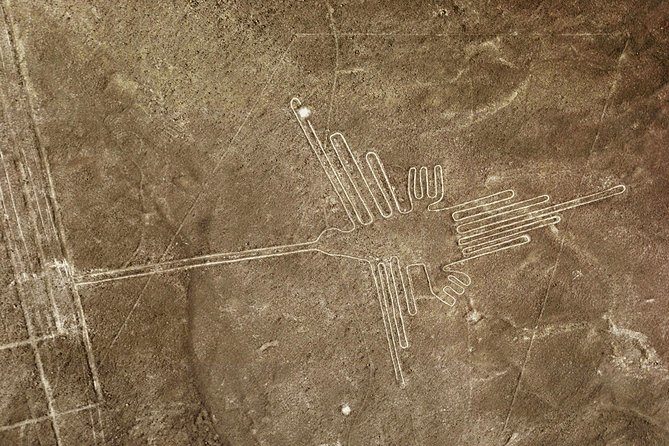
Day three is one of the trip’s more unusual combinations. You travel by bus toward Paracas, transfer to Pisco airport, and take a flight over the Nazca Lines. From the air, enormous figures such as the monkey, hummingbird, condor, and spider become visible across the desert.
The flight lasts about 90 minutes, and the plane holds up to 12 people. That small aircraft suits the tour’s group size, but you should know that an overflight can be tiring for young children and is not recommended for children under eight. The admission cost is not included, and the airport tax is separate.
The purpose of the drawings remains debated. The tour presents the idea that they may have worked as an astronomical calendar, but you should treat the explanation as part of an ongoing puzzle rather than a settled answer. The best part is the scale: patterns that seem almost invisible from the ground become carefully shaped images from above.
The next morning, you take a motorboat to the Ballestas Islands. Along the way, you see the Candelabro, a large carving on a sandy hill facing the Nazca desert. Around the islands, look for Humboldt penguins, seals, and migratory birds.
This section gives you two very different views of southern Peru: stark desert geometry from an airplane and wildlife from a fast boat. The cost is time on the road. You return to Lima by bus in the afternoon, so this is not a restful beach break.
Arequipa offers colonial streets and volcano views
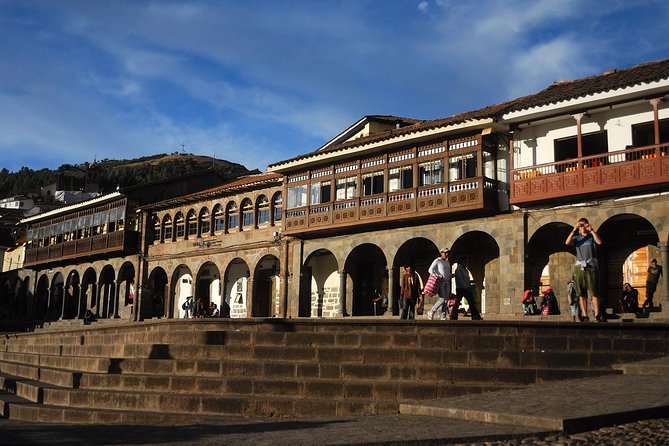
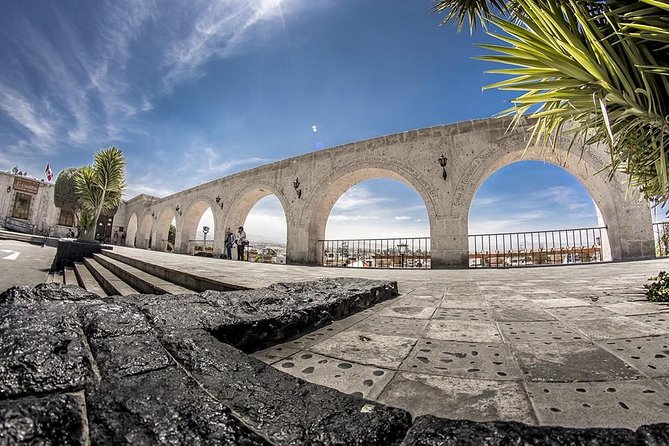
On day five, you fly to Arequipa, often called the White City. The afternoon tour begins in San Lázaro, the colonial district associated with the city’s founding. From there, you walk through streets lined with geraniums before heading to Carmen Alto, where agricultural terraces and the volcanoes Misti, Chachani, and Picchu-Picchu frame the view.
Yanahuara adds another viewpoint and more colonial character. The Santa Catalina Monastery is the main event. Its streets, squares, gardens, and painted walls create a small enclosed city within Arequipa. It was closed for almost 400 years, which helps explain why the complex feels so distinct from the city outside.
The route continues to Plaza de Armas, the Cathedral, and the Church of the Company of Jesus. The tour lasts about four hours, so you see the main sights without spending a full day on foot.
Arequipa is also an important adjustment stop before higher elevations. The schedule does not provide a long acclimatization period, but the city is lower than Colca Canyon and Puno. I would use this evening for water, light meals, and sleep rather than trying to add another activity.
Also leaving from Lima, and nothing like the above:
- Lima Half-Day City Walking Tour (Small Groups)
★ 5.0 · 1,508 reviews - Paracas and Huacachina Exclusive Sunset Picnic Tour
★ 5.0 · 1,398 reviews - Unmissable Visit To Paracas, Huacachina And Sunset In The Oasis
★ 5.0 · 1,138 reviews - Paracas, Ballestas Islands and Huacachina Guided Tour
★ 5.0 · 1,100 reviews
Colca Canyon means high passes and an early condor watch
The road to Colca Valley takes you through the volcano route and the Pampa Cañahuas vicuña reserve. The highest point is Patapampa at 4,900 meters, or about 16,076 feet. That is a serious altitude gain, even for fit people.
You may see vicuñas in their protected high Andean habitat, along with views of Misti, Chachani, Picchu-Picchu, and the active Sabancaya volcano. After descending into the Colca Valley, you have lunch at the hotel and free time to rest or use the area’s thermal waters.
The next morning starts at dawn at Cruz del Cóndor. The timing is necessary because Andean condors often ride the morning air currents. From the viewpoint, you also see the immense scale of the canyon, described as one of the deepest in the world.
Visits to Maca and Yanque add colonial churches before lunch and a roughly six-and-a-half-hour bus ride to Puno. This is one of the tour’s hardest stretches. You should expect a full day with an early start, a long drive, and altitude that may affect your sleep and appetite.
Bring any altitude medicine recommended by your doctor. The tour specifically advises people with a history of altitude sickness to prepare before departure. That warning deserves attention, not a casual nod.
Lake Titicaca combines living traditions with long hours on the water
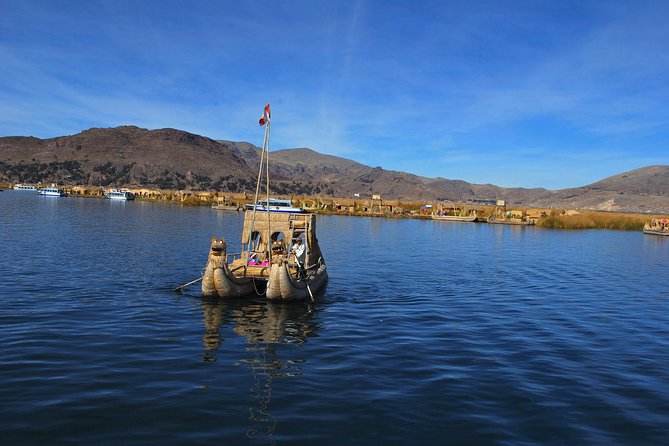
Day eight begins with a motorboat to the Uros communities. The islands are built using ancient techniques, and the visit explains how the community maintains them and earns a living through contact with visitors. This is an informative stop, but it also raises a practical point: the visit is part cultural exchange and part commercial activity.
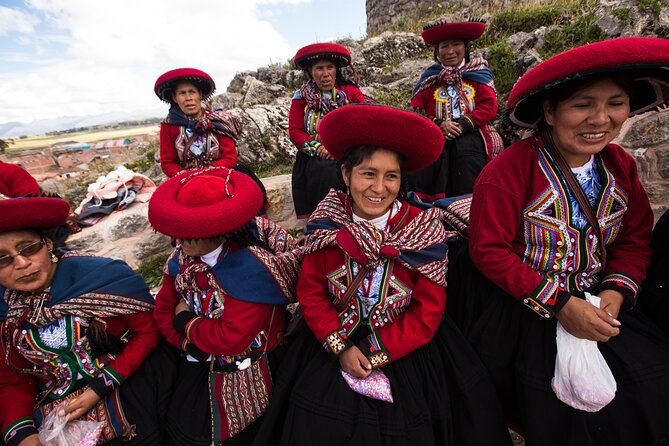
You then continue to Taquile Island, a Quechua community in a mainly Aymara region. Taquile has maintained its clothing, music, dances, and local customs. A community lunch is included, followed by a walk with views across Lake Titicaca.
The excursion lasts about six hours. You should be ready for wind, sun, and a fair amount of boat time. The included lunch is described as simple but nutritious, and the local setting gives it more meaning than an ordinary restaurant meal.
This is one of the better cultural sections because it is not limited to ruins. You see communities that continue to use traditional skills and organize daily life around the lake. Still, the stop at Uros can feel structured, so keep your expectations respectful and realistic.
The road to Cusco adds Pucará, Raqchi, and Andahuaylillas
The bus journey from Puno to Cusco takes about eight hours, but it is broken up by worthwhile stops. At the Lithic Museum of Pucará, you see monoliths, stelae, and animal-shaped sculptures linked to the local culture. The town is also known for its colorful small bull figures, associated with protection, happiness, and fertility.
La Raya Pass reaches 4,335 meters and marks the divide between the Lake Titicaca basin and waters flowing toward the Vilcanota and Amazon basin. It is a quick high point with broad mountain views, not a place for extended wandering.
At Raqchi, the temple of Wiracocha is represented by large stone bases, columns, and walls. The remains help you picture the scale of the original complex. Andahuaylillas closes the day with the Church of San Pedro Apóstol, known for its painted interior and its nickname, the Sistine Chapel of America.
This is a long day, but the stops prevent it from becoming six or eight hours of staring through a bus window. You arrive in Cusco late in the sequence, so keep the evening quiet.
Cusco packs Inca stonework and colonial art into one day
The Cusco city tour begins with Sacsayhuamán, a major Inca site above the city. Its colossal stone construction and broad setting give you an immediate sense of Inca engineering. Q’enqo follows, with an altar cut into rock, then Puca Pucará and Tambomachay, a site connected with water and Andean beliefs.
Back in the city, San Pedro Market gives you a look at local produce and everyday food supplies. From San Cristóbal Square, you get a wide view over Cusco. Qorikancha then shows how an Inca temple was reshaped during the colonial period, with walls once covered in gold.
The walk through San Blas and Hatun Rumiyoc brings you to the famous Twelve Angled Stone and the former palace of Inca Roca. Cusco Cathedral finishes the day with colonial art in the Plaza de Armas.
This is an excellent overview, but the schedule is busy. The stop at Sacsayhuamán is listed as only a few minutes in the timing information, which suggests the exact pace may vary. Ask your guide how much time you will have at each site.
The Sacred Valley moves from markets to living craft
Pisac begins the Sacred Valley section with an archaeological site high above the colonial town. The elevated setting gives you views across the valley, while the market and artisan workshops provide time to shop at ground level.
The Inkariy Museum presents models and representations of pre-Hispanic cultures. It is a useful bridge between the sites you have seen and the larger story of ancient Peru, especially if you appreciate visual explanations.
At the Yucay Live Culture Center, local people demonstrate textile weaving and dyeing, adobe making, and preparation of chicha, a corn drink. You also meet llamas and alpacas. This visit gives the valley a human dimension, though the format is clearly designed for tourism.
The next day includes Moray, where circular terraces are presented as an agricultural experiment involving different microclimates. At Maras, salt ponds spread across a clay-colored hillside in sharp white patterns. The site is photogenic, but the value is more than the view: the salt is still worked using old methods.
Ollantaytambo is one of the most satisfying stops before Machu Picchu. Its streets and terraces retain the shape of an Inca settlement, and the unfinished Sun Temple reveals how stonework was planned and assembled. You then board the train to Machu Picchu town for the night.
Machu Picchu is the payoff, with rules you must understand
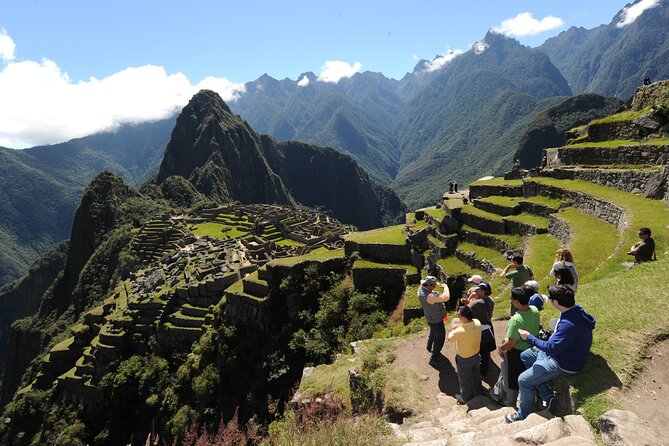
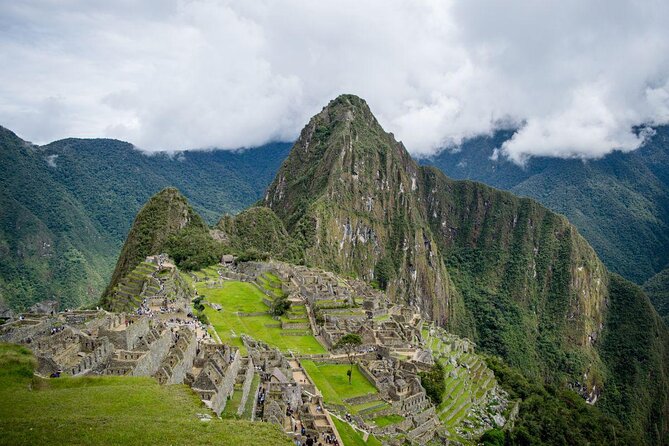
The Machu Picchu day combines a train, a bus up the winding road, and a guided visit to terraces, stairways, ceremonial areas, and urban structures. The Urubamba River cuts through the canyon below, adding to the drama of the approach.
Entry times are assigned in shifts between 6 a.m. and 2 p.m. The shared tours normally use 9 a.m., 10 a.m., or 11 a.m. slots, but another available hour may be used. You need to accept the assigned time, since the entrance ticket cannot be refunded or changed after issue.
The site now uses set circuits. Route 2 receives priority when available. If it is not available, you may be offered Circuit 3B or Circuit 1B before the ticket is issued. That detail matters because the circuit determines what you see and how you move through the ruins.
Train class depends on the package category. Economy and Tourist options use the Expedition or Voyager train. First and Deluxe options use Vistadome or Machu Picchu 360. After the visit, lunch is included, followed by the return train and transfer to Cusco.
Machu Picchu is not a quick photo stop. The five-hour block includes several transfers and the guided visit, so wear practical shoes and keep your day flexible.
Your free day in Cusco is useful, not wasted
Day fourteen is open. That is welcome after the packed route, and you can use it for rest or arrange an optional outing in advance.
One suggested choice is Vinicunca, the Rainbow Mountain, at about 5,000 meters. That is higher than the already demanding Colca and La Raya sections, so it is not a gentle add-on. The other suggestion is kayaking on Huaypo Lake, with lunch by the shore and snowcapped mountains as a backdrop.
The free day also gives you a chance to revisit a Cusco area you saw too quickly, but the supplied program does not include a guided activity here. Reserve any extra experience ahead of time.
On day fifteen, you fly from Cusco to Lima, receive assistance at the airport, and transfer to a Lima hotel. You have free time to discover more of the city before the trip ends.
Who will enjoy this tour most?
I would recommend this tour to you if you want Peru’s main cultural and natural highlights without arranging every connection yourself. It suits people who value punctual transfers, bilingual guidance, small-group travel, and a full schedule.
The strongest praise centers on organization, helpful staff, reliable drivers, prepared guides, and timing that is handled carefully. That support is especially useful in Peru, where a missed bus, train, or airport transfer can disrupt several days.
I would be more cautious if you dislike long road journeys, need lots of free time, or know that altitude affects you badly. The combination of high passes, early starts, boat trips, and frequent hotel changes requires stamina. The tour is also less suitable for children under eight because of the Nazca flight.
Should you book the Great Inca Expedition?
Book it if you want a broad, well-supported first visit to Peru and accept a fast pace. The mix of Lima museums, Nazca drawings, Ballestas wildlife, Arequipa’s monastery, condors, Lake Titicaca, Cusco, the Sacred Valley, and Machu Picchu is hard to match through a single 15-day plan.
Before paying, price the required flights and daily food. Then consider your altitude history and whether you are comfortable with fixed Machu Picchu circuits and entry times.
For an organized Peru sampler with strong logistical help, the $2,397 base price is persuasive. For a slower, more independent trip, choose a shorter route with extra nights in Cusco or the Sacred Valley instead.
FAQ
Is the tour really 15 days long?
Yes. The program lasts approximately 15 days and includes 14 hotel nights. The final day includes a flight from Cusco to Lima, a hotel transfer, and free time in Lima.
Are flights included in the price?
No. International and domestic flight tickets are not included. The sales team can assist with flight arrangements.
What meals are included?
The package includes 14 breakfasts and seven lunches. Other food and drinks are not included unless specifically stated.
How large is the tour group?
The maximum group size is 12 people. The Nazca aircraft also holds up to 12 passengers.
What train is used for Machu Picchu?
Economy and Tourist Class bookings use the Expedition or Voyager train. First and Deluxe Class bookings use the Vistadome or Machu Picchu 360 train.
What should I know about altitude?
The route reaches 4,900 meters at Patapampa, and several other stops are at high elevation. If you suffer from altitude sickness, bring medicine or ask your doctor for advice before departure.
Added recently around Lima
- Yoga Classes in Miraflores, Lima★ 4.5 · 20 reviews
- Magic Water Circuit Tour★ 4.0 · 5 reviews
- Private Walking Tour Lima Heritage Downtown Half Day★ 4.5 · 12 reviews
- Wonders of Peru & Huaraz 16-Day Tour★ 5.0 · 8 reviews
- Water Magic Circuit Lima Night Tour by Panoramic Bus★ 4.5 · 11 reviews
- Visit to the Larco Museum in Lima★ 5.0 · 5 reviews
- Guided Tours in Colonial and Modern Lima★ 5.0 · 54 reviews
- Bizarre Foods Tour for Adventurous Foodies★ 5.0 · 9 reviews
Lima Tours, compared.
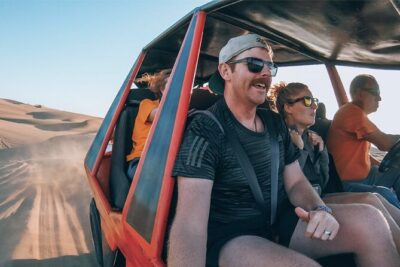
Premium Paracas & Huacachina Day Trip from Lima with Sunset Toast
Read our review →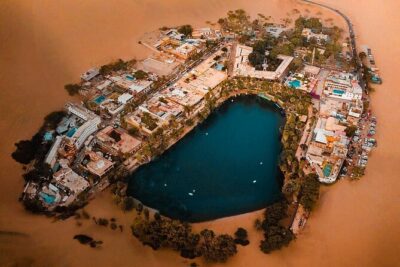
Full Day Tour From Lima: Paracas and Huacachina Oasis
Read our review →
Lima Half-Day City Walking Tour (Small Groups)
Read our review →Paracas and Huacachina Exclusive Sunset Picnic Tour
Read our review →
Unmissable Visit To Paracas, Huacachina And Sunset In The Oasis
Read our review →
Paracas, Ballestas Islands and Huacachina Guided Tour
Read our review →