Reviewed · LIMA TOURS
8-Day Peru Ancestral Energies
Peru’s greatest sights fit into one busy week. This 8-day Peru tour links Lima, Cusco, Machu Picchu, the Sacred Valley, and Lake Titicaca with hotels, transfers, guided visits, and many meals already arranged. It is a strong choice if you want the big landmarks without spending hours piecing together trains, buses, and entrance tickets.
I especially like the route’s efficient progression from Lima to the Andes, then from Cusco to Puno. I also like the small maximum group size of 15, which should make guided walks and transfers easier to manage. The main concern is altitude and pace: you reach high-elevation Cusco and Puno quickly, and the tour includes several early starts and long travel days.
At $1,264 per person, this is a useful package for anyone who values organization. But the price does not include the Lima to Cusco and Juliaca to Lima flights, airport taxes, most dinners, or some drinks. Plan for those costs before deciding if this is the right Peru trip for you.
In This Review
- Key points to know before booking
- What the $1,264 price really covers
- Day 1: Lima’s colonial center and the Larco Museum
- Day 2: Cusco from San Cristóbal to the Plaza de Armas
- Day 3: Sacsayhuaman and Cusco’s four nearby ruins
- Day 4: Chinchero, Moray, and Ollantaytambo
- Day 5: The train to Machu Picchu
- Day 6: The high road from Cusco to Puno
- Day 7: Uros and Taquile Island on Lake Titicaca
- How the transport and group size affect the trip
- Who should book the Peru Ancestral Energies route?
- Final verdict: good value for a tightly planned Peru week
- FAQ
- How long is the Peru Ancestral Energies tour?
- Where does the tour begin?
- Where does the tour end?
- Are flights included in the price?
- What time must the Lima to Cusco flight arrive?
- Is the Machu Picchu train included?
- Which Machu Picchu circuit will be used?
- Can the Machu Picchu ticket be refunded or changed?
- Are meals included?
- How large is the tour group?
Key points to know before booking
- Cusco and Machu Picchu are the heart of the route: You get city sights, Inca ruins, the Sacred Valley, and a full visit to Machu Picchu.
- The itinerary reaches high altitude fast: Cusco, La Raya, and Puno require sensible preparation, especially if you have had altitude sickness before.
- The group maximum is 15 people: That is a more manageable size than a large coach tour, especially in narrow historic streets and at archaeological sites.
- Flights are not included: You must arrange flights from Lima to Cusco and from Juliaca back to Lima, with the correct timing.
- Lake Titicaca includes Uros and Taquile Island: The day combines living traditions, boat travel, island scenery, and a community meal.
- Machu Picchu circuit rules matter: Route 2 has priority, but circuit 3B or 1B may be offered if route 2 is unavailable.
What the $1,264 price really covers
The package includes seven nights of accommodation, seven breakfasts, four lunches, airport-to-hotel transfers, shared transport, admission tickets for the included visits, English-Spanish guided tours, and the round-trip train to Machu Picchu. The train category depends on your selected hotel category and availability.
That bundle has real value. Peru travel can become expensive when you add train tickets, archaeological admissions, private transfers, and local guides one piece at a time. This plan removes much of that work, and the route is designed so you are not constantly arranging your next connection.
Still, $1,264 is not the final trip cost. Flights from Lima to Cusco and from Juliaca to Lima are separate. Airport taxes are listed at $32 per person for the international, Lima to Cusco, and Puno-related charges. Food and drinks are not included unless specifically listed, so you will need money for dinners, extra drinks, and meals outside the four provided lunches.
The tour is best for you if predictability matters more than complete independence. You will have free time in Cusco on Day 3, but most of the week follows a fixed plan. That is a fair trade for covering so much ground in only eight days.
A few more Lima trips worth lining up side by side
- Premium Paracas & Huacachina Day Trip from Lima with Sunset Toast
★ 5.0 · 7,380 reviews - Full Day Tour From Lima: Paracas and Huacachina Oasis
★ 5.0 · 3,694 reviews - Lima Ultimate Peruvian Food Tour
★ 5.0 · 1,845 reviews
Day 1: Lima’s colonial center and the Larco Museum
Your trip begins at Jorge Chávez International Airport in Lima, where a transfer takes you to your hotel. The first sightseeing block lasts about five hours and focuses on Lima’s historic center and one of the city’s best-known museums.
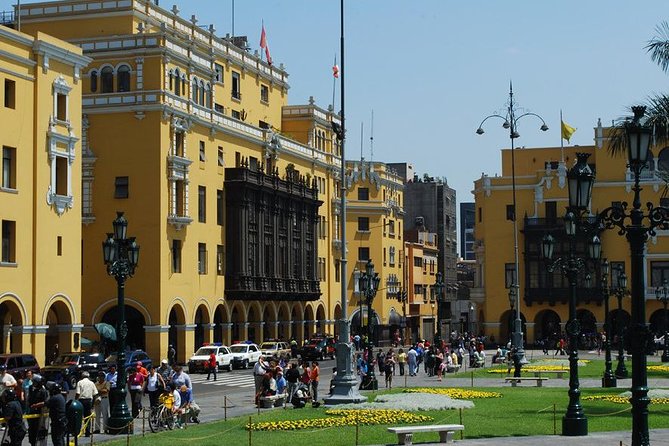
The Convent of Santo Domingo and Universidad Mayor de San Marcos introduce the city’s colonial and academic traditions. In Plaza Mayor, you see the Government Palace, the Municipality, and the Cathedral of Lima. These are not quick photo stops only. Together, they give you a useful first look at how Lima developed as a center of Spanish power in South America.
The Larco Museum finishes the day. Its collection includes gold objects, textiles, and ceramics, so it provides context for the cultures you will encounter later in Cusco and the Sacred Valley. I like this pairing of city history and museum objects because it gives the first day a clear purpose rather than treating Lima as a simple overnight stop.
The schedule is helpful if you want to start sightseeing right away, but it may feel full after an international flight. Your arrival time matters, and the tour information does not promise a long rest period before the Lima visit. Pack your first-day essentials where you can reach them, and keep your expectations realistic if you arrive tired.
Day 2: Cusco from San Cristóbal to the Plaza de Armas
You fly from Lima to Cusco and receive an airport greeting before transferring to your hotel. The domestic flight is not included, and it must arrive by noon, so a morning departure from Lima is required.
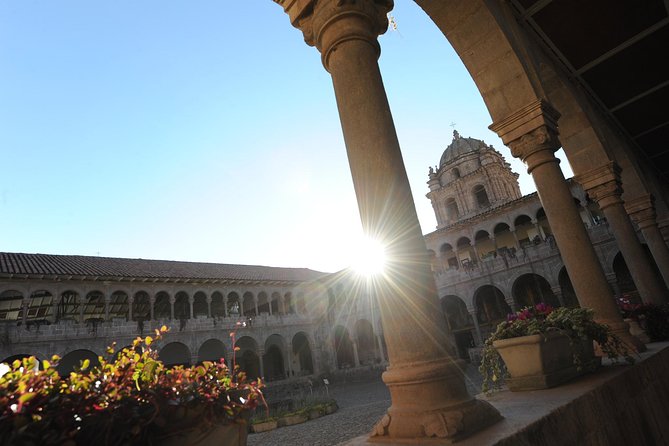
The afternoon walking tour lasts about four hours. It begins at San Cristóbal Square, where you get a broad view over Cusco. That is a smart opening stop because it helps you understand the city’s position before you begin walking through its streets.
San Pedro Market provides a look at the food and goods that supply the city. The visit is more useful than a simple market photo stop because your guide explains local products and flavors. You will also have a chance to see the daily rhythm of a working market, though anyone sensitive to strong smells or crowded aisles should be prepared.
Qorikancha, the Inca temple later covered by a colonial church, is one of the day’s key visits. The walls were once covered in gold, and the site helps explain the importance of Cusco before Spanish rule. From there, the route passes through San Blas, the traditional artisans’ district, and along Hatun Rumiyoc Street.
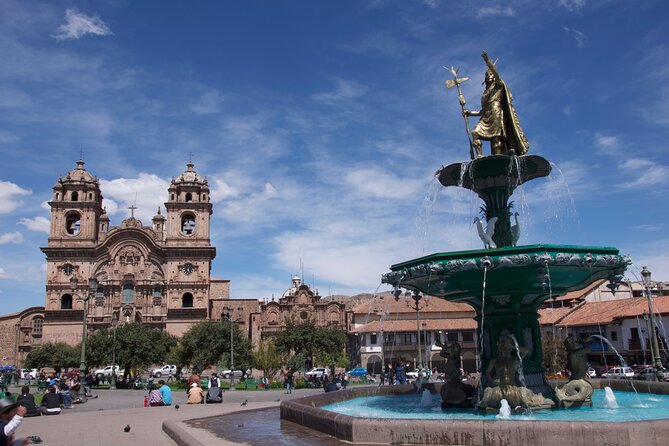
The Twelve Angled Stone is a brief but memorable lesson in Inca masonry. You also see the former palace of Inca Roca, now the Archbishop’s Palace, before reaching the Plaza de Armas and the Cathedral. The cathedral contains valuable colonial works, giving the day a useful contrast between Inca construction and Spanish religious art.
The drawback is altitude. Cusco sits high, and this is a walking afternoon soon after your flight. Walk slowly, drink water, and do not treat the first day as a test of athletic ability.
Day 3: Sacsayhuaman and Cusco’s four nearby ruins
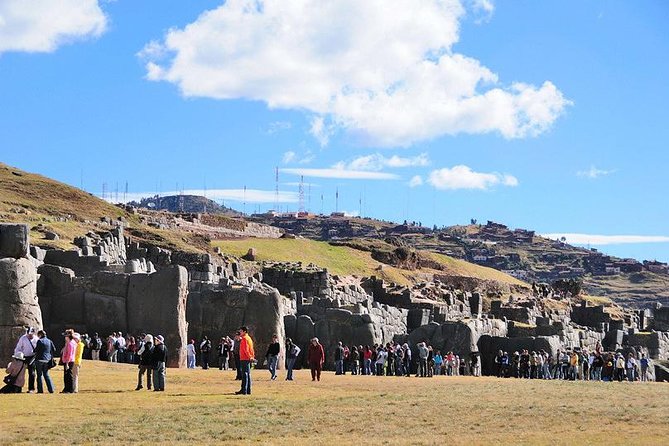
The morning visit leaves the center of Cusco for Sacsayhuaman, Q’enqo, Puca Pucará, and Tambomachay. The guided portion lasts about four hours, followed by a free afternoon.
Sacsayhuaman is the largest and most dramatic stop. Its immense stone construction and open setting make it easier to appreciate the scale of Inca engineering. Your guide’s explanation is especially valuable here because the site can otherwise look like a collection of giant walls without a clear story.
At Q’enqo, the route moves to a ceremonial site built into rock. The internal altar is linked with sacrifice traditions, although the physical setting and its carved stone are the main focus of the visit. Puca Pucará served as a lookout, while Tambomachay is known for its fine stonework and connection to Andean ideas about water and the natural world.
The free afternoon is an important feature. After two guided days, you can rest, return to a favorite Cusco square, or explore at your own speed. Since the tour does not specify additional activities, you should not assume another admission or excursion is included.
Also leaving from Lima, and nothing like the above:
- Lima Half-Day City Walking Tour (Small Groups)
★ 5.0 · 1,508 reviews - Paracas and Huacachina Exclusive Sunset Picnic Tour
★ 5.0 · 1,398 reviews - Unmissable Visit To Paracas, Huacachina And Sunset In The Oasis
★ 5.0 · 1,138 reviews - Paracas, Ballestas Islands and Huacachina Guided Tour
★ 5.0 · 1,100 reviews
Day 4: Chinchero, Moray, and Ollantaytambo
Day 4 takes you into the Sacred Valley, with lodging in the area at night. The visit lasts about five hours, though the route also includes lunch and several stops, so the day may feel longer once road time is added.
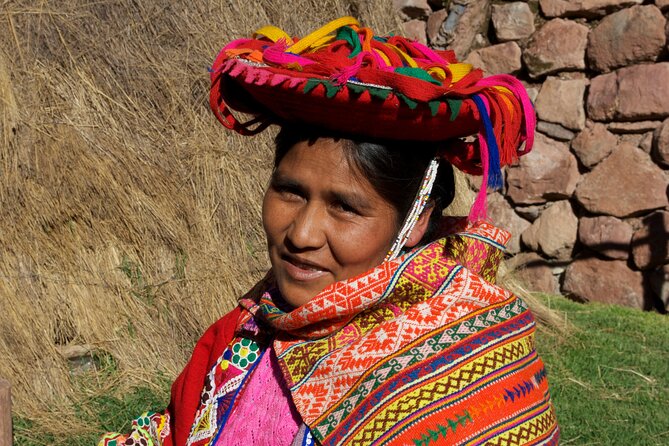
Chinchero is known for its colorful village and weaving traditions. At a textile center, you see older methods of spinning and dyeing alpaca wool. This is a worthwhile part of the itinerary because it connects archaeological Peru with living craft traditions. The visit may also be a shopping opportunity, but you should feel free to look without buying.
The Inca plaza and colonial church show how Spanish and Inca features occupy the same town. That combination appears throughout the route, and Chinchero gives you an early example before the larger sites.
Moray is one of the more unusual Inca sites. Its concentric agricultural terraces are thought to have helped recreate different growing conditions. The circular form is striking, but the practical agricultural purpose is what makes the stop especially interesting.
After lunch, you continue to Ollantaytambo, described as the last living village of the Incas. The program includes the Temple of the Ten Windows, the Princess Baths, and the Sun Temple. From higher points, you get the broad views that make Ollantaytambo one of the most memorable parts of the Sacred Valley.
Sleeping in the area is a practical choice. It places you near the train station for the next day and avoids returning to Cusco after a full sightseeing circuit. Your hotel category is selected at booking and remains subject to availability, so confirm what level of accommodation you are purchasing.
Day 5: The train to Machu Picchu
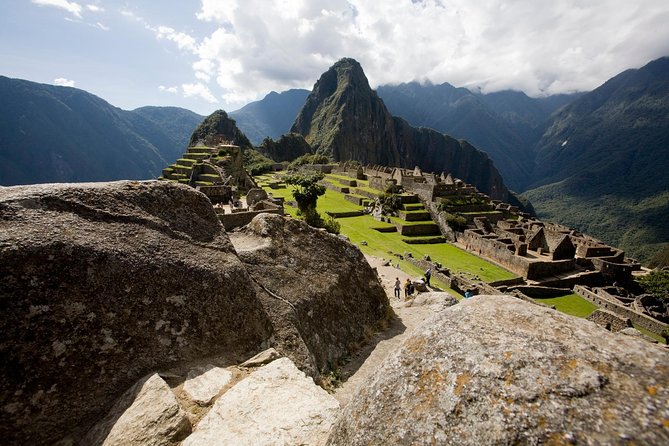
This is the most anticipated day for many people. You board the selected train at Ollantaytambo, arrive at Machu Picchu station, and receive assistance with the bus connection up the winding road toward the ruins.
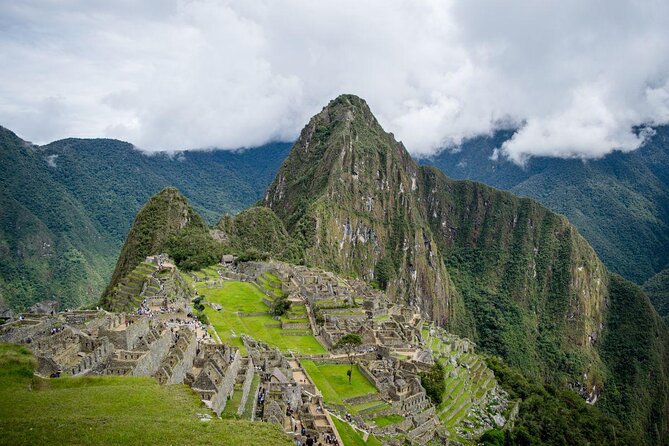
The approach includes views of the Urubamba River and its steep canyon. Once inside Machu Picchu, the visit includes terraces, stairways, ceremonial areas, and urban sections. This is not a quick overlook. The site requires walking, uneven surfaces, and attention to your guide’s timing.
The route system at Machu Picchu has changed. Route 2 is given priority, but if it is unavailable, route 3B or route 1B may be offered. You should understand which circuit you are accepting before the entrance ticket is issued. The ticket is nonrefundable, and the date cannot be changed or amended. If your plans change later, a new ticket is required.
Lunch is included, and you return by train before transferring to your Cusco hotel. The day is listed at about six hours, but train schedules, bus movement, guided touring, and transfers make this a day where timing matters. Keep your passport available, since passport name, number, expiry date, and country are required for all participants at booking.
Day 6: The high road from Cusco to Puno
The route to Puno uses a tourist bus and follows the Vilcanota River toward the Andean altiplano. This is a long transition day in spirit, even though the sightseeing time is listed at four hours. The route includes several cultural stops rather than simply moving from one hotel to the next.
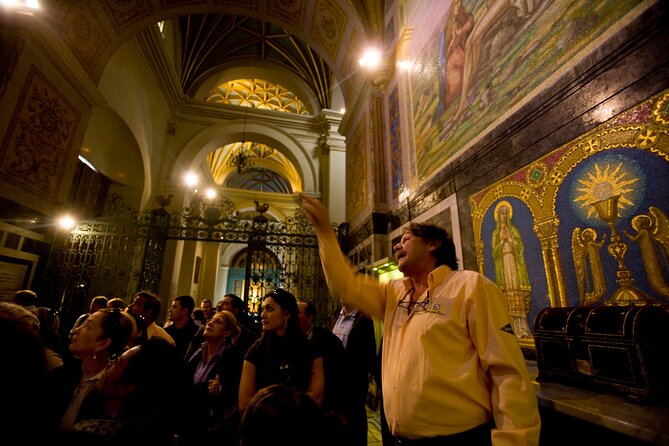
At Andahuaylillas, you visit the Church of the Apostle Saint Peter, known as the Sistine Chapel of America. Its seventeenth-century mural paintings cover the walls and ceiling, making this a valuable stop for anyone interested in colonial religious art.
Racchi brings you back to the Inca period. The Temple of the God Wiracocha includes large columns and walls that hint at the original scale of the complex. Lunch is included during the route.
The bus then reaches La Raya at 4,800 meters above sea level, the highest point of the journey. This is a serious altitude, not just a scenic roadside pause. La Raya marks the division between waters flowing toward Lake Titicaca and rivers moving toward the Amazon basin.
The final visit is the Pucara Site Museum, associated with the famous small Pucara bulls. You arrive in Puno and transfer to your hotel. If altitude sickness is a concern, speak with your doctor before departure and bring recommended medicine. That advice should be treated as essential, not as a footnote.
Day 7: Uros and Taquile Island on Lake Titicaca
A motorboat takes you from Puno to the Uros communities. The islands are built using ancient techniques, and the visit explains how the communities have maintained this practice. The program also notes that local people make their living from visitors, so approach the stop with respect and remember that purchases and demonstrations support the local economy.
The boat continues to Taquile Island, where Quechua traditions remain strong in a region that is mainly Aymara. The island is known for its clothing, music, dances, and continuing community life.
Lunch at a community restaurant is included. It is described as simple and nutritious, which suits the setting. After lunch, you walk around the island to take in views over Lake Titicaca before returning to Puno.
The boat day adds a different kind of cultural experience after the monuments of Cusco and Machu Picchu. The tradeoff is physical effort and altitude. The program includes walking, and the high elevation can make ordinary steps feel harder than expected.
How the transport and group size affect the trip
Transport is one of the strongest reasons to consider this package. Airport transfers, shared hotel transfers, tourist bus service, the Machu Picchu train, and the bus up to the ruins are organized for you. A guide or local staff member is also assigned to key stages of the journey.
The group maximum is 15 people. That does not make every transfer private, but it should keep the guided visits more personal than a large coach excursion. The tour uses shared services, so you should expect some waiting and fixed departure times.
The included review praise focuses on punctuality, helpful drivers, good transport, and prompt answers to questions. Those qualities matter in Peru, where missed connections can disrupt a tightly packed route. The company is VIPAC Travel, and the published rating is 4.9 from 47 reviews, with 100 percent recommending the experience.
No guide names are provided, so you cannot request a particular guide based on this information. You can, however, expect English-Spanish guiding during the shared tours.
Who should book the Peru Ancestral Energies route?
I would recommend this tour to you if you have eight days, want Peru’s headline sights, and prefer having the hard logistics arranged. It suits first-time visitors who do not want to organize separate hotels, rail tickets, entrance permits, and regional transport.
It also works well for people who enjoy guided context. The route is not just a checklist of ruins. It links colonial Lima, Inca temples, weaving, agricultural terraces, island communities, and highland religious art.
I would be more cautious if you need a slow vacation. The schedule includes flights, walking tours, a full Sacred Valley day, Machu Picchu, a high-altitude bus journey, and a boat trip. You also have limited unstructured time beyond the free afternoon in Cusco.
The package is less suitable if you want full control over hotels, meals, or sightseeing order. Hotel availability can affect the final accommodation category, and most dinners remain your responsibility. It is also a poor match for anyone who has a serious altitude concern without first getting medical advice.
Final verdict: good value for a tightly planned Peru week
Book this tour if you want the main sites covered with minimal planning and can handle a quick pace at high altitude. The combination of Machu Picchu, Cusco, the Sacred Valley, and Lake Titicaca gives you far more than a single-region holiday.
Before paying, confirm your hotel category, domestic flight arrangements, airport taxes, Machu Picchu circuit, and expected arrival times. Your Lima to Cusco flight must arrive by noon, and the trip ends at Juliaca Airport, 36 kilometers from Puno, not back in Cusco or Lima.
The best part of the plan is its practical structure. The guides, drivers, and transport handle the complicated pieces, while you focus on the stonework, mountain views, markets, churches, and living Andean traditions. If that sounds like your kind of trip, $1,264 is a reasonable starting price, provided you budget separately for the excluded flights, taxes, dinners, and drinks.
Free cancellation is available up to 24 hours before the experience begins. Changes or cancellations inside that window are not accepted, and Machu Picchu entrance tickets have their own strict no-refund and no-change rule.
FAQ
How long is the Peru Ancestral Energies tour?
The tour lasts approximately eight days and includes seven nights of accommodation.
Where does the tour begin?
It begins at Jorge Chávez International Airport in Lima, Peru.
Where does the tour end?
The departure transfer ends at Inca Manco Cápac International Airport in Juliaca, which is 36 kilometers from Puno.
Are flights included in the price?
No. Flights from Lima to Cusco and from Juliaca to Lima are not included. The sales team can assist with arranging them.
What time must the Lima to Cusco flight arrive?
The flight must be in the morning and arrive by noon. A later arrival is too late for the scheduled Cusco program.
Is the Machu Picchu train included?
Yes. A round-trip railway ticket is included, with the train category based on the selected hotel category and availability.
Which Machu Picchu circuit will be used?
Route 2 is given priority. If it is unavailable, route 3B or route 1B may be offered for your confirmation before the ticket is issued.
Can the Machu Picchu ticket be refunded or changed?
No. The Machu Picchu admission ticket is nonrefundable, and its date cannot be changed or amended. A new ticket must be purchased if you need another date.
Are meals included?
Seven breakfasts and four lunches are included. Other food and drinks are not included unless specifically stated.
How large is the tour group?
The activity has a maximum of 15 participants, and the guided tours use shared services with an English-Spanish-speaking guide.
Added recently around Lima
- Yoga Classes in Miraflores, Lima★ 4.5 · 20 reviews
- Magic Water Circuit Tour★ 4.0 · 5 reviews
- Private Walking Tour Lima Heritage Downtown Half Day★ 4.5 · 12 reviews
- Wonders of Peru & Huaraz 16-Day Tour★ 5.0 · 8 reviews
- Water Magic Circuit Lima Night Tour by Panoramic Bus★ 4.5 · 11 reviews
- Visit to the Larco Museum in Lima★ 5.0 · 5 reviews
- Guided Tours in Colonial and Modern Lima★ 5.0 · 54 reviews
- Bizarre Foods Tour for Adventurous Foodies★ 5.0 · 9 reviews
Lima Tours, compared.

Premium Paracas & Huacachina Day Trip from Lima with Sunset Toast
Read our review →
Full Day Tour From Lima: Paracas and Huacachina Oasis
Read our review →
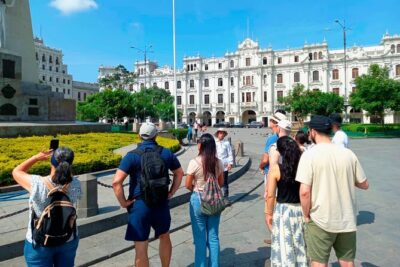
Lima Half-Day City Walking Tour (Small Groups)
Read our review →Paracas and Huacachina Exclusive Sunset Picnic Tour
Read our review →
Unmissable Visit To Paracas, Huacachina And Sunset In The Oasis
Read our review →
Paracas, Ballestas Islands and Huacachina Guided Tour
Read our review →