
Reviewed · LIMA TOURS
8-Days Best of The Inca Empire from Lima
Peru packs a lot into eight days. This organized journey links Lima’s museums and temples with Cusco, the Sacred Valley, and Machu Picchu, giving you a clear route through Peru’s most famous cultural sights. I like the small maximum group of 12 and the careful handling of transfers, hotels, trains, and buses. I also like the gentle pacing in Cusco, which gives you some room to adjust to the altitude. The main drawback is that airfare between Lima and Cusco is not included, and the schedule has several long sightseeing days.
This is a good fit if you want Peru arranged for you rather than pieced together from separate bookings. The company handles airport pickups, hotel transfers, rail connections, entrance fees, and guides. Just plan your Lima to Cusco flight carefully: you need a morning departure and must arrive by noon.
In This Review
- Key points before you book
- Why this route works for first-time visitors
- Lima begins with plazas, ocean views, and old stone
- Pachacamac and the Larco Museum explain Peru before the Incas
- Cusco combines markets, churches, and Inca masonry
- Sacsayhuaman gives you a quieter Cusco morning
- Awanacancha and Pisac open the Sacred Valley
- Moray, Maras, and Ollantaytambo lead to Machu Picchu
- Machu Picchu rewards an early, focused visit
- Hotels, meals, transfers, and the real cost
- Who should book this Peru itinerary?
- FAQ
- Is airfare between Lima and Cusco included?
- What time should the Lima to Cusco flight arrive?
- How many nights of accommodation are included?
- Are meals included?
- Is Machu Picchu admission included?
- How large is the tour group?
- Does the tour include airport and train transfers?
- What should I do if I am concerned about altitude sickness?
- Should you book the Best of the Inca Empire?
Key points before you book
- A full Peru route in eight days: You visit Lima, Pachacamac, Cusco, the Sacred Valley, Ollantaytambo, and Machu Picchu without having to arrange each connection yourself.
- A maximum of 12 people: The small group size should make hotel pickups, guided walks, and questions easier to manage.
- Two substantial Lima museum and archaeology visits: Pachacamac and the Larco Museum give you useful context before you reach the Inca sites.
- Time to adjust in Cusco: The first Cusco afternoon is fairly gentle, and Day 4 leaves the afternoon free after the nearby ruins.
- Hotels, breakfasts, lunches, and entrance fees included: Seven nights of lodging, seven breakfasts, two lunches, and listed admissions are covered.
- Airfare remains your responsibility: You must book the Lima to Cusco and Cusco to Lima flights, and the first domestic flight needs to arrive in Cusco by noon.
Why this route works for first-time visitors
At $1,454 per person, this trip offers solid value if you want a guided package with transport and hotels included. You still need to pay for domestic airfare, most food, and drinks, so the headline price is not your full trip budget. Still, the package removes the costly stress points: airport transfers, Sacred Valley transport, train arrangements, Machu Picchu buses, and entrance tickets.
I especially like the order of the trip. Lima comes first, where you learn about several ancient Peruvian cultures before seeing the Inca sites. Cusco follows, then the Sacred Valley, then Machu Picchu. That sequence gives the ruins more meaning than simply flying into Cusco and racing straight to the famous citadel.
The route is active but not frantic. Most guided visits last about two hours, while the Sacred Valley excursions run about eight hours. The early days mix short walks, museums, and vehicle transfers. The longer days come after you have had some time in Cusco.
The group limit of 12 matters here. Peru’s travel days involve hotel lobbies, railway stations, mountain roads, and timed admissions. A small group is much easier to move than a large coach party. The company also receives very strong overall marks, with a 4.9 rating from 114 reviews and 98 percent of participants recommending the experience.
A few more Lima trips worth lining up side by side
- Premium Paracas & Huacachina Day Trip from Lima with Sunset Toast
★ 5.0 · 7,380 reviews - Full Day Tour From Lima: Paracas and Huacachina Oasis
★ 5.0 · 3,694 reviews - Lima Ultimate Peruvian Food Tour
★ 5.0 · 1,845 reviews
Lima begins with plazas, ocean views, and old stone
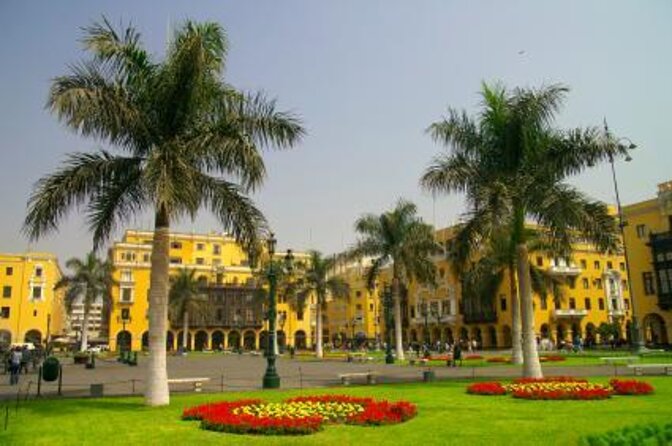
Your first day starts with an airport greeting at Jorge Chávez International Airport and a transfer to your Lima hotel. In the afternoon, you visit Miraflores, beginning at Love Park, where you get a broad view of the Pacific Ocean.
The next stop, Huaca Pucllana, changes the mood. This ceremonial center belongs to the Lima culture, long before the Inca period. Its adobe construction reminds you that Lima’s past is not limited to Spanish churches and colonial balconies.
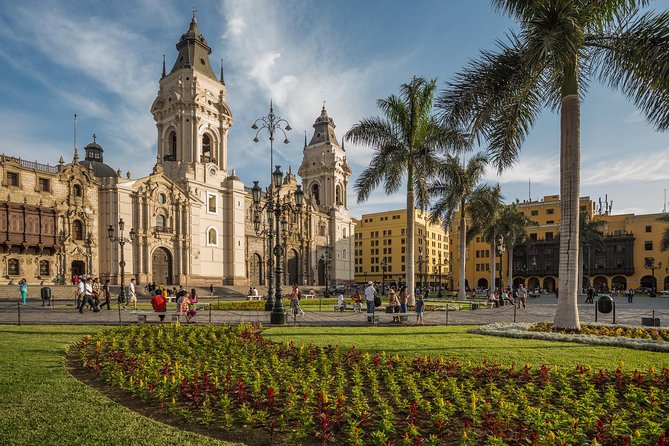
The tour then moves into central Lima and the Plaza de Armas, also called the Plaza Mayor. The Government Palace and Town Hall face the square, while the Cathedral offers a look at Peru’s colonial religious art. At Santo Domingo Convent, you walk corridors connected with San Martin de Porras and Santa Rosa de Lima, whose remains are kept there.
This first outing lasts about two hours and includes admissions. It is a sensible introduction rather than an exhausting city marathon. You see Lima’s oceanfront, an early archaeological site, and its colonial center in one compact visit.
Pachacamac and the Larco Museum explain Peru before the Incas
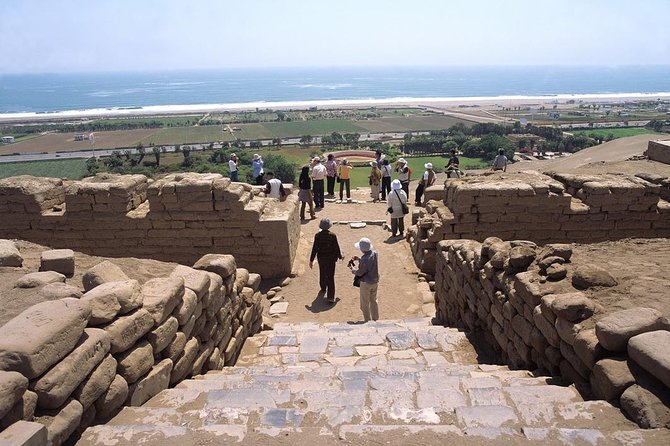
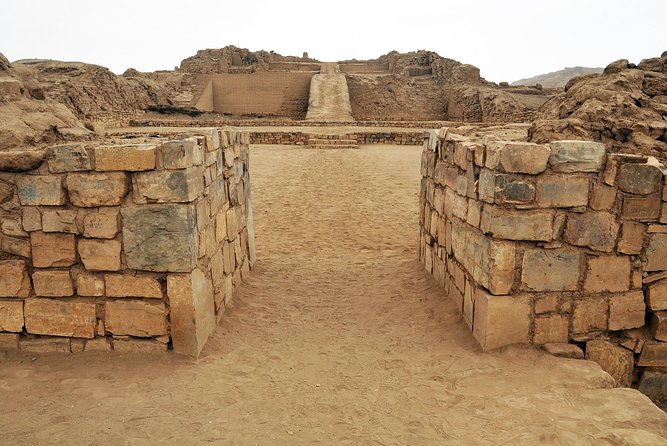
Day 2 is the strongest history day in Lima. About 30 kilometers south of the city, Pachacamac occupies a broad adobe complex overlooking the Pacific and the Lurin River Valley. For centuries, it served as a pilgrimage center for different cultures. After the Incas arrived, they adapted it for administrative use while keeping many earlier structures.
You visit the Temple of the Sun, Acllahuasi, Taurichumbi Palace, and the Pilgrims Plaza, followed by the on-site museum. The museum is useful because the ruins can be difficult to read at ground level. It helps you understand what archaeologists found and how the complex changed over time.
Allow about two hours here. Bring patience for the scale of the site, and remember that much of the construction is adobe rather than finely cut stone. That gives Pachacamac a different feel from Cusco and Machu Picchu, but it is no less important.
The Larco Museum adds objects from ancient Peru in a more polished setting. Its displays cover the beauty and daily life of earlier cultures, while the open storage area shows a large collection of ceramics depicting faces, animals, food, and ordinary objects.
I like this pairing because Pachacamac gives you an archaeological setting, while Larco gives you close views of objects. Together, they help you avoid seeing the Inca Empire as Peru’s entire past.
Near dusk, you visit the Magic Water Circuit, a park filled with fountains, lights, music, and interactive water displays. The visit lasts about an hour. It is more theatrical than historical, but it gives the day a lighter finish.
The evening ends in Pueblo Libre at an old tavern, where you taste Peruvian sandwiches with a pisco-based drink. The tasting is included as an activity, but other food and drinks are generally not included, so check what is covered before ordering more.
Cusco combines markets, churches, and Inca masonry
Day 3 includes your transfer to the airport and flight from Lima to Cusco. The written schedule contains a stray reference to arriving in Lima, but the route clearly continues to Cusco, where you are met and transferred to your hotel.
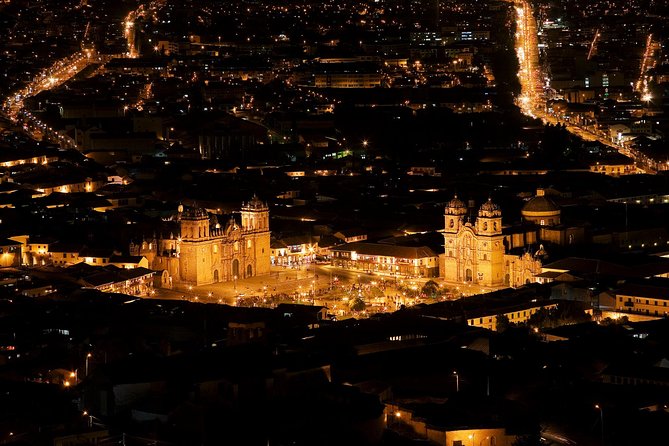
The first Cusco tour begins at San Cristobal Plaza, with a panoramic view over the city. Then you visit San Pedro Market, where the focus is local produce and the foods that supply Cusco. This is a practical stop because it gives you a sense of daily life before the tour turns to major monuments.
Korikancha, the Inca Temple of the Sun, comes next. The Quechua name means Gold Enclosure, and the site is a powerful reminder of how important the temple was before the Spanish church of Santo Domingo was built over part of it.
The walking route continues through San Blas, the artisans’ neighborhood, then along Hatun Rumiyoc Street. You stop at the former Inca Roca Palace, now the Archbishop’s Palace, and see the famous Twelve Angle Stone. The carefully fitted stonework is one of Cusco’s most memorable details because the blocks fit together without ordinary mortar joints.
The day ends at Cusco Cathedral in the Main Square. You see colonial religious art and learn how the city’s Inca and Spanish layers sit side by side.
The guided visit lasts about two hours, but Cusco’s altitude makes even a modest walk feel demanding for some people. Take this day slowly, drink water, and bring any altitude medicine advised by your doctor. The schedule gives you time to rest, which is one reason this package works well for a first visit.
Also leaving from Lima, and nothing like the above:
- Lima Half-Day City Walking Tour (Small Groups)
★ 5.0 · 1,508 reviews - Paracas and Huacachina Exclusive Sunset Picnic Tour
★ 5.0 · 1,398 reviews - Unmissable Visit To Paracas, Huacachina And Sunset In The Oasis
★ 5.0 · 1,138 reviews - Paracas, Ballestas Islands and Huacachina Guided Tour
★ 5.0 · 1,100 reviews
Sacsayhuaman gives you a quieter Cusco morning
Day 4 heads just outside the city to Sacsayhuaman, a huge stone complex with broad views over Cusco. Its massive construction is the main attraction, but the setting matters too. You can see how the site relates to the city below.
Qenqo follows, with a sacrificial altar set inside a rock cave. At Puca Pucara, you stop at a viewpoint before continuing to Tambomachay, a site associated with water and Andean religious thought.
The entire guided outing lasts about two hours, leaving your afternoon free. That free time is valuable. You can rest at the hotel, walk at your own pace, or return to a place that caught your attention during the city tour.
This is also a smart buffer before the Sacred Valley. The package does not force you into another full-day excursion immediately after your first Cusco sightseeing day. For people sensitive to altitude, that breathing room may be more useful than one more monument.
Awanacancha and Pisac open the Sacred Valley
Day 5 is a long eight-hour excursion into the Sacred Valley. At Awanacancha, you see Andean camelids such as llamas and alpacas. You can feed them, and local people demonstrate traditional weaving and dyeing methods.
The stop has a tourist element, but it also connects the animals and textiles to Andean life. It gives you a quick visual lesson in the materials and techniques you will see in markets later.
At Pisac, you visit the Inca and colonial parts of town. The archaeological site sits high on the mountain, with views down toward the colonial settlement. You also get time at the handicraft market, so this is a good day to set aside money for textiles or small souvenirs.
The Inkariy Museum follows, with rooms showing cultural representations of pre-Hispanic civilizations from ancient Peru. Lunch is included there, which is convenient during a full day on the road. You spend the night in the Sacred Valley rather than returning to Cusco, saving you a backtrack before Ollantaytambo and the train.
That overnight location is one of the package’s practical strengths. It breaks up the route and keeps the next day focused on the valley’s major sights.
Moray, Maras, and Ollantaytambo lead to Machu Picchu
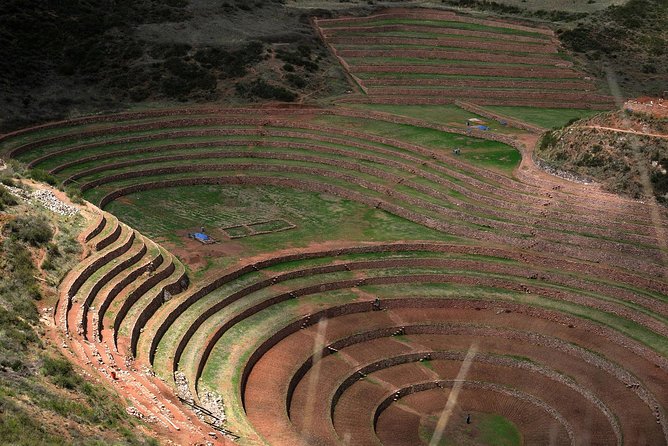
Day 6 is another eight-hour outing. At Moray, you see giant circular terraces built like an amphitheater. The stated purpose was to create different microclimates for agriculture, with about 20 types identified in the design.
The shapes are striking, but the agricultural purpose makes the stop worthwhile. You are not just taking a photograph of unusual terraces. You are looking at a large-scale attempt to test and support food production in difficult mountain conditions.
Maras brings a sharp visual change. Its old salt mines form white pools against the green valley. The contrast is memorable, and the site gives you another example of how local resources were put to work over many generations.
A buffet lunch is included before the afternoon visit to Ollantaytambo. Here, your guide explains how the Incas shaped and moved stone. Ollantaytambo is also important because it remains a living town with an ancient street plan, although the supplied schedule focuses on the archaeological park.
From Ollantaytambo, you take the train to Machu Picchu. Staff assist with your hotel lodging after arrival. This is a long day, so pack only what you need for the overnight portion and keep your essentials easy to reach.
Machu Picchu rewards an early, focused visit
Day 7 begins with breakfast and a bus ride up the winding road to Machu Picchu. The route follows views of the Urubamba River and its canyon before reaching the entrance.
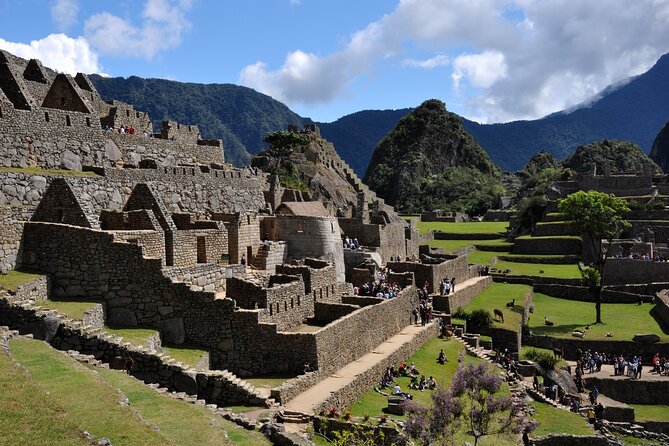
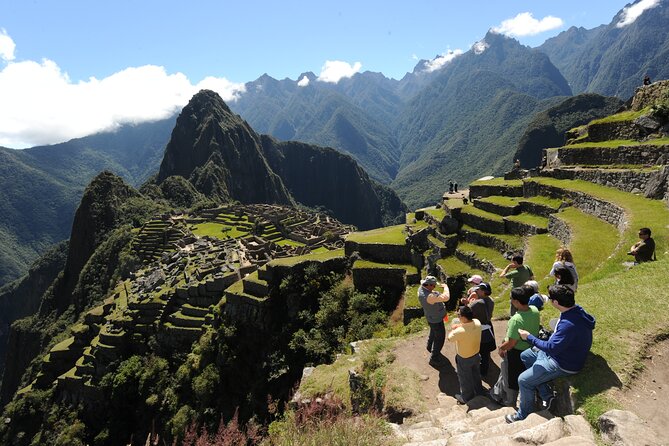
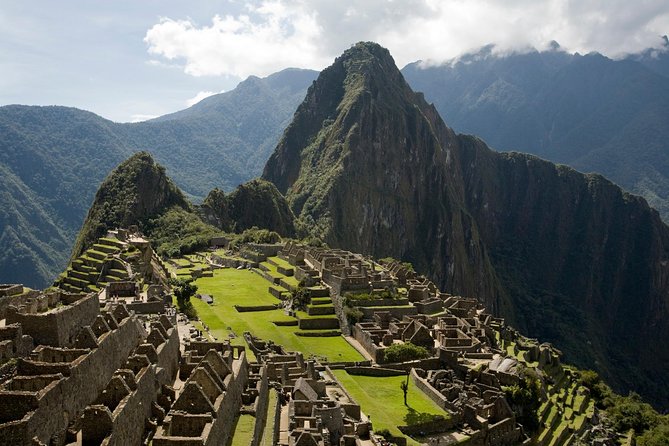
Inside the citadel, your guide leads you past terraces, ceremonial shrines, stairways, and urban areas. A guided visit is especially useful here because the site’s many walls and levels can blur together without explanation. The tour lasts about four hours, including the visit itself and the associated movement through the area.
Lunch at a nearby restaurant follows. At the arranged time, you return toward Cusco and transfer to your hotel.
Machu Picchu admission is not flexible after booking. The ticket is nonrefundable, and date changes or amendments are not accepted. If your plans shift, you may need to buy another entrance ticket, so make sure your flights and other arrangements are firm before committing to the date.
Hotels, meals, transfers, and the real cost
Seven nights of accommodation are included, with hotel class options available. Breakfast is included each morning, along with two lunches, one at the Inkariy Museum and one near Machu Picchu.
Most other meals and drinks are on you. That gives you freedom to choose, but you should budget beyond the $1,454 package price. Domestic airfare between Lima and Cusco is also excluded, as are any extra nights or extensions.
The included transport is a major part of the value. Airport transfers, hotel transfers, railway and bus station transfers, Sacred Valley transport, the Machu Picchu bus, and the train connection are all handled as part of the route. You are not left to decode Peru’s transport system after a long flight.
The strongest practical praise goes to the company’s punctuality and support. Gabriela receives special praise as an excellent guide, and the service is described as professional and helpful. Clean rooms and prompt service are also highlighted, which matters when you are moving hotels several times.
You should provide passport name, number, expiry date, and country for every participant at booking. The company also asks for your international and domestic flight details. Most people can take part, but altitude sickness deserves serious attention, especially in Cusco.
The published cancellation information needs a careful look. It says you can cancel up to 24 hours before the start for a full refund, while another condition mentions a 90 percent refund 15 days before departure. Ask VIPAC Travel to confirm which rule applies to your booking, particularly because Machu Picchu tickets cannot be refunded.
Who should book this Peru itinerary?
I would choose this trip if you are visiting Peru for the first time and want the major sights arranged in a sensible order. It also suits families who prefer support with transport and hotels, especially when moving between Lima, Cusco, the Sacred Valley, and Machu Picchu.
It is a good match for you if you enjoy guided context but still want a free afternoon in Cusco. The two free periods are modest, not generous, so independent explorers may want extra nights before or after the eight-day route.
I would think twice if you want a slow, food-focused trip or several days for mountain walks. The schedule covers a lot of ground, and Days 5 and 6 are long. You also need to manage your own airfare and allow enough time for altitude adjustment.
The 98 percent recommendation rate, 4.9 rating, small group size, and repeated praise for punctual help make this a reassuring package. Just confirm the domestic flights, hotel class, cancellation terms, and altitude plan before paying.
FAQ
Is airfare between Lima and Cusco included?
No. Airfare from Lima to Cusco and from Cusco to Lima is not included. You must arrange those flights yourself.
What time should the Lima to Cusco flight arrive?
Your flight should leave Lima in the morning and arrive in Cusco by noon. An arrival after noon is considered too late for the planned schedule.
How many nights of accommodation are included?
Seven nights are included, according to the route and selected hotel class options.
Are meals included?
Seven breakfasts and two lunches are included. Other food and drinks are not included unless specifically stated.
Is Machu Picchu admission included?
Yes. Entrance fees for the listed tours and excursions are included, including the Machu Picchu visit. The Machu Picchu ticket cannot be refunded or changed after purchase.
How large is the tour group?
The maximum group size is 12 people.
Does the tour include airport and train transfers?
Yes. Airport, hotel, railway station, and bus station transfers are included as part of the planned route.
What should I do if I am concerned about altitude sickness?
Bring medicine or ask your doctor for advice before departure if you suffer from altitude sickness. Cusco is the key point in the itinerary where you should plan for this issue.
Should you book the Best of the Inca Empire?
Book it if you want an efficient first look at Peru’s major cultural sights, with the difficult transport details handled for you. The combination of Lima archaeology, Cusco’s Inca and colonial sites, two Sacred Valley days, and Machu Picchu is well judged.
I would add extra time in Lima or Cusco if your schedule allows. Even so, for $1,454 before airfare and most meals, this is a practical way to see a great deal of Peru in eight days, with enough support to make the route feel manageable rather than chaotic.
Added recently around Lima
- Tour to the sanctuary of Pachacamac★ 4.8 · 8 reviews
- Tour to the magical water circuit with dinner and dance show★ 5.0 · 4 reviews
- Tour of Lima with a visit to the catacombs of San Francisco.★ 4.2 · 24 reviews
- Tour Huaca Pucllana: Pyramids and Pre-Columbian Antiquity★ 4.3 · 12 reviews
- Lima: Palomino Islands Speedboat Tour & Swim with Sea Lions★ 4.8 · 33 reviews
- Surfing experience in Lima★ 5.0 · 6 reviews
- Sandbording in Lima★ 5.0 · 12 reviews
- Pro Sanboarding or skiing in Huacachina from Lima – Day trip★ 4.6 · 8 reviews
Lima Tours, compared.

Premium Paracas & Huacachina Day Trip from Lima with Sunset Toast
Read our review →
Full Day Tour From Lima: Paracas and Huacachina Oasis
Read our review →
Lima Half-Day City Walking Tour (Small Groups)
Read our review →Paracas and Huacachina Exclusive Sunset Picnic Tour
Read our review →
Unmissable Visit To Paracas, Huacachina And Sunset In The Oasis
Read our review →
Paracas, Ballestas Islands and Huacachina Guided Tour
Read our review →
Epic Paracas & Huacachina – Day Trip From Lima
Read our review →Browse the lists this tour appears in