Reviewed · LIMA TOURS
Birdwatching & Landscaping Tour in Lima
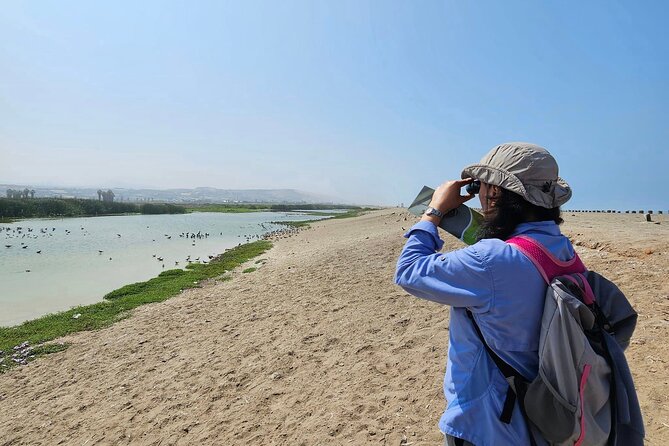
Birds give Lima a different face. This private outing pairs old olive groves with flowering parks and Pacific shorebirds, making it a pleasant way to see nature between city sights. I like the mix of history and habitat, especially the 150-year-old trees at El Olivar and the chance to spot birds such as Vermilion Flycatchers, Peruvian Pelicans, and Inca Terns. I also like the flexible pickup option and the personal attention that comes with a private group.
The main concern is value. At $65 per person, the tour makes sense when all three planned stops run as expected, but long drives or a shortened route can leave you with less active birdwatching than hoped. Clarify the exact plan and pickup point before setting out, especially if you are arriving by cruise ship or plane.
In This Review
- Key things to know before you book
- What this Lima birdwatching tour is really like
- El Olivar: old trees and Lima’s inland birdlife
- Miraflores: flowers, terraces, and small birds
- Costa Verde and Playa Makaha: the Pacific finale
- How many birds can you reasonably expect?
- The $65 price: good value for the right kind of morning
- Timing, pickup, and the importance of a clear meeting point
- What to bring for a better birding morning
- Who will enjoy this tour most?
- Should you book the Lima birdwatching tour?
- FAQ
- How long does the tour last?
- Where does the tour take place?
- What birds might I see at El Olivar?
- What birds might I see along the Costa Verde?
- Is the tour offered in English?
- Is this a private tour?
- Is hotel or arrival pickup available?
- What days and times is the tour available?
- Can I cancel for a full refund?
- What happens if bad weather cancels the tour?
Key things to know before you book
- Three very different habitats: You move from an inland olive grove to a flowering cliff-top park and then to the Pacific coast.
- More than 20 bird species at El Olivar: The park can produce Vermilion Flycatchers, Saffron Finches, Croaking Ground-Doves, Cinereous Conebills, and Red-masked Parakeets.
- A private half-day outing: Only your group participates, so the pace can be adjusted for beginners, keen birders, or families.
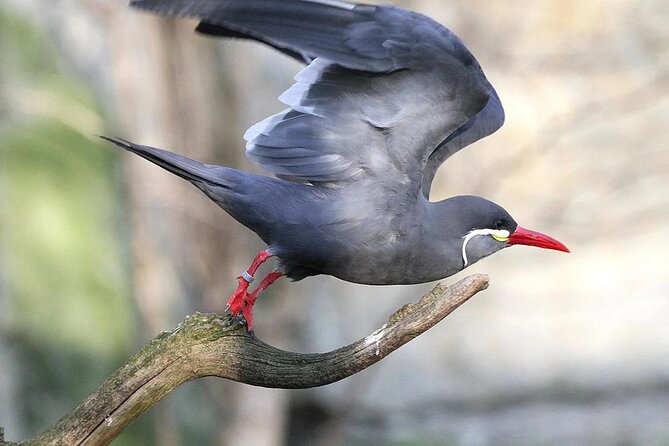
- A useful introduction to Lima’s shorebirds: Playa Makaha and the Costa Verde are places to look for Peruvian Pelicans, Peruvian Gulls, Inca Terns, and oystercatchers.
- Flexible local guiding: Guides and drivers have helped with wrong meeting points, short-notice changes, and finding less obvious birding spots.
- A route that needs confirmation: The advertised timing is about three to four hours, but road time can reduce your time on foot.
What this Lima birdwatching tour is really like
This is not a wilderness expedition. It is a city-based nature tour, built around three small ecosystems inside and around Lima. That is its appeal. You can spend the morning among old olive trees, flowering plants, and seabirds without leaving the metropolitan area.
The planned schedule gives roughly one hour at each stop. That is enough for a useful introduction, particularly if you are new to birdwatching, but it is not a full-day birding program. You will need to pay attention, move at a steady pace, and accept that bird sightings depend on weather, habitat, and timing.
The private format matters. Your group is not combined with strangers, and the guide can focus on your interests. A beginner can ask basic questions without feeling rushed, while an experienced birder can make better use of the short stops by asking to focus on a particular family or habitat.
The tour is offered in English, and pickup can be arranged. The published operating window is Monday through Sunday, from 9:00 a.m. to 2:00 p.m., with confirmation normally sent within 48 hours, subject to availability.
A few more Lima trips worth lining up side by side
- Premium Paracas & Huacachina Day Trip from Lima with Sunset Toast
★ 5.0 · 7,380 reviews - Full Day Tour From Lima: Paracas and Huacachina Oasis
★ 5.0 · 3,694 reviews - Lima Ultimate Peruvian Food Tour
★ 5.0 · 1,845 reviews
El Olivar: old trees and Lima’s inland birdlife

The first stop, Parque El Olivar in San Isidro, gives the tour its strongest sense of place. More than 1,000 olive trees grow here, with many estimated to be over 150 years old. The park covers more than ten hectares, creating a broad green pocket in a city better known for traffic, concrete, and dry coastal weather.
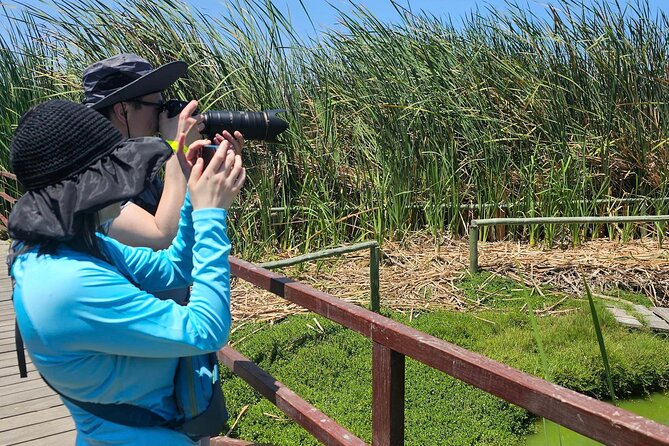
The trees are not just a backdrop. They form a small urban habitat where birds can feed, rest, and move between branches. The tour aims to find more than 20 species here, including Vermilion Flycatchers, Saffron Finches, Croaking Ground-Doves, Cinereous Conebills, and Red-masked Parakeets.
For a new birder, this is a friendly place to learn the basics. Your guide can point out differences in shape, color, calls, and behavior, then help you keep track of what you have seen. A Red-masked Parakeet in the trees makes a very different impression from a ground-feeding dove, and comparing species in one park is more useful than simply ticking off names.
I would allow the full hour here. The stop also has historical interest, since the olive grove connects Lima’s present-day city life with an older agricultural past. You are not only looking at birds. You are seeing how a cultivated park can support wildlife in a dense urban setting.
The limitation is the short visit. If the birds are quiet or hidden, an hour may pass quickly. This is a place where patience helps, but the schedule does not leave much room to wait for one special species. You may get a good variety of common and attractive birds rather than a rare sighting.
Miraflores: flowers, terraces, and small birds
The second stop shifts from old trees to a newer park on the cliff between Miraflores and Barranco. It covers more than 30,000 square meters and uses the old Inca idea of andenes, or bench terraces, along with long ramps for walking.
The setting gives you a fine contrast with El Olivar. Here, flowering ornamental plants provide food for hummingbirds, butterflies, and small seed-eating birds. Amazilia Hummingbirds, Blue-black Grassquits, Blue-grey Tanagers, Shiny Cowbirds, and Mockingbirds are among the species associated with this park.
The flowers listed for the area include Bougainvillea, Campanulas, and small lantana. Their nectar draws insects and birds, while the open paths make it easier to watch movement from one planted area to another. If you enjoy photography, this may be the most visually pleasing stop, though the tour information does not promise photo conditions or equipment.
This park also gives you a break from the narrow focus of bird lists. You can look at butterflies around the flowers and consider how plant choices shape an urban habitat. The park is new, but the terrace design connects it to older building methods, giving the stop a touch of Peruvian cultural context without turning the morning into a formal history tour.
There is one practical point to keep in mind: this stop is described as a new Lima attraction, so you should not expect the mature, shaded feel of El Olivar. Its value comes from flowers, open walking routes, and the birds those plants attract. The one-hour visit should be enough for a good introduction, but not for a slow botanical study.
Costa Verde and Playa Makaha: the Pacific finale
The coastal stop brings a different set of birds and a sharper change in scenery. At the Costa Verde, the focus is on ocean and shore species, including Peruvian Pelicans, Peruvian Gulls, Inca Terns, and oystercatchers.
The pier at Playa Makaha is described as the main viewing area. It is a long, historic beach with a local atmosphere, and the guide can explain how birds use the coast to rest, nest, or reproduce. This is the part of the outing most likely to appeal to anyone interested in Peru’s Pacific wildlife.
The coast also gives you a more grounded sense of Lima. Instead of viewing the city only from museums or polished neighborhoods, you see a working shore with its own rhythm. The guide’s local knowledge can add useful context about the area, not just bird identification.
One previous outing included an unplanned boat ride with a local fisherman. That kind of surprise cannot be treated as a standard feature, but it shows how a flexible guide such as Carlos may respond to opportunities on the day. Do not book expecting a boat trip. Treat it as an example of the personal, local character the operator can sometimes bring to the tour.
The coastal stop can also expose the tour’s biggest weakness: transportation. If traffic takes up a large part of the morning, you may spend less time watching birds than the three-hour outline suggests. Ask how much time is planned at Playa Makaha and how the route will be handled from your hotel or port.
Also leaving from Lima, and nothing like the above:
- Lima Half-Day City Walking Tour (Small Groups)
★ 5.0 · 1,508 reviews - Paracas and Huacachina Exclusive Sunset Picnic Tour
★ 5.0 · 1,398 reviews - Unmissable Visit To Paracas, Huacachina And Sunset In The Oasis
★ 5.0 · 1,138 reviews - Paracas, Ballestas Islands and Huacachina Guided Tour
★ 5.0 · 1,100 reviews
How many birds can you reasonably expect?

The tour identifies more than 20 species at El Olivar and lists additional birds for Miraflores and the Costa Verde. That is a promising range for a short urban outing, but no responsible birding plan can guarantee a fixed count.
Your results will depend on the day, weather, time spent walking, and the guide’s ability to adjust the route. A previous participant picked up ten life-list birds, which is a strong result for a short city tour, but you should not use that number as a promise.
The guide’s value is not limited to naming birds. Good birding depends on knowing where to look and when to stop. The supplied experience of finding out-of-the-way places, handling last-minute changes, and making the best use of limited time suggests that local judgment can matter more than the formal schedule.
If you are new to the hobby, bring a simple list of birds you hope to see and ask the guide to explain how to recognize them. If you already keep a life list, tell the operator in advance. That may help the guide focus on species that are new to you, though the tour does not guarantee a customized species target.
The $65 price: good value for the right kind of morning

The cost is $65 per person. The price includes a private experience, English service, the Miraflores park admission, and pickup arrangements when organized in advance. Admission is free at El Olivar and the Costa Verde.
For a solo participant or a couple, the cost is reasonable if you value private transport, a personal guide, and the chance to see three habitats without arranging separate taxis. It is also more attractive for a small group because group discounts are available. Ask for the group rate rather than assuming the listed per-person price applies unchanged.
The value drops if you mainly want a long period of active birdwatching. One hour per stop is brief, and traffic across Lima can be tiring. A shorter route focused on El Olivar and the Costa Verde might give a dedicated birder more time with binoculars, but the provided tour is designed to show variety rather than maximize hours in one place.
That distinction is important. I would choose this for a first introduction to Lima’s birds, a private family outing, or a morning that mixes nature and local scenery. I would look for a specialist full-day program if my main goal were a high species count or rare birds.
Timing, pickup, and the importance of a clear meeting point

The stated duration is about three to four hours, with departures offered between 9:00 a.m. and 2:00 p.m. The actual finish time can depend on the pickup location and traffic, so leave breathing room before your next appointment.
Pickup is offered, and the operator asks people arriving at the city airport or by cruise ship to contact them to arrange it. This is useful, but it also means you should not assume airport or port pickup is automatic. Send your arrival details and confirm the exact meeting point.
A wrong location once caused a group to miss its original departure. Carlos then salvaged the day on short notice, taking the group to less obvious places and adding cultural context. That is encouraging evidence of flexibility, but it is still better to prevent the problem. Check the address, provide a working phone number, and make sure you know the local time used for the booking.
The tour is private, and most people can participate. Service animals are allowed, and the stops are near public transportation. No special fitness requirement is stated, but you should expect walking in parks and around the beach area.
What to bring for a better birding morning

The supplied details do not list equipment, so you should confirm what the operator provides before booking. At a minimum, I would bring:
- Comfortable walking shoes
- Sun protection
- Water
- A phone or camera
- A small notebook for bird names and sightings
The Pacific coast can feel different from the inland parks, so a light extra layer is sensible. If you use binoculars, bring them, but do not assume the guide supplies optical equipment unless the operator confirms it.
A phone with reliable internet can also help with meeting details, though a previous wrong-location problem shows why you should save the address and contact information before leaving your hotel or ship.
Who will enjoy this tour most?
I think this tour fits a few groups particularly well:
First-time birders get a manageable introduction to several bird habitats, with an English-speaking guide and a private pace.
Families and small groups benefit from the ability to keep the outing together without joining a large bus. Group discounts may improve the price.
Nature-minded city visitors can see olive trees, flowers, butterflies, and ocean birds without giving up most of a day.
Birders with a life list may appreciate the chance to add local species, especially if the guide can adjust the route. Still, the short schedule limits how much time you have to wait and search.
I would be more cautious if you dislike driving in city traffic or want a quiet reserve far from urban life. The tour reaches natural habitats, but it remains firmly connected to Lima.
Should you book the Lima birdwatching tour?
Book it if you want a private, approachable morning that combines birds, parks, local culture, and the Pacific coast. El Olivar gives you old trees and a strong chance at several urban species, Miraflores adds flowers and hummingbirds, and Playa Makaha supplies the ocean birds.
Before paying, confirm that all three stops are planned, ask how much time will be spent in the vehicle, and arrange the meeting point in writing. At $65, the tour is a fair buy when the route runs as intended and the guide makes good use of the short stops.
Skip it in favor of a longer specialist outing if you want serious birding time, a large species list, or a remote natural reserve. For a first look at Lima’s wildlife, though, this is a practical and pleasantly varied choice.
FAQ
How long does the tour last?
The expected duration is approximately three to four hours.
Where does the tour take place?
The planned stops are Parque El Olivar de San Isidro, a park in Miraflores, and the Costa Verde near Playa Makaha.
What birds might I see at El Olivar?
Possible species include Vermilion Flycatchers, Saffron Finches, Croaking Ground-Doves, Cinereous Conebills, and Red-masked Parakeets. More than 20 species may be seen in the park.
What birds might I see along the Costa Verde?
The coastal area can provide sightings of Peruvian Pelicans, Peruvian Gulls, Inca Terns, oystercatchers, and other shorebirds.
Is the tour offered in English?
Yes. The experience is offered in English.
Is this a private tour?
Yes. Only your group participates in the activity.
Is hotel or arrival pickup available?
Pickup is offered. If you are arriving at Lima’s city airport or by cruise ship, you need to contact the operator to arrange the details.
What days and times is the tour available?
It is listed as operating Monday through Sunday, from 9:00 a.m. to 2:00 p.m.
Can I cancel for a full refund?
Yes, if you cancel at least 24 hours before the experience begins. Cancellations within 24 hours are not refunded.
What happens if bad weather cancels the tour?
If poor weather causes cancellation, you will be offered another date or a full refund. A minimum number of participants is also required, and if that minimum is not met, you will be offered another date, another experience, or a full refund.
Added recently around Lima
- Yoga Classes in Miraflores, Lima★ 4.5 · 20 reviews
- Magic Water Circuit Tour★ 4.0 · 5 reviews
- Private Walking Tour Lima Heritage Downtown Half Day★ 4.5 · 12 reviews
- Wonders of Peru & Huaraz 16-Day Tour★ 5.0 · 8 reviews
- Water Magic Circuit Lima Night Tour by Panoramic Bus★ 4.5 · 11 reviews
- Visit to the Larco Museum in Lima★ 5.0 · 5 reviews
- Guided Tours in Colonial and Modern Lima★ 5.0 · 54 reviews
- Bizarre Foods Tour for Adventurous Foodies★ 5.0 · 9 reviews
Lima Tours, compared.

Premium Paracas & Huacachina Day Trip from Lima with Sunset Toast
Read our review →
Full Day Tour From Lima: Paracas and Huacachina Oasis
Read our review →
Lima Half-Day City Walking Tour (Small Groups)
Read our review →Paracas and Huacachina Exclusive Sunset Picnic Tour
Read our review →
Unmissable Visit To Paracas, Huacachina And Sunset In The Oasis
Read our review →
Paracas, Ballestas Islands and Huacachina Guided Tour
Read our review →