Reviewed · LIMA TOURS
Discover Shipibo Women´s Art in Lima
Lima has an Amazonian story too. This four-hour experience takes you from Miraflores to the Rímac district, where a Shipibo-Konibo artisan welcomes you into her home workshop and teaches you the symbols, tools, and methods behind her art. I like the personal setting and the chance to make something with your own hands, rather than simply browsing finished crafts.
I also like the way guide Mila connects the workshop to Peru’s Indigenous peoples, native languages, and migration to Lima. The main consideration is the location: this is not a Miraflores activity, and the ride to the Shipibo neighborhood takes about 40 minutes. You should also expect a cultural workshop, not a standard sightseeing tour.
This is a small-group experience, limited to eight people, and it has earned a five-star rating with full recommendation from those who submitted feedback. The $179 price is high for four hours, but part of its value comes from direct support for more than 20 Shipibo-Konibo women artisans.
In This Review
- Key Points to Know Before You Go
- From Miraflores to Lima’s Rímac District
- Meeting a Shipibo-Konibo Master Artisan
- Making Your Own Indigenous Artwork
- Why the Social Impact Matters
- What Mila Adds to the Afternoon
- Is $179 a Fair Price?
- Timing, Group Size, and Practical Fit
- Who Will Enjoy This Most?
- Should You Book Discover Shipibo Women’s Art?
- FAQ
- Where does the experience begin?
- Where does the activity end?
- How long does the experience last?
- How long is the transfer to the workshop?
- How many people can join the tour?
- Is the workshop located in Miraflores?
- Can I buy artwork from the artisan?
- What is the cancellation policy?
Key Points to Know Before You Go
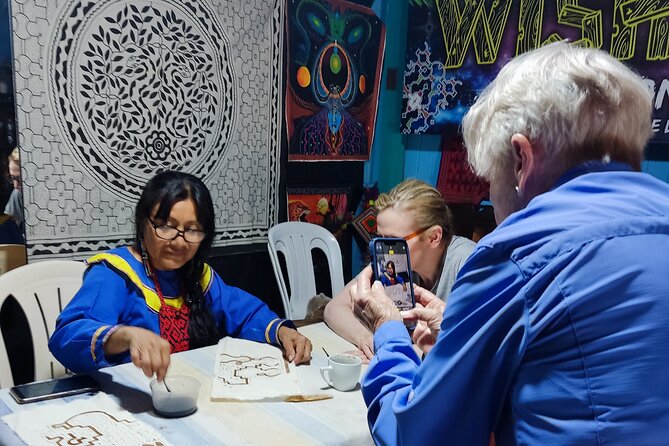
- A home workshop in the Rímac district: You meet an artisan in her own working space, not in a large commercial gallery.
- Hands-on Shipibo-Konibo art: You create your own piece using traditional tools and techniques, with help from the artisan.
- Mila adds cultural context: The guide discusses Indigenous peoples, native languages, Amazonian migration, and cultural survival in Lima.
- Small groups keep it personal: The experience accepts a maximum of eight people.
- Your purchase supports living culture: Artwork bought directly from the artisan helps create income for more than 20 women.
- Plan for a four-hour outing: The tour begins and ends at the Parroquia La Virgen Milagrosa in Miraflores.
From Miraflores to Lima’s Rímac District
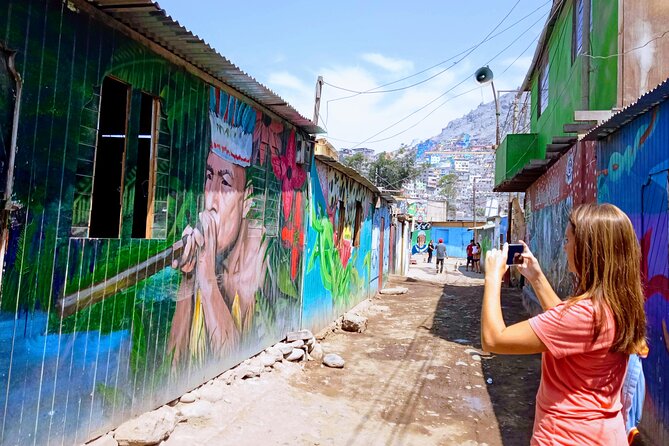
The tour begins at Parroquia La Virgen Milagrosa on Calle Lima 345 in Miraflores. From there, you spend roughly 40 minutes being transported toward the Rímac district. That ride is not dead time. Mila, the heritage interpreter guide, uses it to explain Peru’s Indigenous communities, their native languages, and the cultural traditions that continue far beyond the Amazon.
This opening gives the afternoon a useful frame. You are not simply heading to an art class. You are moving from one part of Lima to another and learning how Amazonian identity has traveled into the capital.
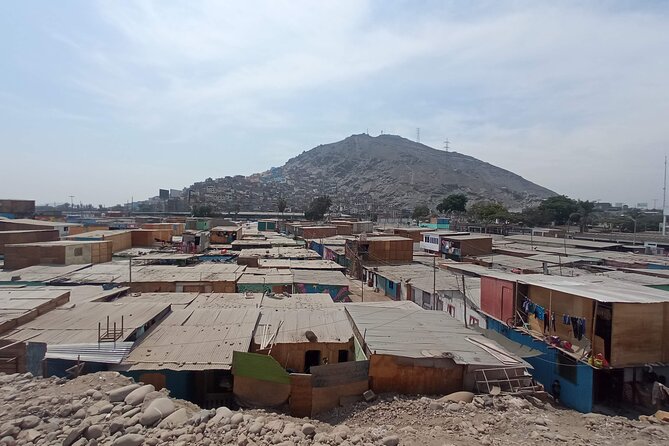
The Rímac district is one of Lima’s oldest and most traditional areas. The experience presents it as a different side of the city from the polished streets of Miraflores. That contrast matters. If you stay only in the areas built for tourism, it is easy to miss how many communities have shaped modern Lima.
The tour information identifies the itinerary stop as Lima’s Historic Center, while the workshop itself is described as being in a Shipibo neighborhood in the Rímac area. Your practical takeaway is simple: meet in Miraflores, expect a transfer, and do not confuse the starting point with the workshop location.
A few more Lima trips worth lining up side by side
- Premium Paracas & Huacachina Day Trip from Lima with Sunset Toast
★ 5.0 · 7,380 reviews - Full Day Tour From Lima: Paracas and Huacachina Oasis
★ 5.0 · 3,694 reviews - Lima Ultimate Peruvian Food Tour
★ 5.0 · 1,845 reviews
Meeting a Shipibo-Konibo Master Artisan
The heart of the afternoon is a visit to the home workshop of a Shipibo-Konibo master artisan. She opens her home and shares her personal story, along with the spiritual connection behind her art. That setting gives the visit an intimacy you will not get from a quick stop at a market stall.
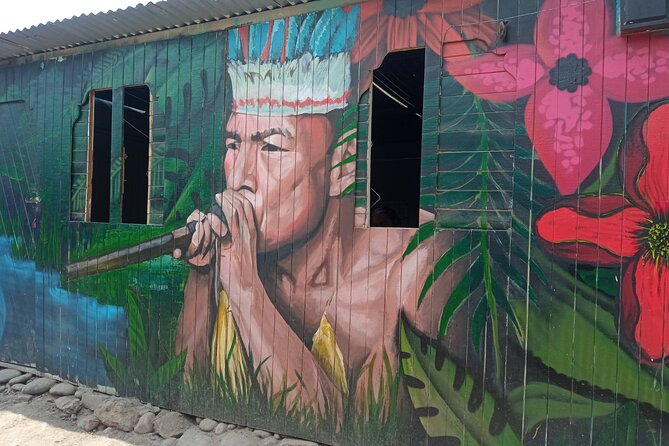
The experience also explains why Shipibo-Konibo culture is present in Lima. Amazonian communities have migrated to the capital, sometimes because they had few choices, while working to preserve language, design, spiritual ideas, and family traditions. The workshop gives you a direct way to understand that cultural resilience.
The artisan’s work is tied to older generations. One account describes techniques learned from a mother and grandmother while the family still lived in the Amazon. Natural materials from the Amazon were part of that tradition, and the artwork included symbols linked to roads, trees, plants, and animals.
That detail helps you look at the designs with more care. The patterns are not just decorative lines added to fabric or another surface. They can carry ideas about place, movement, nature, and memory.
You may meet different women connected with the wider artisan group. Names associated with past sessions include Sylvia, Kiara, Karen, and Wilma. Mila is the guide most often identified with the experience, and her warm hosting style is a major part of the visit.
Making Your Own Indigenous Artwork
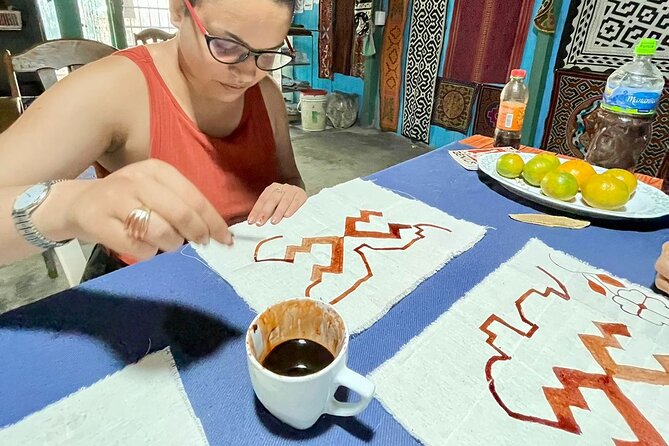
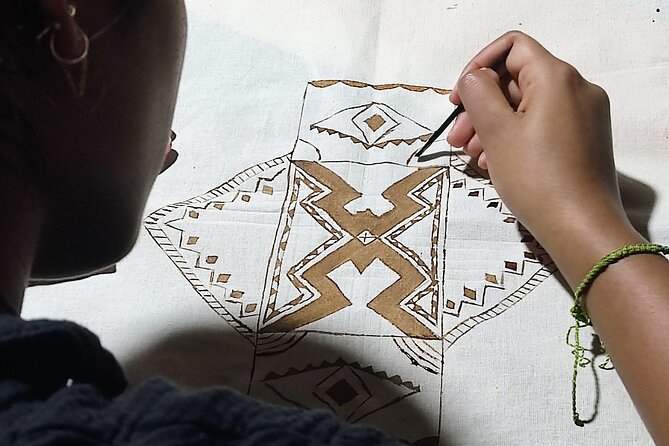
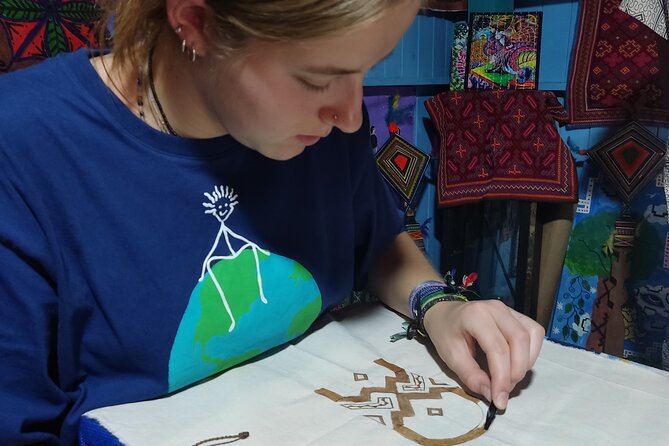
After the introduction, you sit with the artisan and begin making your own piece. The activity uses traditional tools and techniques, and the artisan guides you as you work. You are not expected to arrive with drawing skills or prior knowledge of Shipibo art.
The process includes drawing lines and filling spaces with symbols. One especially appealing detail is the description of the work as relaxing and therapeutic while still being social and enjoyable. You get time to concentrate, but you also have an artisan beside you to explain the designs and help you continue.
This is where the small group matters. With no more than eight people, the workshop has a better chance of feeling like a shared lesson rather than a production line. You can ask questions, receive individual help, and take your time with the piece.
I would think of the activity as a guided introduction, not a chance to reproduce a masterwork. The artisan’s skill will be far beyond what you can create in one afternoon. That difference is part of the point. You see how much patience and practice sit behind the finished pieces on display.
The teaching also gives the art a human face. Instead of hearing a general explanation and then shopping, you learn from the person who practices the tradition. The result is a more respectful way to buy Indigenous art because you have first heard something about its meaning and origins.
Why the Social Impact Matters
The workshop has a clear economic purpose. Direct purchases and the wider program help generate new income for more than 20 Shipibo-Konibo women artisans. That support helps preserve and share a living cultural tradition in Lima.
I would not treat this as a reason to ignore the quality or price of an artwork. You should still buy something because you like it and because the artisan can explain it. But buying directly from the maker gives your money a more visible path than purchasing an anonymous souvenir.
The experience also avoids treating Shipibo-Konibo culture as a museum display. The women are not presented only as people from the past. They are artists adapting their work and identity to life in the capital.
That is one of the strongest reasons to choose this tour. You spend time with a real artisan, learn about migration and cultural continuity, and take part in an activity that creates income. The value is cultural and personal, not just practical.
Also leaving from Lima, and nothing like the above:
- Lima Half-Day City Walking Tour (Small Groups)
★ 5.0 · 1,508 reviews - Paracas and Huacachina Exclusive Sunset Picnic Tour
★ 5.0 · 1,398 reviews - Unmissable Visit To Paracas, Huacachina And Sunset In The Oasis
★ 5.0 · 1,138 reviews - Paracas, Ballestas Islands and Huacachina Guided Tour
★ 5.0 · 1,100 reviews
What Mila Adds to the Afternoon
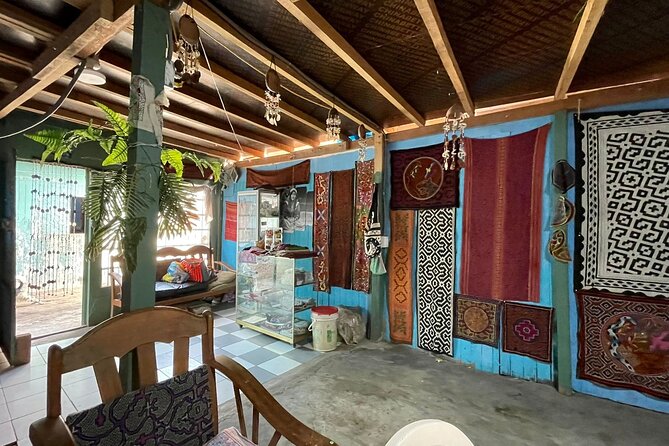
Mila’s role begins before you reach the workshop. She provides background about Indigenous Peru and helps connect the Rímac visit with the larger story of Amazonian communities in Lima.
Her hosting style also matters during the workshop. Feedback describes her as warm and friendly, and one couple enjoyed the experience enough to book two additional tours with her. That suggests Mila may be a good fit if you prefer a guide who is engaged and personable rather than distant or strictly formal.
The experience also benefits from practical local knowledge. Mila has been praised for her guidance, while Roddy is noted for useful food recommendations. That is not the central reason to book this activity, but it adds value if you want a guide who can help you think beyond the scheduled visit.
The artisan remains the main teacher, though. Mila interprets and supports the encounter, while the Shipibo-Konibo woman explains her own craft and story. That division keeps the experience grounded in the community being introduced to you.
Is $179 a Fair Price?
At $179 per person, this is not a bargain-priced craft class. You are paying for about four hours, transportation from the Miraflores meeting point, a heritage interpreter guide, a small group, and a direct encounter with an artisan.
The price makes more sense if you value personal contact and cultural learning. A quick museum visit or market stop would cost less, but it would not offer the same chance to enter a home workshop and make art under the guidance of the person who practices the tradition.
You should also consider what is included in the price of the art activity itself. You leave with your own piece, and you have the option to buy additional artwork directly from the artisan. The exact materials and finished items are not specified, so you should ask Mila or the artisan about what is included if that detail affects your budget.
For a solo visitor or couple, the cost is easiest to justify when this is one of your main cultural experiences in Lima. If you mainly want inexpensive souvenirs, the price will feel steep. If you want a small, personal encounter that supports local women artists, the value is stronger.
The full recommendation rate and five-star score point to a consistent experience, but the price still deserves a clear-eyed look. You are paying for access, teaching, transport, and social impact, not four hours of sightseeing packed with famous landmarks.
Timing, Group Size, and Practical Fit
The experience lasts approximately four hours and ends back at the Miraflores meeting point. That makes it fairly easy to fit into a day in Lima, though you should avoid placing a time-sensitive activity immediately afterward because the duration is approximate.
The group limit is eight people. That is small enough for personal instruction and conversation, while still allowing you to share the session with others.
Most people can participate, and service animals are allowed. The meeting point is near public transportation, but the tour includes transport to the Rímac workshop, so confirm the exact meeting instructions when you book.
The activity is booked, on average, 29 days in advance. That is useful planning information if your Lima schedule is fixed. It does not guarantee that every date will sell out, but booking ahead is sensible for a small-group visit with limited capacity.
Free cancellation is available if you cancel at least 24 hours before the local start time. Cancellations or changes made inside that window are not refunded or accepted.
Who Will Enjoy This Most?
I would recommend this experience to you if you like meeting local makers, learning through conversation, and taking part in a creative activity. It suits people who want to move beyond Miraflores and see a more community-focused side of Lima.
It is also a good choice for anyone interested in Indigenous cultures, women’s economic projects, Amazonian traditions, or textile and pattern work. You do not need to be artistic. The teaching and support are part of the experience.
Families and mixed-age groups may find the hands-on format appealing, though the supplied details do not specify a minimum age. If you are booking with children, ask the provider whether the activity suits their ages and attention span.
This is less suitable if you want a fast tour of major Lima sights. You will not spend the afternoon visiting a long list of monuments. The focus is one neighborhood, one cultural community, one artisan, and the time needed to make something.
You should also be comfortable entering a personal home workshop and listening with respect. The value of the visit depends on your willingness to treat the artisan’s story and creative practice as more than a photo opportunity.
Should You Book Discover Shipibo Women’s Art?
Book it if you want a thoughtful, hands-on encounter with Shipibo-Konibo culture and you are willing to pay for a small-group experience. The best parts are the home workshop, the chance to create your own artwork, Mila’s warm guidance, and the direct support for more than 20 women artisans.
Skip it if your main goal is cheap shopping, famous sights, or a tightly timed four-hour city tour. The trip away from Miraflores is part of the experience, but it may feel like a drawback if you want to stay in the central tourist areas.
For many people, this will be one of the more meaningful afternoons in Lima. You learn where the art comes from, meet someone who keeps the tradition alive, and leave with a piece that carries a personal memory rather than a generic souvenir.
FAQ
Where does the experience begin?
It begins at Parroquia La Virgen Milagrosa, Calle Lima 345, Miraflores 15074, Peru.
Where does the activity end?
The activity ends back at the same meeting point in Miraflores.
How long does the experience last?
The experience lasts approximately four hours.
How long is the transfer to the workshop?
The transport to the Rímac district takes about 40 minutes.
How many people can join the tour?
The maximum group size is eight people.
Is the workshop located in Miraflores?
No. The workshop is in a Shipibo neighborhood in the Rímac district, not in Miraflores.
Can I buy artwork from the artisan?
Yes. You have the opportunity to purchase artwork directly from the artisan at the end of the visit.
What is the cancellation policy?
You can cancel up to 24 hours before the local start time for a full refund. Cancellations or changes made less than 24 hours before the start are not refunded or accepted.
Added recently around Lima
- Yoga Classes in Miraflores, Lima★ 4.5 · 20 reviews
- Magic Water Circuit Tour★ 4.0 · 5 reviews
- Private Walking Tour Lima Heritage Downtown Half Day★ 4.5 · 12 reviews
- Wonders of Peru & Huaraz 16-Day Tour★ 5.0 · 8 reviews
- Water Magic Circuit Lima Night Tour by Panoramic Bus★ 4.5 · 11 reviews
- Visit to the Larco Museum in Lima★ 5.0 · 5 reviews
- Guided Tours in Colonial and Modern Lima★ 5.0 · 54 reviews
- Bizarre Foods Tour for Adventurous Foodies★ 5.0 · 9 reviews
Lima Tours, compared.

Premium Paracas & Huacachina Day Trip from Lima with Sunset Toast
Read our review →
Full Day Tour From Lima: Paracas and Huacachina Oasis
Read our review →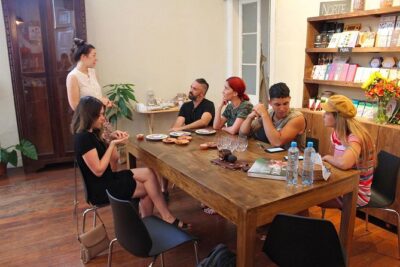
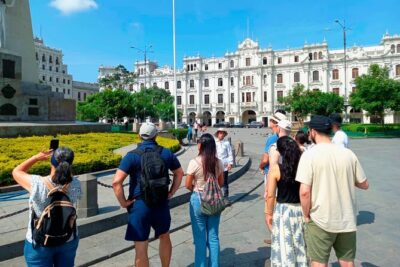
Lima Half-Day City Walking Tour (Small Groups)
Read our review →Paracas and Huacachina Exclusive Sunset Picnic Tour
Read our review →
Unmissable Visit To Paracas, Huacachina And Sunset In The Oasis
Read our review →
Paracas, Ballestas Islands and Huacachina Guided Tour
Read our review →