
Reviewed · MACHU PICCHU TOURS
10-Day Discover Peru: Lima, Arequipa, Puno, Cusco & Machu Picchu
Peru packs a lot into ten days. This route connects Lima’s colonial center, Arequipa’s white-stone streets, Colca Canyon, Lake Titicaca, Cusco, the Sacred Valley, and Machu Picchu without making you arrange each transfer yourself. I especially like the small maximum group of 15 and the mix of famous sights with living Andean communities. The second big plus is the range of included stops, from the Larco Museum to Taquile Island and the church at Andahuaylillas.
The main consideration is the pace. You cross long stretches of high country, reach elevations close to 4,900 meters, and spend several days moving between hotels. The tour is well suited to someone who wants a broad first look at Peru, but it leaves little spare time for resting or making your own discoveries.
The tour costs $1,577 per person and includes nine hotel nights, breakfasts, six lunches, admission tickets, transfers, and bilingual English-Spanish guides. A 4.8 rating from 299 ratings and a 96 percent recommendation rate point to a strong overall package. Still, guide English can vary, and some departures may operate with a mixed English and Spanish group.
In This Review
- Key points to know before booking
- Lima opens the trip with Peru’s colonial and ancient sides
- Arequipa brings colonial charm and volcano views
- Colca Canyon means an early start and serious altitude
- Lake Titicaca combines living culture with open water
- The road to Cusco turns transportation into sightseeing
- Cusco brings together Inca engineering and Spanish colonial art
- The Sacred Valley makes room for craft, farming, and ruins
- Machu Picchu is the grand payoff, with one important caveat
- What the $1,577 price really covers
- Who should choose this Peru itinerary?
- Final verdict: a strong first look at Peru
- FAQ
- How long is the Peru tour?
- Which places does the tour visit?
- Are flights included in the tour price?
- What type of train is used for Machu Picchu?
- Which Machu Picchu circuit will I receive?
- What is the maximum group size?
Key points to know before booking
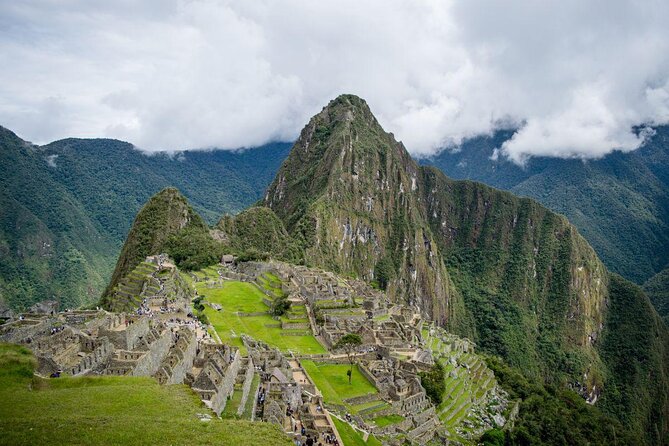
- Four major regions in ten days: You see Lima, southern Peru, the Altiplano, Cusco, the Sacred Valley, and Machu Picchu in one organized trip.
- High-altitude route: Patapampa reaches 4,900 meters, La Raya reaches 4,335 meters, and Cusco itself is also high, so the schedule deserves respect.
- Machu Picchu circuit matters: Route 2 receives priority, but Circuit 3B or Circuit 1B may be offered if Route 2 is unavailable.
- Shared touring with a small cap: Tours are shared and bilingual, with no more than 15 people. Some sections may feel almost private during quieter periods.
- Accommodation choices are available: You select from different hotel classes, helping you match comfort and budget to your plans.
- Excellent coverage for the price: Flights are not included, but nearly all ground touring, hotel nights, breakfasts, lunches, entrance fees, and the Machu Picchu train are covered.
Lima opens the trip with Peru’s colonial and ancient sides
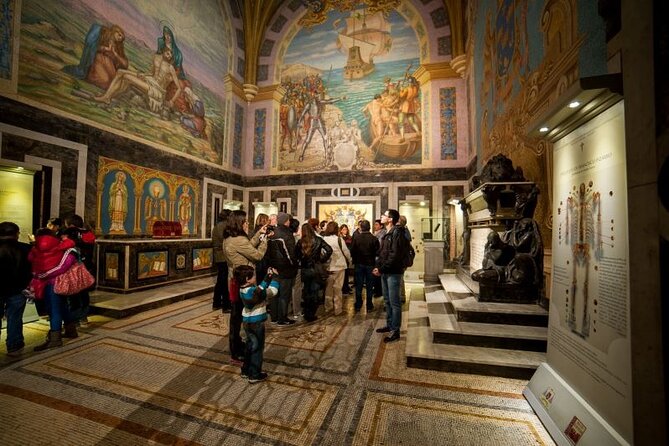
The first day gives you a useful introduction to Peru’s past. In Lima’s UNESCO-listed Historical Center, you visit the Convent of Santo Domingo, a religious complex tied to the early colonial period and to the Universidad Mayor de San Marcos.
Inside, look for the country’s oldest choir stalls and a library holding rare 15th-century books. The convent also contains the remains of notable saints. This is not simply a quick church visit. The building helps explain how religious institutions shaped colonial Lima and education in Peru.
From there, you walk through Plaza Mayor. The Government Palace, Municipality, and Cathedral frame the square, and the Cathedral contains colonial artwork. This section is best taken slowly, since the value comes from seeing how civic, religious, and political power were gathered around one plaza.
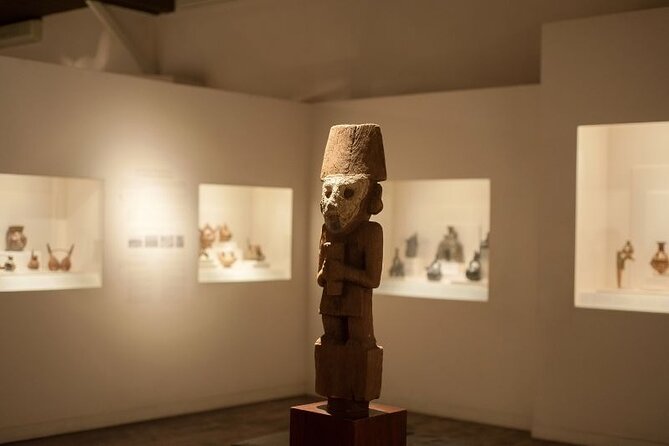
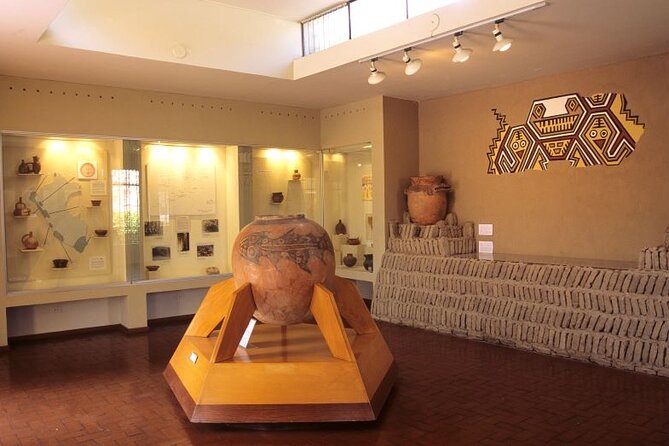
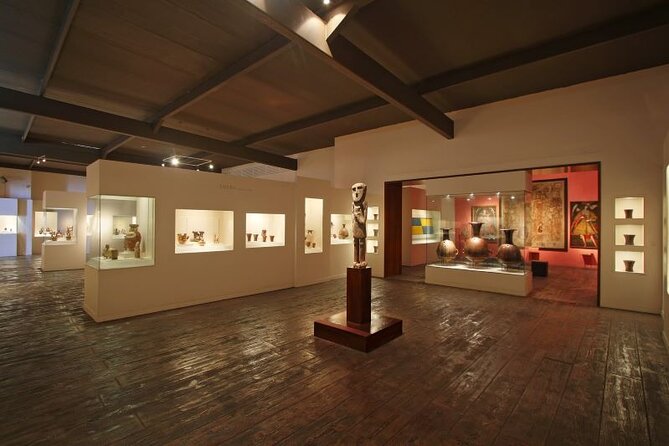
The day finishes at the Larco Museum, one of the strongest museum stops on the route. Its collection covers ancient Peruvian cultures through gold objects, textiles, and ceramics. The unusual bonus is access to the museum warehouse, where you can see a large number of additional pieces arranged for study and viewing.
The Larco visit gives the tour needed context before you reach the Inca sites later. You will see that Peru’s story did not begin with the Incas, and the museum helps put later ruins into a much longer timeline.
More Machu Picchu Tours in Lima
- 7-Day New Dawn in Machu Picchu: Lima, Cusco & Sacred Valley
★ 5.0 · 220 reviews - 7-Day Lima and Cusco Tour with Sunrise at Machu Picchu
★ 4.5 · 218 reviews - 6-Day Peru, Connect your Energies: Lima, Cusco & Machu Picchu
★ 5.0 · 138 reviews
Arequipa brings colonial charm and volcano views
Day two shifts to Arequipa, beginning in the San Lázaro neighborhood where the city was founded. The area’s colonial streets offer a more intimate start than a large central plaza, and they help you see how the city developed around older neighborhoods.
At the Carmen Alto viewpoint, you look across agricultural terraces toward Misti, Chachani, and Picchu-Picchu volcanoes. These views are one of the reasons Arequipa feels different from Lima. The city is closely tied to open countryside and volcanic peaks.
The Yanahuara district follows, with its Andalusian-style church and arched viewpoint. The arches create one of the classic views of Arequipa, especially with Misti in the distance. Keep your camera ready, but also listen to the guide’s explanation of the city’s architecture and setting.
The highlight for many people will be Santa Catalina Monastery. Its narrow lanes, courtyards, and gardens feel almost like a small walled town. The Spanish influence is clear, with spaces that recall Sevilla or Granada, but the setting and volcanic stone give the place a distinct Arequipa character.
You then visit Plaza de Armas, the Cathedral, and the Iglesia de la Compañía de Jesús. The church’s cloisters and Dome of San Ignacio are especially worthwhile for their decorative work. The afternoon contains several stops, so the day can feel full, but the sights are close enough in character to create a coherent picture of the city.
Colca Canyon means an early start and serious altitude
The route from Arequipa to the Colca Valley follows the so-called volcano route. You pass near Chachani and see Misti and Picchu volcanoes before reaching Pampa Cañahuas, a protected high-altitude area where vicuñas live.
The highest point is Patapampa at about 4,900 meters. From there, you can see the active Sabancaya volcano. This is a major scenic moment, but the altitude is not a minor detail. You may feel the thin air even if you are generally fit, so take the day at a calm pace and use the free time at the hotel to rest.
After descending into the Colca Valley, you have lunch at the hotel and time to relax or use the thermal waters in the area. That pause is welcome after the high pass and long drive. The tour does not turn the Colca visit into a strenuous hike, which makes it more approachable for people who want the scenery without a demanding trek.
Day four starts at dawn for the Cruz del Cóndor viewpoint. The timing is designed for watching Andean condors in flight, with the canyon below. Colca is known as one of the world’s deepest canyons, and the viewpoint helps you understand its scale better than a passing roadside stop would.
You also visit Maca and Yanque, two towns with colonial churches. After lunch, the bus ride to Puno takes about six and a half hours. That is one of the toughest transit stretches on the tour. The reward is a changing view of the highlands, but you should expect a long day rather than a relaxed transfer.
Lake Titicaca combines living culture with open water
Puno is your base for Lake Titicaca, and day five is spent on a motorboat visiting the Uros and Taquile Island.
The Uros communities build and maintain floating islands using traditional techniques. The visit focuses on how the islands are made and how the community has adapted life on the lake around its visitors. You should approach this stop with curiosity and respect. It is a working community, and the people earn money from welcoming visitors and sharing their methods.
The boat continues to Taquile Island, where Quechua traditions remain strong in a region that is mainly Aymara. Clothing, music, dancing, and daily life are all part of the visit. Lunch is served at a community restaurant and is described as simple but nourishing.
A walk around the island gives you broad views over Lake Titicaca. The schedule is active, but the lake itself provides a slower rhythm after the long road journey from Colca. This day is valuable because it is not only about ruins and museums. You see communities maintaining their own customs and making a living in a demanding setting.
Other ways to reach Machu Picchu:
- 8-Day Peru Empire of the Senses Lima Cusco and Machu Picchu
★ 5.0 · 130 reviews - Classic Inca Trail Trek 4D/3N to Machu Picchu (Group Service)
★ 5.0 · 8,653 reviews - Machu Picchu: 4-Day Inca Trail Trek with Panoramic Train Ride
★ 5.0 · 4,568 reviews - Short Inca Trail to Machu Picchu 2D/1N
★ 5.0 · 3,007 reviews
The road to Cusco turns transportation into sightseeing
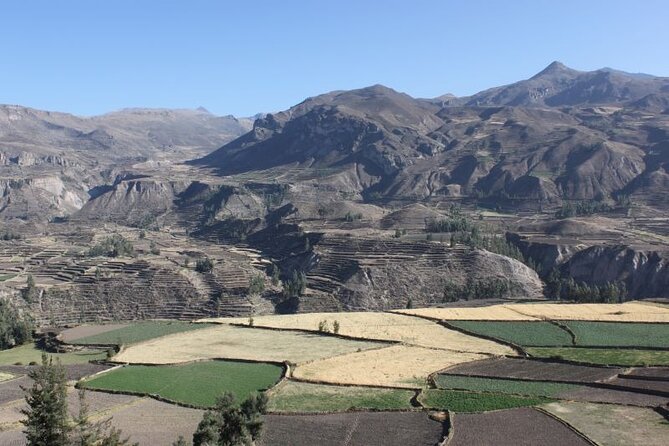
Day six is a full overland journey from Puno to Cusco, with several worthwhile stops.
At the Museo de Lítico de Pucará, you see monoliths and animal-shaped sculptures linked to the Pucará culture. The colorful toritos de Pucará are especially distinctive. They symbolize protection and fertility and are now familiar throughout Peru.
La Raya, at 4,335 meters, marks the watershed between the Lake Titicaca basin and the Amazon basin. This is another high point, so the day continues the altitude challenge. It is also a clear geographic lesson: you are crossing from one major drainage system to another.
After lunch, the route reaches Racchi and the remains of the temple dedicated to Wiracocha. The enormous site gives you a sense of the scale of religious architecture in the Inca world.
The final stop is Andahuaylillas and its church of San Pedro Apóstol. Its elaborate ceiling and wall paintings have earned it the nickname Sistine Chapel of America. The church is a compact but powerful stop, especially after the large open ruins at Racchi.
You finally reach Cusco and transfer to your hotel. Since the day includes many hours on the road, I would treat the stops as the main attraction rather than seeing the transfer as dead time.
Cusco brings together Inca engineering and Spanish colonial art
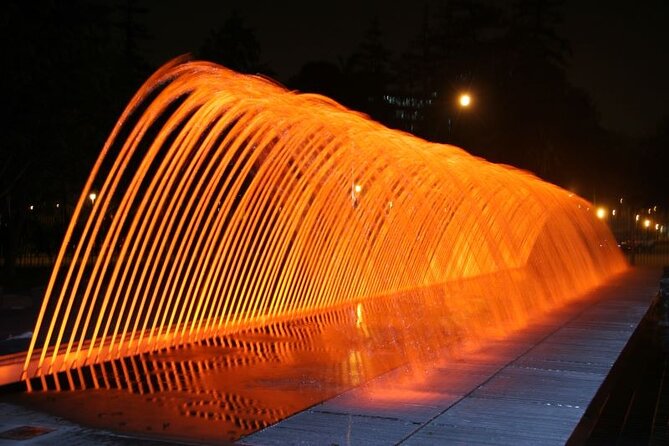
Day seven begins outside the city at Sacsayhuaman. The massive stonework and careful placement on the hills make this one of the most impressive Inca sites in the area. The scale is easier to appreciate from a distance, so take time to look at how the structures fit the surrounding slopes.
Q’enqo follows, with an altar carved into the rock and linked to sacrificial rituals. At Puca Pucará, you see a lookout or fortified site, while Tambomachay offers water features connected to Andean beliefs.
The afternoon returns to central Cusco. From San Cristóbal Square, you get a broad city view before heading to San Pedro Market. The market is a good place to see local produce and everyday products, though the stop is more about local life than polished sightseeing.
Qorikancha, once covered in gold, shows how an Inca religious center was later incorporated into colonial Cusco. That collision of Inca foundations and Spanish architecture is one of the city’s defining themes.
In San Blas, you visit an artisans’ neighborhood, then walk along Hatun Rumiyoc Street to see the Inca Roca Palace and the famous Twelve Angled Stone. The precisely cut stonework is easy to admire, even in a busy street.
The day ends at Plaza de Armas and the Cathedral, known for its colonial artwork. With Sacsayhuaman and the city center in one day, the schedule is packed. Still, it gives you a solid first orientation before the Sacred Valley and Machu Picchu.
The Sacred Valley makes room for craft, farming, and ruins
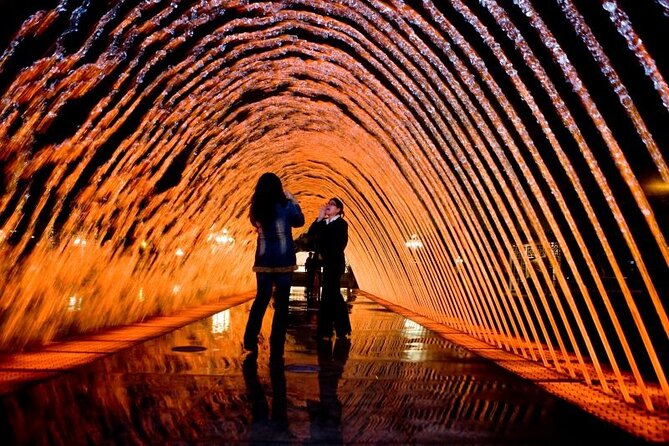
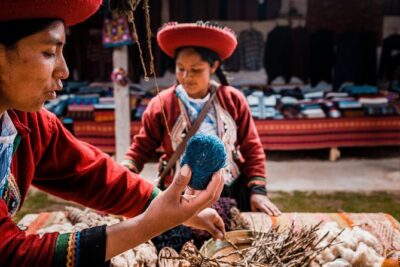
Day eight begins at Chinchero, a colorful village known for its weaving women. At a textile center, you see older methods for spinning and dyeing alpaca wool. This stop has real value when the demonstration explains how natural colors and traditional techniques are used rather than treating the visit as a simple shopping break.
The Inca plaza and colonial church show another familiar Peruvian pattern: precolonial foundations followed by Spanish religious buildings. The pairing helps you see how cultures were layered rather than simply replaced.
Moray is one of the route’s most unusual archaeological sites. Its concentric terraces are thought to have served as an agricultural laboratory, creating different microclimates at various levels. The circular form makes it instantly recognizable, but the practical purpose is what makes the stop memorable.
After lunch, you reach Ollantaytambo, described as the last living village of the Incas. You visit the Temple of the Ten Windows, the Bath of the Princess, and the Sun Temple. The views from above the village are among the best photographic moments in the Sacred Valley.
You stay in the area that night, which is a smart part of the schedule. It places you closer to the Ollantaytambo train station for the next morning rather than sending you back to Cusco before Machu Picchu.
Machu Picchu is the grand payoff, with one important caveat
On day nine, you board the selected train from Ollantaytambo to Machu Picchu. The train may be the Expedition or Vistadome service, depending on availability. After reaching Machu Picchu station, staff assist you with the bus up the winding road beside the Urubamba River canyon.
At the site, you see terraces, staircases, ceremonial areas, and urban sections spread across the mountains. The tour includes a guided visit and lunch, followed by the return train and transfer to your Cusco hotel.
Machu Picchu admission now uses assigned visitor circuits. Route 2 receives priority, but if it is unavailable, you may be offered Circuit 3B or Circuit 1B before the ticket is issued. This matters because the route determines which parts of the site you see and how the visit flows.
The ticket is nonrefundable, and the date cannot be changed after issue. If your plans shift, a new ticket is required. I would check your travel dates carefully before confirming this part of the booking.
Returning to Cusco the same day makes for a long finale. It is efficient and avoids another hotel move, but you will not have much time for a quiet evening in the Machu Picchu area.
What the $1,577 price really covers
At $1,577 per person, the value depends on how much independent planning you want to avoid. The package covers nine nights, daily breakfast, six lunches, admission fees, airport and hotel transfers, the major guided excursions, and the train to Machu Picchu.
International and domestic flights are not included, and drinks are extra. You must arrange the flight into Lima and the domestic flight from Cusco to Lima for your return connection.
The coverage is strongest for a first visit. You are paying for a connected route through several regions where buses, trains, entrance tickets, and hotel transfers can otherwise become a full-time job. Different accommodation classes also let you choose the comfort level that fits your budget.
The tradeoff is flexibility. Shared tours mean you follow the group schedule, and the bilingual format may give English varying amounts of attention. One rating specifically described the communication as prompt and said the later Cusco and Machu Picchu portion felt almost private with only two people, especially in a quieter period. That is a pleasant possibility, but it should not be treated as guaranteed.
Who should choose this Peru itinerary?
I would recommend it if you want to see Peru’s major highlights in one trip and prefer a guide to handle the complicated connections. It suits first-time visitors who value museums, archaeology, living traditions, and a clear day-by-day structure.
It is also a good fit if you enjoy variety. In one trip, you move from colonial churches and gold artifacts to volcanoes, vicuñas, lake communities, Inca terraces, and Machu Picchu.
I would hesitate if you need slow mornings, several free days, or lots of time in each city. The Colca to Puno bus takes about six and a half hours, the Puno to Cusco route is a full sightseeing transfer, and the Machu Picchu day lasts about 12 hours.
Altitude is the other serious consideration. Patapampa reaches 4,900 meters and La Raya reaches 4,335 meters. Most people can participate according to the tour information, but you should be prepared for a high-altitude route and a schedule that does not always allow long recovery periods.
Final verdict: a strong first look at Peru
I would book this tour if my goal were to cover Peru’s essential sights without organizing every hotel, transfer, guide, and ticket myself. The route is ambitious, but it is thoughtfully connected, and the included admissions and meals make the price easier to justify.
The strongest parts are the Larco Museum, Santa Catalina Monastery, Colca Canyon, Taquile Island, the Sacred Valley, and Machu Picchu. The weakest part is the amount of time spent moving between destinations, especially on the road to Puno and Cusco.
Choose it for breadth, structure, and convenience. Skip it only if you want a slower, more independent trip. Free cancellation is available up to 24 hours before the start time, but the Machu Picchu ticket itself cannot be refunded or changed once issued.
FAQ
How long is the Peru tour?
The experience lasts approximately 10 days and includes 9 nights of accommodation.
Which places does the tour visit?
The route includes Lima, Arequipa, the Colca Valley, Puno, Lake Titicaca, Cusco, the Sacred Valley, and Machu Picchu.
Are flights included in the tour price?
No. International and domestic flights are not included. The final day includes a transfer to the airport in Cusco for a flight to Lima, where you connect with your return flight home.
What type of train is used for Machu Picchu?
The tour includes an Expedition or Vistadome train ticket, depending on availability.
Which Machu Picchu circuit will I receive?
Circuit 2 is given priority. If it is unavailable, Circuit 3B or Circuit 1B may be offered for your confirmation before the ticket is issued.
What is the maximum group size?
The tour has a maximum of 15 travelers, with shared tours led by English-Spanish bilingual guides.
Added recently around Lima
- Tour to the sanctuary of Pachacamac★ 4.8 · 8 reviews
- Tour to the magical water circuit with dinner and dance show★ 5.0 · 4 reviews
- Tour of Lima with a visit to the catacombs of San Francisco.★ 4.2 · 24 reviews
- Tour Huaca Pucllana: Pyramids and Pre-Columbian Antiquity★ 4.3 · 12 reviews
- Lima: Palomino Islands Speedboat Tour & Swim with Sea Lions★ 4.8 · 33 reviews
- Surfing experience in Lima★ 5.0 · 6 reviews
- Sandbording in Lima★ 5.0 · 12 reviews
- Pro Sanboarding or skiing in Huacachina from Lima – Day trip★ 4.6 · 8 reviews
Machu Picchu Tours, compared.
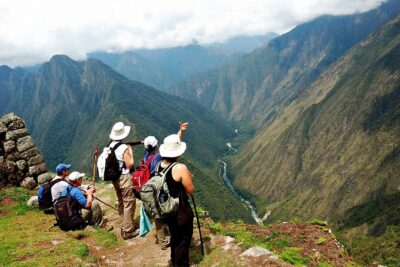
Classic Inca Trail Trek 4D/3N to Machu Picchu (Group Service)
Read our review →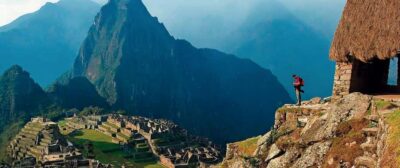
Machu Picchu: 4-Day Inca Trail Trek with Panoramic Train Ride
Read our review →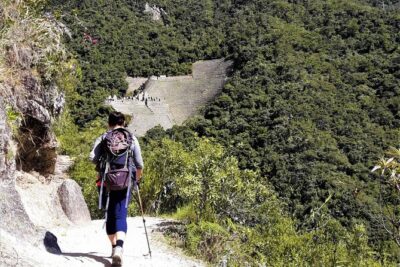
2-Day Inca Trail to Machu Picchu with Panoramic Train
Read our review →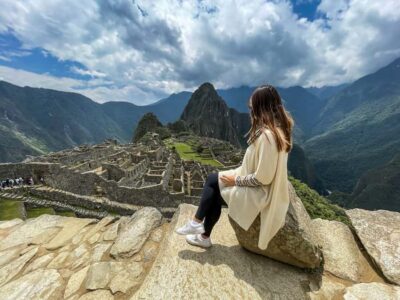
2-Day Tour: Sacred Valley and Machu Picchu by Train
Read our review →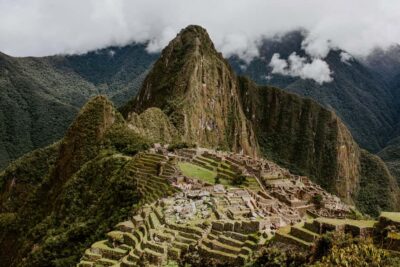
Machu Picchu: Full-Day Tour from Cusco with Optional Lunch
Read our review →Browse the lists this tour appears in