
Reviewed · MACHU PICCHU TOURS
4-Day Inca Trail Tours to Machu Picchu
Machu Picchu is worth earning on foot. This four-day trek from Cusco follows the classic Inca Trail through high mountain passes, stone ruins, cloud forest, and the Sun Gate before reaching Machu Picchu. I like the small-group service and the fact that the price includes permits, camping, meals, porters, and the return train. I also like that the guides make room for cultural explanation, not just marching orders.
The main catch is the physical demand. Day two reaches about 4,200 meters at Dead Woman’s Pass, and the early start, cold nights, steep climbs, and basic camping will test you. At $825 per person, this is a fair package for what is included, but the nonrefundable booking rule and extra costs for a sleeping bag, hiking poles, shuttle bus, tips, and personal porter deserve attention.
In This Review
- The most important details at a glance
- What the $825 price really covers
- Day one: Km 82 to Wayllabamba
- Day two: the 4,200-meter test
- Day three: ruins, stone paths, and changing scenery
- Day four: entering Machu Picchu through the Sun Gate
- Camping, food, and the porter system
- Fitness, altitude, and who should book
- Booking timing and the nonrefundable rule
- Should you choose this four-day trek?
- FAQ
- How long does the Inca Trail tour last?
- What time does the tour start?
- Is the Inca Trail permit included?
- Are meals included?
- Is a sleeping bag included?
- What age and fitness level are required?
The most important details at a glance
- Dead Woman’s Pass reaches about 4,200 meters: Day two is the hardest stretch, with a steep climb and a long descent to Pacaymayo.
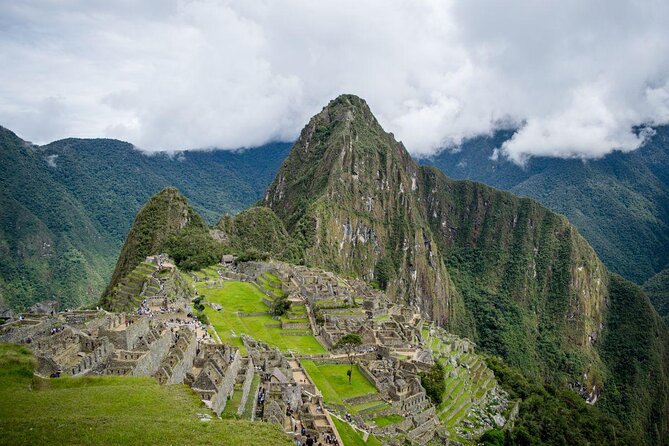
- The final approach uses the Sun Gate: You walk through the forest to Inti Punku, where Machu Picchu first comes into view from above.
- Three nights are spent camping: Personal double tents, an air roll mattress, dining equipment, tables, chairs, and toilet tents are supplied.
- Meals are a real strength: Breakfast, lunch, dinner, and afternoon hot drinks are included for the three trekking days.
- Porters carry the shared equipment: Food, tents, cooking gear, and camp supplies are covered, while a personal porter for up to 7 kilograms costs extra.
- The $825 price includes the major permits and transport: That includes the Inca Trail permit, Machu Picchu ticket, tourist train to Ollantaytambo, and onward bus to Cusco.
What the $825 price really covers
The price makes more sense once you look beyond the headline number. This is not simply a guided walk with a campsite at the end. The package includes the Inca Trail permits, Machu Picchu entry, a bilingual guide, trekking chef, porters, three nights of camping, meals, cooking equipment, water after the first four hours, and transport back toward Cusco.
That bundle removes several expensive and awkward tasks. You do not need to arrange the trail permit, secure the Machu Picchu ticket separately, hire a cook, organize camping gear for the group, or puzzle out the train and onward bus after the citadel visit.
The transport is practical rather than luxurious. A vehicle picks you up in Cusco, brings you through Chincheros, Urubamba, and Ollantaytambo to Km 82, and later a tourist train takes you from Aguas Calientes to Ollantaytambo. A representative then meets you for the tourist bus to Cusco.
You still need a budget for breakfast on the first morning, lunch in Aguas Calientes on the final day, the shuttle bus down from Machu Picchu, travel insurance, tips, a sleeping bag, hiking poles, and possibly a personal porter. Those extras do not ruin the value, but they mean the advertised price is not your final spending figure.
Other Inca Trail departures:
- Classic Inca Trail Trek 4D/3N to Machu Picchu (Group Service)
★ 5.0 · 8,653 reviews - Machu Picchu: 4-Day Inca Trail Trek with Panoramic Train Ride
★ 5.0 · 4,568 reviews - Short Inca Trail to Machu Picchu 2D/1N
★ 5.0 · 3,007 reviews
Day one: Km 82 to Wayllabamba
The day begins at about 4:30 a.m., so plan for a very early pickup from your hotel. The drive passes through several important towns before reaching Chilca and Km 82, the usual starting point for this section of the Inca Trail.
At the trail control point, you show the documents required for entry. This pause also gives the guide time to explain the route and offer practical advice before you begin. You should bring your passport and keep it accessible, since trail and Machu Picchu controls depend on the permit information.
Breakfast is not included on day one, so eat before pickup or bring food with you. The group stops for roughly an hour and a half for lunch, then begins walking toward Wayllabamba, the first camp.
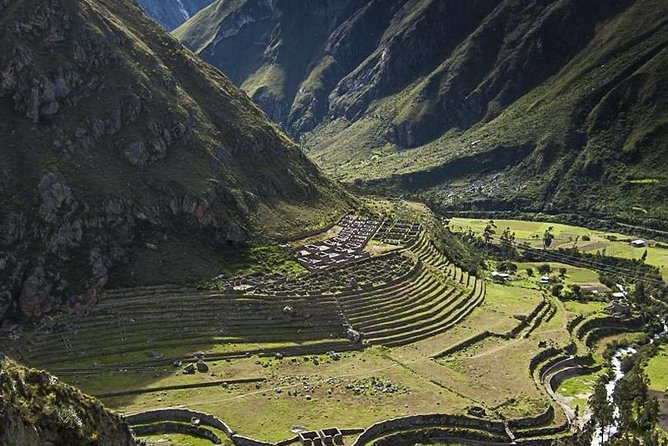
The first guided archaeological visit is Llactapata. This gives you an early reminder that the trail is not only a fitness challenge. Stone remains appear alongside the walking route, and the guide can explain their place in the wider Inca network.
The first day is a useful test of your pace and equipment. You are not yet facing the highest pass, but you are carrying your daypack and adjusting to altitude, uneven ground, and the rhythm of camp life. Shared equipment is carried by porters, including food, tents, cooking supplies, and dining gear.
The personal tents are described as four-person tents used for two people, which gives you more room than a tightly packed two-person shelter. An air roll mattress is also supplied. That is helpful after a long walk, although you still need a sleeping bag, which is not included.
Day two: the 4,200-meter test
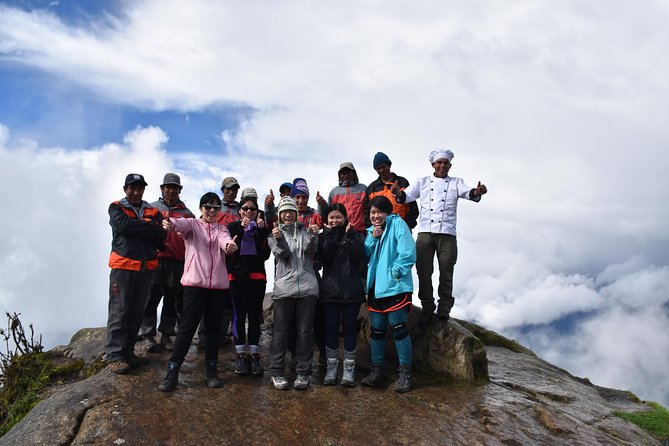
Day two is the serious test. After breakfast, the route climbs steeply for about three hours toward Warmiwañusca, better known as Dead Woman’s Pass, at approximately 4,200 meters above sea level.
The pass is the high point of the trek, and reaching it brings a clear sense of achievement. The views across the surrounding mountains are a major reward, but the altitude can make every step feel slow. If you come from sea level, take the warning seriously. One past participant described the route as physically demanding after living at sea level, while praising the guide for setting a patient pace.
This is where a good guide matters. A guide such as Auriol has been praised for patience, clear explanations, and a willingness not to rush people. That kind of support is more useful than a fast pace when the air gets thin.
After a rest at the pass, you descend to Pacaymayo for lunch, camp, and dinner. The descent may feel easier on your lungs, but it can be hard on your knees, especially after the climb. Trekking poles are not included, so bring your own or arrange them before departure.
Altitude sickness is a real concern. The tour advises you to bring any required medicine and speak with your doctor before the trek if you have a history of altitude problems. The guide carries a first-aid kit and an emergency oxygen bottle, but those supplies are a safety measure, not a substitute for preparation.
Day three: ruins, stone paths, and changing scenery
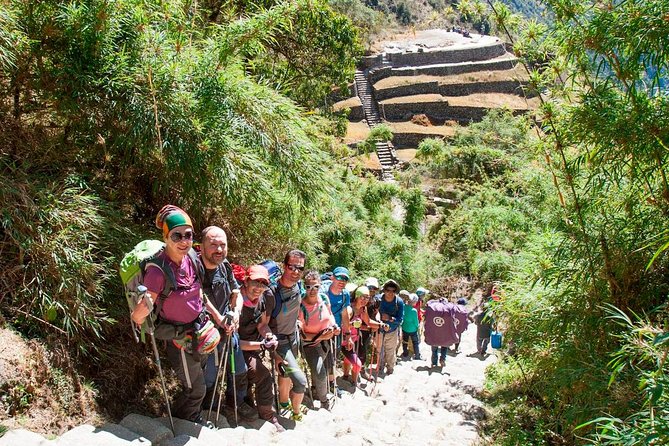
Day three starts with breakfast and another substantial climb, reaching the second-highest point at about 3,800 meters. Compared with Dead Woman’s Pass, this day offers more variety and a stronger sense of the old route as an engineered road through difficult terrain.
The first major archaeological stop is Runkuraqay. The remains are smaller than Machu Picchu, but that is part of their appeal. You can pause, look closely at the stonework, and hear the guide explain how the site fits into the Inca route.
The trail continues to Sayacmarca, where you stop for lunch. From here, the setting changes noticeably. The dry, mountainous feel gives way to greener, more tropical surroundings. The physical effort remains, but the scenery keeps shifting, which helps break up a long day.
Phuyupatamarca, or the village in the clouds, is another important ruin along the route. The name captures the setting, with the site appearing high above the surrounding valleys. After a shorter walk, you reach Wiñayhuayna, the final campsite.
This can be one of the most rewarding days for anyone who enjoys archaeology. You see several sites in one stretch, yet you are also moving through changing plant life and terrain. The tradeoff is a long day with repeated climbs and descents, so do not assume that day three is easy just because it is not the highest day.
Dinner is served at the final camp, and the next morning begins early. Past feedback has praised the cooking in unusually strong terms, with one meal described as close to restaurant quality and even a cake served during a four-course dinner. That is a welcome surprise when your evening normally consists of organizing damp socks and trying to sleep.
A trekking chef named Agapito has been especially praised for producing varied meals with limited resources. Vegetarian meals are available, but you need to state that when booking.
Other ways to reach Machu Picchu:
- 2-Day Inca Trail to Machu Picchu with Panoramic Train
★ 5.0 · 1,876 reviews - From Cusco: Full-Day Group Tour of Machu Picchu
★ 4.7 · 1,767 reviews - Machu Picchu Day Trip from Cusco
★ 4.5 · 1,644 reviews - 2-Day Tour: Sacred Valley and Machu Picchu by Train
★ 5.0 · 1,127 reviews
Day four: entering Machu Picchu through the Sun Gate
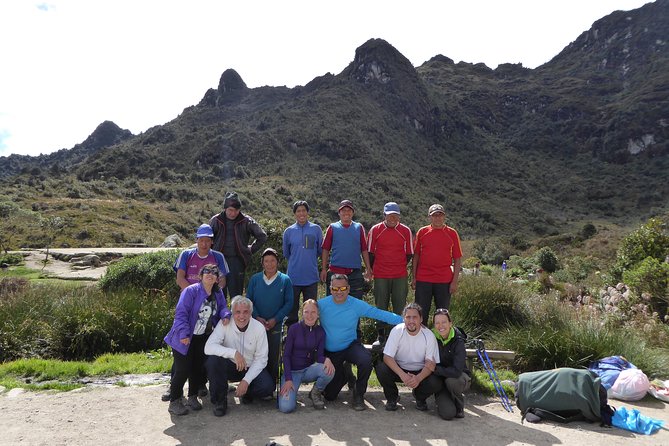
After breakfast, you walk for about an hour through the forest to Inti Punku, the Sun Gate. This is one of the defining moments of the trek. Rather than arriving at Machu Picchu by bus and joining the citadel from below, you approach on foot and see the site from the historic trail entrance.
The view from the Sun Gate depends on conditions, but the arrival itself gives the final day a strong sense of purpose. You have spent three days climbing, camping, and crossing ruins, and now the citadel comes into view as the destination rather than a separate sightseeing stop.
Inside Machu Picchu, the guided visit covers the Main Square, Circular Tower, Sacred Solar Clock, royal quarters, Temple of the Three Windows, and cemeteries. A guide adds value here because the stone structures can look confusing without context. The visit is listed as about two hours.
You will need to plan for the final meal. Lunch in Aguas Calientes is not included, and the shuttle bus from Machu Picchu down to town is also extra. You may walk down instead, but that option is not included as a stated part of the package, so confirm the arrangements with the operator.
Later, you board the tourist train from Aguas Calientes to Ollantaytambo. From there, a representative takes you by tourist bus to Cusco. It is a full day, but the transport removes the need to arrange a separate return journey after a demanding trek.
Camping, food, and the porter system
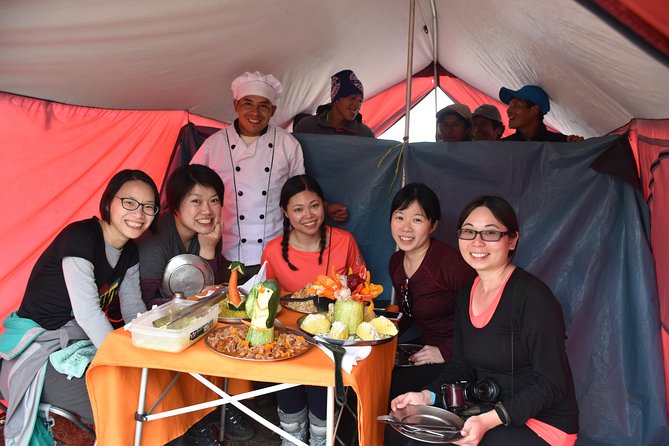
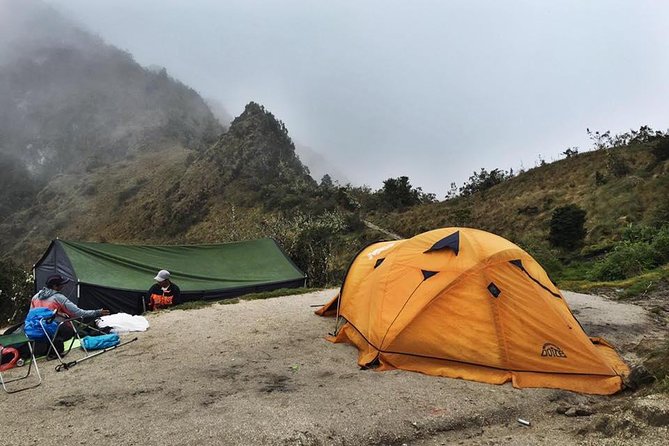
Camping on the Inca Trail is part of the experience, but you should know what comfort level to expect. The operator provides tents, mattresses, a cooking tent, dining tent, toilet tent, tables, chairs, cooking equipment, and bottled gas.
The personal double tents are four-person tents used to give two people more space. That is a thoughtful setup for a four-day trek. Still, this is mountain camping, not a lodge. Your sleeping bag is not included, and nights can feel cold, so arrange one before departure.
Food is one of the strongest parts of the package. You receive three breakfasts, three lunches, three dinners, and three afternoon hot drinks. Water is supplied each day after the first four hours of walking, so start day one with enough water for that opening stretch.
Porters carry the shared camping and cooking equipment. You can pay for an extra porter to carry up to 7 kilograms of your personal belongings, but that service is not included. Pack lightly even if you use one. A manageable daypack should hold your water, rain protection, snacks, camera, documents, and anything you need during the day.
The team structure also adds a human element. Guides including Julio have been praised for sharing Inca culture and explaining medicinal plants, while also keeping the mood light. That combination matters on a hard route. You need practical help, but you also want someone who can turn a difficult climb into a memorable day.
Fitness, altitude, and who should book
The tour lists a moderate physical fitness level, but I would treat that as the minimum rather than a promise of ease. Day two has a steep ascent to 4,200 meters, followed by a descent. Days three and four continue with long walking periods, uneven paths, and archaeological stops reached by foot.
You should be comfortable walking for several hours at altitude and managing your own daypack. If altitude sickness is a concern, consult your doctor before the tour and bring any medicine you need. The emergency oxygen bottle and first-aid kit are useful safeguards, but they do not eliminate the risks of high altitude.
The minimum age is 12. A 14-year-old and parent have completed the trek successfully, but age alone does not determine readiness. A young person should be prepared for steep climbs, early starts, camping, and several demanding days in a row.
This experience suits you if you want the classic Inca Trail, prefer a guided route, and value having meals, permits, porters, and transport arranged. It is less suitable if you dislike camping, need a flexible cancellation policy, or want a relaxed visit to Machu Picchu with minimal exertion.
The tour is described as a small-group experience and also as a private activity for your own group. Because those descriptions can mean different things, ask Tierras Vivas exactly how your departure will operate before paying.
Booking timing and the nonrefundable rule
The Inca Trail has a daily permit limit, and the information provided recommends booking weeks or months ahead. July and August allow an additional 200 people, but those popular months can still fill quickly.
Confirmation is sent within 48 hours of booking, subject to availability. Do not book flights or other fixed plans around this trek until your permit and departure are confirmed.
The cancellation policy is strict. The experience is nonrefundable and cannot be changed for any reason. That makes travel insurance especially important, since illness, altitude problems, or a change in plans could otherwise mean losing the full payment.
Should you choose this four-day trek?
I would choose this trip if your main goal is to reach Machu Picchu by the classic trail rather than simply visit the citadel. The route gives you archaeological sites, high mountain views, changing scenery, and the memorable arrival through the Sun Gate. The included staff, meals, permits, camping equipment, and return transport make $825 a sensible price for a tightly organized trek.
I would hesitate if you have little experience with strenuous walking at altitude or if you need a soft itinerary. The route is demanding, the start time is 4:30 a.m., and several important costs remain outside the package.
For the best chance of enjoying it, book early, prepare for the altitude, arrange your sleeping bag and poles, bring breakfast for the first morning, and keep your first-day water needs in mind. If you are ready for the effort, Tierras Vivas offers the kind of support that lets you focus on the trail, the ruins, and the arrival at Machu Picchu.
FAQ
How long does the Inca Trail tour last?
The tour lasts approximately four days and includes three nights of camping before the guided visit to Machu Picchu.
What time does the tour start?
The stated start time is 4:30 a.m. on the first day, with pickup from your hotel in Cusco.
Is the Inca Trail permit included?
Yes. The price includes the Inca Trail permits and the Machu Picchu entry ticket.
Are meals included?
Yes. The tour includes three breakfasts, three lunches, three dinners, and three afternoon hot drinks. Breakfast on the first day and lunch in Aguas Calientes on the final day are not included.
Is a sleeping bag included?
No. You need to arrange a sleeping bag yourself. Hiking poles are also not included.
What age and fitness level are required?
The minimum age is 12, and the tour requires a moderate physical fitness level. You should also consider the high altitude, including the climb to approximately 4,200 meters at Dead Woman’s Pass.
Added recently around Cusco
- Guided tour of the mountain of colors in Cusco★ 5.0 · 11 reviews
- 2-Day Private Short Inca Trail to Machu Picchu★ 5.0 · 15 reviews
- City Tour Cusco – Group★ 5.0 · 4 reviews
- Tour Sacred Valley with Maras and Moray★ 5.0 · 15 reviews
- San Pedro Market Tour with Peruvian Cooking Class★ 5.0 · 31 reviews
- City Tour in Cusco★ 4.5 · 10 reviews
- Walking Culinary Experience★ 5.0 · 41 reviews
- One Day Tour to Humantay Lagoon★ 5.0 · 8 reviews
Machu Picchu Tours, compared.
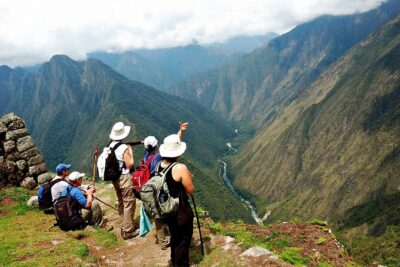
Classic Inca Trail Trek 4D/3N to Machu Picchu (Group Service)
Read our review →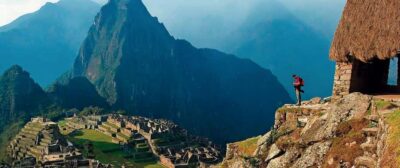
Machu Picchu: 4-Day Inca Trail Trek with Panoramic Train Ride
Read our review →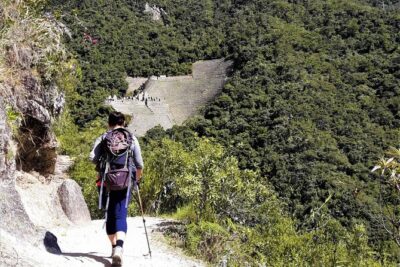
2-Day Inca Trail to Machu Picchu with Panoramic Train
Read our review →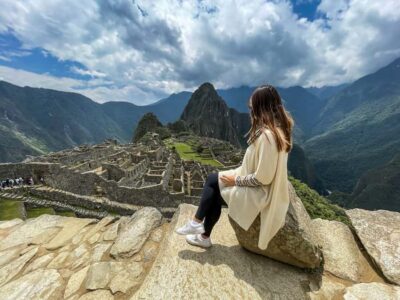
2-Day Tour: Sacred Valley and Machu Picchu by Train
Read our review →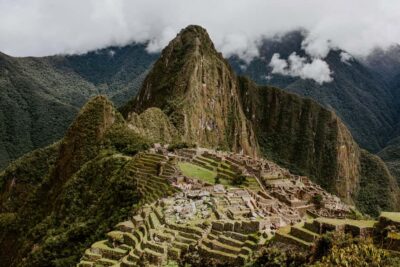
Machu Picchu: Full-Day Tour from Cusco with Optional Lunch
Read our review →Browse the lists this tour appears in