
Reviewed · MACHU PICCHU TOURS
4 Days Inca Trail Adventure to Machu Picchu
The mountains reward early risers. This four-day Inca Trail trip combines ancient ruins and high-Andes scenery with a small group capped at 10 people, making the long route feel organized rather than chaotic. I like the thoughtful transport plan, from Cusco to Km 82 and back from Ollantaytambo, and I like that meals, camping gear, entrance tickets, and a guide are included.
The main consideration is the physical demand. Dead Woman’s Pass reaches 4,215 meters, and the final day begins around 4:00 AM. You need strong fitness, a sleeping bag of your own, and a willingness to trade hotel comfort for three nights in mountain camps.
In This Review
- Key points before you book
- What the $975 price really covers
- The 4:00 AM start from Cusco
- Day one: Km 82, Llactapata, and Ayapata
- Day two: the hard climb to Dead Woman’s Pass
- Day three: cloud forest, Phuyupatamarca, and Wiñay Wayna
- Day four: sunrise at the Sun Gate
- Meals, camping, and the small-group setup
- What the strongest praise tells you
- Who should choose this four-day route?
- Should you book it?
- FAQ
- Where does the tour begin?
- What time does the tour start?
- How long is the experience?
- Is the Inca Trail entrance included?
- Is transport from Cusco to the trailhead included?
- Is the train back to Cusco included?
- Are meals included?
- Do I need to bring a sleeping bag?
- How large is the group?
Key points before you book
- Dead Woman’s Pass reaches 4,215 meters: Day two is the toughest test, with a steep climb followed by a long descent.
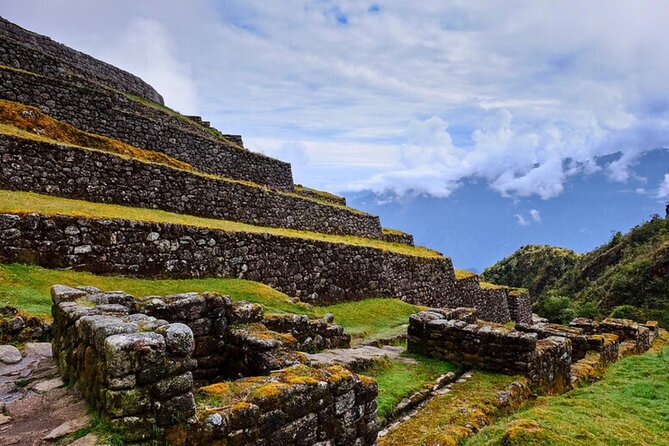
- The route includes several major Inca sites: Runkurakay, Phuyupatamarca, Wiñay Wayna, and the Sun Gate add far more depth than a quick visit to Machu Picchu alone.
- A sunrise approach is built in: You aim to reach Inti Punku before the morning light fully spreads over Machu Picchu.
- The group is limited to 10 people: That is a useful size for keeping the pace and guide’s attention manageable.
- Most practical costs are covered: Transport, permits, camps, meals, mattresses, a duffel bag, and first-aid equipment are included.
- The return is handled for you: After Machu Picchu, you take the train from Aguas Calientes to Ollantaytambo, followed by private transport to Cusco.
What the $975 price really covers
At $975 per person, this is not a bargain-basement hike, but it includes the costly parts of the Inca Trail. Your fee covers the trail entrance, Machu Picchu entrance, transport from Cusco to Km 82, the Expedition train to Ollantaytambo, and the one-way Consettur bus ticket from Machu Picchu to Aguas Calientes.
You also receive three breakfasts, three lunches, three dinners, and four snacks along the trail. Camping equipment includes a kitchen tent, dining tent, double-occupancy tents, and sleeping mattresses. A duffel bag for personal items is supplied, which is useful because you will not need to carry every item in your main luggage.
The price does not include personal expenses or a sleeping bag. That second omission matters more than the first. You should arrange your own sleeping bag before departure and confirm its suitability for high-altitude nights. The supplied mattress is helpful, but it is not a substitute for warm sleeping equipment.
For a four-day trip with permits, meals, staff, camps, rail transport, and a private return transfer, I see solid value here. The package also removes much of the planning work. You are not left figuring out how to connect the mountain trail, Machu Picchu, train station, and Cusco on your own.
Other Inca Trail departures:
- Classic Inca Trail Trek 4D/3N to Machu Picchu (Group Service)
★ 5.0 · 8,653 reviews - Machu Picchu: 4-Day Inca Trail Trek with Panoramic Train Ride
★ 5.0 · 4,568 reviews - Short Inca Trail to Machu Picchu 2D/1N
★ 5.0 · 3,007 reviews
The 4:00 AM start from Cusco
The meeting point is Plaza de Armas de Cusco at Del Medio 123, Cusco 08000. Hotel pickup is offered, with the guide meeting you in your hotel lobby and escorting you to the vehicle. The detailed schedule gives an early pickup around 4:30 AM, while the meeting information lists a 4:00 AM start, so confirm the exact time with the operator before bed.
That early departure is not just a cruel alarm-clock exercise. The drive to Piskacucho, also called Km 82, takes you to the trailhead with a planned arrival around 8:00 AM. From there, the walking day begins.
You should have your daypack ready the night before. Keep water, rain protection, sun protection, snacks, and anything needed for the first walking hours close at hand. The supplied duffel is for personal items, but the tour information does not state a porter weight limit or a luggage transfer arrangement, so ask how that bag will be handled.
Day one: Km 82, Llactapata, and Ayapata
The first walking section leads from Km 82 toward Llactapata. The listed walking time is about four hours, and the reward comes early: broad views of the Andean peaks and valleys. This is a good introduction to the route because you begin with scenery before the hardest climb arrives.
Llactapata gives you a first pause to take in the surrounding country. The setting has the open, high-mountain feel that makes this trail special. You are not simply marching toward a famous ruin. The changing views help you understand why the Incas built routes through such demanding terrain.
The route then continues toward lunch, passing through Huayllabamba. The village offers a look at traditional Quechua life, with green valleys and high peaks around it. The listed walking time here is another two hours, so day one is already a serious start rather than a gentle warm-up.
By around 5:00 PM, you reach Ayapata campsite. Dinner is prepared by the trekking cooks, and the evening is meant for settling into camp and resting. The schedule shows roughly two hours for the final section, though the overall day includes several walking blocks and the early morning transfer.
I like the shape of this first day. You get a scenic opening, a local village, a proper mountain camp, and a meal prepared on site. The drawback is simple: after leaving Cusco before dawn, you are still walking for much of the day. Pace yourself from the first hour, even if your legs feel fresh.
Day two: the hard climb to Dead Woman’s Pass
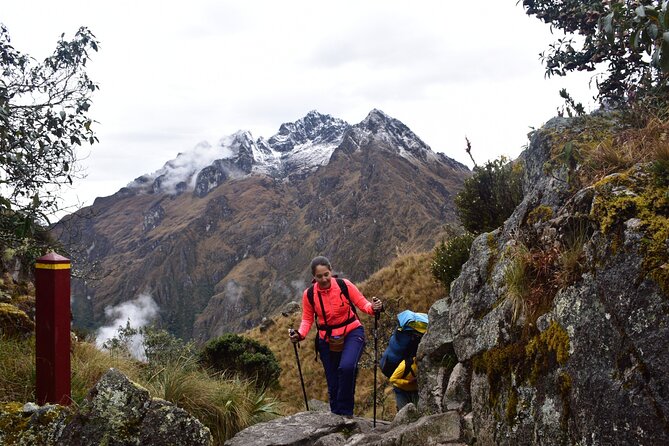
Breakfast is scheduled for 6:00 AM at Ayapata. Day two is the physical center of the route, with the climb to Dead Woman’s Pass at 4,215 meters, or 13,829 feet. This is the highest point on the Inca Trail and the section most likely to test your lungs and legs.
The ascent takes about four hours according to the schedule. At this altitude, a short distance can feel much longer than it looks on a map. You should walk steadily, take the breaks your body needs, and avoid treating the climb as a race. The reward is a wide view over the rugged Andes.
From the pass, the trail drops into the Pacaymayo Valley. The descent is not a free ride for tired knees. A long downhill can be just as tiring as the climb, especially after reaching the highest point. Lunch in the valley gives you time to eat and recover before the afternoon route.
After lunch, you climb again toward the second pass and the ruins of Runkurakay. This compact Inca site adds a strong historical moment to a demanding day. The stonework and setting help turn the route into more than a test of fitness.
The day finishes at Chaquicocha campsite after another stretch of trail. Dinner is included, as it is at the other camps. By this point, a warm meal and a dry place to rest will matter as much as the scenery.
Day two is where you should be most honest with yourself. The operator asks for a strong fitness level, and that request is justified. The trip is not designed for a casual stroll. If you are unsure about your stamina at altitude, discuss the route with a medical professional and prepare with long uphill walks before arriving in Peru.
Other ways to reach Machu Picchu:
- 2-Day Inca Trail to Machu Picchu with Panoramic Train
★ 5.0 · 1,876 reviews - From Cusco: Full-Day Group Tour of Machu Picchu
★ 4.7 · 1,767 reviews - Machu Picchu Day Trip from Cusco
★ 4.5 · 1,644 reviews - 2-Day Tour: Sacred Valley and Machu Picchu by Train
★ 5.0 · 1,127 reviews
Day three: cloud forest, Phuyupatamarca, and Wiñay Wayna
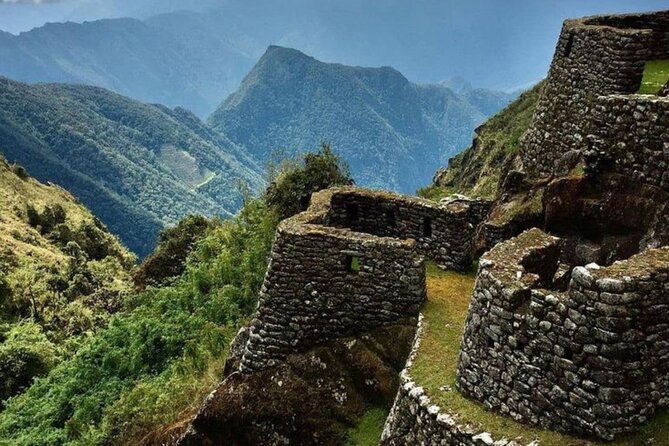
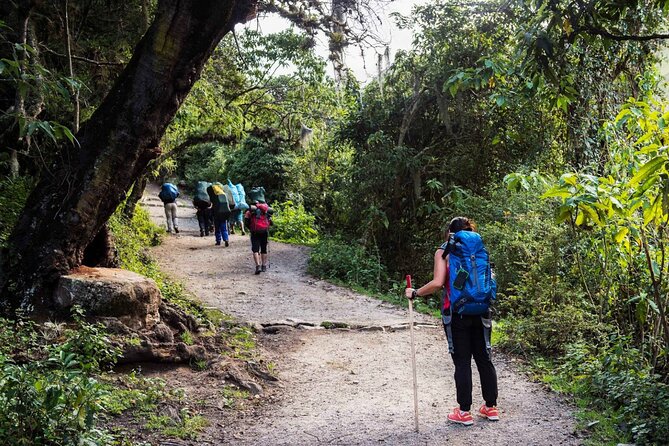
Breakfast begins at 6:30 AM on day three. The route now shifts from the stark high pass to cloud forest, where the scenery becomes lusher and the trail feels more sheltered. The towering Vilcabamba range remains part of the view, but the setting changes hour by hour.
The first walking block is listed at four hours. This section is less strenuous than day two, but it still involves a full day on stone paths. You will want good footwear and careful footing, especially when the trail is wet.
Phuyupatamarca is one of the best stops on the route. Its name is often translated as Town Above the Clouds, and the site earns that title through its high position and broad views over the valleys. You can pause here to explore the terraces and stone structures while the guide explains their place in Inca culture.
This is also the first point where you are scheduled to glimpse Machu Picchu in the distance. That moment changes the mood. The destination is no longer an abstract goal several days away. You can see where the route is taking you.
The descent continues to Wiñay Wayna, an impressive site with agricultural terraces and precise stonework. It is one of the most rewarding archaeological stops on the trail. The route’s design becomes clear here: the ruins are not filler between walking sections. They are the reason to take the full trail instead of simply arriving at Machu Picchu by train.
After a short tour, you continue to the final campsite. The schedule names this as Winay Wayna Camp and allows about four hours for the section. The evening is your last chance to prepare for the early approach to the Sun Gate.
Day three is less punishing than day two, but do not mistake that for easy. You have already climbed and descended for two days. The steady pace and included meals are valuable here, and the small group size should make it easier to stay connected with the guide.
Day four: sunrise at the Sun Gate
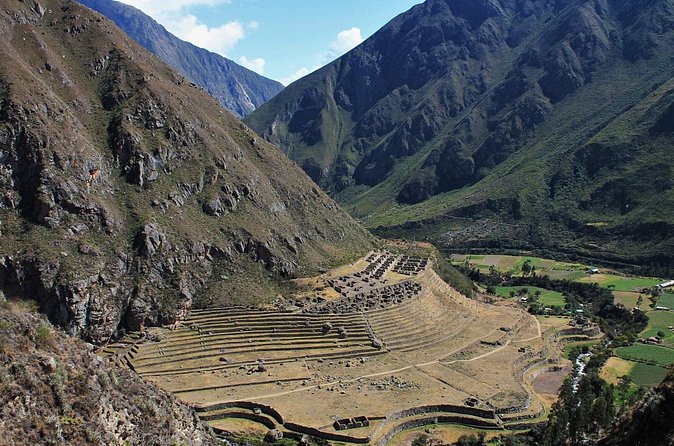
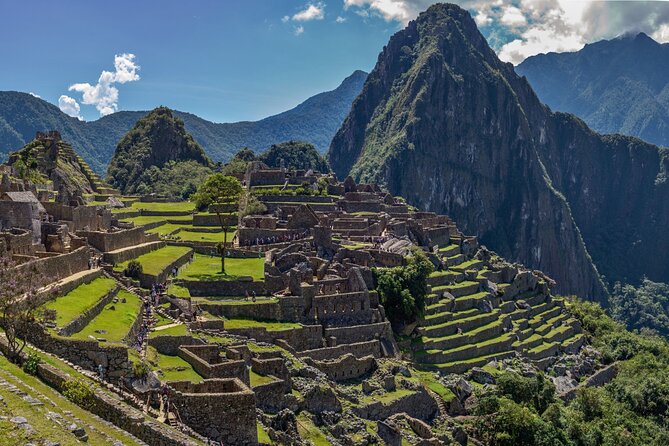
The final morning begins at about 4:00 AM with a quick breakfast. The goal is Inti Punku, the Sun Gate, in time for sunrise. You then pass through the gate and see Machu Picchu from above before entering the main site.
This approach is one of the strongest reasons to choose the full four-day route. You arrive on foot, after passing through cloud forest and several Inca sites, rather than stepping directly off a train into the final destination. The sunrise timing depends on weather and trail conditions, so treat it as a goal rather than a guarantee.
The walk to the Sun Gate is listed at about two hours. Even after three days, this final stretch has a clear purpose. Every step brings the citadel closer, and the first view from Inti Punku gives the arrival a real sense of occasion.
At Machu Picchu, the guided visit lasts about two hours. You explore terraces, temples, and plazas while learning about Inca history and culture. The guide is central here. A good explanation can help you read the site, understand how its parts fit together, and notice details you might otherwise pass without a second glance.
The tour then takes you down to Aguas Calientes, with about three hours allotted for the stop and lunch. The information provided does not specify whether lunch in town is included, so confirm that detail before departure. The listed meal package covers three lunches, which appear to be the three trail lunches, not necessarily a fourth meal in Aguas Calientes.
After lunch, you take the Expedition train to Ollantaytambo. A private transfer then returns you to Cusco, with arrival expected around 7:00 PM. That makes for a long final day, but the transport connection is a major practical advantage. You do not need to arrange a separate train, taxi, or hotel transfer after visiting Machu Picchu.
Meals, camping, and the small-group setup
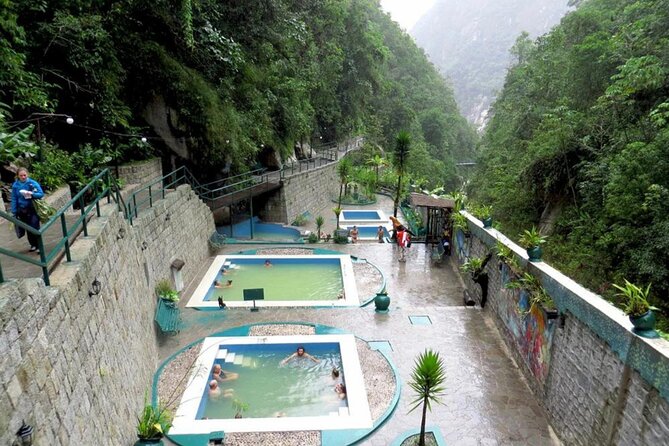
Three breakfasts, three lunches, and three dinners are included, along with four snacks on the trail. The food is prepared by trekking cooks, and the supplied feedback gives the meals particularly strong praise. You can request dietary restrictions such as vegetarian meals, but state your needs at booking and repeat them to the operator.
Camping is basic by design. You sleep in double-occupancy tents on supplied mattresses, with a kitchen and dining tent supporting the group. This is mountain camping, not a lodge with a hot shower and a soft bed every night. The tradeoff is that you stay close to the route and wake up within the mountain setting.
The group maximum is 10 people. That is large enough to share the effort and the evening meals, but small enough for the guide to monitor the pace more closely than on a big departure. The guide is bilingual in English and Spanish, and the tour is offered in English.
The team also carries first-aid equipment and an oxygen bottle. Those supplies are reassuring at altitude, but they are not a promise that altitude problems cannot occur. Give yourself time in Cusco to adjust before the trek if your broader Peru plans allow it.
What the strongest praise tells you
The clearest praise centers on organization, attentive service, food, and the guide’s explanations of Inca culture. The team is described as keeping to schedules, maintaining good energy, and making room to enjoy each stop without rushing. That is important on a route where poor timing can turn a beautiful day into a stressful one.
The feedback also highlights the sunrise at Machu Picchu as a magical part of the trip. That matches the structure of the route: you are not merely visiting the citadel, you are approaching it through the Sun Gate after several days on foot.
Another useful point is the emphasis on Andean culture and spirituality. Huayllabamba, the mountain route, and the archaeological sites give the guide many chances to connect the scenery with local life and Inca tradition. If you want only a fast photo at Machu Picchu, this is more trip than you need. If you want context along the way, the added days earn their keep.
Who should choose this four-day route?
I would choose this experience if you want the classic Inca Trail in a compact four-day format and prefer having the permits, camps, meals, and transport handled together. It suits people who enjoy long days outdoors, archaeological sites, and a clear physical challenge.
It is also a good fit if you value a small group and English-language guiding. The maximum of 10 people should help keep the trip personal, while the included train and private transfer simplify the return.
I would think twice if you dislike camping, struggle with steep climbs, or want a relaxed Machu Picchu visit. The 4:00 AM starts, high pass, repeated ascents, and three nights in tents are not minor details.
The cancellation rule is strict: the experience is non-refundable and cannot be changed for any reason. Book only when your dates, fitness, and sleeping-bag plans are settled.
Should you book it?
Book this tour if you want the full physical and cultural journey, not just the final ruin. At $975, the package offers fair value because it includes the key permits, rail connection, meals, camps, equipment, and return transport.
I especially like the route’s progression from Llactapata and Huayllabamba to Dead Woman’s Pass, Runkurakay, Phuyupatamarca, Wiñay Wayna, and finally the Sun Gate. You get a demanding walk, a series of meaningful stops, and a well-planned finish at Machu Picchu.
Skip it if you need flexibility, luxury, or an easy schedule. For fit hikers who want an organized Inca Trail experience with strong attention to food, timing, and Andean culture, Vicuna Expeditions offers a convincing package.
FAQ
Where does the tour begin?
The listed meeting point is Plaza de Armas de Cusco at Del Medio 123, Cusco 08000, Peru. Hotel pickup in Cusco is offered, and the guide will meet you in your hotel lobby.
What time does the tour start?
The meeting information lists a 4:00 AM start. The day-one schedule describes pickup from your Cusco hotel at around 4:30 AM, so confirm your exact pickup time with the operator.
How long is the experience?
The Inca Trail adventure lasts approximately four days and ends back in Cusco, with expected arrival around 7:00 PM on day four.
Is the Inca Trail entrance included?
Yes. The Inca Trail entrance ticket and Machu Picchu entrance ticket are included in the price.
Is transport from Cusco to the trailhead included?
Yes. Transport from Cusco to Piskacucho at Km 82 is included.
Is the train back to Cusco included?
The Expedition train from Aguas Calientes to Ollantaytambo is included, along with transport from Ollantaytambo to Cusco.
Are meals included?
Three breakfasts, three lunches, and three dinners are included. The package also includes four snacks along the Inca Trail. Vegetarian dietary requirements can be accommodated.
Do I need to bring a sleeping bag?
Yes. A personal sleeping bag is not included, so you need to arrange one yourself.
How large is the group?
The maximum group size is 10 people. The experience is offered in English and includes a bilingual tour guide.
Added recently around Cusco
- Guided tour of the mountain of colors in Cusco★ 5.0 · 11 reviews
- 2-Day Private Short Inca Trail to Machu Picchu★ 5.0 · 15 reviews
- City Tour Cusco – Group★ 5.0 · 4 reviews
- Tour Sacred Valley with Maras and Moray★ 5.0 · 15 reviews
- San Pedro Market Tour with Peruvian Cooking Class★ 5.0 · 31 reviews
- Walking Culinary Experience★ 5.0 · 41 reviews
- City Tour in Cusco★ 4.5 · 10 reviews
- Sightseeing Bus Tour from Cusco to Puno with Buffet Lunch★ 4.5 · 22 reviews
Machu Picchu Tours, compared.
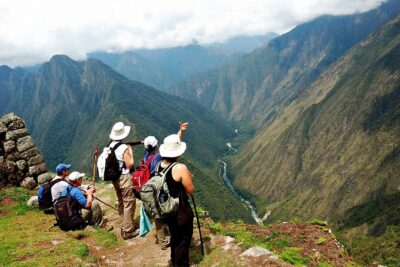
Classic Inca Trail Trek 4D/3N to Machu Picchu (Group Service)
Read our review →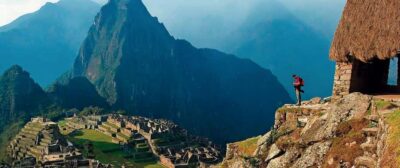
Machu Picchu: 4-Day Inca Trail Trek with Panoramic Train Ride
Read our review →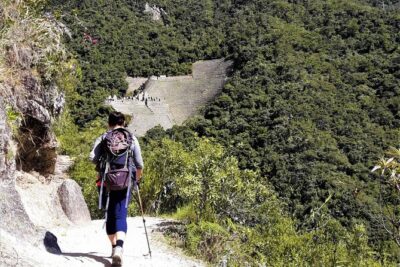
2-Day Inca Trail to Machu Picchu with Panoramic Train
Read our review →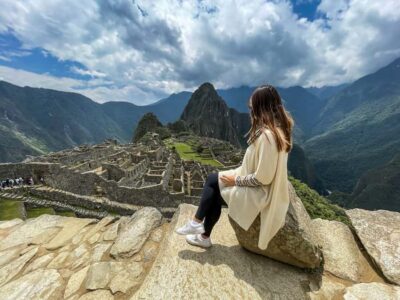
2-Day Tour: Sacred Valley and Machu Picchu by Train
Read our review →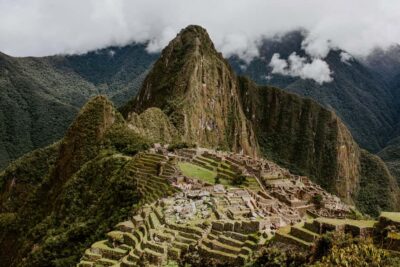
Machu Picchu: Full-Day Tour from Cusco with Optional Lunch
Read our review →Browse the lists this tour appears in