Reviewed · CUSCO TOURS
Bus Journey from Cusco to Puno along the Route of the Sun
A long road can be the attraction. This Cusco to Puno bus journey turns a ten-hour transfer into a full day of Andean sights, with the painted church at Andahuaylillas and the great Inca site of Raqchi as its strongest stops. I like the comfortable bus and included lunch, and I also like having a guide such as Elio or Marco explain what you are seeing along the way. The main drawback is simple: if you only want to reach Puno quickly, a direct bus will take less time.
You will cross farming country, high mountain scenery, and the broad altiplano before arriving in Puno. The optional entrance fees add PEN 53 per person, so the advertised $40 price is not the final sightseeing cost if you enter every site. Still, for a full day of transport, meals, guided stops, and onboard drinks, this is a useful way to connect the two cities.
In This Review
- Key points to know before booking
- Why take the Route of the Sun instead of a direct bus?
- Leaving Cusco at 7:00 am
- Andahuaylillas and the painted church
- Raqchi, the day’s main archaeological stop
- Lunch near Sicuani with mountain views
- Pucara and the early Andean past
- The views are part of the itinerary
- Price, entrance fees, and overall value
- Who will enjoy this bus journey?
- Practical details that make the day easier
- Should you book the Route of the Sun?
- FAQ
- How long does the Cusco to Puno bus journey take?
- Where does the bus leave from in Cusco?
- Where does the bus arrive in Puno?
- Is lunch included?
- Are entrance fees included?
- Is the tour offered in English?
- How many people can join the tour?
- Does the bus have WiFi and air conditioning?
- Can I cancel for a full refund?
Key points to know before booking
- Andahuaylillas church is the artistic highlight: Its murals, gold-leaf decoration, and Cusco School paintings explain its nickname, the Sistine Chapel of the Andes.
- Raqchi gives the trip its strongest archaeological stop: The Temple of Wiracocha includes enormous walls, stone and adobe buildings, and many Inca storage buildings called colcas.
- Lunch is included: The buffet is served at a restaurant in the Sicuani area, with a pleasant view and food that earns repeated praise.
- Pucara adds an earlier Andean culture: The small museum presents ceramics and zoomorphic sculptures from a culture dating from 1600 BC to 400 AD.
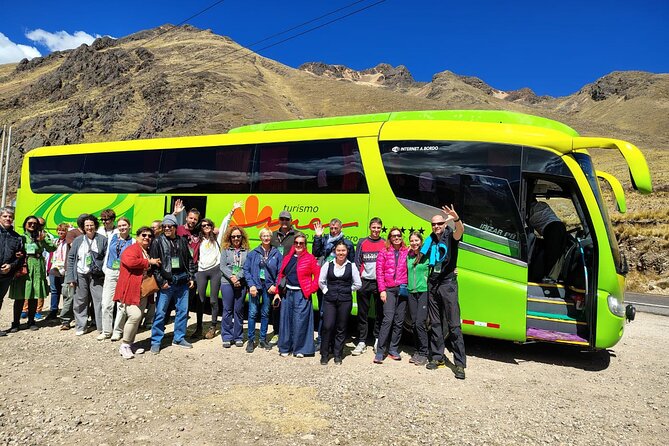
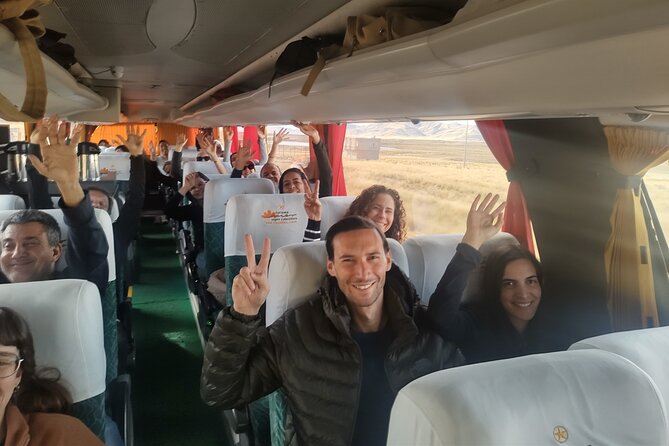
- The bus is more than a ride: Air conditioning, WiFi, water, tea, soft drinks, and a comfortable seat make the long day easier.
- Plan for a full day: Departure is at 7:00 am from Cusco, with arrival in Puno at about 5:40 pm.
Why take the Route of the Sun instead of a direct bus?
Cusco and Puno are linked by a well-used road, but the direct version treats the journey as a chore. This service makes the road part of your Peru visit. You stop at churches, archaeological sites, a museum, and a restaurant, while a guide gives context in English and Spanish.
I especially like this choice if your schedule already includes both cities. You avoid paying for a separate day trip, and your luggage can continue with you rather than sitting in a Cusco hotel while you make a return excursion. The views also change steadily. You pass farms and mountain country, then reach the high altiplano and later broader, more fertile valleys.
The tradeoff is time. The trip lasts about ten hours, and several stops are fairly short. Andahuaylillas allows about 25 minutes, Raqchi about 45 minutes, and Pucara about 30 minutes. That is enough for an introduction, not enough for a leisurely study of every building or museum case.
This is also a group trip, with a maximum of 40 people. That keeps the cost down, but it means you should expect a shared schedule rather than a private guide who can linger whenever you wish.
A few more Cusco trips worth lining up side by side
- Classic Inca Trail Trek 4D/3N to Machu Picchu (Group Service)
★ 5.0 · 8,653 reviews - Cusco: Rainbow Mountain and Red Valley Day Trip with Meals
★ 4.9 · 4,893 reviews - Machu Picchu: 4-Day Inca Trail Trek with Panoramic Train Ride
★ 5.0 · 4,568 reviews
Leaving Cusco at 7:00 am
The journey begins at the Turismo Mer private terminal on Avenida Pacifico J-9-1 in San Antonio, Cusco. You should allow time to reach the terminal before the 7:00 am departure. The trip ends at the Turismo Mer private terminal at Avenida Costanera 430 in Puno, with arrival listed at about 5:40 pm.
That timing matters. You will spend most of the daylight hours on the road, so this is not an evening transfer with a few casual stops. It is a full sightseeing day. Bring a light layer, water if you prefer your own supply, and something small for the ride, even though drinks and lunch are provided.
The onboard setup is one of the service’s better features. The bus is air-conditioned and has WiFi. Direct accounts also describe water, tea, and soft drinks during the trip. WiFi on a mountain road should be treated as a convenience rather than a promise of constant high-speed service, but it is useful for checking messages when the signal works.
A guide accompanies the group at the stops. Elio receives particular praise for being friendly and easy to talk with in English and Spanish. Marco is also described as precise and kind, while the English level may vary depending on the guide assigned that day. If detailed English commentary is essential to you, keep that small uncertainty in mind.
Andahuaylillas and the painted church
The first named stop is Andahuaylillas, a 17th-century church known for its interior decoration. Its murals, gold-leaf work, and paintings from the Cusco School are the reason it is often called the Sistine Chapel of the Andes.
You have about 25 minutes here. That is short, but the church is compact enough for a focused visit. Look closely at the walls and ceiling rather than rushing through with a single glance. This is a place where the interior matters far more than the exterior.
The church also helps explain how colonial religious art worked in the Andes. European Christian subjects were presented through local artistic traditions, creating an interior that feels different from a church in Spain or Italy. You do not need a long lecture to appreciate it, but a guide’s explanation can make the paintings easier to read.
The listed itinerary shows no admission charge at this stop, yet the tour information also lists an optional combined entrance payment covering Andahuaylillas, Raqchi, and Pucara at PEN 53 per person. Because the supplied details describe this payment as optional, confirm the exact arrangement with the guide before the group enters. One practical lesson from the journey is that you can sometimes choose which sites you want to pay for, rather than automatically entering every stop.
Raqchi, the day’s main archaeological stop
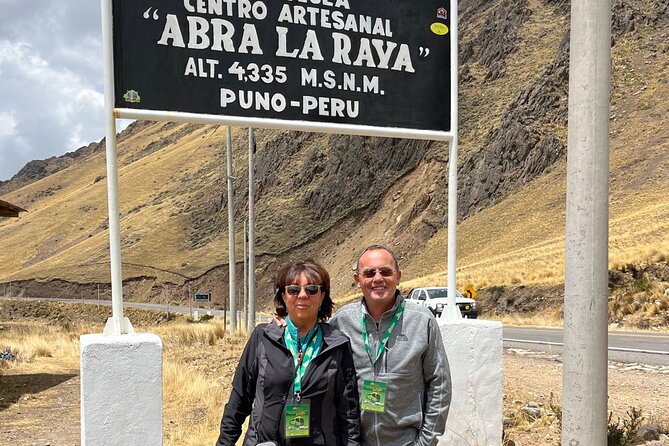
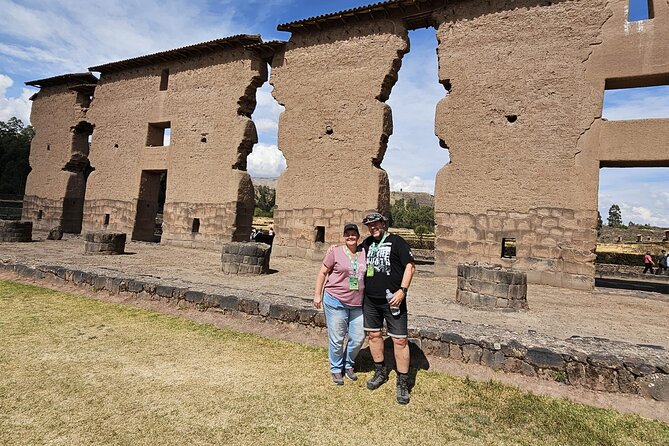
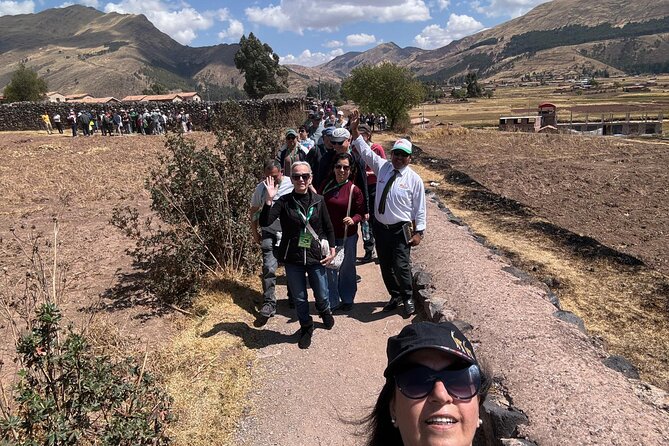
If you choose only one archaeological site, I would make it Raqchi. The site is also known as the Temple of Wiracocha, named for the supreme Inca deity. It includes large stone and adobe structures, as well as an unusually high number of colcas, or granaries.
You have about 45 minutes here, the longest of the three named sightseeing stops. That extra time helps. Raqchi is not just one temple wall placed in a field. The arrangement of storage buildings and other structures gives you a better sense of how an important Inca center functioned.
The combination of stone and adobe is worth noting. It gives the ruins a different look from the all-stone sites more commonly associated with the Inca world. The scale of the surviving walls also makes this the point where the trip feels most like a serious archaeological visit rather than a quick photo stop.
The guide is important here. Without explanation, you may see rows of buildings and a monumental wall but miss why the colcas matter. With a guide, the site becomes easier to understand as a place tied to food storage, administration, religion, and movement through the region.
The limitation is the clock. Forty-five minutes passes quickly, especially if you want photographs and a proper explanation. Wear shoes suitable for uneven ground and be ready to keep moving with the group. The tour requires moderate physical fitness, so you should be comfortable walking around an open archaeological site.
Also leaving from Cusco, and nothing like the above:
- Salkantay Classic Trek 5 Days from Cusco
★ 5.0 · 4,062 reviews - 4-Day Salkantay Trek with Sky Camp Stay
★ 5.0 · 3,346 reviews - Short Inca Trail to Machu Picchu 2D/1N
★ 5.0 · 3,007 reviews - Excursion to Rainbow Mountain Full Day Optional Red Valley
★ 5.0 · 2,996 reviews
Lunch near Sicuani with mountain views
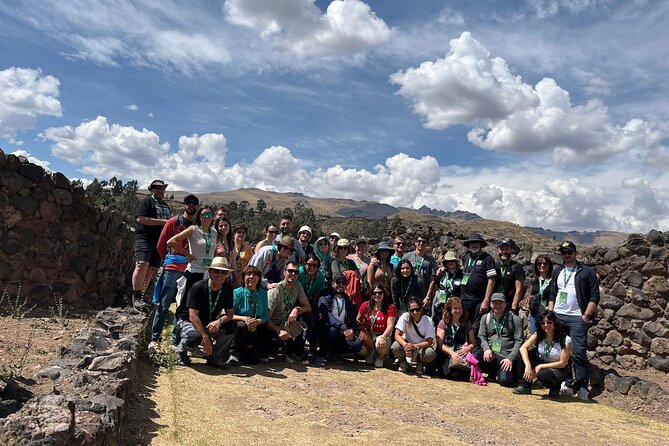
Lunch is included, and it is one of the most practical benefits of the trip. The meal is served as a buffet at a restaurant in the Sicuani area. Descriptions of the stop highlight good food, a pleasant setting, and a view that includes a waterfall.
A buffet works well on a tightly timed bus journey. You can eat without waiting for individual dishes, and the group can get back on the road without turning lunch into another long stop. The food receives repeated praise, and drinks are also available during the journey.
Do not think of this as a private dining experience. It is a scheduled group meal designed to keep a large party moving. Still, a decent lunch in a scenic setting is a welcome break after several hours on the road. It also saves you from having to arrange food in advance.
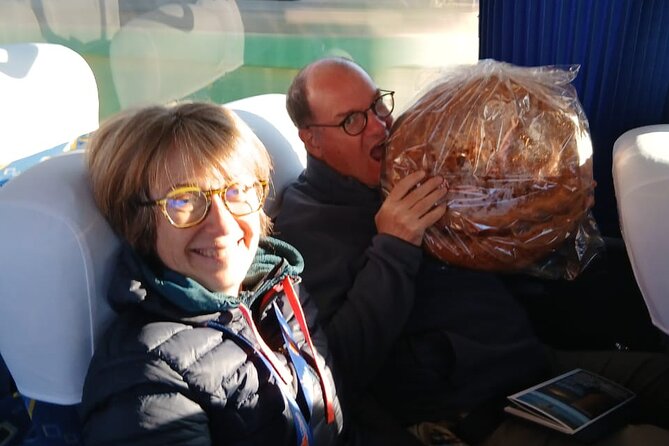
Some accounts describe a picnic-style breakfast or welcome food at the terminal. The core tour information clearly includes lunch, but it does not list breakfast as an official inclusion. Treat any morning snack as a possible service detail, not something to rely on when planning your day.
Pucara and the early Andean past
Pucara is the final named stop. This culture developed from 1600 BC to 400 AD, long before the Inca period. The museum presents ceramics and sculptures, including zoomorphic figures and the famous Hatunñaqac sculpture.
The name Hatunñaqac is translated in the supplied information as the supreme throat-slasher. That striking detail gives you a quick reminder that Andean cultures had their own religious symbols and visual language well before the Inca Empire.
The stop lasts about 30 minutes. This is enough to see the principal displays and hear an introduction, but not enough for a slow museum visit. Pucara may appeal most to you if you like seeing the cultures that came before the Inca. If your main interest is dramatic ruins, you may find Raqchi more rewarding.
Pucara is also useful as a change of pace. After the open archaeological site and the long road, a compact museum offers a quieter look at objects and sculpture. It adds context to the region instead of presenting the journey as an Inca-only story.
Admission is part of the optional PEN 53 payment described for the three sites. Again, confirm the amount and collection method at the start of the trip, especially if you plan to skip one of the entrances.
The views are part of the itinerary
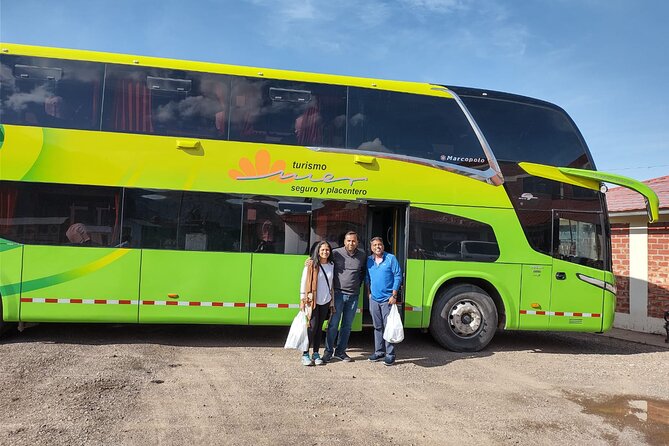
The Route of the Sun works because the road itself has value. You will see farming areas, mountains, and the altiplano from the bus window. The scenery is not a single grand viewpoint that lasts five minutes. It changes over many hours, which makes the transfer feel connected to the region rather than sealed off from it.
This is a good ride for you if you enjoy watching daily life pass by. Farms and broad mountain views give the journey a human scale. The route also helps you understand the distance between Cusco and Puno. Peru is not a small country, and the long day makes that plain.
The bus provides a comfortable base for watching the scenery. Air conditioning matters when the vehicle is full, and the onboard drinks reduce the need to hunt for refreshments at every stop. The road can still feel long, particularly after lunch, so download anything you need before departure and keep expectations realistic about WiFi.
If you prefer constant activity, you may find the quiet stretches slow. That is the price of making a scenic transfer out of a direct road journey. I would choose a window seat if possible, but the supplied details do not guarantee seat selection.
Price, entrance fees, and overall value
The base price is $40 per person. That includes transport, lunch, WiFi, and an air-conditioned vehicle. The optional entrance payment for Andahuaylillas, Raqchi, and Pucara is listed as PEN 53 per person.
At $40, the service offers good value if you need to travel from Cusco to Puno and would otherwise pay separately for transport, food, and a day of sightseeing. You are not simply buying a bus seat. You are paying for a guide, several planned stops, and a meal.
The value is weaker if your priority is speed. A direct bus costs more or less depending on the operator and booking conditions, but it will not give you the same sightseeing program. You should compare the final cost, not just the headline price, by adding the optional entrances and any personal expenses.
I would budget for the PEN 53 unless you already know you want to skip some sites. Raqchi is the most compelling stop for many people, while Andahuaylillas is the best choice for religious art. Pucara is worthwhile if early Andean cultures interest you.
Who will enjoy this bus journey?
I would recommend the Route of the Sun to you if:
- You need to travel between Cusco and Puno anyway.
- You prefer a scenic transfer to a plain point-to-point bus.
- You enjoy archaeology, colonial art, and museum collections.
- You want lunch included and do not want to plan food on a long road day.
- You are comfortable with a group of up to 40 people.
- You can manage walking at archaeological sites and keep to a fixed timetable.
I would hesitate if you dislike long bus rides, need complete control over the schedule, or want to spend a full hour or more at each attraction. The stops are useful introductions, not extended private visits.
The English commentary can also vary by guide. Elio is praised for being approachable and for speaking English and Spanish, while another account describes his English as limited. That does not cancel the value of the service, but it means you should not book this solely for advanced, museum-level English interpretation.
Practical details that make the day easier
The tour confirms your booking at the time of purchase, and mobile tickets are accepted. It is offered in English and operates near public transportation, though you still need to reach the private terminal before the early departure.
Free cancellation is available up to 24 hours before the start time for a full refund. Changes or cancellations inside that window are not accepted for a refund. The service may also be canceled if poor weather affects the trip or if the minimum number of participants is not reached, in which case you are offered another date or experience, or a full refund.
Pack for a long day rather than a short excursion. Bring a light jacket, comfortable walking shoes, and a phone charger if you have one. Keep valuables close during every stop, and check your seat area before leaving the bus. A lost item was successfully returned on one journey, but it is still better not to test the system.
Should you book the Route of the Sun?
Book it if you want your transfer to Puno to count as part of your Peru sightseeing. The strongest reasons are the comfortable bus, good included lunch, changing mountain and altiplano scenery, and the chance to see Raqchi and Andahuaylillas without arranging separate transport.
Skip it for a direct bus if you value getting to Puno quickly or if a ten-hour group day sounds tiring. My best practical advice is to book this service when you have the time, then plan to pay for at least Raqchi and Andahuaylillas. Those two stops give the journey its clearest rewards, while Pucara adds useful context for anyone interested in Peru before the Inca era.
FAQ
How long does the Cusco to Puno bus journey take?
The journey lasts approximately 10 hours. It departs Cusco at 7:00 am and is scheduled to arrive in Puno at about 5:40 pm.
Where does the bus leave from in Cusco?
The departure point is the Terminal Privado Turismo Mer at Avenida Pacifico J-9-1, San Antonio, Cusco 08006, Peru.
Where does the bus arrive in Puno?
The bus arrives at the Terminal Privado Turismo Mer at Avenida Costanera 430, Puno 21001, Peru.
Is lunch included?
Yes. Lunch is included in the tour price and is served at a restaurant in the Sicuani area.
Are entrance fees included?
No. The optional entrance payment for Andahuaylillas, Raqchi, and Pucara is listed as PEN 53 per person.
Is the tour offered in English?
Yes. The experience is offered in English, and a guide accompanies the group at the stops.
How many people can join the tour?
The maximum group size is 40 people.
Does the bus have WiFi and air conditioning?
Yes. WiFi on board and an air-conditioned vehicle are included.
Can I cancel for a full refund?
Yes, if you cancel at least 24 hours before the experience start time. Cancellations made less than 24 hours before departure are not refunded.
Added recently around Cusco
- Guided tour of the mountain of colors in Cusco★ 5.0 · 11 reviews
- 2-Day Private Short Inca Trail to Machu Picchu★ 5.0 · 15 reviews
- City Tour Cusco – Group★ 5.0 · 4 reviews
- Tour Sacred Valley with Maras and Moray★ 5.0 · 15 reviews
- San Pedro Market Tour with Peruvian Cooking Class★ 5.0 · 31 reviews
- Walking Culinary Experience★ 5.0 · 41 reviews
- City Tour in Cusco★ 4.5 · 10 reviews
- One Day Tour to Humantay Lagoon★ 5.0 · 8 reviews
Cusco Tours, compared.
Classic Inca Trail Trek 4D/3N to Machu Picchu (Group Service)
Read our review →
Rainbow Mountain and Red Valley Day Trip with Meals
Read our review →
Machu Picchu: 4-Day Inca Trail Trek with Panoramic Train Ride
Read our review →
Excursion to Rainbow Mountain Full Day Optional Red Valley
Read our review →