
Reviewed · MACHU PICCHU TOURS
Classic Inca Trail Expedition to Machu Picchu 4D/3N
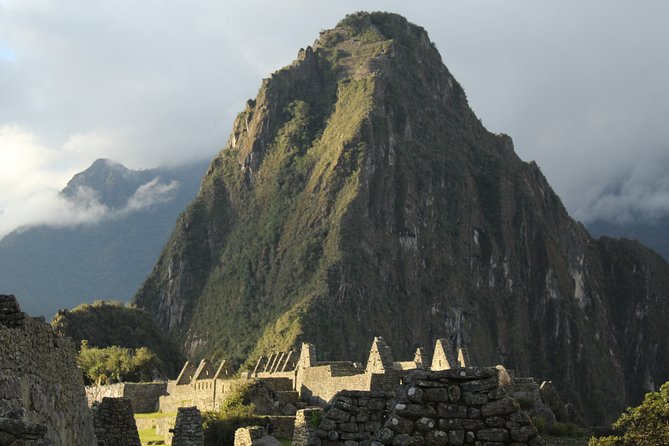
The classic route earns its name. This four-day trek links high mountain passes, cloud forest, and Inca ruins before bringing you to Machu Picchu through the Sun Gate. I like that the $990 price includes trail and citadel permits, tents, meals, transport, and hotel pickup. I also like the small maximum of 15 people and the strong support from the guide, cook, and porters. The main catch is simple: this is a hard trek, not a gentle walk, and sleeping bags and walking sticks cost extra.
You start before sunrise and spend three nights in tents, with early breakfasts, packed snacks, hot meals, and long climbs. The toughest section comes on Day 2, when you reach 4,215 meters at Dead Woman’s Pass. If you have moderate fitness and want to reach Machu Picchu by foot, this is a well-supported way to do it. If you dislike steep steps, basic camping, or fixed nonrefundable bookings, think carefully first.
In This Review
- Key points to know before booking
- What the $990 price really buys you
- The 5:00 a.m. start from Cusco
- Day 1: KM-82, Llactapata, and Ayapata
- Day 2: Dead Woman’s Pass and the steep stone descent
- Day 3: Phuyupatamarca, Inti Pata, and Wiñay Wayna
- Day 4: Walking through the Sun Gate to Machu Picchu
- Meals, tents, and the support team
- How difficult is the four-day route?
- Who will get the most from this expedition?
- Small details that can make a big difference
- Should you book the Classic Inca Trail Expedition?
- FAQ
- How long is the Classic Inca Trail Expedition?
- Where does the trek begin?
- What time is hotel pickup?
- Is hotel pickup included?
- What language is the tour offered in?
- How high is Dead Woman’s Pass?
- Are the Inca Trail and Machu Picchu tickets included?
- Are meals included?
- Is camping equipment included?
- How large is the group?
- Are tips included?
- Is accommodation in Cusco included after the trek?
- Can I cancel and receive a refund?
Key points to know before booking
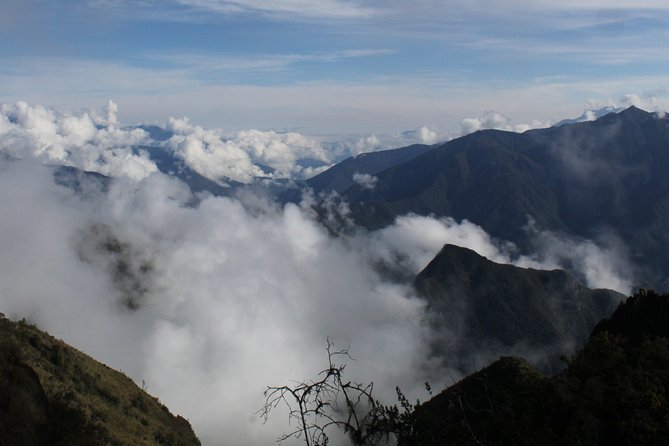
- Dead Woman’s Pass reaches 4,215 meters: Day 2 is the physical test, with a long climb followed by steep Inca steps.
- The Sun Gate arrival is the payoff: You enter Machu Picchu early and walk to the viewpoint for your first sight of the citadel.
- Meals and tents are included: Breakfast, lunch, dinner, snacks, and happy hour are provided during the three camping nights.
- Your passport must match the permit: At KM-82, the first checkpoint checks your passport against your Inca Trail permit.
- Porters and a cook carry much of the burden: The service is a major part of the value, especially after the hardest walking days.
- Camping gear is not fully included: You need to arrange your own sleeping bag and walking stick if you want them.
What the $990 price really buys you
At $990 per person, this is not a bare-bones walk where you simply pay for access to a trail. The cost covers the Inca Trail and Machu Picchu tickets, transport connected with the route, hotel pickup in Cusco, three breakfasts, three lunches, three dinners, snacks, tents, and the staff who keep the expedition moving.
That matters because the Inca Trail is a controlled route with limited access. Your permit is part of the foundation of the trip, not a small optional extra. The passport check at KM-82 also means you need to bring the same passport used when the permit was arranged.
The tour includes a tent for two people on each camping night. It does not include a sleeping bag or walking stick. Those exclusions are easy to overlook, so plan for them before you arrive in Cusco. Tips are also not included. The final lunch is on your own in Aguas Calientes, also called Machu Picchu Pueblo.
I see good value here for someone who wants the full four-day route without arranging separate permits, campsite support, meals, and transport. You are also paying for a working team: a guide, cook, kitchen support, and porters. Past comments place special praise on the food, including a memorable cake, and on the friendly, attentive porter crew. That service can make a real difference when your legs are tired.
Other Inca Trail departures:
- Classic Inca Trail Trek 4D/3N to Machu Picchu (Group Service)
★ 5.0 · 8,653 reviews - Machu Picchu: 4-Day Inca Trail Trek with Panoramic Train Ride
★ 5.0 · 4,568 reviews - Short Inca Trail to Machu Picchu 2D/1N
★ 5.0 · 3,007 reviews
The 5:00 a.m. start from Cusco
Pickup is offered from your Cusco hotel at 5:00 a.m. This is an early start, but it gives the expedition time to reach KM-82 and begin walking on Day 1. The exact driving time is not provided, so you should be ready for a long morning before the trail itself settles into rhythm.
You begin at the trailhead in the Sacred Valley. At the checkpoint, show your passport and make sure it matches the permit details. This is not the moment to discover that a document is missing or that your booking information is wrong.
The group size is capped at 15 people. That is large enough for a social trek but small enough for the guide to keep a reasonable eye on the group. You will be walking in English, so confirm that the pace and explanations suit you before committing.
The first section is described as relatively flat, passing through scenery and archaeological remains before reaching Llactapata. After roughly two hours, the group stops for lunch, prepared with fresh organic ingredients by the cook and support team. The afternoon then turns uphill, with breaks along the way, before reaching Ayapata camp.
The stated walking sections add up to several hours, although the itinerary also lists a one-hour duration for the stop. Treat Day 1 as a full trekking day rather than relying on that shorter figure. Your first night is in a two-person tent, with happy hour and dinner included.
Day 1: KM-82, Llactapata, and Ayapata
The first day is a useful introduction to how this expedition works. You meet the porters and crew, get used to the walking pace, and move from the Sacred Valley toward the more demanding sections ahead.
Llactapata gives the day an early cultural focus. The route is not only a mountain walk. Ancient sites appear alongside the trail, and the guide’s explanations help connect the stonework and terraces with the setting around you.
Lunch is one of the more practical pleasures of the day. You do not need to carry four days of food, and the cook prepares the main midday meal at a planned stop. That support lets you concentrate on walking rather than rationing snacks.
Ayapata is your first camp. By then, the uphill finish may feel longer than expected, especially if you are still adjusting to Cusco’s altitude. Keep your first day controlled. A fast start may look impressive for an hour, but it is a poor strategy before the climb to Dead Woman’s Pass.
Day 2: Dead Woman’s Pass and the steep stone descent
Day 2 is the hardest day of the route. After breakfast, you climb for about five hours toward Dead Woman’s Pass, which reaches 4,215 meters, or 13,779 feet. The name is dramatic, but the challenge is real: the combination of altitude, a sustained climb, and uneven stone steps can test even fit hikers.
Take the breaks offered. The goal is not to race the strongest person in the group. It is to reach the pass with enough energy for the descent and the second half of the day.
From the summit, you descend for about two hours over steep Inca steps to lunch. Downhill walking is not automatically easier. Hard stone steps can put pressure on knees and ankles, so walking poles are worth considering, especially since they are not included.
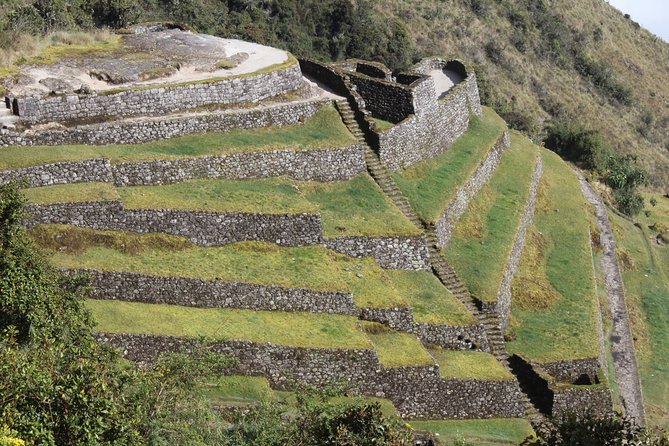
After lunch, the route continues through more up-and-down walking. Runkurakay and Sayacmarca are key archaeological stops, and the ruins break up the physical effort with something to study and photograph. The itinerary describes about two hours uphill and two hours downhill, with breaks at the ruins.
Chaquicocha camp is about 30 minutes beyond Sayacmarca. Dinner and another night in a two-person tent follow. By this point, the quality of the support team becomes especially important. The cook and porters are not decorative additions. They help turn a demanding route into a manageable expedition.
Other ways to reach Machu Picchu:
- 2-Day Inca Trail to Machu Picchu with Panoramic Train
★ 5.0 · 1,876 reviews - From Cusco: Full-Day Group Tour of Machu Picchu
★ 4.7 · 1,767 reviews - Machu Picchu Day Trip from Cusco
★ 4.5 · 1,644 reviews - 2-Day Tour: Sacred Valley and Machu Picchu by Train
★ 5.0 · 1,127 reviews
Day 3: Phuyupatamarca, Inti Pata, and Wiñay Wayna
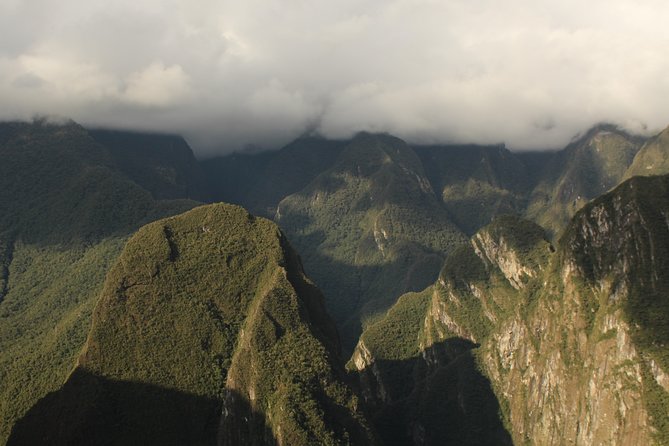
Day 3 is less punishing than the previous day, but it remains a proper hike. You begin with about two hours toward Phuyupatamarca, known as the City in the Clouds. This section is prized for its views, plants, and wildlife, according to the itinerary, and it offers a different feel from the bare exertion of the high pass.
Inti Pata, described as Sun Above the Terraces, is visited in the morning. These sites make Day 3 feel like a moving archaeological tour rather than a simple march toward the finish.
After lunch, you visit Wiñay Wayna, translated here as Forever Young. It is one of the most memorable ruins on the route, and its terraces and position on the approach to Machu Picchu give the afternoon a strong sense of purpose.
You then return to camp for dinner and a small farewell ceremony for the porters. This is also the last time you see much of the porter team. Bring cash for tips and decide in advance how you want to show your appreciation, since gratuities are not included in the price.
The human side of this evening deserves attention. The crew carries equipment, sets up camp, prepares meals, and supports the group over difficult ground. Several comments praise the cook, porters, kitchen assistant, and guide as the heart of the service. That praise fits the structure of the trip: you depend on them every day.
Day 4: Walking through the Sun Gate to Machu Picchu
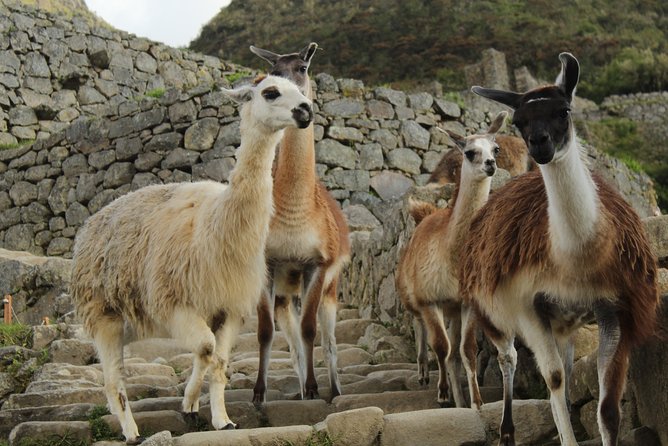
The final morning starts early again. Your team wakes you, and you head to the checkpoint to enter Machu Picchu once the site opens. The first objective is the Sun Gate, where you get your initial view of the citadel.
That arrival is one reason to choose the four-day route instead of simply taking a train to Machu Picchu. You see the site after walking through mountain scenery and ruins for several days. The view is not just a photo stop. It is the physical reward for the climbs, blisters, early starts, and nights under canvas.
Inside Machu Picchu, you receive about two hours of guided touring through the most important sacred sectors of the citadel. The guide’s cultural explanations are a major part of the experience. Feedback about the guides is consistently positive, with Mauro receiving a specific recommendation for his work with the Inca Trail Specialist team.
The itinerary then sends you by train to Ollantaytambo, followed by a bus back to Cusco. The exact arrival time is not given, so do not schedule a tight evening flight or an important appointment on the same day. The final meal is not included. You can eat on your own in Aguas Calientes or Machu Picchu Pueblo before continuing your return journey.
Accommodation in Cusco on the last night is also on your own. Plan that separately, unless your wider Peru itinerary already includes a room.
Meals, tents, and the support team

Three breakfasts, three lunches, and three dinners are included during the trek. Snacks and happy hour are also listed each day. This is useful because regular food matters on a route with long climbs, and you do not need to depend only on what you carry yourself.
The cooking receives unusually warm praise. One account specifically calls out the food and cake, while other comments credit the cook with expert work. The menu details are not provided, so do not book this expecting a particular diet or dish. If you have dietary needs, ask the operator before departure.
You sleep in a two-person tent on Nights 1, 2, and 3. The trip simplifies camp life by supplying tents, but it does not provide all camping equipment. A sleeping bag and walking stick are your responsibility, along with tips.
The porters are a central part of the experience. Their effort allows you to hike with a lighter personal load, though you should not assume that every item you own will be carried. Ask what baggage allowance and porter arrangements apply before the trip if you need certainty.
How difficult is the four-day route?
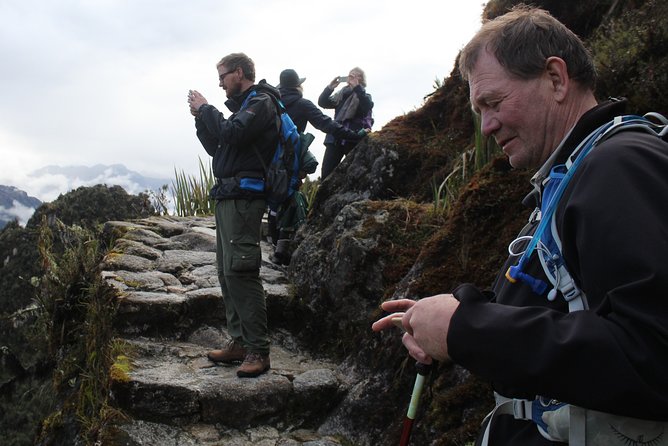
The supplied fitness guidance calls for a moderate level, but the route details make the demands clear. Day 2 includes five hours of climbing to 4,215 meters, followed by a steep two-hour descent. Days 1 and 3 also include uphill and downhill walking, and Day 4 begins early before the guided visit.
I would choose this trek if you already handle long walks and can cope with repeated climbs. You do not need to be an elite athlete, but you do need patience, steady pacing, and a willingness to spend four days outdoors.
Altitude is an important consideration because the expedition begins in the Cusco area and reaches a high pass. The provided information does not state an acclimatization program, medical support arrangement, or exact altitude advice. Ask the operator for current guidance before you book, and do not treat the moderate fitness label as a guarantee that the trek will feel easy.
The weather also matters. The booking terms state that the experience requires good weather. If poor weather forces cancellation, you are offered another date or a full refund. If you cancel for your own reason or request an amendment, the payment is nonrefundable. That is a strict policy, so make your plans carefully.
Who will get the most from this expedition?
This is a strong match for you if you want:
- A full four-day Inca Trail experience rather than a short visit
- Ancient sites woven into the walking route
- A first view of Machu Picchu from the Sun Gate
- Meals, tents, transport, and permits arranged in one booking
- A small group capped at 15 people
- Support from a guide, cook, kitchen assistant, and porter team
It is less suitable if you want a relaxed sightseeing holiday, private rooms each night, flexible dates, or an easy route with few climbs. The early starts and fixed permit system leave little room for casual changes.
The expedition also suits people who care about the working team behind the trip. The strongest praise is directed at the guide, cook, and porters, not only at the scenery. That is worth remembering when comparing prices. A low-cost trek with weak food or poor camp support may look cheaper until you are exhausted at 4,000 meters.
Small details that can make a big difference
Bring the passport connected with your permit. The checkpoint at KM-82 checks it, and the name must match.
Arrange a sleeping bag and walking stick before the start. Neither is included. You may also want to confirm how the tents are assigned if you are booking alone.
Keep the first morning calm. Pickup is at 5:00 a.m., and the trailhead transfer comes before the walking begins. Pack water, personal essentials, and anything you need during the day in a small accessible bag.
Plan your Cusco accommodation for the final night. The trip returns you by train and bus, but lodging in Cusco is not included. Also leave room in your schedule for delays, since no exact return time is provided.
The booking is for an English-language experience. Confirmation comes at booking, and the maximum group size is 15. Since the trail depends on permits and weather, this is not a good choice for someone who needs last-minute flexibility.
Should you book the Classic Inca Trail Expedition?
I would book it if reaching Machu Picchu on foot matters to you and you are ready for the physical work. The included permits, meals, tents, transport, and hotel pickup make the $990 price reasonable for a supported four-day expedition, especially with a respected cook and porter team.
I would not book it casually. Dead Woman’s Pass is high, the stone descents are steep, and the camping equipment list is not complete. Check your fitness, arrange a sleeping bag and walking stick, bring the correct passport, and accept the strict cancellation terms.
For the right person, the route offers more than a visit to Machu Picchu. It gives you the long approach, the ruins at Runkurakay, Sayacmarca, Phuyupatamarca, Inti Pata, and Wiñay Wayna, plus that first view from the Sun Gate. That combination of effort, scenery, archaeology, and strong staff support is the real reason to choose this expedition.
FAQ
How long is the Classic Inca Trail Expedition?
The expedition lasts four days and three nights.
Where does the trek begin?
The trek begins at KM-82, reached by transport from Cusco.
What time is hotel pickup?
Pickup from Cusco hotels is scheduled for 5:00 a.m.
Is hotel pickup included?
Yes. Pickup from your hotel in Cusco is included.
What language is the tour offered in?
The experience is offered in English.
How high is Dead Woman’s Pass?
Dead Woman’s Pass reaches 4,215 meters, or 13,779 feet.
Are the Inca Trail and Machu Picchu tickets included?
Yes. Admission tickets for the Inca Trail and Machu Picchu are included.
Are meals included?
Three breakfasts, three lunches, and three dinners are included during the trek. Snacks and happy hour are also listed. Lunch on Day 4 is on your own in Aguas Calientes or Machu Picchu Pueblo.
Is camping equipment included?
Tents are included, with accommodation in a tent for two people each night. Sleeping bags and walking sticks are not included.
How large is the group?
The maximum group size is 15 people.
Are tips included?
No. Tips are not included.
Is accommodation in Cusco included after the trek?
No. Accommodation in Cusco on the final night is on your own.
Can I cancel and receive a refund?
The experience is nonrefundable if you cancel or request an amendment. If poor weather causes the operator to cancel the experience, you are offered a different date or a full refund.
Added recently around Cusco
- Guided tour of the mountain of colors in Cusco★ 5.0 · 11 reviews
- 2-Day Private Short Inca Trail to Machu Picchu★ 5.0 · 15 reviews
- San Pedro Market Tour with Peruvian Cooking Class★ 5.0 · 31 reviews
- City Tour Cusco – Group★ 5.0 · 4 reviews
- Tour Sacred Valley with Maras and Moray★ 5.0 · 15 reviews
- Walking Culinary Experience★ 5.0 · 41 reviews
- City Tour in Cusco★ 4.5 · 10 reviews
- One Day Tour to Humantay Lagoon★ 5.0 · 8 reviews
Machu Picchu Tours, compared.
Classic Inca Trail Trek 4D/3N to Machu Picchu (Group Service)
Read our review →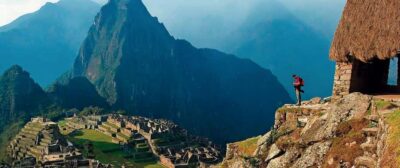
Machu Picchu: 4-Day Inca Trail Trek with Panoramic Train Ride
Read our review →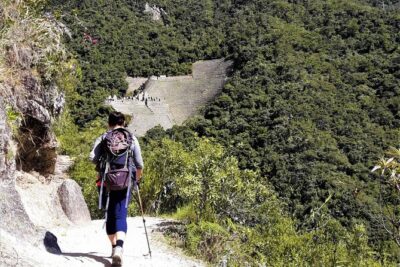
2-Day Inca Trail to Machu Picchu with Panoramic Train
Read our review →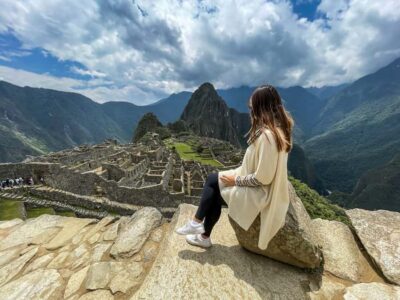
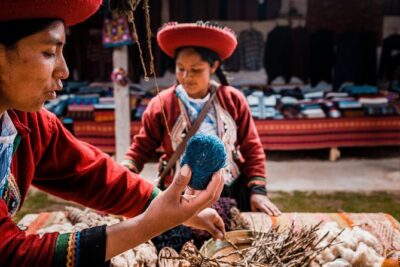
2-Day Tour: Sacred Valley and Machu Picchu by Train
Read our review →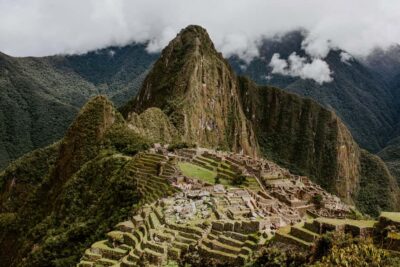
Machu Picchu: Full-Day Tour from Cusco with Optional Lunch
Read our review →Browse the lists this tour appears in