
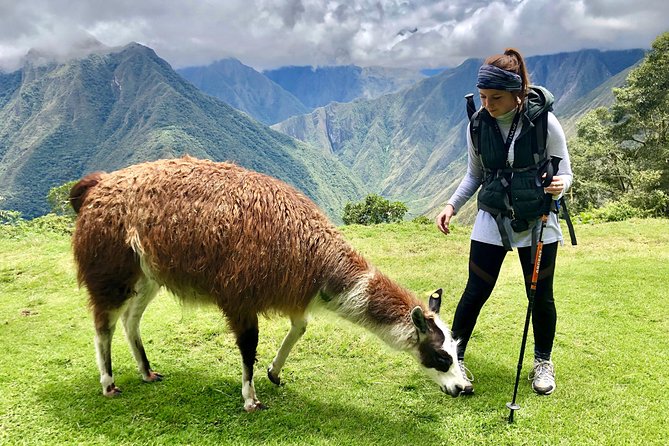
Reviewed · MACHU PICCHU TOURS
Classic Inca Trail To Machu Picchu 4 Days And 3 Nights 2026
The trail rewards every tired step. I like the small-group support and the care taken with food, camps, transport, and safety. I also like that the route reaches Machu Picchu on foot through a chain of Inca sites, not by train alone. The main concern is the physical demand: Day 2 reaches 4,215 meters, and Day 1 starts with a 4:30 a.m. pickup.
At $870 per person, this is a strong package for a four-day trek if you value having the hard planning handled for you. Guides such as Ali, Nilton, and Lino have earned high praise for clear explanations and steady encouragement, while the cooks and porters do much of the unseen work. You still need to prepare for cold nights, steep stone steps, long walking days, and simple camping conditions.
In This Review
- Key points to know before booking
- Why this four-day Inca Trail remains special
- Day 1: From Cusco to Patallacta and Ayapata
- Day 2: Dead Woman’s Pass at 4,215 meters
- Day 3: Phuyupatamarca, Inti Pata, and Wiñay Wayna
- Day 4: Entering Machu Picchu through the Sun Gate
- What the $870 price really covers
- Packing for cold camps and wet stone steps
- Who will enjoy this trek most
- Should you book the Classic Inca Trail?
- FAQ
- How long is the Classic Inca Trail tour?
- What time is hotel pickup in Cusco?
- Where does the trek begin?
- How high is Dead Woman’s Pass?
- What meals are included?
- Is camping equipment supplied?
- Are sleeping bags included?
- How many people can join the group?
- What is included after visiting Machu Picchu?
Key points to know before booking
- Day 2 is the physical test: You climb to Dead Woman’s Pass at 4,215 meters, then tackle more ruins and steep descents.
- The food is a major strength: The cooks prepare three meals daily, and past groups describe abundant, carefully prepared dishes, including strong vegetarian options.
- You reach Machu Picchu through the Sun Gate: The final approach gives you your first broad view of the citadel from above.
- Porters carry the camp: Tents, mattresses, cooking equipment, and food are transported and set up for you.
- This is a real mountain trek: A moderate fitness level is required, with long days, high altitude, rain, and uneven stone paths.
- Book early: The trek is commonly reserved about 120 days ahead, and the group limit is 15 people.
Why this four-day Inca Trail remains special
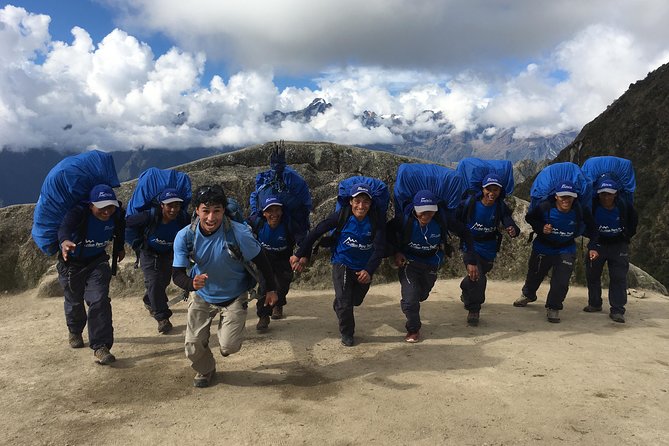
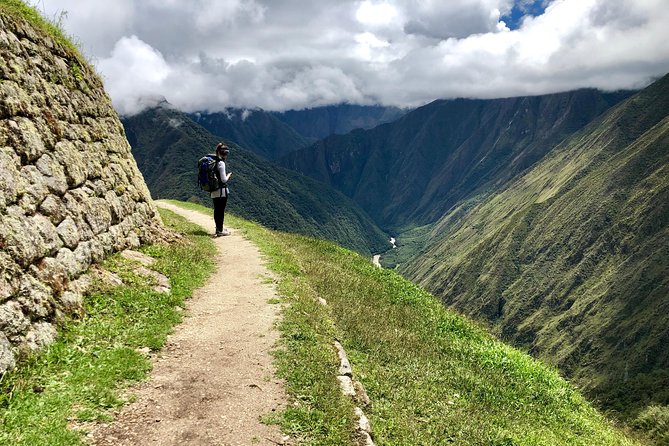
The Classic Inca Trail is not simply a hiking route to Machu Picchu. It is a carefully built mountain road lined with terraces, shrines, tunnels, stairways, and small settlements. You walk through several climate zones, beginning near the Sacred Valley and ending in the cloud forest above Machu Picchu.
I like the way this trip mixes physical effort with history. Each day gives you a different rhythm. You start with a long approach, face the highest pass on Day 2, move through high ruins and forest on Day 3, then enter Machu Picchu through the Sun Gate on Day 4.
The small group, capped at 15 people, matters here. On a demanding trail, you want a guide who can see when someone needs a pause, explain a site without rushing, and keep the group together. Past groups have praised guides including Ali Mesias Huaman Gutierrez, Nilton, Christian, Hipo, and Lino. Lino was described as having completed the route more than 700 times, while Ali was praised for combining history lessons with encouragement.
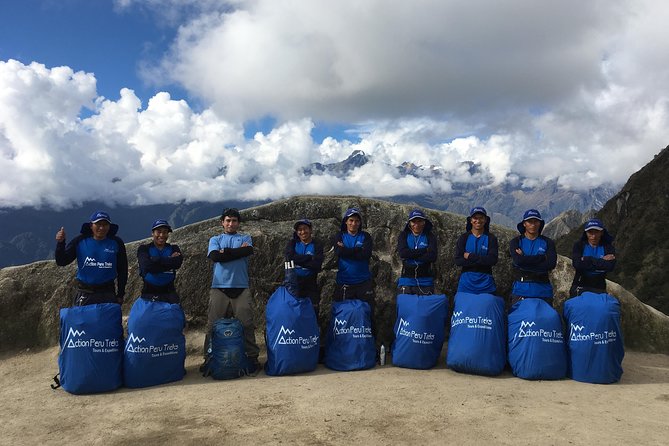
The support team is just as important. Porters carry the camping gear, food, and kitchen equipment, then prepare the campsite before you arrive. You carry your personal items unless you hire a personal porter, so pack with care and keep your day bag light.
Other Inca Trail departures:
- Classic Inca Trail Trek 4D/3N to Machu Picchu (Group Service)
★ 5.0 · 8,653 reviews - Machu Picchu: 4-Day Inca Trail Trek with Panoramic Train Ride
★ 5.0 · 4,568 reviews - Short Inca Trail to Machu Picchu 2D/1N
★ 5.0 · 3,007 reviews
Day 1: From Cusco to Patallacta and Ayapata
Your morning begins early, with hotel pickup in Cusco at 4:30 a.m. The drive passes through the Sacred Valley, with a brief stop in Ollantaytambo for photographs and breakfast. Breakfast is not included, so you should plan to buy something or bring food for the drive.
The trail begins at Kilometer 82, the traditional starting point for the Classic Inca Trail. Your porters and cook meet you there, and the first section is relatively gentle. After about two and a half hours, you reach Wilkaraqay, an Inca site with views toward Llactapata.
This opening stretch gives your body time to adjust. It is not flat in the ordinary sense, but compared with the climbs ahead, it is a forgiving start. Your guide will explain the route and the role of the Inca road, helping you understand that these stone paths once connected settlements, religious places, and administrative centers.
Another two hours brings you to Hatunchaca at 2,598 meters, where lunch is served. Three lunches, three dinners, and three breakfasts are included, along with camp cooking and support staff. That is more useful than it may sound. You do not need to shop for trail meals or carry several days of food.
In the afternoon, you continue for about two and a half hours to Ayapata, your first campsite. The full day can last around 10 hours when driving, stops, walking, and camp arrival are counted. You should expect to feel tired, even though this is not the highest day.
Patallacta is one of the first major archaeological stops. Its terraces, buildings, and position beside the Urubamba River suggest that it served as a rest point and support center for people heading toward Machu Picchu. It may also have had ceremonial importance, with solar alignments adding another layer to the site.
The short visit, about 30 minutes, is well placed. You get a first close look at Inca construction before the trail becomes steeper and more remote. The drawback is the early start and long day. If you are not used to pre-dawn departures, the combination of a dark hotel pickup, a long drive, and several hours of hiking may feel rough at first.
Day 2: Dead Woman’s Pass at 4,215 meters
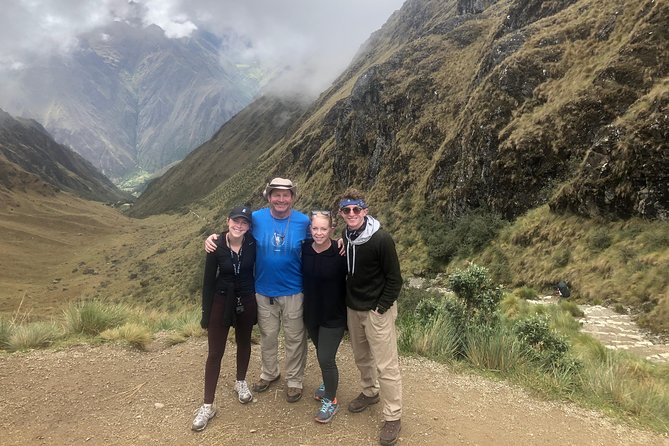
Day 2 is the hardest part of the route for many people. After breakfast, you climb through cloud forest, low sierra, and high Puna. The scenery changes as you gain height, but the key issue is the altitude.
The first two hours bring you to Lluchapampa at 3,800 meters. After a short break, you continue for about two hours to Dead Woman’s Pass, officially reaching 4,215 meters. The name is dramatic, and the climb deserves respect. You should walk slowly, drink regularly, and follow the guide’s advice about rest breaks.
At the top, the reward is a broad mountain view and the satisfaction of reaching the route’s highest point. This is not a place to rush. Weather can change quickly, and the trail can feel exposed even when conditions are good.
The descent to Pacaymayu brings lunch. After eating, the day is not finished. You climb for roughly 45 minutes to Runkurakay, a circular Inca site near the pass. It is thought to have served as a resting place for chaski messengers, the runners who carried messages across the Inca road system.
The site is small but important because it shows how the trail worked as a network. This was not only a ceremonial path. People needed places to stop, recover, and continue.
From Runkurakay, you climb for about another hour to the Runkurakay Pass at 3,950 meters. Then comes a 90-minute descent to Sayacmarca at 3,657 meters. Sayacmarca is one of the route’s most striking ruins, with stone stairways and buildings fitted into steep rock.
The approach makes the site feel hard won. You do not arrive beside it by road. You reach it after climbing and descending through high mountain terrain, which helps explain why its position mattered.
A final 25-minute walk brings you to Chaquicocha camp at about 3,600 meters. This is a full mountain day with repeated climbs and descents. It is also where a good guide earns their fee. Christian was praised for setting a comfortable pace for a family with children, and Hipo was noted for spotting when breaks were needed.
If you have never hiked at altitude, do not judge this day by distance alone. The air is thinner, the steps are uneven, and the body may work harder than expected. A moderate fitness level is the minimum stated requirement, but I would prepare with regular hill walking before arriving in Peru.
Day 3: Phuyupatamarca, Inti Pata, and Wiñay Wayna
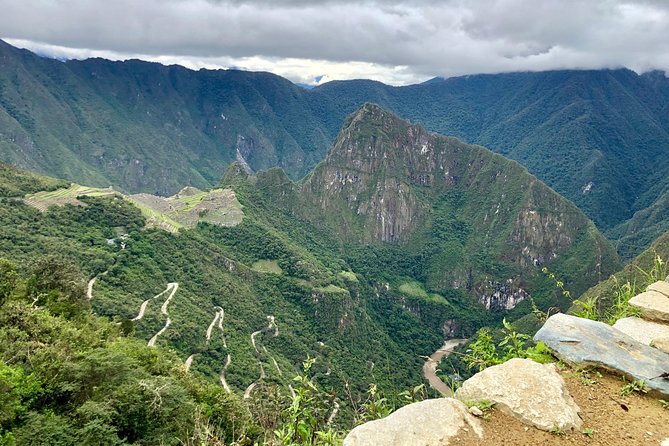
Day 3 begins with a two-hour hike to Phuyupatamarca, known as the City Above the Clouds. At roughly 3,680 meters, the site has stone structures and five small baths supplied by running water during the wet season.
The setting is one of the most memorable parts of the trail. From here, you can see toward Aguas Calientes, Machu Picchu Mountain, and Huayna Picchu Mountain. Weather controls how much you see, so keep your camera ready but do not count on a clear panorama.
After the guided visit, the route turns sharply downhill toward the cloud forest. The descent lasts about two and a half hours. This is where trekking poles become useful, especially if rain has made the stone steps slick.
You then visit Inti Pata, a terraced site often singled out for its views. The terraces appear to follow the mountain rather than fight it, and the changing vegetation gives the route a warmer, more enclosed feel than the high passes of Day 2.
From Inti Pata, it is about 40 minutes to Wiñay Wayna camp at 2,680 meters. You eat lunch, rest, and later visit Wiñay Wayna itself.
Wiñay Wayna means forever young in Quechua. It is the largest archaeological complex on the trail and one of the most satisfying stops because you have time to see it properly. Its terraces, stairways, buildings, and darker cave areas suggest farming, daily life, and possible religious use.
A guided visit is especially helpful here. Without context, it can be easy to see only walls and terraces. With an explanation of water, agriculture, movement, and ritual, the site becomes easier to read.
This is also the night to appreciate the camp team. Past groups have described cooks such as Ruben and Andres preparing multi-course meals with limited equipment. One group even received a homemade cake on the final camp night. Vegetarian meals were also handled well.
The camping setup is practical rather than luxurious. Two people share a four-person tent, and a mattress is supplied. Porters set up and break down the camp, which lets you spend your energy on walking, eating, drying clothes, and sleeping.
Other ways to reach Machu Picchu:
- 2-Day Inca Trail to Machu Picchu with Panoramic Train
★ 5.0 · 1,876 reviews - From Cusco: Full-Day Group Tour of Machu Picchu
★ 4.7 · 1,767 reviews - Machu Picchu Day Trip from Cusco
★ 4.5 · 1,644 reviews - 2-Day Tour: Sacred Valley and Machu Picchu by Train
★ 5.0 · 1,127 reviews
Day 4: Entering Machu Picchu through the Sun Gate
The final morning starts early again. After breakfast, you walk for about an hour on a relatively easy section toward the Sun Gate, or Intipunku.
This is one of the best reasons to choose the Classic Inca Trail instead of arriving at Machu Picchu by train. Your first major view of the citadel comes after days of walking, not from a bus window. If the weather cooperates, you may also see the Andes lit by early morning sun.
From the Sun Gate, you descend for about 45 minutes to the entrance of Machu Picchu. The path is not a final gentle stroll. Your legs have already worked hard for three days, and downhill stone steps can be tiring.
At the citadel, the group goes to the classic photo area before taking a short break. A two-hour guided visit follows. The guide’s role matters here because Machu Picchu is large, layered, and easy to experience as a series of photo stops without a clear explanation.
Lino, Ali, Nilton, and other guides were praised for bringing the sites to life through Inca history and mythology. If your guide stays with you for Machu Picchu, you gain continuity from the first ruins on the trail to the final citadel.
After the visit, you take a bus to Aguas Calientes, then a train to Poroy. A private vehicle takes you back to your Cusco hotel, with arrival expected around 8 p.m. This makes Day 4 long, but it also means your return transport is arranged rather than left to you after an exhausting morning.
What the $870 price really covers
At $870 per person, the price is not just for a walking permit or a guide. It includes the guide, pre-trek briefing, private transport, camping tents, mattresses, porters, cooks, emergency equipment, and meals.
The safety package includes a first aid kit, oxygen, and emergency radios. That does not remove the need to prepare for altitude, but it gives you useful support in a remote setting.
The included meals are a real value. You receive three breakfasts, three lunches, and three dinners. Past groups praised the food for being generous and restaurant-quality, even though it is prepared at camp. Good meals can make a major difference after a high-altitude day.
Not included are sleeping bags, trekking poles, tips, and a personal porter. Sleeping bags and poles can be rented from the company. You should clarify rental costs before departure, since the advertised price does not cover them.
The price also does not include breakfast during the Ollantaytambo stop. Bring cash or food for that part of the morning. Small roadside stops along the trail may also sell drinks and snacks, though you should not depend on them for your main supplies.
Packing for cold camps and wet stone steps
Bring your original passport. If you received a new passport after booking, bring both the old and new documents.
Your clothing should cover warm and wet conditions: trekking boots, fleece, T-shirts, socks, a sun hat, warm underwear, light long pants, gloves, and a rain jacket. Temperatures and weather can shift sharply as the route moves between altitude zones.
A headlamp is important for early starts and camp use. Add sunscreen rated SPF 35 or higher, sunglasses, insect repellent, toilet paper, wet wipes, and a personal towel.
The supplied information recommends a down or synthetic sleeping bag, which you can rent. Trekking poles are also recommended, particularly for the steep descents on Days 2 and 3.
Bring spare camera batteries. Batteries run down faster at high altitude, and you will have plenty of reasons to use your camera. Binoculars and a book are optional but useful during rest time at camp.
Because there is no included personal porter, think carefully about what goes in your own pack. Carry only what you need for the day and keep heavier items organized for the support team to transport.
Who will enjoy this trek most
This route suits you if you want to reach Machu Picchu by walking an historic Inca road and seeing several archaeological sites along the way. It is also a good choice if you prefer having meals, transport, camp setup, and safety equipment organized in advance.
You should be comfortable with long hiking days and high altitude. The itinerary includes a 10-hour first day, a steep climb to 4,215 meters, repeated stone stairways, and a long final return to Cusco.
Families with active older children may manage the route, but the age and pace of each child matter. Christian’s steady pacing helped one family with children aged 11 and 13, yet this remains a demanding trek, not a casual family walk.
The trip is less suitable if you dislike early mornings, shared tents, basic camp facilities, or unpredictable mountain weather. A five-day option may suit you better if you want more time to enjoy the route, but the listed experience is the four-day, three-night version.
The cancellation policy allows a full refund if you cancel at least 24 hours before the local start time. Cancellations or changes made within 24 hours are not accepted for a refund.
Should you book the Classic Inca Trail?
I would choose this trek if the route itself matters as much as Machu Picchu. The approach through Patallacta, Runkurakay, Sayacmarca, Phuyupatamarca, Inti Pata, and Wiñay Wayna gives the journey real substance.
The strongest reasons to book are the small group, experienced guides, porters, included camp logistics, and unusually well-praised cooking. The main reasons to pause are the altitude, early starts, strenuous climbs, and extra costs for a sleeping bag, trekking poles, personal porter, and tips.
If you can train for hills, pack lightly, and accept four nights of basic mountain living, this $870 package offers a lot for the money. Book well ahead, ideally around four months before you want to go, and treat Day 2 as a serious mountain crossing rather than an ordinary sightseeing walk.
FAQ
How long is the Classic Inca Trail tour?
The tour lasts approximately four days and includes three nights of camping.
What time is hotel pickup in Cusco?
Pickup is scheduled for 4:30 a.m. on the first day.
Where does the trek begin?
The hike begins at Kilometer 82, after transport from Cusco through the Sacred Valley and a short stop in Ollantaytambo.
How high is Dead Woman’s Pass?
Dead Woman’s Pass reaches 4,215 meters, or 13,825 feet.
What meals are included?
The tour includes three breakfasts, three lunches, and three dinners.
Is camping equipment supplied?
Yes. Tents and mattresses are included. One four-person tent is provided for every two people.
Are sleeping bags included?
No. Sleeping bags are not included, but they can be rented from the tour provider.
How many people can join the group?
The maximum group size is 15 people.
What is included after visiting Machu Picchu?
After the guided visit, you travel by bus to Aguas Calientes, then by train to Poroy, where a private vehicle takes you back to your Cusco hotel. Arrival is expected around 8 p.m.
Added recently around Cusco
- Guided tour of the mountain of colors in Cusco★ 5.0 · 11 reviews
- 2-Day Private Short Inca Trail to Machu Picchu★ 5.0 · 15 reviews
- Tour Sacred Valley with Maras and Moray★ 5.0 · 15 reviews
- San Pedro Market Tour with Peruvian Cooking Class★ 5.0 · 31 reviews
- City Tour Cusco – Group★ 5.0 · 4 reviews
- Walking Culinary Experience★ 5.0 · 41 reviews
- City Tour in Cusco★ 4.5 · 10 reviews
- One Day Tour to Humantay Lagoon★ 5.0 · 8 reviews
Machu Picchu Tours, compared.
Classic Inca Trail Trek 4D/3N to Machu Picchu (Group Service)
Read our review →
Machu Picchu: 4-Day Inca Trail Trek with Panoramic Train Ride
Read our review →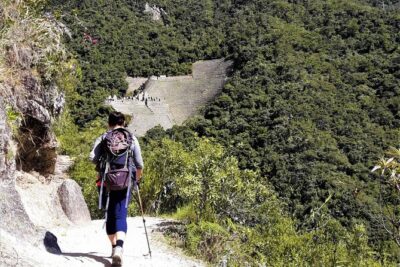
2-Day Inca Trail to Machu Picchu with Panoramic Train
Read our review →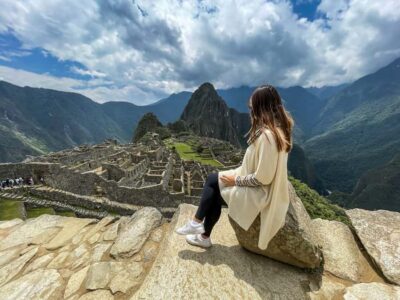
2-Day Tour: Sacred Valley and Machu Picchu by Train
Read our review →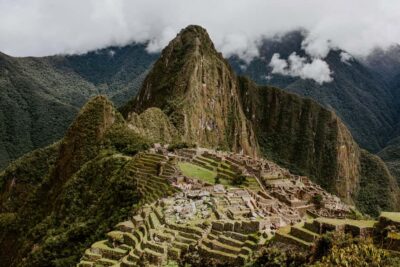
Machu Picchu: Full-Day Tour from Cusco with Optional Lunch
Read our review →Browse the lists this tour appears in