
Reviewed · PRIVATE DRIVERS
Cusco: Alpaca and Llama Farm Tour w/ Transfer & Weaving Demo
Cute animals, serious Andean culture. This short outing takes you about 20 minutes from Cusco’s historic center to meet alpacas, llamas, vicuñas, and huanacos, then watch a traditional weaving demonstration. I especially like the easy hotel transfer and the chance to feed and pet some of the animals rather than simply viewing them from behind a fence. The main drawback is the large textile shop at the end, where prices can be much higher than in Cusco’s ordinary shops.
The tour also makes a smart first activity in Cusco. You get fresh mountain air, city views during the drive, and a gentle introduction to Inca-era animal raising and Peruvian textiles without committing to a full-day excursion. Guides such as Marileth, Marlith, Olga, Holger, and Olger have been praised for clear explanations and friendly help, although one person found the visit shorter and more rushed than expected.
In This Review
- Key points at a glance
- What this Cusco farm visit is really like
- The short ride out of Cusco
- Meeting alpacas, llamas, vicuñas, and huanacos
- Why the Inca connection matters
- The weaving demonstration and the value of wool
- The shop: useful, attractive, and not always cheap
- Is $34 good value?
- Who should book this activity?
- Should you book the Cusco alpaca and llama farm tour?
- FAQ
- Where is the farm located?
- How long does the experience last?
- What animals will I see?
- Can I feed and pet the animals?
- Is the weaving demonstration included?
- Which languages are available?
- Does the price include transportation?
- Is the activity wheelchair accessible?
- Can I cancel or pay later?
Key points at a glance
- Four types of camelids in one visit: See alpacas, llamas, vicuñas, and huanacos, the wild relatives of domesticated Andean animals.
- Hand-feeding is part of the fun: You may get close enough to feed and pet the animals, making this more than a photo stop.
- A useful weaving lesson: Watch wool being cleaned, dyed, spun, and turned into textiles, with advice on spotting genuine baby alpaca fabric.
- Only 20 minutes from central Cusco: The farm gives you a quick break from the city without taking up an entire day.
- A calm way to start in Cusco: The 150-minute schedule suits your first or second day, when you may still be adjusting to the altitude.
- Budget for the shop carefully: The textile store is attractive and informative, but some prices may be far above those in Cusco.
What this Cusco farm visit is really like
This is not a remote highland ranch or a long trek into the countryside. It is a short cultural outing at Manos de la Comunidad, reached by arranged transfer from Cusco. That matters because you can fit it around a morning arrival, a free afternoon, or a major sightseeing day.
The advertised duration is 150 minutes, including transport, with about 80 minutes set aside for the guided visit. A guide meets you in English or Spanish, and the driver takes you up from the city. Several people appreciated the views during the climb and the unhurried driving on winding roads.
Once you arrive, the visit combines animals, history, conservation, and textiles. It has a clear educational purpose, but it never feels like a classroom for long. The animals provide the comic relief. Llamas have attitude, alpacas have excellent hair, and the smaller vicuñas look delicate beside them.
I would set your expectations correctly: this is an organized farm and cultural center, not a completely independent encounter with rural life. There is a retail stop, and the overall experience has a commercial side. Still, the explanations about fiber, animal breeds, and local traditions give the visit more substance than a simple animal photo opportunity.
More Private Transfers in Cusco
- Cusco Airport Shared Arrival Transfer
★ 4.5 · 211 reviews - Cusco: Abode of the Gods ATV Tour with Transfer
★ 4.5 · 118 reviews - Cusco Airport Departure Transfer
★ 4.5 · 113 reviews
The short ride out of Cusco
Pickup and drop-off at your hotel are included, which adds real value at $34 per person. You do not need to arrange a taxi, negotiate a fare, or find the farm on your own. The drive takes roughly 20 minutes from the historic center, though the exact pickup time and road conditions can affect the total schedule.
The road climbs, and you may get broad views back toward Cusco. That change from urban streets to open mountain surroundings is part of the appeal. You are still close to the city, but the setting feels quieter and more open.
This transfer also makes the tour useful for altitude adjustment. You will not be hiking for hours or racing between archaeological sites. You can spend most of the time walking around the farm at a relaxed pace, though you should still bring water and sun protection. Water is provided, but Cusco’s strong high-altitude sun is not part of the package.
If you have limited mobility, the activity is listed as wheelchair accessible. Since the supplied information does not describe every path or surface, it is sensible to confirm the exact conditions when booking if you need a fully step-free route.
Meeting alpacas, llamas, vicuñas, and huanacos
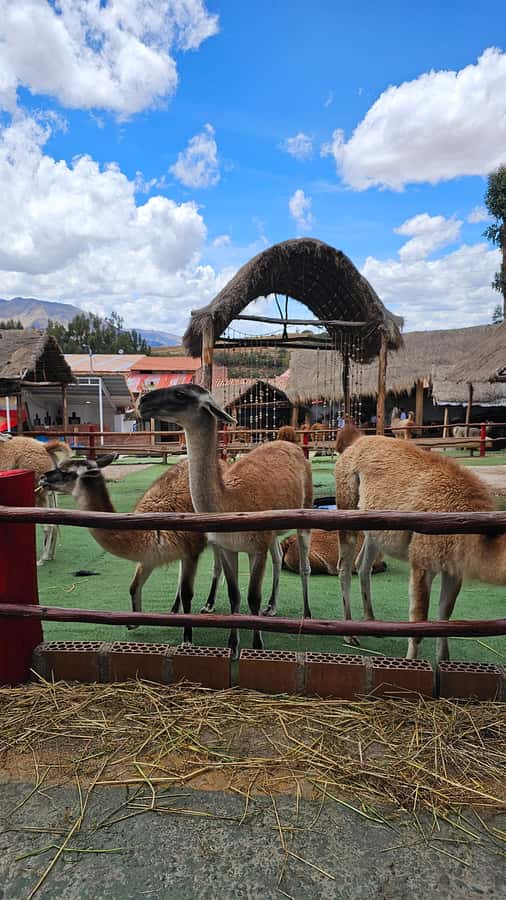
The animal portion begins with a lesson in the ancient South American camelids. Your guide explains how people domesticated these animals and how the Incas developed particular species for different uses. That background gives the visit a useful frame: these animals were not just decorative creatures in Andean life. They provided fiber, transport, and economic value.
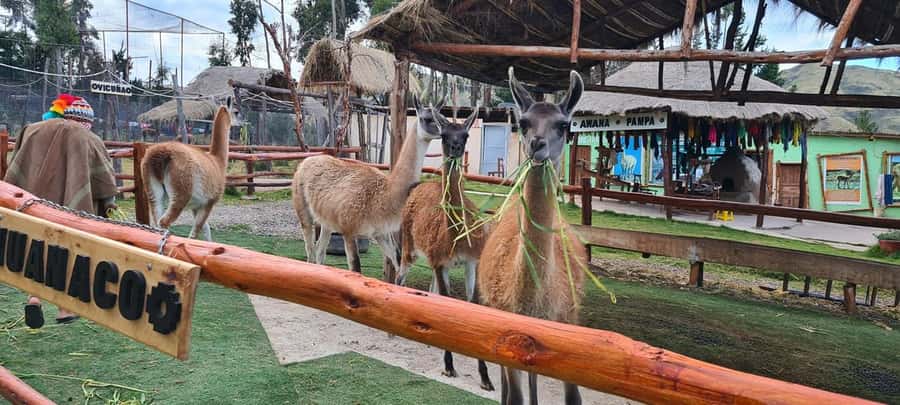
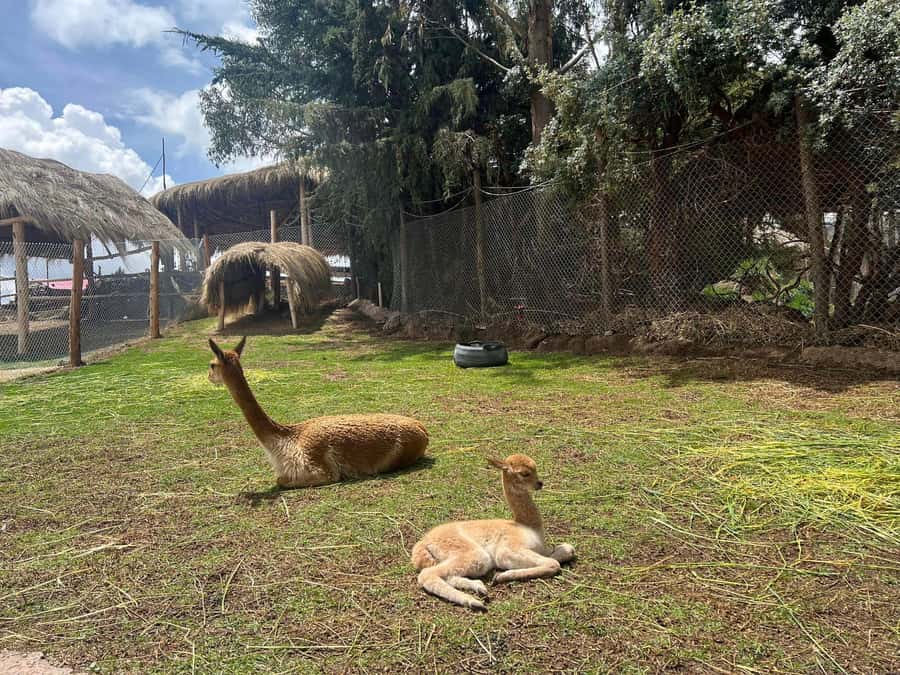
You will see two varieties of alpaca and learn to distinguish them. You will also meet llama varieties and the wild relatives that came before domestication. Vicuñas are especially important. They are often called the gold of the Andes because of the value of their fine wool.
Huanacos are another highlight. They are ancestors of the domesticated llama, and seeing them beside alpacas and llamas makes the family connection easier to understand. Instead of leaving with one blurred memory of fluffy Andean animal, you begin to notice differences in size, shape, coat, and behavior.
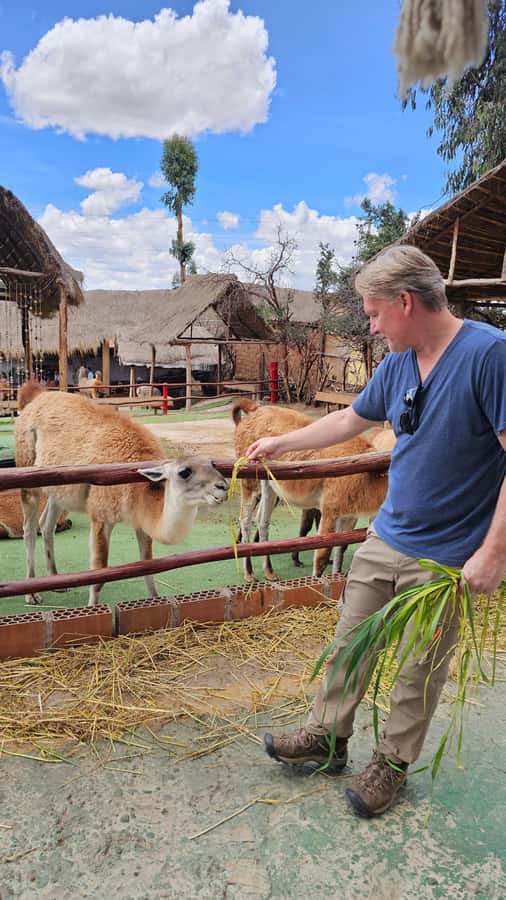
The best part for many people is the close contact. You may feed the animals by hand, pet them, and take photographs at close range. Guides help you get good pictures and answer questions, which is useful when a llama decides to turn its head at exactly the wrong moment.
The setting may include other animals as well. Experiences described at the farm have included rescued condors, deer, guinea pigs, and a particularly memorable muscular farm dog. These extras are not the central promise of the tour, so treat them as possible additions rather than guaranteed stops.
The conservation angle also adds value. The animals have been described as rescues, and the visit offers a chance to think about animal care alongside their role in Peruvian culture. I would still pay attention to how the animals are handled and follow the guide’s instructions when feeding or touching them.
Why the Inca connection matters
A good guide turns the animal visit into a short lesson about Peru. The Incas relied on camelids in ways that still shape how these animals are understood today. Learning about domestication and the species developed in the Andes helps connect the farm to the wider story of Cusco.
Guides Holger and Olger received particular praise for explaining Cusco, Inca culture, and the animals with the right amount of detail. Marileth, also written as Marlith in some bookings, was praised for being friendly, clear, and helpful. Olga was also noted for her strong explanations, while other guides have helped with photographs and local suggestions.
That personal approach matters. You can ask why one animal has a different coat, how the wool is used, or what makes vicuña fiber valuable. The best part of a guided visit is not memorizing names. It is learning what to look for.
You should allow for some variation in the experience. One person found the tour rushed and shorter than advertised, while most descriptions characterize it as leisurely and well paced. Your enjoyment may depend on group size, the pace of the guide, and how much time is available with each animal.
A few more Cusco trips worth lining up side by side
- Full Day:Sacred valley,Alpaca farm,Maras,Moray and Ollantaytambo
★ 5.0 · 109 reviews - Private Ollantaytambo, Pisac Ruins Tour with Farm Visit, Gourmet Picnic Lunch
★ 5.0 · 52 reviews - From Cusco: Private Pisac Ruins and Alpaca Farm Day Trip
★ 5.0 · 9 reviews - Full-Day Tour: Cacao farm experience in the jungle of Cusco
★ 5.0 · 8 reviews
The weaving demonstration and the value of wool
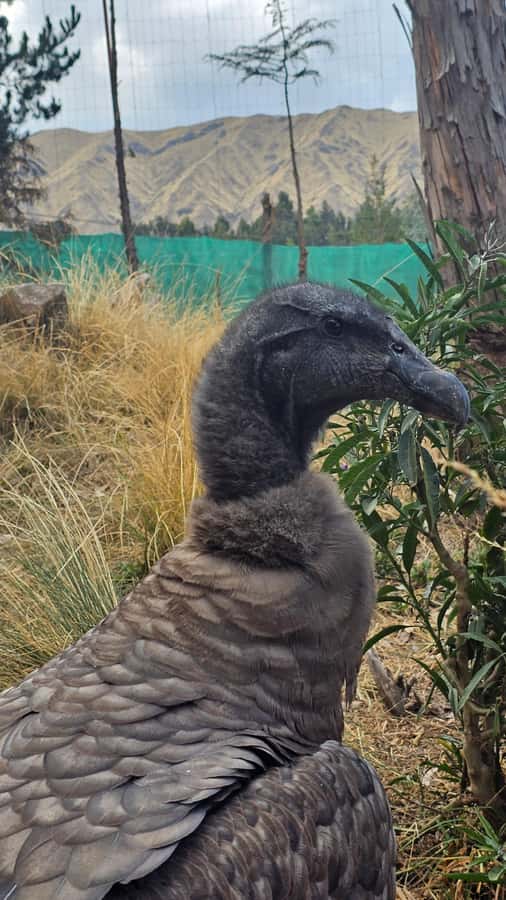
The second half shifts from living animals to the work made from their fiber. A local weaver demonstrates traditional techniques and shows how Andean textiles are produced. You may see stages such as dyeing, spinning, and weaving, along with examples of finished garments.
This is where the visit becomes more useful for shoppers. You can learn why alpaca wool is prized and how to recognize genuine baby alpaca fabric from cheaper imitations. One detailed experience also included explanations of traditional dyeing and examples of ancient fabrics.
Do not rush this section. It is easy to focus on buying a scarf and miss the skill behind it. Watch how the fibers are handled, notice the colors, and ask questions about what you are seeing. Even if you buy nothing, you leave with a better sense of why a handwoven textile costs more than a factory-made souvenir.
The demonstration also links present-day craft to the ancient past. Textiles were important long before modern tourism, and weaving remains a practical way for Andean communities to preserve techniques and earn income. That makes the stop more than a sales pitch, although the sales area is clearly part of the business model.
The shop: useful, attractive, and not always cheap
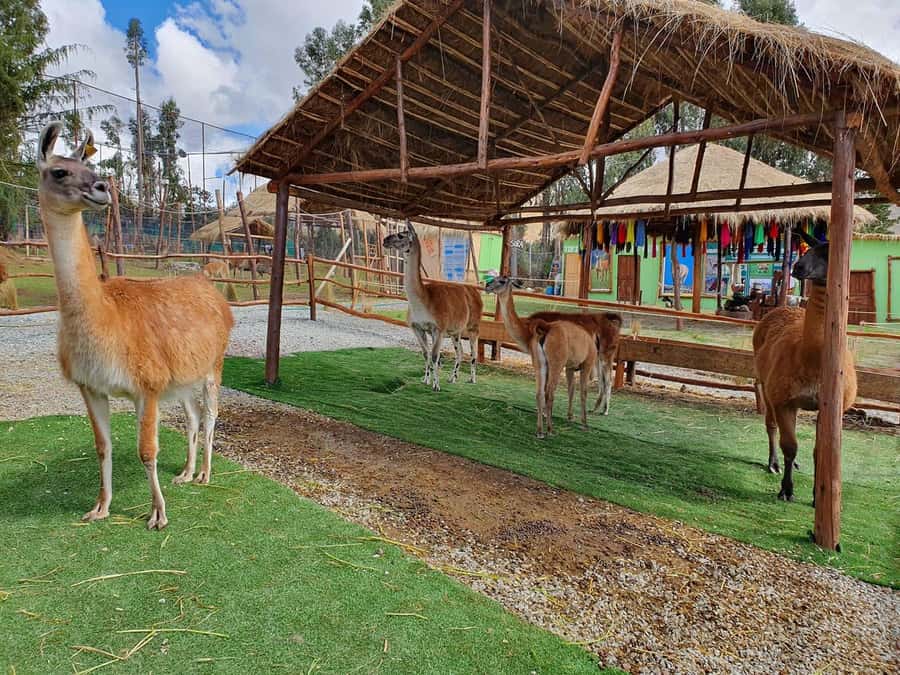
The retail outlet comes at the end, and it is large enough to deserve a warning. You will find alpaca products and other textiles, and the shop can help you compare colors, patterns, and types of wool after the demonstration.
The downside is pricing. A scarf or skein of yarn may cost much more here than in a regular Cusco shop. One comparison found yarn selling for 60 soles at the farm, while similar yarn elsewhere in Cusco cost 15 soles. That does not prove every product is overpriced, since quality, origin, and charitable support may differ, but you should not assume the farm shop has the lowest price.
You may also feel watched while browsing. The pressure is not necessarily aggressive, and you are not required to buy, but the sales attention can change the mood after a relaxed animal visit. I suggest treating the shop as a place to learn and compare, not as your only shopping stop.
If you find something you love and the price works for you, buying directly can support the craft operation. If you are bargain hunting, wait until you have visited several shops around Cusco before spending your souvenir budget.
Is $34 good value?
At $34, the tour offers a lot for a short half-day outing. Your fee covers hotel pickup and return, a live English or Spanish guide, farm admission, the weaving demonstration, and water. You also avoid paying separate taxi fares, which can make the package more useful than the headline price first suggests.
The value is strongest if you want three things in one outing: animal contact, cultural context, and easy transport. A private taxi to a farm plus a separate cultural visit could cost more and require extra planning.
The value is weaker if you want a wild, remote, or highly independent experience. This is a managed attraction with a shop, and the farm is close to Cusco rather than far into the Andes. You are paying for convenience and interpretation as much as for the animals.
The 4.9 rating from 151 bookings reflects a very strong overall response, and the repeated praise centers on the same points: friendly guides, clear animal explanations, hand-feeding, and the weaving lesson. I would give particular weight to those consistent strengths, while keeping the shop prices and possible schedule variation in mind.
Who should book this activity?
I would recommend it to families, first-time visitors, animal lovers, photographers, and anyone who wants a gentle introduction to Andean culture. It is also a good choice for your first or second evening in Cusco, when you want to do something worthwhile without taking on a demanding hike.
It suits you if you enjoy asking questions and learning the difference between related animals. The guide-led format is a plus for anyone who wants history and textile information rather than a quick selfie stop.
It may not suit you if you dislike organized shopping stops or prefer remote rural experiences. You might also want more time at the farm if your main goal is animal photography. In that case, ask about the exact timing and group size before booking.
The tour is available in English and Spanish, and free cancellation is offered up to 24 hours before departure. You can also reserve and pay later, which helps if your Cusco schedule is still changing.
Should you book the Cusco alpaca and llama farm tour?
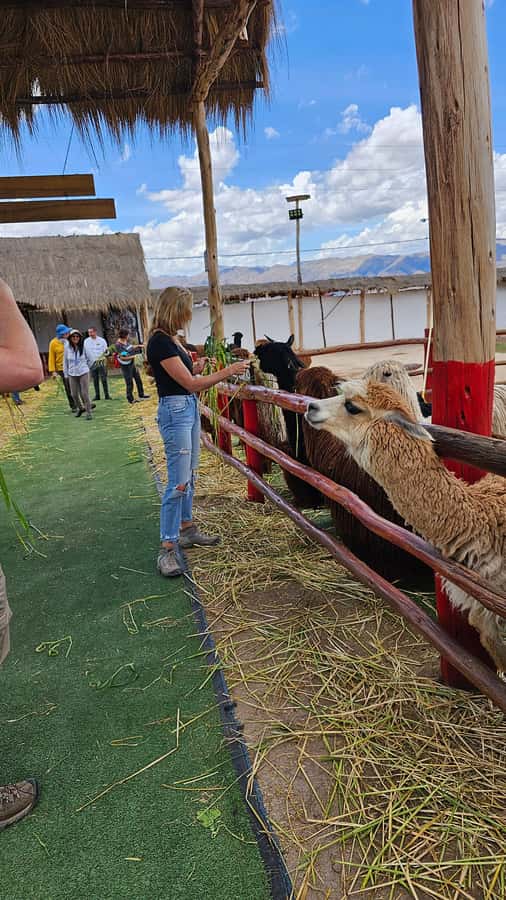
Yes, if you want an easy, affordable activity that combines animals with real cultural background. I like that you can feed and pet the camelids, learn about vicuñas and huanacos, and then see how wool becomes cloth, all within about two and a half hours.
Book it early in your Cusco stay if altitude or a packed sightseeing schedule is a concern. Go in expecting a commercial farm setting, and compare prices before buying at the shop. With that small adjustment, the $34 price is fair, the transfer is convenient, and the animal and weaving lessons make this more worthwhile than a basic photo stop.
FAQ
Where is the farm located?
The farm, Manos de la Comunidad, is about 20 minutes from Cusco’s historic center by transfer.
How long does the experience last?
The total duration is listed as 150 minutes. The guided farm visit itself is scheduled for about 80 minutes, with the remaining time used for transfers and the rest of the activity.
What animals will I see?
You will see alpacas, llamas, vicuñas, and huanacos. The visit may also include rescued condors, deer, guinea pigs, and other animals, though these additional sightings are not the main advertised focus.
Can I feed and pet the animals?
Descriptions of the experience include hand-feeding and petting llamas and alpacas. You should follow the guide’s instructions when interacting with them.
Is the weaving demonstration included?
Yes. A guide explains traditional weaving techniques, wool, dyeing, and textile production as part of the visit.
Which languages are available?
The tour is offered with a live guide in English or Spanish.
Does the price include transportation?
Yes. Hotel pickup and drop-off, the farm visit, a guide, the weaving demonstration, and water are included.
Is the activity wheelchair accessible?
The activity is listed as wheelchair accessible. If you require specific path or vehicle arrangements, confirm those details before booking because the supplied information does not describe every surface or transfer step.
Can I cancel or pay later?
You can cancel up to 24 hours in advance for a full refund. A reserve-now, pay-later option is also available.
More Private Transport around Cusco
- Cusco Airport Pickup and Private Transfer
★ 5.0 · 82 reviews - Cusco Private Airport Transfer: Fast, Reliable Hotel Drop-Off
★ 5.0 · 80 reviews - Transfer from Cusco to Ollantaytambo
★ 5.0 · 30 reviews - Transfer Cusco Airport to Hotel in Cusco (Round trip)
★ 5.0 · 22 reviews
Added recently around Cusco
- Guided tour of the mountain of colors in Cusco★ 5.0 · 11 reviews
- 2-Day Private Short Inca Trail to Machu Picchu★ 5.0 · 15 reviews
- San Pedro Market Tour with Peruvian Cooking Class★ 5.0 · 31 reviews
- City Tour Cusco – Group★ 5.0 · 4 reviews
- Tour Sacred Valley with Maras and Moray★ 5.0 · 15 reviews
- Walking Culinary Experience★ 5.0 · 41 reviews
- City Tour in Cusco★ 4.5 · 10 reviews
- One Day Tour to Humantay Lagoon★ 5.0 · 8 reviews
Private Drivers, compared.


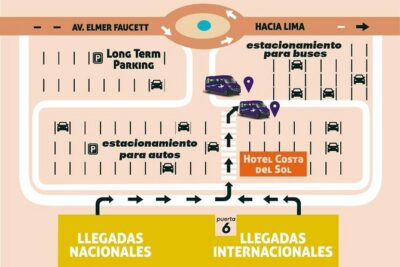
QuickLlama: Door-to-door transfer from Lima Airport to Miraflores
Read our review →

Round Trip Transfer from and to the Airport in Lima: Miraflores/Barranco/Sani
Read our review →
Transfer from the Airport to Hotel/Airbnb Miraflores/San Isidro/Barranco
Read our review →Browse the lists this tour appears in