
Reviewed · FOOD & DRINK
Exploring Markets & Street Food in Lima
Lima makes lunch a cultural lesson. This three-hour outing links local markets and street food with a useful look at how ordinary Limeños shop and eat. I like the unusual fruit tasting at Mercado Nº 1 de Surquillo, and I like that the route goes beyond polished tourist sights into working food markets, Chinatown, and a riverside dessert stop.
I also appreciate the human side of the experience. Guides such as Juan, Alfredo, Lucas, and Darwin have brought strong local knowledge and good English to the tour, with Lucas adding personal insight from growing up around his family’s farm. The main consideration is pace: four stops in about three hours means you get a broad sample, not a long, leisurely visit at each place.
In This Review
- What makes this Lima food tour worth your afternoon
- Why start with Lima’s markets
- Mercado Nº 1 de Surquillo: a smart first stop
- Mercado Central: from raw ingredients to ready-to-eat food
- Chinatown and the Chinese-Peruvian connection
- Alameda Chabuca Granda: ending with Peruvian sweets
- The guides make the difference
- What the three-hour timing means for you
- Is $55 a fair price?
- Who should book this food walk?
- Practical details before you reserve
- Should you book Exploring Markets & Street Food in Lima?
- FAQ
- How much does the Lima street food tour cost?
- How long does the experience last?
- What time does the tour start?
- Is the tour offered in English?
- Which places are included in the route?
- What foods are included?
- Is hotel pickup available?
- Is the experience near public transportation?
- Can most people participate?
- Can I cancel for a full refund?
What makes this Lima food tour worth your afternoon
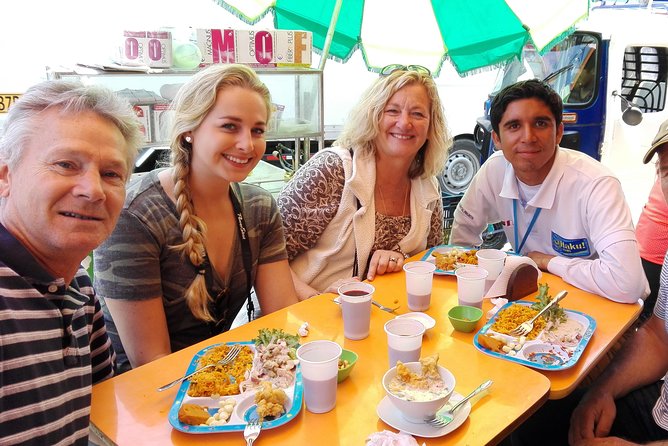
- Fruit tasting at Mercado Nº 1 de Surquillo: Try Peruvian produce that may be completely unfamiliar to you, with explanations about farming and how the fruit is used.
- A look at the food supply chain: The market visits show more than ready-to-eat snacks. You get a sense of how produce and meat reach Lima’s kitchens.
- Anticuchos and picarones at Mercado Central: Two classic Peruvian bites give you savory and sweet samples in one stop.
- Chinatown’s Min Pao: This Chinese-Peruvian specialty adds another layer to Lima’s food culture.
- Dessert at Alameda Chabuca Granda: Finish with Peruvian sweets in a public setting rather than at a formal restaurant.
- Hotel pickup from key districts: Pickup is offered in Miraflores, Barranco, San Isidro, and Downtown Lima, which makes the 1:30 pm start easier to manage.
Why start with Lima’s markets
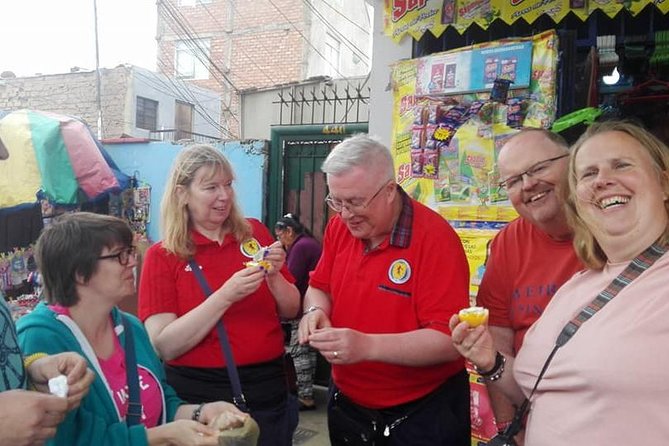
Lima is often introduced through its famous restaurants, but markets give you a more useful first lesson. You see what people buy for daily meals, how produce is displayed, and how many regions of Peru feed the capital.
I like this tour because it does not treat food as a string of isolated samples. The route connects ingredients, vendors, prepared dishes, and local neighborhoods. That gives you a clearer sense of Lima as a city shaped by migration, farming, trade, and family cooking.
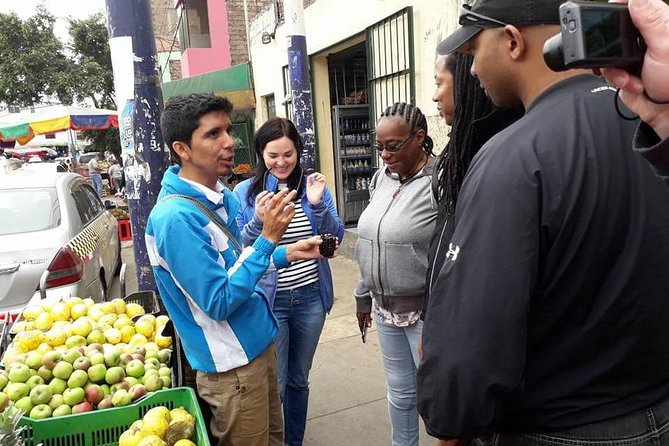
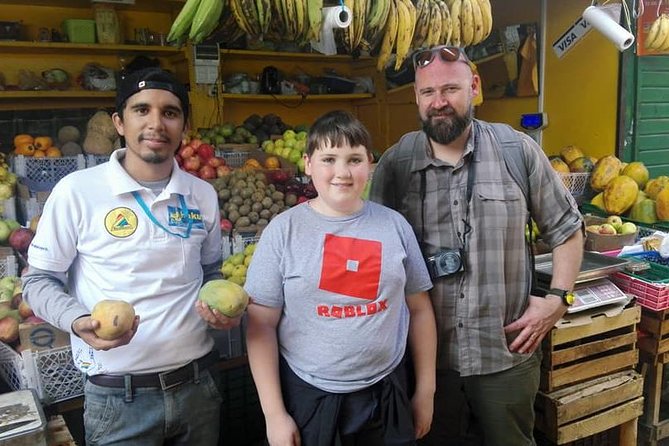
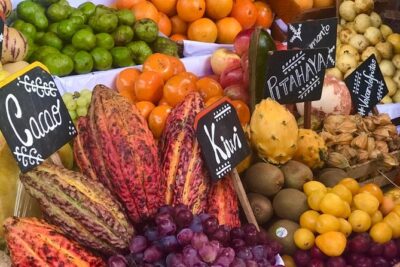
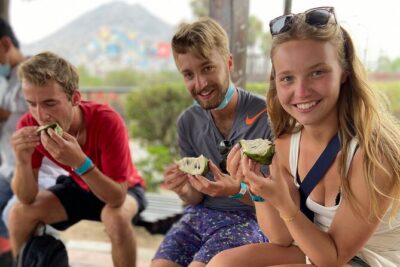
The experience begins at Mercado Nº 1 de Surquillo, a market best known here for fruit tasting. You can expect a colorful selection of produce, including fruits that may be hard to find in the United States or Europe. The useful part is not simply trying something unusual. A good guide can explain its flavor, origin, season, and place in Peruvian cooking.
Lucas has a particularly helpful background for this section. He spent time on his family’s farm as a child and has a personal connection to Peruvian produce. That kind of experience can turn a confusing market display into a practical food lesson.
If you have already wandered through a Lima market on your own, you may have noticed the problem: it is easy to see unfamiliar fruit and have no way to ask the vendor what it is. A guide who speaks English and Spanish helps bridge that gap. You can ask questions, taste the produce, and understand what you are trying instead of simply pointing at something and hoping for the best.
More Food Tours in Lima
- Lima Ultimate Peruvian Food Tour
★ 5.0 · 1,845 reviews - Peruvian Cooking Class, Local Market Tour & Exotic Fruit Tasting
★ 5.0 · 744 reviews - Lima: Ultimate Peruvian Food Tour
★ 4.9 · 700 reviews
Mercado Nº 1 de Surquillo: a smart first stop
This market is likely to be the most appealing stop for curious eaters. You are not limited to familiar bananas, apples, and oranges. The fruit tasting gives you a chance to compare flavors and textures while learning about the farming behind them.
I would treat this stop as an introduction to Peru’s produce rather than a full market-shopping session. The supplied information does not promise time to buy ingredients or cook with vendors, so do not arrive expecting a cooking class. The value is in the guide’s explanations and in tasting fruit you might otherwise pass by.
The market also works well at the start of the afternoon. A 1:30 pm meeting time avoids an early-morning departure and lets you begin with lighter food before the heavier savory dishes later in the route.
Mercado Central: from raw ingredients to ready-to-eat food
The second stop is Mercado Central, where the focus shifts from fruit to prepared specialties. Here you taste anticuchos and picarones, two foods that show different sides of Peruvian street eating.
Anticuchos are traditionally skewered and grilled, while picarones are sweet fried rings. Together, they make a useful contrast: one is savory and filling, the other is dessert-like and often associated with syrup or sweet toppings. The tour gives you a chance to try both without committing to a large meal at a restaurant.
The market also offers a broader look at how food reaches the table. One account of the tour included a wholesale meat and produce market, with an explanation of how ingredients move from suppliers to everyday cooking. That perspective matters because Lima’s food culture is not only about final dishes. It is also about the people who grow, transport, sell, and prepare them.
You should keep your expectations practical. This is a short food walk, so the portions are intended for tasting rather than replacing a full lunch or dinner. If you have a large appetite, plan another meal later. If you prefer to sample several foods instead of eating one big dish, the format works much better.
Chinatown and the Chinese-Peruvian connection
The third stop takes you to Chinatown, where you taste Min Pao. This is one of the route’s most interesting changes of direction. Instead of presenting Peruvian food as a single tradition, the stop shows how Lima’s cooking has been shaped by different communities.
Min Pao gives you a small but clear example of Chinese influence in Peru. The stop is valuable because it moves the tour beyond the usual ceviche-centered picture of Peruvian cuisine. Lima’s food identity includes local produce, Spanish and Indigenous traditions, Chinese cooking, and many other influences.
I like this part of the route for its contrast. After the open market displays and grilled food at Mercado Central, Chinatown brings a different set of flavors and food customs. The tasting may be brief, but it helps you see that Lima’s culinary identity is layered rather than fixed.
The information provided does not specify a full Chinatown meal or a long neighborhood tour. You should expect a Min Pao tasting as part of a compact food route, not an extended study of every restaurant and street. That limitation is reasonable for a three-hour experience, but it is worth knowing before you book.
More eating your way around Lima:
- Street Food, Market & Old Eateries Tour in Lima’s Historic Center
★ 5.0 · 656 reviews - Lima Gourmet Food Tour: Evening Experience
★ 5.0 · 525 reviews - Lima Gourmet Food Tour: Daytime Experience
★ 5.0 · 484 reviews - Food Tour and Market Experience: 12 Peruvian Snacks
★ 5.0 · 412 reviews
Alameda Chabuca Granda: ending with Peruvian sweets
The final stop is Alameda Chabuca Granda, where you try Peruvian desserts. Ending with sweets gives the afternoon a clear finish and keeps the route from becoming one long parade of savory bites.
The alameda is also a change of setting. After the markets and Chinatown, you get time in a public outdoor area while sampling traditional desserts. The exact sweets are not specified, so the selection may depend on what is available that day. I would view that uncertainty as part of the market-style experience rather than expect a fixed dessert menu.
This last stop can be useful if you want a relaxed way to close the tour. It also means you should not plan a heavy snack immediately before the 1:30 pm meeting. You will be tasting at several points, and the food adds up.
The guides make the difference
The strongest feature of this experience is the quality of the guiding. Juan has been described as fluent in both English and Spanish, with the ability to show parts of Lima that many sightseeing routes skip. On one afternoon, he provided a private tour even though the booking had been made with an expectation of a small group of up to 15 people.
That is a pleasant surprise, but I would not book on the assumption that every departure will be private. The stated experience includes group discounts, and the private arrangement was specific to that departure. Group size can affect how easily you hear explanations, ask questions, and move through crowded market areas.
Alfredo has been praised for bringing an informed and thoughtful approach to the city’s social realities. That matters because markets are not only colorful backdrops. They are workplaces, sources of income, and places where people manage the pressures of city life. A guide who can discuss those realities adds weight to the experience.
Lucas is a strong match for the produce section because of his family farming background. Darwin has also been described as attentive, capable, and pleasant. Since guides can vary by departure, I would focus less on securing one particular person and more on choosing the tour for its local access and language support.
What the three-hour timing means for you
Three hours is a good length for a first introduction to Lima’s food culture. You get four distinct stops without giving up an entire day of sightseeing. The 1:30 pm start also fits neatly between morning plans and an evening meal.
The tradeoff is that the route must keep moving. You will not have unlimited time to browse every market aisle, compare every fruit, or sit down for a long meal. I would wear comfortable shoes, keep your schedule open around the tour, and avoid booking a tight appointment immediately afterward.
Hotel pickup is offered from Miraflores, Barranco, San Isidro, and Downtown Lima. That is useful if you are staying in one of those areas, especially for a mid-afternoon departure. The experience is also near public transportation, which gives you another way to reach or leave the route if needed.
Confirmation is provided at booking, and a mobile ticket is available. Most people can participate, according to the supplied details. The tour is offered in English, so it suits you if you want explanations and conversation without relying on translation.
Is $55 a fair price?
At $55 per person, this is not the cheapest way to eat in Lima. You could spend far less by choosing a market on your own and buying individual snacks. The price is easier to justify if you value interpretation, transport help from selected hotel districts, and access to several areas in one organized afternoon.
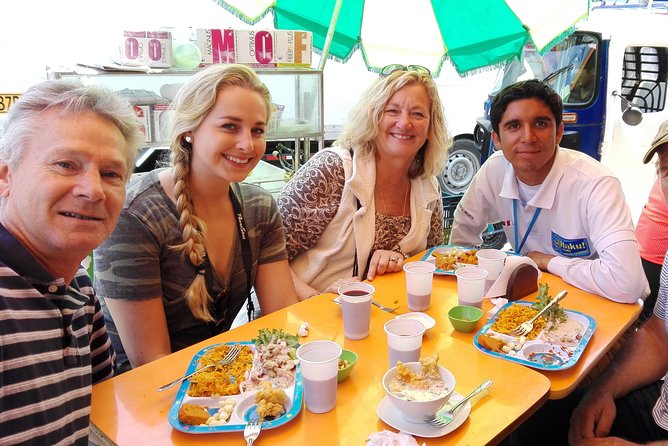
You are paying for more than the food portions. The guide helps you identify unfamiliar produce, explains farming and food supply, translates questions, and connects street dishes to Lima’s wider culture. That added context is especially useful on your first day, when you are still learning how the city works.
The value is strongest for first-time visitors, curious eaters, and anyone who wants to understand daily life rather than simply photograph famous dishes. It is weaker for you if your main goal is a large meal, a luxury dining experience, or a long free period at each market.
The tour has a five-star rating from four submitted ratings, which is a small sample. I would take the consistently positive comments about the guides seriously, but I would not treat the rating as a guarantee of a private departure or a fixed menu.
Who should book this food walk?
I would recommend it to you if:
- You are new to Lima and want a useful first orientation.
- You enjoy trying unfamiliar fruit and local snacks.
- You want an English-speaking guide to explain market foods.
- You prefer small tastings across several neighborhoods.
- You are interested in farming, trade, and everyday food culture.
- You are staying in a listed pickup district.
Families with adult children can also find the format appealing. One reported booking involved a parent and grown children who wanted to understand Peruvian food after seeing unfamiliar produce on their own. The tour gave them a way to ask questions and taste many of the items together.
I would be more cautious if you have strict dietary needs, though the supplied information does not describe ingredients, substitutions, or allergy procedures. Ask the provider before booking if a particular food restriction is important to you.
Practical details before you reserve
The experience costs $55 per person, lasts about three hours, and starts at 1:30 pm. It is offered in English, includes a mobile ticket, and has group discounts.
Pickup is available at hotels in Miraflores, Barranco, San Isidro, or Downtown Lima. If you are outside those districts, check the meeting arrangement before you pay, since the supplied details only confirm pickup in those areas.
Free cancellation is available if you cancel at least 24 hours before the local start time. A cancellation made less than 24 hours before departure is not refunded, and changes inside that window are not accepted.
Should you book Exploring Markets & Street Food in Lima?
I would book this tour for your first or second day in Lima if you want food to explain the city. The fruit tasting, market visits, Min Pao, and desserts create a varied afternoon, while guides such as Juan, Alfredo, Lucas, and Darwin add the local detail that is hard to find on your own.
I would skip it only if you want a long sit-down meal, a private tour guaranteed in advance, or a tightly defined menu. For everyone else, $55 buys a useful introduction to Lima’s markets and food traditions, with enough variety to help you choose what to eat for the rest of your Peru trip.
FAQ
How much does the Lima street food tour cost?
The experience costs $55 per person. Group discounts are available.
How long does the experience last?
The tour lasts approximately three hours.
What time does the tour start?
The start time is 1:30 pm.
Is the tour offered in English?
Yes. The experience is offered in English.
Which places are included in the route?
The route includes Mercado Nº 1 de Surquillo, Mercado Central, Chinatown, and Alameda Chabuca Granda.
What foods are included?
The food experiences include fruit tasting, anticuchos, picarones, Min Pao, and Peruvian desserts.
Is hotel pickup available?
Yes. Pickup is offered at hotels in Miraflores, Barranco, San Isidro, and Downtown Lima.
Is the experience near public transportation?
Yes. The experience is near public transportation.
Can most people participate?
The supplied information states that most people can participate.
Can I cancel for a full refund?
Yes, if you cancel at least 24 hours before the experience’s start time. Cancellations made less than 24 hours before the start time are not refunded.
Added recently around Lima
- Yoga Classes in Miraflores, Lima★ 4.5 · 20 reviews
- Magic Water Circuit Tour★ 4.0 · 5 reviews
- Private Walking Tour Lima Heritage Downtown Half Day★ 4.5 · 12 reviews
- Wonders of Peru & Huaraz 16-Day Tour★ 5.0 · 8 reviews
- Water Magic Circuit Lima Night Tour by Panoramic Bus★ 4.5 · 11 reviews
- Visit to the Larco Museum in Lima★ 5.0 · 5 reviews
- Guided Tours in Colonial and Modern Lima★ 5.0 · 54 reviews
- Bizarre Foods Tour for Adventurous Foodies★ 5.0 · 9 reviews
Food & Drink, compared.
Peruvian Cooking Class, Local Market Tour & Exotic Fruit Tasting
Read our review →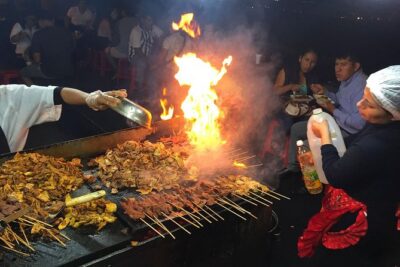
Street Food, Market & Old Eateries Tour in Lima’s Historic Center
Read our review →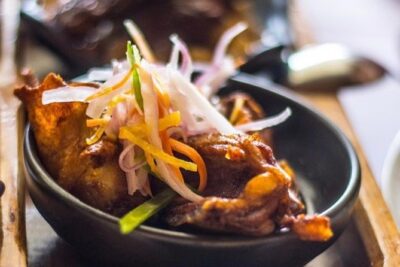
Food Tour and Market Experience: 12 Peruvian Snacks
Read our review →
Group Cooking Class in Cusco with Pisco Tasting
Read our review →Browse the lists this tour appears in