Reviewed · FULL-DAY
Full day tour of Qeswachaca Inca Bridge
Four hours from Cusco, another Peru begins. This full-day trip takes you to Qeswachaka, the last remaining Inca-style suspension bridge in Peru, while also showing you remote towns, river valleys, lagoons, and small archaeological or natural sites in Canas province. I like that the bridge is not treated as a quick photo stop. You walk down to it, cross it, and learn how local families rebuild it each year using hand-twisted grass.
I also like the strong guiding and transport arrangements. Guides such as Jesus Villafuerte have been praised for clear English, local history, and careful attention, while drivers such as Willy have earned high marks for safe driving. The main drawback is the long day: expect roughly 12 hours, several hours in a van, an early start, and extra entrance fees for the bridge and Mini Volcano.
At about $40 per person, the tour offers good value if you want to reach a place that is difficult to visit independently. It is less appealing if you want a relaxed morning, dislike winding roads, or prefer to spend your Cusco holiday close to town.
In This Review
- Key Details Before You Book
- The 4:30 AM Start and the Long Road South
- Breakfast in Cusipata and the Salcca River View
- Yanaoca, Q’ewe, and the Approach to Qeswachaka
- Crossing a 28-Meter Inca Bridge
- Extra Stops That Make This More Than a Bridge Visit
- Food, Guide Service, and Safety
- Is $40 a Fair Price?
- Who Should Take This Tour?
- Should You Book the Qeswachaka Bridge Tour?
- FAQ
- Where is Qeswachaka Bridge?
- How long is the tour?
- Can I cross Qeswachaka Bridge?
- How large is the bridge?
- How high does the tour go?
- Is transportation from Cusco included?
- Are meals included?
- Are entrance fees included?
- Does the vehicle have a toilet?
Key Details Before You Book
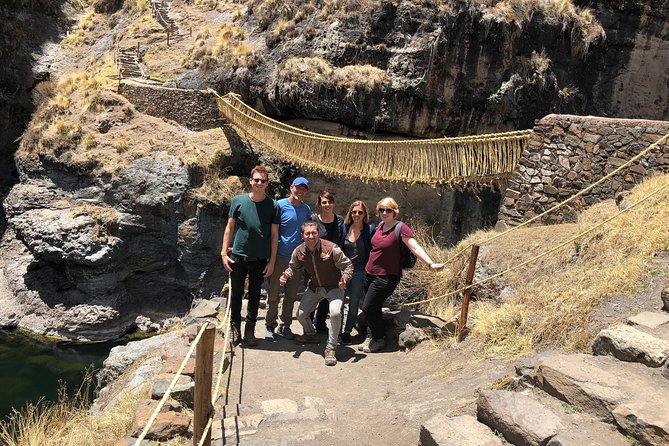
- Qeswachaka is about four hours from Cusco, near the Apurimac canyon in the Quehue district of Canas province.
- The grass bridge is about 28 meters long and 1.2 meters wide, suspended above the river between steep rock walls.
- The bridge is rebuilt each June by local families using traditional weaving methods passed through generations.
- The day includes more than the bridge, with stops at Cusipata, the Combapata viewpoint, nearby towns, lagoons, and small natural or cultural sites.
- Pickup and drop-off in Cusco are included, along with a semi-buffet breakfast, semi-buffet lunch, guide, transport, and a first aid kit with emergency oxygen.
- You need moderate fitness, comfortable walking shoes, and a steady head for a steep path and a swaying bridge.
The 4:30 AM Start and the Long Road South
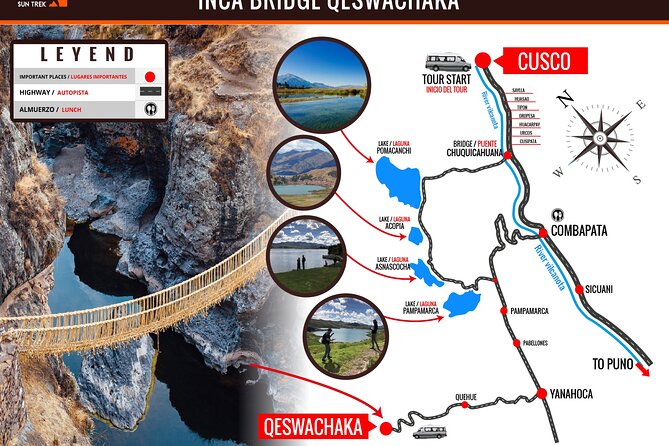
The published details contain two different start times. The meeting information gives 4:30 a.m., while the practical tour notes describe a 7:00 a.m. departure and a 7:00 p.m. finish. Confirm your pickup time when booking, since the drive is long and hotel pickup is part of the plan.
The early hour is not just a scheduling nuisance. Qeswachaka sits far outside the usual Cusco circuit, and the road journey takes about four hours each way, depending on stops and traffic. You will spend much of the day in a tourist vehicle, with breaks that make the ride more manageable.
The maximum group size is 20 people. That is large enough to keep the price down but small enough for a guide to explain things without shouting across a crowd. The vehicle has no toilet, though the driver can stop for bathroom breaks.
The road takes you through changing country. Near Cusco, you pass towns and ordinary daily life. Farther out, farms, stone fences, animals, and small settlements become more common. The trip is useful precisely because it takes you away from the polished center of Cusco and into an area that can be hard to reach without local transport and a guide.
A few more Cusco trips worth lining up side by side
- Classic Inca Trail Trek 4D/3N to Machu Picchu (Group Service)
★ 5.0 · 8,653 reviews - Cusco: Rainbow Mountain and Red Valley Day Trip with Meals
★ 4.9 · 4,893 reviews - Machu Picchu: 4-Day Inca Trail Trek with Panoramic Train Ride
★ 5.0 · 4,568 reviews
Breakfast in Cusipata and the Salcca River View
After roughly an hour and a half in the van, you stop in Cusipata for a semi-buffet breakfast. This is a practical pause rather than a grand meal, but it matters on a day that starts before sunrise and continues into the evening.
From Cusipata, the drive continues for about 30 minutes to the Combapata viewpoint. Here you can see the Salcca River meet the Vilcanota River, which the Incas regarded as sacred. The stop lasts about 15 to 30 minutes, giving you time for photographs and a short explanation from the guide.
I like this stop because it gives the bridge trip a wider setting. Qeswachaka is not an isolated object placed in the countryside for tourists. It belongs to a region shaped by rivers, high valleys, farming, and old routes between communities.
The view is weather-dependent, of course. Clouds can roll across the mountains, and the stop is brief. Still, it breaks up the road journey and helps you understand why the area mattered long before modern roads reached it.
Yanaoca, Q’ewe, and the Approach to Qeswachaka
The route continues toward Yanaoca, one of the districts in Canas province, before heading on to the Q’ewe district. You get a sense of how distant this area is from Cusco’s tourist center. The towns are working communities, not staged heritage villages.
As the road drops toward the Apurimac canyon, the scenery becomes rougher and more dramatic. The bridge first appears between steep rock cliffs, and that first glimpse is one of the best moments of the day. It also gives you time to consider the engineering involved. This is a suspension bridge made from grass, yet it has served as a working crossing for local people.
The final approach involves leaving the vehicle and walking down a steep path to a viewpoint. The path is manageable for people with moderate fitness, but it is not a flat stroll. Wear shoes with a firm grip, and take your time on the way down and back up.
The tour information says the entrance fee to Qeswachaka is not included. The Mini Volcano fee is also extra. These costs are not listed, so keep some money available for admissions.
Crossing a 28-Meter Inca Bridge
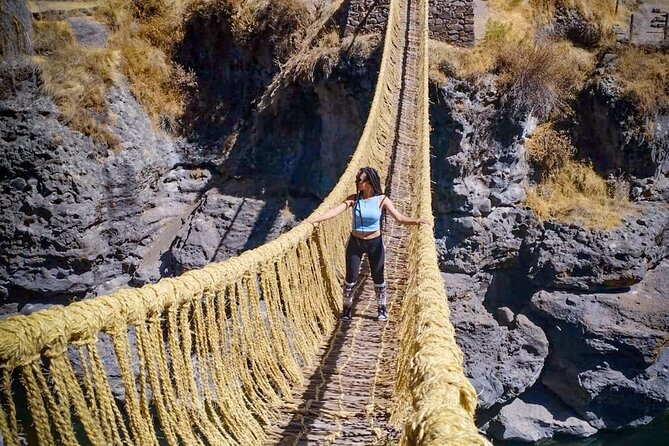
The bridge is about 28 meters long and 1.2 meters wide. It hangs above the river, and it moves as you walk. That motion gives the crossing its thrill, but it can also be uncomfortable if you have vertigo or a strong fear of heights.
The bridge is open to visitors, and you are encouraged to cross it. The height above the water is not described as extreme, but the experience still requires care. Hold the side ropes, follow the guide’s instructions, and avoid rushing to take photographs while moving.
Once across, a bridge attendant gives a short demonstration about the bridge’s construction and past. This is one of the most valuable parts of the stop because you see the structure as a living tradition, not simply an old object.
The bridge is rebuilt every year, generally in June, using knowledge held by local families. Grass is gathered, soaked, pressed, and twisted into strands. Each family is responsible for at least one strand, and the strands are joined into larger ropes. A person with responsibility for the final balance oversees the construction.
The rebuilding takes four days. Three days are used to gather and reconstruct the bridge, and the fourth day is given to celebration. The old bridge is cut loose, allowing the river to carry it away.
That annual renewal is what makes Qeswachaka different from a stone Inca site. You are seeing an active custom that continues through local cooperation. A guide may also arrange a hands-on demonstration of rope-making with a local caretaker, though this should not be treated as guaranteed on every departure.
Also leaving from Cusco, and nothing like the above:
- Salkantay Classic Trek 5 Days from Cusco
★ 5.0 · 4,062 reviews - 4-Day Salkantay Trek with Sky Camp Stay
★ 5.0 · 3,346 reviews - Short Inca Trail to Machu Picchu 2D/1N
★ 5.0 · 3,007 reviews - Excursion to Rainbow Mountain Full Day Optional Red Valley
★ 5.0 · 2,996 reviews
Extra Stops That Make This More Than a Bridge Visit
The strongest days include extra stops on the return route. Exact timing can vary, but the trip has included small volcanoes, village plazas, archaeological sites, and several lagoons.
One unusual stop is the Mini Volcano, a small volcanic formation that rises from a field and can be climbed. The visit is brief, and the entrance fee is not included. It is not a major volcanic attraction, but it adds an amusing and unexpected change from the bridge and canyon.
Pampamarca has an attractive plaza, a white-painted adobe church, and a monument connected with an uprising against Spanish rule. Stops like this give the day a human scale. You are not just looking at scenery through a van window. You are seeing the public spaces where local life takes place.
The return route can also include Pomacanchi Lagoon, where lunch may be served beside the water. Past visits have included a picnic-style meal, with food prepared by the guide, and vegetarian or special meal requests can be arranged if you advise the company in advance.
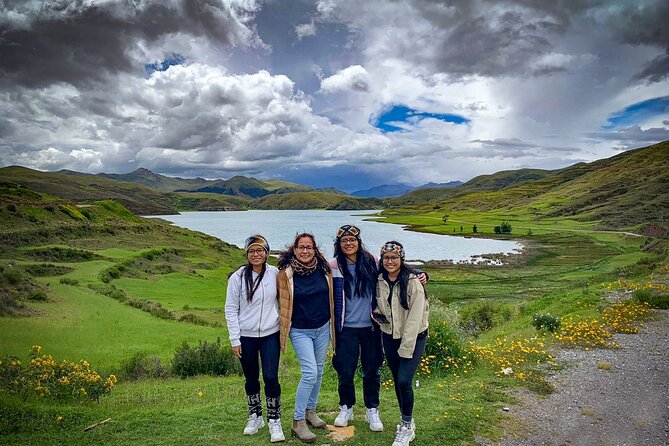
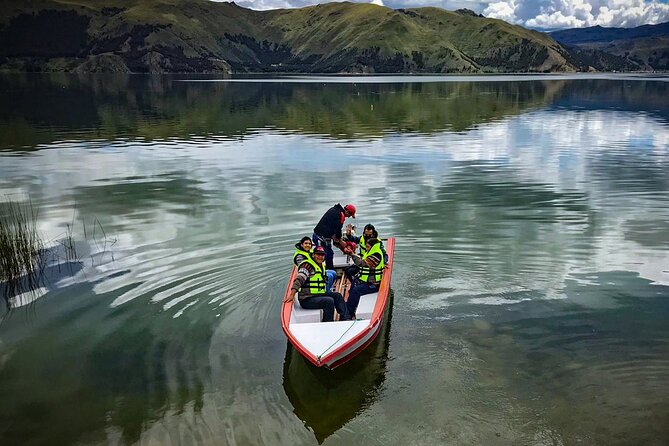
The tour may then continue to Acopia, Asnacqoccha, and Pampamarca lagoons. These stops are good for photographs and quiet observation. You might see people washing clothes, children near the water, farm animals, or birds around the reeds. Flamingos are possible in the area at the right time of year, but they are not guaranteed.
These extra locations help justify the full-day format. If the bridge were the only stop, the long drive would feel harder to defend. With the lagoons, viewpoints, villages, and food breaks, the journey becomes a broad look at Canas province.
Food, Guide Service, and Safety
Breakfast and lunch are included as semi-buffet meals. The food received strong praise, including balanced meals with vegetables, fruit, carbohydrates, and protein. Do not expect a restaurant tour, but the meals are designed to keep you going through a demanding day.
The guide is central to the experience. Jesus Villafuerte has been singled out for his English, local history, cultural explanations, and personal care. He has also been praised for helping people fit an extra activity into a busy Peru itinerary. Rony and other Inti Sun Trek staff have also been described as organized and attentive.
This is important because the road passes through places you may not understand on your own. A guide can explain the rivers, local farming, bridge construction, and regional history. Without that context, the day could become a long drive to a narrow bridge and several attractive views.
A first aid kit and emergency oxygen tank are included. The tour reaches a maximum altitude of about 3,800 meters, or 12,468 feet. Altitude tablets and oxygen may be available if needed, but you should still take altitude seriously. If you have just arrived in Cusco, ask a medical professional for advice and avoid assuming that the tour’s emergency supplies replace preparation.
Is $40 a Fair Price?
At $40, this is an inexpensive way to reach Qeswachaka from Cusco. Hotel pickup and drop-off, transport, a guide, breakfast, lunch, and first aid equipment are included. For an all-day trip covering remote roads and several stops, the price is appealing.
The value depends on what you want from the day. You are paying for access and coordination more than luxury. The vehicle journey is long, the bridge entrance is extra, and the schedule can feel tiring. The listed price also does not include the Mini Volcano admission.
I would compare this with the cost and effort of arranging a private vehicle, driver, meals, and local guidance yourself. For one or two people, the group tour is likely the simpler choice. A private arrangement may offer more control over timing, but the $40 group price is hard to match.
The maximum group size is 20, so do not expect a completely private outing. The benefit is that you share transport costs while still visiting a place with far fewer people than Cusco’s major Inca sites.
Who Should Take This Tour?
I would choose this trip if you have already seen the main sights around Cusco and want a less familiar side of the region. It suits people who enjoy local history, traditional craft, long scenic drives, village stops, and unusual places that are not easy to reach alone.
It also works well for photographers and anyone interested in living cultural traditions. The bridge, river confluence, canyon, farms, lagoons, and plazas give you plenty to look at, but the day is not built around constant activity.
You should think twice if you dislike heights. The bridge sways, and the path to it is steep. You also need moderate physical fitness, comfortable clothing, and sturdy walking shoes.
This is not a good choice for someone seeking a short excursion. The day can begin around 4:30 or 7:00 a.m., depending on the confirmed schedule, and finish around 7:00 p.m. Confirm the exact times before you commit.
Free cancellation is available if you cancel at least 24 hours before the start time. Changes or cancellations made later may not receive a refund.
Should You Book the Qeswachaka Bridge Tour?
I would book it if your priority is an authentic day outside Cusco, especially after seeing the city’s better-known sites. The bridge itself is memorable, but the best part is the combination of traditional construction, remote communities, river views, lagoons, and a guide who can connect the pieces.
I would skip it if you have limited time, poor tolerance for winding roads, serious vertigo, or no interest in spending most of a day in a vehicle. For the right visitor, though, $40 buys far more than a bridge crossing. It gives you a practical introduction to a quieter part of the Cusco region and a tradition that local families still renew each year.
FAQ
Where is Qeswachaka Bridge?
Qeswachaka is located about four hours by car from Cusco, near the edge of the Apurimac canyon in the Quehue district of Canas province.
How long is the tour?
The tour lasts approximately 12 hours. The listed details describe a finish around 7:00 p.m., though the pickup time should be confirmed because both 4:30 a.m. and 7:00 a.m. appear in the tour information.
Can I cross Qeswachaka Bridge?
Yes. Visitors are welcome and encouraged to cross the bridge. The crossing is not recommended for people with vertigo.
How large is the bridge?
The bridge is approximately 28 meters long and 1.2 meters wide.
How high does the tour go?
The highest point reached is about 3,800 meters, or 12,468 feet.
Is transportation from Cusco included?
Yes. Hotel pickup and drop-off in Cusco are included, along with tourist transportation during the tour.
Are meals included?
Yes. A semi-buffet breakfast and semi-buffet lunch are included. A vegetarian option is available if requested when booking.
Are entrance fees included?
No. The entrance fee for Qeswachaka Bridge is not included. The Mini Volcano entrance fee is also extra.
Does the vehicle have a toilet?
No. The vehicle does not have a toilet, but the tour can stop for bathroom breaks.
Added recently around Cusco
- Guided tour of the mountain of colors in Cusco★ 5.0 · 11 reviews
- 2-Day Private Short Inca Trail to Machu Picchu★ 5.0 · 15 reviews
- City Tour Cusco – Group★ 5.0 · 4 reviews
- Tour Sacred Valley with Maras and Moray★ 5.0 · 15 reviews
- San Pedro Market Tour with Peruvian Cooking Class★ 5.0 · 31 reviews
- Walking Culinary Experience★ 5.0 · 41 reviews
- City Tour in Cusco★ 4.5 · 10 reviews
- One Day Tour to Humantay Lagoon★ 5.0 · 8 reviews
Full-Day, compared.
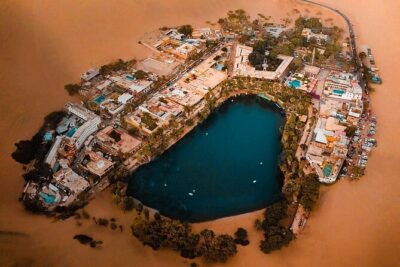
Full Day Tour From Lima: Paracas and Huacachina Oasis
Read our review →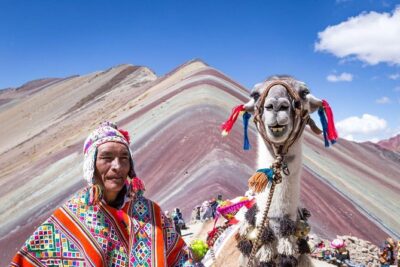
Excursion to Rainbow Mountain Full Day Optional Red Valley
Read our review →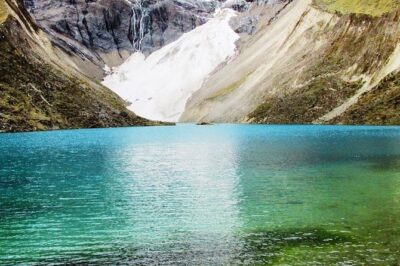
Excursión to Humantay Lake Full Day from Cusco
Read our review →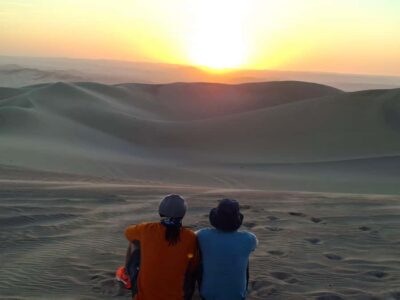
Paracas and Huacachina Oasis Full Day Guided Tour
Read our review →