
Reviewed · MACHU PICCHU TOURS
Inca Trail to Machu Picchu 4 Days – Small Group / Reservations 2026
The classic Inca Trail earns its reputation. This four-day route gives you the full walking experience, from the Sacred Valley and Patallacta to Sun Gate and Machu Picchu. I especially like the maximum group size of eight and the strong support system, including porters, a cook, camping gear, meals, and a personal porter allowance of up to 7 kilos.
I also like the way the route builds toward Machu Picchu rather than simply delivering you by train. You cross high mountain passes, walk through cloud forest, and visit several Inca sites before reaching the citadel. The main consideration is the physical demand, particularly on Day 2, when you climb to 4,200 meters at Dead Woman’s Pass and then descend for hours.
In This Review
- Key points to know before booking
- What the $860 price really covers
- Day 1: Cusco to Piscacucho and Patallacta
- Day 2: Wayllabamba to Dead Woman’s Pass
- Day 3: Runkuracay, Sayacmarca, and the cloud forest
- Day 4: Sun Gate and the first view of Machu Picchu
- Food, camping, and porter support
- Who should book this Inca Trail trip
- Booking details and final advice
- Should you book it?
- FAQ
- How long is the Inca Trail tour?
- Where can pickup take place?
- What documents should I bring?
- How large is the group?
- Is food included?
- Is a sleeping bag included?
- Is Huayna Picchu included?
- What is the cancellation policy?
Key points to know before booking
- Small group of up to eight: A compact group makes it easier to hear the guide and keep a steady walking rhythm.
- Four days of camping: You sleep in tents at Wayllabamba, Pacaymayo, and Wiñay Wayna, with a dining tent, tables, chairs, and prepared meals.
- Dead Woman’s Pass is the hard test: The route reaches 4,200 meters, and cold, thin air can slow even fit walkers.
- Porter support is a real advantage: Staff carry tents, food, and kitchen equipment, while your personal porter can carry up to 7 kilos of your belongings.
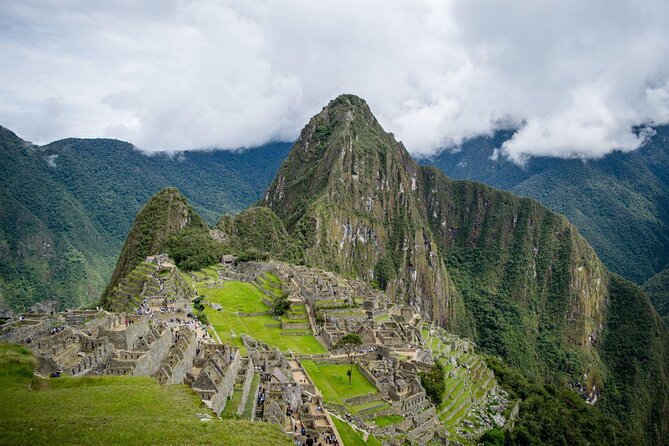
- Sun Gate arrival: You enter Machu Picchu on foot through Inti Punku, with your first broad view of the ruins from above.
- Huayna Picchu costs extra: The optional mountain ticket is $70 and must be requested in advance.
What the $860 price really covers
The price is $860 per person. That is not a bare-bones hiking fee. It includes transport from Cusco or the Sacred Valley to kilometer 82, the Inca Trail and Machu Picchu entrance fees, a bilingual professional guide, porters, a cook and kitchen assistant, three nights of camping, meals, drinking water preparation, the return train, the bus down to Aguas Calientes, and transport back to your hotel.
You also receive a travel pillow and inflatable Thermarest mat at the start of the trek. The tents are designed for four people but used by only two, which gives you more room than a tightly packed mountain camp. A dining tent with portable chairs, field tables, and a gas lamp is another small comfort that matters after a long day.
The personal porter allowance is especially useful. Your porter can carry up to 7 kilos, but you still need a daypack for water, rain gear, warm layers, snacks, sunscreen, and personal items. A sleeping bag and walking sticks are not included, though both can be rented from the office before departure.
At this price, the trip offers good value if you want a fully supported trek. You are paying for a licensed route with official permits and entrance tickets, not just a guide and a campsite. The cost makes less sense if you dislike group schedules, camping, or long mountain days.
Other Inca Trail departures:
- Classic Inca Trail Trek 4D/3N to Machu Picchu (Group Service)
★ 5.0 · 8,653 reviews - Machu Picchu: 4-Day Inca Trail Trek with Panoramic Train Ride
★ 5.0 · 4,568 reviews - Short Inca Trail to Machu Picchu 2D/1N
★ 5.0 · 3,007 reviews
Day 1: Cusco to Piscacucho and Patallacta
Pickup begins at 6:00 a.m. from your Cusco hotel. Pickup is also available from hotels in the Sacred Valley, which can be useful if you are staying outside the city before the trek.
Bring your original passport. If you use a student discount, bring your valid student identification too. These documents are checked at the Inca Trail control post, so do not pack them in luggage that will be stored in Cusco.
The bus ride to kilometer 82 takes about three and a half hours. It is more than a simple transfer. You travel through the Sacred Valley, with views of the Urubamba River, Andean towns, and the Inca fortress of Ollantaytambo. There is a final stop in Ollantaytambo for toilets and last-minute purchases before the bus continues to Piscacucho.
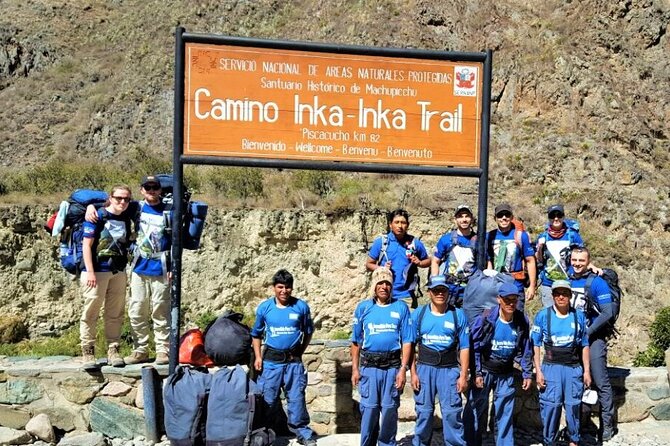
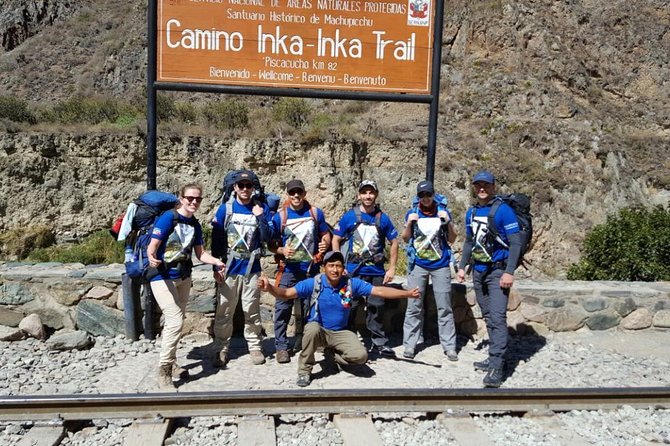
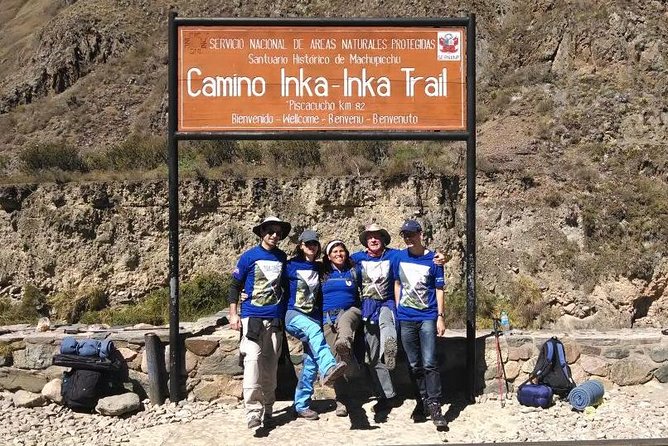
At kilometer 82, you meet the guide, cooks, porters, and the rest of your group. The official control post checks passports, permits, and entrance tickets. Once across the suspension bridge over the Urubamba River, the walking begins.
The first day is the gentlest. You follow the river on mostly level ground for about two hours to Miskay, where the cook serves lunch. This gradual start gives you time to settle into your boots, adjust your pack, and learn how the group walks.
After lunch, you reach Patallacta, the first major archaeological site. Its broad agricultural terraces show how the Incas shaped difficult mountain terrain for farming and settlement. It is an important first reminder that this route is not only a hike to Machu Picchu. The path itself is lined with sites that explain how the Inca road functioned.
From Patallacta, you continue for about two hours toward Wayllabamba. Along the route, you may see views of Veronica, also called Wakay Willka, a snow-covered peak listed at about 5,900 meters. You arrive at the first camp around 5:00 p.m., at roughly 3,000 meters.
Tea, snacks, and a hot drink follow the day’s walk. Dinner is served around 7:30 p.m. The early start and altitude make an early bedtime practical, not merely sensible.
Day 2: Wayllabamba to Dead Woman’s Pass
Day 2 is the toughest part of the trip. You wake with coca tea brought to your tent, eat breakfast, and begin walking around 7:00 a.m.
The climb from Wayllabamba to Llulluchapampa takes about four hours in total. The first two hours are uphill, then the route continues through cloud forest and high grassland. Keep your pace slow. The guide and porters can encourage you, but no one can make the altitude disappear.
This section can bring sightings of hummingbirds, hawks, and eagles. Native queñua trees appear along the route, followed by open stretches of high-altitude grass. The scenery changes as quickly as the breathing gets harder.
Llulluchapampa sits at about 3,600 meters. There is a small stream where you can cool off and refill your bottle. This is a good place to eat a snack, add a warm layer, and take a longer rest before the final climb.
The last two hours lead to Warmiwañusca, better known as Dead Woman’s Pass. At 4,200 meters, it is the highest point on the trek. You get sweeping Andean views from the top, but the real reward is finishing the climb.
Carry a hat and coat where you can reach them. Temperatures can fall quickly at the pass, and the summit stop is exposed. The guide encourages you to walk at your own pace, which is important here. A slow, steady rhythm is more useful than trying to keep up with the fastest person in the group.
From the pass, the trail drops for about two hours to the Pacaymayo Valley. This descent is easier on the lungs but hard on knees and thighs. Lunch and the second camp are near the Pacaymayo River, at approximately 3,600 meters.
The afternoon is intentionally quiet. You have time to rest, drink tea, and eat dinner in the camp. This is one reason the four-day version works well: the schedule allows a full night after the route’s hardest climb.
Day 3: Runkuracay, Sayacmarca, and the cloud forest
Day 3 begins around 6:00 a.m. with hot tea and breakfast. You leave Pacaymayo at about 7:00 a.m. and climb for roughly two hours toward the Runkuracay Pass.
Before reaching the pass, you visit Runkuracay, a small circular Inca site at about 3,800 meters. Its compact shape and high position make it feel very different from the terraces at Patallacta. The guide provides an explanation of the site before you continue to the pass at about 4,000 meters.
From there, the trail descends for about an hour to Sayacmarca. The name means Inaccessible Town, a fitting description for ruins surrounded by steep rock. The setting is dramatic, but the stonework is what deserves your attention. The guide’s explanation helps turn a short stop into more than a photo break.
You then continue to Chaquicocha, where lunch and toilets are available. After lunch, the trail enters a changing cloud forest filled with orchids, mosses, bromeliads, ferns, and giant greenery. I like this part because it gives the trek a different feel from the bare high pass of the day before.
The route passes through a tunnel cut into the mountain and crosses a third pass at about 3,700 meters. Snow-covered peaks and views toward the Urubamba River appear along the way. This is a day of repeated climbs and descents, but none is as severe as Dead Woman’s Pass.
The stone path leads to Phuyupatamarca, or Village Above the Clouds. Here you see fine Inca paving and terraces set high on the route. The trail then drops down a long stone staircase toward Intipata.
Intipata, also called the Terraces of the Sun, sits at around 2,800 meters. Its terraces and water channels show careful agricultural planning. From here, you continue downhill to Wiñay Wayna, arriving around 5:00 p.m.
Wiñay Wayna means Young Forever and is the final official camp. Its closeness to Machu Picchu makes it a favorite stop, but it also signals that the trip’s biggest morning is next. Tea, coffee, hot chocolate, milk, cookies, and popcorn are served after arrival.
The guide uses the final dinner to explain the next day’s schedule. The staff also hold a small ceremony to introduce the porters and thank them for their work. It is a fitting moment because the porters have carried the tents, food, tables, chairs, and kitchen equipment that made the trek possible.
Other ways to reach Machu Picchu:
- 2-Day Inca Trail to Machu Picchu with Panoramic Train
★ 5.0 · 1,876 reviews - From Cusco: Full-Day Group Tour of Machu Picchu
★ 4.7 · 1,767 reviews - Machu Picchu Day Trip from Cusco
★ 4.5 · 1,644 reviews - 2-Day Tour: Sacred Valley and Machu Picchu by Train
★ 5.0 · 1,127 reviews
Day 4: Sun Gate and the first view of Machu Picchu
The final morning starts early. You wake around 4:00 a.m., eat breakfast at 4:30, say goodbye to the cook and porters, and wait at the control post for the gates to open at 5:30.
The walk from Wiñay Wayna to Inti Punku, the Sun Gate, takes about two hours. Much of the route is fairly level, though a narrow trail through cloud forest includes a steep section of roughly 50 steps.
You should reach the Sun Gate around 7:00 a.m. At about 2,700 meters, it gives you a high viewpoint over Machu Picchu and the surrounding mountains. Weather controls the quality of the first view, so it is wise to treat the sunrise as a possibility, not a promise.
From Inti Punku, you walk downhill for about 40 minutes toward the citadel. The approach is part of the reward. Instead of arriving at the entrance by bus, you see Machu Picchu come closer as the trail drops through the mountain.
The guided visit lasts about two hours. The included tour uses Circuits 1 and 3, with explanations of the Inca city and time for photographs and independent exploration afterward. Follow the guide closely because movement inside Machu Picchu follows set routes and control points.
Huayna Picchu is an optional extra. The additional ticket costs $70, and you must request it in advance. The climb takes about an hour each way according to the supplied schedule, with time at the top for views before descending to Machu Picchu. Do not assume this ticket is part of the $860 price.
After the ruins, a bus takes you to Aguas Calientes. Lunch at a town restaurant is included, and you have time to visit the town or use its thermal baths. The return train leaves around 6:00 p.m. for Ollantaytambo, arriving at approximately 7:40 or 7:50 p.m.
A staff member meets you at the Ollantaytambo station and transfers you by tourist bus to Cusco. Arrival is expected around 10:00 p.m., with hotel drop-off in Cusco or the Sacred Valley. It is a long final day, so do not plan an important early-morning activity for the following day.
Food, camping, and porter support
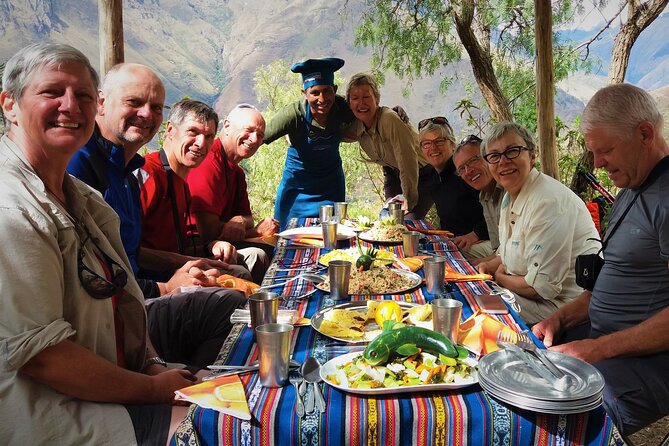
The food plan includes three breakfasts, four lunches, three dinners, and three tea services. Vegetarian, vegan, and special diet meals are available if requested.
Meals are prepared by the cook and kitchen assistant. Boiled water is provided each morning for refilling your bottle. This reduces the need to carry several days of water, though you still need enough for each walking section.
The camping setup is more comfortable than carrying your own tent and stove. You sleep two people in a four-person tent, use an inflatable mat and travel pillow, and eat inside a dining tent with portable chairs. Staff also provide a tent kitchen and carry emergency oxygen and a first-aid kit.
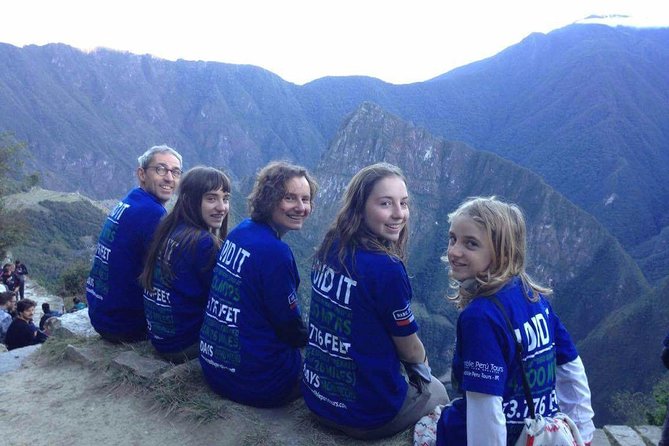
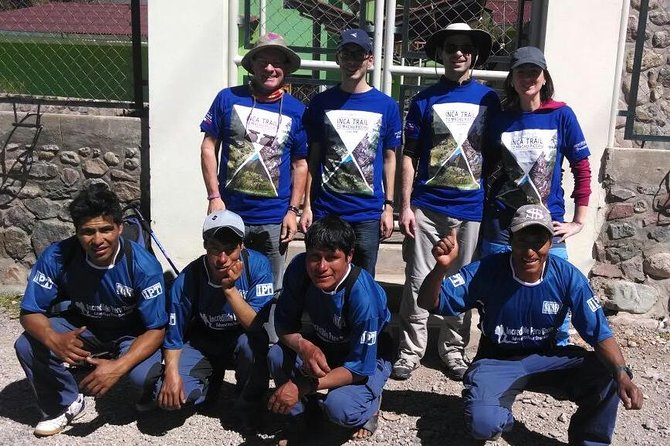
The personal porter allowance is helpful, but pack with restraint. You still need suitable clothing, shoes, and a backpack, and those are not included. A rain poncho and Inca Trail shirt are provided as gifts, but they should not replace proper rain protection or warm clothing.
Who should book this Inca Trail trip
This trip suits you if you want the historic walking route, not just a visit to Machu Picchu. It is also a strong choice if you value a small group, full meal service, and porters who carry shared equipment.
You need a moderate level of physical fitness. The biggest challenges are the altitude, the long climb on Day 2, the descent to Pacaymayo, and the many stone steps on Day 3. The schedule allows rests, but it does not remove the effort.
The 6:00 a.m. pickup, three nights in tents, and return to Cusco around 10:00 p.m. on Day 4 require stamina. If you want a relaxed sightseeing trip with soft beds every night, choose a different Machu Picchu plan.
The experience has earned a 4.8 rating from 47 ratings, with 98 percent recommending it. The most praised elements are the food, the guide, the porters, and the care shown by the full support team. One especially positive account names guide Paul and team members Timoteo, Julián, Nicolás, Pedro, and José Luis, praising their helpful attitude and the way they handled food and luggage. Another highlights the good meals, clear explanations, beautiful scenery, and a highly rated team.
Those details matter. On a four-day trek, a friendly guide and dependable camp crew affect your comfort every hour, not just during the formal archaeological talks.
Booking details and final advice
The experience is often reserved about 57 days ahead. That is a useful planning signal, especially for a route with official permits and fixed entrance arrangements. Confirmation is immediate unless you book within two days of departure, in which case confirmation can take up to 48 hours and depends on availability.
You can cancel for a full refund up to three full days before the start time. Changes or cancellations inside that window are not accepted or refunded.
Should you book it?
Book this tour if you want the complete Inca Trail experience with a small group and practical support already arranged. The $860 price is reasonable for the permits, guide, meals, porters, camping equipment, train, buses, and hotel transfers included.
Think twice if high altitude, basic camping, or a very early final morning sounds unpleasant. For a fit walker who prepares properly and packs carefully, this is a well-supported route with strong value and a memorable arrival at Machu Picchu through the Sun Gate.
FAQ
How long is the Inca Trail tour?
The tour lasts approximately four days, beginning with pickup at 6:00 a.m. on Day 1 and ending with hotel drop-off in Cusco or the Sacred Valley around 10:00 p.m. on Day 4.
Where can pickup take place?
Pickup is available from accommodations in the city of Cusco and from hotels in the Sacred Valley.
What documents should I bring?
Bring your original passport. If you are a student, also bring your valid student identification.
How large is the group?
The group has a maximum of eight people.
Is food included?
Yes. The package includes three breakfasts, four lunches, three dinners, and three tea services. Vegetarian, vegan, and special diet meals can be prepared if requested.
Is a sleeping bag included?
No. Sleeping bags and walking sticks are not included, but they can be rented from the provider’s Cusco office before the trek.
Is Huayna Picchu included?
No. The Huayna Picchu ticket costs an additional $70 per person and must be requested in advance.
What is the cancellation policy?
You receive a full refund if you cancel at least three full days before the experience start time. Cancellations or changes made less than three full days before departure are not accepted or refunded.
Added recently around Cusco
- Super valley or vip valley★ 5.0 · 13 reviews
- the Incas’ Sacred Valley★ 5.0 · 27 reviews
- Sacred Valley of the Incas Day Trip from Cusco★ 5.0 · 6 reviews
- Small-Group Tour: Rainbow Mountains Hiking from Cusco★ 4.0 · 5 reviews
- Excursion to the Sacred Valley of the Incas from Cusco★ 5.0 · 8 reviews
- Maras + Moray & Textile Experience★ 5.0 · 14 reviews
- Tour EN Cuatrimoto POR la Montaña 7 Colors Hike 5 Minutes★ 4.5 · 32 reviews
- rainbow mountain★ 4.0 · 4 reviews
Machu Picchu Tours, compared.
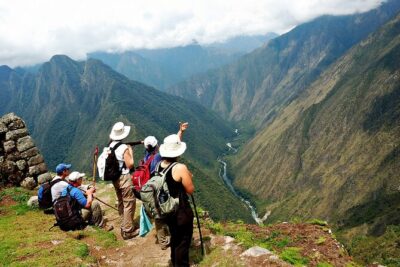
Classic Inca Trail Trek 4D/3N to Machu Picchu (Group Service)
Read our review →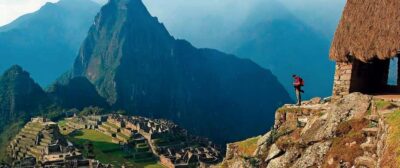
Machu Picchu: 4-Day Inca Trail Trek with Panoramic Train Ride
Read our review →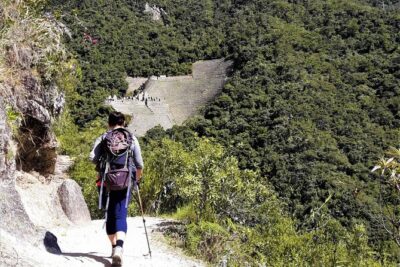
2-Day Inca Trail to Machu Picchu with Panoramic Train
Read our review →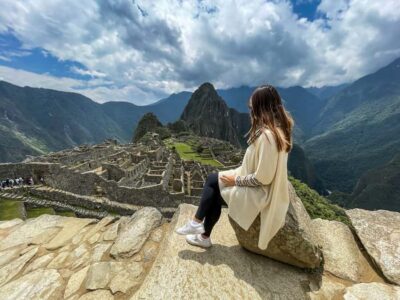
2-Day Tour: Sacred Valley and Machu Picchu by Train
Read our review →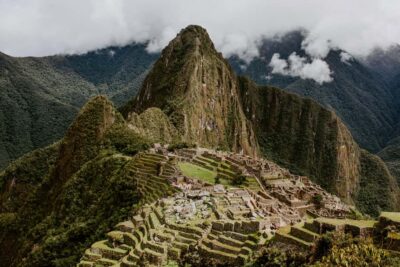
Machu Picchu: Full-Day Tour from Cusco with Optional Lunch
Read our review →Browse the lists this tour appears in