
Reviewed · MACHU PICCHU TOURS
Inka Trail 4 Days to Machupicchu
The old road earns every step. This four-day trek links high Andean passes, Inca ruins, cloud forest, and Machu Picchu in one demanding journey. I especially like the steady mix of archaeology and mountain scenery, plus the support of porters, cooks, tents, and a bilingual guide. The main catch is simple: this is a hard hike, with steep climbs, thin air, long days, and basic camp life.
The small group, capped at 10 people, should make the walking more personal and easier to manage. I also like that transport, the Inca Trail permit, Machu Picchu entry, camping gear support, meals, and the return journey are bundled into the $807.50 price. You should still confirm the exact meal plan and Machu Picchu circuit before paying, since ticket availability controls what you can enter.
In This Review
- Key points to know before booking
- Why the four-day Inca Trail is worth the effort
- Day one: Ollantaytambo, kilometer 82, and Patallacta
- Day two: the climb to Dead Woman’s Pass
- Day three: ruins, stone tunnels, and Wiñayhuayna
- Day four: entering Machu Picchu through Intipunku
- Camp life, meals, and the porter team
- Is $807.50 a fair price?
- What to pack and how to prepare
- Who should book this trek?
- Should you book the Inka Trail 4 Days to Machu Picchu?
- FAQ
- How long is the Inka Trail tour?
- What is the highest point on the trek?
- Is pickup included?
- Are meals included?
- Is Machu Picchu admission included?
- How many people can join the tour?
- What happens if Machu Picchu tickets are unavailable?
Key points to know before booking
- Day two reaches 4,200 meters: Warmiwañusca, the Dead Woman’s Pass, is the trek’s highest point and toughest climb.
- You sleep near major Inca sites: Patallacta, Runcurakay, Phuyupatamarca, and Wiñayhuayna add real substance to the walk.
- Porters carry the camp: They transport cooking and camping equipment, while the crew sets up tents, tables, and the dining area.
- The group stays small: A maximum of 10 people gives the guide more chance to keep an eye on everyone.
- Machu Picchu tickets depend on availability: Circuits 1 and 2 are listed as the standard options, while other circuits may cost extra.
- The tour ends with transport included: After Machu Picchu, you return to Aguas Calientes, take the train to Ollantaytambo, and continue by vehicle to Cusco.
Why the four-day Inca Trail is worth the effort
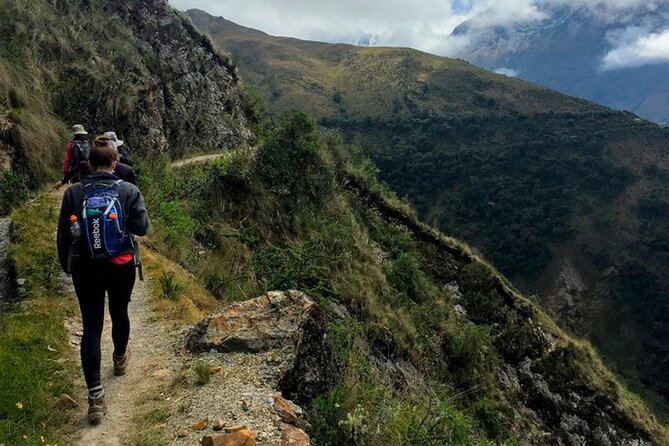
You can reach Machu Picchu by train with far less sweat. But this route gives you something the train cannot: four days of walking through the old Inca road system, with ruins appearing along the way rather than only at the final citadel.
The route also changes character often. You move from Andean farmland to high mountain slopes, then down through thick vegetation and stone ruins. That variety keeps the trek interesting, even when your legs begin asking serious questions.
The strongest feature is the combination of physical challenge and cultural meaning. Patallacta is not just a quick photo stop. Runcurakay, Phuyupatamarca, and Wiñayhuayna help you understand that the trail was once a working network of roads, settlements, lookout points, and religious or administrative sites.
The support system matters, too. Porters carry cooking and camping gear, and the crew prepares meals and sets up the common spaces. One especially memorable detail from the experience is the sight of a fully equipped camp appearing ahead of you, with tents, tables, and a dining area ready before you arrive.
That does not turn the trek into a luxury holiday. You still sleep in tents and walk for hours each day. But you do not have to carry the full weight of the camp, and that can make the difference between enjoying the route and merely surviving it.
Other Inca Trail departures:
- Classic Inca Trail Trek 4D/3N to Machu Picchu (Group Service)
★ 5.0 · 8,653 reviews - Machu Picchu: 4-Day Inca Trail Trek with Panoramic Train Ride
★ 5.0 · 4,568 reviews - Short Inca Trail to Machu Picchu 2D/1N
★ 5.0 · 3,007 reviews
Day one: Ollantaytambo, kilometer 82, and Patallacta
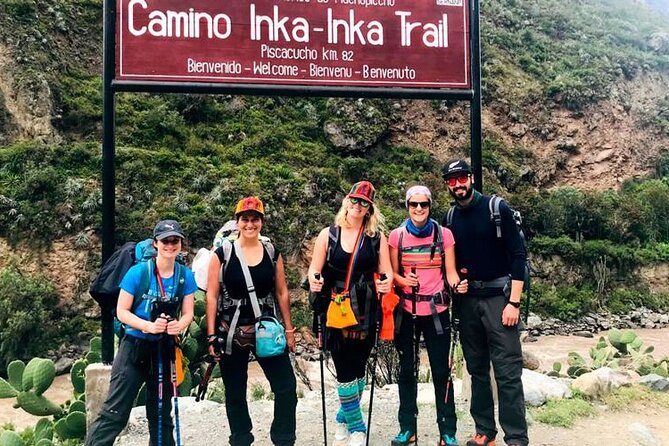
The first morning begins very early with pickup from your hotel or Airbnb. You ride toward kilometer 82 at Piscacucho, the usual starting point for the Classic Inca Trail, where the first control point is located.
The early departure is not glamorous, but it is practical. The group needs enough time for the transfer, registration, walking, lunch, and camp setup. Pack your day bag the night before so you are not sorting socks and snacks in the dark.
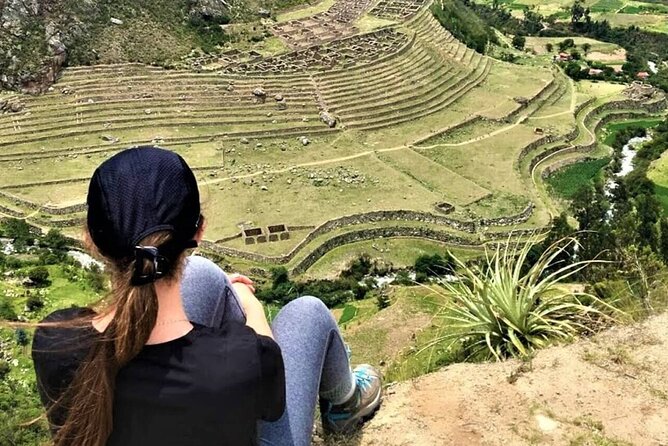
From kilometer 82, you walk for about two hours before reaching Patallacta at roughly 2,750 meters. The ruins sit beside the Urubamba River and provide your first major introduction to the remains along the trail. Your guide explains the site before you continue.
This opening section gives you a useful warm-up. It is still a full day, listed at about seven hours, but it does not begin with the hardest climb. You have time to settle into the pace, check your footwear, and learn how your body reacts to the altitude.
Lunch is prepared by the cook and support crew. After eating, you continue toward Huayllabamba, at about 3,000 meters, where you rest and spend the night.
The schedule description uses the word lunch more than once on day one, and the meal notes are not perfectly clear. Breakfast on day one is specifically excluded, and lunch in Aguas Calientes is also excluded later in the trip. Ask the operator for a day-by-day meal list before departure so you know exactly what to buy in Cusco.
Day two: the climb to Dead Woman’s Pass
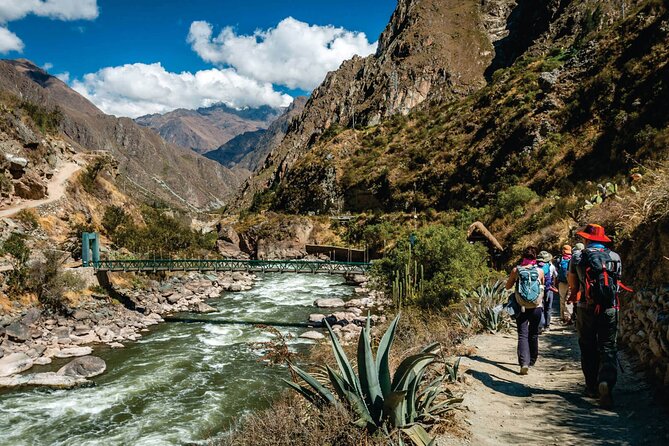
Day two is the physical test. After breakfast, you climb toward Warmiwañusca, better known as Dead Woman’s Pass, at approximately 4,200 meters.
The climb takes about three hours according to the schedule, though your own pace will depend on altitude, fitness, and rest stops. The guide’s best advice here is likely to be the simplest: go slowly, drink often, and stop before you feel completely spent.
At the pass, you get a broad view over the surrounding mountains and several climate zones. The satisfaction comes less from speed than from reaching the top under your own power. This is the point where stair training pays off. Regular stair climbing is a particularly useful preparation method because the trail demands repeated uphill effort rather than one short burst.
Altitude can be more troublesome than muscle fatigue. Drink plenty of water, add electrolytes, and carry snacks you will actually want to eat. Cereal bars, sweets, nuts, and other compact food can help when the next meal still feels far away.
After the pass, you descend to Pacaymayo for lunch, dinner, and the night’s camp. The descent may feel easier at first, but tired knees can make downhill walking surprisingly demanding. Trekking poles are worth considering, although they are not listed among the supplied equipment.
This day is listed at about six hours, but do not treat that number as a guarantee. Trail pace, rest stops, weather, and group ability can stretch the day. A moderate fitness level is the minimum stated requirement, yet I would prepare for a strenuous mountain hike rather than a casual nature walk.
Day three: ruins, stone tunnels, and Wiñayhuayna
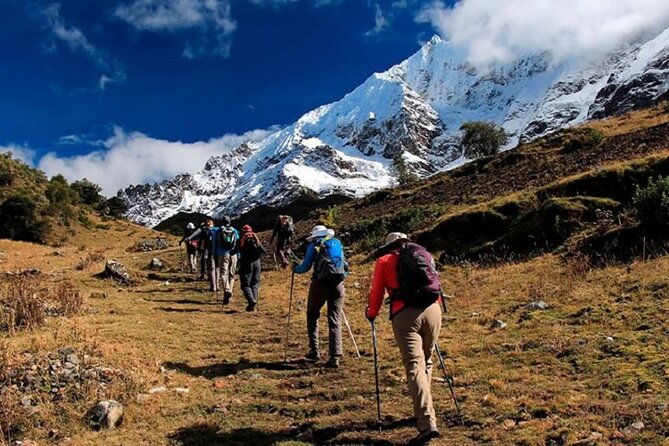
Day three covers about 15 kilometers and brings the greatest concentration of archaeological sites. You begin from the Pacaymayo River after breakfast, moving through thick vegetation and a series of old stone structures.
Runcurakay, at around 3,900 meters, is the first major stop. Its tower-like form and high position suggest a lookout role over the eastern valley. The site feels different from Patallacta because the setting is more enclosed and defensive, with the trail moving through higher terrain.
You continue toward Chaquicocha for lunch. By this stage, a hot meal and a proper break are not minor comforts. They give you time to refill water, dry damp clothing, adjust your pack, and let the group spread out before the next section.
Phuyupatamarca means place above the clouds. The name fits the setting, where the trail reaches another elevated position before descending through changing vegetation. Along the way, you pass through a tunnel carved into the rock, one of the route’s small but memorable pieces of engineering.
The final major site is Wiñayhuayna, often the emotional high point before Machu Picchu itself. Its terraces and stonework sit in a lush setting, and the approach feels like a reward after the long climb and descent of the previous days.
The planned night is at Wiñayhuayna, but the camp may instead be at Phuyupatamarca if space is not available. That possible change matters because it can affect the final morning’s timing and the distance remaining to Machu Picchu. Ask where the third camp is expected to be when you receive your confirmation.
Day three is listed at about six hours, though the 15-kilometer distance and repeated stops make it a full day. It is also the section where the walk becomes especially rewarding for anyone interested in Inca construction, not just mountain scenery.
Other ways to reach Machu Picchu:
- 2-Day Inca Trail to Machu Picchu with Panoramic Train
★ 5.0 · 1,876 reviews - From Cusco: Full-Day Group Tour of Machu Picchu
★ 4.7 · 1,767 reviews - Machu Picchu Day Trip from Cusco
★ 4.5 · 1,644 reviews - 2-Day Tour: Sacred Valley and Machu Picchu by Train
★ 5.0 · 1,127 reviews
Day four: entering Machu Picchu through Intipunku
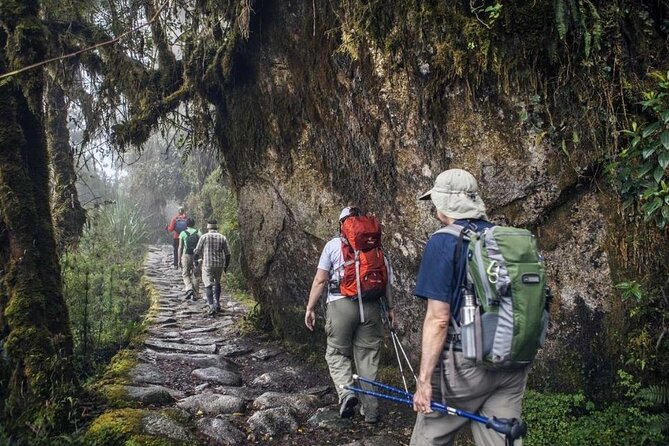
The final day begins with more walking to Machu Picchu. You pass the last checkpoint and continue to Intipunku, the Gate of the Sun.
Arriving through Intipunku gives you a gradual first view of Machu Picchu rather than a sudden arrival at the main entrance. From there, the citadel comes into view, and the long route of the previous days finally makes sense.
The schedule lists about seven hours for the day, including the walk, the visit, lunch in Aguas Calientes, and transport home. Keep your expectations practical. Reaching Machu Picchu is not the same as finishing the day. You still need to follow the site entry rules, make your way to Aguas Calientes, and catch the train and onward vehicle.
The package includes transportation from Machu Picchu to Aguas Calientes, return train service from Aguas Calientes to Ollantaytambo, and transport from Ollantaytambo to Cusco. Lunch in Aguas Calientes is not included, so budget for that separately.
Machu Picchu entry is the most important booking uncertainty. The operator states that tickets are purchased according to the circuits and tickets available through Peru’s Ministry of Culture. Circuits 1 and 2 are the expected options, while other circuits may involve an extra payment.
If no Machu Picchu ticket of any type is available, the stated policy is a full refund of the tour package. That is reassuring, but you should still request confirmation of your circuit as early as possible. Confirmation is issued within 48 hours of booking, subject to availability, and this experience is commonly booked around 90 days ahead.
Camp life, meals, and the porter team
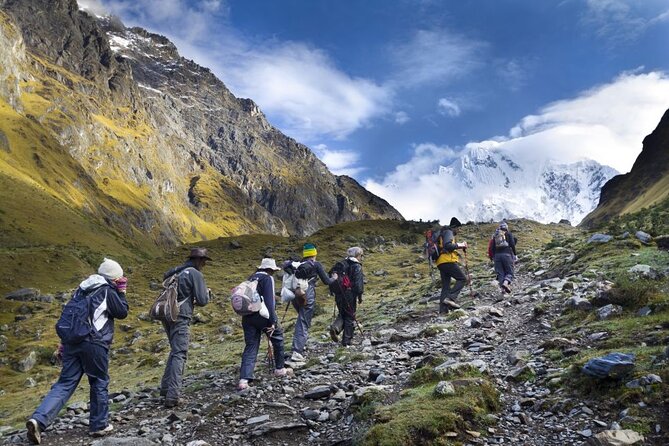
The camping setup is designed to keep the trip functional rather than fancy. You get a dining tent with tables and chairs, a foam sleeping mattress, tents, cooking support, and porters carrying the camp equipment.
The porters are a major part of the value. You are not simply paying for a guide who walks beside you. You are paying for a small mobile operation that moves food, cooking gear, tents, and common equipment along a regulated trail.
Meals include three breakfasts, four lunches, and three dinners according to the inclusions. The details also say that breakfast on day one and lunch in Aguas Calientes are not included, so check how the four lunches are counted. Food on the trail is described as a strong point, with camp cooking that can feel far better than expected after a steep morning.
Still, mountain food carries the usual practical risk. Bring basic stomach medicine such as Pepto-Bismol or Imodium if those are medications you normally use, and take care with any food that does not agree with you. The tour includes a first aid kit, but personal medication remains your responsibility.
Is $807.50 a fair price?
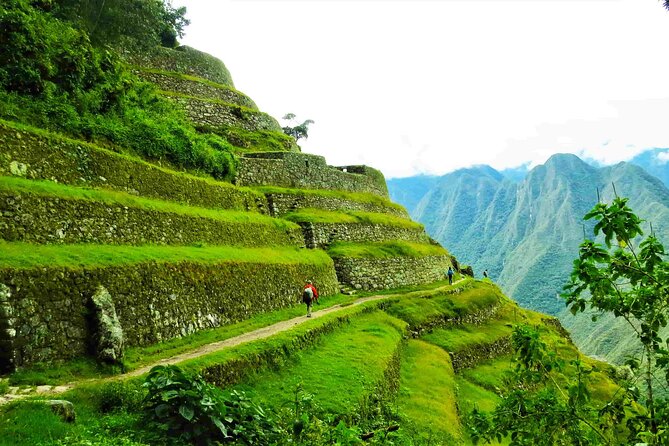
At $807.50 per person, this is not a budget day trip. It is a four-day, small-group expedition with permits, Machu Picchu entry, a bilingual guide, transport to the trailhead, camping support, meals, the return train, and the final ride to Cusco.
That package can offer solid value because the permits and transport alone are not simple items to arrange independently. The porters and cook also save you from organizing and carrying camping equipment, which is especially useful on a route with a 4,200-meter pass.
The price does not cover every expense. You need to account for breakfast on day one, lunch in Aguas Calientes, any meals not listed, and the single supplement if you want private arrangements. The possibility of an extra charge for a different Machu Picchu circuit should also be part of your budget.
A group limit of 10 is another positive. A smaller party can move at a more sensible pace and gives you better access to the guide. The minimum booking requirement is two people, so solo bookers should confirm whether the operator can place them with another party.
What to pack and how to prepare
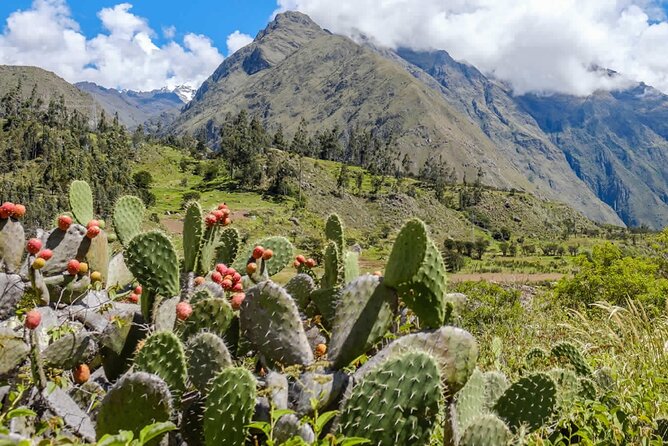
You do not need an extreme training program, but you do need specific preparation. Stair climbing is useful because the route includes long climbs and descents, and you should practice walking for several hours on consecutive days.
Keep your day pack light. Carry water, electrolytes, snacks, sun protection, rain protection, a warm layer, personal medication, and anything you need during the day. Since the porters carry cooking and camping equipment, your own load can remain focused on daily essentials.
Acclimatization is important, though the supplied details do not specify a required number of days in Cusco before starting. Give yourself time to adjust if your wider Peru schedule allows it, and do not try to race the group on day two.
Your footwear should already be broken in. The route is not the place to test new boots. Pack for changing conditions because you move through different elevations and types of vegetation across the four days.
Who should book this trek?
I would choose this tour if you want the journey to Machu Picchu to matter as much as the destination. It suits hikers with moderate to strong fitness, patience for altitude, and genuine interest in ruins, mountain views, and camp life.
It is a good match for someone who likes a small group and wants logistical help without giving up the sense of a real trek. The porters, cook, first aid kit, and transport make the trip more manageable, but they do not remove the hard walking.
I would not choose it simply because you want to see Machu Picchu. If your priority is comfort, a predictable schedule, or minimal physical strain, the train is the better choice. This route asks you to earn the final view.
Chullos Travel Peru has a stated maximum of 10 people, pickup from your hotel or Airbnb, and English-language service. Cancellation terms are generous at six or more full days before the start, but the refund drops for later cancellations, so read the timing carefully before committing.
Should you book the Inka Trail 4 Days to Machu Picchu?
Book it if you are prepared for a strenuous four-day hike and want ancient sites woven into the route. The best parts are the high pass, the ruins at Runcurakay and Wiñayhuayna, the changing scenery, and the support crew that carries the camp.
Skip it if you mainly want an easy visit to Machu Picchu. At this price, you are buying a demanding walking experience, not just admission to a famous monument. Train for stairs, confirm the ticket circuit and meal schedule, and book well ahead. If you do that homework, this can be a powerful and memorable way to arrive at Machu Picchu.
FAQ
How long is the Inka Trail tour?
The tour lasts approximately four days. The daily walking times are listed at about seven hours on day one, six hours on day two, six hours on day three, and seven hours on day four.
What is the highest point on the trek?
The highest point is Warmiwañusca, also called Dead Woman’s Pass. It is approximately 4,200 meters above sea level.
Is pickup included?
Yes. Pickup is offered from your hotel or Airbnb in Cusco.
Are meals included?
The package lists three breakfasts, four lunches, and three dinners. Breakfast on day one and lunch in Aguas Calientes are specifically excluded, so confirm the exact meal schedule before departure.
Is Machu Picchu admission included?
Yes, Machu Picchu entry and entrance to the Inca Trail are included, subject to ticket availability. Circuits 1 and 2 are listed as the standard options, and other circuits may require an additional payment.
How many people can join the tour?
The group has a maximum of 10 people. At least two people are needed for the tour to operate.
What happens if Machu Picchu tickets are unavailable?
The stated policy is a full refund of the tour package if no type of Machu Picchu ticket is available. Tickets are purchased according to the circuits and availability provided by Peru’s Ministry of Culture.
Added recently around Cusco
- Super valley or vip valley★ 5.0 · 13 reviews
- the Incas’ Sacred Valley★ 5.0 · 27 reviews
- Sacred Valley of the Incas Day Trip from Cusco★ 5.0 · 6 reviews
- Small-Group Tour: Rainbow Mountains Hiking from Cusco★ 4.0 · 5 reviews
- Excursion to the Sacred Valley of the Incas from Cusco★ 5.0 · 8 reviews
- Maras + Moray & Textile Experience★ 5.0 · 14 reviews
- Tour EN Cuatrimoto POR la Montaña 7 Colors Hike 5 Minutes★ 4.5 · 32 reviews
- rainbow mountain★ 4.0 · 4 reviews
Machu Picchu Tours, compared.
Classic Inca Trail Trek 4D/3N to Machu Picchu (Group Service)
Read our review →
Machu Picchu: 4-Day Inca Trail Trek with Panoramic Train Ride
Read our review →
2-Day Inca Trail to Machu Picchu with Panoramic Train
Read our review →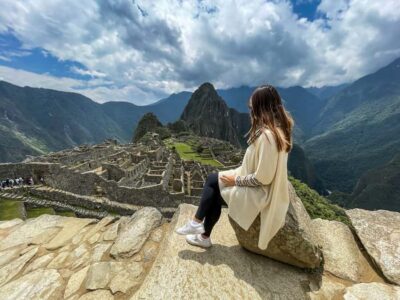
2-Day Tour: Sacred Valley and Machu Picchu by Train
Read our review →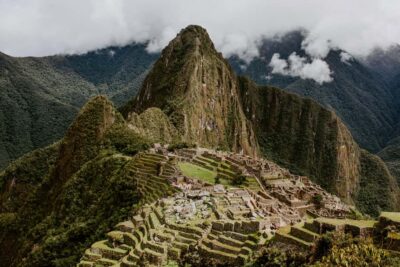
Machu Picchu: Full-Day Tour from Cusco with Optional Lunch
Read our review →Browse the lists this tour appears in