Reviewed · CUSCO TOURS
SOUTH VALLEY CUSCO
Ancient water still does the talking. This seven-hour trip from Cusco combines Tipón’s working irrigation canals with the broad pre-Inca ruins of Pikillaqta, giving you two very different views of southern Peru’s past. I also like the low $20 price, especially since transportation and an English- or Spanish-speaking guide are included.
The main drawback is pace. Tipón and Pikillaqta each receive about 50 minutes, and the stop at Pikillaqta can feel rushed. Lunch is also optional and not included, so I would bring a sandwich unless you are happy to follow the group to a restaurant.
In This Review
- Key points to know before booking
- Why southern Cusco deserves a full day
- Leaving Cusco for Tipón’s water channels
- Pikillaqta, the Wari city with a different feel
- Andahuaylillas and the famous colonial church
- Lunch, side stops, and the return to Cusco
- What the $20 price really covers
- Who will enjoy this South Valley day?
- Should you book the South Valley Cusco tour?
- FAQ
- Where does the South Valley tour begin?
- Where does the tour finish?
- How long does the experience last?
- Which languages does the guide speak?
- Is hotel pickup included?
- Is lunch included?
- Are entrance fees included?
- What should I bring?
- Is the tour suitable for wheelchair users?
Key points to know before booking
- Tipón shows Inca water engineering at its best: Clear channels, terraces, and fountains make the site easy to understand even if you are not an archaeology expert.
- Pikillaqta offers a pre-Inca change of scene: The Wari settlement feels more severe and planned than the Inca sites around Cusco.
- Andahuaylillas adds colonial art: The church is known as the Sistine Chapel of South America, but entrance costs an extra 18 soles.
- The tour lasts about seven hours: You leave Cusco in the morning and return to Plaza Kusipata at about 4 p.m.
- Lunch needs planning: The guide asks the group about stopping for lunch. If most people agree, the stop lasts about one hour, but food is not part of the $20 price.
- The value is strong, with limits: You get transport, hotel pickup in central Cusco, and a guide, but archaeological tickets and the church fee are separate.
Why southern Cusco deserves a full day
Most people first focus on Machu Picchu, the Sacred Valley, and Cusco’s Inca streets. The South Valley gives you a quieter counterpoint. Here, the appeal is not one famous monument but the way three stops fit together: Inca engineering at Tipón, Wari urban planning at Pikillaqta, and Spanish colonial religious art at Andahuaylillas.
I like this route because it makes Peru’s layers easy to see. The Inca site is not the oldest stop. Pikillaqta belongs to the Wari culture, a pre-Inca society, while Andahuaylillas reflects the colonial period that followed the Spanish conquest.
For $20, the tour is aimed at value rather than luxury. You receive tourist transportation and a professional guide in English or Spanish. The vehicle handles the long stretches between sites, which is useful because the route includes roughly three and a half hours of driving in total.
The tradeoff is that this is a group outing. You follow a set schedule, and your time at each archaeological site is limited. If you want to photograph every wall or study every canal, a private day with more time at each stop would be better.
A few more Cusco trips worth lining up side by side
- Classic Inca Trail Trek 4D/3N to Machu Picchu (Group Service)
★ 5.0 · 8,653 reviews - Cusco: Rainbow Mountain and Red Valley Day Trip with Meals
★ 4.9 · 4,893 reviews - Machu Picchu: 4-Day Inca Trail Trek with Panoramic Train Ride
★ 5.0 · 4,568 reviews
Leaving Cusco for Tipón’s water channels
Pickup is available from central hotels around the Plaza de Armas. If your hotel is outside the central pickup area, the meeting point is the Mermaid Fountain in Plaza de Armas. If you choose hotel pickup, wait in the lobby rather than outside on the street.
The first drive takes about one hour. The road heads south through open scenery and smaller settlements. The ride is not simply dead time: it gives you a look at how quickly Cusco’s dense historic center gives way to rural valleys and cultivated land.
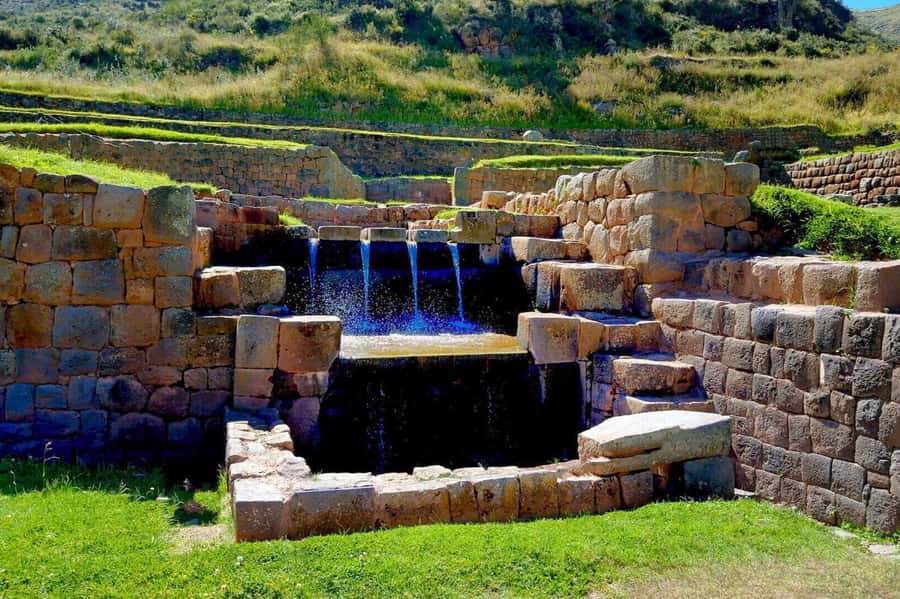
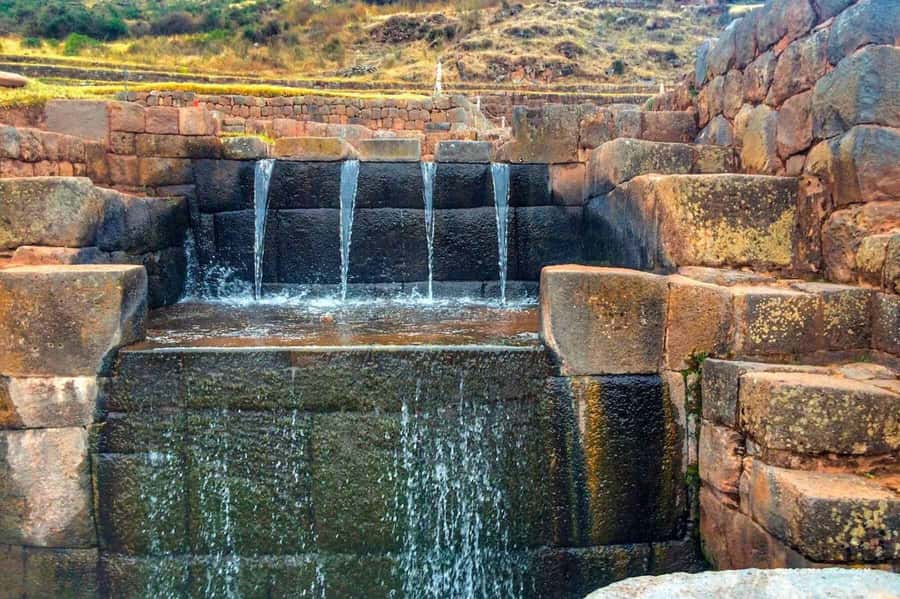
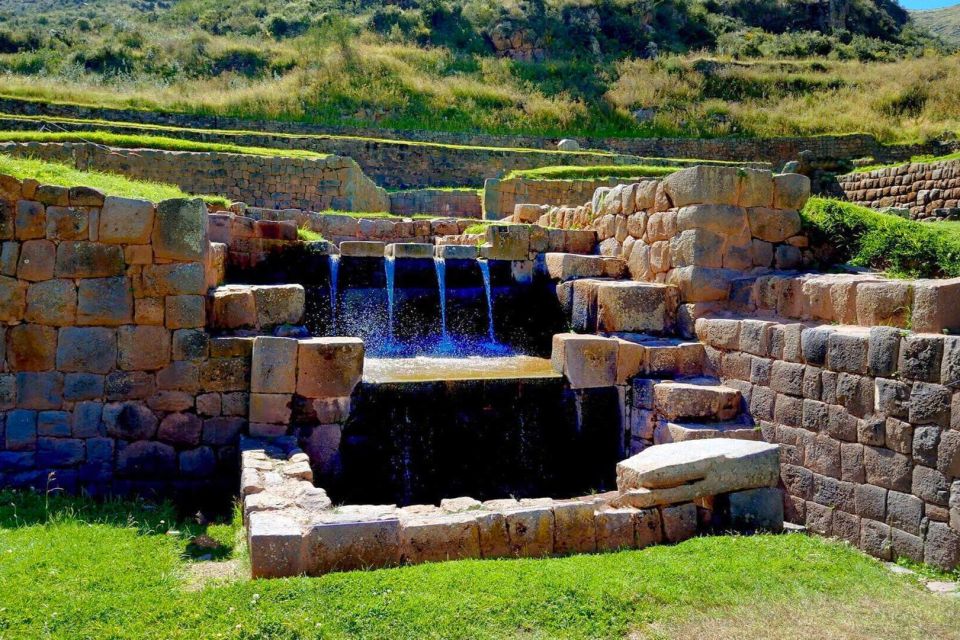
Tipón is the first major stop, with about 50 minutes for a guided visit. The site is known for its agricultural terraces and irrigation canals, and this is where the tour’s title theme becomes clear. The Inca were not only builders of temples and fortresses. They were also careful managers of water.
At Tipón, pay attention to the shape and order of the channels. Water was directed through stonework and across terraces, helping farming take place on sloped ground. The site is especially satisfying because the engineering is visible. You do not need to imagine an invisible system from a pile of foundations. You can follow the route of the water with your eyes.
I would listen closely to the guide here. A good explanation can turn a pretty set of terraces into a lesson in construction, farming, and control of natural resources. English and Spanish tours are offered, though one visitor found the guide’s English and Spanish somewhat difficult to understand. That is worth keeping in mind if clear commentary is a major reason you book.
The 50-minute visit is enough for an introduction. It is not enough for a slow study of every terrace. Wear comfortable clothes and shoes, and keep your camera ready, since the first stop is one of the most visually pleasing parts of the day.
Pikillaqta, the Wari city with a different feel
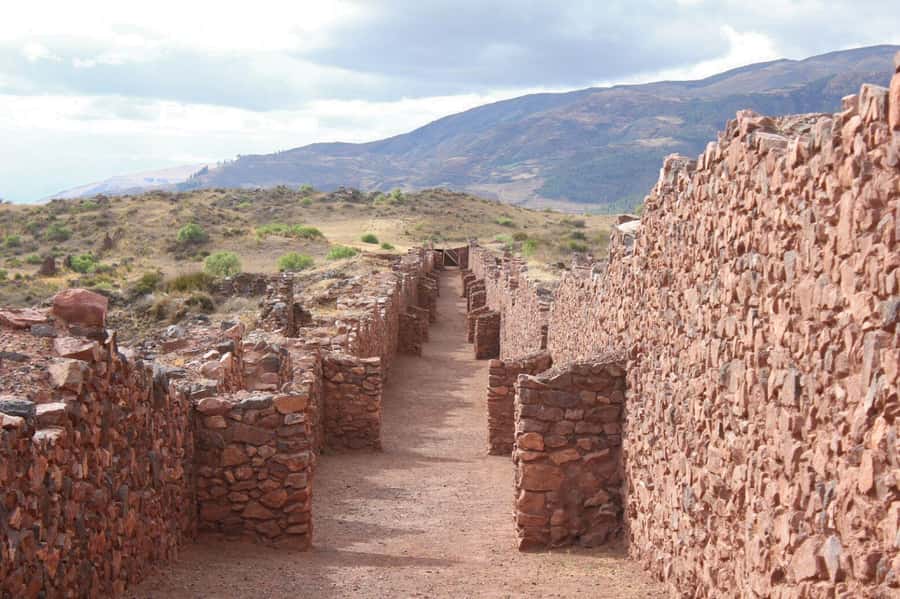
After Tipón, the bus ride takes about 30 minutes to Pikillaqta. The guided visit lasts another 50 minutes. This is the stop that most needs realistic expectations.
Pikillaqta was built by the Wari culture before the rise of the Inca. Its remains give you a chance to think about Peru’s past without treating every ancient site as Inca. The buildings and layout help show that organized urban life in the Andes existed long before the Inca state reached its height.
The mood here differs from Tipón. Tipón draws you in through water, terraces, and practical engineering. Pikillaqta is more about the scale and order of a settlement. You can look across the remains and consider how a pre-Inca society planned space, built walls, and organized a community.
I would make Pikillaqta a priority during the tour, because 50 minutes can pass quickly. One recent account found this visit too brief and wished for more time to explore. That is a fair criticism. If the guide spends too long on the first explanations, you may have little time left to walk and take photographs.
Still, the stop has real value. It broadens the day beyond the familiar Inca story and makes the South Valley feel like a historical route rather than a string of photo stops. Ask your guide to point out the settlement’s main layout and explain how the Wari period fits into the wider Andean past.
Andahuaylillas and the famous colonial church
The final main stop is Andahuaylillas, reached after about 45 minutes on the bus. You receive approximately 45 minutes for a guided visit before the return drive to Cusco.
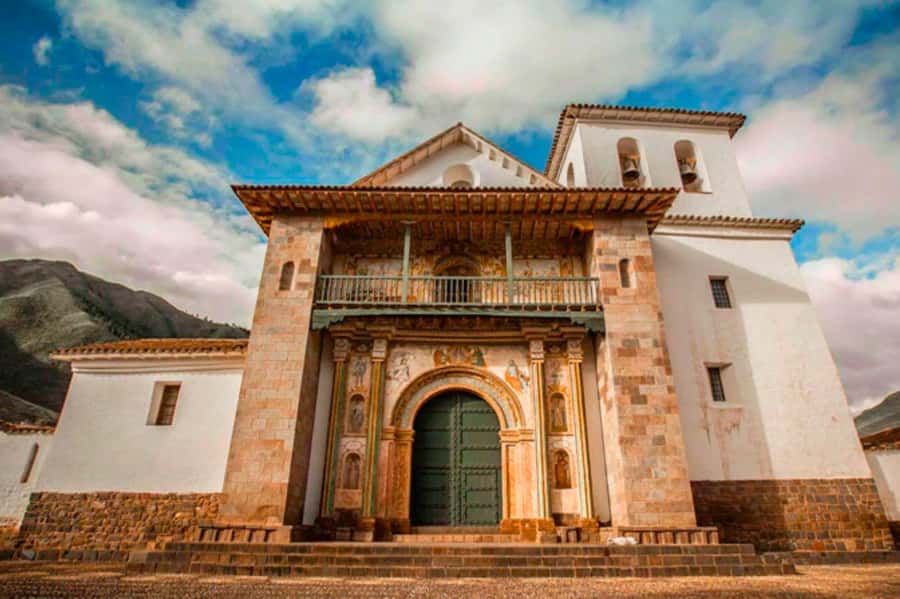
The town is best known here for its colonial church, often called the Sistine Chapel of South America. That nickname signals the focus: painted decoration and religious art rather than Inca stonework. The church provides a sharp contrast to the first two stops, showing how colonial power used architecture and art to shape religious life.
Entrance to the church is not included. The stated fee is 18 soles, so carry cash. The tour price may look unusually low at first, but this extra charge is important when you calculate the full cost.
I like having Andahuaylillas on the route because it prevents the day from becoming a purely archaeological outing. You see a pre-Inca settlement, an Inca engineering site, and a colonial church in one trip. The sequence also helps you notice how each period expressed authority differently: through water and farming, planned settlement, and religious art.
The stop is short, so do not expect a long museum-style visit. Use the time carefully, listen to the explanation, and remember that the church ticket is separate. If you prefer ancient sites to colonial interiors, this may be the least important stop for you. If you enjoy art and historical contrasts, it rounds out the day well.
Also leaving from Cusco, and nothing like the above:
- Salkantay Classic Trek 5 Days from Cusco
★ 5.0 · 4,062 reviews - 4-Day Salkantay Trek with Sky Camp Stay
★ 5.0 · 3,346 reviews - Short Inca Trail to Machu Picchu 2D/1N
★ 5.0 · 3,007 reviews - Excursion to Rainbow Mountain Full Day Optional Red Valley
★ 5.0 · 2,996 reviews
Lunch, side stops, and the return to Cusco
The published schedule allows about one hour for the final drive back toward Cusco, but the day may include a lunch break. The guide asks the group if they want to eat. If most people agree, the bus stops for about an hour.
That arrangement keeps the tour flexible, but it also means lunch is not guaranteed in a way that suits everyone. One person enjoyed a typical Peruvian meal outside the main tourist route, costing about 25 soles per dish. Another found there was no proper chance to buy food and wished they had brought something to eat.
My advice is simple: bring a sandwich, fruit, or another small meal. You can still join the lunch stop if the group chooses it, but you will not be stuck hungry if the timing or menu does not work for you. Carry cash for food and the church entrance.
The trip may also include brief extra stops. These have included a short presentation about Machu Picchu and a bakery stop in Oropesa. Those additions can be pleasant, especially if you like seeing everyday local businesses, but they are not the core reason to book the tour. One person enjoyed these stops, while another did not find them useful.
The bus is described as comfortable, and that matters on a route with several long drives. You will spend about one hour going from Cusco to the first stop, 30 minutes between Tipón and Pikillaqta, 45 minutes to Andahuaylillas, and about one hour returning. The final drop-off is at Plaza Kusipata, around 4 p.m.
What the $20 price really covers
At $20 per person, this is one of the easier ways to see three important South Valley sites in one day. The price includes central hotel pickup, tourist transportation, and a professional guide in English or Spanish. For a visitor who wants an organized route without arranging separate taxis, that is good value.
You need to add the general or partial archaeological ticket, since it is not included. The Andahuaylillas church entrance costs 18 soles. Meals, drinks, and travel insurance are also your responsibility.
The low price does come with compromises. You are paying for shared transport and a fixed schedule, not a custom visit. The guide’s quality can affect the day, and clear language is essential at Tipón and Pikillaqta. Most of the overall feedback is positive, with a rating of 4.1 from 56 reviews, but the weaker comments point to two practical concerns: rushed time at Pikillaqta and uneven communication from the guide.
There is also a customer-service risk worth noting. One person became ill overnight and asked to move to the next day’s tour, but was told to book and pay again. That does not affect the sites themselves, but it is a reason to understand the cancellation terms before booking. Free cancellation is available up to 24 hours in advance for a full refund. A reserve-now, pay-later option is also offered.
Who will enjoy this South Valley day?
I would recommend this tour to you if you want a broad introduction to the area south of Cusco and prefer someone else to handle transport. It works especially well for first-time visitors who want more than the city center but do not want to spend a full day arranging buses, taxis, and entrance tickets.
It also suits anyone interested in how Andean history developed across different periods. Tipón is the strongest stop for engineering fans. Pikillaqta is best for people who want pre-Inca context. Andahuaylillas works for those who enjoy colonial art and religious buildings.
You may want another option if you need a wheelchair-accessible outing, since the activity is not suitable for wheelchair users. You may also be disappointed if you expect long, unhurried visits or a full meal included in the price.
Bring your passport or ID card, comfortable clothing, and cash. Alcohol and drugs are not allowed. Since the tour begins and ends in central Cusco, it is easy to fit into a wider stay, though you should allow the full seven hours rather than planning a tight afternoon appointment.
Should you book the South Valley Cusco tour?
Book it if you want strong sightseeing value for $20 and like the idea of connecting Inca engineering, Wari settlement planning, and colonial art in one day. Tipón is the star, Pikillaqta supplies the historical surprise, and Andahuaylillas changes the mood before you return to Cusco.
I would bring food, budget separately for entrance fees, and treat the lunch stop as optional. Most important, accept that Pikillaqta may feel short. If that sounds fair, this is a practical, affordable addition to a Cusco visit, especially when your schedule does not allow separate trips into the South Valley.
FAQ
Where does the South Valley tour begin?
Pickup is available from central hotels around Cusco’s Plaza de Armas. If you do not use pickup, meet at the Mermaid Fountain in Plaza de Armas.
Where does the tour finish?
The tour finishes at Plaza Kusipata in Cusco at about 4 p.m.
How long does the experience last?
The full experience lasts about seven hours.
Which languages does the guide speak?
The tour offers a live guide in English or Spanish.
Is hotel pickup included?
Hotel pickup is included for central locations. You should wait in your hotel lobby if you select the pickup service.
Is lunch included?
No. The guide asks the group if they want a lunch stop. If most people agree, the stop lasts about one hour, but you pay for your own meal.
Are entrance fees included?
No. The archaeological ticket is not included, and entry to Andahuaylillas church costs 18 soles.
What should I bring?
Bring your passport or ID card, comfortable clothing, and cash.
Is the tour suitable for wheelchair users?
No. The activity is not suitable for wheelchair users.
Added recently around Cusco
- Guided tour of the mountain of colors in Cusco★ 5.0 · 11 reviews
- 2-Day Private Short Inca Trail to Machu Picchu★ 5.0 · 15 reviews
- City Tour Cusco – Group★ 5.0 · 4 reviews
- Tour Sacred Valley with Maras and Moray★ 5.0 · 15 reviews
- San Pedro Market Tour with Peruvian Cooking Class★ 5.0 · 31 reviews
- Walking Culinary Experience★ 5.0 · 41 reviews
- City Tour in Cusco★ 4.5 · 10 reviews
- One Day Tour to Humantay Lagoon★ 5.0 · 8 reviews
Cusco Tours, compared.
Classic Inca Trail Trek 4D/3N to Machu Picchu (Group Service)
Read our review →
Rainbow Mountain and Red Valley Day Trip with Meals
Read our review →
Machu Picchu: 4-Day Inca Trail Trek with Panoramic Train Ride
Read our review →

Excursion to Rainbow Mountain Full Day Optional Red Valley
Read our review →