
Reviewed · MACHU PICCHU TOURS
The Most Traditional Tours Of Cusco And Machu Picchu By Panoramic Train 3 Days
Cusco packs centuries into every street. This three-day program links the city’s great Inca and colonial sights, the Sacred Valley, and Machu Picchu with transport, entrance tickets, and English-speaking guides arranged in advance. I like the efficient route and the daily hotel pickup, which removes much of the guesswork from a complicated Peru trip.
I also like the chance to see smaller cultural stops, such as the Pisac market and Chinchero’s textile demonstration, instead of rushing straight from Cusco to Machu Picchu. The main drawback is the pace. Two full sightseeing days are followed by a very early start and a late return, so you should expect long days rather than a relaxed holiday.
In This Review
- Key points to know before booking
- What this three-day Cusco program is really like
- Day 1: Gold, stone, and water around Cusco
- Day 2: Pisac, Urubamba, Ollantaytambo, and Chinchero
- Day 3: The panoramic train to Machu Picchu
- Guides, service, and group size
- Food, hotels, and what you still pay for
- Who should book this $497.44 experience?
- Should you book it?
- FAQ
- How long does the tour last?
- Is hotel pickup included?
- Is the tour offered in English?
- What is included in the price?
- Is accommodation included?
- Are meals included on all three days?
- How many people can join the tour?
Key points to know before booking
- Cusco’s essential sights come first: The opening day covers the Cathedral, Qorikancha, Sacsayhuaman, Q’enqo, Puka Pukara, and Tambomachay.
- The Sacred Valley day is full: Pisac, its market, Urubamba, Ollantaytambo, and Chinchero are packed into one long outing.
- Machu Picchu requires an early start: Pickup is listed at 4:00 or 5:30 a.m., depending on train availability.
- The train ride is part of the appeal: The journey between Ollantaytambo and Aguas Calientes takes about two hours each way, with mountain and jungle scenery.
- Accommodation is not included: You pay $497.44 per person for the arranged touring, tickets, transport, and guides, but your hotel and several meals are extra.
- Small-group size helps: The maximum is 15 people, a useful limit for narrow ruins, busy platforms, and group movement.
What this three-day Cusco program is really like
This is a sightseeing package for someone who wants the major Cusco-area sights handled in one booking. You get hotel pickup in Cusco, local transport, admission tickets, guided visits, the train to Machu Picchu, the bus up to the citadel, and the return transfer.
That convenience matters in Peru. Train times, Machu Picchu entry slots, bus queues, and archaeological tickets all need to line up. Here, the operator handles the main pieces, while you focus on keeping your passport, identification, water, and personal spending money close at hand.
The price is $497.44 per person. That is not a shoestring trip, but it covers several costly items: the two-day Cusco and Sacred Valley touring, multiple archaeological admissions, the round-trip train, the bus between Aguas Calientes and Machu Picchu, and professional guiding at the citadel. Since hotels, tips, snacks, and food not specified are extra, compare the final cost with a do-it-yourself plan before booking.
The group limit of 15 is another plus. It is small enough to keep instructions manageable, though the schedule itself is still demanding. The experience is offered in English, and hotel pickup is available from Cusco accommodation once you provide the address.
Other ways to reach Machu Picchu:
- Classic Inca Trail Trek 4D/3N to Machu Picchu (Group Service)
★ 5.0 · 8,653 reviews - Machu Picchu: 4-Day Inca Trail Trek with Panoramic Train Ride
★ 5.0 · 4,568 reviews - Short Inca Trail to Machu Picchu 2D/1N
★ 5.0 · 3,007 reviews
Day 1: Gold, stone, and water around Cusco
The first day begins with the city’s colonial center. The Cathedral of Cusco is more than a grand church stop. Inside, you will see carved wooden altars, colonial gold work, paintings from the Cusco school, and the well-known image of the Lord of the Earthquakes.
Allow about 40 minutes here. That is enough for an organized introduction, but not enough for a slow study of every chapel or painting. If church art matters to you, stay alert and ask your guide about the local artistic style, which blends European forms with Andean ideas.
Next comes Qorikancha, also called the Golden Temple or Temple of the Sun. The Inca site was later covered by the Convent of Santo Domingo, making this one of Cusco’s clearest examples of layered history. You can see how the Spanish colonial building sits over the earlier Inca foundations.
This visit also lasts about 40 minutes. I consider it one of the most important stops on the city tour because it explains Cusco in a single place: Inca engineering, Spanish conquest, Catholic conversion, and the survival of older stonework.
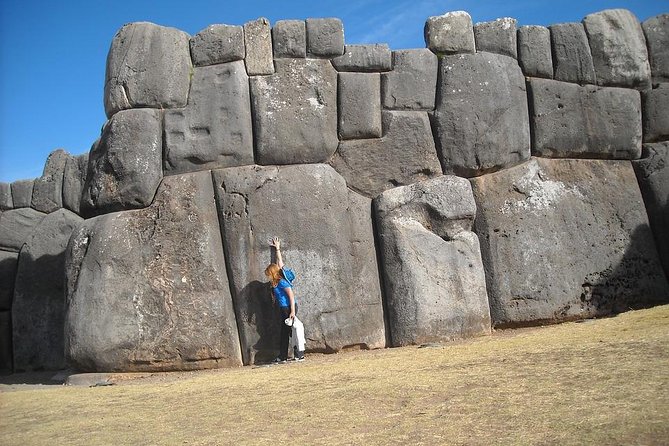
The afternoon moves uphill to Sacsayhuaman. The site sits on a mountain above Cusco and gives you broad views over the city. Its massive fitted stones are the main event. Some are described as reaching roughly 30 feet in height and weighing more than 350 tons.
You have about an hour here, which is useful because the scale of the stones needs time to sink in. The visit does require walking over uneven archaeological ground, and the altitude can make even a short climb feel harder than expected. A moderate level of fitness is required for the entire program.
Q’enqo follows. Its Quechua name means labyrinth, and the site had a religious role during Inca times. The tour points out the semicircular enclosure, trapezoidal niches, and a monolith said to resemble a puma.
This is a shorter visit of about 40 minutes. It is less grand than Sacsayhuaman, but the carved rock areas offer a different look at ritual life. Your guide is especially useful here because the remains can be difficult to read without explanation.
The final archaeological area includes Puka Pukara and Tambomachay. Puka Pukara means Red Fort, while Tambomachay is linked with water worship and a retreat for the Inca ruler. The sites are close together, making this a practical finish to the route.
The first day returns to Cusco at about 6:30 p.m. That makes it a full afternoon and evening, but the order is sensible. You begin with churches and Inca foundations, then move into the hills for giant stonework, ritual sites, and water channels.
Day 2: Pisac, Urubamba, Ollantaytambo, and Chinchero
Day two begins with pickup from your Cusco hotel and a drive toward the Sacred Valley. Stops at viewpoints along the Vilcanota River and valley provide a useful pause during the bus ride. The route is not simply a transfer to the ruins. It gives you a broad sense of how the settlements sit among the mountains.
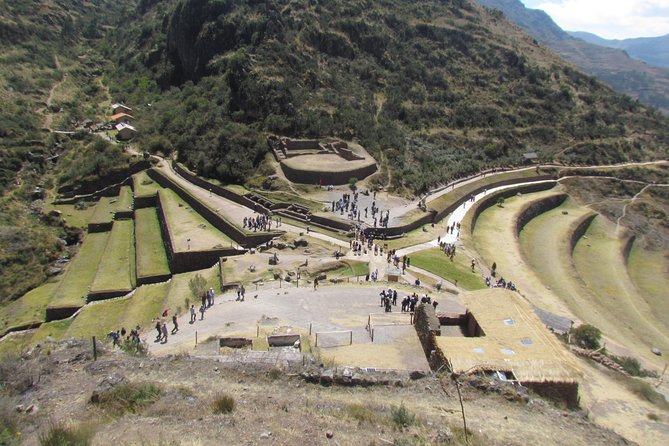
At the Pisac archaeological park, you will visit the Inca citadel high on the mountain. The site includes residential areas, terraces, a cemetery, and other structures. Pisac is memorable because the stonework and agricultural terraces follow the shape of the mountain rather than fighting it.
The scheduled visit is about an hour. That is enough to see the main areas with a guide, though visitors who enjoy archaeology may wish for more time. Wear shoes that feel secure, since the site involves walking on uneven paths and slopes.
The bus then descends to Pisac market. You get about 20 minutes here, which is a short window for browsing. The market is known for Andean textiles, ponchos, bags, jewelry, and ceramic pieces based on Inca designs, including ceremonial vessels called queros.
You can shop, but do not feel pressured to make the market the center of the day. The real value is the contact with local craft traditions and the chance to see goods made in Andean communities. With only 20 minutes, decide in advance if you want to buy something, then compare prices before committing.
The route continues along the Vilcanota River to Urubamba. Lunch is described as a buffet at a local restaurant, with Peruvian dishes and other food available. This is one of the included meals, although you should confirm exactly what is served and whether drinks are included.
Urubamba also acts as a practical break between the day’s major archaeological visits. The schedule does not give a precise length for this stop, so the amount of free time may vary.
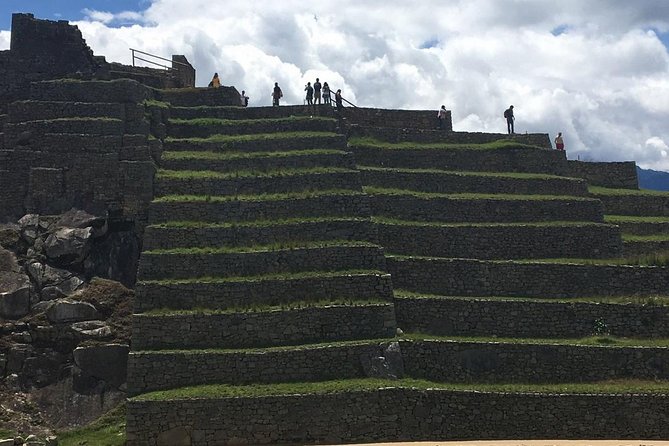
In the afternoon, Ollantaytambo provides one of the strongest stops of the Sacred Valley. The site combines a fortress, ceremonial spaces, terraces, and a living settlement. It is described as the only Inca city in Peru that remains inhabited, giving the visit a more immediate feel than a purely abandoned ruin.
Ollantaytambo was built as a tambo, or stopping place, and as a defensive point guarding this part of the valley. The steep terraces and large stone structures make the site physically impressive, but they also explain its practical purpose.
You have about an hour here. Again, the pace is brisk. If you have knee trouble or find steep stone paths difficult, the guide can help you understand the site even if you choose not to climb every section.
The last stop is Chinchero, a high Andean village on the return route to Cusco. You will see Inca walls in the main square, the remains of the royal estate linked with Tupac Inca Yupanqui, and a colonial church with frescoes on the porch.
A short textile demonstration explains traditional Inca-era production methods. This is a valuable cultural stop because it connects the old archaeological sites with living craft practice. The market also gives you another chance to buy textiles, but the visit is brief.
The return to Cusco is scheduled for about 7:30 p.m. That makes day two the longest sightseeing day before Machu Picchu. The schedule is efficient, but it leaves little room for a slow lunch, extended shopping, or independent wandering.
Day 3: The panoramic train to Machu Picchu
The final day begins very early. Pickup is listed at 4:00 or 5:30 a.m., depending on the assigned train ticket. The drive from Cusco to Ollantaytambo station takes about one hour and 40 minutes.
This early departure is the price of seeing Machu Picchu in a single day from Cusco. You should arrange your belongings and breakfast the night before. Breakfast in Aguas Calientes is on your own, so bring enough cash and allow time to eat before the bus.
The train from Ollantaytambo to Aguas Calientes takes about two hours. The route changes from high mountain scenery toward more tropical vegetation, with mountains and jungle views along the way. The train is not just a practical connection. It is one of the pleasant parts of the day, especially if you have spent the previous two days on roads.
When you arrive in Aguas Calientes, staff meet you and explain the next steps. You then take the bus up the zigzag road to Machu Picchu, a ride of about 30 minutes. The bus ticket is included in the package.
At the entrance, you must show your ticket and identification documents. Keep your passport or accepted identification accessible rather than packed away in a large bag. The entry process is easier when you are ready before reaching the gate.
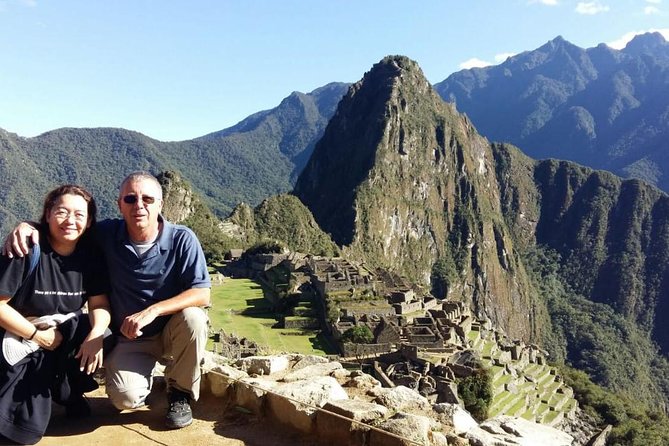
The guided visit inside Machu Picchu lasts about two hours. The route covers major places such as the Main Square, Circular Tower, Sacred Solar Clock, and Royal Rooms. A guide adds essential context because the citadel is a large complex, and many structures look similar until you know what they were used for.
The two-hour visit is enough for a clear introduction to the main sections. It is not a full day inside the site, and the schedule does not promise independent time after the guided circuit. If Machu Picchu is your main reason for coming to Peru, read the exact entry conditions and circuit details provided with your ticket before departure.
After the citadel, you return by bus to Aguas Calientes. Lunch is on your own, and you may optionally visit the town’s hot springs. The hot springs can be a welcome idea after three busy days, but the schedule gives no guaranteed amount of time for that visit. Treat it as a possible extra, not a central feature.
The return train is listed for about 6:00 p.m. and takes around two hours to Ollantaytambo. Staff meet you at the station with a board showing your name, then transfer you back to Cusco.
The stated arrival time is about 10:30 p.m., though another timing note gives possible returns of 8:30 p.m. or midnight based on train availability and preferences. This is an important point to confirm before paying. Your actual return depends on the train assigned to you, and the difference between evening and midnight is substantial.
A few more Cusco trips worth lining up side by side
- 2-Day Inca Trail to Machu Picchu with Panoramic Train
★ 5.0 · 1,876 reviews - 2-Day Tour: Sacred Valley and Machu Picchu by Train
★ 5.0 · 1,127 reviews - Machu Picchu Full Day from Cusco by Panoramic Train
★ 5.0 · 857 reviews - Machu Picchu Full Day Tour from Cusco with Train & Entrance
★ 5.0 · 508 reviews
Guides, service, and group size
The company is Liberty Peru Travel. Names connected with its Cusco service include Ruth Palomino and Angel, both praised for careful communication and friendly assistance. The operating style described is organized, punctual, and attentive, with guides and drivers selected through local partners.
That matters most on day three, when a missed transfer or unclear instruction could disrupt the entire Machu Picchu visit. Staff meeting you at Aguas Calientes and Ollantaytambo is a useful safety net.
The tour is offered in English. The guide is not just there to point out buildings. At Qorikancha, the Cathedral, Chinchero, and Machu Picchu, good explanations help connect separate sights into a larger story about Inca rule, Spanish colonial power, religion, farming, and present-day culture.
The group maximum is 15 people. That is not a private tour, but it is a reasonable size for a package covering so much ground. Keep in mind that the program can feel rushed, especially at markets and smaller ruins. If you prefer photography, long meals, and spontaneous stops, a private or slower itinerary may suit you better.
Food, hotels, and what you still pay for
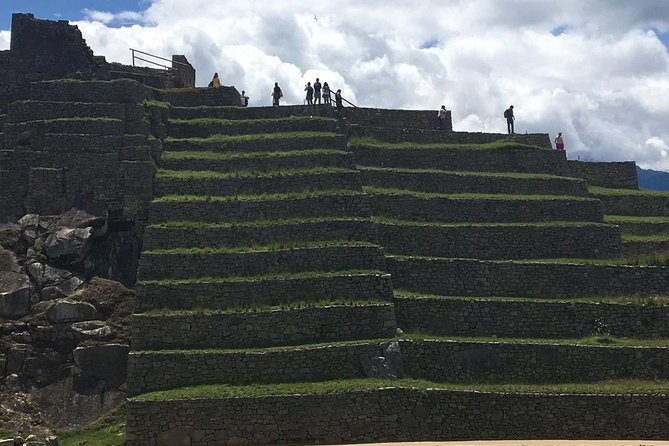
Hotel accommodation is not included. You need to arrange a place in Cusco for the first two nights, and the package does not describe an overnight stay in Aguas Calientes. The program returns to Cusco after Machu Picchu.
Lunch is included in the Sacred Valley portion, specifically as a buffet in Urubamba. Food is not included where it is not specified, including breakfast in Aguas Calientes and lunch after visiting Machu Picchu.
You should also budget for tips, snacks, and any optional hot springs visit. These are small costs compared with the train and entry tickets, but they add up during long days.
Who should book this $497.44 experience?
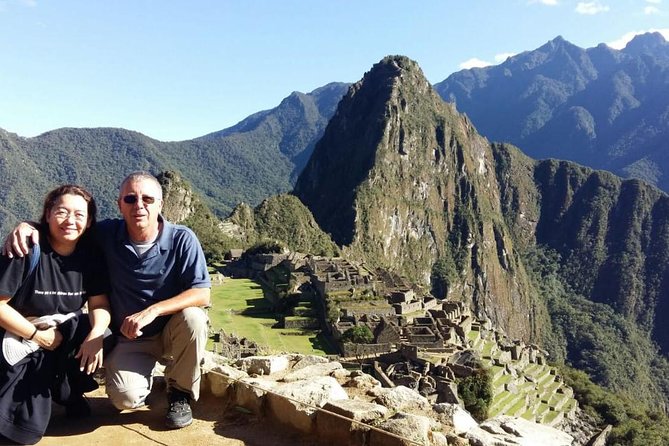
I would choose this program if you have limited time in Cusco and want the major sights arranged by one company. It suits first-time visitors who value clear transfers, included admissions, an English-speaking guide, and hotel pickup more than free time.
It also works well if planning train tickets and Machu Picchu transport feels like too much work. The package handles the complicated parts while still giving you market time, a buffet lunch, and several archaeological sites beyond the famous citadel.
I would be cautious if you need a gentle schedule. Day two runs until about 7:30 p.m., day three may end near 10:30 p.m. or later, and the first Machu Picchu pickup can be before sunrise. Altitude, uneven ground, steep ruins, and long bus rides make a moderate fitness level important.
The cancellation terms are strict: the experience is non-refundable and cannot be changed after booking. Confirm your hotel address, train time, return time, food arrangements, and identification requirements before you commit.
Should you book it?
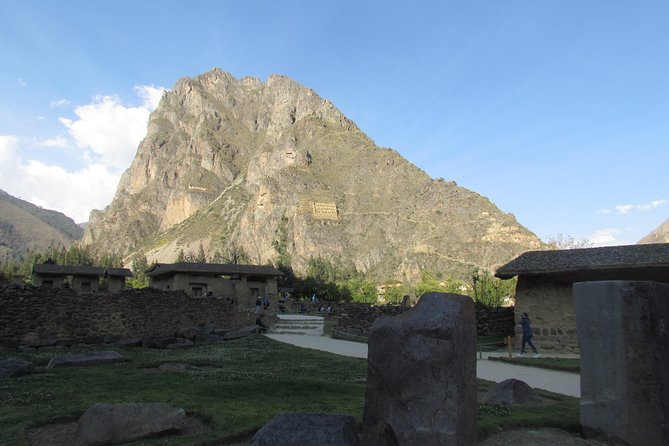
Book this tour if your goal is to see the main Cusco and Machu Picchu sights in three tightly planned days without handling every ticket and transfer yourself. The price offers solid value when you count the train, Machu Picchu bus, archaeological admissions, guides, and city transport.
Skip it if you want slow mornings, long market visits, or several days to adjust to Cusco. The best reason to choose this experience is convenience. The main caution is pace. If you accept both, Liberty Peru Travel gives you a practical route through Peru’s essential Inca sights, with enough cultural stops to make the trip feel like more than a quick visit to Machu Picchu.
FAQ
How long does the tour last?
The program lasts approximately three days. The first day returns to Cusco at about 6:30 p.m., the second at about 7:30 p.m., and the third can return around 10:30 p.m., depending on train availability.
Is hotel pickup included?
Yes. Pickup is available from hotels or accommodation in Cusco. You must provide the correct address when booking.
Is the tour offered in English?
Yes. The experience is offered in English and includes professional guiding for the city tour, Sacred Valley tour, and Machu Picchu visit.
What is included in the price?
The price includes specified transport, guides, city and Sacred Valley entrance tickets, the round-trip train between Ollantaytambo and Aguas Calientes, round-trip buses between Aguas Calientes and Machu Picchu, the Machu Picchu entrance ticket, one included lunch, and taxes and fees.
Is accommodation included?
No. Hotel accommodation is not included, so you must arrange and pay for your own lodging.
Are meals included on all three days?
No. The included lunch is specified as part of the Sacred Valley day. Breakfast in Aguas Calientes, lunch after Machu Picchu, snacks, and other food not listed are extra.
How many people can join the tour?
The maximum group size is 15 people.
Added recently around Cusco
- Sacred Valley of the Incas Day Trip from Cusco★ 5.0 · 6 reviews
- Super valley or vip valley★ 5.0 · 13 reviews
- the Incas’ Sacred Valley★ 5.0 · 27 reviews
- Small-Group Tour: Rainbow Mountains Hiking from Cusco★ 4.0 · 5 reviews
- Excursion to the Sacred Valley of the Incas from Cusco★ 5.0 · 8 reviews
- Maras + Moray & Textile Experience★ 5.0 · 14 reviews
- Tour EN Cuatrimoto POR la Montaña 7 Colors Hike 5 Minutes★ 4.5 · 32 reviews
- rainbow mountain★ 4.0 · 4 reviews
Machu Picchu Tours, compared.
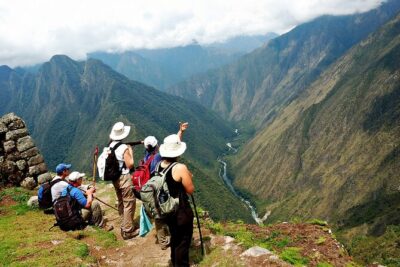
Classic Inca Trail Trek 4D/3N to Machu Picchu (Group Service)
Read our review →
Machu Picchu: 4-Day Inca Trail Trek with Panoramic Train Ride
Read our review →
2-Day Inca Trail to Machu Picchu with Panoramic Train
Read our review →

2-Day Tour: Sacred Valley and Machu Picchu by Train
Read our review →
Machu Picchu: Full-Day Tour from Cusco with Optional Lunch
Read our review →Browse the lists this tour appears in