
Reviewed · FOOD & DRINK
Arequipa Food Tour: Ancestral Cuisine & City Tour
Arequipa tastes better on foot. This four-hour food walk links San Camilo Market with local restaurants, historic streets, and Yanahuara’s Misti views. I like the hands-on batán lesson, where you help grind ingredients for ocopa, and I like the broad menu, from cuy and alpaca to queso helado and chicha. The main drawback is that this is not a gentle stroll: sun, hills, and several walking stretches may be hard if your fitness or mobility is limited.
The $79 price is fair if you want food, drinks, guiding, and a small group in one package. It is less appealing if you avoid meat, gluten, or strong walking days. The tour is English-only, and the guide sets the pace, so ask questions as you go. Guides such as Clara and Caro have been praised for their warmth, local insight, and ability to connect food with Arequipa’s customs and history.
In This Review
- Key points to know before you book
- Why this Arequipa food walk works
- San Camilo Market: your first taste of Arequipa
- The Company Cloisters and central Arequipa
- Your first restaurant stop and regional cooking
- Plaza de Armas and the second restaurant stop
- Malecón Bolognesi: food with a river view
- The final restaurant and the batán lesson
- Yanahuara and the final queso helado
- Is $79 good value?
- Who should book this tour?
- FAQ
- Where does the Arequipa food tour begin?
- Where does the tour finish?
- How long does the tour last?
- What food and drinks are included?
- Is the tour offered in Spanish or other languages?
- How large is the group?
- Is hotel transportation included?
- Should you book the Arequipa food tour?
Key points to know before you book
- The tour begins at San Camilo Market: Meet beside the front door of the Compartamos Financiera building, facing the market’s main entrance.
- You taste Arequipa’s signature foods: Expect cuy, alpaca, rocoto relleno, ocopa, queso helado, chichas, and pisco.
- The batán is a hands-on highlight: You get to try the heavy traditional stone grinder used to prepare ocopa.
- The route mixes food with major sights: Stops include the Company Cloisters, Plaza de Armas, Malecón Bolognesi, and Yanahuara.
- It is a small English-language group: The maximum is 10 people, and all food and drinks are included.
- The walk finishes with a view: Yanahuara Scenic Overlook provides a final dessert stop and views toward Misti volcano.
Why this Arequipa food walk works
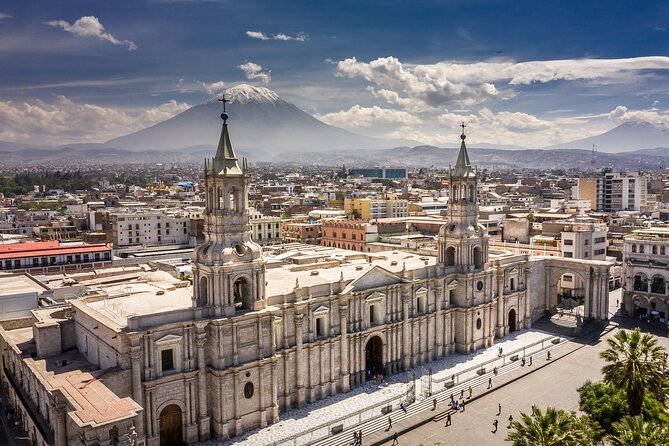
Arequipa is a city of white volcanic-stone buildings, grand plazas, old religious architecture, and strong regional cooking. This tour gives you a practical way to connect those pieces. You are not simply sitting down for one meal. You move through the city, stop for food at several points, and learn why certain ingredients matter here.
I especially like the route’s variety. The morning or afternoon begins in a public market, continues through central streets and historic buildings, then reaches restaurants and viewpoints. That change of setting keeps the four hours moving and gives you a better sense of Arequipa than a single restaurant meal would.
The group size also matters. With no more than 10 people, you have a better chance to ask about a dish, pronunciation, local customs, or the city itself. One highly praised outing had just two participants, which made the day feel almost private. You cannot count on such a small group, but the limit is still useful.
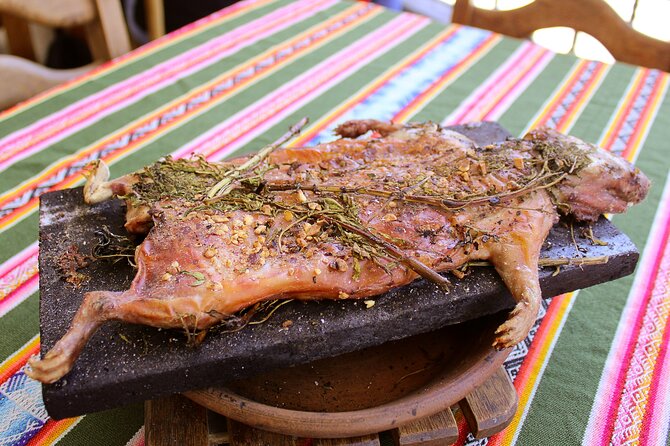
This is also a food tour for curious eaters, not cautious ones. Cuy is guinea pig, a traditional Andean dish that many visitors have never tried. Alpaca is another regional specialty. Rocoto relleno brings a different challenge, since the local pepper can carry real heat. If you want only familiar food, this may not be your best use of half a day.
More City Tours in Arequipa
- Arequipa: Walk through the Historic Center of the City
★ 4.9 · 87 reviews - Arequipa Walking Tour city center and drinks experience
★ 5.0 · 72 reviews - Arequipa Food Tour: Ancestral Cuisine & City Tour
★ 5.0 · 52 reviews
San Camilo Market: your first taste of Arequipa
The meeting point is easy to identify if you follow the directions closely. Your guide waits next to the front door of the Compartamos Financiera building, directly across from the main entrance to San Camilo Market at C. San Camilo 207.
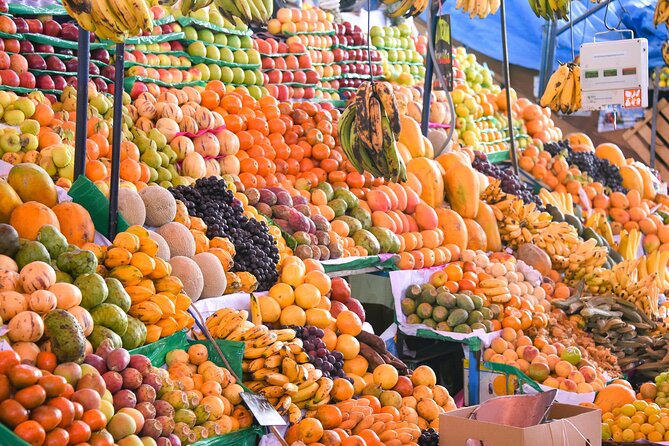
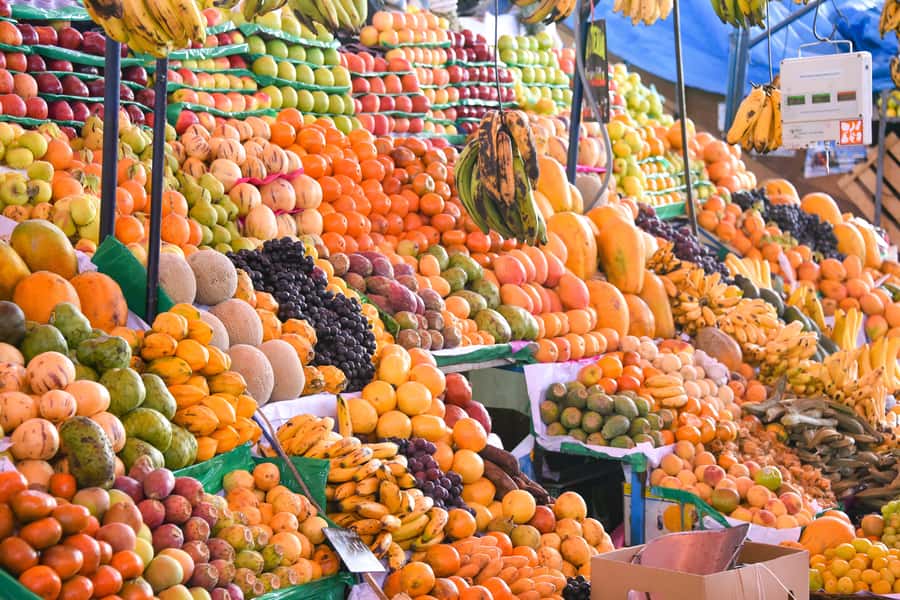
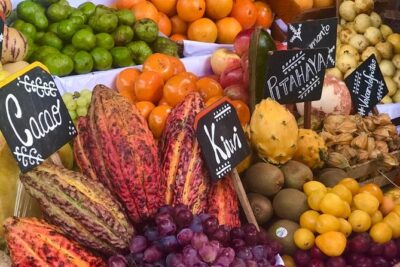
The market is a good opening because it gives food some context before the restaurant stops begin. You can expect about 30 minutes here, with food tasting and a look at the market itself. The setting places local ingredients and everyday shopping at the center of the experience.
For me, the value of a market stop is not just the bite you receive. It helps you see that Arequipa’s cooking is part of daily life, not a restaurant performance created only for visitors. Your guide can explain what you are tasting and how it fits into regional habits.
Come ready for several small samples rather than a single large breakfast. Since the full food schedule continues at three restaurant stops, pace yourself. The included food and drinks can add up to a very full day, especially if you eat every bite offered.
The Company Cloisters and central Arequipa
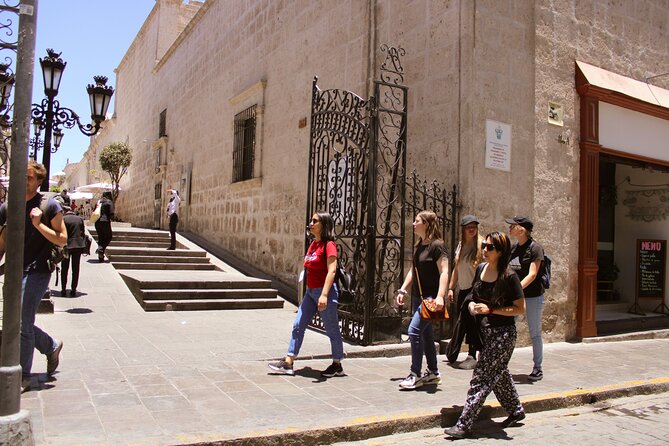
After the market, you walk about 10 minutes toward the Company Cloisters. The stop lasts only around five minutes, so think of it as a short photo and sightseeing pause rather than a full architectural visit.
That brief stop still adds useful texture. The cloisters give you a glimpse of Arequipa’s religious and colonial-era architecture before the tour returns to the city streets. The walking sections between stops are part of the sightseeing, not wasted time between meals.
You then continue through Arequipa for another short walk and sightseeing segment. Your guide can tie the buildings and streets to the food you have just sampled. That combination is one of the tour’s better features: the city is not treated as decoration, and the food is not presented without a sense of place.
Do not expect a long museum visit or an extended guided tour inside the cloisters. The schedule favors movement and tasting. If architecture is your main interest, you may want separate time in the historic center.
Your first restaurant stop and regional cooking
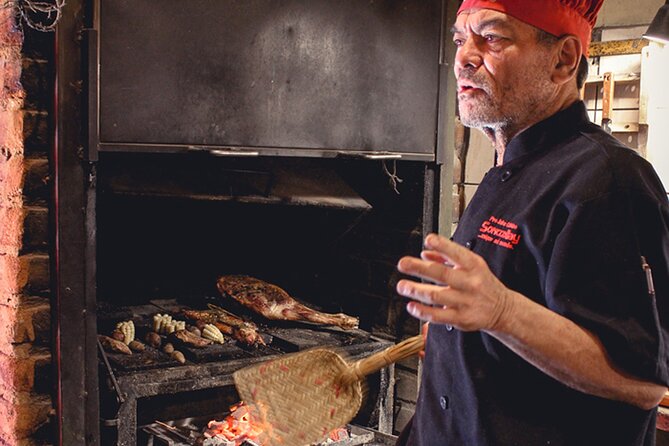
The first local restaurant stop lasts about 40 minutes. Here you begin to move from market tasting to more substantial regional food.
This is where the menu’s unusual choices become important. Cuy and alpaca are not included simply as novelty items. They give you a chance to sample ingredients tied to Andean food traditions. Your guide can help explain what you are eating, how the dishes are served, and what makes them part of Arequipa’s table.
The tour also includes chicha and pisco, so the drinks matter as much as the plates. You may try different types of chicha along the route, along with pisco. Since the tour includes all food and drinks, you do not need to calculate the cost of each sample while eating.
Still, be sensible with alcohol. The day involves walking in strong sun, and the schedule continues for several hours. Water, a hat, sunscreen, and comfortable shoes are specifically recommended. The provided information does not promise a special nonalcoholic substitute, so ask your guide early if you have concerns.
More eating your way around Arequipa:
- A 3-hour Guided Food Tour with 4 Iconic Restaurants of Arequipa
★ 4.5 · 96 reviews - Arequipa Tasting Tour
★ 5.0 · 92 reviews - Lima Ultimate Peruvian Food Tour
★ 5.0 · 1,845 reviews - Peruvian Cooking Class, Local Market Tour & Exotic Fruit Tasting
★ 5.0 · 744 reviews
Plaza de Armas and the second restaurant stop
The route then reaches Plaza de Armas, one of Arequipa’s main visual and civic spaces. You get around 10 minutes for photos, sightseeing, and walking through the square.
This stop helps break up the food portions. It also gives you a natural point to look around and ask your guide about the city’s customs, politics, and past. Clara, one of the named guides praised for this tour, was especially good at connecting meals with those wider subjects. That is the kind of guiding that adds value to a food walk.
After the plaza, you continue through Arequipa for about 15 minutes before reaching another local restaurant. This second tasting lasts around 40 minutes and brings more regional dishes into the day.
Rocoto relleno is a key item to watch for here or at the other restaurant stops. The dish pairs a stuffed rocoto pepper with a filling, and its heat may surprise you. The exact serving order can vary, so do not assume every dish arrives at a particular stop. If you are sensitive to spice, tell the guide before tasting.
The route is designed so that you try several foods in modest portions. Even so, you should arrive hungry but not starved. Market samples, restaurant dishes, drinks, and dessert create a substantial amount of food over four hours.
Malecón Bolognesi: food with a river view
A 25-minute section takes you toward Malecón Bolognesi. This is one of the longer walking stretches, with sightseeing, photos, and scenic views along the way.
The route gives you a chance to reset between restaurant stops. Instead of moving from table to table, you see more of the city and its open views. The walk also makes the tour feel like a city outing with food, not just a series of tastings.
This is where practical preparation matters. Arequipa’s sun can be strong, and the route includes several walks. Wear shoes that you can comfortably use for four hours. A hat, sunscreen, and water are not optional extras for many people.
The tour information lists it as wheelchair accessible but also says it is not suitable for people with mobility impairments. That is a point worth clarifying before booking. The walking route, changing stops, and fitness requirement may not suit everyone, even if some access arrangements are possible.
The final restaurant and the batán lesson
The last local restaurant stop lasts about 45 minutes, making it the longest food stop of the day. This is a good place for the tour’s fuller regional meal experience and for revisiting any dishes or drinks that need more explanation.
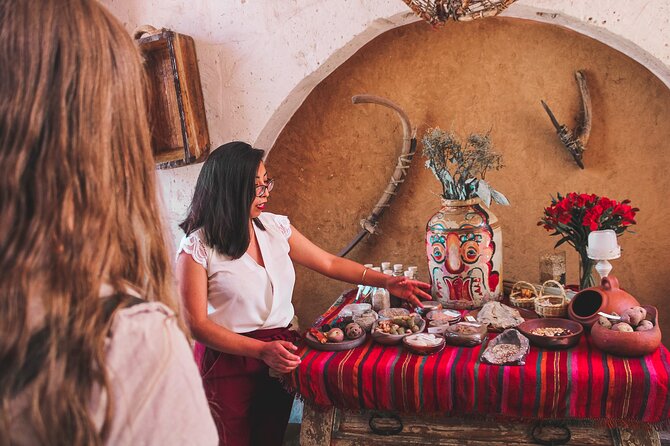
The most distinctive activity is the chance to prepare ocopa with a traditional batán. A batán is a heavy stone grinding tool used to crush and blend ingredients. You do not just hear about traditional preparation. You get to try the technique yourself.
That hands-on moment gives the tour an edge over a standard tasting menu. It shows the effort behind a sauce that might otherwise arrive at your table as an unexplained green topping. The batán can also make you appreciate how cooking methods shape flavor and texture.
Do not expect a full cooking class with a recipe booklet or a long lesson. The activity is one part of a moving food tour. Its value is in the direct experience and the explanation from the guide.
Yanahuara and the final queso helado
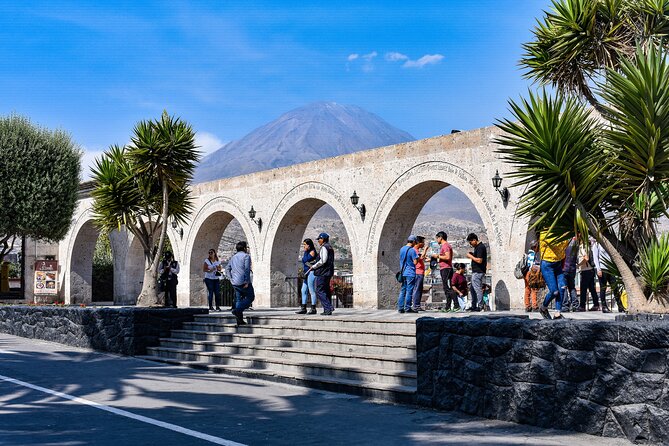
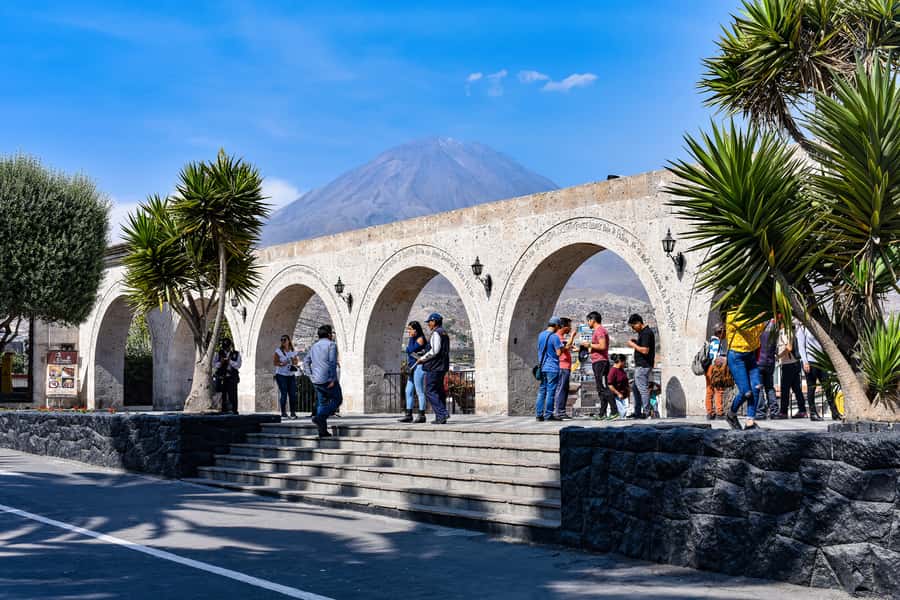
The tour finishes at Yanahuara Scenic Overlook, reached after the restaurant stops and city walks. The final stop lasts about 15 minutes and includes dessert.
Queso helado is the natural finale. Despite its name, this traditional Arequipa dessert is not simply cheese ice cream in the usual sense. The name and preparation are part of the local food story, and tasting it at the end gives the tour a sweet finish without adding another large meal.
Yanahuara is also the place for the best-known view on this route. You can look toward Misti volcano and take in the city from a different angle. The setting turns the final dessert into a pause rather than a rushed last bite.
The tour ends here, not back at San Camilo Market. Plan your afternoon around Yanahuara rather than assuming you will return to your starting point. Since hotel pickup and drop-off are not included, you also need to arrange your own way to the meeting point and onward from the overlook.
Is $79 good value?
At $79 per person, this is not a bargain snack walk, but the price can make sense. You receive four hours of guiding, all listed food and drinks, several restaurant visits, a market stop, a batán activity, and a route through major parts of Arequipa.
The value is strongest if you would otherwise pay separately for a meal, drinks, and a city walk. You also avoid the uncertainty of ordering unfamiliar dishes alone. A good guide can explain what you are eating and help you understand local customs at the same time.
The price is less attractive if you do not eat meat, cannot eat gluten, or plan to skip the drinks and many tastings. The tour is specifically not suitable for vegans, vegetarians, people with gluten intolerance, people over 80, or people with low fitness levels.
An 18 percent sales tax is not included. It can be waived by sending each participant’s passport number, country of issue, and date of entry into Peru. Check this point before payment so the final cost does not surprise you.
Who should book this tour?
I would choose this tour if you want a guided introduction to Arequipa’s food and central sights in one half-day. It suits curious eaters who are happy to try cuy, alpaca, rocoto relleno, ocopa, and local drinks.
It is also a good fit if you value conversation. The strongest guide experiences here involve more than naming dishes. Clara was praised for discussing history, politics, customs, and culture while walking and eating. Caro was praised for introducing the local food scene with care. Those details suggest that the guide can shape the day as much as the menu.
You should think twice if you want a slow, formal meal, a quiet architecture tour, or a fully customizable diet. The route has a set structure, several walking sections, and an English-only guide. It is also not suitable for low fitness levels, despite the stated wheelchair-accessible feature.
Cancellation is flexible up to 24 hours before the start for a full refund, and you can reserve now and pay later. Those policies help if your Peru plans are still shifting, but they do not change the need to check the walking and food requirements first.
FAQ
Where does the Arequipa food tour begin?
It begins at C. San Camilo 207. The guide waits next to the front door of the Compartamos Financiera building, facing the main entrance of San Camilo Market.
Where does the tour finish?
The tour finishes at Yanahuara Scenic Overlook.
How long does the tour last?
The walking food tour lasts four hours. Starting times vary, so you need to check availability when booking.
What food and drinks are included?
All food and drinks are included. The tastings feature cuy, alpaca, rocoto relleno, ocopa, queso helado, different types of chicha, and pisco.
Is the tour offered in Spanish or other languages?
The tour is provided only in English. The guide does not conduct the tour in multiple languages, including Spanish.
How large is the group?
It is a small-group tour limited to 10 participants.
Is hotel transportation included?
No. Hotel pickup and drop-off are not included. You must reach the San Camilo meeting point yourself and make your own onward arrangements from Yanahuara.
Should you book the Arequipa food tour?
Book it if you want to understand Arequipa through its food, not just photograph its white-stone buildings. The combination of San Camilo Market, several local restaurants, the batán lesson, central sights, and Misti views gives you plenty for four hours.
I would skip it if you need a vegetarian or gluten-free menu, dislike walking in strong sun, or want a relaxed day with no challenging foods. For everyone else, the small group, included tastings, and thoughtful guide-led conversation make $79 a reasonable price for a first taste of Arequipa.
Added recently around Arequipa
- gazebos cannon of the coca★ 5.0 · 28 reviews
- Sillar Route★ 5.0 · 4 reviews
- Salinas Lagoon + Mini Volcano DE Lojen★ 5.0 · 9 reviews
- Full Day Tour To The Salt Lake Salinas in Arequipa★ 4.5 · 34 reviews
- 3-Day Colca Canyon trek with Professional Guide★ 5.0 · 40 reviews
- Trekking, Waterfalls and Thermal Baths★ 4.5 · 47 reviews
- Walking Tour Arequipa Including Santa Catalina Monastery★ 4.0 · 8 reviews
- Walking City tour including the Monastery of Santa Catalina★ 5.0 · 6 reviews
Food & Drink, compared.
Peruvian Cooking Class, Local Market Tour & Exotic Fruit Tasting
Read our review →
Street Food, Market & Old Eateries Tour in Lima’s Historic Center
Read our review →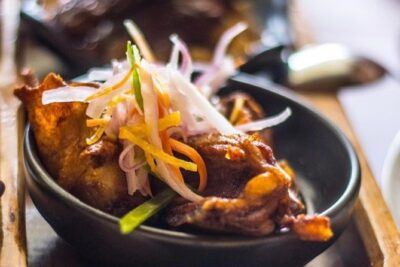
Food Tour and Market Experience: 12 Peruvian Snacks
Read our review →
Group Cooking Class in Cusco with Pisco Tasting
Read our review →Browse the lists this tour appears in