
Reviewed · WALKING TOURS
Walking Tour Arequipa Including Santa Catalina Monastery
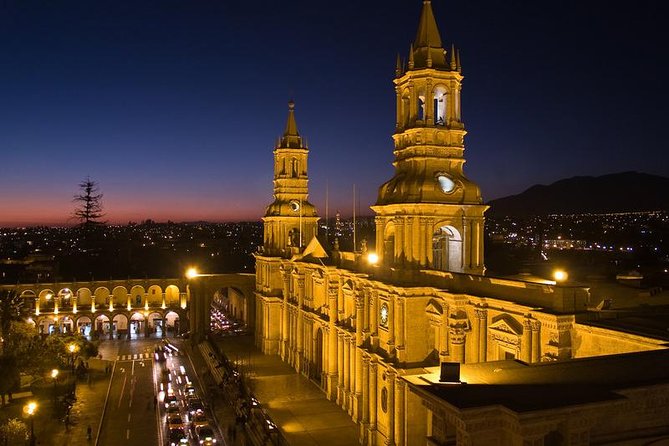
Arequipa reveals itself one white stone at a time. This 3.5-hour private walking tour links the city’s grand Plaza de Armas with quiet colonial lanes, San Lázaro, Mundo Alpaca, and the enormous Santa Catalina Monastery. I especially like the focus on ashlar, the pearl-colored volcanic rock that gives Arequipa its White City nickname, and the visit to Santa Catalina, where a monastery feels more like a small enclosed town.
I also like the mix of major sights and local details, including alpacas, wool textiles, artisan stalls, and a simple potato snack with dipping sauces. The main caution is the amount of walking. One poor experience described limited explanation, a steep climb, and a disappointing viewpoint, so you should confirm the day’s route and pace with your guide before setting off.
In This Review
- Key points at a glance
- Why Arequipa works so well on foot
- Churches, courtyards, and the city’s main square
- San Lázaro and the older side of Arequipa
- Alpacas, llamas, and Andean textiles at Mundo Alpaca
- San Francisco and local craft stalls
- Santa Catalina Monastery, a city behind the walls
- What $48 buys you
- Who should book this walking tour
- Practical advice before you go
- Should you book it?
- FAQ
- How long does the walking tour last?
- Is hotel pickup included?
- Is the Santa Catalina Monastery entrance included?
- Is the tour offered in English?
- How many people are in the group?
- What happens if the Arequipa Cathedral is closed?
Key points at a glance
- Santa Catalina takes a full hour: The monastery covers 20,000 square meters and is divided into four neighborhoods modeled on early colonial Arequipa.
- The tour explains the White City: You learn why volcanic ashlar became the defining building material of the historic center.
- It is entirely on foot: Downtown hotel pickup means a guide meets you near your hotel, not that a vehicle carries you between stops.
- San Lázaro adds a quieter side of Arequipa: This historic neighborhood offers a change from the formal buildings around the main square.
- Mundo Alpaca is more than a shop: You can see alpacas and llamas, view textile displays, and browse wool products.
- The tour works best as a first look: It introduces the main center efficiently, but serious history fans may want more time inside several sites.
Why Arequipa works so well on foot
Arequipa sits in southwestern Peru at about 2,325 meters above sea level, at the foot of El Misti Volcano. It is Peru’s second-largest city, with nearly one million people, yet its historic center can be explored through a compact sequence of plazas, churches, courtyards, and old neighborhoods.
The city’s colonial buildings are made largely from ashlar, a pale volcanic rock available in abundance nearby. The stone is practical, but it also gives the center a striking visual unity. In strong sunlight, the buildings appear almost white. That material is not a minor architectural footnote. It is the thread that connects the churches, monastery walls, arcades, and grand civic buildings you see during the walk.
The historic center received UNESCO World Heritage status in December 2000 because of its architectural character and historical integrity. A guide adds value here because the city can otherwise look like a series of handsome facades. You want someone to explain how local building traditions combined with European colonial design, and why Arequipa developed a look of its own rather than simply copying Lima or Cusco.
The tour begins with a walking pickup from hotels in the central Arequipa area. That is convenient if you are staying downtown, but it is important to read the arrangement correctly: this is not a vehicle tour. You walk from place to place for roughly three and a half hours.
More Walking Tours in Arequipa
- Walking tour in the Historic Center of Arequipa
★ 4.4 · 180 reviews - Arequipa: Walk through the Historic Center of the City
★ 4.9 · 87 reviews - Arequipa Walking Tour city center and drinks experience
★ 5.0 · 72 reviews
Churches, courtyards, and the city’s main square
The first part of the route introduces the historic center, then moves toward the Iglesia de la Compañía de Jesús. You pass this ornate church and spend time in the Cloisters of the Company, where the architecture is the main attraction. The cloisters offer a calmer setting than the streets and give you a closer look at the decorative work that makes Arequipa’s colonial buildings so distinctive.
The time listed for the church and cloisters is about 15 minutes each. That is enough for an introduction and some photographs, but not enough for a long architectural study. If you care about carved stone details, religious art, or the way the courtyard is arranged, ask your guide to point out the features before the group moves on.
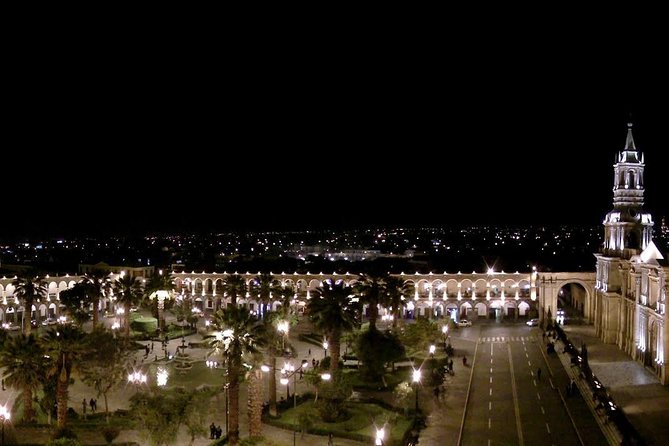
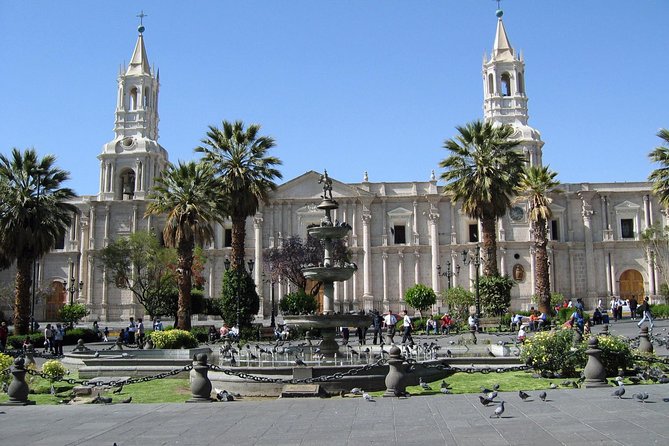
Next comes the Plaza de Armas, Arequipa’s principal square. It is the place to understand the scale of the historic center. Arcaded buildings frame the open space, while the Basilica Cathedral occupies one side. The square is an obvious city landmark, but it is also a useful orientation point. After this stop, the route feels less like a list of disconnected sights and more like a walk through the city’s historic core.
The Cathedral may be open during your visit. If it is, the guide can take you inside. If it is closed, you see it from outside instead. That uncertainty matters, especially if entering the Cathedral is a priority for you. The admission is listed as free, but opening conditions can change the experience.
San Lázaro and the older side of Arequipa
The route then heads to Iglesia de San Lázaro and the Barrio San Lázaro. This section offers a welcome change from the ceremonial center. Instead of focusing only on large public buildings, the tour brings you into one of Arequipa’s most historic neighborhoods.
The stop lasts about 20 minutes. That is a modest amount of time, yet the neighborhood helps explain how the city developed beyond its grand square. You get a sense of older streets and smaller-scale urban life, with the white volcanic stone still tying the area to the rest of the center.
This is also where walking pace becomes important. Arequipa is high above sea level, and the route includes several hours on foot. One positive account described the pace as pleasant and unhurried, while a negative account found the walking tiring and objected to a steep uphill section later in the experience. Your fitness level, the day’s heat, and the exact route can make a real difference.
Wear comfortable shoes, carry water, and use sun protection. The tour specifically advises sun protection and asks you not to wear short clothing, which is sensible because churches and the monastery are religious sites.
Alpacas, llamas, and Andean textiles at Mundo Alpaca
Mundo Alpaca is one of the tour’s more unusual stops. You visit a small museum-style space with alpacas and llamas, see textile exhibits, and have the chance to browse a wool store. The visit lasts about 20 minutes.
I like this stop because it connects the polished colonial center with a major part of Peru’s textile culture. Alpaca wool is closely tied to Andean production, and seeing the animals alongside textile displays makes the subject more concrete than simply passing a shop window.
The visit also breaks up the architecture. After churches, cloisters, and the main plaza, live animals and wool products give the walk a more local, everyday feel. Still, you should know what kind of stop this is. It includes a store, so if you dislike shopping-oriented visits, keep your expectations modest. The experience is listed as included and does not require a separate admission fee.
More walking routes through Arequipa:
- Excursion to the Sillar Route with Walk in Culebrillas
★ 4.0 · 25 reviews - Walking Tour through the Historic Center of Arequipa
★ 4.5 · 18 reviews - Arequipa: Walking Tour and Santa Catalina Monastery
★ 4.4 · 7 reviews - Walking City tour including the Monastery of Santa Catalina
★ 5.0 · 6 reviews
San Francisco and local craft stalls
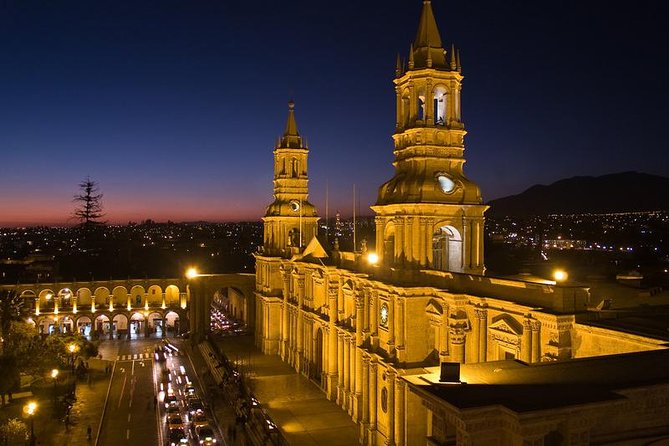
From Mundo Alpaca, the route continues through Plaza San Francisco and the Fundo El Fierro area, where local artisans sell their work. This section is scheduled for about 15 minutes.
Fundo El Fierro is useful for a quick look at local craft production, though the short stop does not allow much time for browsing. If you see something you want to buy, ask the guide how much time is available before pausing at a stall. The tour has a fixed schedule, and Santa Catalina is the major final visit.
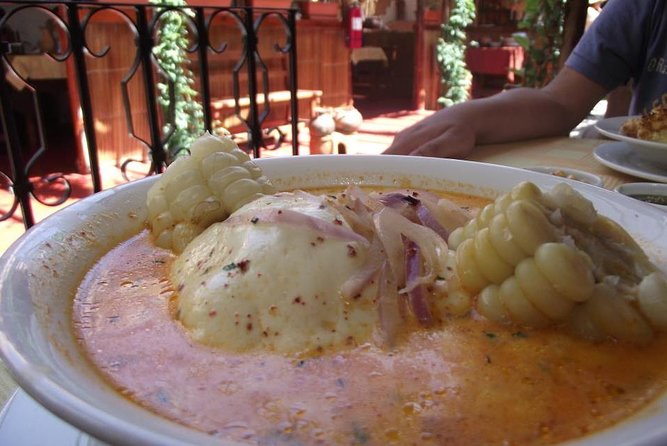
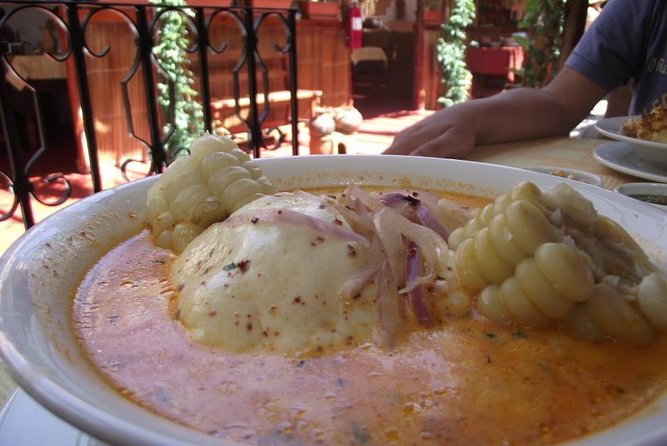
The experience also includes potatoes with dipping sauces as a snack. That may sound simple, but potatoes are one of Peru’s signature foods, with many varieties grown across the country. The snack gives the tour a small food connection without turning it into a full culinary walk. Food and drinks are otherwise not included, so you should bring or buy anything else you need.
Santa Catalina Monastery, a city behind the walls
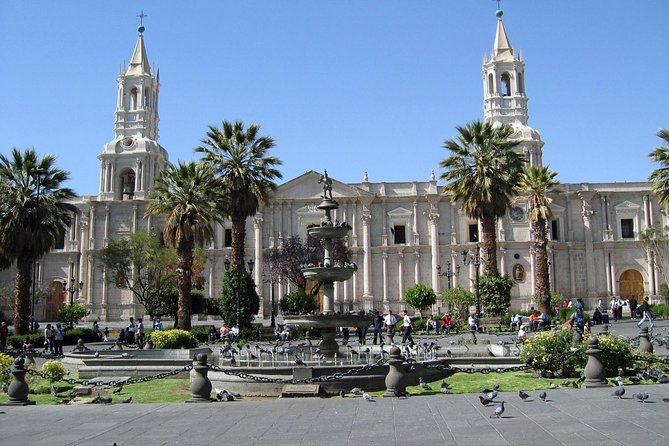
Santa Catalina Monastery is the centerpiece of the tour. The visit lasts about one hour, and the entrance ticket is included. An English-speaking guide accompanies you inside the monastery.
The scale is the surprise. The complex covers about 20,000 square meters and contains four neighborhoods arranged to resemble the urban layout of early colonial Arequipa. Calling it a city within a city is not just a catchy phrase. Once inside, you move through lanes, courtyards, rooms, and enclosed spaces that feel separate from the streets outside.
This is where the tour earns much of its price. A guide can explain how the monastery functioned, connect its design to colonial society, and help you read the different parts of the complex rather than treating it as a collection of colorful walls. The included admission also removes the need to arrange a separate ticket.
One hour is a reasonable first visit, but it will not satisfy every question. You may want more time for photographs or a slower look at the architecture. If Santa Catalina is your main reason for booking, tell the guide at the start. That gives you a better chance of protecting the full hour inside rather than losing time earlier in the walk.
The monastery is also a religious site, so modest clothing is appropriate. The operator specifically advises against short clothes. That is worth following both for practical reasons and out of respect for the setting.
What $48 buys you
The price is $48 per person, with a minimum booking of two people. For that amount, you receive a private 3.5-hour walking tour, an English professional guide, downtown hotel pickup on foot, entry to Santa Catalina Monastery, and an English guide inside the monastery.
The value depends on how you use the tour. If you want a vehicle, frequent sitting breaks, or a broad selection of paid attractions, this is not the right format. You are paying for a guide’s time, a focused introduction to the city, and the monastery admission, not for transportation or a full meal.
For two people, the private format can be appealing. Your group is the only group taking part, so you can ask questions and request a slower pace more easily than on a large shared tour. The tradeoff is that the per-person price is higher than a free walking tour, and one poor account described an experience that felt too similar to a tip-based walk, with limited information.
That concern makes it worth clarifying what is included when you meet the guide. The advertised tour includes a professional English-speaking guide and the Santa Catalina ticket. A good guide should make clear how the time is divided and what happens if the Cathedral is closed.
Who should book this walking tour
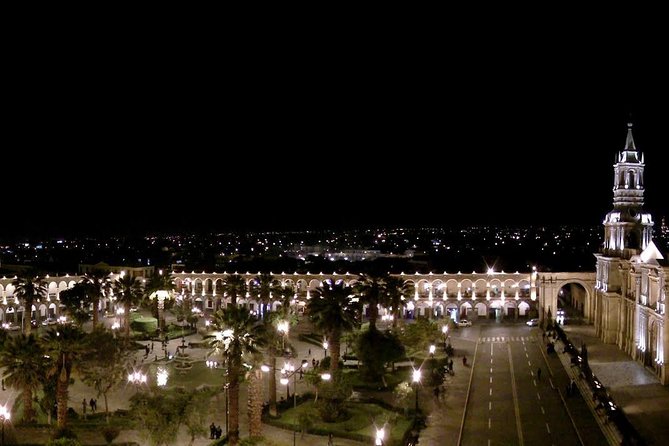
I would recommend it to you if this is your first time in Arequipa and you want a structured introduction before exploring on your own. The route covers the central square, Cathedral, historic churches, San Lázaro, alpacas and textiles, artisan stalls, and Santa Catalina. That is a useful range for one half-day.
It also suits you if you prefer history and architecture but do not want every hour spent inside museums. The walk combines major monuments with street-level neighborhoods and a small food sample.
You should think twice if walking uphill is difficult, if you tire quickly at altitude, or if you prefer a slow visit to each church. The published duration is approximate, and the route has many stops. One account found the walking excessive and the information too limited, while another found the pace comfortable and the guide highly prepared, kind, punctual, and fluent in English. That difference suggests you should be clear about your needs at the beginning.
The tour is also a good fit if you plan to visit Colca Canyon later. Arequipa is often used as the base for that trip, and this walk helps you understand the city before moving on to the canyon. It is not a substitute for a full historical study, but it gives you a solid map of the center.
Practical advice before you go
Book only if you are staying in the central Arequipa area and can reach the route on foot. Pickup is offered from downtown hotels, but transport by car is not included.
Plan for a moderate level of fitness. The tour operator advises this directly, and the mixed feedback about the walking should be taken seriously. Comfortable footwear, water, and sun protection are basic requirements.
Ask about the Cathedral at the start. You may enter if it is open, but the outside visit is the backup plan. Also ask how much time will be spent at Mundo Alpaca and the artisan area if Santa Catalina is your priority.
The tour is offered in English and confirmation is provided at booking. Free cancellation is available up to 24 hours before the start time. A minimum of two people is required per booking.
Should you book it?
Book this tour if you want a private, English-language orientation to Arequipa with Santa Catalina Monastery built into the plan. The ashlar architecture, San Lázaro neighborhood, Mundo Alpaca, and the monastery create a good mix, and the included monastery ticket improves the $48 value.
I would not book it blindly if you have limited mobility or want a highly detailed history lecture at every stop. In that case, ask about walking distance, hills, and the guide’s planned pace before paying. For most reasonably fit visitors staying downtown, this is a useful first look at the White City, with Santa Catalina providing the strongest reason to choose it over a basic free walk.
FAQ
How long does the walking tour last?
The tour lasts approximately 3.5 hours, or three hours and 30 minutes.
Is hotel pickup included?
Walking pickup is offered from hotels located in the central downtown area of Arequipa. No vehicle transport is included.
Is the Santa Catalina Monastery entrance included?
Yes. The entrance ticket to Santa Catalina Monastery is included, along with an English-speaking guide inside the monastery.
Is the tour offered in English?
Yes. The tour includes an English professional guide, and the monastery visit also includes an English guide.
How many people are in the group?
This is a private activity, so only your group participates. A minimum of two people is required per booking.
What happens if the Arequipa Cathedral is closed?
If the Cathedral is open, the tour may enter. If it is closed, you view the building from the outside.
Added recently around Arequipa
- gazebos cannon of the coca★ 5.0 · 28 reviews
- Sillar Route★ 5.0 · 4 reviews
- Salinas Lagoon + Mini Volcano DE Lojen★ 5.0 · 9 reviews
- Full Day Tour To The Salt Lake Salinas in Arequipa★ 4.5 · 34 reviews
- 3-Day Colca Canyon trek with Professional Guide★ 5.0 · 40 reviews
- Trekking, Waterfalls and Thermal Baths★ 4.5 · 47 reviews
- Walking City tour including the Monastery of Santa Catalina★ 5.0 · 6 reviews
- Tour 10 Hours Pillones Waterfall and Puruña Stone Forest★ 5.0 · 9 reviews
Walking Tours, compared.
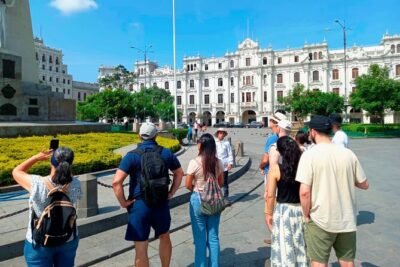
Lima Half-Day City Walking Tour (Small Groups)
Read our review →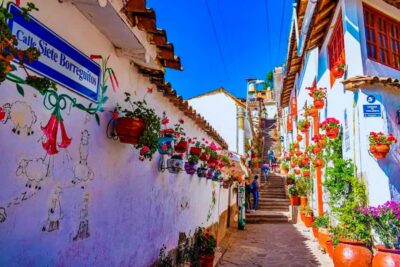

Food & Art: Lima Colors and Flavors Walking Tour
Read our review →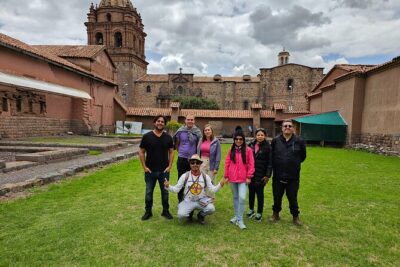
Historic Walking Tour with Pisco Sour and Local Music
Read our review →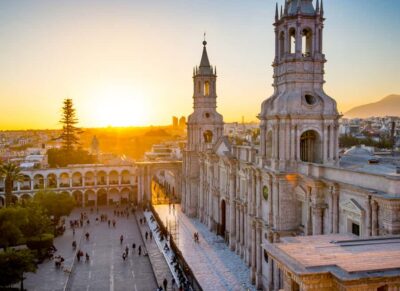
Walking tour in the Historic Center of Arequipa
Read our review →
Curious Monkey Cusco- Eat the Streets, Walking Food Tour
Read our review →

Miraflores Trending Flavors Half-Day Walking Tour
Read our review →Browse the lists this tour appears in