
Reviewed · CITY TOURS
Best Cusco City Tour Half Day Experience
Cusco’s best first look comes with ancient stone. This five-hour tour links the city’s main Inca and colonial sights with a bilingual guide, comfortable tourist transport, and a very low starting price. I especially like the strong mix of city culture and nearby ruins, plus the clear schedule that gives you a useful introduction without taking up your whole day. The main drawback is the extra cost of entrance tickets, which can make the final price much higher than the advertised $12.
The route works well for first-time visitors, families, and anyone with only a short stay in Cusco. I also like that you can choose a morning departure from 9:00 a.m. to about 2:00 p.m. or a later departure from 1:00 p.m. to roughly 6:30 p.m. Just remember that the Qoricancha visit is marked as optional, and the tour finishes at Plaza Regocijo rather than returning everyone to their hotel.
In This Review
- Five things worth knowing before you book
- Why this half-day route works so well
- Qoricancha: the most important indoor stop
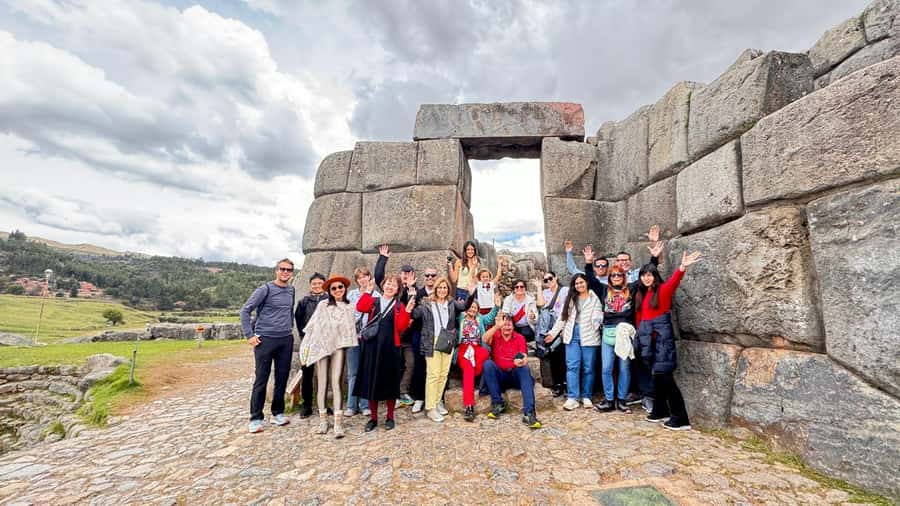
- Sacsayhuamán and the giant fitted stones
- Qenqo, where the mood turns ceremonial
- Puca Pucara and the practical side of Inca roads
- Tambomachay and the sound of running water
- Transport, timing, and the rhythm of the day
- What the $12 price really gives you
- What the guide adds to the experience
- Who should choose this Cusco city tour
- Booking advice and final verdict
- FAQ
- How long does the Cusco city tour last?
- Where does the tour start?
- Where does the tour finish?
- Which archaeological sites are included?
- Is the Qoricancha entrance fee included?
- Is the tourist ticket included?
- Which languages are available for the guided tour?
Five things worth knowing before you book
- Qoricancha gives the tour its best city-center start: This former Inca temple helps explain how Spanish colonial Cusco was built over an older sacred center.
- Sacsayhuamán brings the biggest stonework: You get wide views over Cusco and a close look at the huge fitted blocks associated with Inca construction.
- The four archaeological stops are close enough for a half-day: Qenqo, Puca Pucara, and Tambomachay add variety without requiring a full-day excursion.
- The guide matters here: Guides such as Victor and Luis have been praised for clear English, lively explanations, patience, and useful stories.
- The $12 price is only the starting point: Qoricancha costs S/20, and the tourist ticket is listed at S/70, so budget for these separately.
- The tour is easy to fit around other plans: The morning option leaves your afternoon open, while the later option lets you spend the morning in central Cusco.
Why this half-day route works so well
Cusco can feel like several cities placed on top of one another. In the center, Spanish churches and stone lanes sit above Inca foundations. Beyond the central streets, huge ceremonial and defensive sites spread across the hills. Seeing both areas in one organized trip gives you a better sense of how the city fits together.
The tour lasts about five hours, including road transfers and guided visits. That is long enough to cover the major stops but short enough to fit around a train journey, a free afternoon, or another Cusco activity.
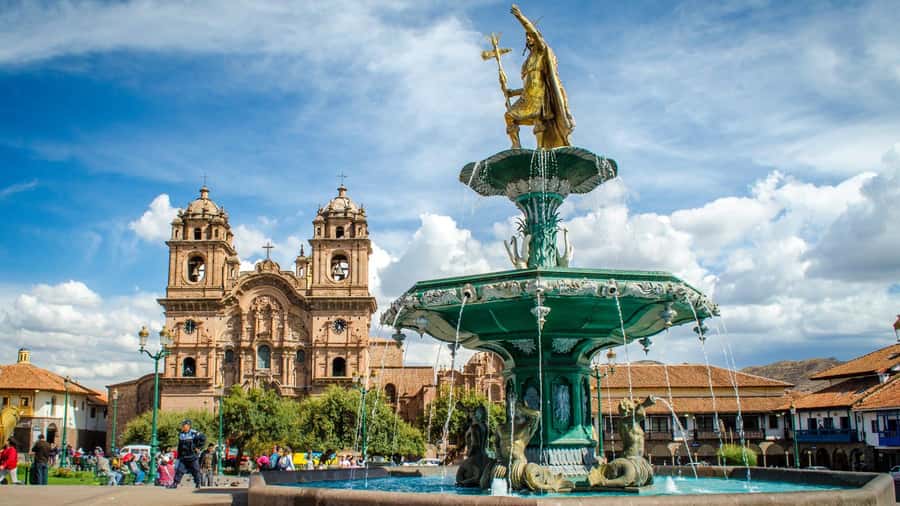
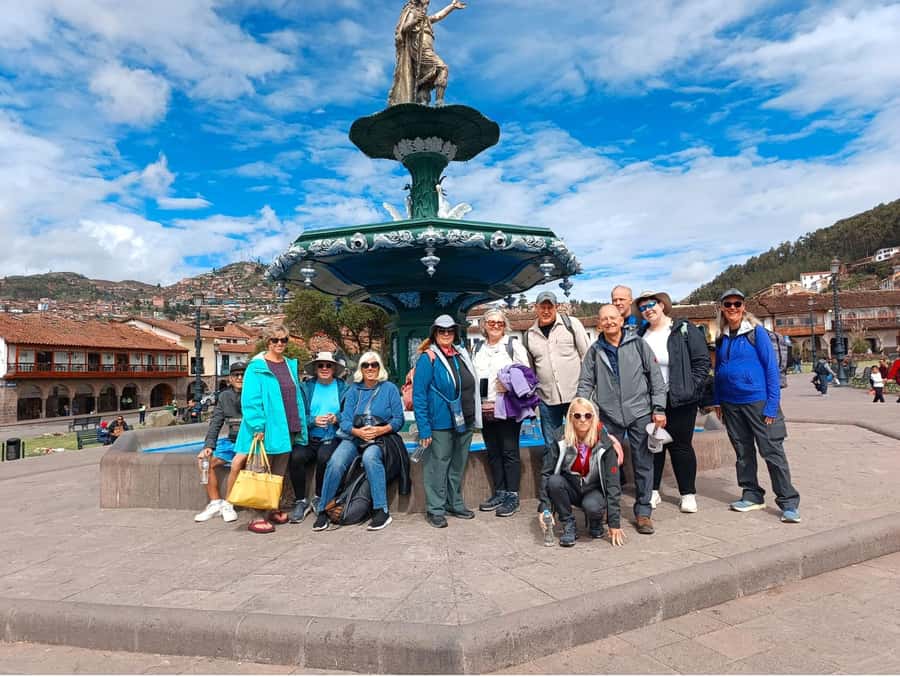
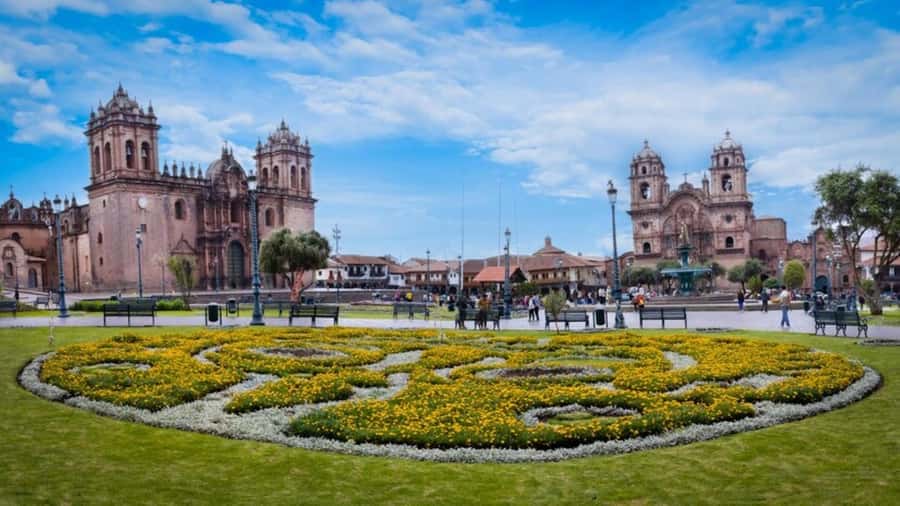
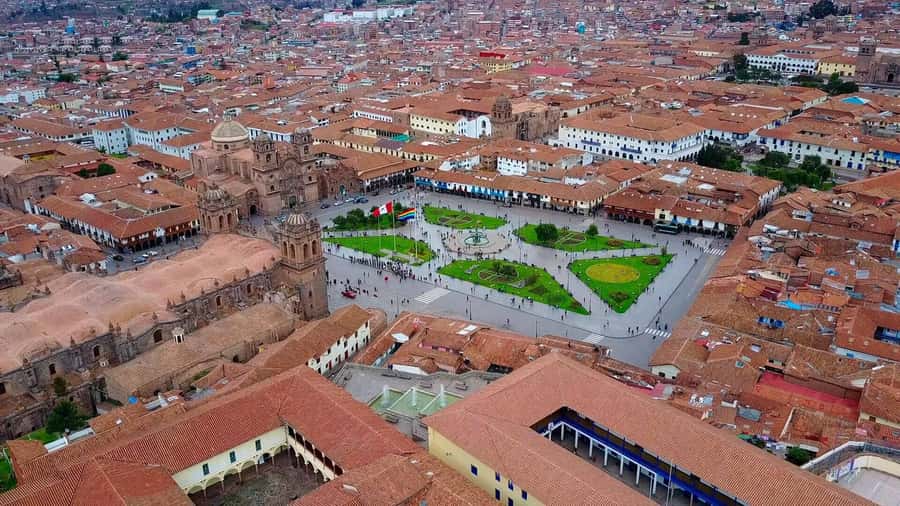
You begin at Plaza de Armas, either by meeting there or after pickup from a hotel in Cusco’s urban area. The stated route includes a 10-minute walk to Qoricancha, followed by transport to the outer sites. At the end, you return to the historic center and finish at Plaza Regocijo.
That final location is useful. You are still close to central restaurants, shops, and hotels, though you should not expect a hotel drop-off unless the operator specifically confirms it.
More City Tours in Cusco
- Cusco: Half-Day City Tour with Sacsayhuaman and Q’enco
★ 4.6 · 1,129 reviews - City Tour Cusco Qoricancha Sacsayhuaman y Tambomachay
★ 4.7 · 617 reviews - Cusco City Tour Four Ruins in Half-Day
★ 5.0 · 530 reviews
Qoricancha: the most important indoor stop
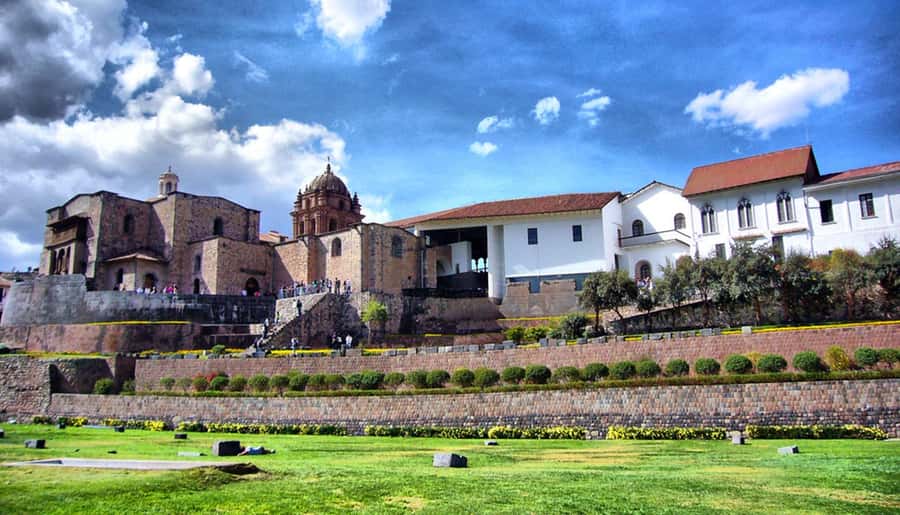
Qoricancha, also written Coricancha or Qorikancha, is the first major visit and the one that gives the tour its strongest cultural context. The name is commonly translated as Golden Temple, and the site was one of the most important religious centers in the Inca capital.
The visit is planned for about an hour. You can expect a guided explanation, sightseeing, and time for photographs. The main appeal is seeing the Inca foundations and understanding how the temple was later incorporated into a Spanish religious building.
The tour description marks this stop as optional. That detail matters because you should confirm whether your chosen departure includes entry or only an exterior visit. The entrance fee is not included and is listed as S/20.
I would make room for Qoricancha if the timing and ticket arrangement are clear. It is not just another photo stop. It helps you understand the rest of the day, especially the way Inca engineering, ceremony, and Spanish colonial power overlap in Cusco.
The walk from Plaza de Armas takes about 10 minutes. That is simple for most people, but it is worth wearing comfortable shoes because the day combines walking, uneven archaeological ground, and several vehicle transfers.
Sacsayhuamán and the giant fitted stones
After Qoricancha, the minivan takes you toward Sacsayhuamán, with the listed transfer taking about 25 minutes. The visit lasts around an hour, making it the longest archaeological stop on the route.
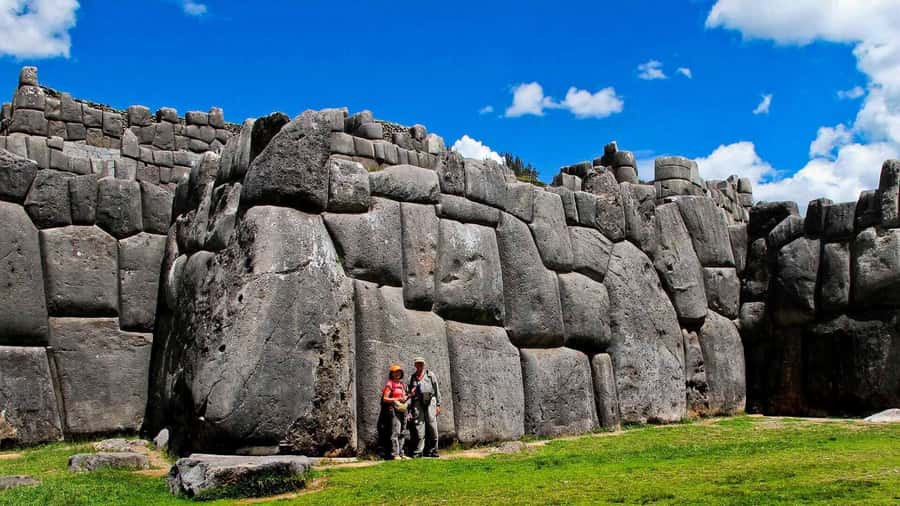
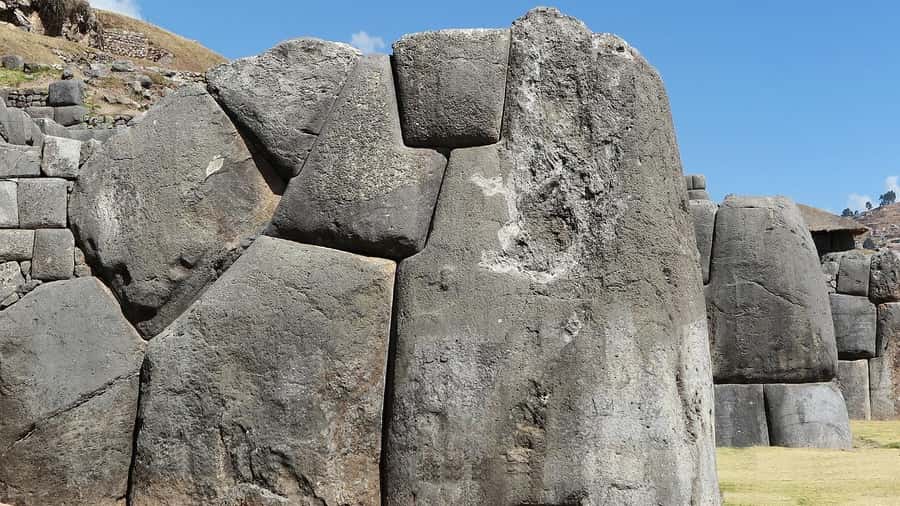
Sacsayhuamán is the visual heavyweight of the tour. Its massive stone walls are the reason many people remember this excursion long after the smaller stops blur together. The site also offers a broad view toward Cusco, giving you a chance to see the city from above rather than only from its plazas.
Your guide’s explanation is especially useful here. Without context, you may simply see enormous stones fitted together with remarkable precision. With a good explanation, you can better appreciate the site’s ceremonial and strategic importance, the scale of the construction, and the way it relates to the city below.
The stonework is also where the tour’s value becomes clear. A guide can point out details you might miss on your own, then connect them to the other sites on the route. Recent departures have included guides named Victor and Luis, both praised for clear English and an engaging approach. Guide assignments can change, but the feedback points to a strong part of the experience: the explanations are not treated as an afterthought.
Allow yourself time for photos, but do not spend the entire visit looking through your phone. The wide views and the stone walls are the main reward.
Qenqo, where the mood turns ceremonial
The drive from Sacsayhuamán to Qenqo takes about 15 minutes. The guided visit is shorter, around 35 minutes, but it adds a different type of interest.
Qenqo is described as a ceremonial and astronomical complex. Its carved stone spaces and unusual layout make it feel less like a fortress and more like a place connected to ritual, observation, and religious practice.
This is a stop where your guide’s storytelling makes a real difference. The physical remains are not as immediately grand as Sacsayhuamán, so a short explanation helps you understand why the site mattered. You will have time for photos and sightseeing, but the stop is compact.
The practical limitation is that 35 minutes goes quickly. If you want to study every feature or take many photographs, you may feel rushed. That is the tradeoff for covering four separate archaeological sites in one half-day.
A few more Cusco trips worth lining up side by side
- Classic Inca Trail Trek 4D/3N to Machu Picchu (Group Service)
★ 5.0 · 8,653 reviews - Cusco: Rainbow Mountain and Red Valley Day Trip with Meals
★ 4.9 · 4,893 reviews - Machu Picchu: 4-Day Inca Trail Trek with Panoramic Train Ride
★ 5.0 · 4,568 reviews - Salkantay Classic Trek 5 Days from Cusco
★ 5.0 · 4,062 reviews
Puca Pucara and the practical side of Inca roads
The ride to Puca Pucara is listed at about 25 minutes, followed by a visit of roughly 25 minutes. The name is often translated as Red Fortress, and the site is associated with military use.
Here you will see multiple rooms, plazas, bathrooms, aqueducts, walls, and towers. Compared with Sacsayhuamán, Puca Pucara is smaller and more restrained. Its value comes from the role it played in the wider network around Cusco.
This stop helps you think beyond grand temples. The Incas also needed places connected with movement, security, water, and administration. Puca Pucara gives the tour a practical angle, showing how the surrounding area supported the capital.
The short visit suits anyone who wants an overview rather than an archaeological study session. You will have time to take pictures and hear the guide’s explanation, but you should not expect a long, unhurried exploration.
Tambomachay and the sound of running water
A short 10-minute drive brings you to Tambomachay, the final archaeological site. The guided visit and free time together take about 45 minutes.
Tambomachay is known for carved stone water channels and is linked with the worship of water. After the walls and defensive structures at the previous stops, the flowing water gives the route a calmer finish.
This is one of the better-balanced parts of the day because you get both a guide explanation and some free time. You can look closely at the channels, take photographs, and enjoy the site without being rushed from one point to the next immediately.
The tour then takes about 35 minutes to return to the center, ending at Plaza Regocijo. That return ride gives you a natural break after several stops on foot.
Transport, timing, and the rhythm of the day
The tour uses tourist transport, described as a minivan, for the longer connections. That is a practical choice because the archaeological sites are spread outside the central streets. Walking between all of them would waste much of your day and would make the route far more tiring.
The published schedule gives two choices:
- Morning: approximately 9:00 a.m. to 2:00 p.m.
- Late shift: approximately 1:00 p.m. to 6:30 p.m.
The morning departure is the better choice if you want the rest of the day free. You could use the afternoon for a relaxed meal, central Cusco sightseeing, or time at your hotel.
The later departure may suit you if you have just arrived, want a slow morning, or prefer to see the city sites after spending time in the center. The route ends in the early evening, so plan your dinner and evening walk from Plaza Regocijo.
Pickup is available at the door of a hotel in Cusco’s urban area, according to the selected schedule, or you can meet at the main square. Because hotel coverage is described only for the urban area, confirm the meeting point if your accommodation is farther out.
Recent descriptions of the experience praise punctual transport, a manageable group size, and smooth organization. Those details matter more than they sound. A late vehicle or a large, slow-moving group can easily eat into the short visits at Qenqo and Puca Pucara.
What the $12 price really gives you
At $12 per person, this is an unusually inexpensive way to see four major archaeological sites with transport and a professional guide. The price is strong if you want orientation, basic logistics, and an introduction to Cusco rather than a private, slow-paced archaeological day.
But the headline price does not cover everything. Meals are not included, and the following entrance costs are listed separately:
- Qoricancha ticket: S/20
- Tourist ticket: S/70
The description also says that services not mentioned are excluded. You should therefore treat $12 as the tour service price, not the total cost of sightseeing.
The extra tickets do not necessarily make the tour poor value. You are still paying a modest amount for a bilingual guide and transport between several sites. You simply need to calculate the full expense before booking, especially if you are trying to keep your Cusco budget tight.
The tour includes Spanish and English guiding. If language is important to you, select the appropriate option and confirm it at booking. The English guide is a useful feature for visitors who want more than a quick shuttle between viewpoints.
What the guide adds to the experience
The most consistent praise goes to the guides. Descriptions of the experience highlight guides who explain Inca history and local culture clearly, answer questions patiently, and adjust the pace when possible.
Victor has been praised for his patience and ability to explain the sites in a clear way. Luis has been noted for speaking good English and giving an informative overview of Cusco in a short time. Names and assignments can vary, but these examples show the kind of guide service you can expect from a good departure.
I would book this tour for the guide as much as for the vehicle. The ruins are impressive on their own, but their purpose is not always obvious from the stones alone. A good explanation turns Sacsayhuamán from a striking wall into part of a larger story about Cusco, ceremony, defense, and movement.
The small-group reports are another positive sign. A manageable group makes it easier to hear, ask questions, and take photographs without waiting for a large crowd. Still, group size can vary, so do not assume every departure will be equally intimate.
Who should choose this Cusco city tour
This experience suits you best if you are visiting Cusco for the first time and want a quick orientation. It is also a sensible choice for families, older relatives, and anyone who prefers vehicle connections instead of arranging separate taxis to each site.
You will get the most from it if you enjoy guided context, want to cover several headline sights, and have only half a day available. The tour is suitable for all ages according to the activity information, though the route still includes walking and archaeological surfaces.
It may be less suitable if you want complete control over every stop. The schedule is fixed, Qenqo and Puca Pucara receive shorter visits, and the group must keep moving. Independent visitors who want long photo sessions or detailed archaeological study may prefer a private arrangement.
You should also think about your arrival day. If you are arriving in Cusco and need a very slow start, the later departure gives you more breathing room. If you already feel ready to explore, the morning shift protects your afternoon.
Booking advice and final verdict
I would book this tour if you want the most efficient introduction to Cusco’s city center and nearby Inca sites at a low starting price. The mix is excellent: Qoricancha for context, Sacsayhuamán for scale, Qenqo for ceremony, Puca Pucara for military function, and Tambomachay for water.
Before paying, check three things: the exact meeting point, whether Qoricancha entry is included in your chosen arrangement, and the additional S/20 and S/70 ticket costs. Those details decide whether the tour fits your budget and schedule.
Choose the morning departure if you want a free afternoon. Choose the later shift if you want a relaxed morning in central Cusco. If you accept the fixed pace and extra entrance fees, this is a practical, well-organized way to get your bearings and see a lot in five hours.
FAQ
How long does the Cusco city tour last?
The experience lasts about five hours. The morning schedule runs from approximately 9:00 a.m. to 2:00 p.m., and the late schedule runs from approximately 1:00 p.m. to 6:30 p.m.
Where does the tour start?
You can be picked up at the door of your hotel if it is in the urban area of Cusco. You can also meet at the main square, Plaza de Armas.
Where does the tour finish?
The tour finishes in Cusco’s historic center at Plaza Regocijo.
Which archaeological sites are included?
The route includes Sacsayhuamán, Qenqo, Puca Pucara, and Tambomachay. It also includes a visit to Qoricancha when that optional stop is selected.
Is the Qoricancha entrance fee included?
No. The Qoricancha ticket is listed separately at S/20.
Is the tourist ticket included?
No. The tourist ticket is listed as an additional cost of S/70.
Which languages are available for the guided tour?
Live guiding is available in Spanish and English.
Added recently around Cusco
- Guided tour of the mountain of colors in Cusco★ 5.0 · 11 reviews
- 2-Day Private Short Inca Trail to Machu Picchu★ 5.0 · 15 reviews
- City Tour Cusco – Group★ 5.0 · 4 reviews
- Tour Sacred Valley with Maras and Moray★ 5.0 · 15 reviews
- San Pedro Market Tour with Peruvian Cooking Class★ 5.0 · 31 reviews
- Walking Culinary Experience★ 5.0 · 41 reviews
- City Tour in Cusco★ 4.5 · 10 reviews
- One Day Tour to Humantay Lagoon★ 5.0 · 8 reviews
City Tours, compared.
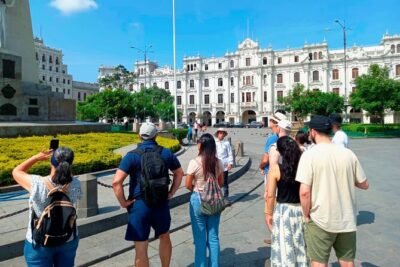
Lima Half-Day City Walking Tour (Small Groups)
Read our review →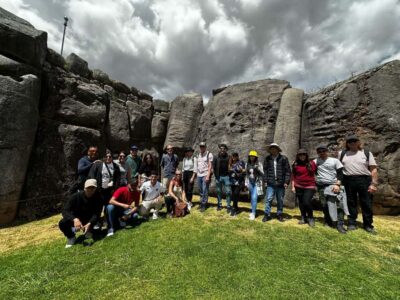
Half-Day City Tour with Sacsayhuaman and Q’enco
Read our review →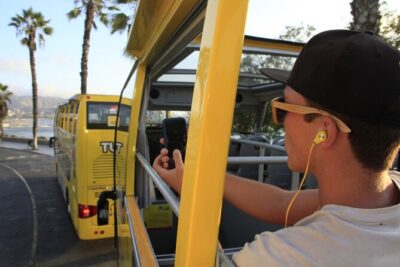
City Tour Panoramic Bus Departure From Larcomar
Read our review →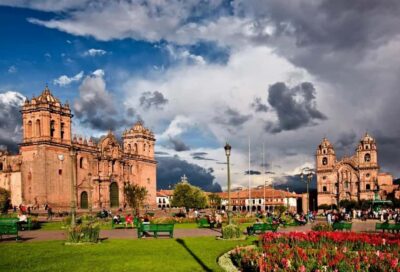
City Tour Cusco Qoricancha Sacsayhuaman y Tambomachay
Read our review →
Lima’s Vibrant Heritage: Exploring the City’s Landmarks Half-day
Read our review →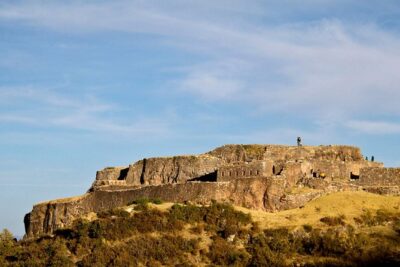
Sightseeing Tour of the City on an Open-Top Bus
Read our review →
Lima City, Central Market & Catacombs Tour (Pick-up & Drop Off)
Read our review →Browse the lists this tour appears in