
Reviewed · INCA RUINS & ARCHAEOLOGICAL SITES
Cusco City Tour Four Ruins in Half-Day
Cusco packs centuries into a single afternoon. This five-hour tour links Qorikancha, Sacsayhuaman, Q’enqo, Puka Pukara, Tambomachay, and an alpaca sanctuary without making you arrange several taxis or puzzle out the ruins alone. I especially like the small-group limit of 15 and the way a good guide connects these sites to the wider Inca world, including Machu Picchu.
I also like the easy hotel pickup in central Cusco and the short driving time between the ruins. Guides such as José, Jesse, Tito, and other members of the team have been praised for clear explanations, humor, patience, and care with altitude concerns. The main drawback is pace: you visit many places in about five hours, and one stop, the alpaca sanctuary, may feel too commercial if you prefer archaeology without shopping.
In This Review
- Key points to know before you book
- Why this half-day route works in Cusco
- Qorikancha, where Inca and Spanish Cusco meet
- Sacsayhuaman and its immense stonework
- Q’enqo, a ceremonial site carved from rock
- Puka Pukara, the red fortress above the road
- Tambomachay and the Inca worship of water
- Manos de la Comunidad and the alpaca stop
- Guides, drivers, and the small-group advantage
- How hard is the walking?
- Timing, cost, and what you actually receive
- Who should book this Cusco tour?
- Should you book it?
- FAQ
- How long does the Cusco City Tour Four Ruins take?
- How much does the tour cost?
- Which sites are included?
- Is hotel pickup included?
- Is transportation included?
- What languages are available for the guide?
- How many people can join the tour?
- Can I cancel for a full refund?
Key points to know before you book
- Six stops fit into roughly five hours: You visit Qorikancha, four major archaeological sites, and Manos de la Comunidad.
- The $40 price does not include the $18 entry fee: Budget for this additional charge, which is paid separately.
- Altitude matters: Sacsayhuaman and the other hilltop sites sit above Cusco, with uphill walking and steps.
- José, Jesse, and Tito receive especially warm praise: Their approach is friendly, informative, and attentive to individual needs.
- The alpaca visit is fun but optional in spirit: You can feed llamas and see wool demonstrations, but some people may find the shopping element distracting.
- A small group makes a big difference: The maximum is 15 people, and some departures have operated with only one or a few participants.
Why this half-day route works in Cusco
Cusco can be confusing on your first day. The city center is full of Inca walls, Spanish churches, narrow streets, and tour offices, while the most impressive ruins sit on the hills outside town. This tour gives you a useful map of the area in one outing.
You begin at the city’s famous Qorikancha, then head uphill and outward to the main archaeological sites. The route is efficient, with little of the long highway driving that can make a Sacred Valley day feel tiring. If you want a first look at Cusco’s Inca foundations before visiting Machu Picchu, this is a sensible choice.
The tour costs $40 per person, with an $18 admission fee added separately. That makes the basic total about $58 per person before any other personal spending. For that amount, you receive transportation, a guide in English or Spanish, hotel pickup and return in central Cusco, and visits to several places that are difficult to cover easily on your own.
The value depends on what you want. If you prefer slow photography, long walks, or quiet time at each ruin, the schedule may feel tight. If you want a clear introduction and efficient transport, it offers a lot in half a day.
More City Tours in Cusco
- Cusco: Half-Day City Tour with Sacsayhuaman and Q’enco
★ 4.6 · 1,129 reviews - City Tour Cusco Qoricancha Sacsayhuaman y Tambomachay
★ 4.7 · 617 reviews - Cusco: Sightseeing Tour of the City on an Open-Top Bus
★ 4.0 · 481 reviews
Qorikancha, where Inca and Spanish Cusco meet
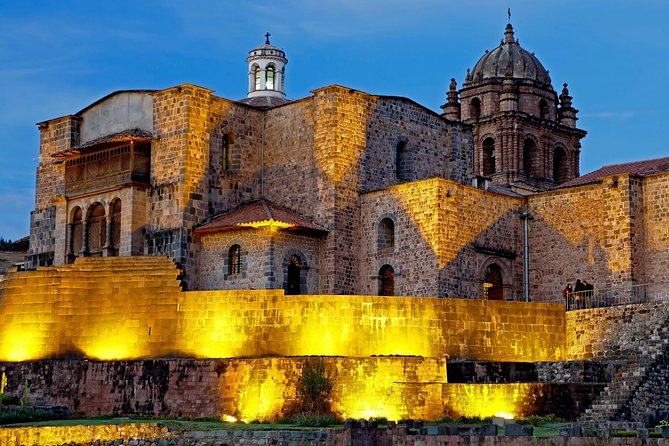
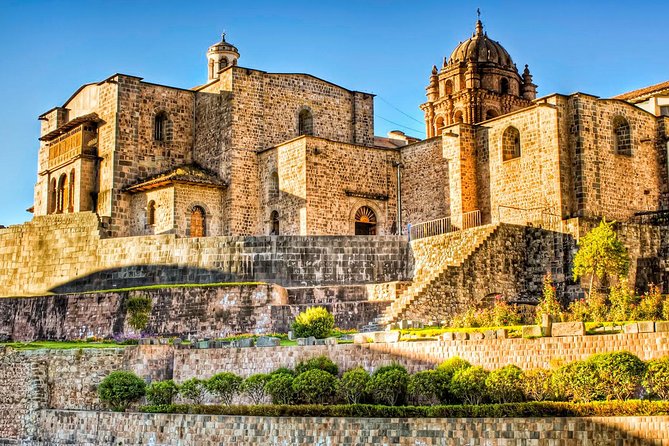
Qorikancha, also written Coricancha, was the Inca temple dedicated to the sun and one of the most important religious sites in the empire. Inside, you see smaller spaces connected with the sun, moon, and stars, along with original Inca stone foundations.
The contrast between the precise Inca masonry and later colonial construction is central to the visit. Your guide can help you read the building in layers rather than seeing it as just another church or museum site. Outside, gardens and fountains occupy the former temple grounds.
You have about 40 minutes here. That is enough for an introduction and a look at the main features, but not enough for a leisurely visit if you want to study every wall. Admission is not included, so remember that the separate $18 entry cost applies to the archaeological sites on this route.
Qorikancha is a good opening stop because it gives meaning to what comes later. After seeing how the Incas shaped sacred space in the city, you can better understand the ceremonial and defensive sites on the hills.
Sacsayhuaman and its immense stonework
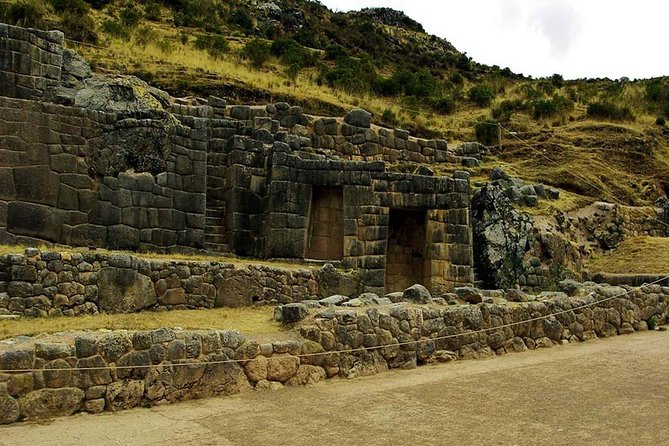
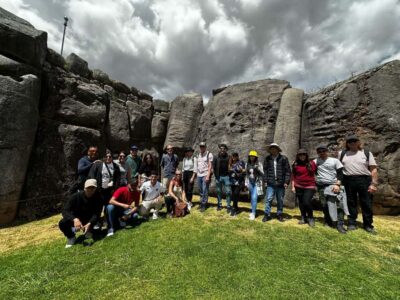
Sacsayhuaman is the visual centerpiece of the outing. Its huge stones form three overlapping platforms above Cusco, with broad views over the city and the surrounding mountains.
The most striking detail is not simply the size of the blocks. It is the fit. The stones were cut and placed with such care that the joints remain remarkably tight. Your guide will likely focus on the cutting, setting, and purpose of the walls, helping you look beyond the usual photo stop.
This is also a place connected with Inti Raymi, Cusco’s major Inca-inspired festival. The site remains tied to offerings to Pachamama, or Mother Earth, including the use of sacred coca leaves. That living cultural connection adds something that a purely architectural visit would miss.
You have around 45 minutes, the longest stop among the ruins. Still, expect walking and some uphill movement. Several people have found the altitude harder here than expected, particularly when visiting soon after arriving in Cusco. I would not make this your first activity after landing if you are sensitive to high elevation.
The views are excellent, but the open setting can make weather a factor. The tour requires good weather, and conditions can change your comfort level even when the route continues.
Q’enqo, a ceremonial site carved from rock
Q’enqo is smaller and more intimate than Sacsayhuaman. The complex was used as an Inca ceremonial center, and much of it is cut directly from the natural rock.
Look for the zigzag channels on top of the rock and the small trapezoidal niches inside. These details show how the Incas worked with existing stone rather than treating every sacred place as a separate building project.
The visit lasts about 30 minutes. That makes Q’enqo a quick stop, but the compact layout suits the schedule. A guide is particularly useful here because the carved surfaces are not always easy to interpret without explanation.
This is one of the places where a clear guide can turn a short stop into a memorable one. José and Tito have been praised for using pictures, humor, and direct explanations to make Inca customs and construction easier to understand. You will not get a long silent walk, but you should leave with a better idea of how ritual shaped these sites.
More Ruins & Archaeology Tours in Cusco
- Cusco: City Tour | Half-Day Tour to 4 Archaeological Sites
★ 4.6 · 206 reviews - Cusco City Sightseeing and Sacsayhuaman Archeological Park Tour
★ 4.5 · 101 reviews - Cusco: Historical Guided City Tour with 4 Inca Ruins
★ 4.5 · 99 reviews - Cusco: Half-Day City Tour with Sacsayhuaman and Qenqo
★ 4.5 · 77 reviews
Puka Pukara, the red fortress above the road
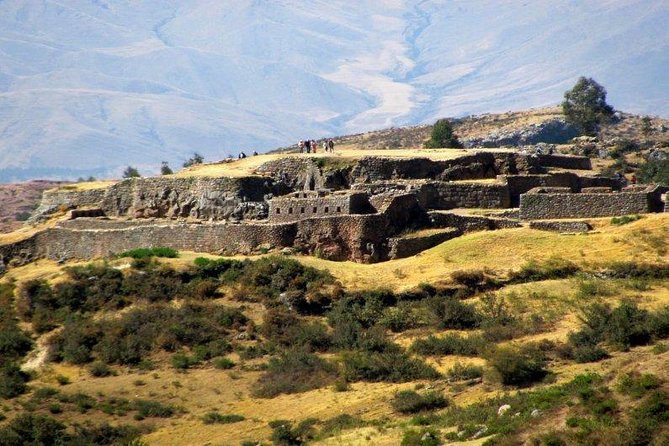
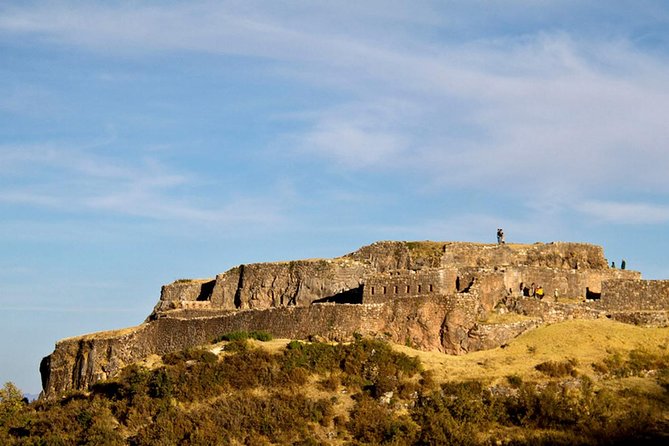
Puka Pukara means red fortress, a name linked to the iron in its rocks. The site served as a military control center during the Inca period, and its elevated position gives you a broad view of the surrounding area.
The visit is brief, about 20 minutes. You mainly see the archaeological site from a panoramic position rather than spending a long time exploring a large complex. That brevity may disappoint serious archaeology fans, but it keeps the overall route moving.
Puka Pukara is useful because it adds a practical side to the tour. Qorikancha represents religion, Q’enqo ceremony, and Puka Pukara defense and control. You begin to see that the sites around Cusco were not isolated ruins. They formed part of a connected system.
The stop is also another reminder to pace yourself. The sites are close together, but the elevation and walking can still build up over the afternoon.
Tambomachay and the Inca worship of water
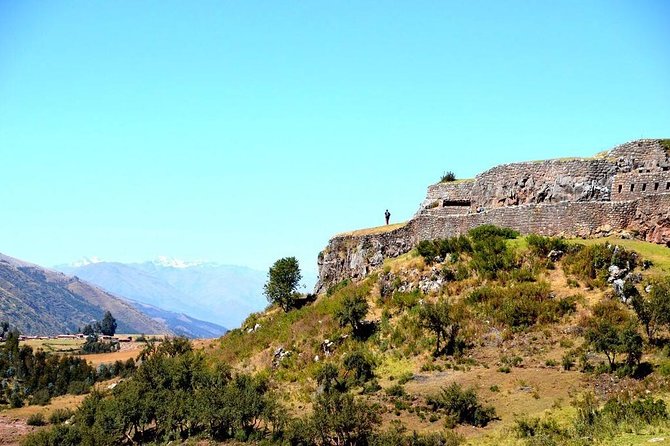
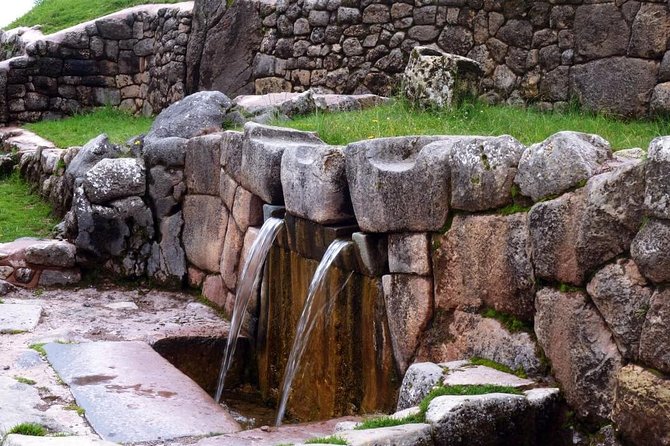
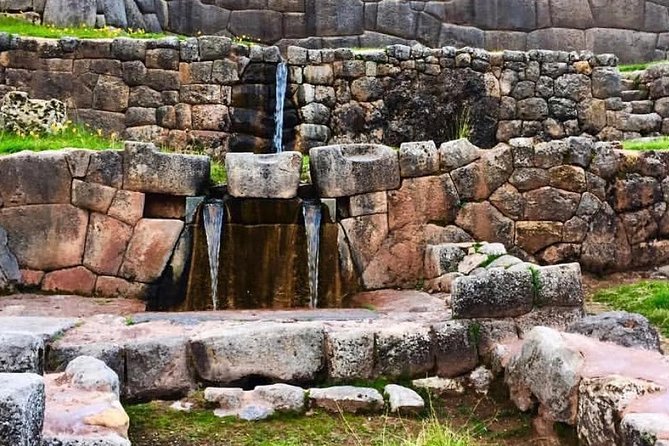
Tambomachay is devoted to water. Aqueducts and fountains carry spring water through the site, and the steady flow gives it a calmer feel than the massive walls at Sacsayhuaman.
The Incas treated water as sacred, and Tambomachay functioned as a place of worship and adoration. Your guide can explain how the channels and fountains fit into that belief system.
You have about 35 minutes here. It is enough to view the waterworks, listen to the explanation, and take photographs without being rushed as severely as at a very large site. The setting also provides a welcome change from stone terraces and high walls.
If you have just arrived in Cusco, remember that even a peaceful stop can require walking at elevation. One person who took the tour early in a stay found the uphill sections very hard and advised allowing several days to adjust. That is useful advice, especially if you are traveling with children, older relatives, or anyone who reacts strongly to altitude.
Manos de la Comunidad and the alpaca stop
The final stop is Manos de la Comunidad in Wallarcocha, an alpaca and llama sanctuary. You can see the animals, feed them, and, if the conditions allow, hold a baby alpaca. Families often find this the most immediately entertaining part of the day.
The visit also includes a demonstration about wool. You learn how to identify baby alpaca fiber and vicuña wool, which is presented as the finest wool in the world. This gives you a useful introduction to one of Peru’s best-known textile traditions.
The stop lasts about 30 minutes and admission is included. It is not an archaeological site, so the change in subject may feel abrupt after a full afternoon of Inca ruins. Some people enjoy the animals but dislike the possible pressure to buy textiles or souvenirs.
You should treat purchases as optional. The stop can be worthwhile if you want a family-friendly break and a closer look at alpacas and llamas. If your main goal is ancient architecture, you may wish the time were spent at the ruins instead. This is the clearest tradeoff in the itinerary.
Guides, drivers, and the small-group advantage
The quality of this tour depends heavily on the guide. Names that come up often include José, Jesse, and Tito. Their praised strengths are clear history lessons, friendly conversation, patience with questions, and attention to people who are still adjusting to Cusco’s altitude.
A good example of the difference a guide makes is Sacsayhuaman. Without context, you see giant stones. With a good explanation, you start asking how the blocks were shaped, how the walls were organized, and how the site related to ceremony, power, and the city below.
The driver matters too. Richard and Christian have been described as polite, safe, and helpful. You do not have to manage Cusco traffic or arrange separate rides between hilltop ruins. That practical benefit is easy to underestimate until you see how spread out the stops are.
The group limit is 15 people. Some departures have had only one booking or have ended up nearly private, though you should not assume that will happen on your date. Even with a full group, 15 is small enough for questions and easier coordination at each site.
The tour includes English or Spanish guiding. Hotel pickup and drop off are offered in the Cusco city center, while the stated meeting point is on Triunfo in central Cusco. Confirm the exact pickup details when you book, especially if your lodging sits outside the central area.
How hard is the walking?
This is not a strenuous trek, but it is not a sit-down city tour either. You will walk around ruins, manage uneven ground, and encounter uphill sections. The higher sites can feel demanding because Cusco itself is already at high altitude.
I would plan this for after you have had time to acclimate, unless you already know you handle elevation well. Several people have used it early in their stay and managed fine, while another found the climbing very difficult on the second day.
The guide may help adjust the pace. One account praised the care given to people still adapting to the altitude. Still, you should be honest about your energy level and avoid treating the five-hour schedule as a relaxed stroll.
Comfortable shoes, water, and weather protection are sensible choices, though the supplied tour details do not specify equipment requirements. The tour can be canceled or moved if poor weather makes the outing unsuitable.
Timing, cost, and what you actually receive
The advertised duration is about five hours. The stop times add up to roughly three hours and 20 minutes, leaving the rest for driving, transfers, meeting arrangements, and movement between sites.
That makes the route efficient rather than leisurely. You see a great deal, but you should expect short explanations and focused visits. The tour is often booked well ahead, with an average booking lead time of about 34 days, so it is wise to reserve before your Cusco trip if your dates are fixed.
At $40 per person, the tour includes:
- Central Cusco hotel pickup and return
- Round-trip transportation
- An English or Spanish guide
- Visits to the listed archaeological sites
- Entry to Manos de la Comunidad
The $18 archaeological admission fee is extra. The information provided does not state every payment detail, but one practical note is that separate site admission has been described as cash only. Carry enough local cash and confirm the exact collection process before departure.
The overall rating is 4.9 from 530 ratings, and 96 percent of customers recommend it. Those numbers suggest strong consistency, but they do not erase the itinerary’s limits. The tour is best judged as an organized overview, not a substitute for spending a full day at each ruin.
Who should book this Cusco tour?
I would recommend it to first-time visitors who want a clear introduction to Inca Cusco. It is also a good fit if you have a short stay, want to avoid arranging transport, or need an afternoon activity after arriving in the morning.
Families may appreciate the short transfers, small group, and alpaca visit. The infant in one family group was accommodated successfully, though your own needs should be discussed with the operator in advance.
It also suits solo visitors. A solo booking has operated with the guide and driver despite having no other participants, which shows that the experience can work well for one person. Couples who prefer efficient sightseeing and plenty of historical explanation should find the format appealing.
I would hesitate if you want a quiet, unhurried archaeological experience or strongly dislike textile demonstrations and souvenir stops. I would also avoid scheduling it immediately after a long flight if you are unsure how altitude affects you.
Should you book it?
Book this tour if you want to see Cusco’s key nearby ruins in half a day and understand how they fit together. The best reasons are the efficient route, central pickup, small groups, and guides such as José, Jesse, and Tito, who bring warmth and useful context to the stonework.
Before booking, add the $18 entry fee to the price and allow time to adjust to the altitude. Go in expecting a brisk overview, not hours at each site. If that sounds right, this is a strong first or second activity in Cusco, and it may help you appreciate Machu Picchu and the wider Inca world more fully.
FAQ
How long does the Cusco City Tour Four Ruins take?
The tour lasts approximately five hours.
How much does the tour cost?
The listed price is $40 per person. An additional archaeological entry fee of $18 per person is not included.
Which sites are included?
The route includes Qorikancha, Sacsayhuaman, Q’enqo, Puka Pukara, Tambomachay, and Manos de la Comunidad.
Is hotel pickup included?
Yes. Pickup and drop off are included for hotels in Cusco City Center.
Is transportation included?
Yes. Round-trip transportation is included.
What languages are available for the guide?
The tour offers an English or Spanish-speaking guide.
How many people can join the tour?
The maximum group size is 15 travelers.
Can I cancel for a full refund?
Yes, if you cancel at least 24 hours before the experience start time. Cancellations made less than 24 hours in advance are not refunded.
More Ruins and Archaeology near Cusco
- Cusco 4-Hour Private Tour Including Sacsayhuaman and Qenqo
★ 5.0 · 77 reviews - Sacsayhuaman Temple, Tambomachay and Puca Pucara Half-Day Tour
★ 4.5 · 59 reviews - Private Cusco City Tour with Sacsayhuaman & Inca Sites
★ 5.0 · 52 reviews - Private Ollantaytambo, Pisac Ruins Tour with Farm Visit, Gourmet Picnic Lunch
★ 5.0 · 52 reviews
Added recently around Cusco
- Guided tour of the mountain of colors in Cusco★ 5.0 · 11 reviews
- 2-Day Private Short Inca Trail to Machu Picchu★ 5.0 · 15 reviews
- City Tour Cusco – Group★ 5.0 · 4 reviews
- Tour Sacred Valley with Maras and Moray★ 5.0 · 15 reviews
- San Pedro Market Tour with Peruvian Cooking Class★ 5.0 · 31 reviews
- City Tour in Cusco★ 4.5 · 10 reviews
- Walking Culinary Experience★ 5.0 · 41 reviews
- One Day Tour to Humantay Lagoon★ 5.0 · 8 reviews
Inca Ruins & Archaeological Sites, compared.
Half-Day City Tour with Sacsayhuaman and Q’enco
Read our review →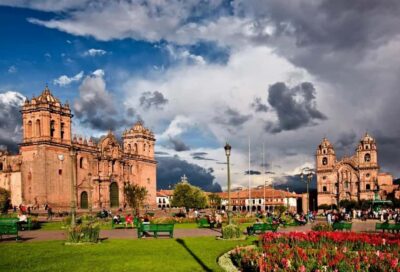
City Tour Cusco Qoricancha Sacsayhuaman y Tambomachay
Read our review →
Pachacamac Ruins & Barranco Half-Day Guided Tour
Read our review →
Pre Inca Temple of Pachacamac Half-Day Tour from Lima
Read our review →
Tour to the Archaeological Sanctuary of Pachacamac (small group)
Read our review →
From Pyramids & Bohemian Streets: Lima Miraflores & Barranco Tour
Read our review →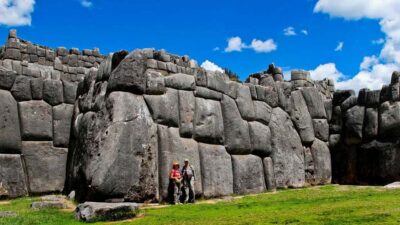
City Tour | Half-Day Tour to 4 Archaeological Sites
Read our review →
Caral, The Oldest Civilization in the Americas:Day Trip from Lima
Read our review →Browse the lists this tour appears in