
Reviewed · CITY TOURS
City Tour Cusco
Cusco’s great stones tell the story. This five-hour tour gives you a clear introduction to Inca culture through Sacsayhuaman, Q’enqo, Tambomachay, and Puca Pucará, with transport and a live guide in English or Spanish. I especially like the way it combines major archaeological sites with broad views around Cusco, and I like that hotel pickup and 24/7 agency assistance are included.
The main point to consider is cost beyond the $15 tour price: entrance tickets are not included, and neither are food or drinks. You should also be ready for uneven ground and walking, since the tour is not suitable for people with mobility impairments.
In This Review
- Key points to know before you book
- What this Cusco tour is really about
- Sacsayhuaman: colossal stones above Cusco
- Q’enqo: a shrine shaped by Andean belief
- Tambomachay: water, terraces, and the Andean world
- Puca Pucará: the lookout over the imperial city
- Inca and Spanish Cusco in one half-day
- What the $15 price includes, and what it does not
- Pickup, timing, and practical comfort
- Who will enjoy this tour most?
- Should you book City Tour Cusco?
- FAQ
- How long does the City Tour Cusco last?
- What sites are visited?
- Where does the tour start?
- Where does the tour finish?
- Is transportation included?
- Are entrance tickets included in the price?
- What languages are available for the guide?
- What should I bring, and are there any restrictions?
Key points to know before you book
- Sacsayhuaman is the main event: Explore three levels of a huge ceremonial fortress above Cusco.
- Q’enqo adds a more mysterious stop: See an Inca shrine linked with the Puma and Pachamama.
- Tambomachay focuses on water: Its spring sources still feed fields and terraces.
- Puca Pucará gives you a strategic viewpoint: The old watchtower looks across the valley toward Cusco.
- The price is low, but tickets cost extra: At $15 per person, the tour covers transport and guiding, not site admission.
- The schedule is flexible but not fully fixed: Pickup can be arranged from your hotel or a neutral meeting point, with the collection time provided separately.
What this Cusco tour is really about
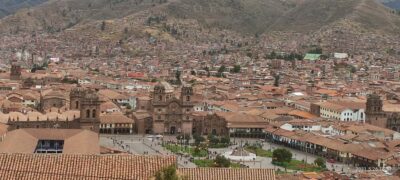
Cusco is not simply a colonial city built on top of an Inca one. It is both at once. Spanish churches, streets, and plazas share space with carefully fitted Inca stonework, and this tour takes you outside the center to see how the Inca built, worshipped, managed water, and watched over their capital.
I like this route because it does not try to cover every attraction in Cusco. Instead, it concentrates on four sites that work well together. You get a large fortress, a religious sanctuary, a water complex, and a defensive lookout. That gives the half-day a useful shape.
The route lasts about five hours, including the guided visits and scenic views along the way. You begin with pickup in Cusco and finish at the city’s main square. The exact collection time is provided after booking, and the pickup can be coordinated from your hotel or a neutral point.
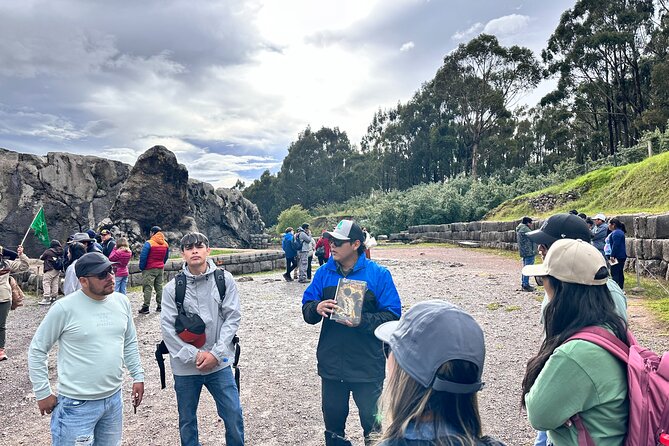
The guide is an important part of the experience. The tour is offered in English or Spanish, and the guide leads you through the sites rather than simply dropping you at the gates. One verified booking from Brazil praised the guide as kind and very well prepared, with strong knowledge across many subjects. That is exactly what you want here, since the large stones and open ruins need explanation to make sense.
More City Tours in Cusco
- Cusco: Half-Day City Tour with Sacsayhuaman and Q’enco
★ 4.6 · 1,129 reviews - City Tour Cusco Qoricancha Sacsayhuaman y Tambomachay
★ 4.7 · 617 reviews - Cusco City Tour Four Ruins in Half-Day
★ 5.0 · 530 reviews
Sacsayhuaman: colossal stones above Cusco
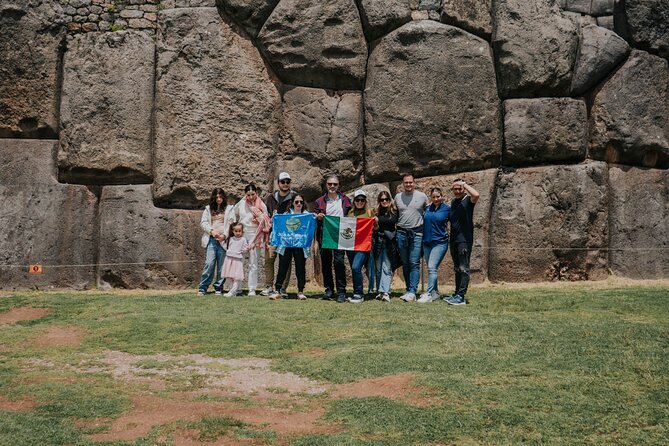
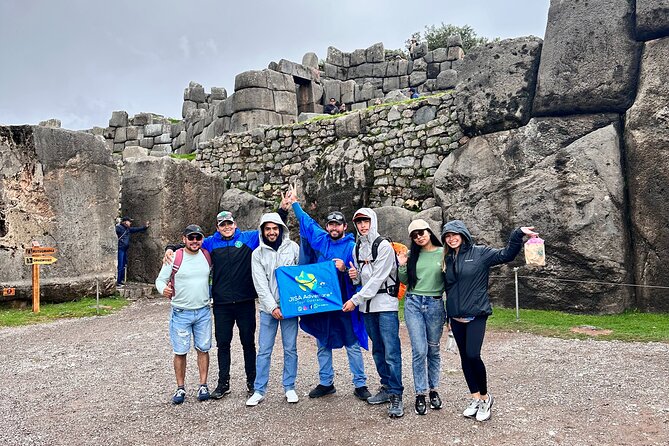
Sacsayhuaman is the first major stop and the place most likely to shape your impression of the tour. It is described as a ceremonial fortress, though its purpose and use were tied to several parts of Inca life. The site is made of immense stone constructions arranged across three levels.
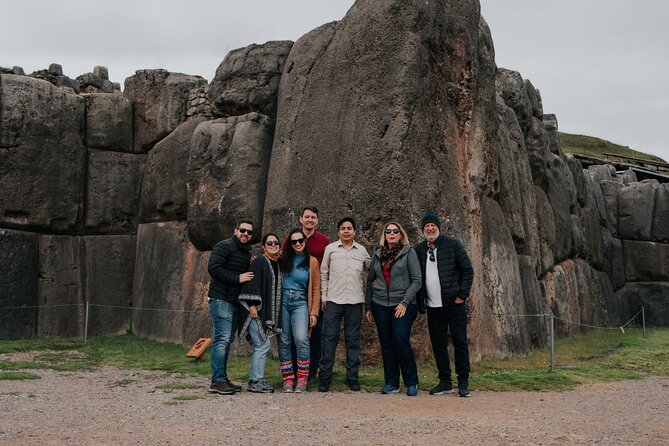
You will tour those three levels with the guide. At the upper part, you can see the foundations of the great towers that once dominated Cusco during the Inca period. Even without reconstructing the entire complex in your mind, the scale is striking. These are not small decorative walls. They are huge works of engineering set among open hills and views.
I find this stop valuable because it gives you a physical sense of Inca power. In central Cusco, you see fine stonework fitted into city streets. At Sacsayhuaman, you see the same skill used on a much larger scale. The contrast helps explain why Cusco was the capital of an empire.
The site also rewards a careful eye. A guide can point out details that you might pass without noticing, including how the stonework relates to the surrounding setting. The supplied description makes a useful point: an experienced guide notices details that can escape a first-time visitor. That is a strong reason to choose a guided visit instead of treating Sacsayhuaman as a quick photo stop.
You should also expect outdoor walking and uneven surfaces. The tour is not suitable for people with mobility impairments, so consider your comfort with archaeological ground before booking. Bring your passport or identity card, as that is listed among the required items.
Q’enqo: a shrine shaped by Andean belief
The next stop is Q’enqo, an Inca shrine connected with the Puma. The site includes an altar for sacrifices inside a space associated with Pachamama, or Mother Earth in Andean belief.
Q’enqo offers a different mood from Sacsayhuaman. At the fortress, size and setting dominate. Here, the focus is on ritual, carved spaces, and belief. The site helps you see that Inca architecture was not only about palaces, roads, and military control. Sacred places were built into the rock and connected with the natural world.
The guide’s explanation matters especially at Q’enqo. Without context, the carved and enclosed areas may appear puzzling. With a guide, you can connect the physical design with the Puma symbolism and the role of Pachamama.
I would not expect a long independent visit here. The entire tour includes four sites within roughly five hours, so each stop must fit a shared schedule. Still, Q’enqo earns its place because it changes the pace and subject of the morning. After the broad remains of Sacsayhuaman, you get a more focused look at Inca religious practice.
Tambomachay: water, terraces, and the Andean world
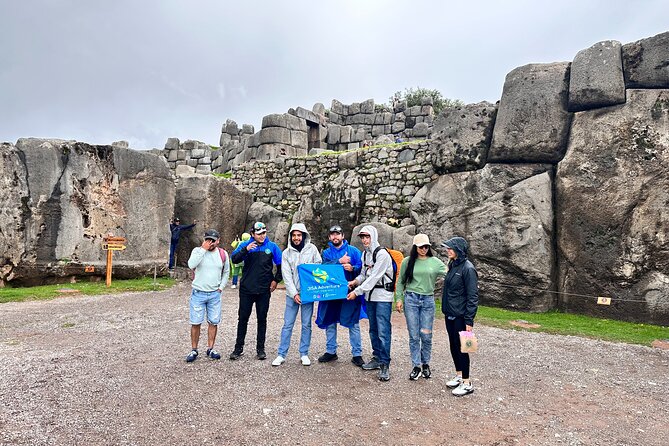
Tambomachay is the tour’s clearest lesson in water management. The site is described as a monument of notable architectural quality and one of the pillars of the Andean way of understanding the world.
You will see spring water sources that still irrigate fields and terraces around the city. That living connection makes Tambomachay especially useful. You are not looking only at abandoned walls. You are seeing how water remains part of the area’s agricultural system.
This stop also broadens your understanding of Inca planning. The Inca worked with the land rather than treating it as an obstacle. Water, terraces, sacred places, and settlements formed part of one connected system. That is one of the most useful ideas to carry through the tour.
The stop may appeal to you if you prefer practical details over grand legends. Sacsayhuaman shows what the Inca could build. Tambomachay shows how they handled a basic resource that made life and farming possible.
As with the other sites, the supplied information does not give a precise amount of time at Tambomachay. The full guided portion is about five hours, so you should expect a managed group schedule rather than unlimited time at each monument.
A few more Cusco trips worth lining up side by side
- Classic Inca Trail Trek 4D/3N to Machu Picchu (Group Service)
★ 5.0 · 8,653 reviews - Cusco: Rainbow Mountain and Red Valley Day Trip with Meals
★ 4.9 · 4,893 reviews - Machu Picchu: 4-Day Inca Trail Trek with Panoramic Train Ride
★ 5.0 · 4,568 reviews - Salkantay Classic Trek 5 Days from Cusco
★ 5.0 · 4,062 reviews
Puca Pucará: the lookout over the imperial city
The final archaeological stop is Puca Pucará, a watchtower in a strategic position above the valley and the imperial city. The name is often translated as Red Fortress, though the information provided for this tour emphasizes its role as a lookout.
You will enter the watchtower and take in the position it held above Cusco. This is a fitting final stop because the tour moves from ceremony and sacred spaces toward oversight and defense. From here, the guide can help you understand how the surrounding area related to the Inca capital.
Puca Pucará may not have the same immediate impact as Sacsayhuaman. It is smaller and less monumental. Its value comes from location and purpose. It helps you see Cusco as a capital that needed routes, water, rituals, and watchpoints, not just impressive buildings.
The final viewpoint also gives the tour a natural close before returning to the city. You finish at Cusco’s main square, where the Inca and Spanish layers of the city come together again.
Inca and Spanish Cusco in one half-day
Although the four main stops are outside the central streets, the tour begins and ends in Cusco, making it easy to connect the ruins with the city itself. The pickup point can be Plaza de Armas, and the tour finishes at the main square in Cusco.
That ending matters. After seeing the outer sites, you can look at Cusco with a sharper eye. The city’s Spanish architecture does not erase the Inca capital beneath it. Instead, the two traditions sit side by side, sometimes uneasily and sometimes in a striking blend.
The tour also introduces different styles of Cusco art. The supplied highlights specifically point to learning about Cusco art styles, along with the surprise of Inca and Spanish architecture. The exact museums, churches, or artworks are not specified, so you should think of this as a guided introduction rather than a dedicated art tour.
If art is your main reason for visiting Cusco, you will probably want extra time elsewhere in the city. If you want a first look at how local architecture and art developed across Inca and Spanish periods, this tour adds useful context without taking a full day.
What the $15 price includes, and what it does not
At $15 per person, this is a low-cost way to cover four important sites with organized transport and a professional guide. The price includes tourist transportation, guided visits for about five hours, and 24/7 assistance from the agency.
That is good value if you want someone else to handle the route between the sites. The four locations are spread around Cusco, and arranging separate transport could be less convenient than joining one organized outing.
The price does not include entrance tickets. This is the most important budget detail. Your final cost will be higher than $15, and the exact ticket amount is not given in the supplied information. Check the current admission requirements before you commit to a strict budget.
Meals, beverages, snacks, and travel insurance are also excluded. The tour is only five hours, so a meal is not necessarily needed during the outing, but you should plan your own drinks and snacks if you want them. Large bags and luggage are not allowed.
The low price also means you should not expect a private, custom-paced visit unless that is separately arranged. The listing provides no group-size information, so you should ask the operator if group size matters to you.
Pickup, timing, and practical comfort
Pickup is included, but the arrangement is slightly flexible. Collection can be made from your hotel, or it can be coordinated from a neutral point. A collection schedule is provided, and the timing can be coordinated with the agency.
That flexibility is useful in Cusco, where accommodation locations and access for tourist vehicles can vary. Confirm your pickup details before the day of the tour, especially if you are meeting at a neutral point.
The activity lasts five hours, though the city visit is also described as about 5.5 hours in the itinerary details. Treat it as a half-day outing and allow a little extra breathing room around the stated duration.
Bring your passport or identity card. Do not bring luggage or large bags. Since mobility impairments are listed as a restriction, ask yourself whether you can manage walking around archaeological sites with uneven ground and changing levels.
The tour operates with a live guide in English or Spanish. If your preferred language matters, choose it when booking and confirm the arrangement with the agency.
Who will enjoy this tour most?
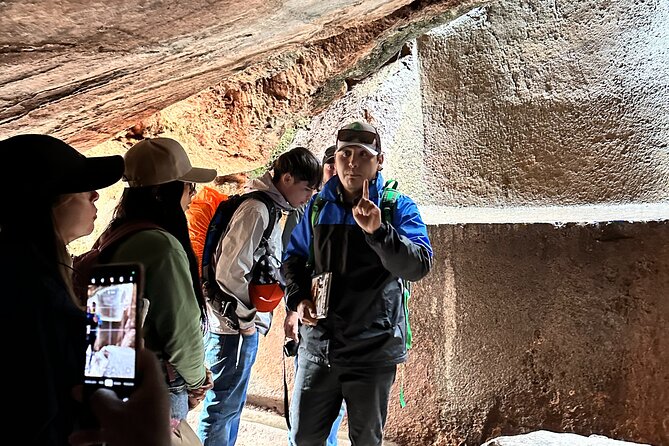
I would recommend this tour to a first-time visitor who wants a quick, structured introduction to the Inca sites around Cusco. It is also a good match if you prefer having transport and explanations arranged for you rather than working out several separate visits.
You will get the most from it if you care about architecture, sacred sites, water systems, and views over Cusco. The four stops are varied enough to prevent the outing from feeling like four versions of the same ruin.
It may be less suitable if you want slow photography, long periods alone at each site, or a highly specialized art tour. The schedule covers several places in one half-day, so the guide must keep things moving.
It is also not the right choice if you have significant mobility limits. The activity specifically says it is unsuitable for people with mobility impairments, and the sites include multiple levels, outdoor paths, and archaeological surfaces.
Should you book City Tour Cusco?
Book it if you want a budget-friendly half-day that explains the big picture of Inca Cusco. For $15, you receive transport, a professional guide, guided visits, hotel pickup coordination, and support from the agency. The strongest part is the route itself: Sacsayhuaman gives you scale, Q’enqo gives you ritual, Tambomachay gives you water, and Puca Pucará gives you strategy.
Before paying, confirm the separate entrance-ticket cost and your pickup time. Bring identification, leave large bags behind, and plan for walking. If those conditions suit you, this is a practical first step into Cusco’s Inca world, with enough variety to make the five hours worthwhile.
FAQ
How long does the City Tour Cusco last?
The tour duration is five hours. The itinerary also describes the city visit as about 5.5 hours, so allow some extra time around the stated schedule.
What sites are visited?
The tour visits Sacsayhuaman, Q’enqo, Tambomachay, and Puca Pucará. It also includes scenic views during the route through the Cusco area.
Where does the tour start?
Pickup options include Plaza de Armas in Cusco. Collection can also be coordinated from your hotel or a neutral meeting point.
Where does the tour finish?
The tour finishes at Cusco’s main square, also known as the Cuzco Main Square.
Is transportation included?
Yes. Tourist transportation is included, along with a professional tourist guide and guided visits at the sites.
Are entrance tickets included in the price?
No. Entrance tickets are not included. Meals, drinks, snacks, and travel insurance are also excluded.
What languages are available for the guide?
The live tour guide is available in English or Spanish.
What should I bring, and are there any restrictions?
Bring your passport or identity card. Luggage and large bags are not allowed, and the activity is not suitable for people with mobility impairments.
Added recently around Cusco
- Guided tour of the mountain of colors in Cusco★ 5.0 · 11 reviews
- 2-Day Private Short Inca Trail to Machu Picchu★ 5.0 · 15 reviews
- Tour Sacred Valley with Maras and Moray★ 5.0 · 15 reviews
- San Pedro Market Tour with Peruvian Cooking Class★ 5.0 · 31 reviews
- City Tour Cusco – Group★ 5.0 · 4 reviews
- Walking Culinary Experience★ 5.0 · 41 reviews
- City Tour in Cusco★ 4.5 · 10 reviews
- One Day Tour to Humantay Lagoon★ 5.0 · 8 reviews
City Tours, compared.
Lima Half-Day City Walking Tour (Small Groups)
Read our review →
Half-Day City Tour with Sacsayhuaman and Q’enco
Read our review →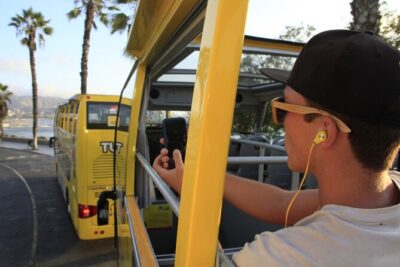
City Tour Panoramic Bus Departure From Larcomar
Read our review →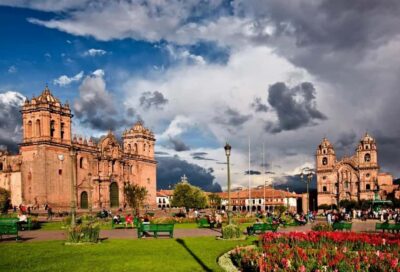
City Tour Cusco Qoricancha Sacsayhuaman y Tambomachay
Read our review →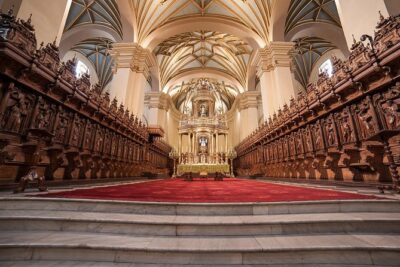
Lima’s Vibrant Heritage: Exploring the City’s Landmarks Half-day
Read our review →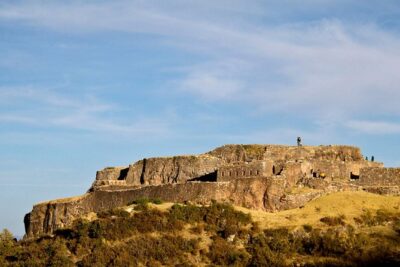
Sightseeing Tour of the City on an Open-Top Bus
Read our review →
Lima City, Central Market & Catacombs Tour (Pick-up & Drop Off)
Read our review →Browse the lists this tour appears in