
Reviewed · CITY TOURS
City Tour Cusco
Cusco reveals its layers quickly. This half-day outing links the city’s most important Inca sites with private transport and a guide who can explain what you are seeing instead of leaving you to puzzle over a wall of stone. I especially like the mix of Qorikancha’s Inca and Spanish architecture and Saqsayhuamán’s huge fitted blocks. The main catch is that the $32 price does not include the archaeological entrance ticket or Qorikancha admission.
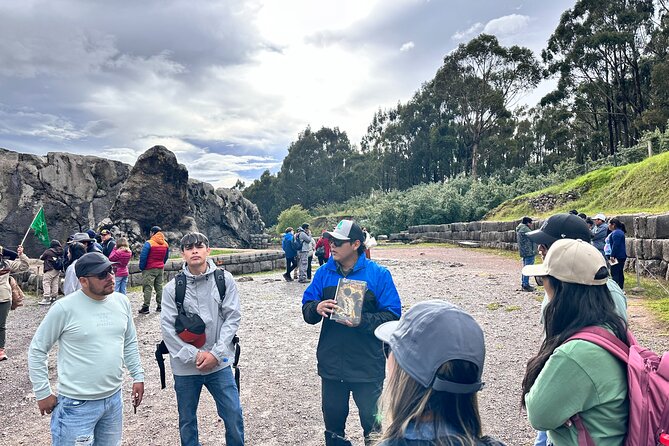
You meet at Cusco’s Plaza de Armas and return there after visiting five sites. The small group, capped at 12 people, keeps the outing more personal than a large coach tour. Guides such as Jhonny, Victor, and Saul have earned strong praise for clear explanations, good energy, photo stops, and attentive care.
In This Review
- Key points at a glance
- Why this Cusco tour works well as an introduction
- Qorikancha: where Inca and Spanish Cusco meet
- Saqsayhuamán: massive stones and wide views
- Q’enqo: a rocky ritual center
- Puka Pukara: a strategic stop above the route
- Tambomachay: water, ceremony, and engineering
- The guides can shape the whole experience
- Transport, group size, and the real timing
- What the price really covers
- Who should book this outing
- Should you book City Tour Cusco?
- FAQ
- Where does the City Tour Cusco begin?
- Where does the tour end?
- How long does the City Tour Cusco last?
- What sites does the tour visit?
- Are entrance fees included?
- How many people can join the tour?
- What is included in the tour price?
Key points at a glance
- Five major sites in one outing: Qorikancha, Saqsayhuamán, Q’enqo, Puka Pukara, and Tambomachay form a useful introduction to Cusco’s Inca surroundings.
- Transport saves your legs: Private transportation connects the sites, including a roughly 20-minute ride to Saqsayhuamán and a 15-minute ride toward Puka Pukara.
- Admission costs extra: Budget $25 for the partial archaeological ticket and $7 for Qorikancha, in addition to the $32 tour price.
- Guide quality matters here: Jhonny, Victor, and Saul are praised for lively explanations, historical context, and making time for photographs.
- Small group format: The maximum group size is 12, a sensible limit for listening, asking questions, and moving around ancient stonework.
- A useful first day in Cusco: The tour gives you a broad cultural orientation before longer trips to places such as the Sacred Valley or Machu Picchu.
Why this Cusco tour works well as an introduction
Cusco can feel like several cities stacked in one place. Inca foundations support Spanish colonial buildings, colonial churches face an old ceremonial center, and major archaeological sites sit on the hills outside the center. This tour gives you a quick way to understand that pattern.
The route is especially useful if you have limited time or want help getting your bearings on your first day. You do not need to arrange separate taxis to five locations, and you get a guide to connect the stones, water channels, religious sites, and military structures into one story.
At $32 per person, the tour itself is reasonably priced for private transportation, an official tourism guide, and a maximum of 12 people. The real cost is higher once you add the $25 partial ticket covering the archaeological centers and the $7 Qorikancha entry. That brings the known total to $64 per person before tips.
The value depends on what you want. If you would otherwise hire taxis and pay for explanations at each site, the package makes sense. If you already know Cusco well and prefer moving at your own pace, the fixed route may feel less appealing.
More City Tours in Cusco
- Cusco: Half-Day City Tour with Sacsayhuaman and Q’enco
★ 4.6 · 1,129 reviews - City Tour Cusco Qoricancha Sacsayhuaman y Tambomachay
★ 4.7 · 617 reviews - Cusco City Tour Four Ruins in Half-Day
★ 5.0 · 530 reviews
Qorikancha: where Inca and Spanish Cusco meet
The tour begins at Qorikancha, usually translated as the Temple of the Sun. This is the best first stop because it introduces the central idea of Cusco: Spanish colonial buildings were placed over, beside, and sometimes directly against Inca work.
You spend about 45 minutes with the guide inside the complex, although the stop is listed as approximately one hour. Look for the contrast between carefully fitted Inca masonry and later colonial construction. The point is not only to admire old stones. It is to see how two religious and political systems occupy the same physical space.
Qorikancha was an important religious center, and the guide’s explanation helps you understand its role in the Inca world. The site also provides a useful frame for the rest of the day. After this visit, the outlying ruins feel less like isolated monuments and more like parts of a larger ceremonial and defensive network.
Admission is not included. The stated price is $7. Since the tour begins from the Plaza de Armas, you should plan to arrive ready to start rather than expecting a hotel pickup.
Saqsayhuamán: massive stones and wide views
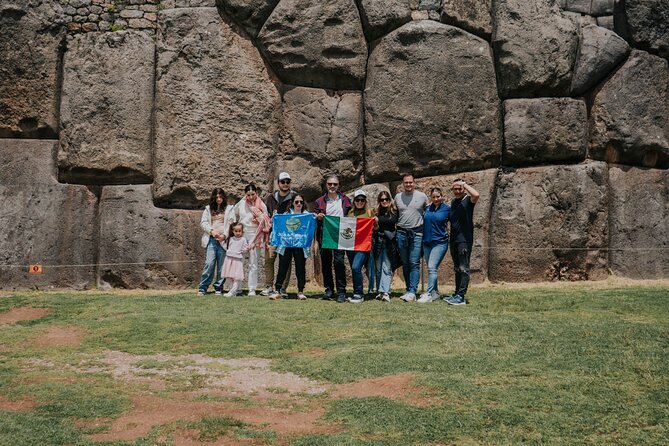
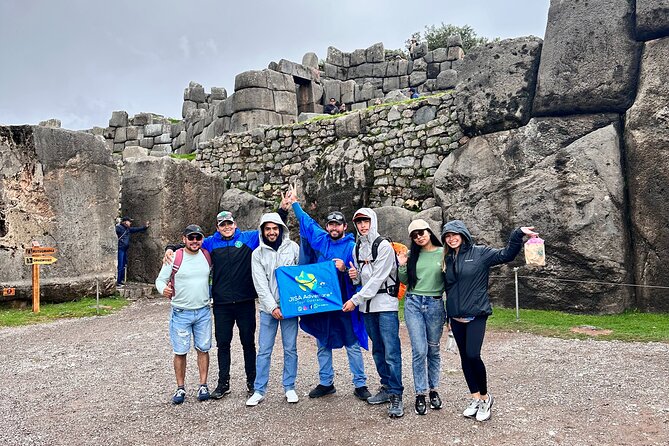
After Qorikancha, the vehicle ride to Saqsayhuamán takes about 20 minutes. This is the stop that tends to impress even people who have already seen plenty of ruins. The enormous carved stones and thick walls show the scale of Inca construction better than almost any site in the city center.
Your guide explains the building methods and the site’s ceremonial and historical role. Pay attention to the joints between the stones. Their precise fit is the feature that makes the walls memorable, but the larger lesson is how much planning and labor went into shaping and placing each block.
Saqsayhuamán also gives you a different sense of space. Qorikancha is an urban site, tied closely to Cusco’s streets and colonial buildings. Here, the open setting lets you appreciate the walls as a major architectural project rather than as one fragment in a modern neighborhood.
The ticket is not included, and the $25 partial archaeological ticket covers this site along with the other archaeological centers on the route. Keep that extra charge in mind when comparing this tour with a cheaper city outing.
Q’enqo: a rocky ritual center
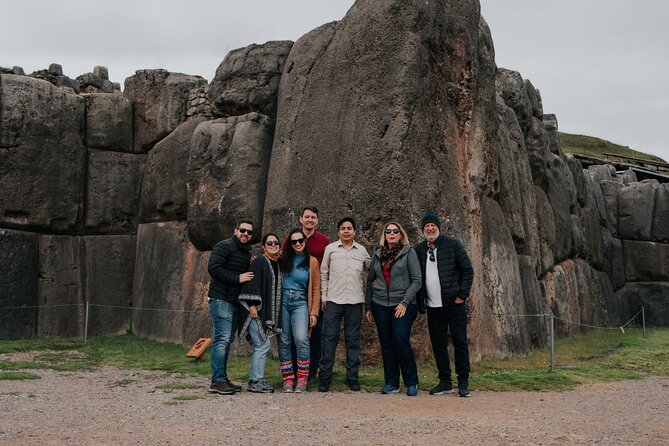
Q’enqo is a smaller and more mysterious stop. It sits on a rocky outcrop and includes carved altars and underground chambers. The guide focuses on ritual activity and the Inca view of sacred places.
This is where a good explanation makes the biggest difference. The site is not as visually grand as Saqsayhuamán, and some of its meaning can be hard to read from the stone alone. The guide helps you notice the carved surfaces, chambers, and ceremonial features without turning the visit into a guessing game.
The setting also changes the rhythm of the tour. After the wide walls at Saqsayhuamán, Q’enqo feels more enclosed and focused. You are looking closely at carved rock rather than standing back from monumental walls.
The site can be interesting for anyone curious about religion and ritual, but it may not satisfy you if you only want the largest ruins and best photo views. That is one reason the five-stop format works well: it gives you several kinds of Inca sites instead of repeating the same experience.
A few more Cusco trips worth lining up side by side
- Classic Inca Trail Trek 4D/3N to Machu Picchu (Group Service)
★ 5.0 · 8,653 reviews - Cusco: Rainbow Mountain and Red Valley Day Trip with Meals
★ 4.9 · 4,893 reviews - Machu Picchu: 4-Day Inca Trail Trek with Panoramic Train Ride
★ 5.0 · 4,568 reviews - Salkantay Classic Trek 5 Days from Cusco
★ 5.0 · 4,062 reviews
Puka Pukara: a strategic stop above the route
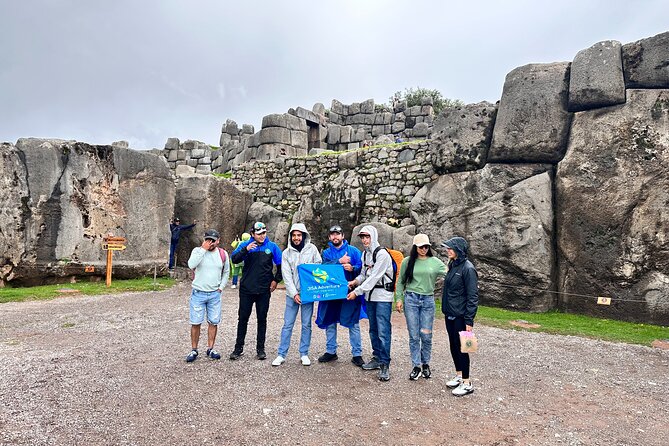
After roughly 15 minutes in the vehicle, you reach Puka Pukara, often called a military fortress. Its name is associated with the red color of the construction, and the site is presented as a defensive and strategic point within the Inca Empire.
The value here comes from the change in function. Qorikancha represents religion, Saqsayhuamán combines ceremonial and defensive importance, and Q’enqo centers on ritual. Puka Pukara lets you consider movement, control, and protection along the routes around Cusco.
The stop is not as large as Saqsayhuamán, but that is part of its appeal. You can focus on how the site fits its purpose rather than expecting another enormous complex. Your guide explains the military role and helps connect the structure to the wider network around the former Inca capital.
Like the other archaeological locations, entry is not included in the tour price. The shared partial ticket is an important practical detail, since you need it for the group of sites rather than paying only for one stop at a time.
Tambomachay: water, ceremony, and engineering
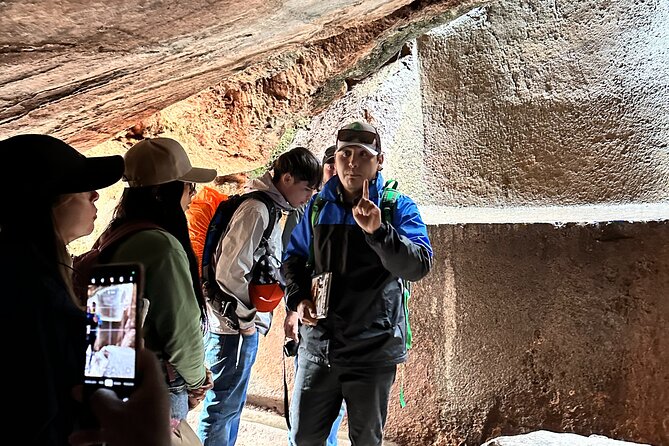
The final site is Tambomachay, known as the Baño del Inca, or Inca’s Bath. It is associated with ceremonies and water worship, and its stone fountains and channels show the care the Incas gave to managing water.
This is a calm way to end the route. Instead of finishing with another fortress, you finish with flowing water, carved stone, and a site tied to ceremony. The hydraulic features are the main attraction, so listen for the explanation of how the fountains and canals were built and used.
Tambomachay also rounds out the day’s themes. You have seen religious architecture, huge defensive walls, a ritual center, a military site, and water engineering. That range is more valuable than simply checking off famous names, especially if this is your first close look at Inca culture.
After Tambomachay, the vehicle takes you back to Cusco and the Plaza de Armas meeting point. The five stops are each described as about an hour, but the full experience is advertised at approximately five hours, including the rides. Expect the timing to be approximate rather than treating every stop as a strict 60-minute appointment.
The guides can shape the whole experience
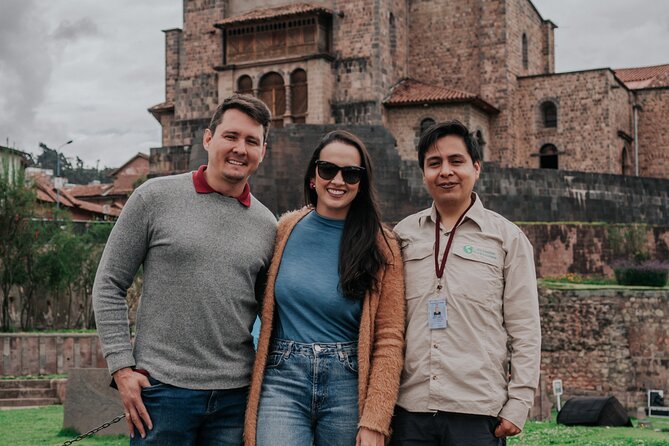
Ancient sites are much easier to appreciate when someone explains why they matter. The strongest praise for this tour centers on the guides’ energy, clarity, and attention.
Jhonny is repeatedly singled out for making the tour fun while still giving solid historical explanations. One family found his timing just right, which is useful if you want information without feeling trapped in a lecture. Another description highlights his kindness and attentiveness.
Victor is praised for explaining the history at each stop and making time for photographs. That small detail matters. A rushed guide can turn a beautiful site into a blur of instructions, while a guide who allows photo time makes the outing feel more relaxed. Victor also led longer outings that included the city tour, Laguna Humantay, and Vinicunca, suggesting that he is used to staying engaged across a full Peru itinerary.
Saul is recommended for a first day in Cusco because he combined care with clear explanations. Jorge is also praised for being accommodating, though his strongest mention relates to other Peru excursions rather than this exact route.
Guide assignments can change, so you should not book on the assumption that one particular person is guaranteed. Still, the repeated emphasis on lively, well-informed guiding is one of the tour’s strongest assets.
Transport, group size, and the real timing
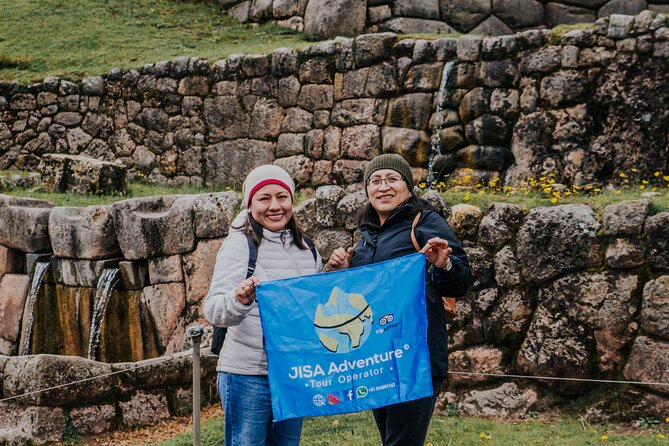
Private transportation is included, and that is more useful here than it may sound. The sites are spread around Cusco, with uphill and outlying sections that would take effort to connect on foot. The vehicle lets you save energy for the ruins themselves.
The group limit is 12 people. That is small enough for a guide to keep the group together and answer questions, but it is not a private tour for just you and your party. If you want a completely personal schedule, ask about a different arrangement before booking.
The stated duration is about five hours. The stop descriptions each use one hour, while the route also includes vehicle transfers. Treat the published time as a practical estimate. Traffic, group pace, and time spent taking photographs can affect the return time.
The meeting point is Plaza de Armas in Cusco, and the activity ends back there. The listed operating period runs from September 3, 2023, through August 12, 2026, Monday through Sunday, with hours shown as 12:00 AM to 6:00 PM. Because that display is unusually broad, confirm the exact departure time at booking.
An oxygen ball is included. No further detail is provided about how or when it is used, so do not treat it as a substitute for taking altitude concerns seriously or arranging medical support if you need it.
What the price really covers
The base price is $32 per person. For that, you receive private transportation, an official tourism guide, and the organized route through five sites. Tips are not included.
You also need to pay:
- $25 for the partial tourist ticket covering the archaeological centers
- $7 for Qorikancha
- Tips, if you choose to give them
That makes the known admission total $32 per person, bringing the tour and entry costs to $64 before gratuity. This is still a fair price for a half-day route with transport and a guide, but the extra fees should be part of your planning from the start.
The tour is best value when you want an efficient overview. It is less compelling if you only want to visit Qorikancha and Saqsayhuamán, since you would still pay for the full package and the additional ticket.
Who should book this outing
I would choose this tour for a first visit to Cusco, especially if you want context before heading to Machu Picchu or the Sacred Valley. The route gives you a broad introduction to Inca religion, construction, defense, ritual, and water management in one manageable outing.
It also suits families and mixed-age groups because the vehicle reduces the need to organize transport between sites. The positive comments about guides making time for photos and looking after the group are encouraging if you want a relaxed pace.
You should think twice if you dislike fixed itineraries or want long, independent visits at each ruin. You also need to be comfortable with the added admission costs and the fact that the five-hour duration is approximate.
The activity is described as suitable for most people, and it is near public transportation. No special accessibility details are provided, so ask the operator directly if you need specific information about walking surfaces, steps, or vehicle access.
Should you book City Tour Cusco?
Book it if you want a well-organized first look at Cusco’s Inca sites without arranging several rides yourself. The five-stop route is varied, the group size is controlled, and guides such as Jhonny, Victor, and Saul have been praised for making the history clear and enjoyable.
Skip it if your priority is total independence or if you want to spend a full day at only one or two archaeological sites. For everyone else, the tour offers a practical introduction, provided you budget the additional $32 in entrance fees and confirm the exact start time.
FAQ
Where does the City Tour Cusco begin?
The tour begins at Plaza de Armas in Cusco, Peru.
Where does the tour end?
The activity ends back at the meeting point in Plaza de Armas.
How long does the City Tour Cusco last?
The tour lasts approximately five hours.
What sites does the tour visit?
The route includes Qorikancha, Saqsayhuamán, Q’enqo, Puka Pukara, and Tambomachay.
Are entrance fees included?
No. The $25 partial tourist ticket for the archaeological centers and the $7 Qorikancha admission are not included.
How many people can join the tour?
The maximum group size is 12 people.
What is included in the tour price?
The price includes an official tourism guide, private transportation, and an oxygen ball. Tips and entrance fees are not included.
Added recently around Cusco
- Guided tour of the mountain of colors in Cusco★ 5.0 · 11 reviews
- 2-Day Private Short Inca Trail to Machu Picchu★ 5.0 · 15 reviews
- City Tour Cusco – Group★ 5.0 · 4 reviews
- Tour Sacred Valley with Maras and Moray★ 5.0 · 15 reviews
- San Pedro Market Tour with Peruvian Cooking Class★ 5.0 · 31 reviews
- Walking Culinary Experience★ 5.0 · 41 reviews
- City Tour in Cusco★ 4.5 · 10 reviews
- Rainbow Mountain Small-Group Full-Day Hike from Cusco with Meals★ 4.5 · 15 reviews
City Tours, compared.
Lima Half-Day City Walking Tour (Small Groups)
Read our review →
Half-Day City Tour with Sacsayhuaman and Q’enco
Read our review →
City Tour Panoramic Bus Departure From Larcomar
Read our review →
City Tour Cusco Qoricancha Sacsayhuaman y Tambomachay
Read our review →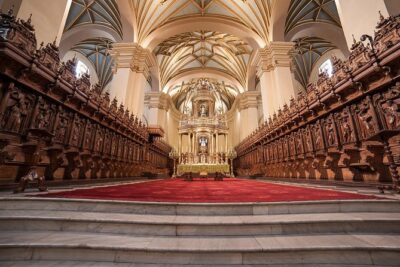
Lima’s Vibrant Heritage: Exploring the City’s Landmarks Half-day
Read our review →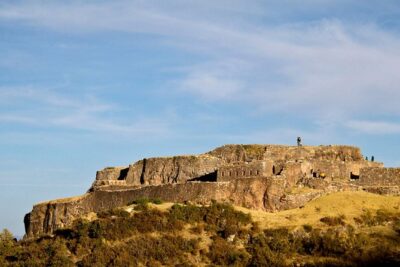
Sightseeing Tour of the City on an Open-Top Bus
Read our review →
Lima City, Central Market & Catacombs Tour (Pick-up & Drop Off)
Read our review →Browse the lists this tour appears in