
Reviewed · CITY TOURS
City Tour in Cusco
Six sights, one Andean afternoon. This Cusco city tour gives you a useful first look at the city’s Spanish and Inca landmarks, with Historic Center pickup and a bilingual guide included. I like the sensible route from the Cathedral and Qorikancha to the hilltop ruins, and I like that the group is limited to 18 people. The main drawback is that the low $12.80 price does not cover the key entrance tickets.
A good guide can make a big difference here. Guide Richard earned special praise for keeping an exhausted guest engaged after an overnight bus ride, explaining local culture and history clearly, and even helping with directions afterward. You should also allow for extra ticket costs, a five-hour schedule, and changing mountain weather.
In This Review
- Key points to know before you book
- Why this five-hour route works in Cusco
- Cusco Cathedral and the Spanish face of the city
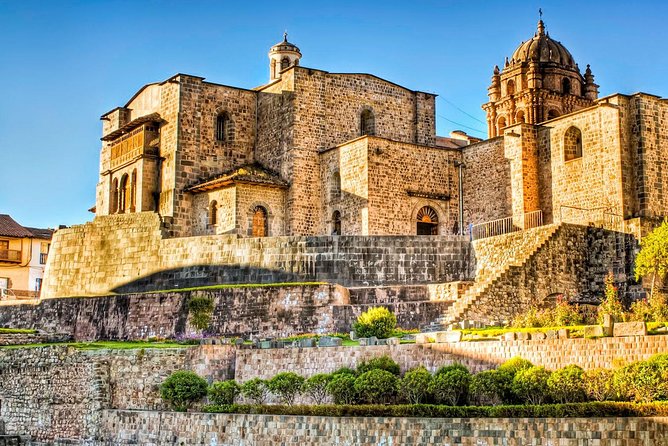
- Qorikancha, where Inca and Spanish Cusco meet
- Sacsayhuaman and the enormous stonework
- Q’enqo and the remains carved into stone
- Puka Pukara, a checkpoint above the city
- Tambomachay and the sound of moving water
- What the $12.80 price really covers
- The guide can shape the whole afternoon
- What to pack for the changing weather
- Who should book this Cusco city tour
- Should you book it?
- FAQ
- How long does the Cusco city tour last?
- Where is pickup offered?
- Is transportation included?
- Is an English-speaking guide included?
- Are entrance tickets included?
- What happens if I cancel the tour?
Key points to know before you book
- Six major Cusco sights in about five hours: The route covers the Cathedral, Qorikancha, Sacsayhuaman, Q’enqo, Puka Pukara, and Tambomachay.
- Pickup from central Cusco: Transport is offered from accommodations in the city’s Historic Center.
- English and Spanish guide service: A professional bilingual guide leads the visit, with Richard receiving especially warm praise for his clear and entertaining approach.
- The advertised price is only the tour cost: Qorikancha, the Cathedral, and the partial archaeological tourist ticket require separate payment.
- The outer ruins require short visits: You get a broad introduction to each site, but not a slow, in-depth archaeological study.
- Bring weather protection: A waterproof jacket or poncho, water, snacks, a sun hat, and factor 35 sunscreen are specifically recommended.
Why this five-hour route works in Cusco
Cusco can feel confusing at first. Spanish churches sit on Inca foundations, major ruins are spread across the hills, and the best-known sites do not all fit neatly into a simple walk from the Plaza de Armas.
This tour solves that problem with a compact route. You begin in the city center, visit two important monuments on foot or near the center, then use authorized tourist transport to reach the archaeological sites outside town. I like this setup for a first day in Cusco because it helps you connect the city’s main pieces before you decide where to spend more time.
The schedule is full. The Cathedral gets one hour, Qorikancha one hour, Sacsayhuaman 50 minutes, Q’enqo 40 minutes, Puka Pukara 40 minutes, and Tambomachay 50 minutes. Those times include the planned stops, so you should expect an orientation rather than a long, quiet visit at every site.
The group limit of 18 people is a useful middle ground. You are not paying for a private tour, but the group should be small enough for a guide to explain details without shouting across a large crowd. Pickup is offered around the central area, which saves you from arranging transport to a distant meeting point.
More City Tours in Cusco
- Cusco: Half-Day City Tour with Sacsayhuaman and Q’enco
★ 4.6 · 1,129 reviews - City Tour Cusco Qoricancha Sacsayhuaman y Tambomachay
★ 4.7 · 617 reviews - Cusco City Tour Four Ruins in Half-Day
★ 5.0 · 530 reviews
Cusco Cathedral and the Spanish face of the city
The Cathedral is the natural place to begin. It is one of Cusco’s major religious buildings and combines Gothic, Baroque, and Renaissance elements. That mixture reflects the city itself, where European colonial design overlaps with earlier Andean foundations and traditions.
You have about an hour here. That is enough time for a guided introduction to the building’s style and importance, though the exact amount of interior time will depend on the day’s conditions and the guide’s pacing. I would listen closely to the explanations rather than simply treating the Cathedral as a quick photo stop. Its importance is not only visual. It helps explain how Spanish power reshaped the center of Cusco.
Admission is not included. The listed price for the Cathedral is S/. 40 per person. Bring this cost into your budget before booking, since the low headline price can otherwise give you the wrong idea about the total expense.
The Cathedral is also a good first test of the tour’s style. If you prefer a slow visit with time to study paintings, chapels, and architectural details on your own, one hour may feel tight. If you want a clear introduction before seeing more of Cusco, the timing should work well.
Qorikancha, where Inca and Spanish Cusco meet
Qorikancha was a place of worship dedicated to Inti, the sun god, during the Inca period. The site is especially valuable because it shows how sacred Inca space became part of the colonial city.
The visit lasts about an hour, and the entrance ticket is separate. The listed price is S/. 20 per person, although the supplied ticket information also shows a different PEN figure. That inconsistency is worth checking with Paqarina Journeys Peru before you go. The tour price is clear, but the extra-ticket details should be confirmed in the local currency.
I like Qorikancha as the second stop because it gives you a sharper sense of Cusco’s layered past. The Cathedral presents the colonial center. Qorikancha turns your attention back to the Inca period and to the importance of the sun in religious life.
A guide matters here. Without context, you may see walls and courtyards but miss why the site carries so much weight. The guide can help connect the surviving stonework to the former religious complex and explain how the city changed after the Spanish conquest.
Sacsayhuaman and the enormous stonework
After the central sites, the route moves to Sacsayhuaman, only a short distance from central Cusco by tourist vehicle. This is one of the most memorable stops because of its huge fitted stones and broad ceremonial or defensive setting.
The complex was built under Inca Pachacutec in the 15th century and is linked with the Inca Empire. It is also part of Cusco’s UNESCO World Heritage designation. The scale is the point. The stones are so large that even a short visit gives you a clear sense of the engineering challenge.
You have about 50 minutes here. That should allow time to see the principal area and hear the main explanation, but it is not enough for an unhurried study of every section. Wear shoes suited to uneven archaeological ground, although the supplied details do not promise a particular type of path or walking surface.
Admission requires the partial BTC tourist ticket, listed at S/. 70 per person. This ticket also applies to the other archaeological sites on the route. Add it to the tour price when comparing value with other Cusco excursions.
Sacsayhuaman is likely to be the stop that stays with you longest. It has a strong visual impact, and the guide’s explanation can make the stonework more than a collection of impressive walls. If you have only one day for a broad Cusco introduction, this is an efficient inclusion.
A few more Cusco trips worth lining up side by side
- Classic Inca Trail Trek 4D/3N to Machu Picchu (Group Service)
★ 5.0 · 8,653 reviews - Cusco: Rainbow Mountain and Red Valley Day Trip with Meals
★ 4.9 · 4,893 reviews - Machu Picchu: 4-Day Inca Trail Trek with Panoramic Train Ride
★ 5.0 · 4,568 reviews - Salkantay Classic Trek 5 Days from Cusco
★ 5.0 · 4,062 reviews
Q’enqo and the remains carved into stone
Q’enqo is a smaller and more fragmentary archaeological complex. What remains includes carved rocks, traces of paths and aqueducts, enclosures, storage areas, and liturgical bathing areas. The site also suffered major loss during the Spanish period, so you should arrive with realistic expectations.
The planned visit lasts 40 minutes. That is enough for a focused explanation of the surviving features, but you will not see a fully preserved complex. Much of the value comes from learning how archaeologists and guides interpret partial remains.
I would pay attention to the stone itself here. Q’enqo is less about a grand open view and more about carved surfaces and the way the site was shaped for ceremonial use. The contrast with Sacsayhuaman is helpful: one stop gives you massive construction, while the next asks you to look more carefully at smaller details.
The same S/. 70 partial BTC ticket covers this archaeological stop. Since the tour moves through several sites under one ticket, the extra cost makes more sense than paying separate admission at every ruin. Still, confirm the current ticket rules before departure, since prices and access arrangements can change.
Puka Pukara, a checkpoint above the city
Puka Pukara had a military role as a checkpoint for entry into Cusco, the capital of the Inca Empire. It also worked as a tambo, or resting place, for chaskis who carried messages and packages between settlements.
This is a 40-minute stop, and admission is listed as free in the supplied details. The site is useful for understanding that the Inca road system needed more than temples and palaces. It also required places for messengers to rest, supplies to be stored, and movement into the capital to be watched.
A particularly interesting detail concerns food storage. Dehydrated products were kept on the hillside, where strong winds helped preserve them for longer periods. The site’s position and airflow served a practical purpose, almost like a natural refrigerator.
Puka Pukara may feel less dramatic than Sacsayhuaman, but I would not dismiss it. The explanation of travel, communication, storage, and security gives the route a wider purpose. You begin to see how the Inca state operated, not just how it built monuments.
Tambomachay and the sound of moving water
Tambomachay is devoted to water. The Incas prayed here for rain to nourish crops, and the site is sometimes called the Temple of Fertility. Clear water still runs through its channels, supplied from a small waterfall and divided into two cascades.
The visit lasts about 50 minutes. That gives you time to see the aqueducts and hear the stories connected with the water. One local legend says women who drink from the springs may conceive easily, with the right or left side associated with the sex of a future child. Treat that as folklore, not medical advice, but it shows how the site has remained part of local storytelling.
Tambomachay also had restricted access. The Inca and his entourage were allowed to use its facilities, while local people had limited entry. That detail adds a social and political layer to what might otherwise look like a simple water channel.
Admission is not included and is covered by the partial BTC ticket listed at S/. 70 per person. The site is a calm ending to the archaeological portion of the route, especially after the larger stonework at Sacsayhuaman and the more fragmentary remains at Q’enqo.
What the $12.80 price really covers
At $12.80 per person, this is an inexpensive way to arrange transport, guiding, and a fixed route through Cusco’s main sights. The included professional bilingual guide and authorized tourist vehicle are the main sources of value. You are paying for organization as much as for sightseeing.
The price does not cover the main admissions. Budget separately for:
- Qorikancha: listed at S/. 20 per person
- Cusco Cathedral: listed at S/. 40 per person
- Partial BTC tourist ticket for the archaeological sites: listed at S/. 70 per person
The supplied figures contain a small inconsistency for Qorikancha, with both S/. 20 and PEN15 shown. Since S/. and PEN refer to Peruvian currency notation, check the current amount before setting your budget. The Cathedral and partial BTC figures are also worth confirming at booking, especially if your visit is far ahead.
Once those admissions are added, the total cost is higher than $12.80, but the package can still be good value if you want a guide and transport. It is less attractive for someone who plans to visit only one or two sites independently.
The guide can shape the whole afternoon
The strongest personal praise attached to this experience concerns Richard. His clear explanations, entertaining manner, and help with directions made a strong impression on one guest who had arrived in Cusco after an overnight bus trip.
That detail matters. Cusco sightseeing can become a blur of dates, rulers, religious terms, and unfamiliar place names. A guide who keeps the story moving can help you stay alert, especially on a five-hour route with six stops.
The tour promises a professional bilingual guide in Spanish and English. The information does not guarantee that Richard will lead every departure, so you should not book solely on the assumption that he will be your guide. Still, his performance gives you a useful idea of the kind of guide service you should hope for.
I also like that the guide helped with onward directions. This tour may be especially useful near the start of your Cusco stay, when you are still learning the layout of the city and deciding how to plan the next part of your trip.
What to pack for the changing weather
The practical advice is simple and worth following. Bring a waterproof jacket or poncho, since rain can arrive during the afternoon. A sun hat and factor 35 sunscreen are also recommended, along with water and snacks.
The tour lasts about five hours, and the schedule leaves limited time for long food stops. Carrying a small snack keeps you from relying on an unplanned break. Water is just as important for comfort during a full sightseeing circuit.
Pickup is available from accommodations in Cusco’s Historic Center. The details do not promise pickup from every neighborhood, so confirm that your lodging is within the stated central area. Transport is described as comfortable, authorized tourist transportation, which is useful for the stretch between the central monuments and the hilltop ruins.
Who should book this Cusco city tour
I would recommend this tour to you if you want a broad first look at Cusco without arranging separate taxis, tickets, and guides. It suits people with limited time, first-time visitors, and anyone who wants the major city and nearby archaeological sites explained in one continuous outing.
It also works well if you value history and local stories more than a slow photographic visit. The schedule is active, and the six-stop plan means you will keep moving.
I would look elsewhere if you want a private pace, long time at each site, or a tour focused on only Inca architecture. The 18-person maximum is reasonable, but it is still a group experience. You will also need to manage several admission costs beyond the advertised price.
The cancellation terms are friendly if your plans change: cancel at least 24 hours before the start time for a full refund. Changes or cancellations within 24 hours are not refunded, and the cut-off uses Cusco local time.
Should you book it?
Book this Cusco city tour if you want efficient coverage, central pickup, bilingual guiding, and transport to the four outer ruins at a low starting price. The route gives you a strong introduction to the city’s colonial center, Inca worship, engineering, military organization, communication network, and water ceremonies.
Before paying, confirm the current admission prices and the exact pickup location. If you are comfortable with a busy five-hour schedule and separate entrance fees, the tour offers good practical value. If you prefer lingering at one site, hire a private guide or choose a slower visit instead.
FAQ
How long does the Cusco city tour last?
The tour lasts approximately five hours.
Where is pickup offered?
Pickup is offered from accommodations located in Cusco’s Historic Center. Pickups are around the city center.
Is transportation included?
Yes. The tour includes comfortable, authorized tourist transportation.
Is an English-speaking guide included?
Yes. A professional bilingual guide in Spanish and English is included.
Are entrance tickets included?
No. Tickets for Qorikancha, Cusco Cathedral, and the archaeological sites are not included. Puka Pukara is listed as free.
What happens if I cancel the tour?
You receive a full refund if you cancel at least 24 hours before the experience begins. Cancellations or changes made within 24 hours are not refunded or accepted.
Added recently around Cusco
- Guided tour of the mountain of colors in Cusco★ 5.0 · 11 reviews
- 2-Day Private Short Inca Trail to Machu Picchu★ 5.0 · 15 reviews
- City Tour Cusco – Group★ 5.0 · 4 reviews
- Tour Sacred Valley with Maras and Moray★ 5.0 · 15 reviews
- San Pedro Market Tour with Peruvian Cooking Class★ 5.0 · 31 reviews
- Walking Culinary Experience★ 5.0 · 41 reviews
- One Day Tour to Humantay Lagoon★ 5.0 · 8 reviews
- Rainbow Mountain Small-Group Full-Day Hike from Cusco with Meals★ 4.5 · 15 reviews
City Tours, compared.
Lima Half-Day City Walking Tour (Small Groups)
Read our review →
Half-Day City Tour with Sacsayhuaman and Q’enco
Read our review →
City Tour Panoramic Bus Departure From Larcomar
Read our review →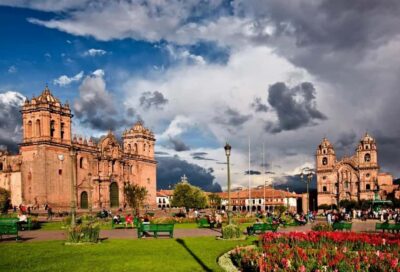
City Tour Cusco Qoricancha Sacsayhuaman y Tambomachay
Read our review →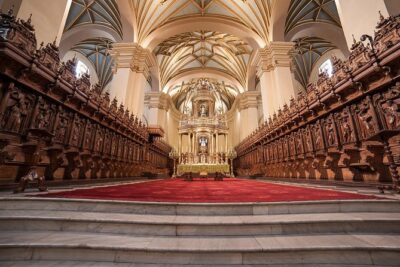
Lima’s Vibrant Heritage: Exploring the City’s Landmarks Half-day
Read our review →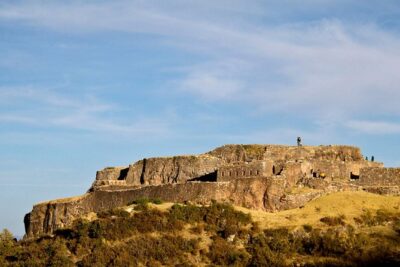
Sightseeing Tour of the City on an Open-Top Bus
Read our review →
Lima City, Central Market & Catacombs Tour (Pick-up & Drop Off)
Read our review →Browse the lists this tour appears in