
Reviewed · CITY TOURS
Cusco City Tour
Cusco reveals its secrets in layers. This $18 tour gives you a useful first look at the city, combining the Inca heart of Coricancha with Sacsayhuaman, Q’enqo, Tambomachay, and Pucapucara. I like the strong mix of central Cusco and major archaeological sites, plus the air-conditioned vehicle for the hills outside town.
I also like the guide-led explanations, which can turn massive stones and old ceremonial spaces into something easier to understand. The main concern is timing: the route can run about four hours or longer, and one past booking started more than 30 minutes late. I would not schedule it close to a flight.
The tour starts at 1:00 pm near Cusco’s Plaza de Armas and uses a bilingual Spanish and English guide. That sounds convenient, but English may be shared with Spanish rather than delivered as a fully English tour. If you want uninterrupted English, ask about a private option before booking.
In This Review
- Key points to know before booking
- Why this Cusco tour works as a first look
- Coricancha, where gold once framed the Sun
- Cusco Cathedral and the Spanish layer
- Sacsayhuaman and the stones that stop conversation
- Q’enqo, a ceremonial labyrinth in stone
- Tambomachay and Pucapucara, water and watchfulness
- Finishing near Plaza Regocijo
- Timing problems you should plan around
- Language, group size, and what you are really buying
- Who should book this city tour?
- FAQ
- How much does the Cusco City Tour cost?
- What time does the tour start?
- Where does the tour begin?
- Is hotel pickup available?
- Which sites are included?
- Are entrance tickets included?
- Is the tour conducted in English?
- How many people can join the tour?
- Should I take this tour before an afternoon or evening flight?
- Should you book it?
Key points to know before booking
- Coricancha links Inca religion with colonial Cusco: You see the former Sun Temple, later incorporated into a Spanish church complex.
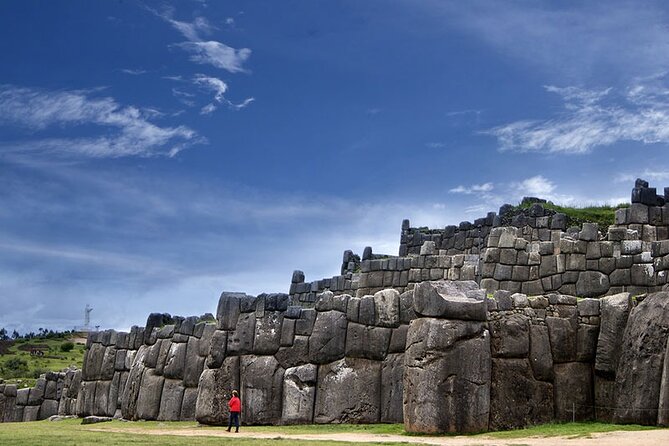
- Sacsayhuaman is the visual high point: Its zigzag walls use stones weighing more than 150 tons.
- The tour covers six major stops: You visit Coricancha, the Cathedral, Sacsayhuaman, Q’enqo, Tambomachay, and Pucapucara, with a finish near Plaza Regocijo.
- The advertised price is only the starting cost: Entrance fees for the Cathedral and Inca sites are separate, and the fee information needs clarification.
- Spanish and English are both used: English interpretation is available, but the tour may not be English-only.
- Build in extra time: Traffic, pickup delays, and the final stops can push the outing beyond four hours.
Why this Cusco tour works as a first look
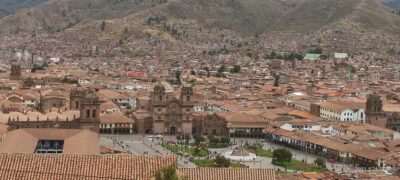
Cusco is not a city you understand from one plaza or one church. Inca foundations sit under Spanish walls, ceremonial sites sit above the city, and old road networks explain why certain hills mattered. This tour gives you that basic framework in one afternoon.
At $18 per person, the cost is appealing. Transportation and a bilingual guide are included, and the small maximum of 18 people should be easier to manage than a huge coach group. You also get a vehicle for the four sites outside the center, which matters because they are about 15 minutes away by car.
The tradeoff is that the low price does not cover all admission fees. The tour also includes walking sections, so you are not simply looking out a window while someone else does the work. I would wear firm shoes and bring water, especially since Cusco’s altitude can make even short walks feel harder than expected.
The start point is in the middle of the Plaza de Armas, at Del Medio 123. If your hotel is close to the square, pickup may be arranged from a central point there. The exact end point is different from the start, so confirm where you will be dropped off if you have evening plans.
More City Tours in Cusco
- Cusco: Half-Day City Tour with Sacsayhuaman and Q’enco
★ 4.6 · 1,129 reviews - City Tour Cusco Qoricancha Sacsayhuaman y Tambomachay
★ 4.7 · 617 reviews - Cusco City Tour Four Ruins in Half-Day
★ 5.0 · 530 reviews
Coricancha, where gold once framed the Sun
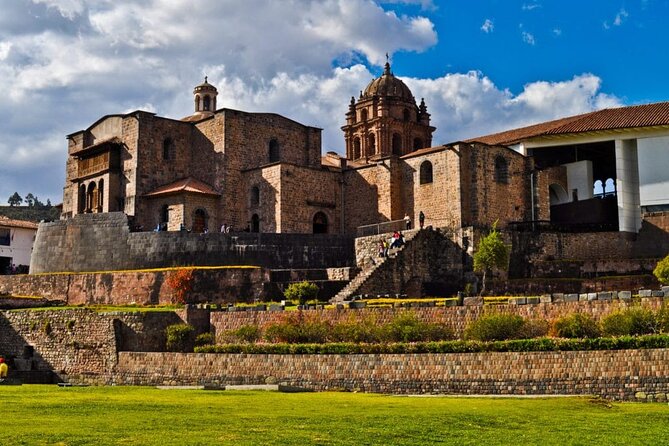
The tour begins with about 50 minutes at Coricancha, also written Qorikancha. The name comes from qori, meaning worked gold, and kancha, meaning an enclosed place. In the Inca world, this was not just another temple. It was a religious center and a political and geographical reference point for Cusco.
The main focus is Inti, the Sun god. The Inca honored Inti here, and the temple’s name recalls the gold that once covered important surfaces. The Spanish later built the Santo Domingo church over the Inca foundations, creating one of Cusco’s clearest examples of two cultures occupying the same site.
I like this stop because it gives you a useful key for the rest of the afternoon. At Sacsayhuaman, you will be looking at enormous stonework. At Coricancha, you begin with the reason such work mattered. The guide’s explanation is especially important here, since the site can otherwise feel like a collection of walls inside a church complex.
The ticket details are unclear in the supplied information. One section lists Coricancha as free, while the admission notes list a 15-sol fee and also separately mention 70 soles. Ask the operator to confirm the current Coricancha price before you go. Do not assume the $18 price covers entry.
Cusco Cathedral and the Spanish layer
Next comes Cusco Cathedral, with about 50 minutes inside or around this major church. Construction took almost 100 years, and the building is made partly from stone blocks brought from Sacsayhuaman, the Inca site you visit later.
That detail gives the tour a useful connection between its stops. The Cathedral is not only a church to photograph. Its materials show how colonial Cusco reused Inca structures and stone. You see the power shift in physical form, with Spanish religious architecture built from stones taken from an earlier sacred and defensive complex.
Admission is not included. The stated price is 40 soles, so carry local currency or confirm accepted payment methods before the tour begins. Since the church is one of the best-known religious buildings in Peru, I would not skip it simply to save the ticket. The interior helps explain the colonial side of the city in a way that an outdoor walk alone cannot.
The schedule gives the Cathedral the same length as Coricancha, 50 minutes. That is enough for a guided look, but not a slow, independent visit if the group is running late. This is another reason to avoid booking the tour on a tight afternoon timetable.
Sacsayhuaman and the stones that stop conversation
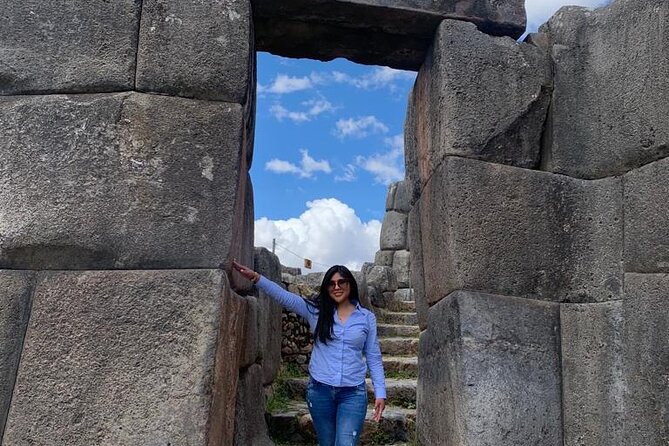
Sacsayhuaman is likely to be the afternoon’s most memorable stop. The site uses huge stones arranged in zigzag walls across three levels. Some blocks weigh more than 150 tons, which makes the scale difficult to grasp until you are standing beside them.
The complex served religious and defensive purposes. Its position above Cusco also helps you see why it mattered. I would pay close attention to the wall joints and the way the stones fit together. The construction is the point here, not simply the view from the hill.
The visit lasts about 50 minutes, and admission is separate. The tour information lists 70 soles for four Inca sites, which appear to be Sacsayhuaman, Q’enqo, Tambomachay, and Pucapucara. It also lists separate entrance information for Coricancha and the Cathedral, with conflicting Coricancha amounts. Get a complete ticket breakdown before departure so the final cost does not catch you off guard.
Because Sacsayhuaman is outside the central streets, the vehicle saves time and effort. You still need to walk at the site, and the route is not a purely seated sightseeing trip. If you are sensitive to altitude, take the pace slowly and tell the guide if you need a pause.
A few more Cusco trips worth lining up side by side
- Classic Inca Trail Trek 4D/3N to Machu Picchu (Group Service)
★ 5.0 · 8,653 reviews - Cusco: Rainbow Mountain and Red Valley Day Trip with Meals
★ 4.9 · 4,893 reviews - Machu Picchu: 4-Day Inca Trail Trek with Panoramic Train Ride
★ 5.0 · 4,568 reviews - Salkantay Classic Trek 5 Days from Cusco
★ 5.0 · 4,062 reviews
Q’enqo, a ceremonial labyrinth in stone
Q’enqo means labyrinth, and the name fits its maze-like rocky setting. The site includes underground passages and a ceremonial table inside one of them. There is also an amphitheater-like area with a stone altar that was shaped like a puma and measured about six meters high.
You get about 30 minutes here. That is a shorter stop than Coricancha or Sacsayhuaman, so the guide’s commentary makes a big difference. I would listen for explanations of how the spaces may have been used rather than expecting a large, open ruin complex.
Q’enqo rewards careful looking. The details are in the rock, passages, and carved forms. It may not deliver the immediate scale of Sacsayhuaman, but it adds a ceremonial side to the route and shows that Inca sacred places were not all built as grand buildings.
The site is reached by vehicle as part of the group’s circuit. Keep your belongings close and stay aware of the meeting point, since the afternoon involves several short stops and repeated loading and unloading.
Tambomachay and Pucapucara, water and watchfulness
Tambomachay receives about 30 minutes and is described as a place connected with water worship and purification. That gives the stop a different mood from the massive walls at Sacsayhuaman. Here, the subject is water, ritual, and the care given to a natural resource.
I would not judge Tambomachay only by its size. Short visits can still be worthwhile when the guide explains why water mattered in Inca religious life. The stop works best as part of the larger sequence, after you have seen defensive walls and ceremonial rock spaces.
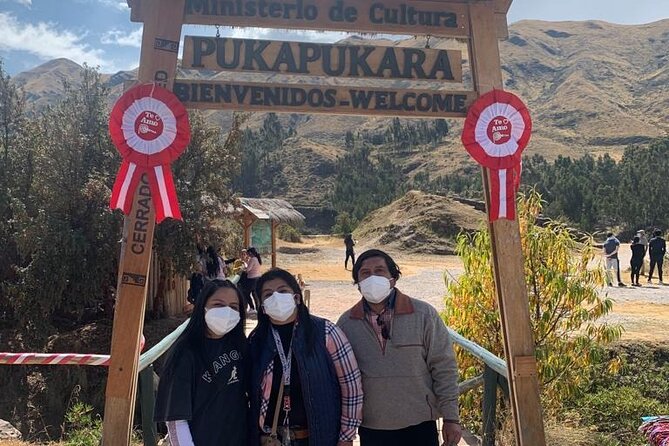
Pucapucara is also scheduled for about 30 minutes. Its name means Red Fortress, and it was a checkpoint and lookout on the Inca route from the Sacred Valley. The site lies about six kilometers from Cusco.
Pucapucara helps you think about movement. Inca roads were not just paths between ruins. They connected communities, valleys, religious centers, and control points. A lookout near a route from the Sacred Valley shows how travel and security were tied together.
Pucapucara is listed as free admission in one part of the tour details, while the four Inca sites are also grouped under a 70-sol ticket elsewhere. Again, confirm whether the listed 70 soles covers entry to all four stops. The written fee information is not fully consistent.
Finishing near Plaza Regocijo
The tour ends at or near Plaza Regocijo, also called Kusipata. This smaller public square sits in Cusco’s historic center and has trees, a fountain, colonial mansions, and the old city council building around it.
The square is part of Cusco’s Monumental Zone, designated a Historic Monument of Peru in 1972. It is also within the central historic area recognized by UNESCO in 1983. That makes the ending more than a random drop-off. You finish among the streets and buildings that connect the Inca and colonial parts of the city.
Plaza Regocijo is close enough to the main center for you to continue exploring on foot, though the tour details do not give a precise final location beyond the square area. Ask the guide where the vehicle will leave you if you need to meet a taxi or return to a hotel.
Timing problems you should plan around
The schedule deserves careful attention. The tour begins at 1:00 pm, and the listed stop times add up to nearly five hours before allowing for driving, loading, traffic, or delays. The overall duration is described as approximately one to six hours, which is a wide range.
One booking began more than 30 minutes late and continued past four hours. The operator explained that traffic can extend the schedule, and the final two stops were not completed until later than expected. The practical lesson is simple: do not book this outing if you need to be at the airport soon afterward.
If you have an afternoon flight, a train, a timed dinner, or another paid activity, leave a large cushion. A past participant had to leave the tour partway through and find a taxi after discovering that two stops remained. That is not a risk worth taking on a departure day.
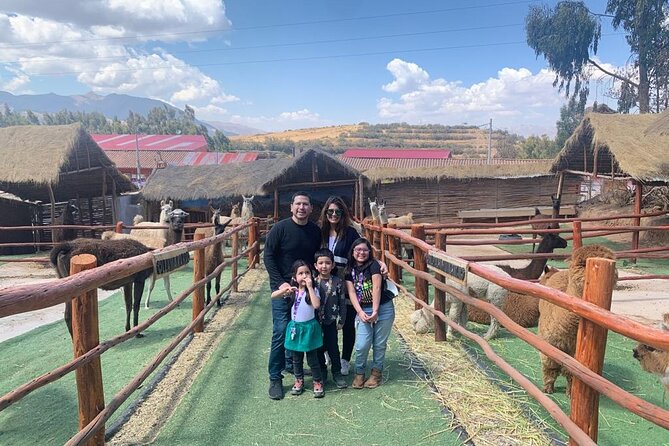
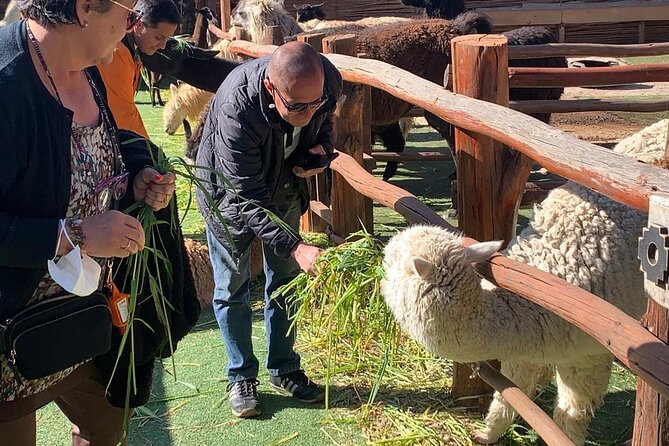
The route may also include a stop at an alpaca product shop. The purpose is to explain how to distinguish real and imitation alpaca goods. If shopping is not part of your plan, ask at the start whether this stop is included and how long it will take. A prior booking had an uncomfortable experience when the shop exit was temporarily blocked by a cloth hanger and the guide and driver were difficult to find afterward. This is a good reminder to keep the group contact details handy and confirm the meeting point at every stop.
Language, group size, and what you are really buying
The tour is offered in English, but it is described as bilingual Spanish and English. In practice, explanations may be delivered mostly in Spanish and then translated into English. That can work well if you are patient, but it will not feel like a fully English tour.
If clear English commentary is essential, contact Perutt before paying and ask if an English-only or private tour is available. The listed group size is capped at 18, which is modest enough for questions, though shared translation can still make the tour feel slower.
What you are buying for $18 is transport, a guide, and a broad introduction to six important sites. You are not buying a private guide, included admission, lunch, or dinner. The price is good if you want orientation and do not mind paying the entrance fees separately.
The strongest value comes from the combination of locations. A taxi to each site would require planning and negotiation, while this tour puts the route together for you. The weaker value appears when you need exact timing or a polished English-only experience.
Who should book this city tour?
I would recommend it to a first-time visitor who wants a fast introduction to Cusco and prefers having transport arranged for the sites outside the center. It also suits anyone who wants a guide to explain the connection between Inca religion, military planning, water worship, roads, and Spanish colonial construction.
It may work well during an open afternoon, especially if you have several days in Cusco and can treat the schedule as flexible. The tour is also useful for people who want to decide which sites deserve a later, slower visit.
I would choose another arrangement if you have a flight, train, or strict dinner reservation afterward. I would also look for a private English option if you want every explanation in English without shared translation.
Cancellation is free up to 24 hours before the 1:00 pm start for a full refund. Changes made within 24 hours are not accepted, and poor weather or too few bookings can lead to a new date or refund.
FAQ
How much does the Cusco City Tour cost?
The listed price is $18 per person. Entrance fees are separate, and lunch and dinner are not included.
What time does the tour start?
The tour starts at 1:00 pm.
Where does the tour begin?
It begins near the middle of Cusco’s Plaza de Armas, at Del Medio 123, Cusco 08000, Peru.
Is hotel pickup available?
Pickup may be available if your hotel is close to the Plaza de Armas. The listed pickup arrangement uses locations in the middle of the main square.
Which sites are included?
The route includes Coricancha, Cusco Cathedral, Sacsayhuaman, Q’enqo, Tambomachay, Pucapucara, and Plaza Regocijo.
Are entrance tickets included?
No. The Cathedral and the Inca sites require separate admission fees. The supplied fee information lists 40 soles for the Cathedral and 70 soles for four Inca sites, while the Coricancha amounts are inconsistent, so confirm the current prices before departure.
Is the tour conducted in English?
The tour includes a Spanish and English bilingual guide. English interpretation is available, but the experience may not be English-only.
How many people can join the tour?
The maximum group size is 18 people.
Should I take this tour before an afternoon or evening flight?
You should not rely on it when you have a tight departure schedule. Delays, traffic, and extra time at the final stops can extend the outing beyond four hours.
Should you book it?
Book this tour if you want broad coverage at a low starting price, a guide to explain the sites, and transport to the four archaeological stops outside central Cusco. Coricancha and Sacsayhuaman alone give the afternoon plenty of substance, while Q’enqo, Tambomachay, and Pucapucara round out the picture.
Go in with realistic expectations. Confirm all ticket prices, ask how much English will be used, and keep your schedule open until the evening. With those precautions, this can be a practical first chapter in your Cusco visit.
Added recently around Cusco
- Super valley or vip valley★ 5.0 · 13 reviews
- the Incas’ Sacred Valley★ 5.0 · 27 reviews
- Sacred Valley of the Incas Day Trip from Cusco★ 5.0 · 6 reviews
- Small-Group Tour: Rainbow Mountains Hiking from Cusco★ 4.0 · 5 reviews
- Excursion to the Sacred Valley of the Incas from Cusco★ 5.0 · 8 reviews
- Maras + Moray & Textile Experience★ 5.0 · 14 reviews
- Tour EN Cuatrimoto POR la Montaña 7 Colors Hike 5 Minutes★ 4.5 · 32 reviews
- rainbow mountain★ 4.0 · 4 reviews
City Tours, compared.
Lima Half-Day City Walking Tour (Small Groups)
Read our review →
Half-Day City Tour with Sacsayhuaman and Q’enco
Read our review →
City Tour Panoramic Bus Departure From Larcomar
Read our review →
City Tour Cusco Qoricancha Sacsayhuaman y Tambomachay
Read our review →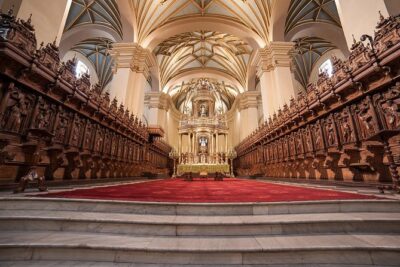
Lima’s Vibrant Heritage: Exploring the City’s Landmarks Half-day
Read our review →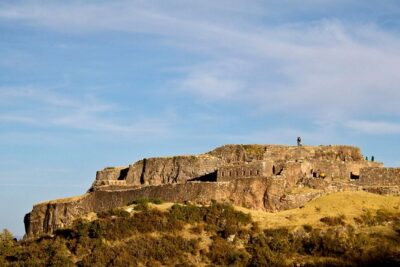
Sightseeing Tour of the City on an Open-Top Bus
Read our review →
Lima City, Central Market & Catacombs Tour (Pick-up & Drop Off)
Read our review →Browse the lists this tour appears in