
Reviewed · DAY TRIPS IN AREQUIPA
From Arequipa: Pillones Waterfall and Stone Forest Day Trip
Water, stone, and altitude shape this long day. From Arequipa, this 12-hour outing heads into the high country for Pillones Waterfall, the strange rock columns of Imata, vicuñas in Salinas and Aguada Blanca National Reserve, and the old railway station at Pampa de Arrieros. I like the mix of natural sights and small historical stops, especially since the trip gives you more than one photo stop.
I also like that transport, hotel pickup in central Arequipa, and a bilingual English and Spanish guide are included. The main drawback is the length: twelve hours in a vehicle, followed by a hike of about 45 minutes to one hour at the stone forest, makes this a demanding day rather than a relaxed outing. At $55 per person, the price is fair if you want several remote sights in one trip, but you should be ready for an early, full day.
In This Review
- Key Points Before You Book
- Why This Day Trip Works
- Pampa de Arrieros and Its Old Railway Stop
- Vicuñas in Salinas and Aguada Blanca National Reserve
- Coca Tea at Patahuasi
- The Imata Stone Forest Hike
- Reaching Pillones Waterfall
- The 12-Hour Schedule and What It Means
- Who Will Enjoy Pillones and Imata
- Should You Book This Arequipa Day Trip?
- FAQ
- How long is the Pillones Waterfall and Stone Forest trip?
- What language is the tour guide?
- Is hotel pickup included?
- Is drop-off at my accommodation included?
- Is food included in the tour price?
- How long is the hike at Imata Stone Forest?
- How high is Pillones Waterfall?
- Can I cancel the tour for a refund?
Key Points Before You Book
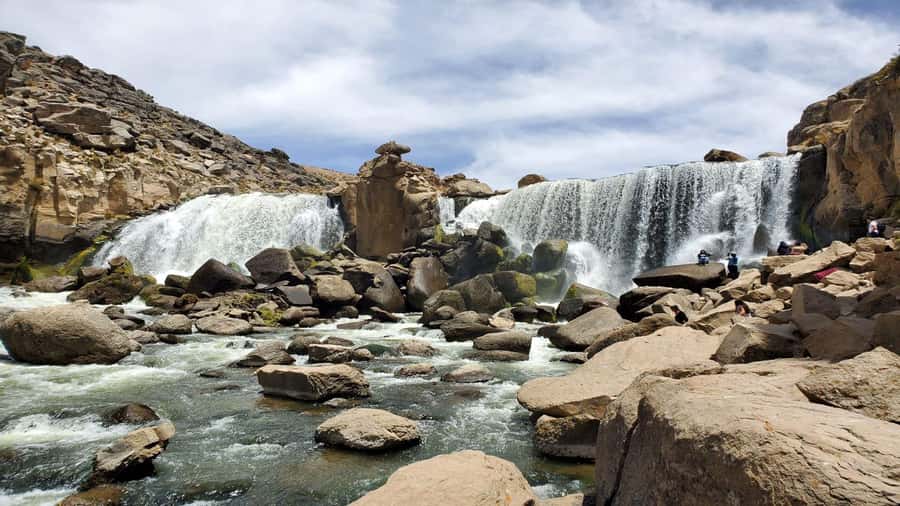
- Pillones Waterfall has several drops totaling about 15 meters, with water-worn rocks around the base.
- The Imata Stone Forest requires a 45-minute to one-hour hike, so this is not a drive-up viewpoint.
- Vicuñas are part of the Salinas and Aguada Blanca stop, adding wildlife to the scenery.
- Patahuasi provides a coca tea stop, a useful pause during a long high-country route.
- Pampa de Arrieros offers an old railway station, giving the trip a touch of local transport history.
- Central Arequipa pickup is included, but accommodation drop-off is not.
Why This Day Trip Works
Arequipa is a fine base for exploring southern Peru, but some of the region’s best scenery lies well beyond the city. This excursion takes you into broad, high-altitude country where the main attractions are not grand buildings or busy streets. They are open views, weathered rock, native animals, and water cutting through volcanic stone.
That variety is the strongest reason to choose this trip. You do not spend the entire day looking at one waterfall. You move from a railway site to a protected reserve, then to a refreshment stop, a rock formation, and finally a waterfall. Each stop has a different feel, which helps the long drive pass with a sense of purpose.
The schedule is also useful if you have limited time in Arequipa. Rather than arranging separate transport to the waterfall and stone forest, you can see both on one organized route. The tradeoff is flexibility. A group excursion follows its planned order and timing, so you should not expect to linger wherever you please.
The experience has a rating of 4.4 out of 5 from 15 ratings, a solid result for a demanding full-day trip. Since only a limited number of ratings are shown, I would treat that score as encouraging rather than final proof that every departure runs identically.
More Day Trips in Arequipa
- From Arequipa: 1-Day Guided Tour to Colca Canyon with Meals
★ 4.1 · 144 reviews - From Arequipa: Colca Canyon Day Trip with Transfer to Puno
★ 4.6 · 90 reviews - From Arequipa: Salinas Lagoon Full-Day Trip with Hot Springs
★ 4.0 · 62 reviews
Pampa de Arrieros and Its Old Railway Stop
The first visit is Pampa de Arrieros, a town known here for its old train station. It is a modest opening to the day, but that is part of its appeal. The station connects the remote high country with the rail routes that once carried people and goods across southern Peru.
You will not come here for a large museum or a long guided history lesson. The value is in seeing an old transport site in its setting, with the station forming part of a much wider Andean scene. I like stops such as this because they give context to the road itself. The journey is not simply a modern route to a waterfall. It passes through places shaped by older forms of travel.
Keep your expectations measured. The information provided does not specify how long you spend at the station, what buildings remain open, or how much historical interpretation the guide provides. Think of Pampa de Arrieros as a brief atmospheric stop rather than the main attraction.
The bilingual guide can explain the visit in English or Spanish. If the station matters to you, it is worth asking questions during the stop, since the depth of explanation can make a small site much more meaningful.
Vicuñas in Salinas and Aguada Blanca National Reserve
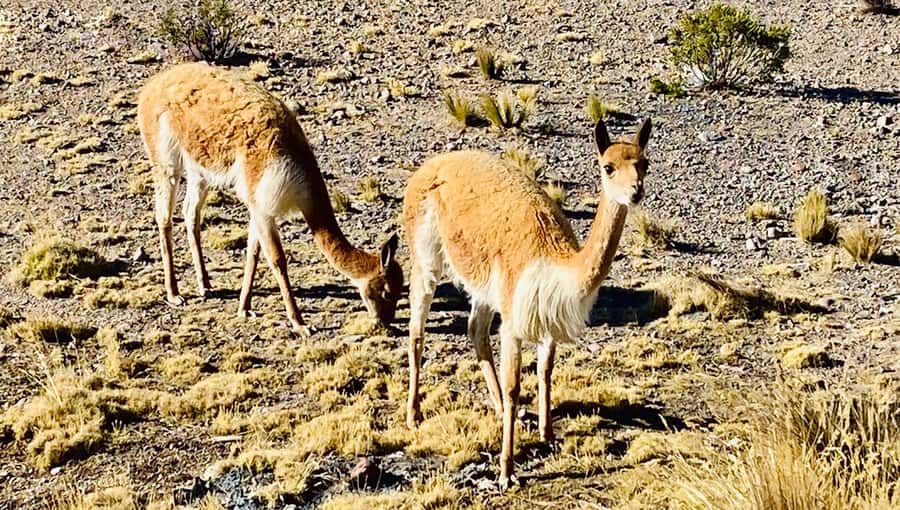
The route continues into Salinas and Aguada Blanca National Reserve, where you stop to look for vicuñas. These elegant wild camelids are one of the memorable sights of Peru’s high plains, and their presence adds life to what can otherwise feel like a stark, open environment.
This stop works best when you view it as an observation point, not a wildlife safari. The tour information promises a chance to observe vicuñas, but it does not promise a particular number of animals or close encounters. You might see them at a distance, and your view will depend on where they are when the vehicle stops.
I like that the reserve is included because it broadens the day beyond rock formations. You get a sense of the protected area and its wildlife, not just a quick photograph at a famous natural feature. The open setting also helps you appreciate how different the high country is from Arequipa’s urban streets.
Bring patience and keep your camera ready, but do not build the whole day around a close animal photograph. The vicuñas are a welcome part of the route, not the sole purpose of the excursion.
Coca Tea at Patahuasi
At Patahuasi, the group stops for coca tea. This is a practical pause during a long day, and it gives you a moment to warm up, rest, and take in the highland setting before continuing.
Coca tea is closely associated with high-altitude travel in the Andes. The stop does not replace medical preparation, and the tour details do not claim that it prevents altitude sickness. Still, a warm drink can be welcome during a day spent in exposed mountain country.
Food is not included unless specifically stated, and the tour information lists meals as excluded. That means you should not count on a provided breakfast or lunch. The details do not say whether food can be bought at Patahuasi, so plan ahead and carry whatever snacks or drinks you need for twelve hours.
This is one of those small details that affects the whole outing. A long road day feels much easier when you have water and something to eat. Since the itinerary is full, you may not have many chances to arrange a proper meal at the exact time you want.
A few more Arequipa trips worth lining up side by side
- 2 day 1 night trek / Colca Canyon
★ 5.0 · 1,069 reviews - From Arequipa: Colca Canyon Full-Day Guided Tour with Meals
★ 4.5 · 982 reviews - Tour to the Salinas Lagoon and National Reserve in Arequipa
★ 4.5 · 548 reviews - From Arequipa: Sillar Route Trek
★ 4.2 · 461 reviews
The Imata Stone Forest Hike
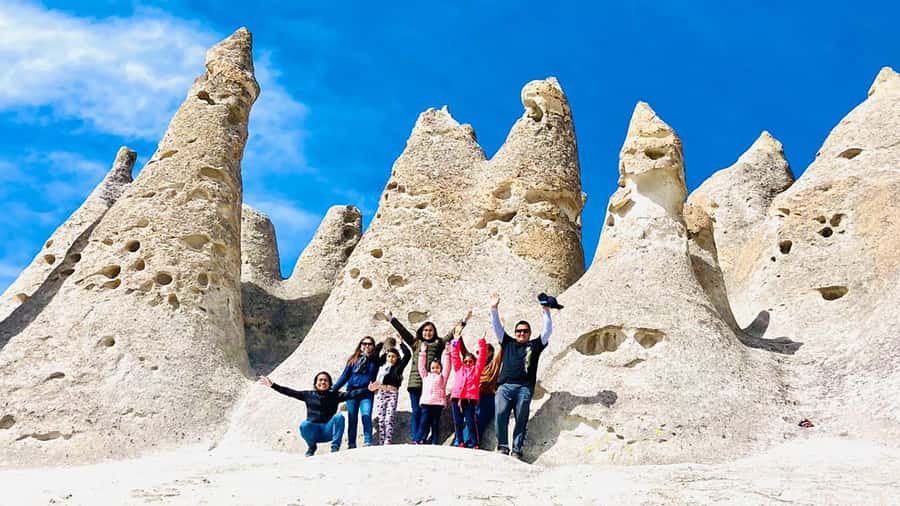
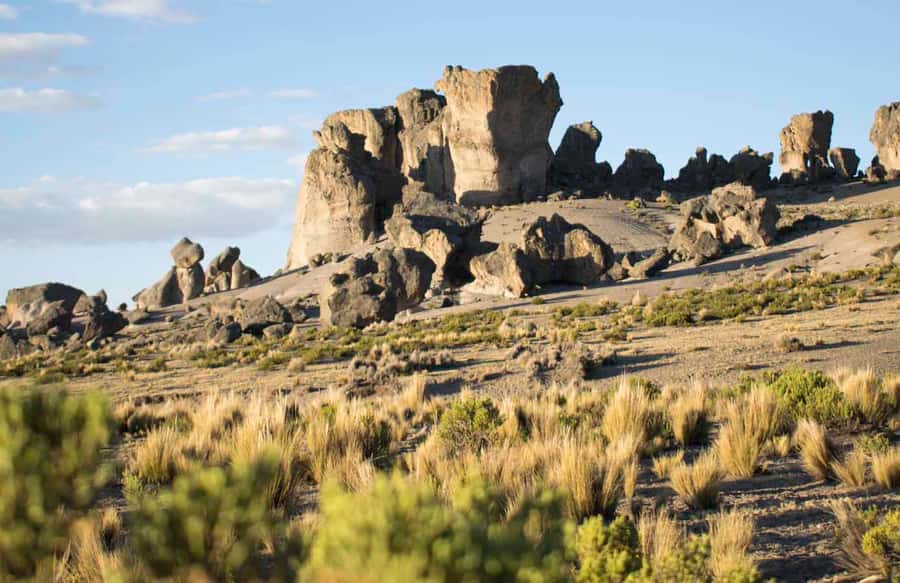
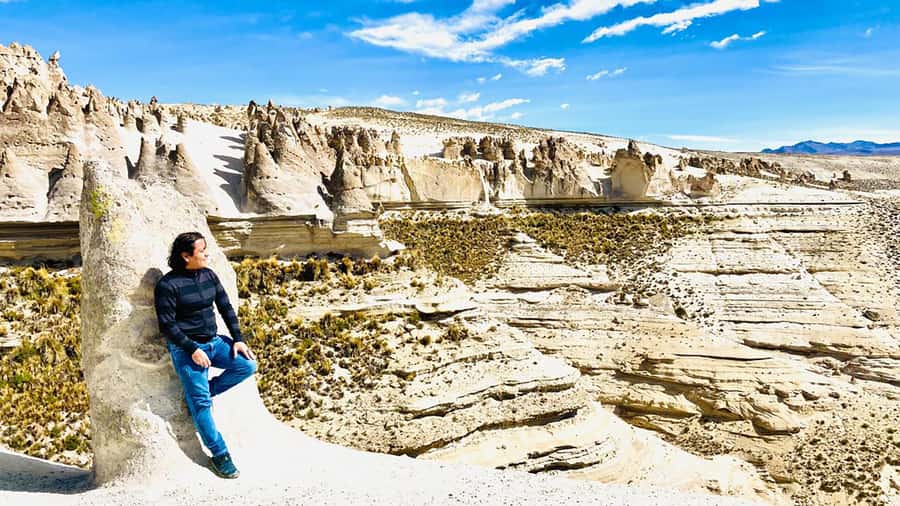
After the reserve stop, you continue to the Stone Forest of Imata. This is the most imaginative part of the excursion. Natural erosion has shaped the rocks into columns and odd forms, giving the area a name that fits its appearance.
The hike takes approximately 45 minutes to one hour. That time is important to note. You are not merely stepping out of the vehicle, taking one picture, and getting back in. You walk among the formations, with enough time for photographs and for looking at the shapes from different angles.
The appeal here is personal. One rock may suggest an animal, another a person, and another something entirely different. The strange forms invite you to use your imagination, which makes this stop more playful than a standard scenic overlook. I would not rush through it. The shapes reveal themselves slowly as you move around them.
At the same time, the information provided does not describe the trail’s surface, slope, or facilities. You should therefore treat the hike as a genuine outdoor walk and wear practical footwear. If you find a 45-minute to one-hour walk difficult, this portion could be the main challenge of the day.
The guide gives you a reasonable period to take photographs. That is helpful because the stone forest is best enjoyed at your own pace, even within a group schedule. You can photograph the formations, study the erosion patterns, and then return to the vehicle for the next leg.
Reaching Pillones Waterfall
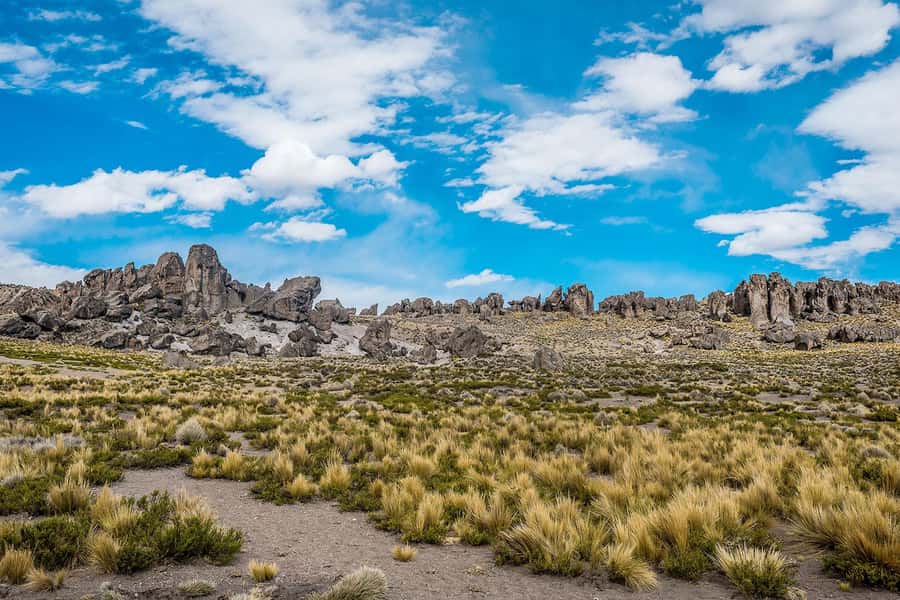
The final major stop is the town of Pillones, where the waterfall is located. From there, you go down toward the falls. The approach matters because the best views are not simply from the road. You need to get closer to the rocks and water.
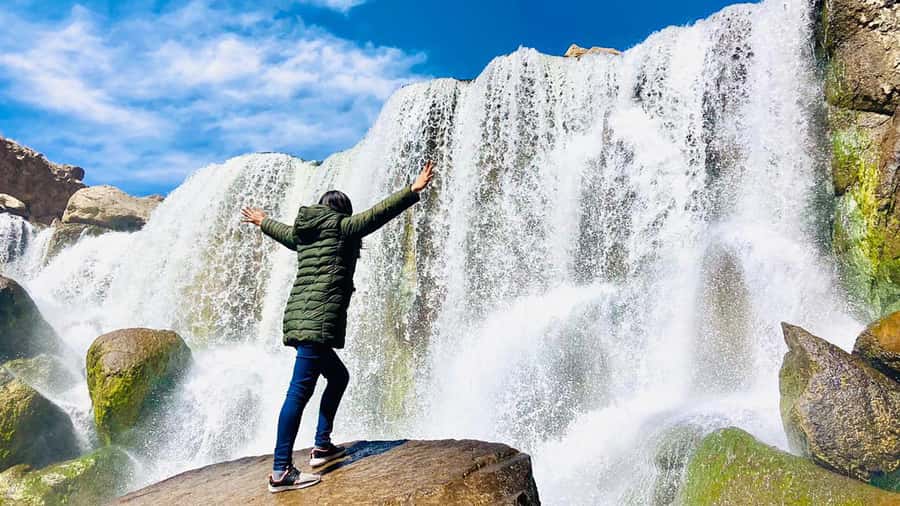
Pillones Waterfall is made up of several jumps, with the falls reaching about 15 meters in total height. Rather than one enormous vertical drop, expect water moving through a series of rocky steps. That gives the waterfall a more textured appearance, with multiple channels and ledges shaped by constant erosion.
The rocks around the falls have been formed by the repeated force of the water. This is the feature I find most rewarding: the attraction is not only the falling water, but also the stone surface that records its movement. Look closely at the channels, edges, and rounded forms around the base. The water has slowly altered the rock into the setting you see today.
You can go down to the waterfall and spend time taking photographs. The tour description does not provide details about the exact path, railings, or conditions near the water, so use care and follow the guide’s instructions. Wet rock can be unpredictable, and the desire for a better photograph is not worth a slip.
Pillones is the payoff for the long drive, but it is not a resort-style waterfall visit. The attraction is natural and relatively simple: water, stone, and open country. If you prefer built viewpoints, cafés, and easy access, this may feel rough around the edges. If you enjoy seeing a force of nature up close, it should be the day’s strongest stop.
The 12-Hour Schedule and What It Means
This is a twelve-hour excursion, so the timetable shapes your experience as much as the sights do. You will spend substantial time traveling between stops, with short visits at some locations and a longer walk at Imata.
I see the long schedule as a fair exchange for the number of places covered. Pampa de Arrieros, the reserve, Patahuasi, Imata, and Pillones are spread across a wide area. Combining them makes sense if you have only one free day and want a broad taste of the region.
The cost is $55 per person. With transport, central hotel pickup, and a bilingual guide included, that is reasonable value for a full-day excursion. Meals are not included, and accommodation drop-off is also not included, so factor in those practical gaps when comparing the price with other options.
Pickup is available from accommodations around central Arequipa. The supplied details do not specify an exact pickup time because starting times depend on availability. Confirm the departure time before booking, then keep the entire day open. Since drop-off at your accommodation is not included, you should also plan how you will get back from the city drop-off point.
Free cancellation is available up to 24 hours before departure for a full refund, and you can reserve now and pay later. Those policies help if your Arequipa plans are still shifting, though they do not change the physical demands of the outing.
Who Will Enjoy Pillones and Imata
I would choose this trip if you want several distinct sights in one day and do not mind a long road journey. It suits people who enjoy natural formations, basic outdoor walks, wildlife viewing, and unusual historical stops more than those seeking a slow, luxurious tour.
It is also a good fit if you are staying in central Arequipa and want pickup included. The English and Spanish guide makes the outing accessible to speakers of either language, though the details do not identify individual guides or promise a particular guiding style.
You should think twice if your priority is a short excursion or a guaranteed close wildlife encounter. The twelve-hour length is fixed, the vicuña sighting is not guaranteed at close range, and the walk at Imata may be tiring.
I would also be careful about booking it on a day when you need to return to Arequipa for an evening event. The tour finishes with the return drive, and no precise end time is provided. Give yourself room in your schedule.
Should You Book This Arequipa Day Trip?
Book it if you want a practical way to reach Pillones Waterfall and Imata Stone Forest without arranging separate transport. The combination of water-shaped rock, unusual stone columns, vicuñas, coca tea, and an old railway station gives the day more variety than a simple waterfall run.
Skip it if you want a relaxed pace, included meals, or a short walk from the vehicle to every sight. At $55, the value is strongest for an active visitor who will use the included transport and guide across the full twelve-hour route.
My advice is simple: bring water, food, sturdy footwear, and patience for the road. If that sounds like a good day rather than a burden, Pillones and Imata make a worthwhile outing from Arequipa.
FAQ
How long is the Pillones Waterfall and Stone Forest trip?
The excursion lasts 12 hours. Starting times depend on availability, so check the available departure options when booking.
What language is the tour guide?
The tour includes a bilingual guide who speaks English and Spanish.
Is hotel pickup included?
Yes. Pickup is included from accommodations located around the Arequipa city center.
Is drop-off at my accommodation included?
No. Drop-off at your accommodation is not included.
Is food included in the tour price?
No. Meals are not included unless specifically stated. A coca tea stop is scheduled at Patahuasi.
How long is the hike at Imata Stone Forest?
The hike takes approximately 45 minutes to one hour.
How high is Pillones Waterfall?
The waterfall has several jumps reaching about 15 meters in height.
Can I cancel the tour for a refund?
Yes. You can cancel up to 24 hours in advance for a full refund. You can also reserve now and pay later.
Added recently around Arequipa
- gazebos cannon of the coca★ 5.0 · 28 reviews
- Sillar Route★ 5.0 · 4 reviews
- Salinas Lagoon + Mini Volcano DE Lojen★ 5.0 · 9 reviews
- Full Day Tour To The Salt Lake Salinas in Arequipa★ 4.5 · 34 reviews
- 3-Day Colca Canyon trek with Professional Guide★ 5.0 · 40 reviews
- Trekking, Waterfalls and Thermal Baths★ 4.5 · 47 reviews
- Walking Tour Arequipa Including Santa Catalina Monastery★ 4.0 · 8 reviews
- Walking City tour including the Monastery of Santa Catalina★ 5.0 · 6 reviews
Day Trips in Arequipa, compared.



Full Day Trip to Colca Canyon from Arequipa ending in Puno
Read our review →
Offer Price: Colca Canyon One Day in Arequipa with Breakfast
Read our review →Browse the lists this tour appears in