
Reviewed · SACRED VALLEY TOURS
From Cusco: Sacred Valley Group Tour with Buffet Lunch
The Incas packed a lot into one valley. I like this tour for its wide range of stops, from Chinchero’s terraces to the Salineras salt ponds, and for its filling Andean buffet in Urubamba. I also like that hotel pickup, transport, a guide, and lunch are included, keeping the day simple for $69 per person.
The trade-off is the pace. You leave Cusco around 6:30 to 7:00 am and return near 7:00 pm, with many stops squeezed into one long day. That is excellent for seeing the main sights efficiently, but you will have less time at each place than you would on a private or slower tour.
In This Review
- Key points to know before booking
- Why this Sacred Valley route works well
- Starting early from Cusco
- Chinchero, the city of the rainbow
- Moray and the Incas’ agricultural experiments
- The Salineras salt mines near Maras
- Buffet lunch in Urubamba
- Ollantaytambo fortress and its many roles
- A final stop at Pisaq
- The guide makes the difference
- Is $69 good value?
- Who should book this tour?
- Should you book the Sacred Valley group tour?
- FAQ
- How long does the Sacred Valley group tour last?
- What places does the tour visit?
- Is lunch included?
- Are entrance fees included?
- What languages are available?
- What should I bring?
- Can I cancel the booking?
Key points to know before booking
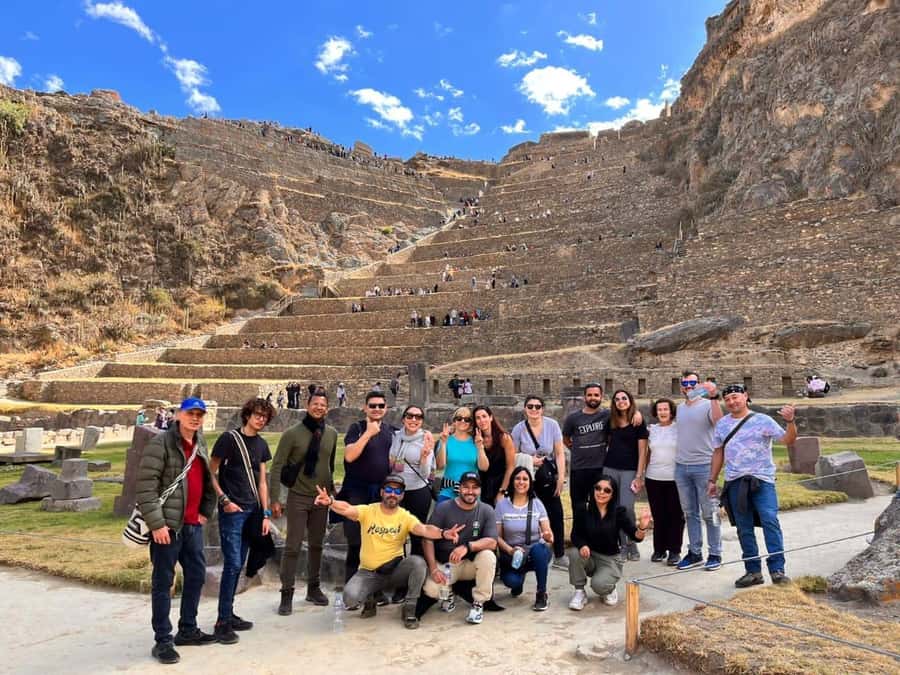
- Six major Sacred Valley stops: The route includes Chinchero, Moray, the Salineras salt mines, Urubamba, Ollantaytambo, and Pisaq.
- Moray explains Incan farming: The circular agricultural platforms are linked to the Incas’ experiments with growing conditions.
- Salineras costs extra: Bring money for the 10-sol entrance fee, along with the 70-sol Sacred Valley admission.
- Lunch is a real strength: An Andean buffet of Peruvian dishes is included in Urubamba.
- Expect a very full day: Pickup begins between 6:30 and 7:00 am, and the return to Cusco is scheduled for about 7:00 pm.
- The tour earns strong praise for its guide: The guide is repeatedly described as informative, well organized, and good at explaining the sites.
Why this Sacred Valley route works well
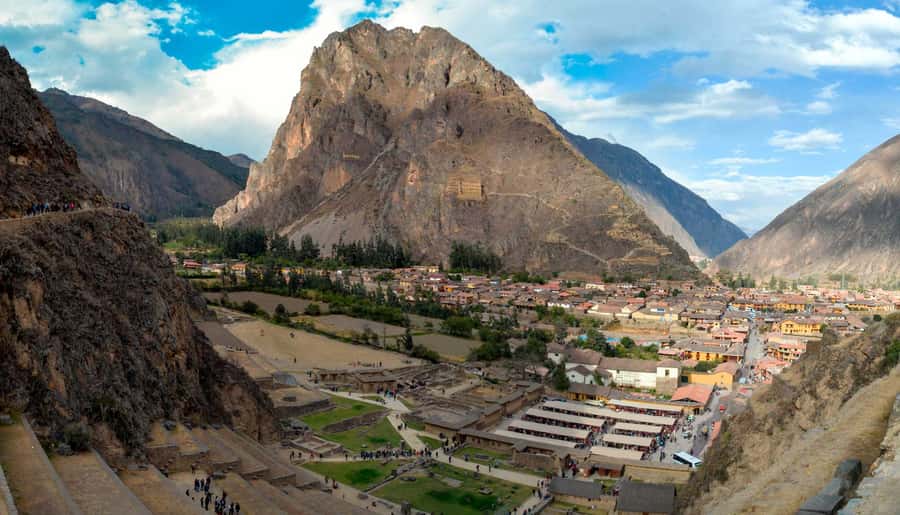
The Sacred Valley is not one single sight. It is a chain of towns, farms, ruins, and working sites spread across a broad valley near Cusco. This tour gives you a useful first look at that mix in one day.
I especially like the way the route combines famous archaeological sites with places that still connect to daily work. You see agricultural terraces at Chinchero, farming platforms at Moray, salt production at Salineras, and major Incan construction at Ollantaytambo. That variety helps you understand the valley as more than a string of ruins.
The tour also suits you if you have limited time in the Cusco region. Instead of arranging separate taxis, buses, tickets, and meals, you have one long guided day. The group format keeps the price at $69, though you still need to pay the two entrance fees separately.
The main concern is the schedule. With an early pickup and a return around 7:00 pm, this is not a relaxed outing. One particularly positive assessment described the many stops as an efficient way to see the highlights, while also noting that the pace could feel quick if you prefer to explore slowly. That is the right way to view this tour: good coverage, limited lingering.
More Sacred Valley days out:
- From Cusco: Sacred Valley & Maras Salt Mines Tour with Lunch
★ 4.8 · 2,227 reviews - From Cusco: Moray, Maras Salt Mines & Chinchero Weavers Tour
★ 4.8 · 1,925 reviews - 2-Day Tour: Sacred Valley and Machu Picchu by Train
★ 5.0 · 1,127 reviews
Starting early from Cusco
Hotel pickup is scheduled from about 6:30 to 7:00 am, with the more specific pickup window often given as 6:35 to 6:50 am. You should be ready early and wait at your hotel rather than treating the timing as flexible.
If your hotel is far away or difficult for the vehicle to reach, you will be informed one day before departure. That detail matters in Cusco, where narrow streets and central traffic can affect vehicle access. The tour includes tourist transport, so you can leave the driving to someone else while the day’s stops unfold.
Bring your passport. It is specifically required, and you do not want to begin a full-day excursion by discovering that an important document is back in your room.
Chinchero, the city of the rainbow
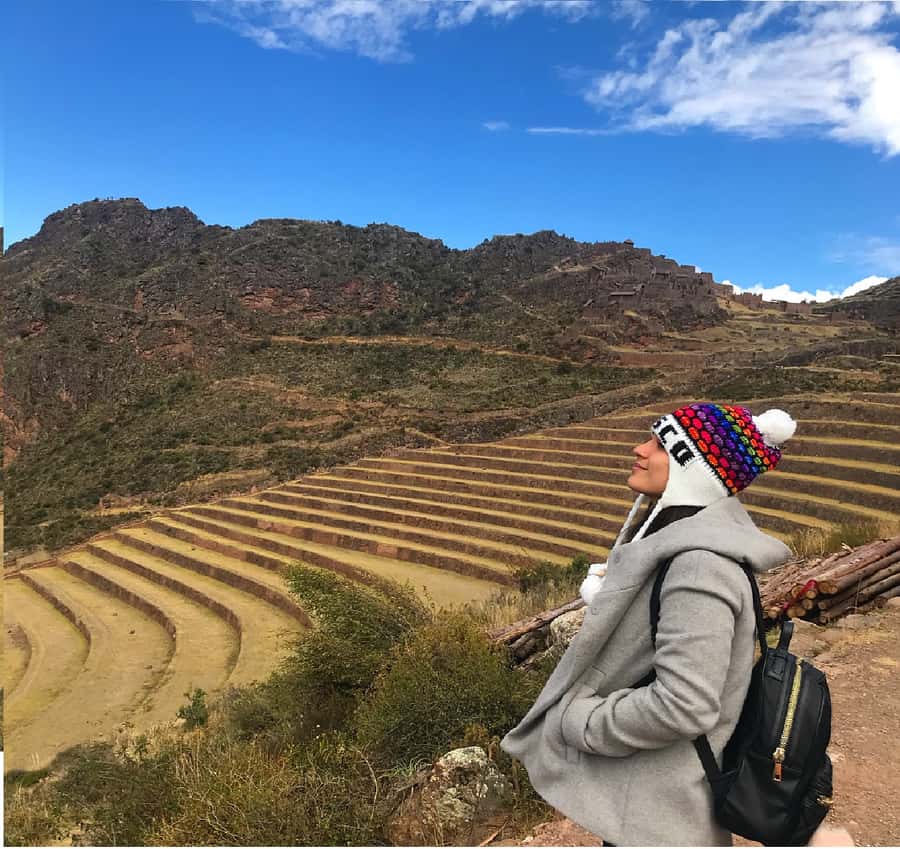
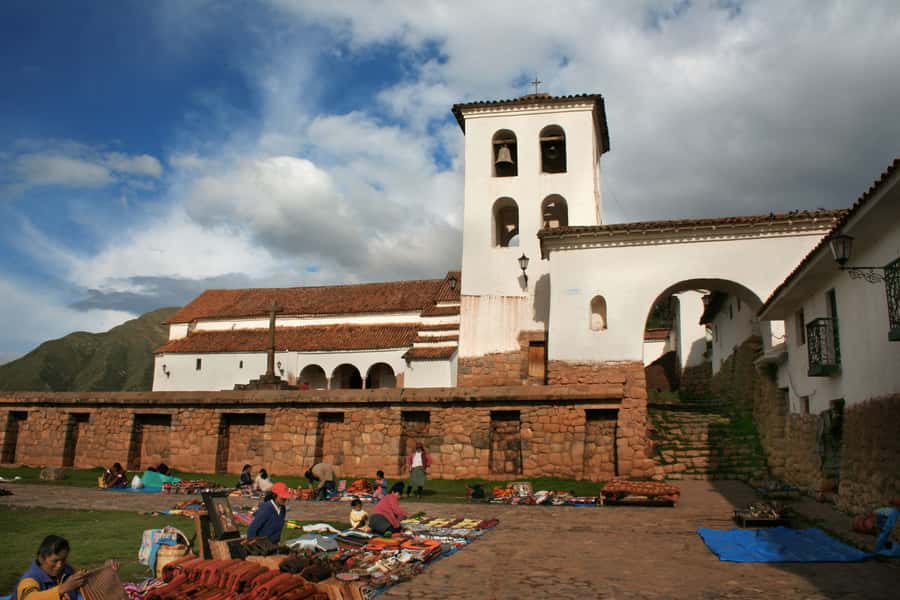
The first main stop is Chinchero, described as the city of the rainbow. The town is known for the Church of Our Lady of Monserrat and its Andenería agricultural terraces.
This is a useful opening stop because it introduces two sides of the Sacred Valley at once. The church represents the colonial layer of the region, while the terraces show the practical skill of Incan agriculture. Your guide can help connect those pieces, rather than leaving you to see only a church and a set of stone steps.
Chinchero is also a good place to start noticing how the Incas worked with steep ground. Agricultural terraces were not simply decorative walls. They helped organize cultivation on sloping land, making the valley’s terrain more useful for farming.
Do not expect to spend a long, unhurried morning here. The tour has several more stops ahead, so Chinchero functions as an introduction rather than a deep visit. Still, I would not want it removed from the route. It gives the day context early on.
Moray and the Incas’ agricultural experiments
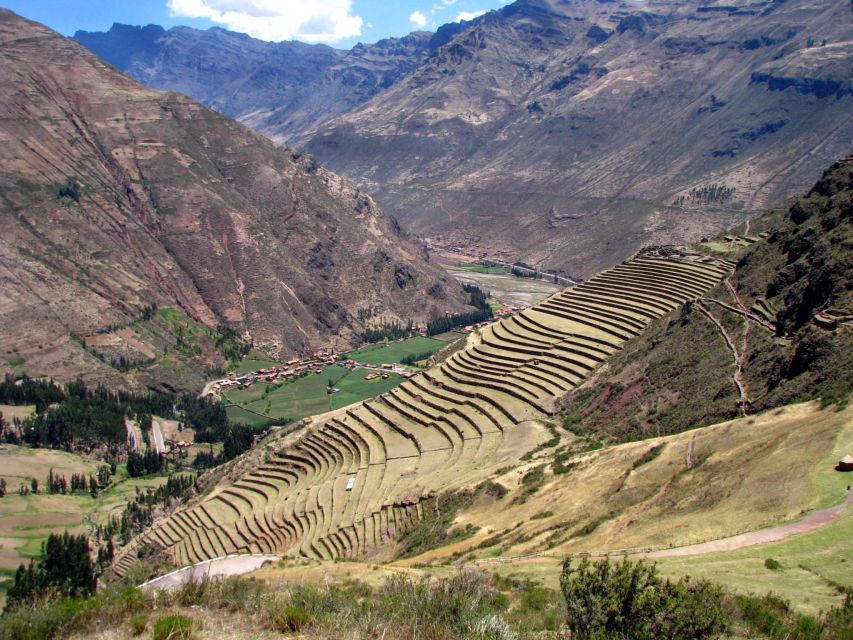
The route continues toward Maras and the agricultural experimentation platforms of Moray. The circular terraces are often associated with the Incas’ efforts to create different growing conditions, or micro-climates.
Moray is one of the most visually distinctive stops on this outing. The repeated circular forms make it easy to see why the site attracts attention, but the important point is what the shape suggests about Incan agriculture. The Incas were not only building temples and fortresses. They were also testing ways to grow food in varied conditions.
I like this stop for that reason. It gives your guide something substantial to explain, and it helps you see the Sacred Valley as a place of planning and production. The visit also balances the more obviously monumental sites later in the day.
The schedule may limit how long you stand at the platforms. If you enjoy taking your time with photographs or studying the terraces closely, you may want to keep your expectations in check. You are getting a guided overview of several major sites, not an extended archaeological field visit.
Also leaving from Sacred Valley, and nothing like the above:
- Cusco: Sacred Valley, Pisac, Ollantaytambo, Salt Mines Moray
★ 4.6 · 1,058 reviews - Cusco:Chinchero,Moray & Salt Mines drop-off in Ollantaytambo
★ 4.8 · 793 reviews - Sacred Valley and Maras Moray Tour with Full Day Buffet Lunch
★ 5.0 · 670 reviews - The Ultimate Full Day Sacred Valley Tour
★ 5.0 · 644 reviews
The Salineras salt mines near Maras
The Salineras salt mines are one of the tour’s most unusual stops. Here, salt evaporation ponds have been used since Incan times, and the white terraces spread across the slope in a striking pattern.
This is a working place rather than only a monument. That makes it especially valuable. You can see how a natural resource is collected through evaporation, and you can connect modern production with a method that reaches back to the Incan period.
The stop also gives the day a change of texture. After stone terraces and archaeological platforms, the salt ponds look almost geometric, with small pools arranged along the mountainside. Your guide can explain the salt-mining process and its connection to the area.
The entrance fee is not included. You should budget 10 soles for Salineras, in addition to the 70-sol Sacred Valley entrance charge. Since both fees are separate from the tour price, include them when comparing the total cost with other options.
Buffet lunch in Urubamba
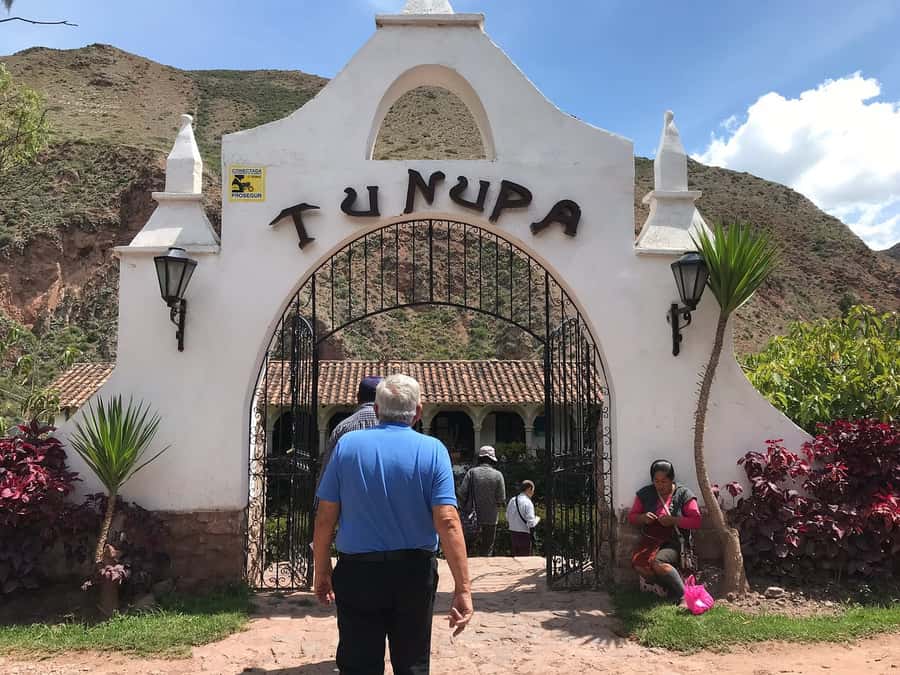
After the morning visits, the tour drives to Urubamba for an Andean buffet lunch. This is one of the most praised parts of the day, and I can see why. A full meal matters when you have been out since early morning and still have major sites ahead.
The buffet is described as excellent, with authentic Peruvian cuisine and a good range of Andean dishes. The exact menu is not specified, so I would not book this expecting a particular dish. Instead, think of it as a convenient chance to sample several Peruvian preparations in one sitting.
The included lunch improves the tour’s value. You do not need to search for a restaurant during a tightly scheduled day, and the meal is already built into the route. It also gives you a proper break before the afternoon visits.
Still, lunch is part of a group itinerary, so you should not assume you can linger as long as you like. The bus needs to continue to Ollantaytambo and Pisaq. Enjoy the food, but keep an eye on the schedule.
Ollantaytambo fortress and its many roles
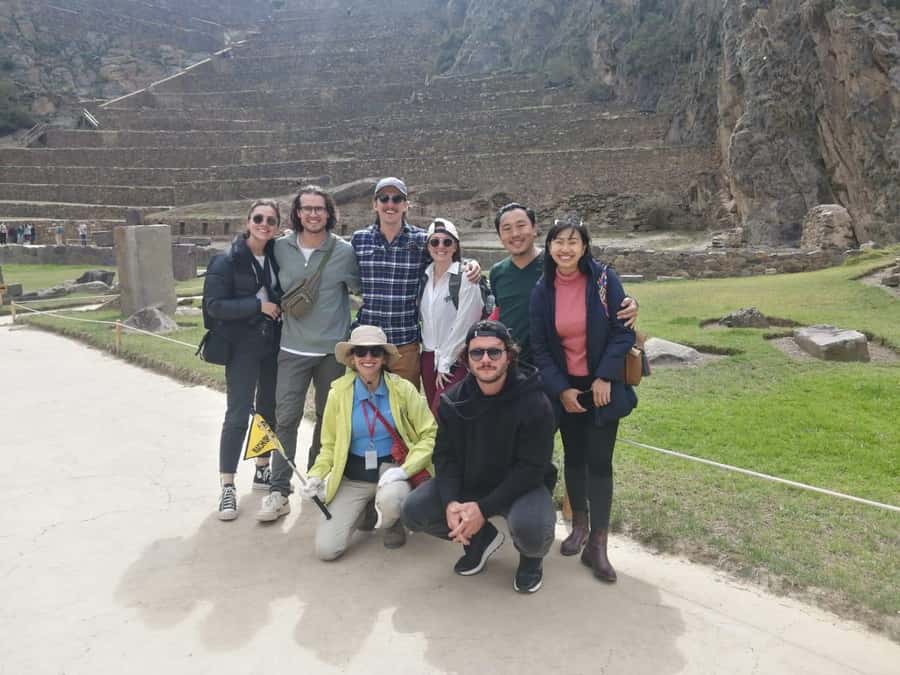
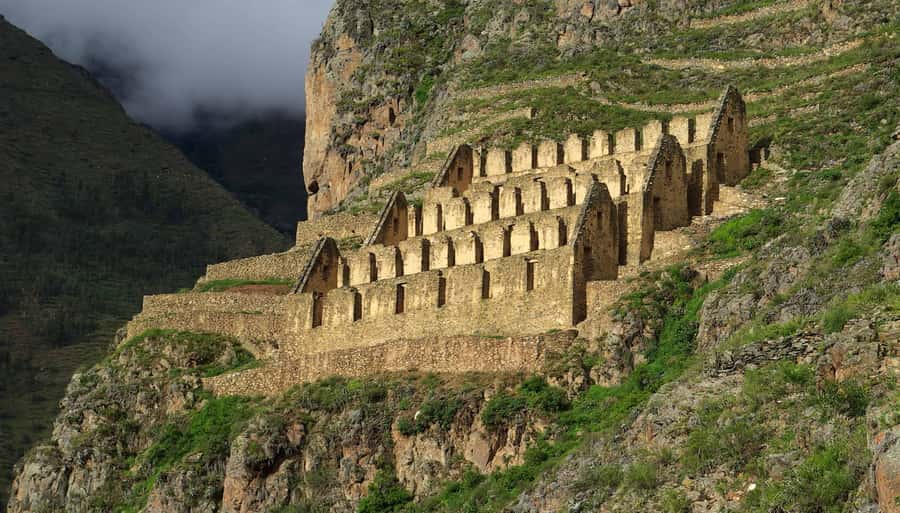
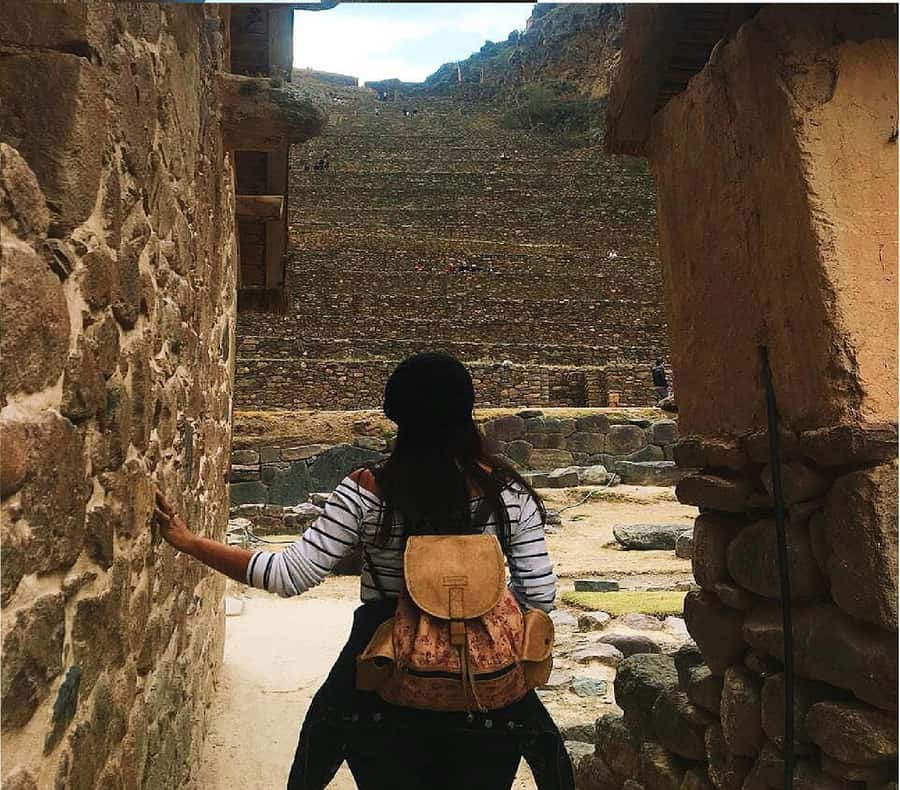
Ollantaytambo is described as a strategic military, agricultural, and religious center. That range is important. The site was not built for one narrow purpose, and your guide’s explanation can help you read the remains as part of a larger settlement.
The fortress is one of the day’s major archaeological highlights. It combines dramatic stone construction with evidence of planning and defense. Its location also helps explain why the Incas valued the Sacred Valley. The region supported farming, movement, and control of important routes.
I would give Ollantaytambo your full attention, even if the earlier stops have made the day feel long. This is the point where the military and ceremonial side of Incan power becomes most apparent.
The limitation is again time. A short stop can show you the scale and setting, but it may not satisfy you if you want to examine every wall or climb at a leisurely pace. If Ollantaytambo is your main priority, a tour devoted only to this area would give you more breathing room. For a broad introduction, though, its inclusion is essential.
A final stop at Pisaq
Pisaq comes later in the route, before the return to Cusco. The supplied details do not specify the exact activities or length of the Pisaq visit, so you should treat it as a final Sacred Valley stop rather than plan around a particular feature.
Its position near the end of a 12-hour day affects how you experience it. You will already have visited Chinchero, Moray, Salineras, Urubamba, and Ollantaytambo. I would expect this part of the tour to feel more like a final look at the valley than a slow, independent exploration.
That said, Pisaq helps complete the route. The tour does not focus on just one archaeological center. It gives you a wider sense of the valley’s towns and sites before returning to Cusco at about 7:00 pm.
The guide makes the difference
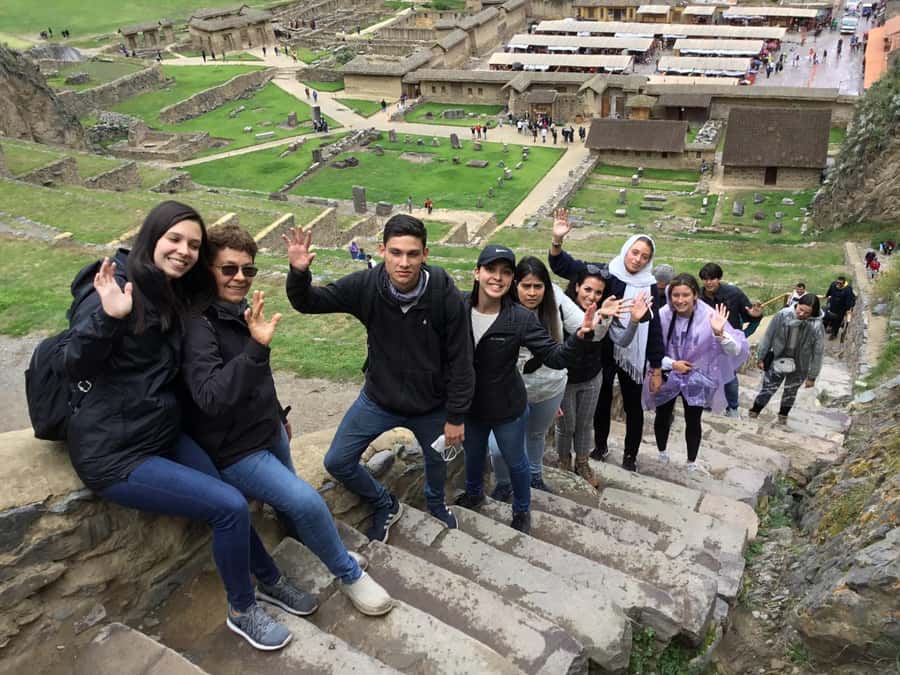
The strongest praise for this experience focuses on the guide and organization. The guide is described as very good at explaining the visits, highly informative, and well prepared. That matters here because the sites are more rewarding when you understand what you are seeing.
Moray, Chinchero, Salineras, and Ollantaytambo each need some explanation. Without context, you might see terraces, salt ponds, and stone walls without understanding their purpose. A live guide in English or Spanish gives the day structure and helps connect the stops.
No guide’s name is provided, so I cannot recommend a particular individual. I can say that the guide service is one of the tour’s clearest strengths based on the consistently positive feedback. The organization also receives strong praise, which is important on a route with so many moving parts.
Is $69 good value?
At $69 per person, the tour offers solid value if you want a full overview of the Sacred Valley. The price includes hotel pickup, tourist transport, a professional guide, and the Andean buffet lunch. Those inclusions cover the services that would otherwise take time and effort to arrange.
You should add 80 soles for the stated entrance fees: 70 soles for the Sacred Valley and 10 soles for Salineras. Since exchange rates change, check the current dollar equivalent before you go. The true cost is therefore the tour price plus those admissions, not $69 alone.
Even with the extra fees, the package makes sense for a first visit or a tight schedule. You are paying for transport across a broad region, a guide, and a meal in one day. The value is weaker only if you dislike early starts, group timing, or quick visits.
Who should book this tour?
I would choose this excursion if you want to see many major Sacred Valley sights without arranging separate transport. It suits first-time visitors, people staying in Cusco for a limited period, and anyone who values a guide’s explanations over complete independence.
The tour also works well if you enjoy variety. You move from a colonial church and agricultural terraces to experimental farming platforms, salt ponds, a buffet meal, a fortress, and Pisaq. Few moments should feel repetitive.
I would think twice if you want long photo stops, quiet time, or a flexible lunch. The schedule begins early and runs until evening, and the number of locations naturally keeps the pace moving.
The activity is listed as unsuitable for pregnant women and people over 95 years old. The information does not give further mobility details, so you should ask the provider directly if you have specific physical concerns.
Should you book the Sacred Valley group tour?
Book it if your priority is efficient sightseeing with a strong guide and included lunch. The route covers an impressive range of Incan agriculture, salt production, settlement planning, and fortress architecture, all in one day.
Skip it if you already know the valley well or want to linger at one site. For everyone else, $69 is a fair starting price, provided you remember the extra 80 soles in entrance fees and prepare for a long day.
The best practical approach is simple: wear comfortable clothing, bring your passport, arrive ready before the pickup window, and accept that you are buying coverage rather than solitude. If that sounds like your kind of day, this is a well-organized way to get your first strong look at the Sacred Valley.
FAQ
How long does the Sacred Valley group tour last?
The tour lasts 12 hours. Pickup begins between 6:30 and 7:00 am, and the return to Cusco is scheduled for about 7:00 pm.
What places does the tour visit?
The route includes Chinchero, the Church of Our Lady of Monserrat, the Andenería agricultural terraces, Moray, the Salineras salt mines, Urubamba, Ollantaytambo fortress, and Pisaq.
Is lunch included?
Yes. An Andean buffet lunch in Urubamba is included in the tour price.
Are entrance fees included?
No. The Sacred Valley entrance costs 70 soles, and the Salineras entrance costs 10 soles. These fees are paid separately.
What languages are available?
The tour offers a live guide in English or Spanish.
What should I bring?
You should bring your passport. It is listed as required for the activity.
Can I cancel the booking?
You can cancel up to 24 hours in advance for a full refund. The tour also offers a reserve now and pay later option.
Added recently around Sacred Valley
- Tour Sacred Valley with Maras and Moray★ 5.0 · 15 reviews
- Full day excursion in the Sacred Valley, Pisac, Ollantaytambo from Cusco City★ 4.5 · 12 reviews
- Full day tour of Sacsayhuaman,Q’enQo, Puka Pukara, and Sacred Valley Tour★ 5.0 · 10 reviews
- Full Day Sacred Valley of the Incas Private Tour★ 5.0 · 10 reviews
- Full Day in the Sacred Valley – The Pantry of Cusco★ 5.0 · 14 reviews
- Full Day Urubamba River Rafting Adventure★ 3.5 · 6 reviews
- Full-Day Tour in the Sacred Valley with Lunch★ 4.5 · 15 reviews
- Full Day Tour Sacred Valley of the Incas (Private)★ 5.0 · 7 reviews
Sacred Valley Tours, compared.
Sacred Valley & Maras Salt Mines Tour with Lunch
Read our review →
Moray, Maras Salt Mines & Chinchero Weavers Tour
Read our review →
2-Day Tour: Sacred Valley and Machu Picchu by Train
Read our review →
Sacred Valley, Pisac, Ollantaytambo, Salt Mines Moray
Read our review →
Chinchero,Moray & Salt Mines drop-off in Ollantaytambo
Read our review →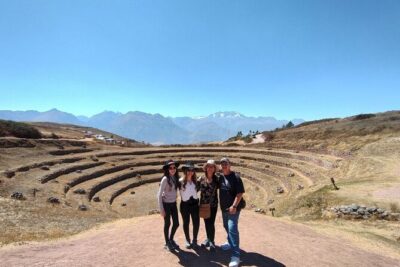
Sacred Valley and Maras Moray Tour with Full Day Buffet Lunch
Read our review →

Browse the lists this tour appears in