
Reviewed · CITY TOURS
Full Day City Tour Cusco
Cusco keeps its best stories close. This five-hour outing links the city’s Temple of Gold with four Inca sites above town, giving you a useful first look at Cusco’s sacred and military past. I like the round-trip transport and the small maximum of 15 people, which make a busy afternoon easier to manage. The main drawback is the extra entrance cost, plus a schedule that can feel full by the final stop.
I also like the multilingual guiding in English, Spanish, or Portuguese, and the careful communication reported by guests before pickup. Guide Silvia earned special praise for her patience and clear explanations. Still, you should know that the tour covers a lot of ground, and one guest felt the day would have been stronger if it had ended after the city sites and Sacsayhuaman.
In This Review
- Key points to know before booking
- A practical first look at Cusco
- Qorikancha and the Inca Temple of Gold
- Sacsayhuaman and stones too large to ignore
- Q’enqo and stone shaped for ritual
- Puka Pukara, the Red Fortress
- Tambomachay and the sacred role of water
- The pace, transport, and group size
- What the $29.86 price really buys
- Who should book this Cusco route?
- Should you book the Full Day City Tour Cusco?
- FAQ
- How long does the Cusco city tour last?
- What time does the tour start?
- Which sites are included in the route?
- Is transportation included?
- Are entrance fees included in the tour price?
- How much is the partial ticket for the four outer sites?
- How much does admission to Qorikancha cost?
- Is Cathedral admission included?
- What languages are available for the guide?
- What is the maximum group size?
Key points to know before booking
- Five hours, starting at 12:30 pm: This is an afternoon route that returns you to Cusco in the late afternoon.
- Five major sites: You visit Qorikancha, Sacsayhuaman, Q’enqo, Puka Pukara, and Tambomachay.
- Tickets cost extra: The partial ticket for the four outer sites is PEN70, Qorikancha is PEN20, and the Cathedral is PEN40 if included in your visit.
- Transport is included: Round-trip tourist transportation and a professional guide are part of the price.
- Small group size: The maximum is 15 people, a useful limit for a walking and sightseeing tour.
- A strong introductory route: You get sacred temples, huge stonework, water shrines, and mountain views in one compact outing.
A practical first look at Cusco
At $29.86 per person, this is priced as an affordable orientation tour rather than a full private experience. You are paying for transport, a guide, and agency service, but not for the main entrance fees, meals, drinks, or snacks.
The added admission costs matter. If you visit all the listed paid areas, the known fees come to PEN90 for Qorikancha plus the four-site partial ticket. If the Cathedral is part of your particular city visit, add PEN40. Check the exact ticket arrangement before setting out, because buying several admissions separately can make the day feel less simple than the headline price suggests.
The timing is useful for anyone arriving in Cusco and wanting a first overview without giving up a full morning. The 12:30 pm start lets you have a relaxed morning, though you should not expect a slow, museum-style visit. With five stops in roughly five hours, each place gets a focused introduction.
I would use this tour to learn the layout and major themes of Cusco. Then I would return on my own to the place that caught my attention most. That is the smart way to get value from a route that covers breadth rather than long, quiet visits.
More City Tours in Cusco
- Cusco: Half-Day City Tour with Sacsayhuaman and Q’enco
★ 4.6 · 1,129 reviews - City Tour Cusco Qoricancha Sacsayhuaman y Tambomachay
★ 4.7 · 617 reviews - Cusco City Tour Four Ruins in Half-Day
★ 5.0 · 530 reviews
Qorikancha and the Inca Temple of Gold
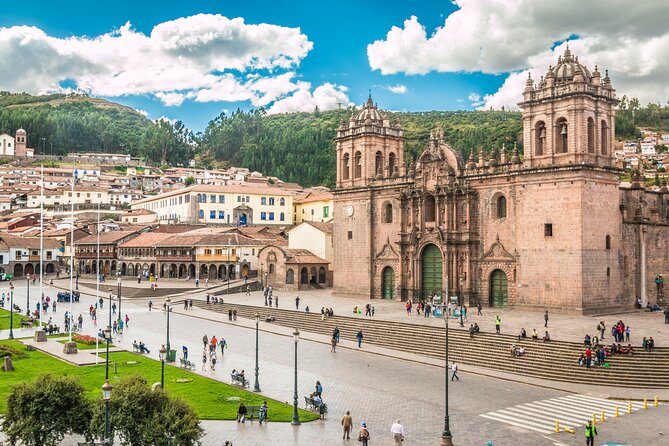
Qorikancha is the city portion of the tour and one of the most important stops. Its Quechua name means Temple of Gold, a fitting title for a sanctuary once covered with large quantities of gold and silver during the Inca period.
You get about 30 minutes here, with admission not included. That is enough time for a guide to explain why the site mattered and to point out the contrast between Inca stonework and later colonial construction. It is not enough for a leisurely examination of every room, wall, or display.
This is where the tour’s history feels most concentrated. Qorikancha was the first temple built by the Incas, and its importance was religious as well as political. The precious metals once used here were not simply decoration. They reflected the sacred status of the place and the power of the Inca state.
I would pay close attention to the stonework rather than focus only on the lost gold. The surviving walls are the real lesson. Their precise construction helps explain why Inca buildings remain one of Cusco’s great draws.
A city visit may also include the Cathedral or Basilica, with a separate PEN40 entrance fee. The details provided for this experience list the Cathedral as an extra cost, while the main route names Qorikancha directly. Ask your guide at the start whether the Basilica is part of your departure, and budget accordingly. This small question can save you an awkward surprise at the ticket desk.
Sacsayhuaman and stones too large to ignore
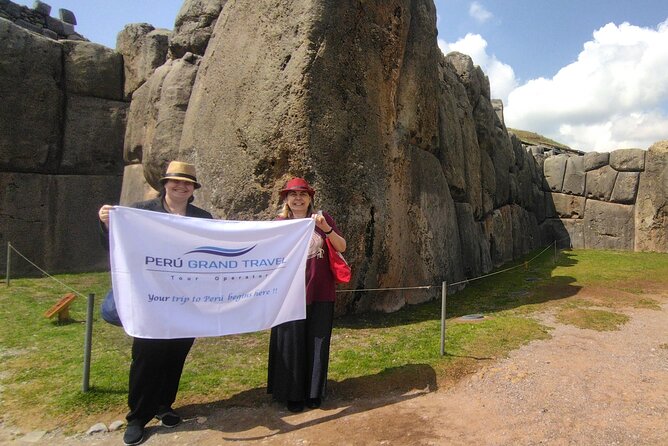
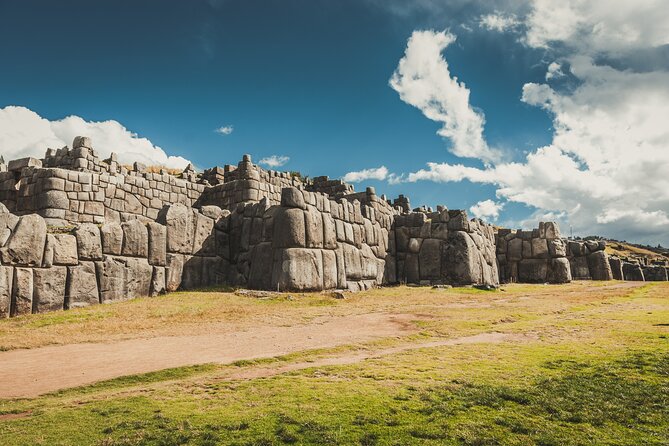
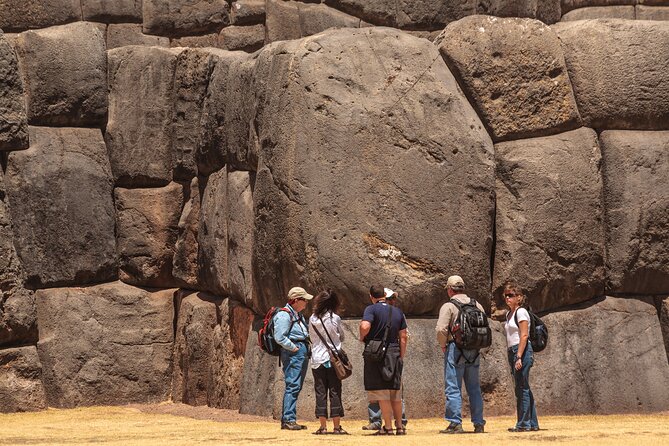
After leaving central Cusco, the tour heads to Sacsayhuaman, also written Saqsayhuaman. You get about 45 minutes here, the longest scheduled stop, and that makes sense. The site is famous for massive megalithic stones, some weighing more than 150 tons.
No photograph quite explains the scale. You need to stand beside the walls and look closely at the joins. The stones fit together with remarkable precision, and the size alone gives the site a physical force that smaller ruins cannot match.
During the Inca Empire, Sacsayhuaman was considered the Temple of Lightning and was linked to Illapa, the god associated with storms and lightning. That religious meaning adds another layer to what may first look like a fortress or ceremonial complex.
This is probably the strongest stop for visitors who want a quick sense of Inca engineering. It is also where the schedule feels most reasonable. Forty-five minutes gives your guide time to explain the site and leaves you enough room for photos without turning the visit into a race.
Admission is not included. The stated partial ticket for Sacsayhuaman, Q’enqo, Puka Pukara, and Tambomachay costs PEN70 per person. Since these four sites are grouped under one ticket, keep it handy throughout the afternoon. The need to buy or manage several tickets is one of the less polished parts of the experience.
Q’enqo and stone shaped for ritual
Q’enqo receives about 20 minutes. The stop is smaller and more focused than Sacsayhuaman, but it gives the route a different feel. This temple was dedicated to Pacha Mama, or Mother Earth, and features intricate stone carvings.
Twenty minutes can work here if you want a clear explanation and a quick look around. You should not expect a long period of quiet exploration. The guide’s role matters more at Q’enqo because the meaning of carved surfaces and ceremonial spaces is not always obvious at first glance.
I like this stop because it shifts the focus from giant construction to ritual detail. Sacsayhuaman shows the scale of Inca building. Q’enqo asks you to look at the relationship between carved stone, worship, and the natural world.
If you prefer ruins where you can wander at your own pace, this may feel brief. If you enjoy a guide pointing out small features you might otherwise miss, the short visit earns its place on the route.
A few more Cusco trips worth lining up side by side
- Classic Inca Trail Trek 4D/3N to Machu Picchu (Group Service)
★ 5.0 · 8,653 reviews - Cusco: Rainbow Mountain and Red Valley Day Trip with Meals
★ 4.9 · 4,893 reviews - Machu Picchu: 4-Day Inca Trail Trek with Panoramic Train Ride
★ 5.0 · 4,568 reviews - Salkantay Classic Trek 5 Days from Cusco
★ 5.0 · 4,062 reviews
Puka Pukara, the Red Fortress
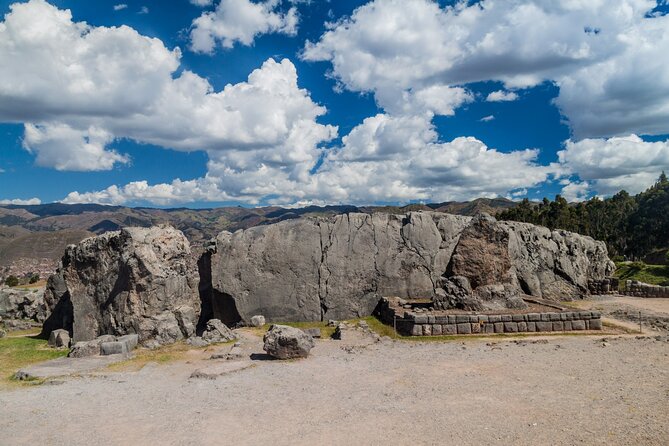
Puka Pukara is another 20-minute stop. Its Quechua name means Red Fortress, referring to the reddish stone structures used in its walls and buildings.
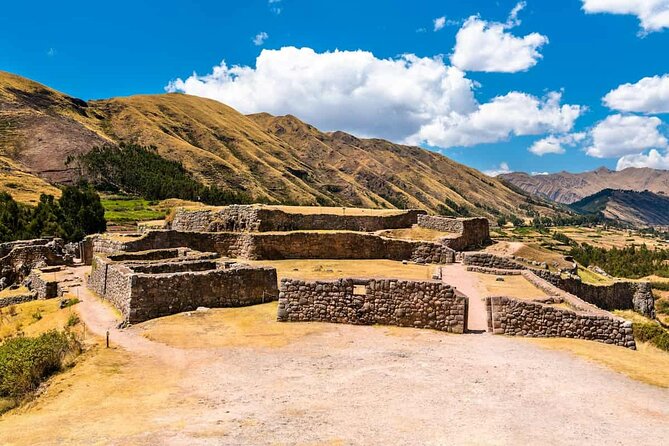
The site adds a practical side to the afternoon. While Qorikancha and Q’enqo connect strongly to worship, Puka Pukara is presented as an Inca fortress. You get a sense of how the network around Cusco included places for watching, controlling, and supporting movement through the hills.
The short visit is enough for an introduction and photographs. It may feel less dramatic than Sacsayhuaman, especially if you have already seen enormous stone walls. Still, its position in the route helps show that the Inca sites around Cusco were not isolated monuments. They formed part of a wider system.
The reddish stone also gives Puka Pukara a distinct look. That makes it easier to remember than a site whose name and walls blend into the rest of the afternoon. Keep your expectations realistic: this is a compact stop, not a long archaeological visit.
Tambomachay and the sacred role of water
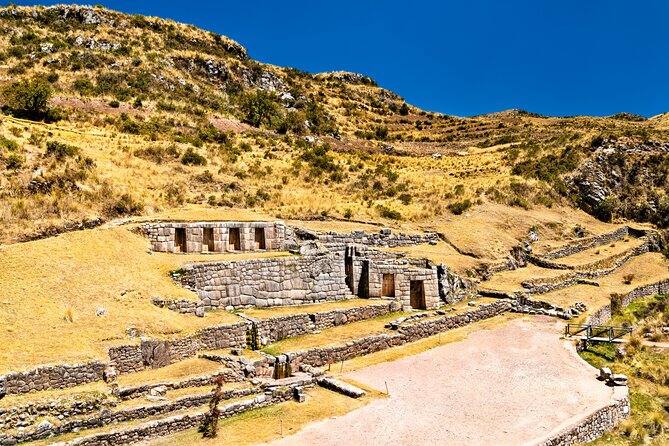
The final named site is Tambomachay, with about 30 minutes scheduled. This temple was dedicated to water worship and likely served as a purification bath for Inca rulers.
After the huge masonry at Sacsayhuaman and the carved surfaces at Q’enqo, Tambomachay offers a calmer theme. Water was not just a useful resource here. It had religious meaning, and the site’s channels and ceremonial setting point to the importance of purification and control of water.
This is a good final stop because it rounds out the religious picture. Qorikancha introduces the central temple. Q’enqo brings in Mother Earth. Tambomachay connects belief to flowing water and ritual cleansing.
The drawback is energy. By this point, you have already visited several locations, paid or discussed multiple entrance fees, and spent time moving by vehicle. One guest found the complete route too long and felt the experience would have been successful after Qorikancha, the Basilica, and Sacsayhuaman. I would take that concern seriously if you prefer depth over variety.
The pace, transport, and group size
The tour lasts about five hours, including the round trip and time at the sites. The route starts at 12:30 pm and returns you to Cusco in the late afternoon, with drop-off at your hotel or the Plaza de Armas.
That hotel drop-off is useful after a full afternoon at high elevation. You do not need to work out a second ride back into the center, and you can choose the Plaza de Armas if that suits your evening plans better.
Round-trip tourist transportation is included. This is a real benefit because the outer sites are spread beyond central Cusco. A taxi-by-taxi plan could become tiring, and public transport would not offer the same simple connection between each stop.
The group limit is 15 people. That is not private, but it is small enough for a guide to keep the group together and answer questions. The experience also suits most participants, according to the provided activity details.
A guide is available in Portuguese, English, or Spanish. If you care about language, confirm your preferred option when booking. Guide Silvia received especially warm praise for being patient and well informed, and her support helped make the visit feel organized rather than rushed.
The company also made a strong first impression by contacting customers soon after purchase and providing updates before the tour. That kind of communication matters in Cusco, where pickup plans and timing can affect the rest of your day.
What the $29.86 price really buys
The base price is attractive for a guided route with transport. You are not merely paying for a vehicle. You are also getting a guide who can connect five places that may otherwise seem like separate ruins.
Still, the advertised amount is not your full spending total. You need to add:
- PEN70 per person for the partial ticket covering Sacsayhuaman, Q’enqo, Puka Pukara, and Tambomachay
- PEN20 per person for Qorikancha
- PEN40 per person for the Cathedral, if that visit applies
- Your own food, drinks, and snacks
The cost is good if you value convenience and a broad introduction. It is less compelling if you want a slow visit at every stop or dislike paying for admissions one at a time.
There is no food or drink included. Since the tour starts after midday and runs into late afternoon, eat beforehand or bring what you need. The supplied details do not promise a meal break, so I would not count on one.
The high booking lead time, about 83 days on average, suggests that planning ahead can be sensible. That does not guarantee every departure will sell out, but it is a reason not to leave the booking until the last minute if your dates are fixed.
Who should book this Cusco route?
I would recommend it most strongly to first-time visitors who want a guided overview and do not yet know which Inca sites deserve a longer return visit. You get a useful mix of architecture, religion, ritual, military planning, and water worship in one afternoon.
It also suits visitors who want transport handled for them. The outer sites are much easier when one vehicle links them together and drops you back at your hotel or the Plaza de Armas.
The tour may be less suitable if you prefer a relaxed pace. The itinerary gives you 20 minutes at two sites, 30 minutes at two others, and 45 minutes at Sacsayhuaman. That is efficient, but not leisurely.
It may also disappoint anyone expecting every city highlight to be included in one fixed package. The Cathedral is listed as a separate admission, and the formal route centers on Qorikancha and the four outer sites. Ask what your departure includes before paying for optional entries.
The route is a good choice for a short stay. If you have several days in Cusco, I would still consider taking it early, then returning to Qorikancha or Sacsayhuaman with more time. A guide can give you the framework, while a second visit lets you set your own pace.
Should you book the Full Day City Tour Cusco?
Book it if you want an affordable, organized introduction to Cusco’s major Inca sites, especially with round-trip transport and a group capped at 15 people. The strong rating of 4.9 from 135 ratings and a 99 percent recommendation figure support the tour’s basic quality, while the praise for communication and guides such as Silvia is encouraging.
Skip it if you want to linger, avoid extra ticket payments, or spend a full afternoon on only one or two sites. The experience covers a lot, and that breadth is both its main strength and its main weakness.
My practical choice would be to book it near the start of a Cusco stay, eat before the 12:30 pm departure, set aside the additional PEN90 for the main sites, and ask whether the Cathedral is included in your particular plan. Used that way, this tour gives you a clear map of Cusco’s Inca world without taking an entire day.
FAQ
How long does the Cusco city tour last?
The tour lasts approximately five hours, including transportation and sightseeing time.
What time does the tour start?
The stated start time is 12:30 pm.
Which sites are included in the route?
The route visits Qorikancha, Sacsayhuaman, Q’enqo, Puka Pukara, and Tambomachay.
Is transportation included?
Yes. Round-trip tourist transportation is included, with return drop-off at your hotel or the Plaza de Armas.
Are entrance fees included in the tour price?
No. Entrance fees are separate from the tour price.
How much is the partial ticket for the four outer sites?
The partial ticket for Sacsayhuaman, Q’enqo, Puka Pukara, and Tambomachay costs PEN70 per person.
How much does admission to Qorikancha cost?
The stated entrance fee for Qorikancha is PEN20 per person.
Is Cathedral admission included?
No. Cathedral admission is listed separately at PEN40 per person.
What languages are available for the guide?
The professional guide is available in Portuguese, English, or Spanish.
What is the maximum group size?
The tour has a maximum of 15 participants.
Added recently around Cusco
- Guided tour of the mountain of colors in Cusco★ 5.0 · 11 reviews
- 2-Day Private Short Inca Trail to Machu Picchu★ 5.0 · 15 reviews
- San Pedro Market Tour with Peruvian Cooking Class★ 5.0 · 31 reviews
- City Tour Cusco – Group★ 5.0 · 4 reviews
- Tour Sacred Valley with Maras and Moray★ 5.0 · 15 reviews
- Walking Culinary Experience★ 5.0 · 41 reviews
- City Tour in Cusco★ 4.5 · 10 reviews
- One Day Tour to Humantay Lagoon★ 5.0 · 8 reviews
City Tours, compared.
Lima Half-Day City Walking Tour (Small Groups)
Read our review →
Half-Day City Tour with Sacsayhuaman and Q’enco
Read our review →
City Tour Panoramic Bus Departure From Larcomar
Read our review →
City Tour Cusco Qoricancha Sacsayhuaman y Tambomachay
Read our review →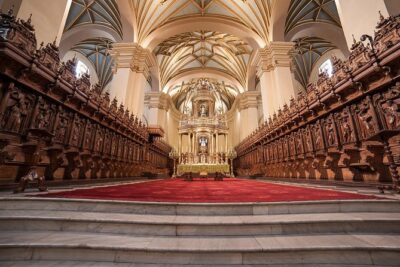
Lima’s Vibrant Heritage: Exploring the City’s Landmarks Half-day
Read our review →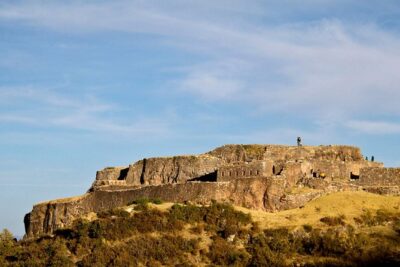
Sightseeing Tour of the City on an Open-Top Bus
Read our review →
Lima City, Central Market & Catacombs Tour (Pick-up & Drop Off)
Read our review →Browse the lists this tour appears in