
Reviewed · TICKETS
Hop-On Hop-Off Tourist Bus in Lima – Tickets 24h, 48h or 72h
Lima reveals itself in layers. This bus links Pacific views, Miraflores cafes, ancient adobe ruins, grand plazas, and evening fountains in one useful circuit. I like the easy introduction to the city and the chance to combine Larcomar and Huaca Pucllana without arranging separate taxis.
I also like the live bilingual guide, air-conditioned bus, and open-top seating for photos. The main caution is the route system: schedules and return buses may be confusing, and heavy traffic can turn a short ride into a slow one.
In This Review
- Key points before you buy
- What the Lima bus actually does well
- Larcomar and the Pacific edge
- Kennedy Park, cats, art, and easy Miraflores time
- Huaca Pucllana brings ancient Lima into the day
- Bicentennial Park and Miraflores craft shopping
- Óvalo Gutiérrez and Intihuatana Park
- San Martín Square and Lima’s historic center
- Alameda Chabuca Granda and old Peruvian flavors
- The Magic Water Circuit after sunset
- Park of the Exposition and the mixed route problem
- Timing, traffic, and the return journey
- Price, passes, and who gets good value
- Should you book the Lima sightseeing bus?
- FAQ
- How long does the bus tour take?
- What is included in the ticket?
- Are museum and attraction entry fees included?
- Does the bus visit Huaca Pucllana?
- Does the route go to the Larco Museum?
- Is the Magic Water Circuit included?
- Is the tour available in English?
- Can I cancel for a refund?
Key points before you buy

- Larcomar gives you Lima’s best coastal start, with Pacific views, restaurants, shops, and a cliffside setting.
- Huaca Pucllana adds genuine ancient Lima to an itinerary otherwise centered on parks, shopping, and city streets.
- The Magic Water Circuit works best after dark, when fountains, lights, and music come together.
- Kennedy Park is a useful Miraflores base, with cats, art stalls, cafes, and nearby restaurants.
- The bus is more useful for orientation than speed, especially in Lima’s noisy, crowded traffic.
- The $35 price makes more sense over 48 or 72 hours, but only if you plan to get off at several stops.
What the Lima bus actually does well

This is not a sightseeing ride through quiet streets. Lima is a huge capital, and the bus shares roads with taxis, buses, delivery vans, and ordinary city traffic. You will spend part of the ride looking at traffic rather than monuments.
That sounds like a criticism, but it also tells you what this experience is for. I see it as a city orientation tool. It helps you understand how Miraflores relates to central Lima, where the coast sits, and which areas deserve a second visit by taxi or on foot.
The advertised ride lasts about two hours, but the pass options let you use the bus for 24, 48, or 72 hours. The value depends on how often you get off. If you stay aboard for one complete loop, $35 is a fairly expensive way to see Lima from a seat. If you use it as transport between several sights, it becomes more useful.
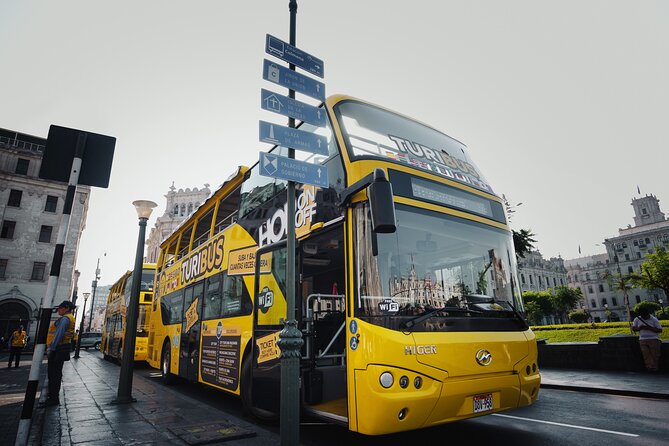
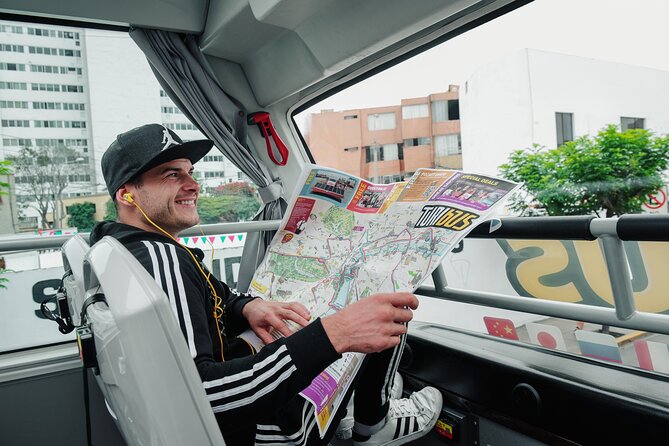
The bus includes air conditioning, a bilingual Spanish and English guide, and open-top seating on suitable buses. The upper deck is the place to sit for photographs and fresh air, though you should expect sun and city noise. WiFi is advertised as included, but one account found no working WiFi and instead was asked to join a private WhatsApp group. I would treat onboard internet as a bonus, not a reason to book.
A few more Lima trips worth lining up side by side
- Premium Paracas & Huacachina Day Trip from Lima with Sunset Toast
★ 5.0 · 7,380 reviews - Full Day Tour From Lima: Paracas and Huacachina Oasis
★ 5.0 · 3,694 reviews - Lima Ultimate Peruvian Food Tour
★ 5.0 · 1,845 reviews
Larcomar and the Pacific edge
Larcomar is the most polished stop on the route. Built into a cliff above the Pacific, it combines shopping, restaurants, entertainment, and broad ocean views. You can start here, have lunch, watch the water, and use the bus to continue through Miraflores.
The appeal is visual rather than cultural. Larcomar is a modern commercial center, so it will not give you the old Lima experience. Still, its position makes it a practical first stop, especially if you want an easy introduction to the city or a safe place to pause after arriving in Miraflores.
Allow extra time if you plan to eat or shop. If you are using the pass only for sightseeing, you may find that a short photo stop is enough. The cliff view is the real reason to get off.
Kennedy Park, cats, art, and easy Miraflores time

Parque Kennedy sits at the center of Miraflores and is one of the bus route’s most useful stops. It gives you access to restaurants, cafes, shops, art markets, and local artists. The park is also known for its unusual colony of cats, an attraction that has become part of its identity.
I like Kennedy Park because it does not require a formal plan. You can get off, walk around, browse small art displays, and decide what you want to do next. It is also a good place to divide your day between scheduled sights and unplanned wandering.
The surrounding area is more commercial than historic. If you want old churches and grand colonial buildings, save your time for central Lima. If you want food, shopping, and a comfortable place to pause, Kennedy Park is a strong choice.
Huaca Pucllana brings ancient Lima into the day
The Pucllana Site Museum is the most important archaeological stop on the Miraflores portion of the route. Huaca Pucllana is a pre-Columbian adobe complex with tall pyramid structures, a striking sight among modern city streets.
This stop changes the tone of the tour. Instead of another park or shopping area, you get a direct connection with the cultures that lived in the Lima region long before the modern capital took shape. Guided visits are available, and there is also a restaurant at the site.
Check the admission cost before you go. Entry to museums and tourist sites is not included, with an additional cost listed as $10 per person. That extra charge is reasonable if ancient sites interest you, but it changes the day’s budget if you plan to enter several attractions.
I would prioritize Huaca Pucllana over some of the less distinctive commercial stops. The bus gets you close to an experience you cannot reproduce simply by walking around Miraflores.
Also leaving from Lima, and nothing like the above:
- Lima Half-Day City Walking Tour (Small Groups)
★ 5.0 · 1,508 reviews - Paracas and Huacachina Exclusive Sunset Picnic Tour
★ 5.0 · 1,398 reviews - Unmissable Visit To Paracas, Huacachina And Sunset In The Oasis
★ 5.0 · 1,138 reviews - Paracas, Ballestas Islands and Huacachina Guided Tour
★ 5.0 · 1,100 reviews
Bicentennial Park and Miraflores craft shopping

Bicentennial Park offers green space, walking paths, and views tied to Peru’s 200 years of independence. It is a quieter stop than Kennedy Park and gives you room to slow down.
The park is best for a relaxed walk rather than a major sightseeing payoff. You can use it to break up a busy day of traffic and city streets. Its importance comes from the way it links modern public space with Peru’s national story.
Another Miraflores stop at C. Gral. Suárez 315 focuses on craft markets. Look here for Andean textiles, handmade jewelry, and small souvenirs. This is the more practical stop for shopping, especially if you want something connected to Peruvian design rather than a standard store purchase.
The exact selection can change, so do not expect every stall to offer the same goods. I would compare prices before buying and keep enough time for your bus connection.
Óvalo Gutiérrez and Intihuatana Park
Óvalo Gutiérrez is a modern Miraflores junction surrounded by cinemas, cafes, and restaurants. It is less of a sightseeing stop than a useful local-services stop. You might choose it for a meal, coffee, or an evening break.
Intihuatana Park is near the sea and combines lawn, ocean views, and a calmer setting. Its appeal is simple: sit, look toward the water, and take a break from the city. It will not fill a full afternoon, but it can be worthwhile if you prefer quiet public spaces to more shopping.
These two stops show the range of the bus. Some stops are major attractions, while others are convenient access points. Before getting off, ask yourself if the location is worth the waiting time for the next bus.
San Martín Square and Lima’s historic center
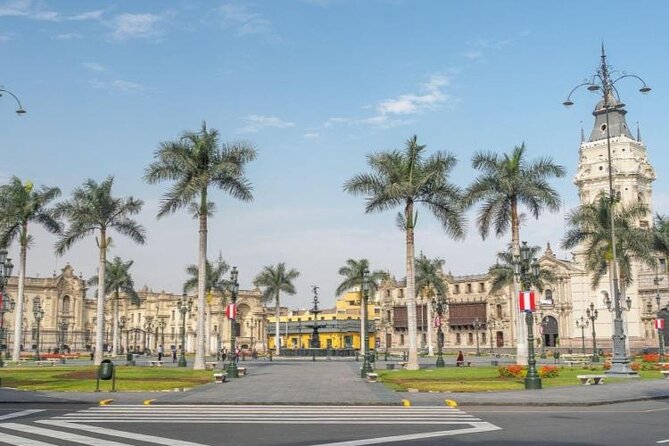
Plaza San Martín is the strongest central Lima stop on the route. Its equestrian statue honors José de San Martín, a key figure in Peru’s independence, and the square is framed by grand historic buildings.
This is the kind of place where the bus provides real value. Miraflores and the coast can feel like a separate city from old Lima. San Martín Square helps connect the two parts of the capital and gives you a starting point for exploring the historic center.
The square is also a good photography stop. You can take in the architecture, then continue toward other central sights on foot if your time and energy allow. The bus does not replace a walking visit, but it can save you the trouble of arranging transport into the center.
One note of caution: the square is a busy urban location, and the route may not feel peaceful. Keep track of your return time, particularly if you are using the last bus of the day.
Alameda Chabuca Granda and old Peruvian flavors
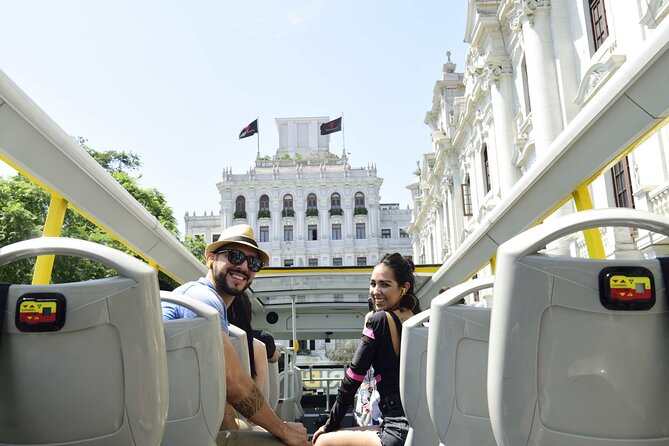
Alameda Chabuca Granda follows the Rímac River and pays tribute to the famous Peruvian singer-songwriter. The promenade combines crafts, Creole music, food stalls, and traditional dishes such as anticuchos and picarones.
This is one of the better stops for a taste of local culture. Anticuchos are grilled skewers, while picarones are sweet fried rings often served with syrup. You do not need a formal restaurant to sample something recognizably Peruvian here.
The stop is most appealing if you want food and atmosphere rather than a museum visit. It also pairs naturally with San Martín Square, since both are in the central Lima portion of the route. Still, confirm the bus departure before sitting down for a snack. A missed connection can cost more time than expected.
The Magic Water Circuit after sunset
The Magic Water Circuit in Reserve Park is the route’s most theatrical stop. It is recognized as the world’s largest fountain complex and presents water, colored light, and music shows.
Go near dusk or after dark. In daylight, you can still see the fountains, but the lights are the main attraction. This stop suits families particularly well, though adults who enjoy public art and evening photography should also find it worthwhile.
Admission is not included in the bus price, and tourist-site entry is listed separately at $10 per person. Add that cost before deciding if the pass fits your budget.
The circuit is also where timing matters most. If you use the bus to arrive for an evening show, a delayed bus or unclear return schedule can become a real nuisance. Get clear information about the final departure before entering the park. I would not leave this stop until the last possible bus unless the route details are completely clear.
Park of the Exposition and the mixed route problem
The Park of the Exposition is a central green space with ponds, museums, and areas for cultural events and exhibitions. It offers a gentler alternative to Lima’s traffic and concrete streets.
Its value depends on your interests. If you like parks, museums, and public cultural spaces, it is worth a stop. If your time is short, Huaca Pucllana, San Martín Square, Larcomar, and the Magic Water Circuit offer more distinctive reasons to leave the bus.
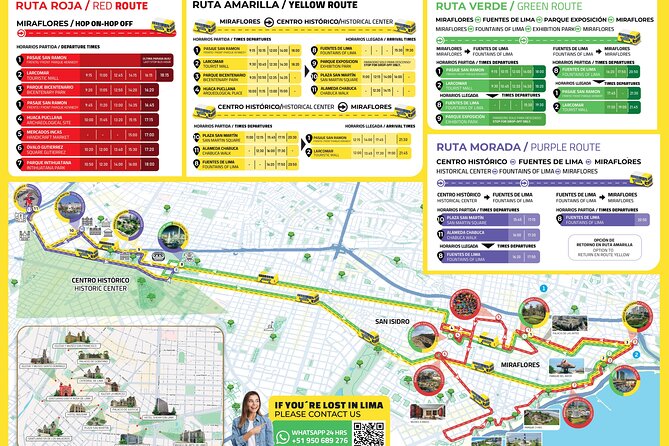
The published stop lists include several different combinations. One version places Larcomar, Bicentennial Park, Kennedy Park, Huaca Pucllana, the Magic Water Circuit, San Martín Square, Alameda Chabuca Granda, and the Park of the Exposition together. Other versions add the craft market, Óvalo Gutiérrez, and Intihuatana Park.
That suggests the 24, 48, and 72-hour products may involve different circuits or operating patterns. One account also found only two routes despite expecting three, with some buses serving different destinations at different times. The printed schedule was difficult to follow, and buses did not clearly show which route they were operating.
My advice is direct: ask at the starting kiosk for the current route map and exact return times. Also confirm where the bus stops, since one pickup point was reportedly about half a block from the kiosk rather than directly beside it.
Timing, traffic, and the return journey
The biggest practical weakness is not the sights. It is coordination. Some buses may serve one destination at one time and another destination later, so the bus that takes you out may not be the bus that brings you back to your original stop.
Ask the guide twice if needed:
- Which bus goes to your next stop?
- What time is the final bus?
- Does it return to your exact starting point?
- Where is the actual pickup point?
One passenger was told a return bus would stop at the original location, only to learn onboard that it did not. The alternative stop required about a 20-minute walk back to the hotel. That is manageable in daylight for many people, but it is not ideal after the Magic Water Circuit or for anyone carrying bags.
The live guide speaks both Spanish and English on at least part of the ride. That is useful, but do not assume every bus has a full audio guide. The information provided does not promise one, and the experience described included live commentary rather than recorded narration.
Price, passes, and who gets good value
The listed price is $35 per person. Entry fees for museums and tourist sites are separate, with $10 per person given as a guide. Food and snacks are also extra.
For a single two-hour ride, the price feels high. You are paying for convenience, a bilingual guide, a dedicated sightseeing vehicle, and the ability to get off along the route. You are not paying for admission to the main attractions.
The price makes more sense if you use a 48 or 72-hour pass as city transport. You could visit Kennedy Park and Larcomar one day, Huaca Pucllana and Bicentennial Park another day, then spend an evening at the Magic Water Circuit and central Lima. That plan gives the pass a job beyond one loop.
I would choose this for a first visit, especially if you are staying in Miraflores and want a broad introduction without arranging every taxi. It also suits families and people who prefer a guide and fixed sightseeing vehicle.
I would skip it if you already know Lima well, want to focus on the Larco Museum, or dislike waiting in traffic. The route does not include the Larco Museum, and one of the clear requests for improvement was a route there. For a short list of carefully chosen sights, taxis or ride-hailing may save both time and frustration.
The operator offers free cancellation up to 24 hours before the start time. Service animals are allowed, public transportation is nearby, and most people can participate.
Should you book the Lima sightseeing bus?
Book it if you want a broad first look at Lima, like sitting above the traffic for photographs, and plan to use several stops. The best stops are Huaca Pucllana, Larcomar, San Martín Square, Kennedy Park, and the Magic Water Circuit, each for a different side of the city.
Do not book it expecting a smooth, fast transport system. Route details can be unclear, WiFi may not work, and heavy traffic is part of the experience. Before boarding, get the day’s route and final departure times in writing if possible.
My call: choose the 48-hour option if you want breathing room and several planned stops, but use the bus selectively. Ride the full circuit once for orientation, then get off only where the attraction justifies the wait. That approach gives you the convenience of the tour without surrendering your whole day to Lima traffic.
FAQ
How long does the bus tour take?
The sightseeing ride lasts approximately two hours. The available pass durations are 24, 48, or 72 hours, allowing you to get on and off during the selected period.
What is included in the ticket?
The ticket includes the tourist bus, air conditioning, WiFi as advertised, a bilingual Spanish and English guide, and the ability to get on and off during the day.
Are museum and attraction entry fees included?
No. Museum and tourist-site tickets are not included. An additional cost of $10 per person is listed for these admissions.
Does the bus visit Huaca Pucllana?
Yes. Pucllana Site Museum is included among the listed stops. It provides access to the pre-Columbian Huaca Pucllana archaeological site, where guided visits are available.
Does the route go to the Larco Museum?
No. The listed routes do not include the Larco Museum.
Is the Magic Water Circuit included?
The bus stops at the Magic Water Circuit of Reserve Park, but admission is not included in the ticket price. The fountain shows are best seen at dusk or at night.
Is the tour available in English?
Yes. A bilingual guide in Spanish and English is included. The experience described includes live bilingual commentary on part of the ride, but an audio guide is not guaranteed.
Can I cancel for a refund?
Yes. You can cancel up to 24 hours before the experience start time for a full refund. Cancellations or changes made less than 24 hours in advance are not accepted for a refund.
Added recently around Lima
- Tour to the sanctuary of Pachacamac★ 4.8 · 8 reviews
- Tour to the magical water circuit with dinner and dance show★ 5.0 · 4 reviews
- Tour of Lima with a visit to the catacombs of San Francisco.★ 4.2 · 24 reviews
- Tour Huaca Pucllana: Pyramids and Pre-Columbian Antiquity★ 4.3 · 12 reviews
- Lima: Palomino Islands Speedboat Tour & Swim with Sea Lions★ 4.8 · 33 reviews
- Surfing experience in Lima★ 5.0 · 6 reviews
- Sandbording in Lima★ 5.0 · 12 reviews
- Pro Sanboarding or skiing in Huacachina from Lima – Day trip★ 4.6 · 8 reviews
Tickets, compared.

Skip the Line: Planetarium Cusco Admission Ticket
Read our review →
Machu Picchu: Tour Guide Service & Entrance Ticket Circuit-2
Read our review →
Machu Picchu Private Tour from Aguas Calientes (Tickets included)
Read our review →


Cusco Tourist Ticket and Sacred Valley Site Pass
Read our review →Browse the lists this tour appears in