
Reviewed · MUSEUMS
Skip the Line: Larco Museum Admission Ticket
Peru’s past begins long before Machu Picchu. This ticket gives you a clear introduction to 5,000 years of Peruvian history, from early cultures to the Inca, inside an 18th-century mansion built over a much older pyramid. I especially like the museum’s excellent chronological layout and its remarkable public storage area, where thousands of additional objects sit on display. The main drawback is that this is admission only, not a guided tour, and the skip-the-line benefit may matter less during quieter periods.
I also like the gardens, the fine collection of gold and silver work, and the unusual gallery of erotic art. Together, they make the museum feel broader and more human than a simple display of old objects. Plan on at least one to two hours, though you could easily spend two and a half to three hours if you read the descriptions and stop for food or coffee afterward.
In This Review
- Key points at a glance
- Why the Larco Museum helps explain Peru
- Entering an 18th-century mansion built over a pyramid
- Following the chronological galleries
- Gold, silver, ceramics, and the details of daily life
- The erotic art gallery, handled as history
- The public storage area with 45,000 objects
- How much time should you allow?
- The ticket, skip-the-line claims, and practical value
- Self-guided visit or paid guide?
- Making a meal part of the visit
- Who will enjoy the Larco Museum most?
- Should you book the Larco Museum ticket?
- FAQ
- Where is the Larco Museum?
- How long does a visit take?
- What are the museum’s opening hours?
- What does the ticket include?
- Is a guided tour included?
- Is food included in the ticket?
- Is the erotic art suitable for children?
- Can I cancel the booking?
Key points at a glance
- Five thousand years in one visit: The chronological galleries connect pre-Columbian cultures with the archaeological sites you may visit elsewhere in Peru.
- A mansion over a pyramid: The museum occupies an 18th-century colonial house built on top of a 7th-century pre-Columbian pyramid.
- The storage area is part of the experience: About 45,000 classified archaeological objects are available to see in a behind-the-scenes style display.
- More than pottery and stone: Gold, silver, textiles, ceramics, and erotic art give you a wider view of ancient Peruvian life.
- A pleasant place to linger: Beautiful gardens and an on-site restaurant make it easy to turn a museum visit into a relaxed half-day outing.
- Best for building context: Visit before Machu Picchu, Cusco, Nazca, or other archaeological sites if you want a better sense of how they fit together.
Why the Larco Museum helps explain Peru
Many visitors first meet Peru through Machu Picchu. It is unforgettable, but it can also seem like an isolated wonder. The Larco Museum helps put that famous site into a much longer story.
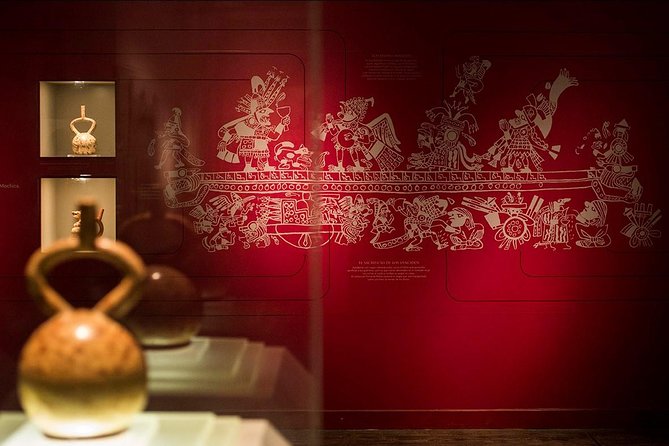
The Inca ruled for a relatively short period compared with the full span of Peruvian civilization. Long before the Inca, different societies developed farming, textiles, metalworking, architecture, religious traditions, and distinctive styles of ceramics. The museum’s chronological rooms let you follow those changes instead of treating every pre-Columbian object as if it belonged to one single culture.
That context matters. When you later see a ruin, a temple, a ceramic vessel, or a textile in Peru, you will have a better idea of the people and periods behind it. The museum also helps connect famous references such as the Nazca Lines to the wider cultures that existed before the Inca Empire.
I would particularly recommend visiting Larco early in your Peru trip. If your plans include Cusco, the Sacred Valley, Machu Picchu, or other archaeological sites, the museum gives you a useful framework before you arrive. If you have already been to those places, the visit works in reverse, helping you place what you saw into a larger timeline.
More Museum Visits in Lima
- Experience Lima: Gastronomic Evening at Larco Museum
★ 4.5 · 95 reviews - Larco Museum, Pisco Old Tavern and Magic Water Circuit Evening Tour
★ 4.5 · 66 reviews - Pachacamac’s Inka Pyramids Tour including Museum Small-Group
★ 5.0 · 65 reviews
Entering an 18th-century mansion built over a pyramid
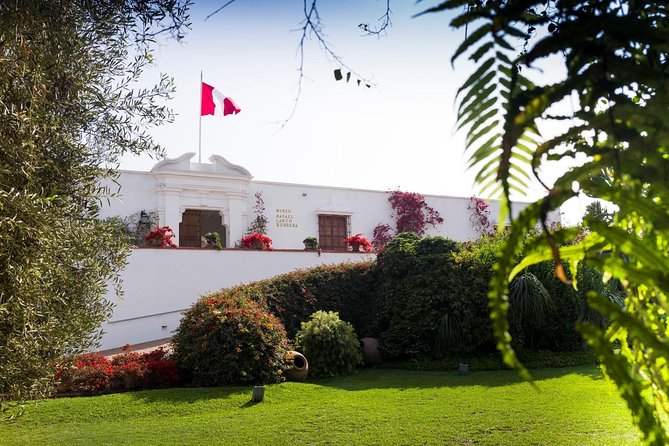
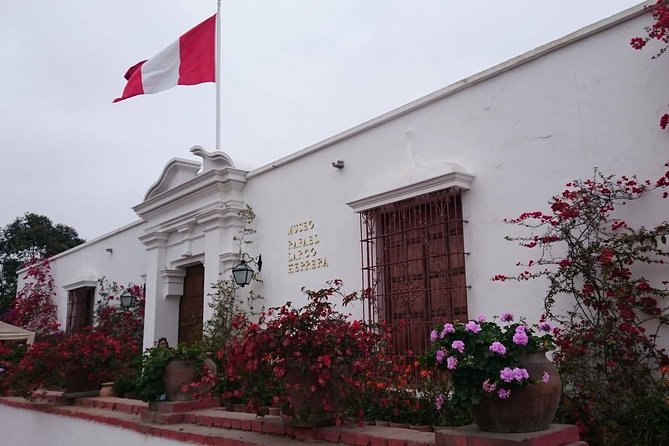
The setting prepares you for the museum before you see a single artifact. The collection is housed in an 18th-century colonial mansion, but the building sits on top of a 7th-century pre-Columbian pyramid.
That layering is one of the most interesting details of the visit. Peru’s past is not arranged in neat, separate boxes. Older structures often sit beneath later buildings, and colonial history exists directly above pre-Columbian foundations. Here, the building itself reflects that overlap.
The surrounding gardens add a welcome change of pace. After several rooms of ceramics, metalwork, and historical explanations, you can step outside among flowers and greenery. The garden setting also makes the museum feel less formal and enclosed than many archaeological collections.
The entrance area and gardens are especially pleasant if you are visiting with family or friends who may not want to spend every minute reading exhibit panels. You can move at different speeds, meet outside, or stop for a drink without ending the visit.
Following the chronological galleries
The main exhibition is organized in chronological order. That is a major strength because it gives you a steady sense of development across thousands of years.
You begin with early Peruvian cultures and move through the societies that came before the Inca. The displays show how artistic styles, religious ideas, technical skills, and daily life changed over time. The arrangement is made for independent exploration, and a museum map helps you find your way through the rooms.
The text beside the objects is available in multiple languages. This is important because the collection is large, and the objects mean more when you understand their use and cultural setting. You can simply admire the workmanship, but the written explanations help connect each piece to a particular period and society.
I would avoid rushing through this section. A quick walk gives you a pleasant view of beautiful objects, but the real value lies in noticing the differences from one period to another. Shapes, patterns, materials, and subject matter begin to make more sense as the timeline unfolds.
The museum also makes a good introduction for people who do not consider themselves archaeology enthusiasts. You do not need specialist knowledge to follow the basic story. The displays provide enough structure to keep the visit from feeling like a long room after long room of unconnected artifacts.
Gold, silver, ceramics, and the details of daily life
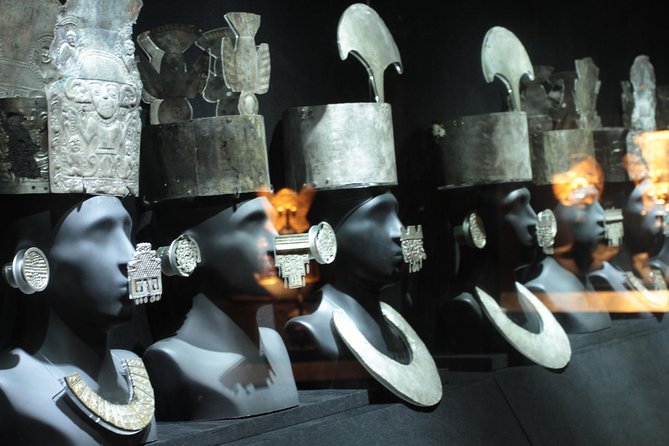
The gold and silver collection is one of the museum’s major attractions. Ancient Peruvian metalworkers produced objects with impressive technical skill, and the display gives you a chance to look closely at that work.
Yet the museum is not only about precious materials. Ceramics are central to the collection, and they often reveal more about ordinary life, beliefs, animals, clothing, ceremonies, and social roles than a glittering ornament can. The objects help show how ancient communities represented the world around them.
The collection is large enough to reward patience. You may notice vessels with familiar animals, carefully shaped human figures, or repeated designs that become easier to recognize as you progress through the rooms. Some objects are visually striking right away. Others become interesting only after you read the explanation beside them.
This is also where the museum’s organization pays off. Instead of seeing a gold object without context, you can compare it with ceramics and other materials from the same broad period. That comparison gives you a better sense of how an entire society worked, not just what its elite possessions looked like.
More museums worth an hour in Lima:
- From Lima: Pachacamac Inka Pyramids & The Larco Museum Tour
★ 4.8 · 43 reviews - Lima: Huaca Ruins and Larco Museum at Night with Dinner
★ 4.9 · 35 reviews - Lima city tour: Larco Museum and Huaca Pucllana
★ 4.8 · 33 reviews - Lima: Half-Day Colonial Lima and Larco Museum Tour
★ 4.9 · 31 reviews
The erotic art gallery, handled as history
The erotic art collection is the museum’s most unexpected section. It is not a side note that you happen to stumble upon. It forms a distinct part of the visit and presents a very different set of images from the more familiar displays of gold, pottery, and ceremonial objects.
The subject matter is explicit, so you should consider that before visiting with young children. Children must be accompanied by an adult, and families may want to decide in advance how they wish to approach this section.
For adults, the gallery offers a reminder that ancient societies expressed ideas about the body, sexuality, fertility, and social life in many different ways. It also challenges the narrow view that archaeology is only about temples, rulers, warfare, and treasure.
You may find the section surprising, amusing, or uncomfortable. That reaction is part of what makes it memorable. It broadens the picture of ancient Peru beyond the grand monuments that usually dominate travel plans.
The public storage area with 45,000 objects
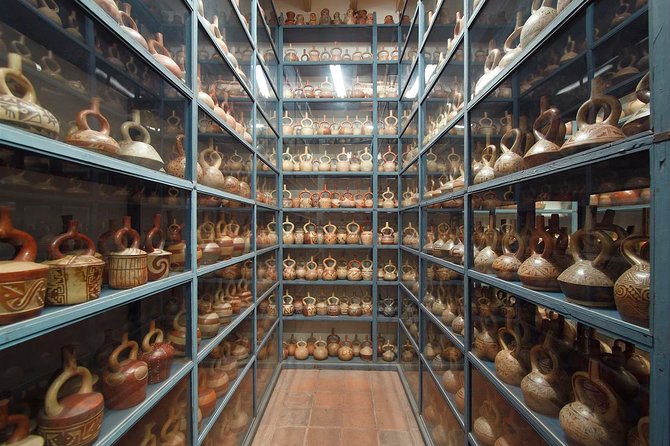
The storage area is one of the best reasons to allow extra time. It contains more than 45,000 classified archaeological objects that are open for the public to see.
Most museums show only a small selection of what they own. Larco gives you a look at a much larger body of material. The display has a less polished, more densely packed feel than the formal galleries, but that is precisely its appeal. You see variations, repeated forms, and objects that might not have made it into the main rooms.
I find this section useful because it shows how much archaeological evidence exists beyond the famous highlights. A single ceramic vessel in a main gallery can seem unique. In storage, you may see many related examples and begin to understand patterns in shape, decoration, and manufacture.
Do not treat the storage area as an optional afterthought. If you have an interest in ancient Peru, this may be the part you remember most clearly. It offers a sense of the scale of the museum’s holdings and gives you a closer look at the range of objects recovered and classified over time.
How much time should you allow?
The official estimate is one to two hours, but that is only a sensible minimum. If you move briskly and focus on the main rooms, you can see a good portion of the museum in that time.
I would allow two and a half to three hours if you want to read the descriptions, visit the storage area, enjoy the gardens, and stop at the restaurant. One visitor spent that long touring the displays and gardens, and that timing makes sense for anyone who prefers a thoughtful visit rather than a quick checklist stop.
A short visit works well if you have only one day in Lima. The museum is organized enough that you can get a useful overview without spending an entire day. If you have more time, slow down in the chronological galleries and compare objects from different periods.
The museum is open daily from 9 a.m. to 7 p.m. That broad schedule gives you flexibility. You can go in the morning, visit between other plans, or arrive later in the day. Since the ticket is valid during normal opening hours, you are not tied to a formal group departure.
The ticket, skip-the-line claims, and practical value
The price is $20.52 per person. That is more than a basic entry fee at some museums, so the value depends on how much use you make of the collection.
For a quick one-hour visit, the cost may feel less attractive. For two or three hours of well-organized exhibits, the public storage area, gardens, and the option to eat on site, it becomes easier to justify. The museum provides much more than a small display of famous objects.
The ticket is held at the box office for collection on the day of your visit. Confirmation is provided at booking. The supplied information describes it as a skip-the-line ticket, and advance entry can be useful when the museum is busy.
Still, you should keep expectations realistic. At least one visit during a quieter period found no line at all, so the time-saving feature may not always produce a major benefit. One person also reported needing to pay again at arrival because the ticket was not available in the app or had not been sent. That appears to be an individual booking problem, but I would check your confirmation carefully before you go.
The ticket includes entrance only. Food, drinks, hotel pickup, hotel drop-off, and a guide are not included. The museum is near public transportation, but you will need to arrange your own way there.
Self-guided visit or paid guide?
You can explore independently with the museum map and the written descriptions beside the objects. This works well if you enjoy setting your own pace or want to focus on particular periods and materials.
A guided option is available for an extra fee, but it is not part of this admission ticket. A guide could be useful if you prefer someone to explain the differences between cultures, point out details you might miss, or answer questions as you go.
I would choose the self-guided ticket if you are comfortable reading exhibit panels and want flexibility. I would consider paying for a guide if this is your first serious introduction to pre-Columbian Peru or if you find museum labels tiring.
The key point is simple: do not buy this ticket expecting a hosted tour. You are purchasing access to the museum, not a scheduled explanation from a guide.
Making a meal part of the visit
The on-site restaurant is repeatedly praised for its food, service, and atmosphere. The gardens provide a pleasant setting for lunch, dinner, coffee, dessert, or a glass of wine.
You do not need to eat there to enjoy the museum, and food is not included in the ticket. But the restaurant can make the visit feel less like a single indoor attraction and more like a relaxed outing.
If your schedule allows, I would save time for a meal or at least coffee and dessert. It is a practical way to pause after the galleries, especially if you have spent several hours reading and looking closely at objects.
The museum shop is another small bonus. It offers souvenirs and original items, with prices described as fair. That can be useful if you want something connected to Peruvian art and archaeology rather than a generic airport purchase.
Who will enjoy the Larco Museum most?
This museum suits you best if you want cultural context before visiting Peru’s major archaeological sites. It is also a strong choice for anyone interested in ancient art, Indigenous cultures, ceramics, metalwork, or the development of societies over time.
Families can visit, but adults should remember that the erotic art gallery is explicit. Children must be accompanied by an adult.
The museum also works well for solo visitors. The map, multilingual information, and chronological design make it easy to explore without joining a group. Couples and friends can split up for parts of the collection and meet in the gardens or restaurant.
You may be less satisfied if you want a short, tightly scheduled attraction with a guide included. You may also find the ticket less useful during a quiet period when there is no line to skip.
Should you book the Larco Museum ticket?
Yes, I would book it if you want a clear introduction to Peru’s pre-Columbian cultures and plan to spend at least two hours in the museum. The chronological galleries, gold and silver, erotic art, gardens, and especially the 45,000-object storage area give you a fuller picture than a standard highlight-only collection.
I would visit before Machu Picchu, Cusco, or the Nazca Lines if possible. The museum will not replace those places, but it will help you understand them.
Buy the ticket for convenience, not simply for the promise of skipping a line. Check your confirmation before arrival, remember that a guide costs extra, and allow time for the restaurant if you want the full outing. With a 4.9 out of 5 rating from 659 reviews and 98 percent recommendation, it has earned its place among Lima’s most worthwhile cultural stops.
FAQ
Where is the Larco Museum?
The Museo Larco is in Lima, Peru. It is near public transportation.
How long does a visit take?
The stated visit length is approximately one to two hours. If you read the displays, visit the storage area, and enjoy the gardens, you might spend two and a half to three hours.
What are the museum’s opening hours?
The museum is open Monday through Sunday from 9 a.m. to 7 p.m.
What does the ticket include?
The ticket includes the entrance fee to the Larco Museum.
Is a guided tour included?
No. This is an admission ticket only. A guide may be available for an extra fee, but guiding is not included.
Is food included in the ticket?
No. Food and drinks are not included. The museum has a restaurant where you can order separately.
Is the erotic art suitable for children?
The museum includes an erotic art collection. Children must be accompanied by an adult, so families should decide how they want to handle that gallery.
Can I cancel the booking?
Yes. You can cancel at least 24 hours before the experience start time for a full refund. Cancellations made less than 24 hours in advance are not refunded.
More Skip the Line in Lima
- Skip the Line: Planetarium Cusco Admission Ticket
★ 4.5 · 193 reviews - Cusco: Pub Crawl with Skip-the-Line Access and Drinks
★ 4.6 · 57 reviews - Arequipa: Pub Crawl with Skip-The-Line Access and Drinks
★ 3.0 · 4 reviews
Added recently around Lima
- Tour to the sanctuary of Pachacamac★ 4.8 · 8 reviews
- Tour to the magical water circuit with dinner and dance show★ 5.0 · 4 reviews
- Tour of Lima with a visit to the catacombs of San Francisco.★ 4.2 · 24 reviews
- Tour Huaca Pucllana: Pyramids and Pre-Columbian Antiquity★ 4.3 · 12 reviews
- Lima: Palomino Islands Speedboat Tour & Swim with Sea Lions★ 4.8 · 33 reviews
- Surfing experience in Lima★ 5.0 · 6 reviews
- Sandbording in Lima★ 5.0 · 12 reviews
- Pro Sanboarding or skiing in Huacachina from Lima – Day trip★ 4.6 · 8 reviews
Museums, compared.

City Tour in Cusco & visit Museum South American Camelid Private.
Read our review →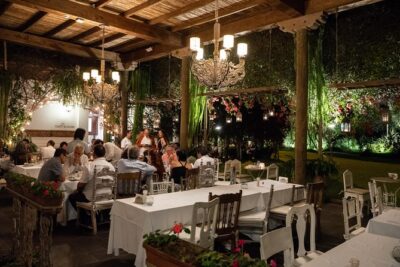
Experience Lima: Gastronomic Evening at Larco Museum
Read our review →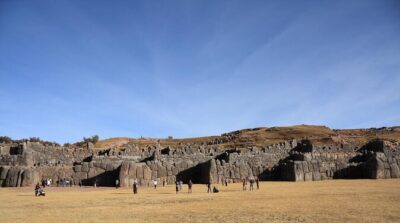
City Tour in Cusco & visit Museum South American Camelid
Read our review →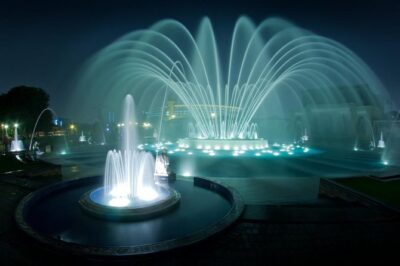
Larco Museum, Pisco Old Tavern and Magic Water Circuit Evening Tour
Read our review →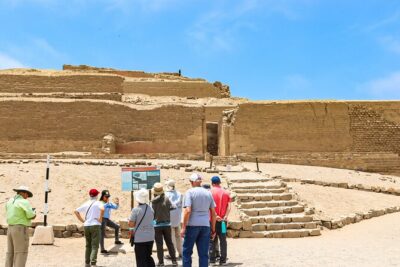
Pachacamac’s Inka Pyramids Tour including Museum Small-Group
Read our review →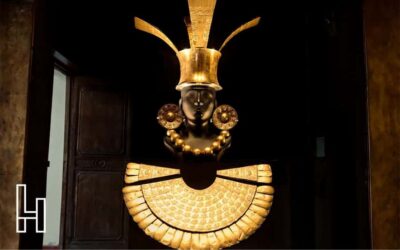
Pachacamac Inka Pyramids & The Larco Museum Tour
Read our review →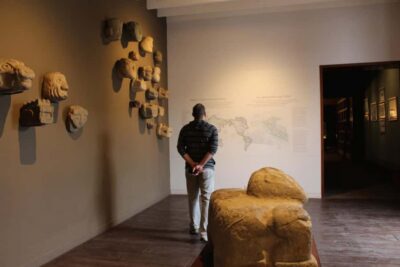
Huaca Ruins and Larco Museum at Night with Dinner
Read our review →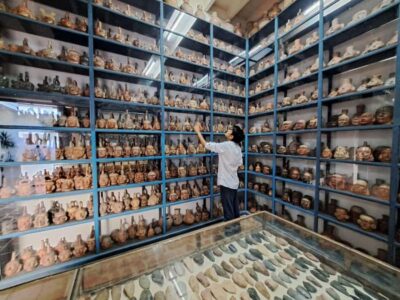
Browse the lists this tour appears in