
Reviewed · INCA RUINS & ARCHAEOLOGICAL SITES
Pre Inca Temple of Pachacamac Half-Day Tour from Lima
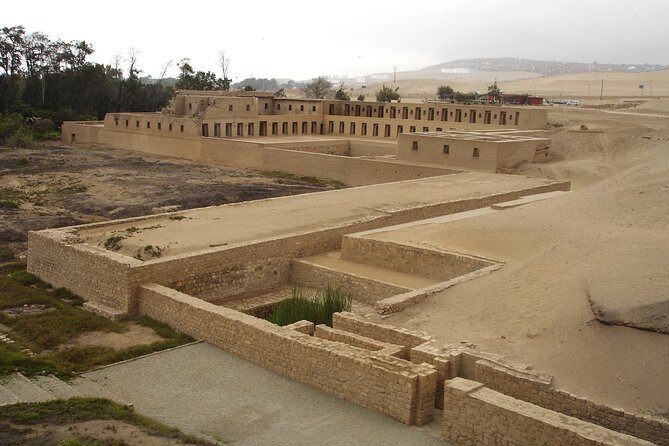
Ancient adobe rises beside Lima. The Pachacamac sanctuary gives you a close look at coastal Peru’s old cultures without leaving the capital, and I like the included museum visit and the small group size, capped at 12 people. The main drawback is time: three and a half hours can feel tight, especially if you want to linger at the Temple of the Sun.
The tour also takes care of hotel pickup, admission, transport, and the return trip. Guides such as Mario, Nataly, Eduardo, Edwin, Sonia, Victor, Olinda, and Mayron have earned praise for clear English, patience, and strong storytelling. Just remember to use the restroom before walking into the site, since there may be no facilities along the route.
In This Review
- Key points to know before you book
- Why Pachacamac makes a good Lima half-day
- The coastal drive from Lima to the ruins
- Starting with the Site Museum
- Walking among adobe walls and ceremonial buildings
- Reaching the Temple of the Sun
- The cultures behind the sanctuary
- How long the walking feels
- What the $79 price includes
- Guides, drivers, and the human side of the visit
- The views and the wider setting
- Who should book this tour
- Booking, cancellation, and practical details
- FAQ
- Where is Pachacamac located?
- What time does the tour start?
- Is hotel pickup included?
- Is admission to the museum included?
- How many people can join the tour?
- How long does the experience last?
- Should you book the Pachacamac half-day tour?
Key points to know before you book
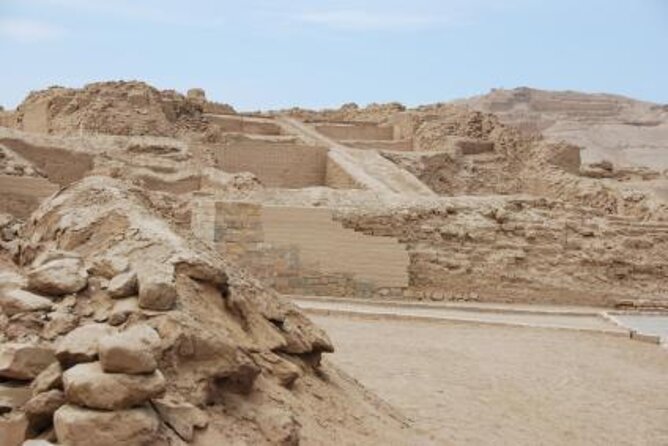
- Pachacamac sits about 30 kilometers south of Lima, making it one of the easiest major archaeological visits from the city.
- The Temple of the Sun used an estimated 50 million adobe bricks, a remarkable sign of the site’s size and labor.
- The museum comes early in the visit, helping you understand the objects, textiles, and cultures connected with the ruins.
- Hotel pickup and admission are included, so the $79 price covers the main practical costs.
- The group has a maximum of 12 people, though several departures have operated with only one or two participants.
- A restroom stop matters, since the long walking route may not offer another convenient chance.
Why Pachacamac makes a good Lima half-day
Lima is often treated as a starting point for Peru’s better-known sights. Pachacamac shows why the capital deserves time of its own.
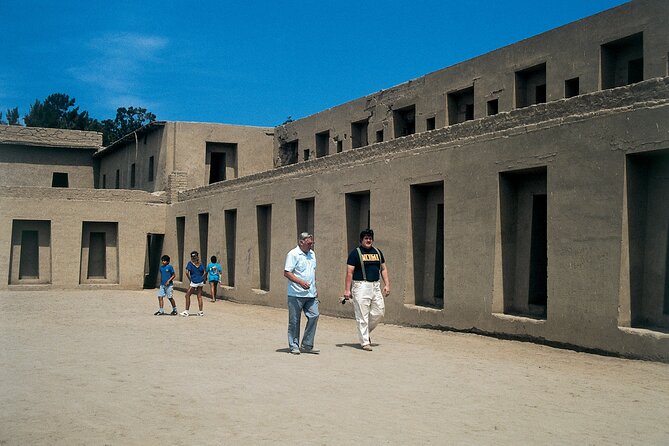
The sanctuary lies about 30 kilometers south of central Lima, near the Lurin River valley and the Pacific coast. You ride there in an air-conditioned minivan, usually leaving at 9:00 a.m., then spend roughly three hours at the archaeological complex and museum before returning to the city.
That timing works well if you have only a few days in Lima. It also suits the end of a trip, when you have a late flight and want a worthwhile morning activity. You get ancient architecture, a museum, wide views, and a guide who can explain how the site connects to Peru’s larger story.
Pachacamac was not built by just one people. It served as a pilgrimage center for several cultures that developed in ancient Peru. Later, the Incas took control and adapted the complex for administration while keeping and modifying earlier buildings.
That mixture is the real appeal. You are not looking at one cleanly defined monument from one short period. You are seeing a large adobe center shaped over centuries by changing religious and political powers.
More Ruins & Archaeology Tours in Lima
- Lima: Pachacamac Ruins & Barranco Half-Day Guided Tour
★ 4.6 · 296 reviews - Tour to the Archaeological Sanctuary of Pachacamac (small group)
★ 5.0 · 260 reviews - From Pyramids & Bohemian Streets: Lima Miraflores & Barranco Tour
★ 5.0 · 257 reviews
The coastal drive from Lima to the ruins
The drive is part of the orientation. As the minivan heads south, your guide may explain Lima, Peru’s past, and the region around the sanctuary. Marco Polo, for example, was praised for keeping the bus ride interesting with stories about the country as well as the ruins.
Pickup from your hotel or lodging is included, which saves you from arranging a taxi to a site outside the city. That matters in Lima, where a guided vehicle also removes the need to work out the route, admission, and return transport yourself.
The minivan is air-conditioned, a welcome feature in a city where the sun, wind, or road conditions can make an open vehicle uncomfortable. The small group limit of 12 should give you a better chance to hear the guide and ask questions than a large coach tour.
Group size is not guaranteed to be small in practice, but several departures have had only one participant or a couple. Those lucky departures became private or nearly private visits. Even with a full group, the limit is modest enough for personal attention.
Starting with the Site Museum
The museum helps give shape to what you are about to see. Pachacamac is a wide adobe complex, and much of it can look like walls, ramps, platforms, and earth-colored mounds if you arrive without context.
Inside, you can examine salvaged remains, artifacts, and textiles connected with the site. The displays also help explain the cultures associated with the area, including the Moche and Huari, whose influence in the region dates to the period from about 200 to 800 AD.
I like having the museum near the beginning rather than treating it as an afterthought. Once you see objects and learn about the religious role of the sanctuary, the outdoor structures become easier to read.
The museum is also useful when the weather makes outdoor viewing less comfortable. Several hours among exposed adobe walls can be tiring, so this indoor portion gives the visit a change of pace.
Walking among adobe walls and ceremonial buildings
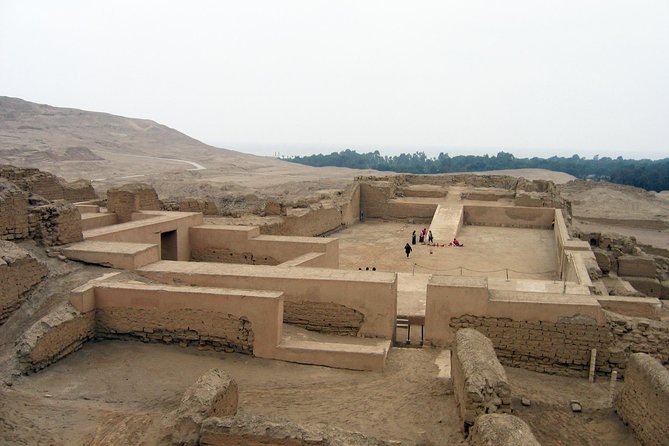
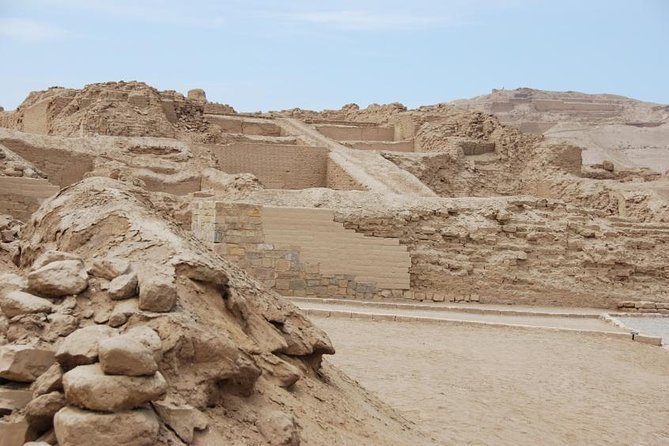
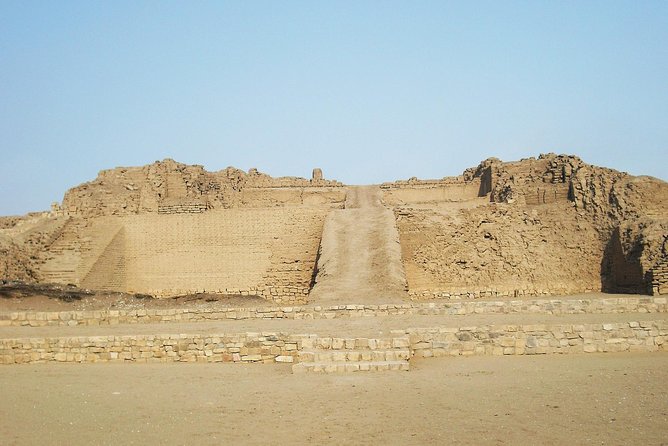
Pachacamac was built mainly from adobe, or sun-dried mud brick. The scale is hard to grasp from a single photograph. The Temple of the Sun alone is said to contain an estimated 50 million sun-dried bricks.
You will see both original remains and areas where walls have been repaired or relaid. That mix is important. Restored sections help you understand the original shape, while surviving portions show the fragile, uneven condition of an ancient adobe site.
The complex includes the Temple of the Sun, the Acllahuasi, the Palace of Taurichumbi, and the Pilgrimage Plaza, among other structures. Your guide explains how the buildings served religious and administrative purposes, rather than leaving you to guess from the ruins.
Colorful murals are also part of the story. They offer a reminder that these buildings were not always plain brown walls. Decorative surfaces and painted details once gave the compound a different appearance from the weathered adobe you see today.
The site remains partly excavated, and archaeological work continues. That gives the visit a sense of discovery, but it also means you should not expect every building to be complete or fully restored.
More ruins and archaeology near Lima:
- Caral, The Oldest Civilization in the Americas:Day Trip from Lima
★ 5.0 · 199 reviews - Lima: Pachacamac Inca Archaeological Complex Tour
★ 4.8 · 164 reviews - Lima Bike Tour Miraflores – Barranco + Huaca Pucllana!
★ 4.5 · 137 reviews - Lima:Half-Day Pachacamac, Barranco & Chorrillos Private Tour
★ 4.8 · 76 reviews
Reaching the Temple of the Sun
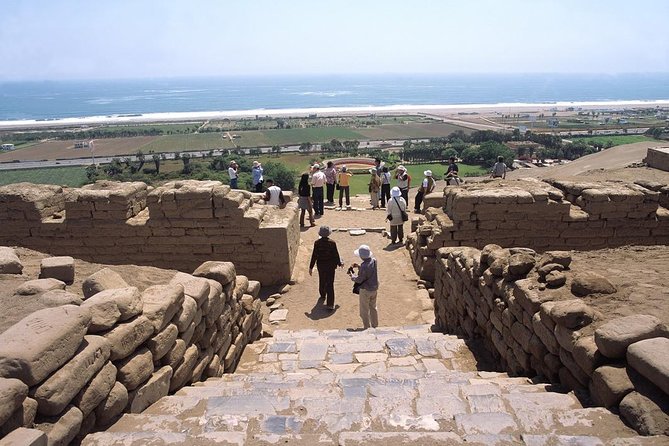
The Temple of the Sun is the visual high point for many people. The walk takes you upward, and from the top you can look toward the sea and across the Lurin River valley.
Those views add something that the museum and lower walls cannot provide. From above, you can better understand the sanctuary’s position and size. The combination of religious architecture, open ground, nearby development, and the Pacific horizon makes this more than a series of disconnected ruins.
The climb is manageable for people comfortable with moderate walking, but the exact pace can shape your experience. Mayron was praised for adjusting the visit to suit physical abilities, and Daniel was noted for allowing time to walk comfortably. If you need a slower pace, say so early.
One practical warning is especially useful here: the route may not include restrooms after the entrance area. Go before the outdoor portion begins. It is a small detail, but it can make a big difference during a three-hour site visit.
One person felt the schedule did not allow enough time to properly explore the Temple of the Sun. That is the clearest weakness of the tour. The guide must cover the museum and several parts of a large compound within a limited window, so you may need to choose between lingering for photographs and keeping up with the group.
The cultures behind the sanctuary
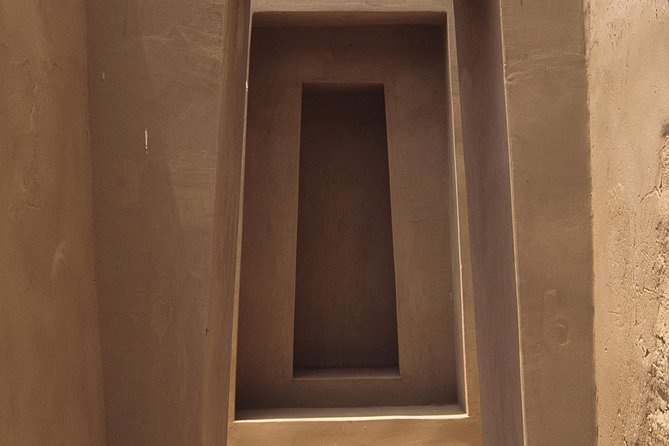
Pachacamac is valuable because it broadens your picture of Peru beyond the Inca Empire.
The site had already served as a pilgrimage center before the Incas arrived. The tour connects the ruins with the Moche and Huari cultures, and then explains how the Incas adapted the compound for their own purposes.
That layered story helps correct a common travel mistake: treating every pre-Columbian site as simply Inca. Here, the Inca period is one chapter in a longer sequence.
The guide’s role matters a great deal. Strong guides have been praised for explaining the architecture clearly, answering questions patiently, and adding information about life in Lima and Peru today. Eduardo was especially appreciated for linking the sanctuary to broader life in the country, while Sonia was praised for thorough explanations during a quieter, one-person departure.
English ability also appears to be a strength of this experience. Guides including Edwin, Victor, Olinda, and MP were praised for clear communication and engaging delivery. Still, individual guide quality can vary from departure to departure, as it can on any guided excursion.
How long the walking feels
The stated tour duration is about three hours and 30 minutes, with approximately three hours at Pachacamac. That is enough for a useful first visit, but not enough for every corner of a huge archaeological compound.
You will walk between the museum, plazas, adobe buildings, and elevated areas. The route includes steps or uphill sections toward the Temple of the Sun, so bring shoes you can walk in comfortably.
Wind can be a factor. One departure was described as enjoyable despite windy conditions, and the site’s open position near the coast makes that easy to understand. A light layer is sensible, even if Lima feels mild when you leave your hotel.
The tour suits most people who can manage moderate movement. It may be less suitable if you want a slow archaeological study with long pauses at each building. For that kind of visit, an independent return or a longer private arrangement would offer more control, but this half-day option is easier and more structured.
What the $79 price includes
At $79 per person, this is not the cheapest possible way to see Pachacamac. But the price includes the items that often create trouble on a short city excursion:
- Hotel or lodging pickup and drop-off
- Air-conditioned vehicle
- Professional bilingual English-Spanish guide
- Admission to Pachacamac
- Admission to the Site Museum
That package gives the tour fair value. You are paying for transport beyond central Lima, entry, interpretation, and the convenience of returning to your accommodation without arranging another ride.
The value is strongest if you are staying in Lima for a short time, dislike negotiating transport, or want historical context instead of simply walking around the ruins. It is also attractive for solo visitors. With a small group, you may receive plenty of direct attention, and some departures have effectively become private tours without an extra private-tour charge.
If you are already comfortable arranging transport and prefer to spend as long as possible at one site, the fixed schedule may feel less worthwhile. The experience is designed for convenience and explanation, not unlimited time.
Guides, drivers, and the human side of the visit
The strongest praise has centered on the guides and drivers. Punctual hotel pickup, safe driving, and clear explanations repeatedly shape the positive experience.
Drivers such as Luis, Angel, Carlos, and others have been praised for making the ride comfortable and safe. That may sound basic, but it is important when you are leaving central Lima for a major site outside the city.
The best guide moments come through conversation. You can ask about construction methods, the role of pilgrimage, the different brick shapes from different periods, or how archaeologists know which sections belong to which era.
Olinda was praised for kind, careful explanations, while Victor was praised for patience and strong English. Willian, Ursula, Nataly, Mila Campos, Marco Polo, and MP also received strong personal praise for making the information easy to follow.
Do not be shy about asking questions. The guides seem to respond well to curiosity, and a question can turn a standard walk past a wall into a much clearer explanation of its purpose.
The views and the wider setting
The view from the Temple of the Sun is one of the tour’s best rewards. Looking toward the ocean gives the site a strong sense of place, while the view across the valley helps explain why this location mattered.
Some routes also pass areas where you can look toward modern facilities, open grounds, and nearby properties. One detailed account described views of a bullring and a polo field, along with sections interpreted as an Inca route running north and south. These details show how ancient remains sit beside the modern outskirts of Lima.
The contrast can be striking. Pachacamac is not an isolated ruin surrounded only by wilderness. It is an archaeological sanctuary near a major city, with old walls and modern life sharing the same broad setting.
That urban proximity is both a strength and a limitation. You can reach it easily from Lima, but you should not expect a remote, untouched setting.
Who should book this tour
I would choose this tour if you want a half-day history outing with the practical work handled for you. It is especially well suited to:
- First-time visitors spending limited time in Lima
- People interested in Moche, Huari, and Inca cultures
- Solo visitors who value guide interaction
- Couples and families wanting a structured morning
- Anyone with a late flight who needs a useful final activity
- Visitors who prefer a museum and guided explanation alongside ruins
You may want another option if you need a very slow pace, extensive photography time, or a full archaeological survey. The tour covers a lot, and the Temple of the Sun may receive less time than you expect.
The experience is also a good complement to a Cusco or Machu Picchu trip. It lets you see an important coastal site and understand that Peru’s ancient past was not limited to the highlands.
Booking, cancellation, and practical details
The tour begins at 9:00 a.m., and confirmation is provided when you book. The group maximum is 12 people, and most people can participate, though the walk includes moderate movement and uphill sections.
Free cancellation is available if you cancel at least 24 hours before the start time. Cancellations or changes made later are not accepted for a refund, and the cut-off follows local time.
Bring water, sun protection, and a light layer for the coastal wind. Use the restroom at the entrance or ticket area before setting out, since there may be no restroom along the walking route.
FAQ
Where is Pachacamac located?
Pachacamac is about 30 kilometers, or 19 miles, south of Lima, near the Lurin River valley and the sea.
What time does the tour start?
The stated start time is 9:00 a.m.
Is hotel pickup included?
Yes. Pickup and drop-off from your hotel or lodging are included.
Is admission to the museum included?
Yes. The price includes admission to the Temple of Pachacamac and the Site Museum.
How many people can join the tour?
The tour has a maximum of 12 travelers.
How long does the experience last?
The full experience lasts about three hours and 30 minutes, with approximately three hours spent at Pachacamac.
Should you book the Pachacamac half-day tour?
Book it if you want an easy, well-organized way to see one of Lima’s major archaeological sites without spending a full day away from the city. The included transport, admission, museum, and bilingual guide make $79 reasonable, especially for solo visitors or anyone short on time.
The main trade-off is the fixed pace. You may not get as long as you want at the Temple of the Sun, and the walking route leaves little room for delays. Still, for a morning of adobe temples, coastal views, museum displays, and useful cultural context, this is a strong choice.
If the history matters more to you than checking off sights, ask questions and tell your guide about your walking pace. That is where this tour offers its best value.
Added recently around Lima
- Tour to the sanctuary of Pachacamac★ 4.8 · 8 reviews
- Tour to the magical water circuit with dinner and dance show★ 5.0 · 4 reviews
- Tour of Lima with a visit to the catacombs of San Francisco.★ 4.2 · 24 reviews
- Tour Huaca Pucllana: Pyramids and Pre-Columbian Antiquity★ 4.3 · 12 reviews
- Lima: Palomino Islands Speedboat Tour & Swim with Sea Lions★ 4.8 · 33 reviews
- Surfing experience in Lima★ 5.0 · 6 reviews
- Sandbording in Lima★ 5.0 · 12 reviews
- Pro Sanboarding or skiing in Huacachina from Lima – Day trip★ 4.6 · 8 reviews
Inca Ruins & Archaeological Sites, compared.
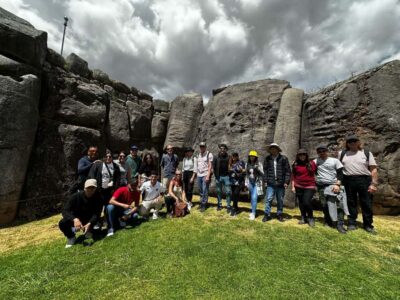
Half-Day City Tour with Sacsayhuaman and Q’enco
Read our review →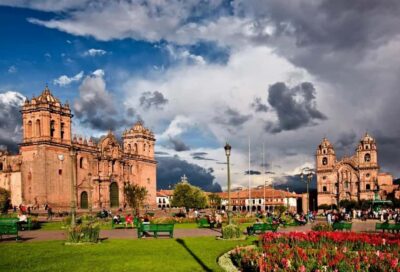
City Tour Cusco Qoricancha Sacsayhuaman y Tambomachay
Read our review →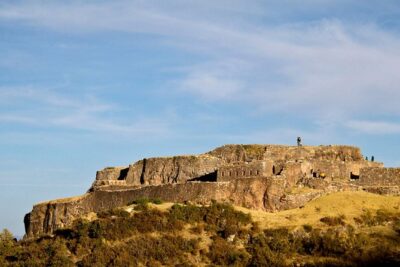
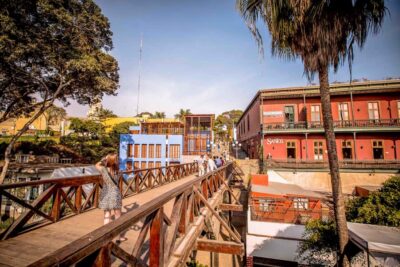
Pachacamac Ruins & Barranco Half-Day Guided Tour
Read our review →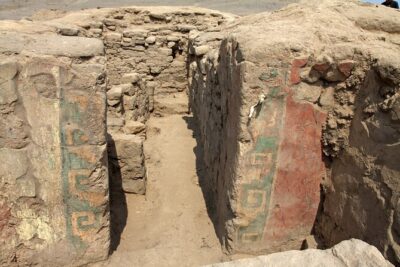
Tour to the Archaeological Sanctuary of Pachacamac (small group)
Read our review →
From Pyramids & Bohemian Streets: Lima Miraflores & Barranco Tour
Read our review →
City Tour | Half-Day Tour to 4 Archaeological Sites
Read our review →
Caral, The Oldest Civilization in the Americas:Day Trip from Lima
Read our review →Browse the lists this tour appears in