
Reviewed · BUFFET EXPERIENCES
Puno: Scenic Sun Route to Cusco with Buffet Lunch
The long way to Cusco is the memorable way. This 10-hour journey follows Peru’s historic Sun Route, linking Puno and Cusco with ancient temples, high mountain views, a buffet lunch, and several useful stops along the way. Instead of spending the transfer in an airplane or on a train, you get a day of culture and scenery.
I like the well-spaced itinerary, which breaks up the road time with five worthwhile stops. I also like the strong value, since transport, guiding, drinks, onboard facilities, and lunch are included for $45.
The main catch is the extra entrance cost of 53 soles for three attractions. The early 6:30 am start, high altitude, and nearly full day on the road also require some stamina.
In This Review
- Key points before you book
- Why the Sun Route works better than a simple transfer
- Pucará and the first chapter of highland civilization
- La Raya Pass at 4,335 meters
- Lunch in Marangani near Sicuani
- Raqchi and the huge Temple of Wiracocha
- Andahuaylillas Church, the colorful finale
- What the $45 price really covers
- The practical side of a 10-hour group journey
- Who should choose this route?
- Should you book the Puno to Cusco Sun Route?
- FAQ
- How long does the Puno to Cusco tour take?
- Where does the tour begin and end?
- Is lunch included?
- Are entrance tickets included?
- What is the highest point on the route?
- What is included on the vehicle?
Key points before you book
- Five meaningful stops: Pucará, La Raya Pass, Raqchi, Andahuaylillas, and a buffet lunch in Marangani near Sicuani.
- Highest point: La Raya reaches 4,335 meters, or about 14,200 feet, with broad views of the Andes.
- Best cultural stop: Andahuaylillas Church packs gold-leaf altars and wall frescoes into a modest village building.
- Food included: The buffet offers quinoa soup, grilled meats, native potatoes, vegetables, and traditional sauces.
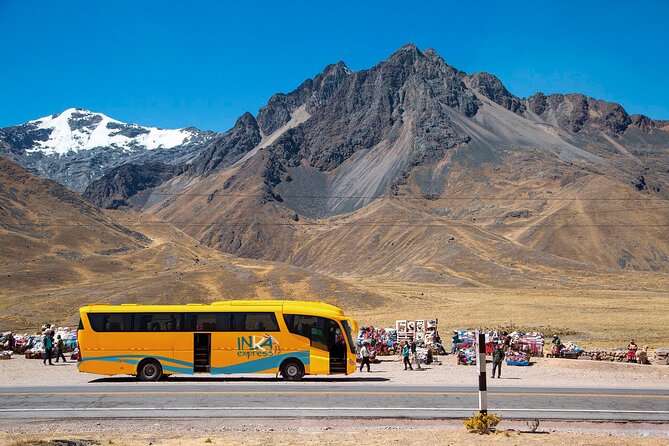
- Useful onboard comforts: Air conditioning, hot and cold drinks, a restroom, and an oxygen tank are provided.
- Plan for extra fees: Entrance tickets to Pucará, Raqchi, and Andahuaylillas cost 53 soles and are not included.
Why the Sun Route works better than a simple transfer
Puno and Cusco are connected by road, but the trip is not just a way to get from one city to another. The route crosses the high Altiplano and follows a chain of places that explain how Andean culture developed before, during, and after the Inca period.
You leave from the Puno bus terminal at 6:30 am and arrive at Alameda Pachacuteq 499b in Cusco. The journey takes about 10 hours, so this works best when you need to move between the two cities and want to turn a transfer day into a sightseeing day.
The longest stretch of driving comes near the beginning and lasts about 1 hour and 40 minutes. After that, the stops are spaced fairly evenly, which makes the day feel less tiring than one long ride with no breaks.
The service is described as private luxury transport, though the maximum group size is 40 people. That means you should expect a proper group excursion rather than a personal car with a flexible schedule. The upside is a lower price and an organized route. The tradeoff is that you will follow the set timing at every stop.
Guides such as Ellie, Edwin, and Manuel have been associated with this service. The guiding is an important part of the day because the sites are more rewarding when someone explains the history, geography, and beliefs behind them. Ellie is noted for speaking both English and Spanish clearly, while Manuel’s explanations have been praised for being easy to follow.
A few more Puno trips worth lining up side by side
- From Cusco: Vinicunca Rainbow Mountain ATV Tour with Meals
★ 4.6 · 1,060 reviews - From Puno: Uros, Amantaní & Taquile Islands 2-Day Tour
★ 4.5 · 452 reviews - Tour to Uros and Taquile Islands in a Fast Boat
★ 5.0 · 419 reviews
Pucará and the first chapter of highland civilization
The first stop is the Lithic Museum of Pukara, also written as Pucará. You have about 45 minutes here, and the admission fee is separate.
Pucará dates back to around 500 BC and represents one of the earliest major cultures in the Lake Titicaca region. At its height, the settlement covered roughly one square kilometer and supported priests, artisans, farmers, and warriors. That gives the stop real weight: you are not looking at an isolated artifact collection, but at evidence of an organized highland society.
The museum is especially useful for seeing Pucará’s stone sculpture and ceramics. Look for geometric patterns and carvings of people and animals. These objects give you an early glimpse of artistic ideas that continued to shape Andean culture long before the Inca Empire.
Forty-five minutes is enough for a guided visit, but not enough for a slow, academic study of every object. If ancient cultures are your main interest, the stop may feel brief. For most people, though, it is a good opening lesson before the trip moves into Inca territory.
Small merchant stalls are found at many stops along the route, including Pucará. You may find inexpensive souvenirs here, but keep your purchases modest if you do not want to carry them all the way to Cusco.
La Raya Pass at 4,335 meters
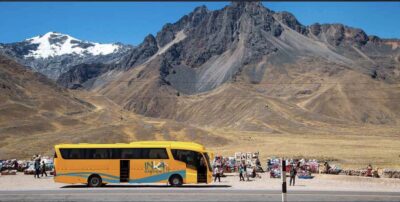
After Pucará, the road climbs toward Abra La Raya, the natural border between the Puno and Cusco regions. This is the highest point of the trip, at 4,335 meters above sea level.
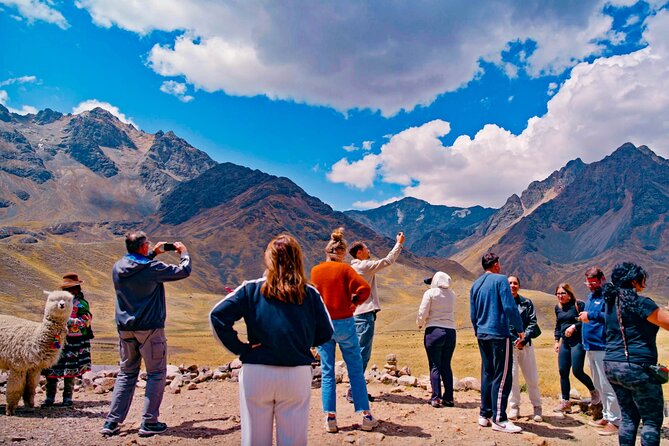
You get about 20 minutes at the pass. That is enough time for photographs and a quick look at the snow-capped peaks, glacial streams, open sky, and alpacas grazing nearby. The view is broad and spare, with the kind of silence that makes even a short stop feel worthwhile.
The altitude is the key practical issue. Even if you have already spent time in Puno, 4,335 meters can affect you. Move slowly, avoid rushing up slopes or steps, and use the short stop to breathe and take in the view rather than trying to do too much. The vehicle carries an oxygen tank, which is reassuring, though it is still sensible to take the altitude seriously.
La Raya is mainly a scenic stop, not a place for an extended walk. Weather can change quickly in the high Andes. A light shower was reported during a December journey, but it passed quickly. Bring a warm layer and rain protection, even if the morning begins clear.
Lunch in Marangani near Sicuani
The included buffet lunch is served at Andes Perú in the Marangani and Sicuani area. You have one hour to eat, rest, and prepare for the second half of the drive.
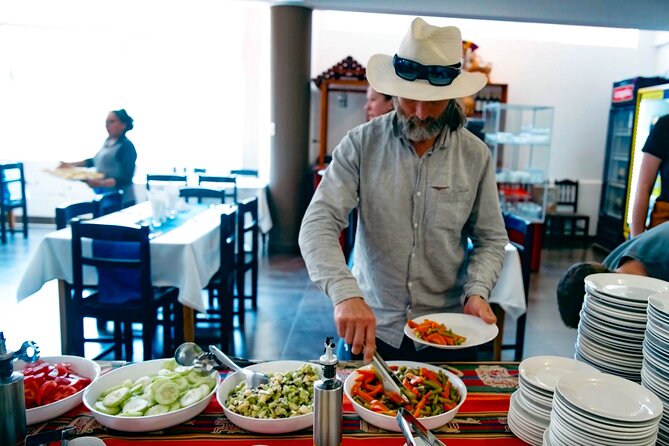
This is more than a basic roadside meal. The buffet includes quinoa soups, grilled meats, native potatoes, vegetables, and regional sauces. Vegetarian choices are available, so you can eat well even if you do not want meat. Hot and cold drinks are also provided as part of the service.
I would treat lunch as one of the strongest value points. A separate restaurant meal can take time and planning during a long transfer, while this stop keeps the group together and gives you a proper break. The dining hall is described as clean and comfortable, with views and friendly service.
One caution: one assessment found the buffet somewhat expensive, even though it offered a broad sample of Peruvian foods. Since lunch is included in this package, that concern matters less here. You are paying for convenience as well as food, and the meal helps prevent the journey from becoming a tiring series of rushed roadside stops.
If you want to try several local dishes in one sitting, the buffet is a good chance to do it. Quinoa soup, potatoes, grilled meat, vegetables, and sauces let you sample familiar Andean ingredients without committing to one large plate.
Also leaving from Puno, and nothing like the above:
- From Puno: Floating Islands of the Uros Half-Day Tour
★ 4.4 · 394 reviews - Uros and Taquile Islands on New and Comfortable SpeedBoat
★ 4.5 · 254 reviews - Lake Titicaca (Day Trip) Uros & Taquile Islands
★ 4.5 · 245 reviews - Lake Titicaca 2-Day Tour to Uros, Amantani and Taquile
★ 4.4 · 199 reviews
Raqchi and the huge Temple of Wiracocha
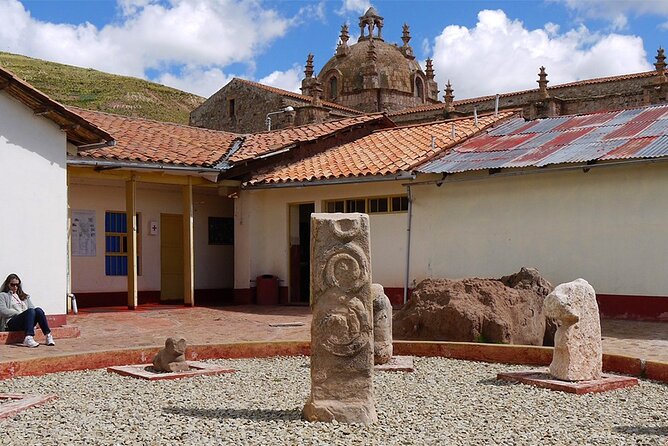
The next major stop is the Archaeological Park of Raqchi. The visit lasts about one hour, and admission is not included.
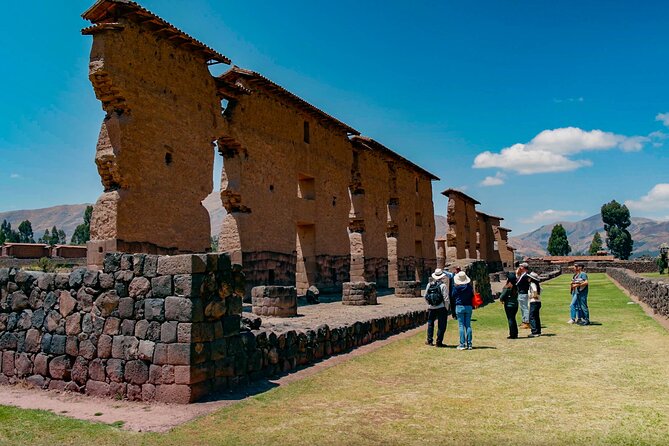
Raqchi is one of the most impressive sites on this route because of its scale. The centerpiece is the Temple of Wiracocha, a structure that once reached about 15 meters high. Wiracocha was regarded by Andean people as an invisible superior god, and the temple’s size reflects the importance of the site.
You will see partial walls, ceremonial areas, and storage silos connected with the former settlement. The remaining stonework and layout help you picture Raqchi as a working religious and administrative center, not simply a ruin viewed from a distance.
This stop rewards a guide who can explain how the buildings fit together. Without context, you may see walls and foundations. With a good explanation, you can better understand the planning, engineering, and religious purpose behind them.
The hour gives you time to walk through the main area without turning the visit into a long archaeological expedition. The site can also be a strong shopping stop, since vendors often sell handmade items nearby. Prices may be low, but compare pieces before buying and keep an eye on your available space.
Andahuaylillas Church, the colorful finale
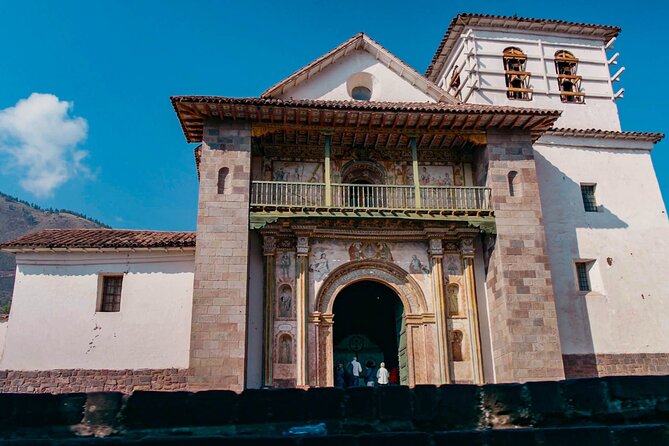
The final attraction is San Pedro Apostol de Andahuaylillas, a 16th-century church often called the Sistine Chapel of the Andes. You have about 45 minutes here, and the entrance fee is separate.
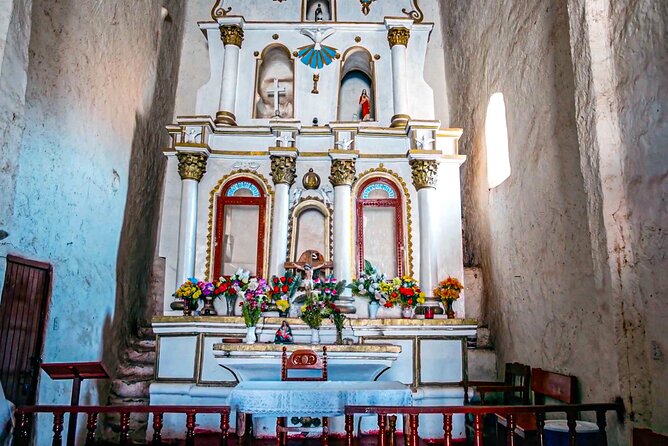
From the outside, the church can look fairly plain. Inside, it becomes a very different experience, with gold-leaf altars, carved wood, and frescoes covering the walls and ceiling. European baroque design mixes with Andean ideas, creating an interior that is both ornate and distinctly local.
The church was built by Jesuits on a site considered sacred before Spanish rule. That layering is what makes the visit so powerful. You are seeing Catholic art used in a place where older Andean beliefs and sacred geography still mattered.
Photography rules may affect how you experience the interior, but even a short visit gives you plenty to examine. Look closely at the painted details and the way the church uses color to teach religious stories. The building is a fitting final stop because it brings together the route’s main themes: pre-Inca culture, Inca power, Spanish colonization, and Andean tradition.
If you care more about dramatic interiors than open archaeological sites, Andahuaylillas may be your favorite stop. If you prefer ruins and mountain scenery, you may rate Raqchi or La Raya higher.
What the $45 price really covers
At $45 per person, this is a strong-value way to travel from Puno to Cusco. You receive transport, a guide, buffet lunch, hot and cold drinks, air conditioning, an onboard restroom, and access to an oxygen tank.
The price is especially attractive when compared with arranging separate transport, meals, and visits yourself. You also avoid spending the entire day inside a plane or train. The service turns a necessary travel day into a guided cultural route.
Remember to add 53 soles for entrance tickets to the Pucará Museum, Raqchi Complex, and Andahuaylillas Church. These fees are not included. There is also a small 1.90-sol fee per person at the Puno bus station for access to the buses.
The extra costs are modest, but you should carry local currency so you are not caught off guard. The tour’s low advertised price is most accurate when you include the entry fees in your budget from the start.
The practical side of a 10-hour group journey
The 6:30 am departure means an early morning at the Puno terminal. Arrive with enough time to find the meeting point at Terminal Terrestre Puno, located at Puno 21001.
You will spend much of the day in the vehicle, but the stops are designed to break up the ride. The onboard restroom is useful, although it is intended for basic needs. A direct note from the service is that you cannot use it for a bowel movement, so use the free toilets available at most stops.
The vehicle has air conditioning, and hot and cold drinks are available onboard. Those details matter on a high-altitude route where the weather can shift between cold, sun, and rain.
Most people can participate, and the group can reach 40 people. If you want a private guide, frequent photo breaks, or freedom to linger at one site, this is not the right format. If you value a clear schedule and a social group journey, the arrangement makes sense.
The service ends in Cusco at Alameda Pachacuteq 499b. That is convenient for continuing into the city, but you should organize your next local ride if your accommodation is elsewhere.
Who should choose this route?
I would choose this experience if you need to travel from Puno to Cusco and want more than a basic bus ride. It suits people interested in archaeology, colonial art, Andean food, and high mountain scenery.
It is also a good option for first-time visitors who want a guide to connect the stops. The explanations can add a lot, especially at Pucará and Raqchi, where the remains make more sense with historical context.
You should think twice if you dislike early starts, long road journeys, or fixed group schedules. The day is full, and the altitude at La Raya can be demanding. Families and older adults may still manage it, since most travelers can participate, but everyone should be comfortable with a long transfer day.
The free cancellation policy gives you some flexibility: you can cancel up to 24 hours before the start time for a full refund. Changes or cancellations made within 24 hours are not accepted for a refund.
Should you book the Puno to Cusco Sun Route?
Book it if you want the best mix of transport and sightseeing for about $45. The route gives you five distinct experiences, and the most praised features are the guides’ clear explanations, the well-planned stops, the generous buffet, and the overall value.
Bring warm clothing, rain protection, local currency, and water. Budget for the 53 soles in entrance fees and the small bus-station charge. Most of all, accept that this is a full day on the road.
If you prefer speed, fly. If you want a transfer filled with ancient sites, mountain views, local food, and a memorable church interior, this is the smarter choice.
FAQ
How long does the Puno to Cusco tour take?
The journey lasts approximately 10 hours, including the sightseeing stops and buffet lunch.
Where does the tour begin and end?
It begins at Terminal Terrestre Puno, Puno 21001, at 6:30 am. It ends at Alameda Pachacuteq 499b in Cusco.
Is lunch included?
Yes. A one-hour Andean buffet lunch in Marangani near Sicuani is included.
Are entrance tickets included?
No. Entrance tickets for Andahuaylillas, the Raqchi Complex, and the Pucará Museum cost 53 soles and must be paid separately.
What is the highest point on the route?
La Raya Pass is the highest point, at 4,335 meters, or about 14,200 feet above sea level.
What is included on the vehicle?
The service includes air conditioning, hot and cold drinks, an onboard restroom, and an oxygen tank.
Added recently around Puno
- Walking City tour Puno★ 4.5 · 12 reviews
- Uros Sunset Kayak Private Tour★ 5.0 · 5 reviews
- Uros Reed Floating Islands & Taquile Island Titicaca Puno Full Day★ 4.0 · 38 reviews
- Uyuni Express 3 days from Puno Copacabana and Isla del Sol★ 5.0 · 16 reviews
- Two-Day Tour to Uros with Amantani and Taquile from Puno★ 5.0 · 44 reviews
- Uros Amantani Taquile Full Day tour★ 5.0 · 7 reviews
- Uros Floating Islands★ 3.0 · 13 reviews
- Tour island Uros, Amantani and Taquile 02days/01 night lake titicaca★ 5.0 · 5 reviews
Buffet Experiences, compared.
Humantay Lake Tour with Breakfast and Buffet Lunch
Read our review →
Sacred Valley and Maras Moray Tour with Full Day Buffet Lunch
Read our review →
Tour Sacred Valley & Maras – Moray with buffet lunch
Read our review →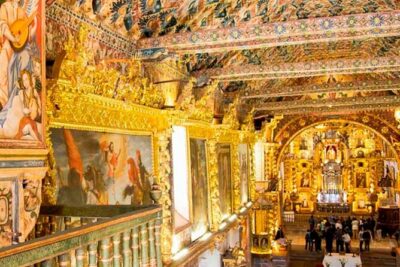
Scenic Route of the Sun to Puno with Buffet Lunch
Read our review →
Excursion to Sacred Valley Full Day & Buffet Lunch |Group Tour|
Read our review →
Valle Sagrado VIP, Maras, Moray y Almuerzo Buffet
Read our review →
Browse the lists this tour appears in