
Reviewed · WALKING TOURS
Walking City tour Puno
Puno begins with stone, music, and mountain air. This small-group walking tour links the city’s cathedral, museum, hilltop viewpoint, markets, and churches in about 90 minutes, giving you a useful first look at life beside Lake Titicaca. I like the clear route through central Puno and the chance to see living Andean traditions, not just monuments. I also like that the group is limited to 15 people. The main drawback is value: at $33.99, you still pay separately for the cathedral and museum, adding 30 soles in cash.
The walk is strongest when your guide adds meaning to what you are seeing. Guide Samuel earned especially warm praise for his professional manner and good English, including helpful details about Cusco. Still, this is a brisk introduction rather than a long cultural tour, and the 85 minutes assigned to the stops can feel tight if you want to linger, take photos, or browse the market.
In This Review
- Key points to know before booking
- Starting in Plaza de Armas with Puno’s cathedral
- Reading Puno’s past inside the Carlos Dreyer Museum
- Climbing Huajsapata Hill for the city view
- Seeing everyday beliefs at Laykakota Market
- Walking through independence history at Arco Deustua
- Meeting Puno at Parque Pino
- Entering San Juan Bautista and learning about Candelaria
- Finishing at the Central Market
- What $33.99 really buys you
- Timing, walking effort, and practical details
- Who will get the most from this walk
- Should you book Walking City Tour Puno?
- FAQ
- Where does the Walking City Tour Puno begin?
- Where does the tour finish?
- How long does the walking tour last?
- What is included in the price?
- How much do the museum and cathedral tickets cost?
- How many people can join the tour?
- Can most people participate?
- Is the tour available in poor weather?
- Can I cancel for a full refund?
Key points to know before booking
- The route connects Puno’s main sights on foot: You begin in the Plaza de Armas and finish at the Central Market.
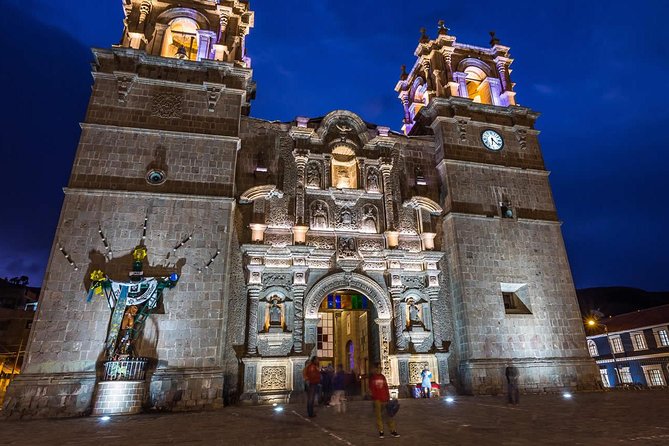
- The cathedral’s Andean-Baroque carvings are the visual highlight: Look for sirens playing charangos, native flowers, and local faces in the stone.
- Laykakota Market offers a close look at living Andean customs: You will see coca, muña, amulets, and ritual offerings used in folk healing and devotion.
- Huajsapata Hill gives you the best broad view: The climb is gentle, with Puno below and Lake Titicaca on the horizon.
- Two admissions cost extra: The Carlos Dreyer Museum and Cathedral each cost 15 soles per person, cash only.
- The final market stop adds local flavor: There may be chances to see fruits and try new foods, though this is not presented as a full food tour.
Starting in Plaza de Armas with Puno’s cathedral
Your walk begins at the Plaza Mayor of Puno, the city’s natural meeting point. It is a good place to start because the square puts Puno’s civic life directly beside its religious and colonial past.
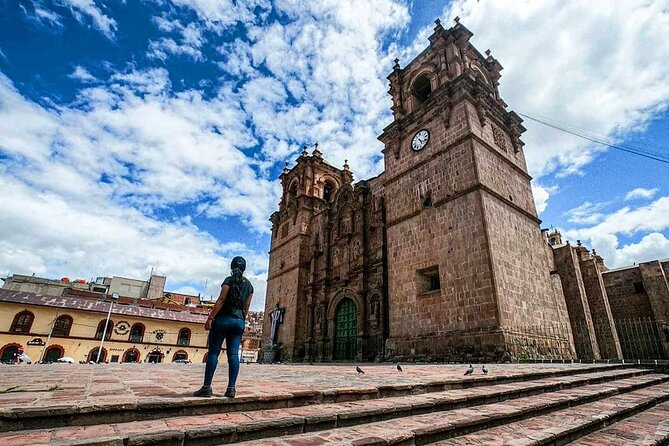
The first stop is Catedral de Puno, a stone church with an Andean-Baroque façade. Your guide points out details that are easy to miss if you only snap a photo: sirens holding charangos, native flowers, and human faces worked into the decoration. These images show how Catholic design mixed with highland beliefs and local artistic ideas.
The cathedral was built in the 18th century under the indigenous master builder Simón de Asto, with support from local miners. That detail gives the building more weight. You are not simply looking at a Spanish-style church. You are seeing a local expression shaped by Andean workers, materials, and faith.
Allow ten minutes here. That is enough for an explanation and a few wide photographs of the twin towers and square. It is not enough for a slow architectural study. Cathedral admission is not included and costs 15 soles per person, payable in cash. If the doors are open, the visit is best handled quietly, since this remains an active place of worship.
More walking routes through Puno:
- Puno: History and Culture Walking Tour
★ 4.1 · 13 reviews - Lima Half-Day City Walking Tour (Small Groups)
★ 5.0 · 1,508 reviews - Cusco: Walking Tour with an Experienced Local Guides
★ 4.8 · 636 reviews
Reading Puno’s past inside the Carlos Dreyer Museum
The Museo Municipal Carlos Dreyer sits close to the main square, making it an efficient second stop. It is a compact museum, but the collection covers a lot of ground.
Inside, you can see pre-Inca and Inca ceramics, stonework, funerary objects, mummies from the Altiplano, colonial and republican art, textiles, metalwork, and models of chullpas, or ancient funerary towers. Pieces connected with the German artist Carlos Dreyer add another layer to the museum’s story.
I like this stop because it gives you a framework for the rest of the walk. The museum helps explain the objects, beliefs, and burial traditions you may encounter around Lake Titicaca. Without that background, the displays can feel like separate artifacts. With a guide’s explanation, they become part of a longer local timeline.
The scheduled visit is 20 minutes, so expect a focused overview rather than a full museum visit. The entrance fee is separate, 15 soles per person in cash. If you have a strong interest in archaeology, you may want more time here than the tour allows. If you are new to Puno, the short visit delivers useful context without taking over the morning.
Climbing Huajsapata Hill for the city view
From the center, the route rises gently to Cerrito Huajsapata. The climb is short, but Puno sits at high altitude, so even a modest incline may feel more demanding than it looks. Take your time and use the ten-minute stop for both the view and a rest.
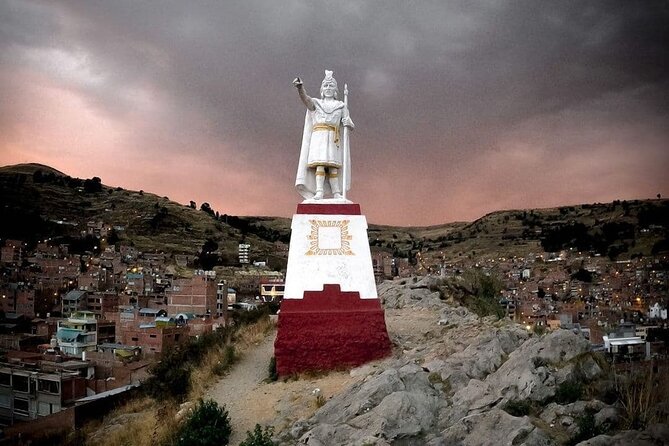
At the top, a statue of Manco Cápac, the legendary founder of the Inca Empire, watches over the city. Below, Puno spreads out toward Lake Titicaca. This is the walk’s best point for broad photographs and for understanding the city’s setting.
The stop is free, and there is no admission complication. The tradeoff is time. Ten minutes gives you a panorama, but not a long pause. If the weather is clear, this may be the part you remember most. If clouds or poor weather move in, the view loses some of its appeal, which is one reason the tour requires suitable weather.
Seeing everyday beliefs at Laykakota Market
Mercado Laykakota is often called the Witches’ Market, but that label can make a living tradition sound like a novelty. The better approach is to treat it as a place where Andean folk healing, devotion, and commerce meet.
Shelves carry muña and coca, amulets, and offerings connected with local rituals. Your guide explains how despachos to Pachamama fit into daily life and festivals. This makes the market more than a shopping stop. You get a look at beliefs that continue to shape family, religious, and community practices.
This is also where good manners matter. Ask before photographing people, stalls, or ritual objects. If you buy something, do so because you value it, not because the name Witches’ Market makes it sound exotic. Supporting local families and treating the goods with respect is the right approach.
The visit lasts about 15 minutes. That is enough for an introduction and perhaps a small purchase, but not for an unhurried browse. One useful touch is the practical advice about when to ask permission for photographs and how to shop respectfully.
A few more Puno trips worth lining up side by side
- From Cusco: Vinicunca Rainbow Mountain ATV Tour with Meals
★ 4.6 · 1,060 reviews - From Puno: Uros, Amantaní & Taquile Islands 2-Day Tour
★ 4.5 · 452 reviews - Tour to Uros and Taquile Islands in a Fast Boat
★ 5.0 · 419 reviews - From Puno: Floating Islands of the Uros Half-Day Tour
★ 4.4 · 394 reviews
Walking through independence history at Arco Deustua
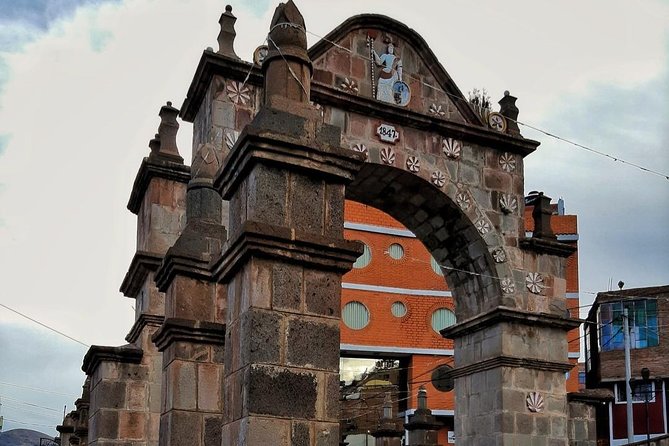
Arco Deustua provides a change of mood. This handsome stone arch was built in 1847 to honor Peru’s independence heroes after the battles of Junín and Ayacucho.
The guide explains the inscriptions and decorative details, then connects the arch to the streets leading back toward the center. At ten minutes, this is a short photo and history stop, not a major monument visit. Still, it helps you see how Puno remembers the 19th century in its public spaces.
From here, the walk continues along Jirón Lima. The pedestrian street brings you back into daily city life, linking the old arch with shops, facades, and people moving through the center. This transition is one of the tour’s strengths. You are not being driven from one isolated attraction to another. You see how the sights fit into Puno’s ordinary streets.
Meeting Puno at Parque Pino
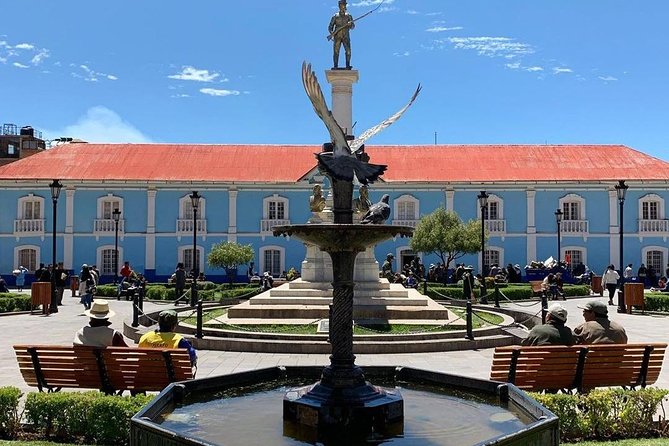
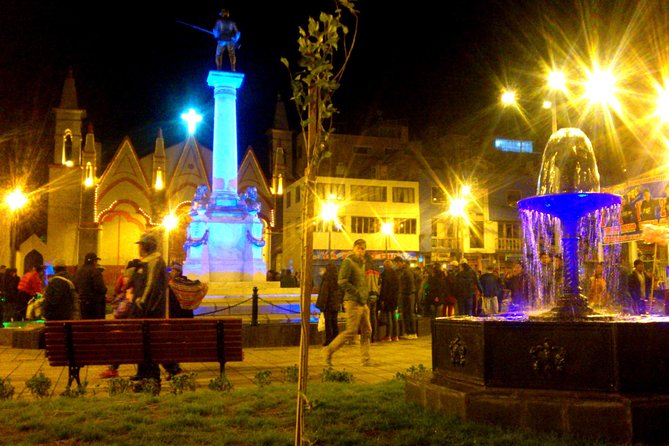
At the north end of Jirón Lima, Parque Pino functions as a social square. Clipped trees surround a monument to Dr. Manuel Pino, a local hero of the War of the Pacific. The monument was unveiled in 1901.
Your guide may use this ten-minute stop to explain nearby San Juan church, older facades, and the way civic life, religion, and public memory overlap in Puno. It is also a natural place to watch the city for a few moments.
I appreciate stops like this because they show Puno as a lived-in city rather than a collection of heritage labels. The square is not only about its monument. It is also a place where people meet, pass through, and carry on with the day.
Entering San Juan Bautista and learning about Candelaria
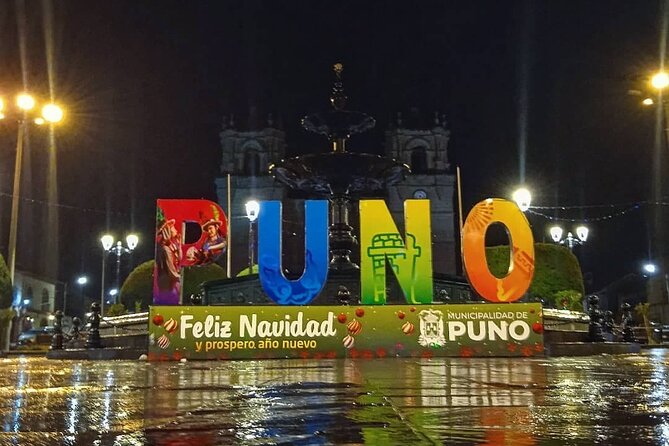
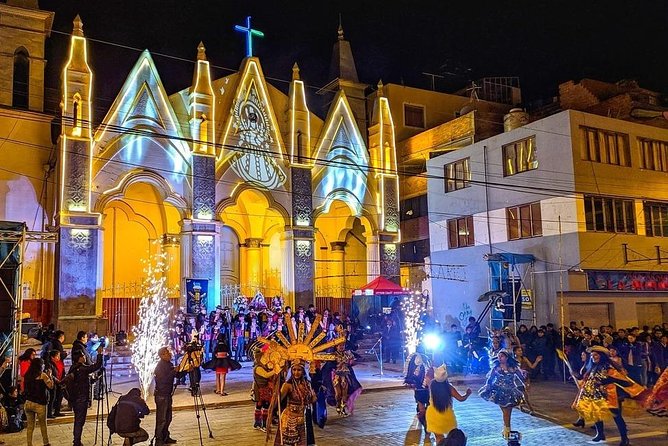
Across from Parque Pino, Iglesia de San Juan Bautista is connected to one of Puno’s most important devotions, the Virgen de la Candelaria. The church’s French-ogival façade is unusual in a city better known for Andean-Baroque design.
Inside, the setting is more modest, with the beloved image of the Virgin at its center. Your guide explains how devotion to her took root in the 18th century and how February processions fill these streets with music and dance.
When the church doors are open, you enter quietly and observe local worship. That condition matters. You should not assume a full interior visit every time, since access depends on the church being open and on services or local activity.
The ten-minute stop is short, but the subject is important. The Virgen de la Candelaria is not simply a decorative figure for a tour. Her devotion is part of Puno’s identity, especially during the February celebrations. Even a brief explanation helps you understand why music, costumes, and dance carry such weight here.
Finishing at the Central Market
The tour ends at Mercado Central de Puno on Oquendo 154. This is practical for anyone staying in the central area, since the guide can explain how to reach nearby hotels from there.
The market finish also gives the walk a more ordinary ending. Instead of wrapping up at another monument, you finish among stalls and daily shopping. One particularly appealing detail from the experience is the chance to run through the market and try unfamiliar fruits and foods. Treat that as a possible bonus rather than a promised tasting program, since the tour’s main focus is city history and culture.
If you are hungry or curious about local produce, this is a useful place to continue on your own after the guide departs. The exact amount of time available depends on the pace of the earlier stops, so do not plan a long market shopping session during the official tour.
What $33.99 really buys you
The listed price is $33.99 per person. It includes the local guide, but not the two paid entrances. Adding 15 soles for the Carlos Dreyer Museum and 15 soles for the cathedral brings the required extra admissions to 30 soles per person, and both payments must be made in cash.
That makes the tour more expensive than the headline price suggests. The value depends on what you want from a guide. If you only need directions and a list of landmarks, you may find it costly for a walk lasting approximately 90 minutes. One rating described the experience as good but overpriced for its content, which is a fair concern.
I see better value if you want the sites interpreted in English and prefer a fixed route. The cathedral carvings, Manco Cápac viewpoint, Andean ritual goods, independence arch, and Candelaria devotion are easier to connect when someone explains them as you go.
The group limit of 15 people is another factor. It is not a private tour, but it is small enough for a guide to keep the group together and answer questions. The quality of the experience will depend heavily on the guide. Samuel was singled out for his professional approach and strong English, so a guide of that standard can make the price feel more reasonable.
Timing, walking effort, and practical details
The tour is described as lasting about 1 hour 30 minutes, while the headline description also refers to a two-hour walk. The listed stop times total 85 minutes, before allowing for walking between locations. In practice, plan for roughly 90 minutes and keep a little flexibility in your schedule.
You will walk through central Puno and make a gentle climb to Huajsapata Hill. Most travelers can participate, but the altitude and uphill section are worth considering if you are not used to walking in Puno.
Start at Plaza Mayor de Puno, identified by the map code 5X5C+QR3. Finish at the Central Market, Oquendo 154. The experience requires good weather. If poor weather cancels it, you are offered another date or a full refund.
You can cancel without penalty up to 24 hours before the start time. Changes or cancellations made later are not accepted for a refund. Confirmation arrives when you book, and the experience is operated by Inca Lake.
Who will get the most from this walk
I would choose this tour if you have just arrived in Puno and want your bearings before visiting Lake Titicaca or exploring on your own. The route gives you a useful civic, religious, archaeological, and cultural base in a short time.
It also suits you if you enjoy asking questions about symbols and customs. The cathedral’s carvings and Laykakota Market offer more to discuss than to photograph, and a good guide can help you look beyond the surface.
You may want to skip it if you already know central Puno well, dislike brisk schedules, or want long visits inside the museum and churches. The extra admission costs also make the tour less attractive if your main goal is simply to see the outside of each building.
Should you book Walking City Tour Puno?
Book it if you want an efficient, guide-led introduction to Puno, especially on your first day. I like the mix of major landmarks and everyday places, and the stop at Laykakota Market gives the walk a local focus that many city tours miss.
Before paying, budget for the additional 30 soles in cash and expect a quick pace. If you value clear explanations, a small group, and useful orientation more than extended sightseeing, this is a sensible choice. If you want maximum time in the museum, cathedral, or market, explore those places separately after the tour.
FAQ
Where does the Walking City Tour Puno begin?
It begins at Plaza Mayor de Puno, at map location 5X5C+QR3, in Puno 21001, Peru.
Where does the tour finish?
The tour ends at Mercado Central de Puno, located at Oquendo 154. The guide can explain how to reach most central hotels from there.
How long does the walking tour last?
The experience lasts approximately 1 hour 30 minutes. The description also refers to a two-hour walking tour, so you should allow some flexibility.
What is included in the price?
The price includes a local guide. It does not include entrance tickets to the Carlos Dreyer Museum or Catedral de Puno.
How much do the museum and cathedral tickets cost?
Each entrance costs 15 soles per person. Both tickets are cash only, making the additional total 30 soles per person.
How many people can join the tour?
The maximum group size is 15 people.
Can most people participate?
Yes. The activity information says most travelers can participate. The route includes walking and a gentle climb to Huajsapata Hill.
Is the tour available in poor weather?
The experience requires good weather. If it is canceled because of poor weather, you will be offered a different date or a full refund.
Can I cancel for a full refund?
Yes. You must cancel at least 24 hours before the experience start time for a full refund. Cancellations or changes made less than 24 hours before the start time are not accepted for a refund.
Added recently around Puno
- Uros Reed Floating Islands & Taquile Island Titicaca Puno Full Day★ 4.0 · 38 reviews
- Uyuni Express 3 days from Puno Copacabana and Isla del Sol★ 5.0 · 16 reviews
- Uros Sunset Kayak Private Tour★ 5.0 · 5 reviews
- Two-Day Tour to Uros with Amantani and Taquile from Puno★ 5.0 · 44 reviews
- Uros Amantani Taquile Full Day tour★ 5.0 · 7 reviews
- Uros Floating Islands★ 3.0 · 13 reviews
- Tour island Uros, Amantani and Taquile 02days/01 night lake titicaca★ 5.0 · 5 reviews
- Full Day Tour to Uros and Amantani Islands★ 5.0 · 4 reviews
Walking Tours, compared.
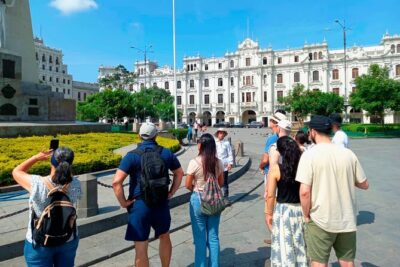
Lima Half-Day City Walking Tour (Small Groups)
Read our review →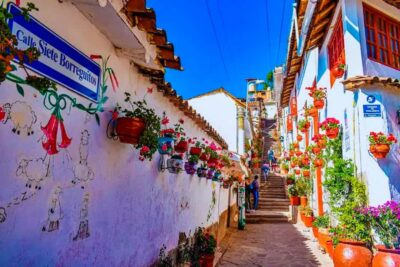
Food & Art: Lima Colors and Flavors Walking Tour
Read our review →
Historic Walking Tour with Pisco Sour and Local Music
Read our review →
Walking tour in the Historic Center of Arequipa
Read our review →
Curious Monkey Cusco- Eat the Streets, Walking Food Tour
Read our review →
Miraflores Trending Flavors Half-Day Walking Tour
Read our review →Browse the lists this tour appears in