
Reviewed · SACRED VALLEY TOURS
Sacred Valley (VIP) – Full Day Trip
See five major Andean sites in one long day. This $55 Cusco tour packs Chinchero, Moray, Maras, Ollantaytambo, and Pisac into roughly 12 hours, with hotel pickup, a bilingual guide, and buffet lunch in Urubamba. I like the range of places covered, especially Ollantaytambo and Moray, and I like that lunch includes a vegan option. The catch is clear: this is a fast-moving day, not a relaxed valley outing.
I also like the chance to see both famous Inca sites and living Andean communities. Guides such as Irving, Jhonnatan, Richard, and Warner have been praised for clear explanations, patience, and keeping the group on schedule. Still, you need to budget extra for the Partial Tourist Ticket at 70 soles and the Maras salt mines at 20 soles, and you may encounter sales stops that reduce sightseeing time.
In This Review
- Key points before you book
- What this $55 day really offers
- Chinchero at 3,765 meters
- Moray and the Inca crop laboratory
- Maras salt pools and the extra 20 soles
- Urubamba buffet lunch and the middle of the day
- Ollantaytambo, the strongest major stop
- Pisac and the final push
- Guides, vehicles, and the risk of uneven organization
- Sales stops and how to protect your time
- Who should book this Sacred Valley day?
- Should you book it?
- FAQ
- How long is the Sacred Valley VIP tour?
- What sites does the tour visit?
- Is hotel pickup included?
- How much are the additional admission fees?
- Is lunch included?
- How many people can join the tour?
Key points before you book
- Five major stops in 12 hours: Chinchero, Moray, Maras, Ollantaytambo, and Pisac give you a broad introduction to the Sacred Valley.
- Ollantaytambo deserves your full attention: Its terraces, fortress, temples, and Inca village are among the strongest parts of the day.
- The advertised group limit is 19 people: That is small enough for a guided outing, but the quality of organization matters greatly on a packed route.
- Bring at least 90 soles for admissions: The Partial Tourist Ticket costs 70 soles, and Maras costs another 20 soles per person.
- Lunch is included in Urubamba: The buffet has a vegan option, a useful detail after a morning of walking and high-altitude sightseeing.
- Expect sales pitches: Some departures include stops at alpaca, salt, silver, jewelry, or other commercial businesses.
What this $55 day really offers
At $55 per person, the tour offers good value if your main goal is coverage. You get transport from a Cusco hotel, an English and Spanish speaking guide, guided visits, and buffet lunch. Booking well ahead is sensible, since this experience is often reserved about 48 days in advance.
The real value comes from the geography. Instead of seeing one Sacred Valley site and returning to Cusco, you cross a large section of the area and see how Inca farming, religion, defense, stonework, and present-day village life fit together. You will not study any one ruin at length, but you will leave with a useful map of the region.
The extra charges matter. The 70 soles Partial Tourist Ticket and 20 soles Maras admission bring the listed cost to $55 plus 90 soles per person. The ticket is required for the archaeological sites, while Maras has its own admission fee. The tour details call attention to these charges, but the booking information has not always made them clear enough to every customer, so check the final price before paying.
A 12-hour day also has a physical cost. You will be getting on and off the vehicle, walking across uneven archaeological grounds, climbing steps, and moving on a fixed schedule. One especially useful warning is to expect quick walking and quite a few steps. Pack water, sun protection, and shoes with a firm sole.
More Day Trips in Cusco
- Cusco: Rainbow Mountain and Red Valley Day Trip with Meals
★ 4.9 · 4,893 reviews - Cusco: #1 Rainbow Mountain & Red Valley Day Trip with Meals
★ 4.8 · 2,342 reviews - Cusco: Rainbow Mountain & Red Valley Premium Day Trip with Meals
★ 5.0 · 2,249 reviews
Chinchero at 3,765 meters
Chinchero is the first major stop, and it gives you an immediate sense of the high Andes. At about 3,765 meters, the village sits on the open plains of Anta, around 30 kilometers from Cusco. The air can feel thin, and the broad views reach toward the Sacred Valley, the Cordillera Vilcabamba, and snow-capped Salkantay.
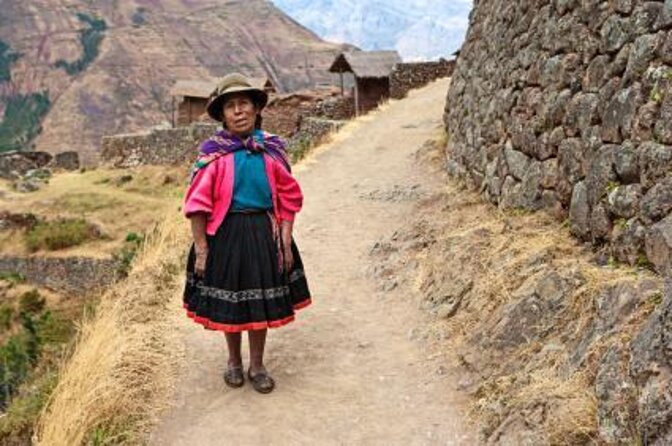
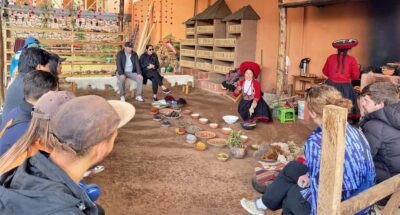
The village is traditionally linked with the rainbow. It is also one of the more useful stops for seeing how old and new life overlap. Adobe houses, traditional clothing, working agricultural terraces, and Inca stonework all appear close together.
The main plaza contains a massive Inca wall with ten trapezoidal niches. The wall and nearby terraces are associated with Inca ruler Tupac Yupanqui, who may have used Chinchero as a country retreat. The terraces are not just museum pieces. Some remain in use, which helps you understand that Inca farming methods still shape daily life.
The listed visit lasts about an hour, with admission shown as free. In practice, your guide may connect the stop with the Partial Tourist Ticket arrangements for the day, so carry the required 70 soles and follow the guide’s instructions. If your tour visits a textile or alpaca business, treat it as a shopping stop rather than part of the archaeological visit. One account found an alpaca processing visit worthwhile, while other commercial stops felt like wasted time.
Moray and the Inca crop laboratory
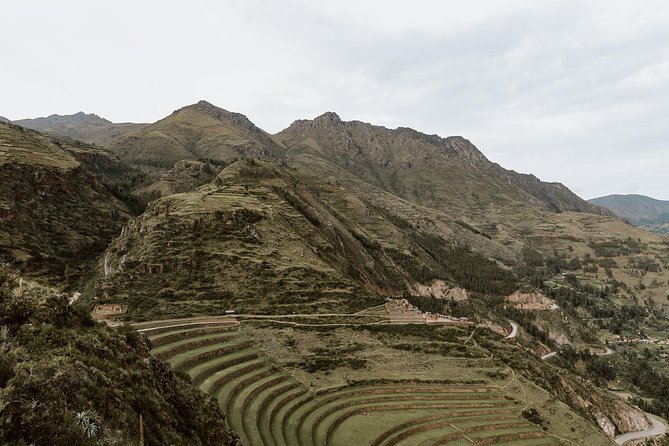
Moray is one of the day’s most unusual sights. Its circular terraces sink into the earth in a series of broad rings, reaching as much as 330 feet deep. The shape is striking from above, but the explanation is even more interesting.
The Incas used the terraces to create different growing conditions. Each level could have its own temperature and exposure, making Moray a kind of crop laboratory. Retaining walls and irrigation channels helped support the system.
You get about 45 minutes here. That is enough to look across the circles, hear the main explanation, and take photographs. It is not enough for a slow walk or lengthy study, particularly if the group is delayed earlier in the day.
Moray is about 4.5 miles from Maras and roughly 39 miles from Cusco. That location helps explain why the stop fits naturally into the day, but it also adds to the amount of road time. I would pay close attention to the guide here, because the purpose of the terraces is easy to miss if you only view them as a striking series of circles.
The itinerary lists no admission charge for Moray, yet the Partial Tourist Ticket is an extra purchase for the day. Ask exactly which sites the ticket covers before entering. A little clarity at the start saves confusion later.
Maras salt pools and the extra 20 soles
The Maras salt pools offer a very different view of Andean engineering. Small salt pans spread across the hillside near the rural community of Pichingoto, creating a patterned sweep of white and brown against the surrounding slopes.
The pools are fed by salty spring water and worked as separate evaporation pans. The key point for you is that Maras is not included in the 70 soles Partial Tourist Ticket. You need another 20 soles per person, preferably in cash.
The visit lasts about 45 minutes. That works well for photographs and a short look at the salt-making area. It does not leave much room for a hike, even though routes connect the salt mines with Tarabamba and Pichingoto. Hikers and mountain bikers may wish they had more time here than this tour allows.
The description also refers to the Sanctuary of Tiobamba, a colonial adobe church with Cusco School paintings, but the scheduled Maras stop is short. Do not assume you will have time to explore every nearby attraction. Ask the guide what is included on the day.
Some departures include a salt shop or a presentation connected with local products. That can be useful if you want context or a souvenir, but it can also feel like a sales detour after several archaeological stops. If your priority is ruins and views, make that clear to the guide early.
More Day Trips in Sacred Valley
- From Cusco: 2-Day Trip to the Sacred Valley and Machu Picchu
★ 4.6 · 265 reviews - Maras, Moray and Chinchero Private Day Trip from Cusco
★ 5.0 · 131 reviews - Rafting & Zip line Urubamba River 1 Day
★ 5.0 · 75 reviews - Sacred Valley & One Day Inca Trail 3 Days
★ 5.0 · 23 reviews
Urubamba buffet lunch and the middle of the day
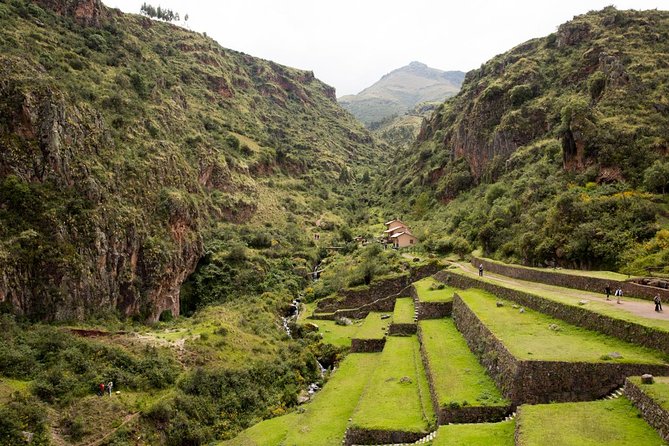
Lunch in Urubamba is included, and this is an important practical benefit. By the middle of a 12-hour outing, a proper buffet gives you time to refuel rather than relying on snacks between stops. A vegan option is available, so plant-based eaters have a stated choice.
The meal also breaks up a demanding schedule. You have already been at high altitude and on your feet, and the afternoon still includes the two large Inca sites of Ollantaytambo and Pisac. Use lunch to eat well, drink water, and check that you have cash, camera, and personal items before returning to the vehicle.
The provided information does not specify the buffet’s full menu, so do not plan around particular dishes. The useful certainty is that lunch is included and a vegan option is offered.
Ollantaytambo, the strongest major stop
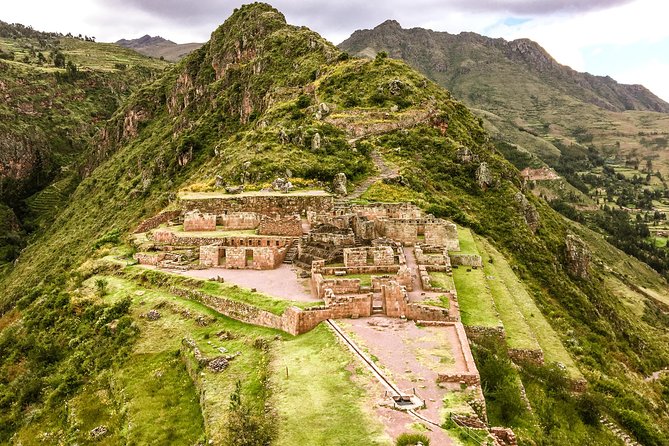
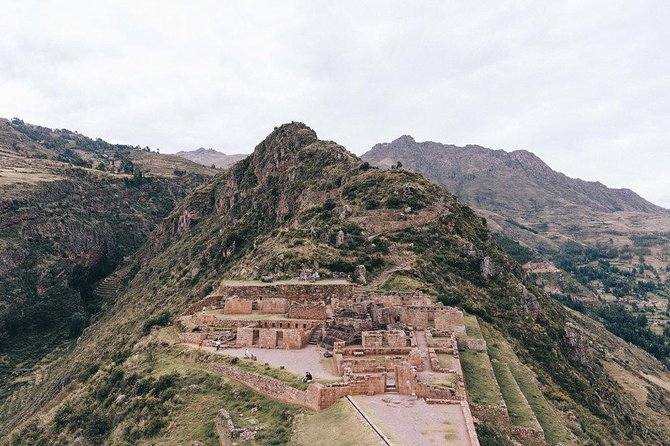
Ollantaytambo is the place I would most want to protect from delays. The village preserves its Inca street and building design, while the huge ceremonial and defensive complex rises above it. At about 9,160 feet, the site combines impressive stonework with steep climbs.
The terraces are the first major challenge. They rise one above another beside a steep stairway, and the scale becomes clearer as you climb. Above them are structures linked with water worship, the Temple of Inti, Incamisana, and the baths of the Ñustas.
Ollantaytambo also guarded the entrance to the valley. Its fortress occupies the space between two mountains, giving the site a strong defensive position. Look beyond the largest walls for the smaller details: tiered terraces, funerary towers at Cachiccata, and the storehouse remains on Pinculluna, also called Tunupa.
You have about an hour here. That is short for such a large site, but it is enough to see the main terraces and hear the story of its role in the valley. Several people who enjoyed this tour singled out Ollantaytambo as the highlight, and I can understand why. It offers the clearest combination of monumental stonework, strategic setting, living village design, and ceremonial purpose.
Expect a steady pace. The site is not a flat plaza, and the steps can be steep. Stay close enough to hear the guide, but take a moment to look back across the valley. The view explains why the Incas chose this location better than any single date or architectural label.
Pisac and the final push
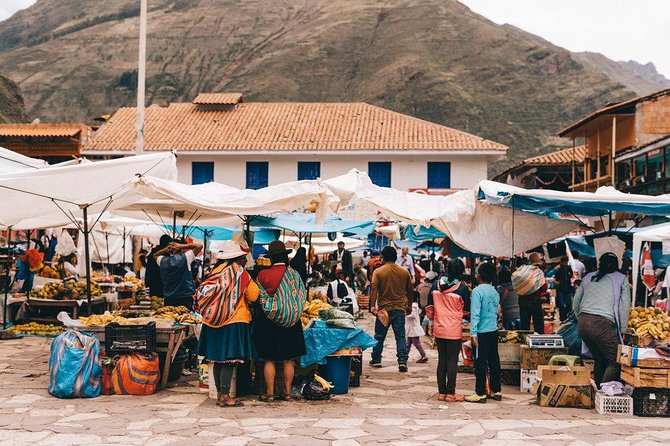
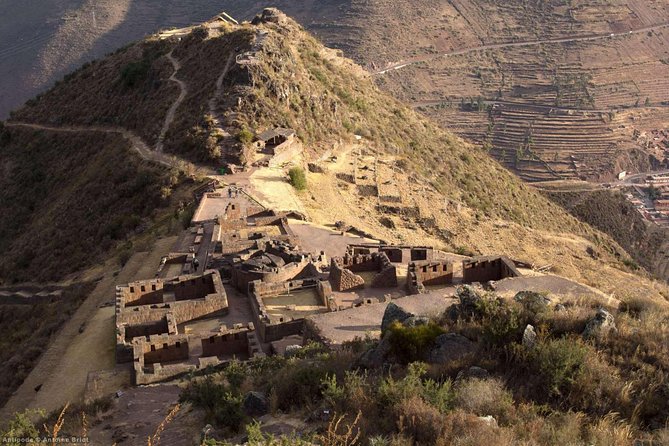
Pisac usually comes late in the day, when you may already be tired. The site is known for carefully fitted stone walls, terraces, towers, palaces, and ceremonial buildings spread across the mountain above the valley.
The Intihuatana is the main ceremonial area. Its name is often translated as sundial, and its carved stonework is connected with solar observation, including the June solstice. From the upper site, you can look across the valley and see why Pisac worked as both a ceremonial center and a royal estate associated with Pachacutec.
The City of the Towers contains around 20 towers along the mountain edges. Water channels and fine stone finishes add to the sense that Pisac was not a single ruin, but a connected settlement with several functions.
You may also hear the story of the Enchanted Princess. The legend tells of Inquill Chumpi, daughter of the local chief Huayllapuma, and Prince Asto Rimac, who had to build a bridge in one night to win her hand. She was forbidden to look back as he worked. When she turned, both were turned to stone. The rock formation called Ñusta Encantada is linked to this tale.
The scheduled hour at Pisac is enough to see the principal structures, but not enough to linger over every terrace and tower. One poorly organized departure reportedly arrived late and had very little time here, which is a reminder that delays earlier in the day have consequences. A guide who keeps the group moving, such as the praised Irving, Jhonnatan, or Richard, can make a big difference.
Pisac is also associated with a colorful Sunday market that is less aimed at tourists than the market at Pisac’s better-known competitors. The scheduled archaeological visit does not guarantee market time, and commercial stops may take priority on some departures. If local shopping matters to you, ask about the day’s route before you book.
Guides, vehicles, and the risk of uneven organization
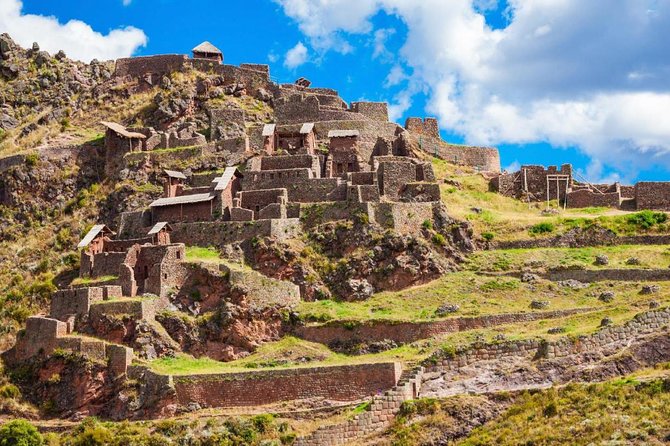
The best part of this tour depends heavily on the guide. Strong guides explain the Incas in both English and Spanish, keep the group together, answer questions, and manage a tight timetable without making you feel abandoned. Jhonnatan was praised for enthusiasm and bilingual explanations. Irving was credited with good timing and clear information. Richard was remembered for friendliness, useful explanations, and taking photographs. Warner was praised for being attentive and pleasant.
That kind of guide can turn a rushed schedule into a productive one. The weakest part of the experience is organization, not the Sacred Valley itself. One serious account described a group transfer to another guide, passengers left behind at two stops, a tire change caused by badly worn tires, and a late arrival at Pisac. The provider issued a full refund in response.
That appears to be an exception, but it is too serious to ignore. Another account described a rude guide and a hurried day, although the operator disputed the reservation and said it was not their booking. The practical lesson is simple: confirm your pickup details, stay aware of the departure time at every stop, and do not assume the driver will automatically notice if someone is missing.
The stated maximum is 19 people. That is larger than a private tour but still workable if everyone returns promptly. The tour is not available from private residences, so you need pickup from a Cusco hotel.
Sales stops and how to protect your time
Commercial visits are the main complaint beyond the pace. You might be taken to an alpaca processing business, salt shop, jewelry store, or silver shop. One alpaca stop was considered interesting, while a jewelry stop at the end of a long day was considered especially unhelpful.
These visits can support local businesses and give you a chance to buy textiles or jewelry. They can also bring pressure to purchase and take time from Ollantaytambo or Pisac. The tour’s low price may partly depend on these retail partnerships, though the supplied details do not state how the operator is paid.
I would ask at the start: how many shopping stops are planned, how long will each last, and can I skip one? A polite question will not guarantee a change, but it tells the guide that your priority is the archaeological sites. Keep your budget in mind and do not feel obliged to buy anything.
Who should book this Sacred Valley day?
This tour suits you if you have only one free day, want to see the major sites, and prefer a guide to explain what you are looking at. It also suits first-time visitors who want a broad introduction before deciding where to spend more time later.
It is a good match for people who enjoy active sightseeing, can manage steps at altitude, and accept a fixed timetable. Families and friends may appreciate the variety, and the vegan lunch option makes the meal easier for mixed groups.
It is less suitable if you want quiet photography, long walks, market browsing, or a slow study of Inca stonework. A private or two-day plan would give you more control, but this $55 outing offers far more coverage for the money.
Free cancellation is available if you cancel at least 24 hours before the local start time. Changes or cancellations made later are not accepted for a refund.
Should you book it?
Book this tour if your priority is seeing a lot in one day. The route includes five important places, the guide support is often excellent, lunch is included, and the total price is modest for the amount of ground covered.
Go in with realistic expectations. Add 90 soles for admissions, expect walking and steps, and prepare for a day that may feel rushed. Ask about commercial stops and confirm the group size and pickup point.
My verdict: a strong value for a time-short visit, with Ollantaytambo and Moray likely to be the high points. I would book it for efficient sightseeing, but not for a peaceful or deeply detailed exploration of the Sacred Valley.
FAQ
How long is the Sacred Valley VIP tour?
The experience lasts approximately 12 hours.
What sites does the tour visit?
The route includes Chinchero, Moray, Maras, Ollantaytambo, and Pisac.
Is hotel pickup included?
Pickup from Cusco hotels is included. Pickup is not available from private residences.
How much are the additional admission fees?
The Partial Tourist Ticket costs 70 soles per person. Entrance to the Maras salt mines costs another 20 soles per person.
Is lunch included?
Yes. A buffet lunch in Urubamba is included, and a vegan option is available.
How many people can join the tour?
The stated maximum is 19 people.
More Sacred Valley Days Out
- From Cusco: Moray, Maras Salt Mines & Chinchero Weavers Tour
★ 4.8 · 1,925 reviews - 2-Day Tour: Sacred Valley and Machu Picchu by Train
★ 5.0 · 1,127 reviews - Cusco: Sacred Valley, Pisac, Ollantaytambo, Salt Mines Moray
★ 4.6 · 1,058 reviews - Cusco:Chinchero,Moray & Salt Mines drop-off in Ollantaytambo
★ 4.8 · 793 reviews
Added recently around Cusco
- Guided tour of the mountain of colors in Cusco★ 5.0 · 11 reviews
- 2-Day Private Short Inca Trail to Machu Picchu★ 5.0 · 15 reviews
- Tour Sacred Valley with Maras and Moray★ 5.0 · 15 reviews
- San Pedro Market Tour with Peruvian Cooking Class★ 5.0 · 31 reviews
- City Tour Cusco – Group★ 5.0 · 4 reviews
- Walking Culinary Experience★ 5.0 · 41 reviews
- City Tour in Cusco★ 4.5 · 10 reviews
- One Day Tour to Humantay Lagoon★ 5.0 · 8 reviews
Sacred Valley Tours, compared.
Sacred Valley & Maras Salt Mines Tour with Lunch
Read our review →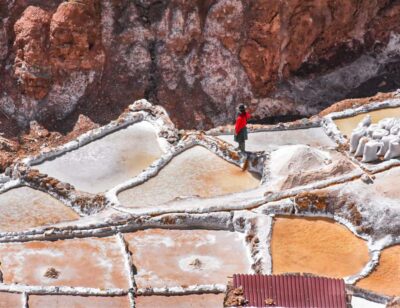
Moray, Maras Salt Mines & Chinchero Weavers Tour
Read our review →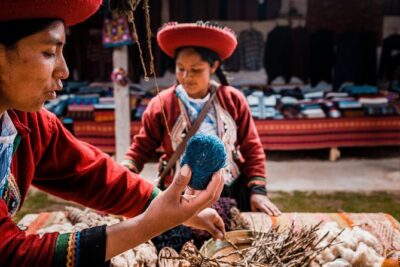
2-Day Tour: Sacred Valley and Machu Picchu by Train
Read our review →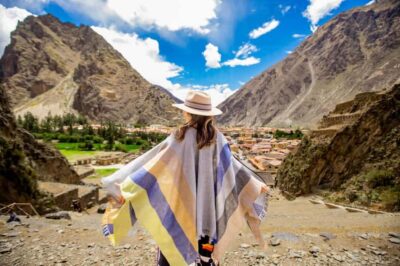
Sacred Valley, Pisac, Ollantaytambo, Salt Mines Moray
Read our review →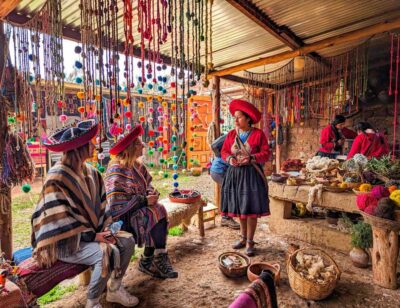
Chinchero,Moray & Salt Mines drop-off in Ollantaytambo
Read our review →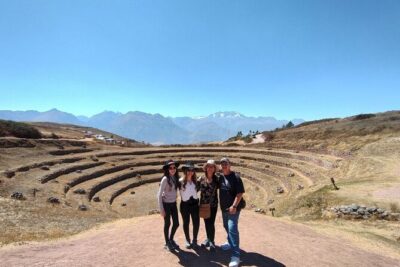
Sacred Valley and Maras Moray Tour with Full Day Buffet Lunch
Read our review →

Browse the lists this tour appears in