
Reviewed · MACHU PICCHU TOURS
2 Day Sacred Valley & Machu Picchu Tour from Cusco
Machu Picchu is only half the story. This two-day Sacred Valley tour links Cusco with Pisac, Urubamba, Ollantaytambo, and Aguas Calientes before the main event. I like the small maximum group of 10 and the way the trip handles the big transport puzzle: road travel, train tickets, hotel check-in, and the Machu Picchu bus are all coordinated for you.
I also like the mix of Inca sites and ordinary Andean life, especially Pisac’s market area and Urubamba’s food traditions. The trade-off is a packed schedule, with an early start on day one and another early morning for Machu Picchu. You should also budget an extra 70 soles, about $25, for the Sacred Valley archaeological sites.
- Pisac combines mountain scenery with Inca terraces, temples, tombs, and trade history.
- Ollantaytambo gives you two memorable encounters with Inca stonework, first on day one and again as your return train destination.
- A one-night stay in Aguas Calientes breaks up the journey and puts you near Machu Picchu.
- Machu Picchu admission, the guided visit, breakfast, day-one lunch, and transport are included.
- The group is capped at 10 people, a useful size for questions and guide assistance.
- Edwin receives special praise for his kindness, planning help, and steady support.
In This Review
- The Big Picture: Two Days, Five Andean Stops
- Leaving Cusco at 7:00 for the Sacred Valley
- Pisac: Terraces, Temples, and Mountain Views
- Urubamba: A Food Stop With Local Context
- Ollantaytambo: Inca Stonework on a Huge Scale
- The Train to Aguas Calientes and a Useful Evening Pause
- Machu Picchu Before the Crowds Build
- Lunch, Rail Travel, and the Return to Cusco
- What the $443 Price Really Covers
- Who Should Book This Two-Day Route?
- Should You Book It?
- FAQ
- How long is the Sacred Valley and Machu Picchu tour?
- Where does pickup take place in Cusco?
- Where does the tour end?
- Is Machu Picchu admission included?
- Are the Sacred Valley archaeological site tickets included?
- Is accommodation included?
- Which meals are included?
- What language is the tour offered in?
- How many people can join the tour?
The Big Picture: Two Days, Five Andean Stops
At $443 per person, this is not the cheapest way to reach Machu Picchu. It is a practical package, though, especially if you want one company to arrange the Sacred Valley transport, one night in Aguas Calientes, rail connections, the Machu Picchu entrance, and a bilingual guide.
You are not simply riding to the citadel and back. The first day gives you a useful introduction to Inca engineering and Sacred Valley agriculture. The second day focuses on Machu Picchu, then gets you back toward Cusco by afternoon train and road transfer.
The schedule is tight. That matters in Cusco, where altitude, traffic, queues, and train timetables can make an already long day feel longer. The tour removes much of the guesswork, but it does not create extra free time. I would choose it for efficiency, not for a slow, lingering pace.
The maximum group size of 10 is one of the strongest points. A small group makes it easier to hear explanations at the ruins, ask about local customs, and get help with the many transitions. Several comments about the service praise kindness, organization, and careful attention. One guide, Edwin, is singled out for helping with questions and broader trip planning, not just leading the scheduled visits.
Leaving Cusco at 7:00 for the Sacred Valley
Pickup begins at 7:00 am. If you stay in the historic center, wait in your hotel lobby for the guide. If your accommodation is outside the historic center, the meeting point is by the fountain in Cusco’s main square.
That arrangement is simple, but you should confirm where you need to wait before bedtime. The tour ends at Plaza Regocijo, also called Kusipata, rather than necessarily at your hotel. This central ending point is useful if you plan to walk to a nearby accommodation or arrange a short local transfer.
The first leg takes you from Cusco toward the Sacred Valley. The scenery shifts from the city to broad Andean views and agricultural areas. The appeal here is not just pretty mountain photography. This valley supported food production and administration for the Inca state, and the stops ahead show how religion, farming, trade, and military control fitted together.
More Machu Picchu Tours in Sacred Valley
- 2-Day Tour: Sacred Valley and Machu Picchu by Train
★ 5.0 · 1,127 reviews - Sacred Valley & Machu Picchu 2D1N
★ 5.0 · 617 reviews - 6 Days Exploring Cusco, Sacred Valley & Machu Picchu
★ 5.0 · 470 reviews
Pisac: Terraces, Temples, and Mountain Views
You spend about three hours at the Parque Arqueologico Pisac. The ruins sit roughly 30 miles northeast of Cusco and date from around 1100 to 1400 AD. The site includes terraces, tombs, temples, and ceremonial structures.
Pisac worked as a religious and administrative center. It also played a role in tax collection and trade, so the site helps you see the Inca world as more than a collection of royal palaces. The terraces show how much effort went into farming on steep slopes, while the temples and ceremonial areas point to the spiritual life tied to the mountains and the sun.
I like this stop because it gives you scale. You can look across the valley and see how the ruins occupy the mountain rather than sitting as one isolated building. Your guide should help connect the stonework to the valley below, which makes the visit more meaningful than simply photographing walls.
The important cost note is easy to miss. Admission to the Sacred Valley archaeological sites is not included, and the stated charge is 70 soles, or about $25. That fee applies to the archaeological portion of the day, including sites such as Pisac and Ollantaytambo. Bring this amount into your planning rather than treating the advertised price as the complete cost.
Urubamba: A Food Stop With Local Context
The next stop is Urubamba, where a buffet lunch is provided on day one. The visit lasts about three hours in the schedule, which includes time for the meal and the surrounding stop.
Urubamba is known for fertile soil and crops such as corn, potatoes, barley, and fruit. That makes lunch more than a routine break. It gives you a taste of the valley’s agricultural identity, the same productive setting that helped make this region important for centuries.
Local dishes named for the area include cuy, or guinea pig, chicharrón, and chiriuchu, a traditional combination of ingredients. You should not assume every one of these dishes will appear on the buffet, but they are useful names to know if you have time to explore local food during the trip.
Vegetarian preferences can be accommodated. Mention dietary needs when booking, then remind the operator before departure if necessary. The day-two lunch in Aguas Calientes is different: it is not included, so you choose and pay for your own meal.
Ollantaytambo: Inca Stonework on a Huge Scale
After lunch, you visit the Archaeological Park of Ollantaytambo. The site dates largely from the reign of Emperor Pachacuti, around 1450, and includes terraces, temples, baths, palaces, and plazas.
The most striking feature is the large stone construction assembled without mortar. Inca builders cut and fitted the stones with great precision. Your guide can help you read the site as a planned center rather than a random pile of ruins: terraces supported farming, plazas organized public life, and the high stone structures had religious and political importance.
This is one of the most rewarding parts of the first day because the ruins feel connected to the modern town and to the rail journey that follows. You do not just visit an archaeological site and return to Cusco. You continue through Ollantaytambo toward Aguas Calientes, making the site part of the route itself.
The timing can feel compressed. Three hours is enough for a guided visit, but you will want comfortable shoes and a willingness to keep moving. The ruins involve steps and uneven ground, and the day already includes several hours of transport.
Other ways to reach Machu Picchu:
- Classic Inca Trail Trek 4D/3N to Machu Picchu (Group Service)
★ 5.0 · 8,653 reviews - Machu Picchu: 4-Day Inca Trail Trek with Panoramic Train Ride
★ 5.0 · 4,568 reviews - Short Inca Trail to Machu Picchu 2D/1N
★ 5.0 · 3,007 reviews - 2-Day Inca Trail to Machu Picchu with Panoramic Train
★ 5.0 · 1,876 reviews
The Train to Aguas Calientes and a Useful Evening Pause
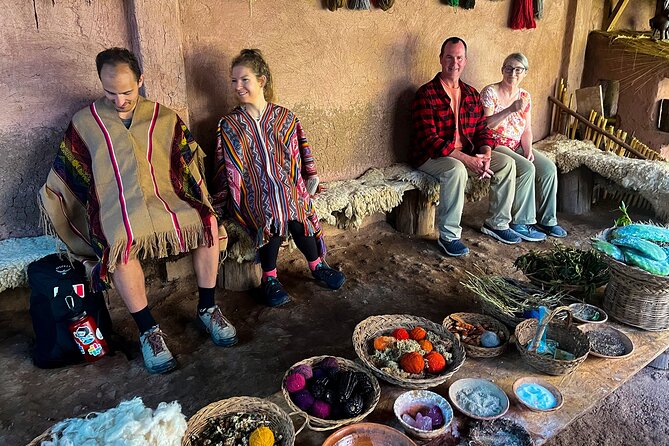
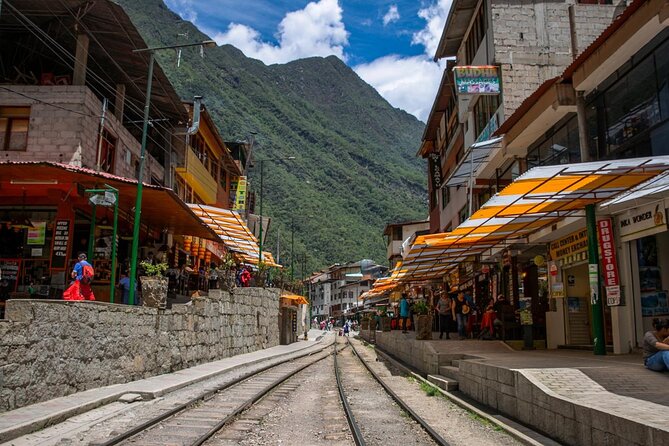
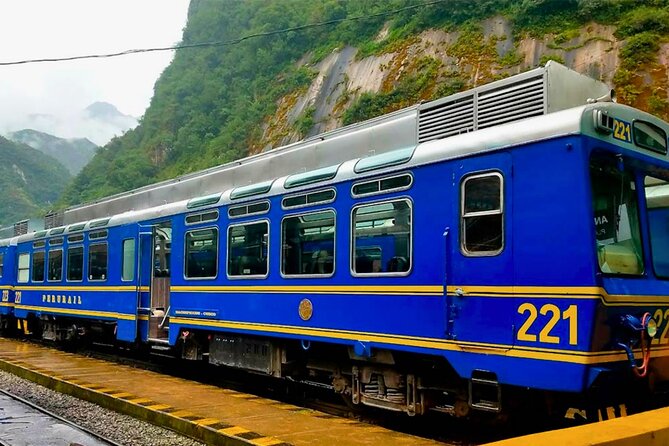
After Ollantaytambo, you board a train to Aguas Calientes, the town below Machu Picchu. On arrival, staff assist with hotel check-in, which is especially helpful after a full day of sightseeing and transfers.
One night of accommodation is included. That overnight stop is a major reason to choose this tour instead of trying to make Machu Picchu a single, exhausting day trip from Cusco. You can get settled, walk around town, and visit the hot springs if you wish.
The schedule allows about two hours for free time in Aguas Calientes. Treat that as a chance to rest rather than another must-see checklist. The hot springs are presented as an optional way to relax, and any personal expenses connected with them are not listed as included.
Aguas Calientes is also where you need to prepare for the next morning. Set out what you need for Machu Picchu, keep your ticket and identification secure, and avoid turning the evening into a late night. The morning visit begins after breakfast and is the centerpiece of the tour.
Machu Picchu Before the Crowds Build
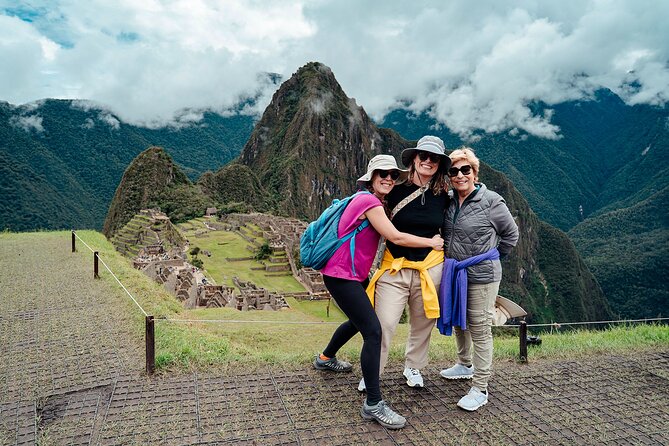
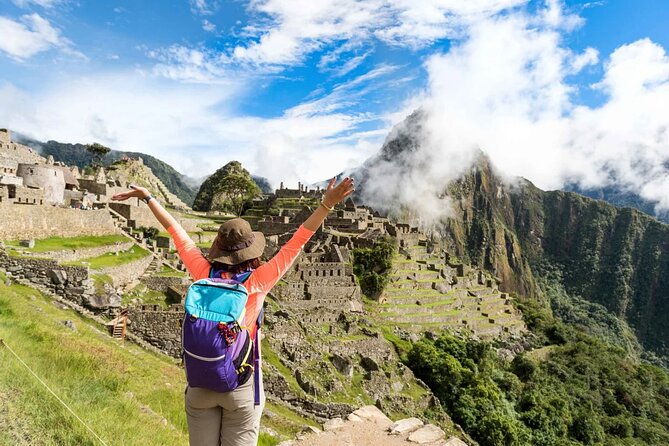
On day two, you take a bus from Aguas Calientes to Machu Picchu after breakfast. The visit begins with a security check, followed by a guided exploration of the citadel.
The Machu Picchu entrance is included, as is the guided tour. The scheduled visit lasts about two hours at the Historic Sanctuary of Machu Picchu, while the broader morning stop is listed at about three hours. That gives you time for the bus connection and site procedures as well as the actual walk through the ruins.
The citadel was built by Emperor Pachacuti between about 1450 and 1460. It served as a royal estate until the Spanish conquest in 1532. Its terraces, temples, plazas, stairways, and residential areas were built from carefully cut granite blocks, fitted so closely that the joints are famously difficult to see.
Your guide should help you notice the difference between the public spaces, religious structures, agricultural terraces, and residential areas. Without that context, Machu Picchu can become a fast circuit of famous viewpoints. With guidance, the stonework and layout begin to explain how the site functioned.
If you have separately purchased tickets for Huayna Picchu or Machu Picchu Mountain, the staff will guide you to the trail starting points. Those mountain tickets are not listed as part of the basic package, so do not assume they are included in the $443 price.
The early start is a benefit and a burden. You reach the citadel before the day is fully underway, but you will need to be ready after a short night and a busy first day. This is not a good fit if you want a leisurely morning.
Lunch, Rail Travel, and the Return to Cusco
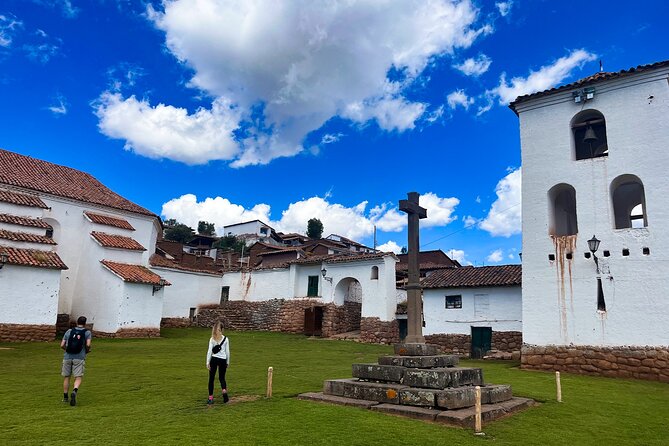
After the Machu Picchu visit, a bus returns you to Aguas Calientes. You then have time for lunch at a local restaurant of your choice, with the bill paid separately.
This is a pleasant point in the schedule because you can sit down and process the morning rather than rushing directly into another guided stop. Keep an eye on the departure time, though. The tour continues by afternoon train from Aguas Calientes to Ollantaytambo.
The train ride gives you another look at the Sacred Valley, this time from the tracks. From Ollantaytambo, ground transport continues to Cusco, ending at Plaza Regocijo. The listed duration for the final segments is generous, so do not plan an important evening appointment too close to the expected arrival.
Transportation from Cusco through the Sacred Valley and Aguas Calientes, then back toward Cusco, is included. The value lies in this chain of connections. You avoid having to arrange separate vehicles, rail tickets, hotel handoff, and the Machu Picchu bus on your own.
What the $443 Price Really Covers
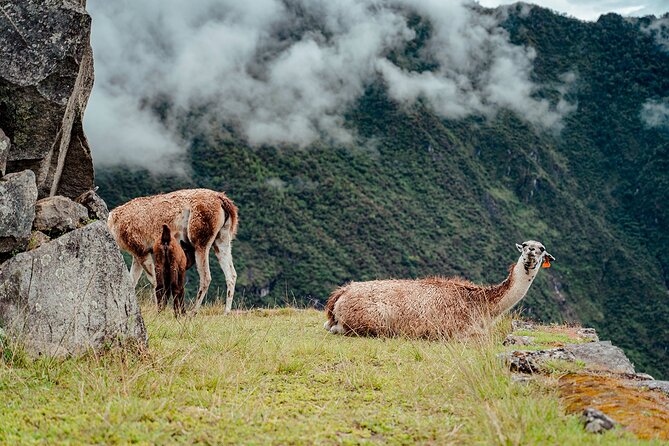
The $443 price includes:
- One night in Aguas Calientes
- Breakfast
- Day-one buffet lunch
- Round-trip transportation through the stated route
- A professional bilingual guide
- Guided Machu Picchu visit
- Machu Picchu entrance
- Support during the tour
You still need to pay for the Sacred Valley archaeological admission, tips, personal expenses, and the day-two lunch. The possible extra for the archaeological sites is listed as 70 soles, or $25.
I see this as a convenience package with a fair value for someone who wants a short, organized Machu Picchu visit. You are paying for coordination as much as for transport. If you already know how to arrange trains and site tickets, you might find an independent trip cheaper. If you value a small group, guide support, and fewer moving parts, the price is easier to justify.
The food arrangement is also clear enough to plan around. Breakfast and the first lunch are covered, but you need cash or another payment method for lunch in Aguas Calientes and incidental purchases.
Who Should Book This Two-Day Route?
I would recommend this tour to you if you have limited time in Cusco and want to combine Machu Picchu with the Sacred Valley. It suits people who prefer a planned route, appreciate help with transport, and want a guide present for the major archaeological sites.
It is also a good match if you like asking questions. A maximum of 10 people gives the guide a better chance to provide personal help than a large coach group. The strong praise for friendly service, careful organization, and individual support is consistent with that small-group design.
I would hesitate if you want long breaks, independent wandering, or a flexible schedule. The route covers a lot in two days, and the early starts are real. The non-refundable booking rule also means you should confirm your dates before paying, since cancellations or changes do not receive a refund.
The guide language is listed as English, with bilingual service. One experience included a Portuguese-speaking guide, but you should confirm language availability for your own departure rather than count on it.
Should You Book It?
Book this tour if your priority is a well-organized two-day route that covers the Sacred Valley and Machu Picchu without making you arrange every transfer yourself. The combination of a small group, included Machu Picchu entry, overnight stay, rail travel, and guide support gives the package practical value.
Skip it if you need a relaxed pace or want to control every detail. Before booking, confirm the Sacred Valley admission cost, day-two lunch budget, hotel details, train times, and any Huayna Picchu or Machu Picchu Mountain plans. If Edwin is available, requesting him could be worthwhile based on his warm, hands-on approach to guiding and trip support.
FAQ
How long is the Sacred Valley and Machu Picchu tour?
The tour lasts approximately two days, with departure from Cusco at 7:00 am on day one and a return to Cusco on day two.
Where does pickup take place in Cusco?
If your hotel is in the historic center, wait in the hotel lobby for the guide. If it is outside the historic center, wait by the fountain in Cusco’s main square.
Where does the tour end?
The tour ends at Plaza Regocijo, also called Kusipata, in Cusco.
Is Machu Picchu admission included?
Yes. The Machu Picchu entrance and guided visit are included.
Are the Sacred Valley archaeological site tickets included?
No. Admission to the Sacred Valley archaeological sites costs 70 soles, or about $25, and is paid separately.
Is accommodation included?
Yes. One night of accommodation in Aguas Calientes is included.
Which meals are included?
Breakfast and day-one lunch are included. Lunch in Aguas Calientes on day two is not included.
What language is the tour offered in?
The tour is offered in English and includes professional bilingual guide service. Portuguese guidance was provided on one departure, but you should confirm availability for your date.
How many people can join the tour?
The maximum group size is 10 people.
More Sacred Valley Days Out
- From Cusco: Moray, Maras Salt Mines & Chinchero Weavers Tour
★ 4.8 · 1,925 reviews - Cusco: Sacred Valley, Pisac, Ollantaytambo, Salt Mines Moray
★ 4.6 · 1,058 reviews - Cusco:Chinchero,Moray & Salt Mines drop-off in Ollantaytambo
★ 4.8 · 793 reviews - Sacred Valley and Maras Moray Tour with Full Day Buffet Lunch
★ 5.0 · 670 reviews
Added recently around Cusco
- Super valley or vip valley★ 5.0 · 13 reviews
- the Incas’ Sacred Valley★ 5.0 · 27 reviews
- Sacred Valley of the Incas Day Trip from Cusco★ 5.0 · 6 reviews
- Small-Group Tour: Rainbow Mountains Hiking from Cusco★ 4.0 · 5 reviews
- Excursion to the Sacred Valley of the Incas from Cusco★ 5.0 · 8 reviews
- Maras + Moray & Textile Experience★ 5.0 · 14 reviews
- Tour EN Cuatrimoto POR la Montaña 7 Colors Hike 5 Minutes★ 4.5 · 32 reviews
- rainbow mountain★ 4.0 · 4 reviews
Machu Picchu Tours, compared.
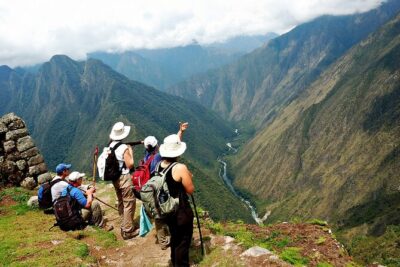
Classic Inca Trail Trek 4D/3N to Machu Picchu (Group Service)
Read our review →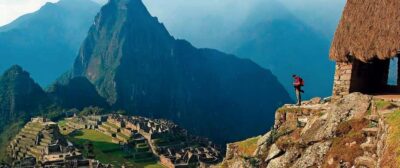
Machu Picchu: 4-Day Inca Trail Trek with Panoramic Train Ride
Read our review →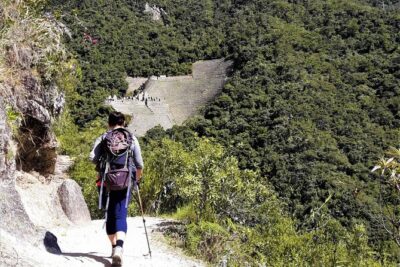
2-Day Inca Trail to Machu Picchu with Panoramic Train
Read our review →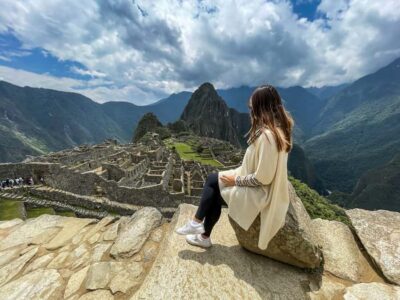
2-Day Tour: Sacred Valley and Machu Picchu by Train
Read our review →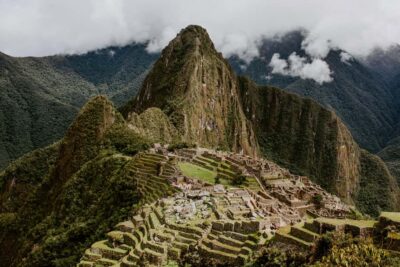
Machu Picchu: Full-Day Tour from Cusco with Optional Lunch
Read our review →Browse the lists this tour appears in