
Reviewed · MACHU PICCHU TOURS
2 Day Sacred Valley Tour & Machu Picchu
The Andes reward an early start. This two-day route packs Pisac, Ollantaytambo, and Machu Picchu into one well-planned trip from Cusco. I like the small group of no more than 15 people, and I like spending the night in Aguas Calientes, which gives you a better chance of reaching Machu Picchu early.
I also like the careful support built into the trip. A hotel briefing covers tickets and timing, and past guests have singled out staff such as Yang, driver Raul, and guides Carlos and Paul for clear communication and genuine enthusiasm. The main drawback is the pace: you cover a lot in two days, with long transfers, fixed train times, and little room for a relaxed Sacred Valley visit.
In This Review
- Key points to know before booking
- Why this two-day route works from Cusco
- Day one begins with Pisac at 8:00 a.m.
- Urubamba brings lunch and a change of pace
- Ollantaytambo shows Inca engineering at full scale
- Aguas Calientes gives you a useful overnight pause
- Machu Picchu is the payoff on day two
- The return train keeps the day moving
- Guides and group size shape the experience
- What the price includes, and what it leaves out
- Who should book this two-day tour?
- Should you book it?
- FAQ
- How long is the tour?
- What places are visited?
- Is the tour offered in English?
- How large is the group?
- Is a hotel night included?
- Are Huayna Picchu and Machu Picchu Mountain included?
- Can I request vegetarian food?
Key points to know before booking
- Pisac combines Inca terraces with a traditional market, giving you both archaeology and present-day local life.
- Ollantaytambo is your rail gateway, as well as one of the Sacred Valley’s most impressive Inca sites.
- Aguas Calientes overnight makes an early Machu Picchu visit possible without leaving Cusco before dawn.
- The group is capped at 15 people, a useful middle ground between a private trip and a large coach tour.
- Huayna Picchu, Machu Picchu Mountain, hot springs, and the Vistadome train cost extra, so budget before you book.
- The schedule is tight, and train departures can change the exact return time to Cusco.
Why this two-day route works from Cusco
Machu Picchu can be visited as a long day trip, but that option often turns the experience into a race between buses and trains. This two-day plan breaks up the journey. You see two major Sacred Valley sites first, sleep in Aguas Calientes, then visit Machu Picchu before returning to Cusco.
That order makes practical sense. The Sacred Valley is not merely a road stop on the way to the ruins. Pisac and Ollantaytambo show how the Incas used farming terraces, water systems, ceremonial buildings, and military positions. Machu Picchu then feels like part of a larger Andean story rather than an isolated postcard.
At $461.54 per person, this is not a budget excursion. The cost includes transport arrangements, a professional English or Spanish-speaking guide, a hotel night with breakfast, the Sacred Valley buffet lunch, and the major admissions listed for the route. The value depends on how much planning you want handled for you.
You are paying for coordination as much as sightseeing. Rail tickets, the overnight stay, the bus connection at Machu Picchu, and the return transfer all need to line up. If you arranged every part yourself, you might spend less, but you would also take on the risk of mismatched times and limited ticket choices.
More Machu Picchu Tours in Sacred Valley
- 2-Day Tour: Sacred Valley and Machu Picchu by Train
★ 5.0 · 1,127 reviews - Sacred Valley & Machu Picchu 2D1N
★ 5.0 · 617 reviews - 6 Days Exploring Cusco, Sacred Valley & Machu Picchu
★ 5.0 · 470 reviews
Day one begins with Pisac at 8:00 a.m.
Pickup is scheduled for around 8:00 a.m. from your hotel in Cusco. The drive to Pisac takes about 45 minutes by private transport, so the first stop comes early enough to leave useful time for the rest of the day.
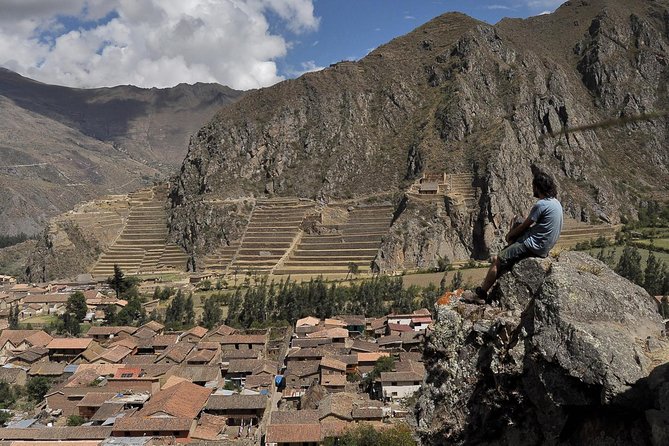
Pisac offers a fine introduction to Inca construction. Its terraces, domestic areas, ceremonial structures, and aqueducts show that the site was more than a fortress. It is associated with Inca Pachacutec and is often understood as a royal estate, with agriculture and water management built into the design.
Look closely at the terraces. They are not just dramatic steps on a mountainside. They show how the Incas made productive use of steep ground, while the aqueducts point to the careful control of water. Your guide can help connect these practical features with the broader Inca system of farming and administration.
The archaeological visit is listed at about 30 minutes. That is enough for an overview, but it is not a long, wandering visit. If you enjoy taking many photographs or stopping to study each structure, you may feel rushed. The short visit is part of the tradeoff that allows you to reach Ollantaytambo and the train on the same day.
Pisac also has a traditional market. This adds a human, modern side to the stop, with local goods and souvenirs alongside the ancient terraces. Treat the market as a chance to browse rather than a guaranteed source of rare local craftwork. The information provided does not specify how much time is reserved there, so keep your shopping focused.
Urubamba brings lunch and a change of pace
Around midday, the route continues to Urubamba, one of the Sacred Valley’s main agricultural centers during the Inca period. Lunch is served buffet-style, with Peruvian dishes and vegetarian food available at no extra cost if requested in advance.
A buffet suits a busy day because you can choose quickly and sample several foods. It also makes the meal easier for a mixed group with different tastes. Still, lunch is functional rather than the main event. You will want to keep an eye on the clock, since the afternoon visit and rail departure are still ahead.
The meal arrangements deserve a close check before departure. The tour information lists lunch and also refers to a buffet lunch in the Sacred Valley. Breakfast is included with the Aguas Calientes hotel night, while dinner is not included. Ask for the exact meal schedule during the hotel briefing so you know what to purchase later.
Ollantaytambo shows Inca engineering at full scale
The afternoon stop is Ollantaytambo, listed at about 45 minutes. The site served military, agricultural, and religious purposes, and its location helped control movement through the Sacred Valley.
The terraces are the visual centerpiece. Above them, large, carefully cut stone blocks form part of the upper structures. Walls and watchtowers point to the site’s defensive role, while the agricultural terraces show that this was also a working center. The combination gives Ollantaytambo more variety than a single-purpose ruin.
This is a place where a good guide matters. A quick look at stone walls tells you little about how the site functioned. Guides such as Carlos and Paul have been praised for explaining the structures clearly and bringing personal enthusiasm to the subject. Carlos is also able to speak Quechua, an unusual skill that can add cultural context, though guide assignments are not guaranteed.
The timing is the chief limitation. Forty-five minutes is enough to understand the plan of the site and see its major features, but not enough for a slow exploration of every terrace. Wear practical shoes and keep your belongings manageable, since the visit involves archaeological paths and steps.
After Ollantaytambo, you board the train to Aguas Calientes. This is an important part of the route, not just a transfer. The train carries you from the valley toward the town below Machu Picchu, and your next morning begins much closer to the ruins than it would from Cusco.
Other ways to reach Machu Picchu:
- Classic Inca Trail Trek 4D/3N to Machu Picchu (Group Service)
★ 5.0 · 8,653 reviews - Machu Picchu: 4-Day Inca Trail Trek with Panoramic Train Ride
★ 5.0 · 4,568 reviews - Short Inca Trail to Machu Picchu 2D/1N
★ 5.0 · 3,007 reviews - 2-Day Inca Trail to Machu Picchu with Panoramic Train
★ 5.0 · 1,876 reviews
Aguas Calientes gives you a useful overnight pause
The overnight stay is one of the strongest reasons to choose this itinerary instead of a single-day trip. Your hotel night includes breakfast, and you can optionally visit the local hot springs for an additional entrance fee.
Do not assume the hot springs are included. They are optional, and the tour price does not cover admission. Since the schedule is built around the following morning at Machu Picchu, check how much free time you actually have before paying for another activity.
Aguas Calientes is mainly a practical base for the ruins. You have the evening to eat, rest, and prepare for an early start. Dinner is not included, so budget separately. The hotel category can also be upgraded for an additional cost.
The advertised highlight is sunrise over Machu Picchu. That is an appealing idea, but the exact experience depends on your entry time, bus timing, and the ticket circuit assigned to you. The itinerary says the transfer occurs according to your scheduled time, so sunrise should be treated as a possibility rather than a promise.
Machu Picchu is the payoff on day two
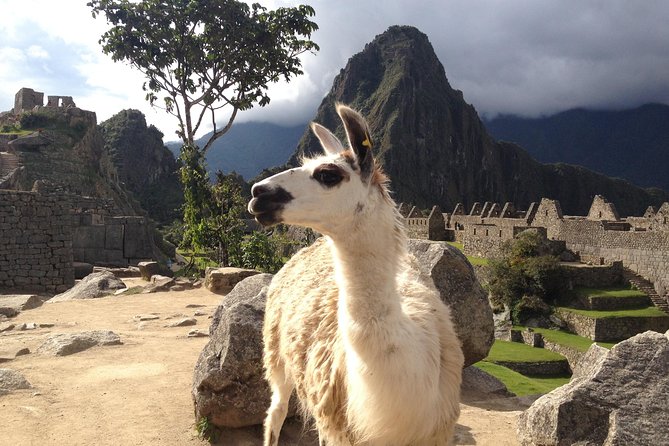
In the morning, you are transferred to the bus station in Aguas Calientes. The uphill bus takes you to the Machu Picchu archaeological park, where your guide explains the Inca city, temples, buildings, and mountain setting.
The guided portion is listed at about two hours. That is a sensible length for an introduction. You get the basic plan of the site and an explanation of the major structures before having free time to look around on your own.
After the guided visit, you have time to explore independently until about 2:00 p.m. This free period is valuable because it lets you take photographs, revisit a favorite section, or simply sit with the scale of the place. It is not unlimited, so do not expect to cover every optional route in the park.
Huayna Picchu and Machu Picchu Mountain are not included in the standard package. Each requires advance planning, and the listed additional charge for an optional mountain is $30. Request it before the trip if you want to add one. Do not wait until you arrive and assume space will be available.
Your guide’s role is particularly useful here. Machu Picchu is visually powerful, but without context it can become a sequence of walls and terraces. A guide who explains the architecture and Inca use of the site helps you notice details you might otherwise pass by.
The return train keeps the day moving
The planned return train leaves around 4:30 p.m. from Aguas Calientes, followed by a train to Ollantaytambo. Around 6:30 p.m., staff meet you at the station and transfer you back to your Cusco hotel.
Those times can vary according to the train departure and the service you select. This is why the pre-trip briefing matters. Yang has been praised for contacting people before, during, and after the trip, then checking tickets and train times in person. That sort of communication is useful when a small delay can affect the rest of the day.
The return is not a quick ride back to Cusco. You should expect an evening arrival, and the exact time is not fixed. Plan nothing important immediately afterward, especially a flight or another timed activity.
The trip also has a record of adapting when weather causes problems. Staff communication between guide, driver, and office can make a real difference in the Andes, where conditions may force changes. That does not remove the risk of disruption, but it is a reassuring sign for an itinerary with many moving parts.
Guides and group size shape the experience
A maximum of 15 people is a useful promise. It is small enough for questions and easier movement at archaeological sites, yet less expensive than a private departure. The actual feel of the group may vary, but this limit is far better than a large bus tour if you want to hear the guide.
The English and Spanish guide is included, and the available guide names include Carlos and Paul. Carlos has been praised for his attention, passion, and Quechua language ability. Paul has been described as enthusiastic about his country and his work.
Driver Raul has also received strong praise for looking after the group. That matters on a two-day route because the driver handles the road portions while the guide handles interpretation. Yang’s phone and in-person support provide another layer of help with tickets and timing.
These names are examples, not guarantees. Ask who your guide will be during the briefing. The overall service has received four top ratings, with particular praise for organization, communication, flexibility, and staff kindness.
What the price includes, and what it leaves out
The $461.54 price includes the following core elements:
- Hotel pickup and return to the Cusco meeting point
- Guided visits in English or Spanish
- Sacred Valley transportation
- The train to and from Aguas Calientes
- One hotel night in Aguas Calientes
- Breakfast at the hotel
- Sacred Valley buffet lunch
- Coffee or tea
- Standard site and bus arrangements listed for Machu Picchu
The exact train service matters. A Vistadome upgrade costs an additional $55, and the hotel can be upgraded for a separate fee. Huayna Picchu or Machu Picchu Mountain also costs extra, listed at $30 with advance request.
Lunches beyond the included meal, dinners, hot springs admission, extra activities, and tips are not covered. The trip can therefore cost more than the headline price, especially if you want a better train, a higher hotel category, or a mountain ticket.
I see the package as good value for a short first visit if you prefer one company to coordinate the difficult pieces. It is less attractive if you already know the rail system, want a slow Sacred Valley visit, or are happy to arrange your own overnight stay.
Who should book this two-day tour?
I would recommend it to you if your time in Cusco is limited and Machu Picchu is the priority. It is also a good fit if you want the Sacred Valley included but do not want to manage separate transport, rail tickets, hotel reservations, and bus connections.
The route suits active people who can handle early starts, archaeological paths, and a full schedule. Most people can participate, and a vegetarian option is available when requested in advance.
You may prefer a longer private itinerary if you want Maras and Moray, more time at Pisac, or a slower visit to Ollantaytambo. One past booking was customized to include Maras, Moray, and other Sacred Valley highlights, suggesting that extra planning may be possible. Ask before booking rather than assuming those sites are part of this standard route.
You also need to supply your full name, passport number, nationality, date of birth, sex, WhatsApp phone number, Cusco hotel, and arrival flight information. This is normal for a rail and Machu Picchu booking, but have the details ready.
The experience is non-refundable and cannot be changed after booking. Because of that strict rule, confirm your dates, hotel, flight arrival, and preferred train options first.
Should you book it?
Book this tour if you want a tightly organized two-day introduction to the Sacred Valley and Machu Picchu, with an overnight stay that improves your chances of an early park visit. The strongest reasons are the manageable group size, careful staff communication, and the chance to see both Pisac and Ollantaytambo before Machu Picchu.
Skip it if you need a loose schedule, dislike fixed train departures, or want every extra included in the price. For most first-time visitors with limited time, the convenience justifies the cost, provided you understand that sunrise, mountain tickets, train upgrades, and the final return time depend on availability and scheduling.
FAQ
How long is the tour?
The tour lasts approximately two days, beginning around 8:00 a.m. in Cusco on day one and ending back at the Cusco meeting point after the return transfer on day two.
What places are visited?
The route includes the Pisac archaeological site, the Pisac traditional market, Urubamba, Ollantaytambo, Aguas Calientes, and Machu Picchu.
Is the tour offered in English?
Yes. The professional group guide can provide the tour in English or Spanish.
How large is the group?
The group has a maximum of 15 participants.
Is a hotel night included?
Yes. One hotel night in Aguas Calientes is included, along with breakfast. A hotel upgrade costs extra.
Are Huayna Picchu and Machu Picchu Mountain included?
No. These require an additional payment and must be requested in advance. The listed price is $30.
Can I request vegetarian food?
Yes. A vegetarian option is available without an extra charge, but you must request it when booking.
More Sacred Valley Days Out
- From Cusco: Moray, Maras Salt Mines & Chinchero Weavers Tour
★ 4.8 · 1,925 reviews - Cusco: Sacred Valley, Pisac, Ollantaytambo, Salt Mines Moray
★ 4.6 · 1,058 reviews - Cusco:Chinchero,Moray & Salt Mines drop-off in Ollantaytambo
★ 4.8 · 793 reviews - Sacred Valley and Maras Moray Tour with Full Day Buffet Lunch
★ 5.0 · 670 reviews
Added recently around Cusco
- Guided tour of the mountain of colors in Cusco★ 5.0 · 11 reviews
- 2-Day Private Short Inca Trail to Machu Picchu★ 5.0 · 15 reviews
- City Tour Cusco – Group★ 5.0 · 4 reviews
- Tour Sacred Valley with Maras and Moray★ 5.0 · 15 reviews
- San Pedro Market Tour with Peruvian Cooking Class★ 5.0 · 31 reviews
- Walking Culinary Experience★ 5.0 · 41 reviews
- City Tour in Cusco★ 4.5 · 10 reviews
- One Day Tour to Humantay Lagoon★ 5.0 · 8 reviews
Machu Picchu Tours, compared.
Classic Inca Trail Trek 4D/3N to Machu Picchu (Group Service)
Read our review →
Machu Picchu: 4-Day Inca Trail Trek with Panoramic Train Ride
Read our review →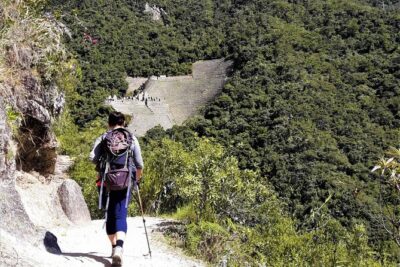
2-Day Inca Trail to Machu Picchu with Panoramic Train
Read our review →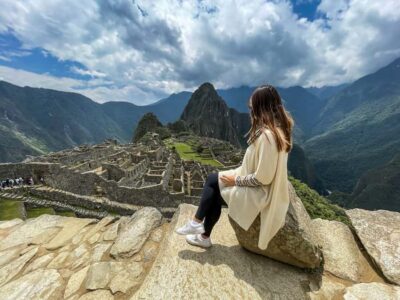

2-Day Tour: Sacred Valley and Machu Picchu by Train
Read our review →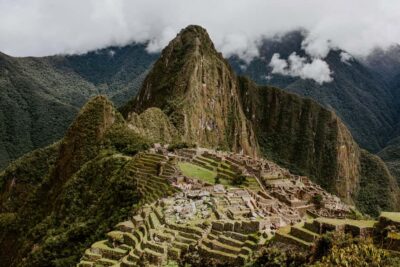
Machu Picchu: Full-Day Tour from Cusco with Optional Lunch
Read our review →Browse the lists this tour appears in