
Reviewed · HIKING TOURS IN AREQUIPA
4-hour excursion: Sillar Route with Hiking in Culebrillas
Stone tells Arequipa’s story. This four-hour excursion pairs the working Añashuayco Quarries with a short walk through Culebrillas Canyon, giving you a useful look at the white volcanic stone used across the city. I especially like the chance to see stonemasons at work and the Megacavado carving of the Church of the Company of Jesus. The views toward the volcanoes and Chilina Valley are another strong point.
The main caution is that the word hiking may oversell the walking. The Culebrillas section lasts about 20 minutes, while much of the outing involves riding between sites, listening to explanations, and stopping for photographs. The Sillar Route can also feel commercial rather than ancient or spiritual, so you should come expecting a working quarry and a cultural sightseeing trip, not a remote trek.
In This Review
- Key points to know before you book
- What this Arequipa half-day trip is really about
- The first viewpoint: volcanoes and the Chilina Valley
- Añashuayco Quarry and the work behind Arequipa’s white stone
- The Megacavado: a large carving in a working quarry
- Culebrillas Canyon and the 20-minute walk
- Wari petroglyphs at the end of the canyon
- Apachetas and the trip back to Arequipa
- Price, language, and what you actually receive
- Who will enjoy this excursion most?
- Should you book the Sillar Route and Culebrillas?
- FAQ
- How long does the Sillar Route and Culebrillas excursion last?
- What time does the excursion begin?
- What time does the group return to Arequipa?
- What is included in the price?
- Are entrance fees included?
- Which languages are available?
- How long is the walk in Culebrillas Canyon?
- What can I see at Culebrillas Canyon?
- Can I cancel for a full refund?
Key points to know before you book
- The Añashuayco Quarry is still active, so you can see how ashlar is extracted and shaped rather than viewing a completely preserved archaeological site.
- The Megacavado is a large stone carving modeled on the Church of the Company of Jesus, made by local stonemasons.
- Culebrillas Canyon offers the best walking, with walls reaching about 15 to 20 meters and Wari petroglyphs at the end of the route.
- The volcano viewpoint is a quick but worthwhile stop, with views toward Arequipa’s volcanoes and the Chilina Valley.
- The $20 price covers transport and a professional guide, but entrance fees of 10 soles are extra.
- The tour runs in English or Spanish, though clear communication may vary depending on the guide and the conditions inside the vehicle.
What this Arequipa half-day trip is really about
Arequipa is famous for its pale buildings, and the reason is sillar, a light-colored volcanic stone called ashlar in English. The city’s churches, mansions, and courtyards use it in ways that give Arequipa its distinctive appearance. This outing takes you to the source of that material.
I would think of the trip as a short cultural excursion with one modest walk, not a full hiking day. The advertised duration is four hours, with a schedule running roughly from 9:15 a.m. to 1:30 p.m. That makes it easy to fit into a morning in Arequipa, especially if you want to return for lunch or continue sightseeing in the historic center.
The route also gives you two different kinds of scenery. Añashuayco is shaped by quarry work, with tall ignimbrite walls cut by stone extraction. Culebrillas feels narrower and quieter, formed by water rather than by modern labor. That contrast is one of the best reasons to choose this particular outing.
More Hiking Tours in Arequipa
- 2 day 1 night trek / Colca Canyon
★ 5.0 · 1,069 reviews - From Arequipa: Sillar Route Trek
★ 4.2 · 461 reviews - Colca Canyon Trek 3 Day 2 Night
★ 5.0 · 328 reviews
The first viewpoint: volcanoes and the Chilina Valley
The journey begins at 9:15 a.m. with a drive away from Arequipa toward the Sillar Route. The first stop is a strategic viewpoint where you can see the volcanoes and the Chilina Valley.
The exact viewpoint may change with the season. At times, the route uses another traditional lookout with volcano views. This is not a long visit, but it helps you understand Arequipa’s setting before you reach the quarries.
I like this opening because it gives the excursion some visual scale. You are not looking only at blocks of stone. You are also seeing the volcanic setting that helped create the material beneath your feet. The stop is brief, so keep your camera ready and do not expect a long guided walk here.
The quality of the explanation may depend heavily on the guide and the vehicle’s microphone. One confirmed experience had a guide whose heavy accent and nervous delivery made it difficult to understand the commentary through the sound system. If the history matters to you, listen carefully during the stops and ask questions directly when possible.
Añashuayco Quarry and the work behind Arequipa’s white stone
After about 45 minutes of driving, you reach Añashuayco Quarry. This is the main stop on the Sillar Route and the place where the excursion becomes more than a photo trip.
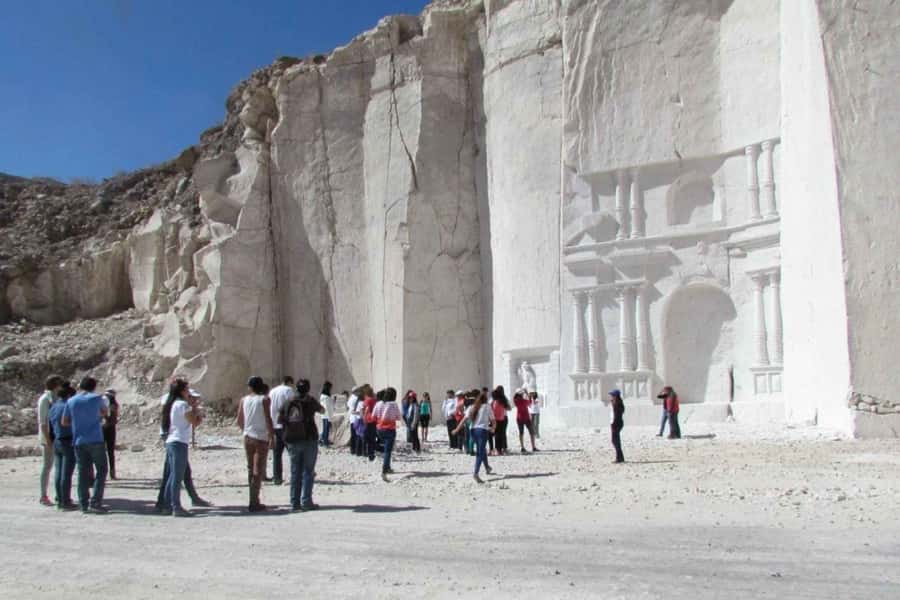
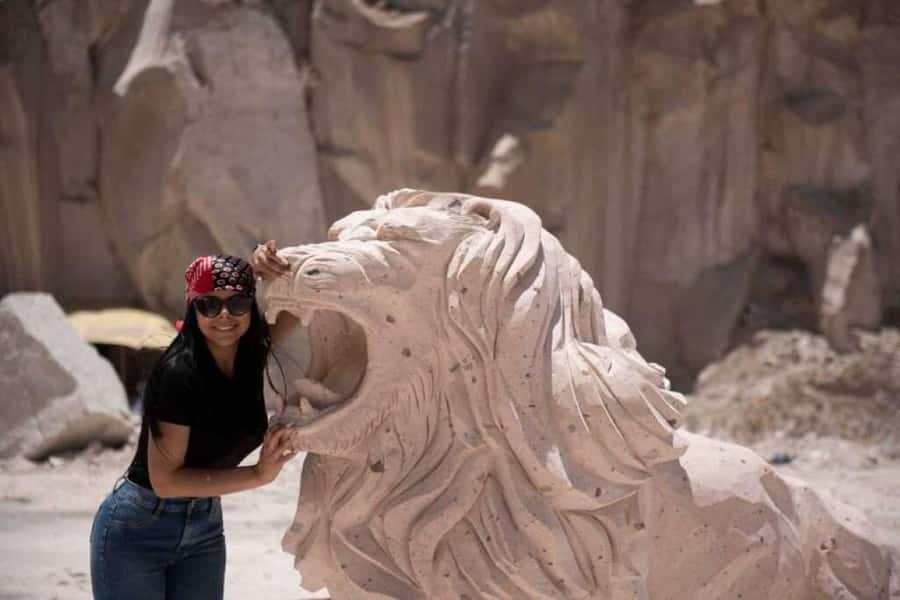
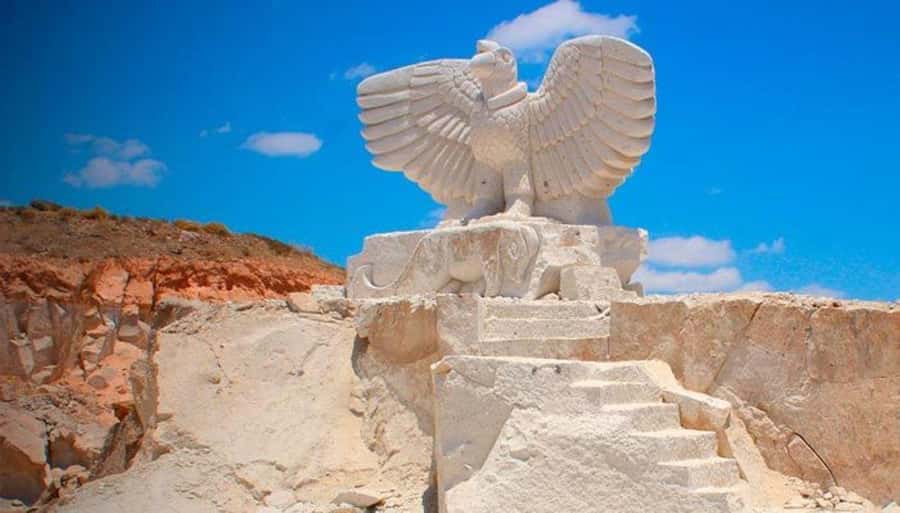
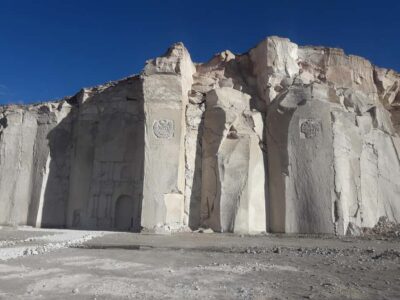
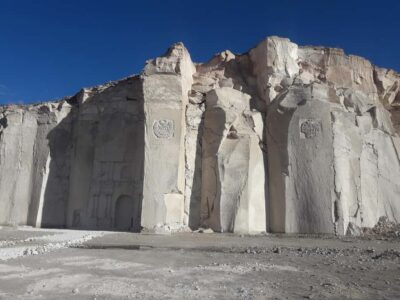
The quarry remains in operation. Its walls are made of ignimbrite, a volcanic rock formed from compacted material, and extraction has created a large canyon-like setting with cliffs several meters high. The pale stone catches the light, but the scene is not polished or museum-like. It is a working area shaped by cutting, hauling, and carving.
That working quality matters. You can learn how ashlar is produced, how it has been used over time, and why it became central to Arequipa’s architecture. Rather than simply seeing a finished church in town, you get a basic sense of the labor behind the stone.
The stonemasons usually begin their work early. Depending on the time of your visit, you may see active quarry work and meet one of the workers. The visit can include an explanation of the daily job and a chance to try cutting a stone block yourself.
I would keep expectations sensible here. You are not signing up for a full workshop, and the activity is brief. Still, trying the process gives you a better feel for the skill involved. Sillar may look soft and uniform from a distance, but shaping blocks by hand is demanding work.
The Megacavado: a large carving in a working quarry
The quarry’s most recognizable feature is the Megacavado, a large carving of the Church of the Company of Jesus. Local stonemasons made it directly in the quarry.
This is a clever stop because it links the raw material to a famous Arequipa building. You can look at the carving, then connect it with the city’s ornate church fronts and pale stone structures. It is also an easy place to take photographs, although the setting can feel more like a developed attraction than an untouched historic site.
That distinction is worth knowing before you book. If you expect the Sillar Route to feel mysterious, sacred, or thousands of years old, you may be disappointed. The quarry is a commercial working site with an organized visitor stop. Its value comes from seeing a present-day craft and understanding the material, not from visiting an ancient monument.
The surrounding cliffs remain impressive. Their scale helps you see how much stone has been removed over time. I would spend less time trying to capture the perfect photograph and more time watching the stone surfaces, tool marks, and work areas. Those details explain the place better than a wide shot alone.
More hiking days from Arequipa:
- From Arequipa: 2-Day Colca Canyon Trekking Tour
★ 4.8 · 243 reviews - Colca Trekking 2days from Arequipa
★ 4.5 · 212 reviews - 2 Day 1 Night Trek / Colca Canyon
★ 4.5 · 92 reviews - 4 hours Tour: Route of Sillar with Trek in Culebrillas
★ 4.2 · 69 reviews
Culebrillas Canyon and the 20-minute walk
From Añashuayco, the vehicle continues for about 30 minutes to Quebrada de Culebrillas. This is the walking portion of the outing.
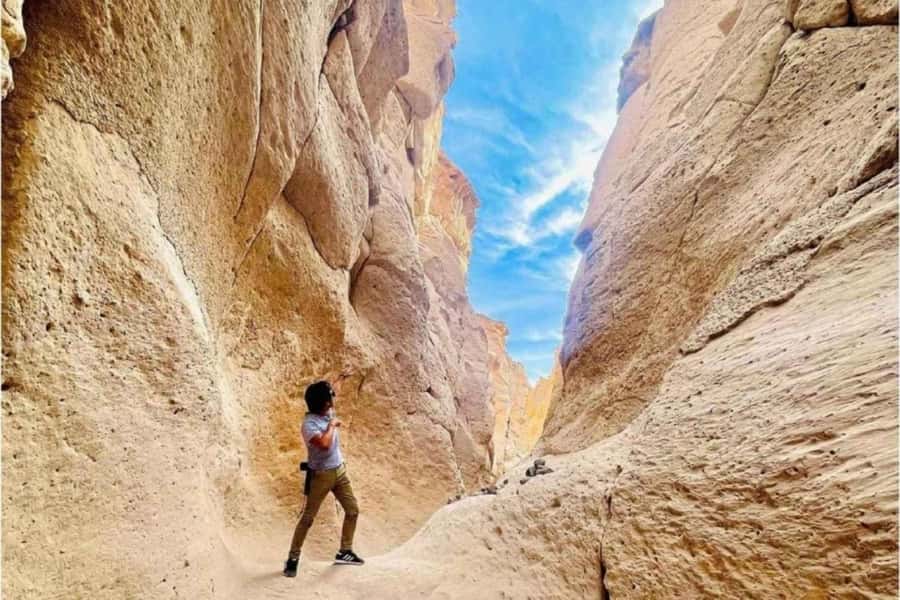
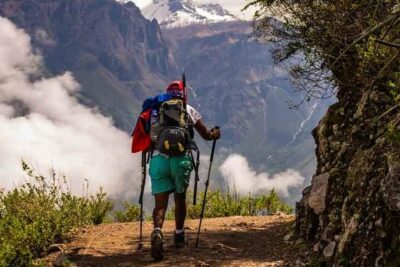
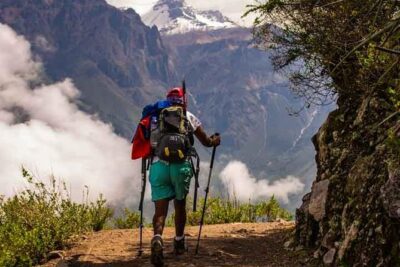
Culebrillas is a narrow canyon formed by the passage of water. Its walls rise approximately 15 to 20 meters, and they become taller as you move farther inside. The walk takes about 20 minutes through the canyon.
This section may be the highlight if you want a more natural setting. The quarry shows how people have cut into volcanic rock, while Culebrillas shows how water has shaped it. The narrow walls change the mood of the trip, and the short walk gives you a break from the vehicle.
Still, I would not book this as a serious hike. The walk is short, and the total tour includes considerable driving. The description fits a gentle canyon stroll better than a strenuous route. If you want a longer mountain walk, you will need a different activity.
The canyon can also be a place where the group’s interests split. Some people may focus on photographs, while others want to hear about the site and its past. If you care about the cultural details, stay close to the guide and ask about the places being pointed out.
Wari petroglyphs at the end of the canyon
At the end of the walk, you can see petroglyphs attributed to the Wari culture and dated to more than a thousand years ago. This is the most genuinely old element of the excursion.
The petroglyphs add an important layer to Culebrillas. The canyon is not only a pleasant place to walk through. It also preserves signs of earlier human activity. That makes the short hike feel more meaningful, even if the main Sillar Route is modern and commercial.
The information provided for the excursion does not give details about the exact symbols or their condition, so I would avoid expecting a large archaeological display. You may need the guide’s help to identify the carvings. Pay attention to where the group stops, and do not assume every mark on the rock is a petroglyph.
This is also a good reason to keep the canyon portion unhurried. Twenty minutes is enough to reach the main point, but it is not much time for a long explanation, careful photographs, and a relaxed walk all at once.
Apachetas and the trip back to Arequipa
Before leaving Culebrillas, the group observes apachetas. These are small stone formations made by placing stones one on top of another.
They are described as symbols of gratitude toward nature and as signs associated with good luck. For some people, this will be a simple visual detail. For others, the stacked stones add a more reflective, almost mystical moment at the end of the canyon visit.
I like this stop because it slows the outing down after the quarry’s practical focus. You have seen stone being extracted and carved, then stone shaped by water, and finally stone arranged by people as a gesture of thanks.
The return to Arequipa begins around 12:30 p.m., with arrival expected at about 1:30 p.m. Since the schedule is tight, traffic or delays could affect the exact return time. I would avoid booking a fixed lunch reservation immediately afterward.
Price, language, and what you actually receive
At $20 per person, the excursion offers solid value if you want transport, a guide, and several sights outside Arequipa without arranging a private trip. The price includes tourist transport and a professional guide. Entrance fees are not included and cost 10 soles.
The value depends on what you want from the day. For a low-cost introduction to the quarries, the canyon, and the volcano views, it is a reasonable deal. You get more variety than you would from visiting only a city church or only the quarry.
It is less compelling if you want a long hike, a quiet archaeological visit, or a detailed craft workshop. Much of your time is spent traveling, and the main quarry stop has a clear tourist component.
The tour is offered in English and Spanish. I would not assume that an English-language departure will provide perfect audio at every moment. A heavy accent, road noise, or a weak microphone can make spoken explanations hard to follow, so use the stops to clarify anything you miss.
The overall score is 4 out of 5 from 21 ratings, which suggests a generally positive experience with some unevenness. One confirmed booking reported that the excursion did not take place at all. Because of that, I would confirm the departure with Latitudes before setting out, especially if this is your only chance to see the Sillar Route.
Free cancellation is available up to 24 hours before departure for a full refund, and you can reserve now while paying later. Those terms make the booking less risky if your Arequipa schedule is still changing.
Who will enjoy this excursion most?
I would recommend it to first-time visitors who want a quick look at the area beyond the city center. It works especially well if you are curious about Arequipa’s white stone buildings and want to see where the material comes from.
It also suits people who like variety. In one morning, you get a viewpoint, a working quarry, a carved church facade, a narrow canyon, old petroglyphs, and apachetas. None of these stops is very long, but together they create a useful introduction to the region.
Families and casual sightseers may appreciate the short walking section. The excursion does not require a full day of physical effort, though you should still be prepared for uneven ground in the canyon and quarry areas. The available information does not specify accessibility conditions, so anyone with mobility concerns should ask the provider before booking.
I would be more cautious if your main goal is hiking. The outing includes only about 20 minutes of walking through Culebrillas. Calling it a canyon visit with a short walk would set a more accurate expectation.
Should you book the Sillar Route and Culebrillas?
Book it if you want an affordable, time-efficient way to connect Arequipa’s architecture with its volcanic stone. The Añashuayco Quarry is the strongest practical stop, while Culebrillas provides the best walking and the most satisfying link to the past through its Wari petroglyphs.
Skip it if you are looking for a remote adventure or a long mountain hike. The Sillar Route is active, organized, and tourist-friendly, with a commercial feel that may surprise you.
For most first-time visitors, I think the $20 cost is fair, provided you accept the short walk and pay the extra 10 soles entrance fee. Confirm that the departure is operating, keep your expectations focused on culture and scenery rather than strenuous hiking, and this can be a worthwhile morning outside Arequipa.
FAQ
How long does the Sillar Route and Culebrillas excursion last?
The activity is advertised as four hours. The stated schedule runs from approximately 9:15 a.m. to 1:30 p.m., which is about four hours and 15 minutes.
What time does the excursion begin?
The journey begins at approximately 9:15 a.m.
What time does the group return to Arequipa?
The return trip begins around 12:30 p.m., with arrival in Arequipa expected at about 1:30 p.m.
What is included in the price?
The price includes tourist transport and a professional guide.
Are entrance fees included?
No. Entrance tickets are not included and cost 10 soles.
Which languages are available?
The tour is offered with a live guide in English or Spanish.
How long is the walk in Culebrillas Canyon?
The walk through the canyon lasts approximately 20 minutes.
What can I see at Culebrillas Canyon?
You can see canyon walls approximately 15 to 20 meters high, Wari petroglyphs dated to more than a thousand years ago, and apachetas made from stacked stones.
Can I cancel for a full refund?
Yes. You can cancel up to 24 hours in advance for a full refund.
Added recently around Arequipa
- gazebos cannon of the coca★ 5.0 · 28 reviews
- Sillar Route★ 5.0 · 4 reviews
- Salinas Lagoon + Mini Volcano DE Lojen★ 5.0 · 9 reviews
- Full Day Tour To The Salt Lake Salinas in Arequipa★ 4.5 · 34 reviews
- 3-Day Colca Canyon trek with Professional Guide★ 5.0 · 40 reviews
- Trekking, Waterfalls and Thermal Baths★ 4.5 · 47 reviews
- Walking Tour Arequipa Including Santa Catalina Monastery★ 4.0 · 8 reviews
- Walking City tour including the Monastery of Santa Catalina★ 5.0 · 6 reviews
Hiking Tours in Arequipa, compared.
4 hours Tour: Route of Sillar with Trek in Culebrillas
Read our review →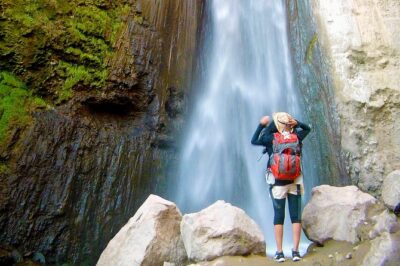
Browse the lists this tour appears in