
Reviewed · CITY TOURS
Arequipa: The White City Origins – Sillar Route Half Day
Stone gives Arequipa its character. This four-hour morning tour takes you beyond the city center to the quarries that supply the pale volcanic stone used in Arequipa’s famous buildings, with stops at Añashuayco and Culebrillas. I like the chance to meet local stoneworkers and see their tools in use, and I like that the tour adds Wari petroglyphs to the quarry visit instead of treating the route as just a photo stop. The main drawback is practical: the $23 price does not include the S/ 5 entrance fee, payment to master cutters, food, drinks, or a ride back to your hotel.
The experience suits you best if you have only half a day and want transportation, an English or Spanish guide, and a clear introduction to the stone behind Arequipa’s colonial architecture. Guide Andreas received especially warm praise for explaining not only the Sillar Route but also Arequipa, its districts, people, and Peruvian culture. Guide Fiorella was also noted for her friendly manner and good humor, though guide assignments can vary.
In This Review
- Key details before you book
- Why Arequipa Is Called the White City
- The Morning Pickup and Ride Out
- Añashuayco Quarry and the Stonecutters’ Work
- The Pink Sillar Stop
- Meeting the Artisans and Understanding the Craft
- Walking Through Culebrillas Ravine
- The Wari Petroglyphs
- What the $23 Price Really Covers
- Who Will Like This Half-Day Route
- Practical Packing Advice
- Should You Book the Sillar Route?
- FAQ
- How long does the Sillar Route tour last?
- What language is the guide?
- Where does hotel pickup take place?
- Is the entrance fee included?
- Are food and drinks included?
- Are young children allowed?
Key details before you book
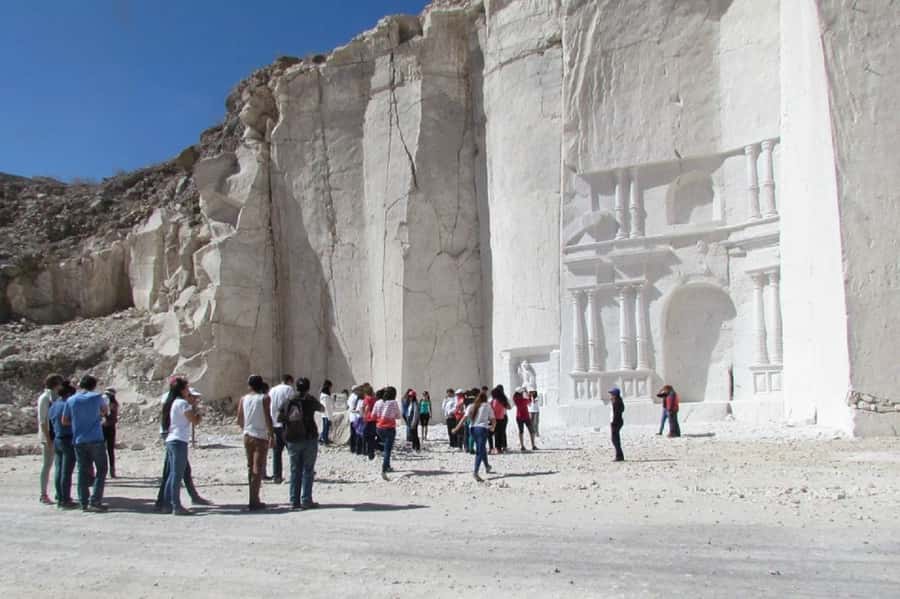
- Añashuayco Quarry: Walk among working stonecutters at the foot of Chachani Volcano, beside the Chili River.
- Pink Sillar: See the quarry section where sillar takes on a strong pink tone from sunlight, sand, and rock.
- Hands-on craft: Watch artisans shape sillar with traditional tools and browse optional handmade pieces.
- Culebrillas Ravine: Follow narrow walls formed by water and wind erosion, with petroglyphs reaching about 30 meters high.
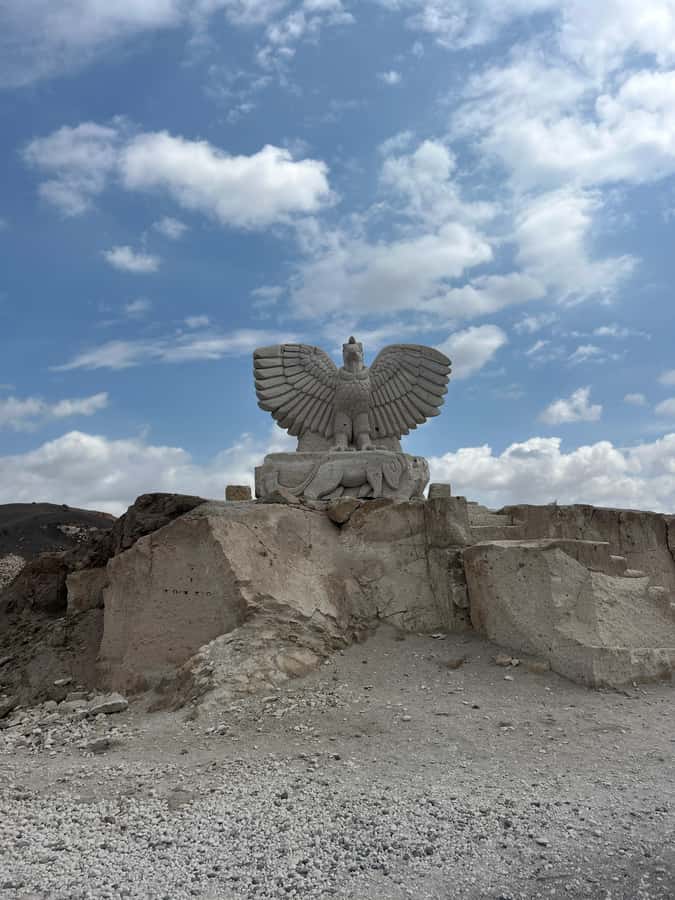
- Wari carvings: Look for birds, felines, and snakes linked to the Wari culture, which flourished from the 7th to 13th centuries.
- Simple half-day logistics: Morning pickup is available from hotels in Arequipa’s historic center, but return is to the city center rather than your hotel.
Why Arequipa Is Called the White City
Arequipa’s pale color is not just a paint choice. Much of the city was built with sillar, a light volcanic stone formed from deposits left by eruptions in the region. Builders cut and shaped it into walls, facades, arches, and carved details.
The stone helped give the historic center its unified appearance, a quality that contributed to Arequipa’s UNESCO World Heritage status. Once you see the quarries, the city’s churches and colonial buildings make more sense. You are no longer looking at pale walls as a decorative style. You are seeing a local material with a long working tradition behind it.
That connection is the main reason I would choose this tour over a simple taxi ride to a quarry. A taxi can get you there, but it does not automatically provide the explanation of how sillar is extracted, shaped, and used. The guide helps tie the outlying quarries back to the streets you have already walked in Arequipa.
More City Tours in Arequipa
- Arequipa: Walk through the Historic Center of the City
★ 4.9 · 87 reviews - Arequipa Walking Tour city center and drinks experience
★ 5.0 · 72 reviews - Arequipa Food Tour: Ancestral Cuisine & City Tour
★ 5.0 · 52 reviews
The Morning Pickup and Ride Out
The tour begins in the morning with pickup from a centrally located hotel in the historic center. You should wait in the lobby about 10 minutes before the scheduled pickup time. Transportation is included, which makes this easier than arranging your own ride to the quarry district.
The route heads toward Cerro Colorado, a district outside the central streets. The total activity lasts about four hours, so this is a useful choice if your Arequipa schedule includes other plans later in the day. The timing also keeps the visit focused. You get the main quarry sights without giving up an entire day.
The pickup area is limited to central hotels. If you are staying outside the historic center, you should confirm how to reach the meeting point before booking. The return is to Arequipa’s city center, not a drop-off at your hotel, so allow a little time and energy for the final walk or local ride.
The tour is offered in English and Spanish with a live guide. That matters here because the quarry is more than an open-air photo setting. The story of the stone, the work of the cutters, and the meaning of the petroglyphs are what make the visit worthwhile.
Añashuayco Quarry and the Stonecutters’ Work
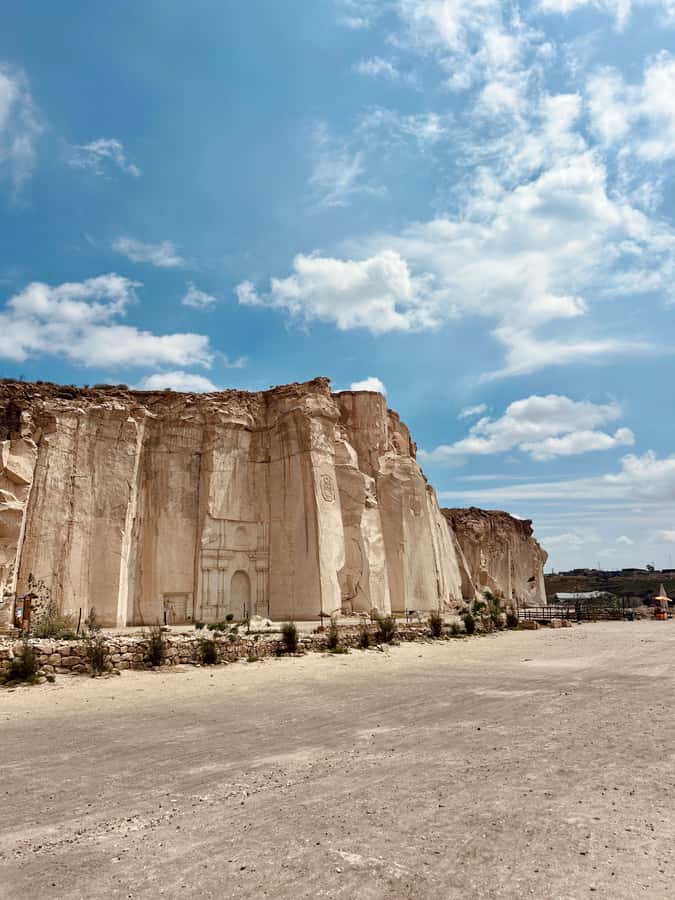
The first major stop is the Añashuayco Quarries, located near the foot of Chachani Volcano and beside the Chili River. The setting brings together volcanic stone, a large Andean peak, and the working area of local master cutters.
You walk through the quarry area and see handcrafted examples made from sillar. These can include colonial-style facades and carved pieces, giving you a sense of what the raw blocks become after careful shaping. The stop is especially useful if you have admired Arequipa’s historic center but have not yet understood how its stonework is made.
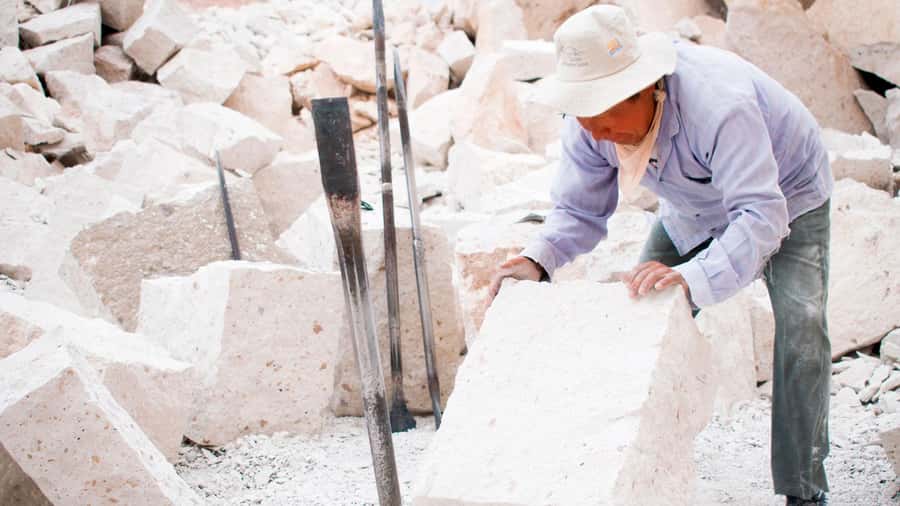
The tour also gives you a look at the extraction process. Sillar is not presented as a ready-made building block that simply comes out of the ground in perfect form. You can observe where it is taken from and how artisans work with it using traditional tools.
That traditional work is one of the strongest parts of the experience. The visit is not only about geology. It is also about a skilled local trade passed from one generation to the next. You get to see the physical effort behind the smooth arches and detailed facades found in Arequipa.
There is an optional chance to buy handicrafts. Bring cash if you are interested, since cash is specifically recommended for the tour. You should also expect to pay the master cutters separately. The exact amount is not listed, so keep some extra soles available and ask your guide about the customary payment.
The Pink Sillar Stop
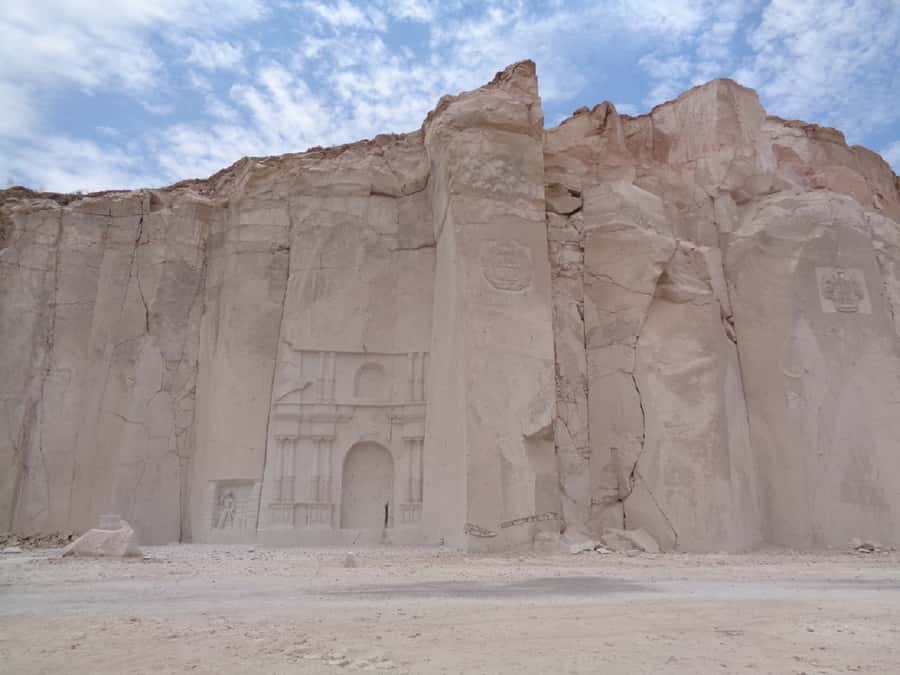
One section of the quarry is known as Pink Sillar. In sunlight, the stone appears intensely pink because of the mix of sillar, sand, and rocks.
This is a good reminder that sillar is not always a uniform white. The color change gives the quarry a different character and makes this stop more than a repeat of the first set of stone walls. I would plan to pause here rather than rush through for a single photograph. The stone’s color is tied to its mineral mix and the way the sun hits the quarry.
The tour description does not promise a particular amount of time at Pink Sillar, so your guide will likely balance this stop with the artisan workshops and extraction area. If photography matters to you, bring sunglasses and a hat. The recommended gear also includes sunscreen, comfortable clothes, and a passport.
A few more Arequipa trips worth lining up side by side
- 2 day 1 night trek / Colca Canyon
★ 5.0 · 1,069 reviews - From Arequipa: Colca Canyon Full-Day Guided Tour with Meals
★ 4.5 · 982 reviews - Tour to the Salinas Lagoon and National Reserve in Arequipa
★ 4.5 · 548 reviews - From Arequipa: Sillar Route Trek
★ 4.2 · 461 reviews
Meeting the Artisans and Understanding the Craft
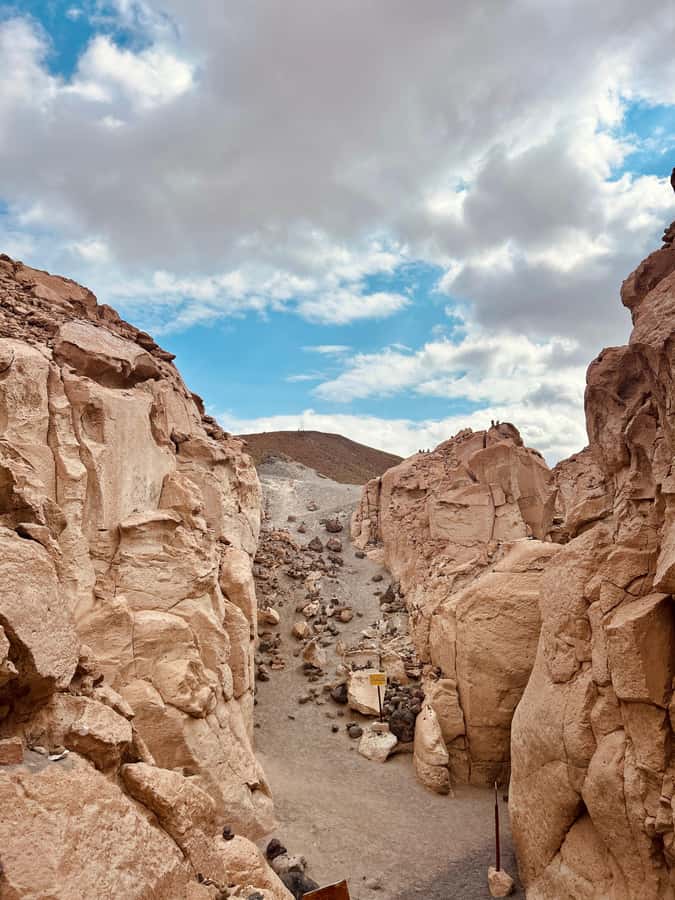
At the workshops, you can see how sillar is worked with ancestral tools. This is where the route becomes more personal. Instead of only viewing a quarry wall, you watch people turn the material into useful and decorative objects.
I like this part because it places local skill at the center of the visit. The stone may be famous, but the craft is what makes it part of Arequipa’s living culture. A guide can explain the process, while the artisans show the practical side through their movements, tools, and finished work.
The tour includes an English or Spanish professional guide, but payment to the master cutters is not included. That distinction is worth noting. The listed price covers the basic organized visit, while direct support for the artisans is handled separately.
You can buy handicrafts if something catches your eye. This is optional, not part of the tour cost. I would treat shopping as a chance to support the workshop rather than a required part of the route, especially if you prefer to travel light.
Walking Through Culebrillas Ravine
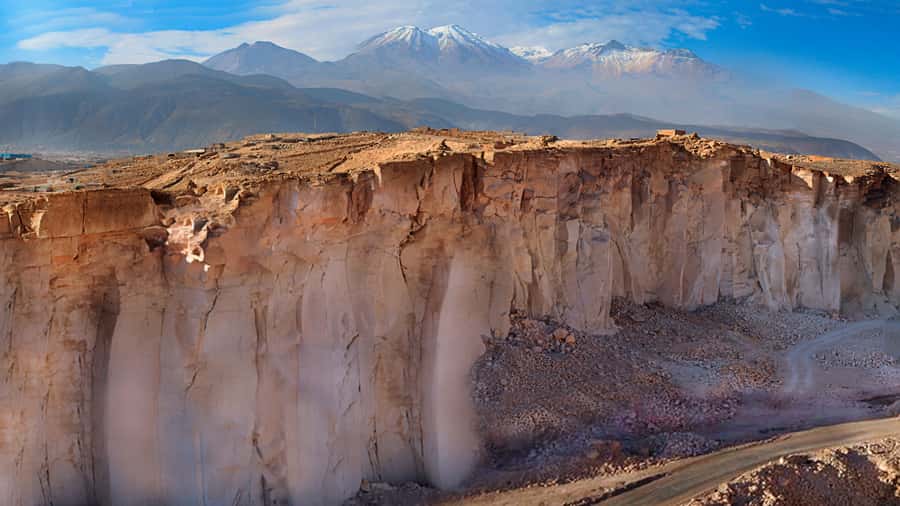
After Añashuayco, the route continues to the Culebrillas Quarry. Here, the focus shifts from active stonework to a narrow natural ravine shaped by water and wind erosion.
You walk between the ravine walls and look up at surfaces that can reach around 30 meters high. The narrow passage gives this part of the tour a different feel from the open quarry areas. It also provides a clear view of how natural erosion has shaped the site over time.
The walk is described as suitable for all ages, but comfortable clothing and sensible footwear are still a good idea. The tour involves strolling through quarry and ravine areas, so it is not the place for stiff shoes or clothing that limits movement. The supplied information does not specify the exact trail surface or level of accessibility, so anyone with mobility concerns should ask the operator before booking.
Culebrillas is valuable because it adds a cultural layer to the stone route. You are not only seeing where material for Arequipa came from. You are also looking at a site connected with the Wari culture, an Andean civilization active from the 7th to the 13th centuries.
The Wari Petroglyphs
The ravine walls contain petroglyphs depicting birds, felines, and snakes. These carvings are associated with the Wari culture and can be found high on the walls.
The exact meaning of the figures is not provided, so you should listen to the guide’s explanation rather than expect a full archaeological lecture. Still, the carvings give the Culebrillas stop a sense of time that reaches far beyond Arequipa’s colonial period.
This combination is one reason I see the tour as good value. In four hours, you move from volcanic geology to living craft, colonial architecture, and pre-Columbian culture. The route does not stay in one historical period. Each stop explains a different part of the region.
The petroglyphs may be harder to spot than the large quarry walls, especially from a distance. Bring sunglasses, but do not forget to remove them when looking for details in the rock. A guide can help point out the animal shapes and explain what you are seeing.
What the $23 Price Really Covers
At $23 per person, the tour is reasonably priced for a guided half-day outing with transportation from central hotels. You are paying for a structured route to two quarry areas, a professional bilingual guide, and pickup service.
The value is strongest if you do not want to arrange transport yourself or research how Añashuayco and Culebrillas fit together. The guide also adds context that is difficult to get from a quick independent visit, especially around the artisans, the Pink Sillar, and the Wari carvings.
Budget separately for the S/ 5 entrance fee per person. Food and drinks are not included, and payment to the master cutters is separate. Handicrafts are optional purchases, so the final cost depends on how much cash you choose to spend.
A taxi could be a better deal for you if you only want to see one quarry and do not need explanations. One person specifically considered a taxi a good option for a simple quarry or canyon visit. I agree with that distinction. The organized tour earns its price through the combination of both sites, a guide, and the cultural background.
The tour also offers free cancellation up to 24 hours before departure and a reserve-now, pay-later option. These policies can help if your Arequipa plans are still shifting.
Who Will Like This Half-Day Route
I would recommend the tour to you if:
- You have limited time in Arequipa but want to leave the city center.
- You want to understand the source of the stone used in Arequipa’s historic buildings.
- You prefer a guide who can explain culture and local districts along with the main attraction.
- You are interested in traditional craft and may want to buy a small handmade item.
- You enjoy adding archaeological details to a scenic outing.
- You want transportation included rather than arranging a separate trip.
Families can consider it too, since the activity is listed as suitable for all ages. Children age two and younger are complimentary when seated on a parent’s lap.
I would be more cautious if you want a long, slow archaeological visit, a full-day outing, or door-to-door hotel service. This is a compact route with a set four-hour duration. It gives you a good introduction, but it does not promise extended time at each quarry.
Practical Packing Advice
Bring your passport, sunglasses, sunscreen, a hat, comfortable clothes, and cash. Those items match the exposed quarry setting and the separate costs you may encounter.
A small amount of cash in Peruvian soles is especially useful for the S/ 5 entrance fee and any payment to the master cutters. The tour does not include food or drinks, so you may also want to eat before pickup or carry something suitable, though no meal stop is promised.
The provider supplies a first aid kit and a COVID kit. That is a useful basic safeguard, but it does not replace ordinary preparation for a sunny outdoor outing. The tour information does not give a forecast-specific packing list, so check the weather in Arequipa before you leave.
Should You Book the Sillar Route?
Book this tour if you want the story behind Arequipa’s white stone, not just another viewpoint. The combination of Añashuayco’s working quarries, Pink Sillar, artisan workshops, Culebrillas Ravine, and Wari petroglyphs gives you a clear sense of why the material matters.
The strongest guide feedback centered on enthusiasm, clear explanations, and local context. Andreas was praised for connecting the route with Arequipa’s people and districts, while Fiorella was remembered for her friendly approach. That personal element can make a short tour feel much more useful.
Skip it and arrange your own taxi if you only need a quick look at one quarry or want complete control over timing. For $23, though, the organized version offers solid value for a four-hour morning, provided you remember the extra entrance charge, artisan payment, and return transport from the city center.
FAQ
How long does the Sillar Route tour last?
The tour lasts four hours and takes place in the morning.
What language is the guide?
The tour has a live professional guide in English or Spanish.
Where does hotel pickup take place?
Pickup is available from centrally located hotels in Arequipa’s historic center. You should wait in the hotel lobby 10 minutes before the scheduled pickup.
Is the entrance fee included?
No. The entrance fee is S/ 5 per person, payable in local currency.
Are food and drinks included?
No. Food and drinks are not included in the tour price.
Are young children allowed?
Yes. The activity is suitable for all ages, and children age two and younger are complimentary when seated on a parent’s lap.
Added recently around Arequipa
- gazebos cannon of the coca★ 5.0 · 28 reviews
- Sillar Route★ 5.0 · 4 reviews
- Salinas Lagoon + Mini Volcano DE Lojen★ 5.0 · 9 reviews
- Full Day Tour To The Salt Lake Salinas in Arequipa★ 4.5 · 34 reviews
- 3-Day Colca Canyon trek with Professional Guide★ 5.0 · 40 reviews
- Trekking, Waterfalls and Thermal Baths★ 4.5 · 47 reviews
- Walking Tour Arequipa Including Santa Catalina Monastery★ 4.0 · 8 reviews
- Walking City tour including the Monastery of Santa Catalina★ 5.0 · 6 reviews
City Tours, compared.
Lima Half-Day City Walking Tour (Small Groups)
Read our review →
Half-Day City Tour with Sacsayhuaman and Q’enco
Read our review →
City Tour Panoramic Bus Departure From Larcomar
Read our review →
City Tour Cusco Qoricancha Sacsayhuaman y Tambomachay
Read our review →
Lima’s Vibrant Heritage: Exploring the City’s Landmarks Half-day
Read our review →
Sightseeing Tour of the City on an Open-Top Bus
Read our review →
Lima City, Central Market & Catacombs Tour (Pick-up & Drop Off)
Read our review →Browse the lists this tour appears in