
Reviewed · MACHU PICCHU TOURS
Best 2-Day Private Machu Picchu & Sacred Valley Experience
Machu Picchu is only half the story. This two-day private trip links Cusco’s nearby Inca sites with the Sacred Valley, scenic train rides, and a three-hour guided visit to Machu Picchu. I like the door-to-door transport planning and the chance to see Chinchero, Moray, Maras, and Ollantaytambo in one well-packed day. I also like that your group has a private guide at Machu Picchu, rather than joining a large tour.
The main drawback is the pace. Day one covers several archaeological sites, lunch, a train ride, and an overnight stay in Aguas Calientes. The price is also significant at $589.05 per person, and the strict non-refundable policy means you should confirm dates, names, tickets, and pickup details before paying.
In This Review
- Key points to know before booking
- Why this two-day route works
- Chinchero: weaving, Inca foundations, and a colonial church
- Moray: an Inca agricultural puzzle
- Maras Salt Mines: working tradition on a mountain slope
- Urubamba lunch: a needed pause in the valley
- Ollantaytambo: an Inca town that still functions
- The train to Aguas Calientes
- Morning bus to Machu Picchu
- Three hours inside Machu Picchu
- Lunch and free time in Aguas Calientes
- Returning to Cusco
- Service, trust, and the value of personal help
- Is $589.05 per person good value?
- Who should book this experience?
- Should you book it?
- FAQ
- How long is the experience?
- What is included in the price?
- Is the Machu Picchu tour private?
- Which train class is included?
- Where does pickup take place?
- Can pickup be arranged outside Cusco?
- Which sites are visited in the Sacred Valley?
- Where do you stay overnight?
- Can the booking be cancelled or changed?
Key points to know before booking
- Four Sacred Valley stops before Machu Picchu: Chinchero, Moray, Maras, and Ollantaytambo give you a broad look at Inca engineering and local traditions.
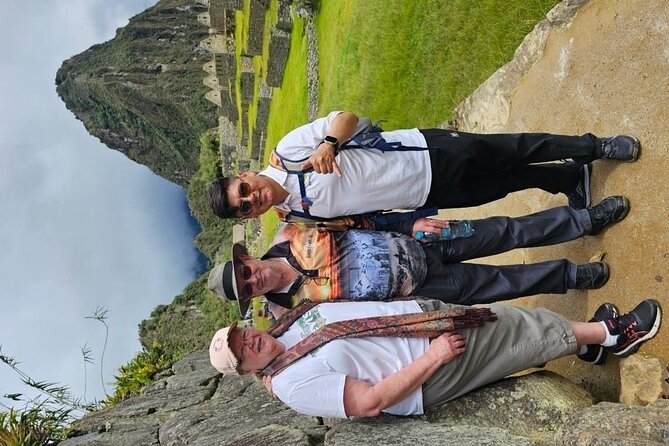
- Private Machu Picchu guiding: The three-hour visit includes the Temple of the Sun, Main Plaza, Intihuatana, and Temple of the Three Windows.
- Overnight at Hotel Pucara Machupicchu: Staying in Aguas Calientes avoids an exhausting same-day return to Cusco.
- Round-trip Expedition trains included: You can ask about upgrading to Vistadome and Observatory service for an added cost.
- Flexible pickup: Hotel or airport pickup in Cusco is included, and other pickup locations in Peru may be arranged.
- Strong personal service, with one serious caution: Edgar and his team receive praise for care and quick problem-solving, but one account raises concerns about missed transfers and guide attention.
Why this two-day route works
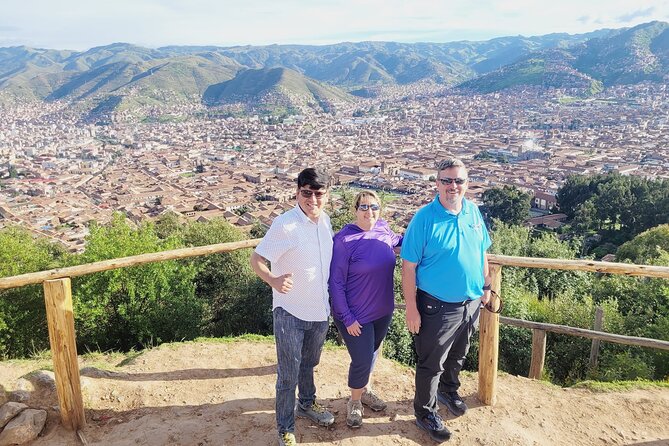
This trip is designed for people who want to see Machu Picchu but do not want to spend all their time there. The first day uses the route through the Sacred Valley, where the sites are not filler stops. Each one shows a different part of Andean life: weaving, farming, salt production, royal planning, and mountain transport.
You also avoid returning to Cusco after the Sacred Valley. Instead, you continue from Ollantaytambo by train to Aguas Calientes, the town below Machu Picchu. That saves a long backtrack and puts you close to the entrance the next morning.
The tradeoff is a full schedule. You should think of this as a carefully arranged introduction, not a slow countryside holiday. If you want long photo stops, quiet meals, or extended time in each village, the timing may feel tight.
More Machu Picchu Tours in Sacred Valley
- 2-Day Tour: Sacred Valley and Machu Picchu by Train
★ 5.0 · 1,127 reviews - Sacred Valley & Machu Picchu 2D1N
★ 5.0 · 617 reviews - 6 Days Exploring Cusco, Sacred Valley & Machu Picchu
★ 5.0 · 470 reviews
Chinchero: weaving, Inca foundations, and a colonial church
The first major stop is Chinchero, described as one of the most typical and picturesque towns in the Sacred Valley. You spend about an hour and a half here, with admission included.
The visit begins at a textile center, where local women demonstrate traditional methods for dyeing and spinning alpaca wool. This is a useful stop because it connects the famous Andean textiles to actual work. You can see how color and yarn are produced rather than treating weaving as a shop display alone.
You then visit Chinchero’s Inca square and colonial church. The pairing is important. Spanish buildings were placed over or beside Inca foundations in many Andean towns, and Chinchero gives you a direct look at that layered past.
The textile center may include a sales area, so keep your spending plans in mind. Buying a handmade item can support local producers, but do not feel pressured to purchase. Ask questions, compare prices, and remember that the tour’s main value here is the cultural demonstration and historic setting.
Moray: an Inca agricultural puzzle
Moray receives about 45 minutes, with admission included. Its huge circular terraces drop into the earth in a series of rings. The Incas likely used the site to test crops under different growing conditions, although the exact purpose remains a matter of interpretation.
The terraces create different temperatures and conditions as they descend. That makes Moray more than a striking photograph. It offers a simple way to understand how Inca farmers worked with altitude, sun, soil, and water.
You will not have unlimited time here, so listen closely to the guide’s explanation and allow time for the view. The site is open and exposed, with little reason to linger if weather turns poor. Still, Moray is one of the most memorable stops on the route because its design is easy to grasp and visually unusual.
Maras Salt Mines: working tradition on a mountain slope
The Maras Salt Mines take about an hour. More than 3,000 small pools spread across a hillside, fed by a natural underground stream. Local families still collect salt from the ponds, continuing a practice that dates back to Inca times.
The salt pans are not an abandoned ruin. They remain part of local production, which gives this stop a direct connection to present-day life. The pools can appear pink, white, brown, or tan depending on water, light, and mineral concentration.
The viewpoint is striking, but conditions can be uneven and the route may involve standing and walking near the hillside. Follow your guide’s instructions and avoid stepping into the pools. The stop is brief enough to fit the schedule, yet long enough to understand how the water is channeled and the salt gathered.
Moray and Maras work well together. Moray shows planned agricultural experimentation, while Maras shows a practical system still used by families. One is a dramatic archaeological site. The other is a living production area.
Other ways to reach Machu Picchu:
- Classic Inca Trail Trek 4D/3N to Machu Picchu (Group Service)
★ 5.0 · 8,653 reviews - Machu Picchu: 4-Day Inca Trail Trek with Panoramic Train Ride
★ 5.0 · 4,568 reviews - Short Inca Trail to Machu Picchu 2D/1N
★ 5.0 · 3,007 reviews - 2-Day Inca Trail to Machu Picchu with Panoramic Train
★ 5.0 · 1,876 reviews
Urubamba lunch: a needed pause in the valley
Lunch in Urubamba lasts about an hour and a half. The meal is included, and the plan is to serve traditional Peruvian food using regional ingredients. Possible dishes are described broadly as Andean stews, grilled meats, salads, and other local specialties.
After a morning of stops, this is not a minor detail. It is your chance to sit down, eat properly, and reset before Ollantaytambo and the train. A rushed meal would make the rest of the day harder.
Because the exact restaurant and menu are not specified, ask about the meal if you have dietary restrictions. Personal expenses are not included, so budget for drinks, extra dishes, and purchases outside the provided lunch.
Ollantaytambo: an Inca town that still functions
Ollantaytambo gets about an hour and a half. This is one of the strongest stops because it combines a working town with a major Inca site.
The terraces rise above the settlement, with the Temple of the Sun and other stone structures showing the scale of Inca construction. The town below retains a grid linked to its Inca planning, so you are not simply looking at isolated walls in a field. You are seeing an old settlement that remains part of daily life.
Ollantaytambo also matters logistically. It is the train departure point for Aguas Calientes. That makes the visit both cultural and practical. You see an important site, then board the train without returning to Cusco.
The schedule allows enough time for a useful visit, but not an exhaustive archaeological study. Wear shoes suited to uneven ground, and keep your belongings organized before heading to the station. Train connections are the backbone of this trip, so being ready on time matters.
The train to Aguas Calientes
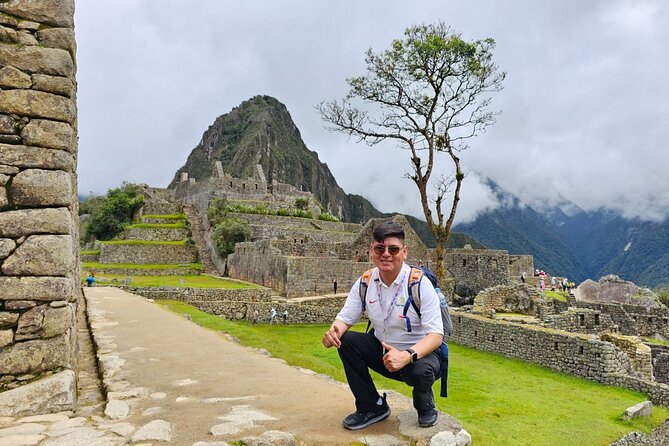
The train ride takes about two hours and follows the Urubamba River through changing Andean scenery, valleys, and cloud forest. Expedition-class round-trip tickets are included.
This is one of the pleasant parts of the trip because you can rest after the day’s sightseeing while the scenery changes outside the windows. The route also helps explain why Machu Picchu feels so remote. The mountain setting is not just a backdrop. The railway follows a narrow river corridor into a wetter, more enclosed zone.
The included train class is Expedition. You may ask about Vistadome and Observatory upgrades, but those cost extra. If the train itself is a major part of your Peru holiday, the upgrade may interest you. If you mainly need a reliable ride to the citadel, Expedition service covers the essential journey.
On arrival, you stay at Hotel Pucara Machupicchu in Aguas Calientes. An overnight here is a sensible choice. You do not have to finish Machu Picchu and then face a long return to Cusco on the same day.
Morning bus to Machu Picchu
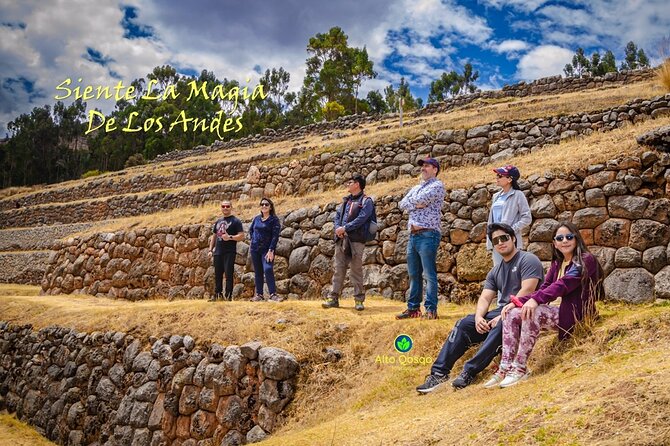
After breakfast at the hotel, you take the bus from Aguas Calientes up to Machu Picchu. The ride takes about 40 minutes and winds through steep mountain scenery, with views toward the river, canyon, valleys, and terraces.
The bus ticket for the round trip is included. That removes one of the common practical tasks at Machu Picchu, where transport and entry arrangements can become confusing during a short visit.
The morning departure time is not provided, so confirm it before the day begins. You should also keep your admission ticket and passport details available as required by the operator. The tour includes your Machu Picchu admission, but the exact circuit and entry time should be confirmed in advance because access follows controlled routes.
Three hours inside Machu Picchu
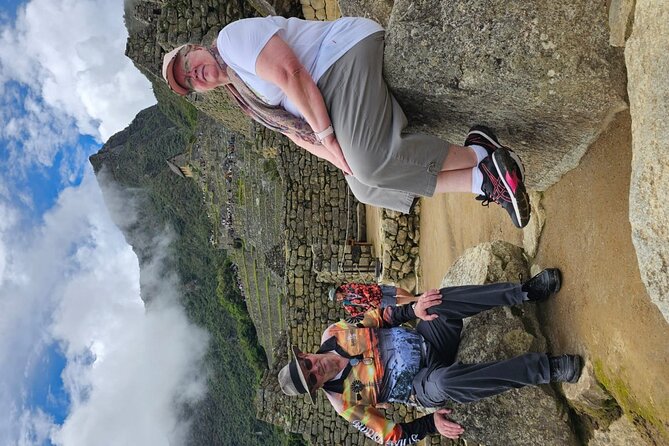
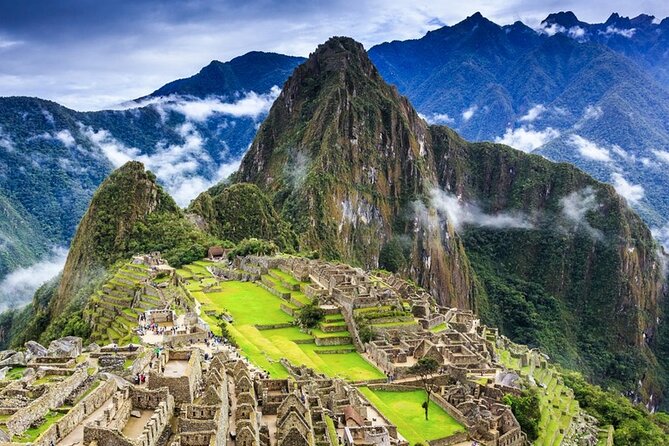
The centerpiece is a three-hour private guided tour. The planned highlights include the Temple of the Sun, Main Plaza, Intihuatana, and Temple of the Three Windows.
Three hours is a useful length for a first visit. It gives you enough time to understand the site rather than simply walk through, take a few photographs, and leave. A private guide can also adjust explanations to your interests and answer questions from your own group.
The guide named in the available service information is César. One account praises him highly, while another says the guide spent too much time on a phone and did not provide the expected level of attention. That contrast matters. The private format gives you a better chance to ask for a focused tour, but you should speak up early if the pace or explanation is not working for you.
Machu Picchu is physically impressive, but it can be mentally crowded too. Do not try to record every word. Look at how the buildings fit the ridge, notice the stonework, and leave room for a quiet pause. The guide’s job is to give meaning to what you see, not to fill every minute with speech.
Lunch and free time in Aguas Calientes
After the citadel, the bus returns you to Aguas Calientes in about 40 minutes. Lunch is not clearly specified as included at this point, so plan to pay for your own meal in town.
You have time to eat and walk around the town’s artisan shops before returning to the station. Aguas Calientes is mainly a gateway to Machu Picchu, and its commercial character may feel less intimate than the Sacred Valley villages. Still, the break is useful after a demanding morning.
Use this time to check your train details, gather your belongings, and avoid wandering too far from the station. The return train is scheduled for about two hours back to Ollantaytambo.
Returning to Cusco
After reaching Ollantaytambo, a vehicle takes you back to your Cusco hotel or the original meeting point. The drive gives you another look at the Sacred Valley, and the service includes assistance around the transfers.
Pickup is flexible. Hotel or airport pickup in Cusco is included if you provide the location in advance. The operator also says it can customize pickup from other Sacred Valley locations, cities, ports, train stations, or airports in Peru. Confirm any special arrangement in writing, especially if your flight or hotel is outside central Cusco.
The published meeting point is Plaza Regocijo in Cusco, but the activity ends back at the meeting point unless another drop-off is arranged. This is worth clarifying before departure.
Service, trust, and the value of personal help
The strongest praise centers on Edgar and the wider team’s personal care. One account describes Edgar helping a family who arrived in Cusco without Machu Picchu tickets and had very little time. He arranged taxis, trains, vouchers, and admission, with someone present at each transfer. Another account praises the team’s hospitality and value.
That kind of help can be worth a great deal in Peru, where the trip involves several separate pieces: road transport, train tickets, a hotel, bus tickets, park admission, and a guide. You are paying not only for sights, but also for someone to coordinate the chain.
At the same time, you should not ignore the negative account. It describes a guide who appeared distracted and missed promised airport transfers, leaving the family to find taxis at the last minute. The operator apologized for the guide not meeting expectations but disputed that the complaint represented its normal service.
My practical advice is simple: get every transfer, train time, hotel detail, guide name, and included meal confirmed before departure. Keep the company’s contact information handy. Personal service can be excellent, but clear written details protect you when a trip has this many moving parts.
Is $589.05 per person good value?
At $589.05 per person, this is not a budget excursion. Yet the package includes a great deal: Sacred Valley transportation, admissions for the listed archaeological sites, lunch on day one, round-trip Expedition trains, the Aguas Calientes hotel, Machu Picchu admission, round-trip buses, a private three-hour guide, and 24/7 assistance.
The value is strongest if you are short on time or uneasy about managing Peru’s connections yourself. Booking each part separately might give you more control, but it also leaves you responsible for matching every bus, train, ticket, and hotel booking.
The value is weaker if you prefer a slow schedule, already have Machu Picchu tickets, or want to choose your own hotel and restaurants. You are paying for coordination as much as sightseeing.
Personal expenses are not included. That covers things such as extra food, drinks, shopping, and other purchases. Ask about any train upgrade before booking so the final cost is clear.
Who should book this experience?
I would consider this trip a good match for a first visit to Cusco and Machu Picchu when you have only two days available. It suits couples, families, and private groups that want direct help with the complicated transport chain.
It also works for people who value local assistance. Edgar’s ability to help with last-minute arrangements is a major strength, based on the information available. The private format gives your group more control than a large coach tour.
I would hesitate if you dislike early starts, fixed schedules, or long sightseeing days. I would also hesitate if you want a quiet, highly customized visit with plenty of time at each site. For those travelers, a longer Sacred Valley stay and a separate Machu Picchu day would likely feel better.
The activity is described as suitable for most people, and it is a private tour for your group. Still, the itinerary includes archaeological sites, buses, trains, and walking, so ask the operator about any personal mobility concerns before booking.
Should you book it?
Book this tour if you want the Sacred Valley and Machu Picchu in a short, organized package, and if reliable coordination matters more to you than a relaxed pace. The included hotel, trains, buses, admission, and private guide make the price easier to justify.
Before paying, confirm the exact train times, Machu Picchu entry circuit, guide name, hotel details, pickup point, lunch arrangements, and any airport transfer promise. The experience is non-refundable and cannot be amended after booking, so the final check is important.
For a two-day introduction to Peru’s best-known Inca sites, this is an ambitious and useful route. Just treat it as a busy highlight tour, not a leisurely escape.
FAQ
How long is the experience?
The experience lasts approximately two days. Day one covers the Sacred Valley and the train to Aguas Calientes. Day two includes Machu Picchu and the return journey to Cusco.
What is included in the price?
The package includes lunch, round-trip Expedition-class train tickets, Machu Picchu admission, a private three-hour Machu Picchu guide, Sacred Valley visits, one hotel night in Aguas Calientes, round-trip buses between Aguas Calientes and Machu Picchu, and 24/7 assistance.
Is the Machu Picchu tour private?
Yes. The three-hour Machu Picchu visit includes a private tour guide, and the activity is described as private for your group.
Which train class is included?
Expedition-class train tickets are included for the round trip. Vistadome and Observatory service may be available for an additional charge, so ask about the upgrade before booking.
Where does pickup take place?
The listed meeting point is Plaza Regocijo in Cusco. Hotel or airport pickup is included when you provide the location in advance.
Can pickup be arranged outside Cusco?
The operator says pickup can be customized from places such as the Sacred Valley, other cities, seaports, train stations, and airports in Peru. Confirm the details before the trip.
Which sites are visited in the Sacred Valley?
The route visits Chinchero, Moray, the Maras Salt Mines, and Ollantaytambo, with lunch in Urubamba.
Where do you stay overnight?
The overnight stay is at Hotel Pucara Machupicchu in Aguas Calientes.
Can the booking be cancelled or changed?
No. The experience is non-refundable and cannot be changed for any reason. Cancellation or amendment does not result in a refund.
More Sacred Valley Days Out
- From Cusco: Moray, Maras Salt Mines & Chinchero Weavers Tour
★ 4.8 · 1,925 reviews - Cusco: Sacred Valley, Pisac, Ollantaytambo, Salt Mines Moray
★ 4.6 · 1,058 reviews - Cusco:Chinchero,Moray & Salt Mines drop-off in Ollantaytambo
★ 4.8 · 793 reviews - Sacred Valley and Maras Moray Tour with Full Day Buffet Lunch
★ 5.0 · 670 reviews
Added recently around Cusco
- 2-Day Private Short Inca Trail to Machu Picchu★ 5.0 · 15 reviews
- Guided tour of the mountain of colors in Cusco★ 5.0 · 11 reviews
- City Tour Cusco – Group★ 5.0 · 4 reviews
- Tour Sacred Valley with Maras and Moray★ 5.0 · 15 reviews
- San Pedro Market Tour with Peruvian Cooking Class★ 5.0 · 31 reviews
- Walking Culinary Experience★ 5.0 · 41 reviews
- City Tour in Cusco★ 4.5 · 10 reviews
- One Day Tour to Humantay Lagoon★ 5.0 · 8 reviews
Machu Picchu Tours, compared.
Classic Inca Trail Trek 4D/3N to Machu Picchu (Group Service)
Read our review →
Machu Picchu: 4-Day Inca Trail Trek with Panoramic Train Ride
Read our review →
2-Day Inca Trail to Machu Picchu with Panoramic Train
Read our review →

2-Day Tour: Sacred Valley and Machu Picchu by Train
Read our review →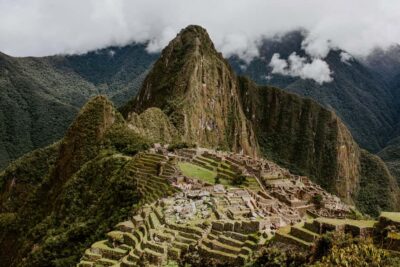
Machu Picchu: Full-Day Tour from Cusco with Optional Lunch
Read our review →Browse the lists this tour appears in