

Reviewed · CITY TOURS
City Tour of Arequipa
Arequipa’s white stone tells the city’s story. This four-hour private tour connects the old districts, volcanic-stone quarries, viewpoints, markets, and grand central square, giving you a useful introduction before you explore more on your own. I like the visit to the Añashuayco sillar quarries, where you see how the pale volcanic stone shaped Arequipa, and I like the flexible finish at either Santa Catalina Monastery or Plaza de Armas.
The morning hotel pickup and air-conditioned vehicle make the route easy, especially if you are still getting your bearings. The main consideration is pace: you cover several districts in about four hours, so this is an orientation tour rather than a slow museum visit. Santa Catalina Monastery is only introduced at the end, not explored as part of the main route.
In This Review
- Key points to know before booking
- Why this route gives you a useful first look at Arequipa
- Cayma and the 1544 chapel
- Añashuayco and the work behind Arequipa’s white buildings
- Antiquilla market and old Yanahuara
- Plaza de Armas and the cathedral
- Santa Catalina Monastery: useful handoff, not a full visit
- What the $99 price gets you
- How to make the most of the four hours
- Who should book this Arequipa tour?
- Should you book it?
- FAQ
- How long does the City Tour of Arequipa last?
- Is hotel pickup included?
- Is this a private tour?
- What languages are offered?
- Does the tour visit the inside of Santa Catalina Monastery?
- Are food and drinks included?
- Can I cancel for a full refund?
Key points to know before booking
- Private four-hour outing: Only your own group participates, which makes it easier to ask questions and adjust the final stop.
- Sillar quarry visit: Learn how Arequipa’s famous white volcanic stone is extracted and used in colonial buildings.
- Cayma’s 1544 church: Visit the traditional district’s main plaza and its Dominican-built chapel, now linked with the Virgin of Candelaria.
- Yanahuara views: See traditional streets, the Antiquilla market, and views toward Arequipa’s volcanoes.
- Central Arequipa finish: Hear about the cathedral and Plaza de Armas before ending near Santa Catalina Monastery.
- Good practical value: The $99 price includes hotel pickup, transport, a professional English or Spanish guide, live commentary, and admission tickets.
Why this route gives you a useful first look at Arequipa
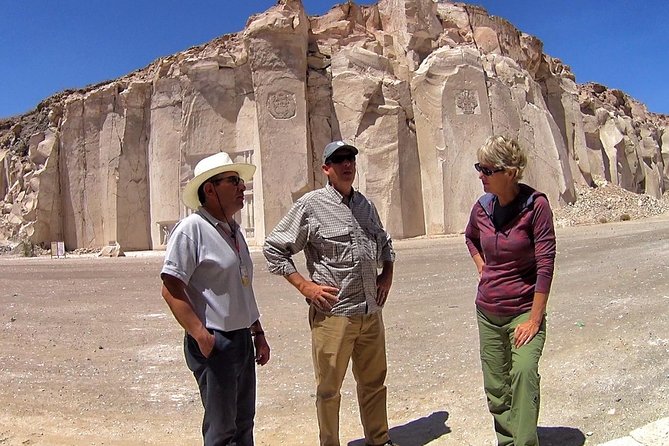
Arequipa can seem straightforward at first. Much of the historic center is walkable, with white façades, arcades, churches, and busy streets packed into a compact area. But the city makes more sense when you understand its surrounding districts and the volcanic stone used in its buildings.
This tour gives you that wider picture. You begin in Cayma, travel through the Añashuayco area, continue to Yanahuara, and finish in the central square. Instead of seeing only the postcard center, you get a short lesson in Arequipa’s building materials, religious traditions, district identities, and Spanish and European architectural influences.
I particularly like that the tour does not treat Arequipa as just a collection of handsome buildings. At Añashuayco, you connect those buildings with the physical work of quarrying sillar. In the markets and plazas, you see how the city’s older districts still function today.
The experience has a strong educational side. One visitor who toured with Milagros found her explanations of architecture, local food, herbs, shamanism, and the meeting of Christianity with older traditions especially useful. That detail matters if you want more than a quick photo stop. A good guide can turn a market or church into a place with meaning.
More City Tours in Arequipa
- Arequipa: Walk through the Historic Center of the City
★ 4.9 · 87 reviews - Arequipa Walking Tour city center and drinks experience
★ 5.0 · 72 reviews - Arequipa Food Tour: Ancestral Cuisine & City Tour
★ 5.0 · 52 reviews
Cayma and the 1544 chapel
The tour starts with pickup from your Arequipa hotel in the morning. You ride in an air-conditioned coach or vehicle toward Cayma, using the newer Chilina Bridge. The route gives you views over the city and terraces along the Chili River, so the transfer itself becomes part of the sightseeing.
Cayma is one of Arequipa’s traditional districts. Its main plaza and church offer a quieter start than the central square, and the church carries a long local connection with Dominican monks. A chapel was built here in 1544, and it is now the sanctuary of the Virgin of Candelaria.
You have time to visit the main church and walk around the plaza. This is not presented as a long interior tour with extensive free time, so you should expect a guided introduction rather than a detailed study of every religious artwork. Still, the stop gives useful context for the city’s Catholic traditions and the way Spanish colonial institutions shaped its districts.
The route through Cayma also helps you see that Arequipa is not limited to its historic center. The city grew through a group of distinct neighborhoods, each with its own plaza, church, streets, and local character. If you later return to Cayma on your own, you will already know what you are looking at.
Añashuayco and the work behind Arequipa’s white buildings
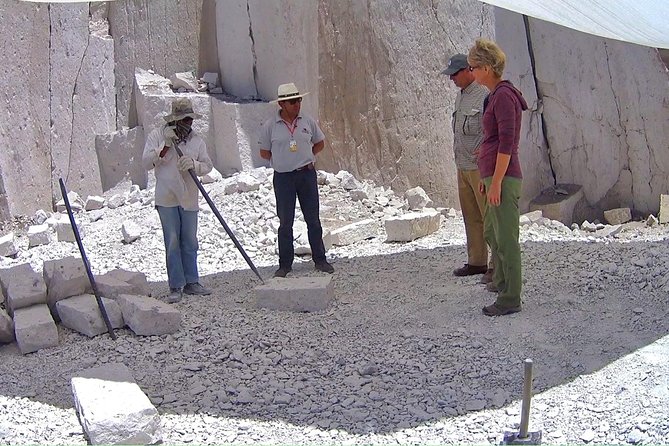
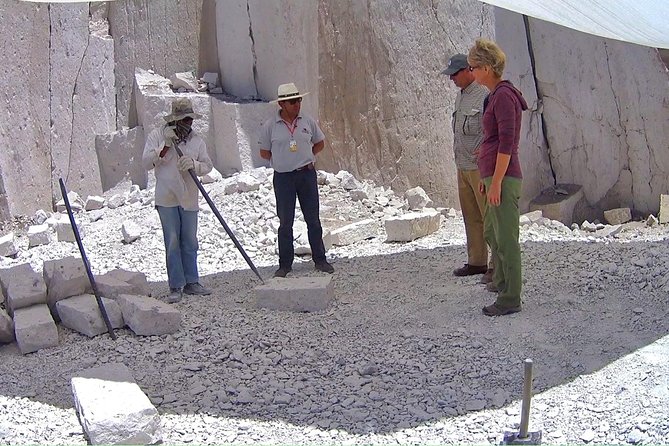
From Cayma, the tour continues to Añashuayco, the area associated with Arequipa’s famous white volcanic stone, sillar. This is one of the strongest parts of the experience because it explains the material that gives the city its nickname, the White City.
Your guide explains the origin and geological formation of the quarries. You also see how sillar is mined and extracted, along with the daily work involved. The point is not simply that the stone is white. You learn how volcanic material became a practical building resource and how it shaped the appearance of churches, mansions, arcades, and public buildings across Arequipa.
This stop adds a human side to the city’s architecture. Once you know the stone is cut and worked by hand in demanding quarry conditions, the carved façades in the center carry more weight. The pale buildings are not just pretty surfaces. They reflect local geology and generations of skilled labor.
Allow yourself to look closely here. Notice the color and texture of the stone, and compare it later with the ornate façades around Plaza de Armas. The tour’s live commentary should help you make that connection while the details are still fresh.
The main drawback is that quarry visits may feel less polished than the city’s plazas and churches. This is a working area, not a formal museum. If your interests are limited to colonial architecture, you might prefer more time in the historic center. If you want to understand why Arequipa looks the way it does, the stop is well worth keeping.
Antiquilla market and old Yanahuara
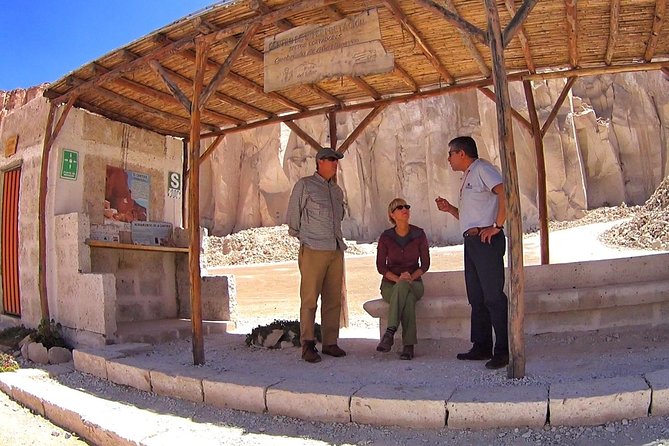
After Añashuayco, you continue to Yanahuara. The route includes time at the Antiquilla market, where you can look for souvenirs and bargains. The market is also tied to the older architectural character of Arequipa, with traditional buildings that preserve the feel of Old Arequipa.
I like this kind of stop because it breaks up the church-and-plaza rhythm. Markets show what a place sells, values, and uses in ordinary life. Here, you can browse rather than simply listen, although the exact amount of shopping time will depend on the group and the guide.
Do not expect a large shopping expedition. This is one stop within a four-hour route, so you should treat it as a chance to find a small souvenir or inspect local goods, not as a dedicated market tour. The supplied tour details do not specify particular products or fixed shopping time.
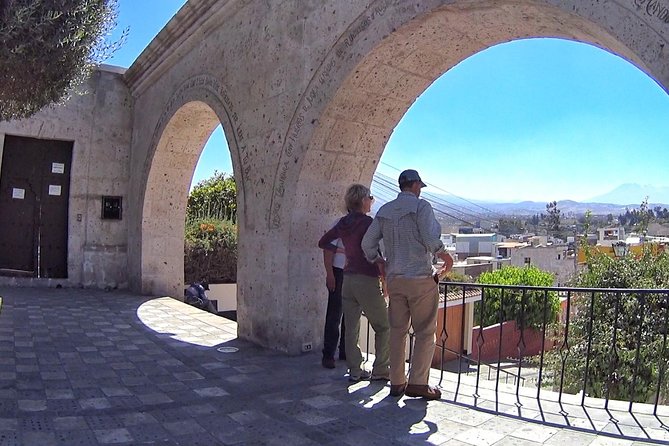
The Yanahuara area also gives you traditional streets and a main plaza with views toward the city and nearby volcanoes. The most important visual reward is the chance to see the relationship between Arequipa and its volcanic surroundings. On a clear day, the views can be a strong part of the tour, though visibility naturally depends on conditions.
The Yanahuara plaza is a good place to pause and take in the city’s white architecture from a different angle. The area feels more local and residential than the central square, while still offering a clear link to Arequipa’s older urban style.
A separate short visit to the Yanahuara viewpoint is also a popular idea if you have more time. The experience details specifically highlight the plaza and its views, so do not assume that every possible viewpoint or nearby attraction is included as a full stop. Ask your guide what time allows.
A few more Arequipa trips worth lining up side by side
- 2 day 1 night trek / Colca Canyon
★ 5.0 · 1,069 reviews - From Arequipa: Colca Canyon Full-Day Guided Tour with Meals
★ 4.5 · 982 reviews - Tour to the Salinas Lagoon and National Reserve in Arequipa
★ 4.5 · 548 reviews - From Arequipa: Sillar Route Trek
★ 4.2 · 461 reviews
Plaza de Armas and the cathedral
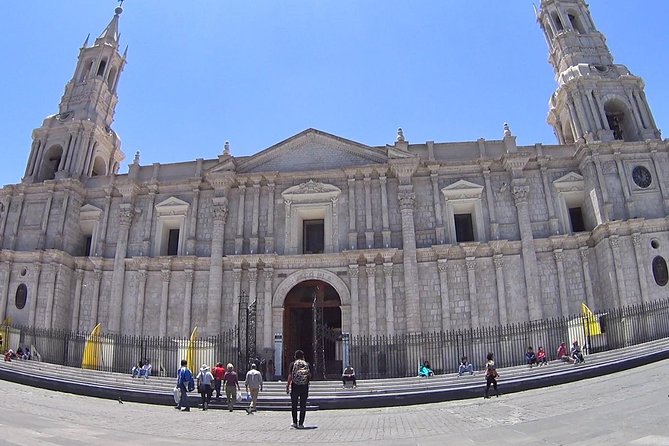
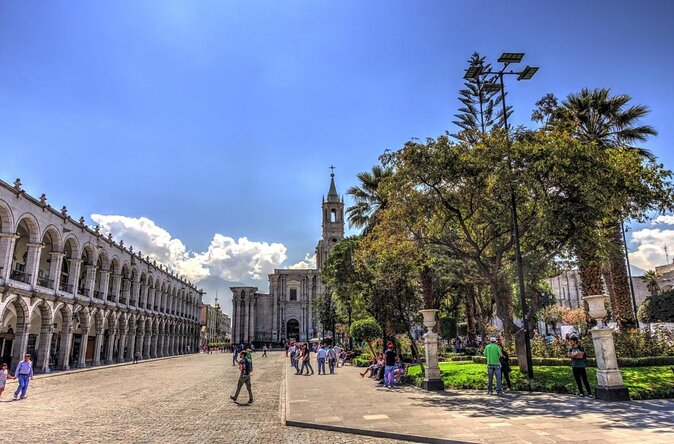
The final central stop brings you to Arequipa’s Plaza de Armas. This is the place where the city’s architecture gathers in one powerful frame: the cathedral, grand arcades, and white stone façades surrounding the square.
Your guide explains the square’s history, infrastructure, and important details about the cathedral. That commentary is useful because the buildings can look impressive without being easy to read. The square is not just a photo stop. It shows how religious, civic, and commercial life was organized around a central public space.
You can use this part of the tour to get your bearings for the rest of your stay. From here, you may want to return on foot for photographs, cafés, meals, or a slower look at the cathedral. The tour does not replace an extended visit to every central attraction, but it gives you a framework for exploring independently.
One benefit of having the guide explain the cathedral before you visit other monuments is that you can compare it with the churches in Cayma. You begin to see how Arequipa’s religious architecture varies from district to district, even while the white sillar links the city together.
The tour normally ends at the entrance to Santa Catalina Monastery. On request, it can finish in Plaza de Armas instead. That choice is helpful if you already plan to enter the monastery immediately, or if you prefer to remain in the center after the guided portion.
Santa Catalina Monastery: useful handoff, not a full visit
At Santa Catalina, the guide can provide information and assistance for anyone who wants to visit the monument. This is an important distinction: the tour takes you to the entrance and explains how to proceed, but the main four-hour sightseeing route does not appear to include a full guided exploration of the monastery’s rooms and streets.
Santa Catalina is large enough to deserve its own time. If you want to see it properly, plan your schedule around a separate visit rather than assuming you will have enough time during this tour. Ending here can still be convenient because you are already at the entrance and have received basic orientation.
If you would rather finish in the center, request Plaza de Armas instead. That option may suit you better if you have a restaurant reservation, want to continue walking, or plan to visit a different attraction.
What the $99 price gets you
The cost is $99 per person. Value depends largely on how much you would pay for private transport and a guide if you arranged the same route yourself.
The price includes:
- Morning pickup from your Arequipa hotel
- Air-conditioned transportation
- A professional English or Spanish guide
- Live commentary during the trip
- Admission tickets
- A private tour for your own group
Food and drinks are not included. Since the experience lasts about four hours, this is not a meal-based outing, and you should plan refreshments separately.
For a solo visitor, $99 is a significant half-day expense. For a small group, the private format can make the price easier to justify, especially if you value hotel pickup and do not want to arrange transport between several districts. Group discounts are offered, which may improve the value for larger parties.
The private setup is one of the most useful features. You are not sharing the vehicle with a large mixed group, and you can ask questions about architecture, local customs, or the market without waiting for a crowded group to move on. The tour’s rating is 4.8 from four reviews, with especially strong praise for clear explanations, friendly service, and good planning.
How to make the most of the four hours
This is a morning orientation tour, so use it early in your Arequipa stay if possible. You will learn where the main districts are and can then decide which places deserve a longer return visit.
I would keep these points in mind:
- Ask at booking for the language you want. English is offered, and the guide service is described as English and Spanish.
- Tell the provider if you want to end at Plaza de Armas instead of Santa Catalina.
- Bring some flexibility for the market. Shopping time is part of the route, but it is not the main purpose of the tour.
- Save Santa Catalina for a separate visit if the monastery is a major priority.
- Watch the route between stops. The Chilina Bridge and views toward the Chili River help explain Arequipa’s setting.
- Ask about the sillar work at Añashuayco. This is the place where specific questions can turn a short stop into a more memorable lesson.
The tour is described as suitable for most people, with no specific restrictions except for serious health conditions. Since it includes vehicle transfers, walking around plazas and streets, and stops at outdoor areas, you should still judge the pace against your own comfort.
Who should book this Arequipa tour?
I would recommend it to first-time visitors who want a clear introduction to Arequipa without spending a full day on a single attraction. It also suits you if you want to see several surrounding districts but prefer not to organize taxis, routes, and local explanations yourself.
Architecture fans will appreciate the connection between the sillar quarries and the city center. People interested in religion and local customs should enjoy Cayma, the cathedral explanation, and the cultural context provided by the guide. Shoppers get a short market stop, while photographers get plazas, volcanic views, white façades, and the central cathedral.
It may be less suitable if you want a slow, detailed visit to museums or Santa Catalina Monastery. It is also not the best choice if you already know Arequipa well and only want extended time in the historic center. The route covers many places, but each stop is necessarily brief.
The guide quality matters here. The available feedback gives particular praise to Milagros for thorough explanations and a friendly manner, while another private group appreciated being kept informed during planning and having a bilingual guide. If your guide is similarly engaged, the tour’s value comes from interpretation as much as transport.
Should you book it?
Book this tour if you want to understand Arequipa’s shape, stone, and surrounding districts in one manageable morning. The strongest reasons are the private format, hotel pickup, Añashuayco quarry visit, and the chance to connect Cayma and Yanahuara with the central square.
Skip it if your main goal is a long, unhurried visit to Santa Catalina or Arequipa’s museums. In that case, use your time for independent visits and arrange only the attractions you want. For most first-time visitors, though, this is a practical way to get oriented, ask questions, and see why Arequipa’s white buildings are more than a pretty backdrop.
Free cancellation is available if you cancel at least 24 hours before the local start time. Changes or cancellations made less than 24 hours before departure are not accepted for a refund.
FAQ
How long does the City Tour of Arequipa last?
The tour lasts approximately four hours.
Is hotel pickup included?
Yes. Morning pickup from your Arequipa hotel is included.
Is this a private tour?
Yes. Only your group participates in the activity.
What languages are offered?
The experience is offered in English, and the guide service is described as English and Spanish.
Does the tour visit the inside of Santa Catalina Monastery?
The tour finishes at the entrance, where the guide can provide information and assistance for anyone who wants to visit. A full monastery visit is not described as part of the main guided route.
Are food and drinks included?
No. Food and drinks are not included in the $99 price.
Can I cancel for a full refund?
Yes, if you cancel at least 24 hours before the experience start time. Cancellations or changes made less than 24 hours before the start are not accepted for a refund.
Added recently around Arequipa
- gazebos cannon of the coca★ 5.0 · 28 reviews
- Sillar Route★ 5.0 · 4 reviews
- Salinas Lagoon + Mini Volcano DE Lojen★ 5.0 · 9 reviews
- Full Day Tour To The Salt Lake Salinas in Arequipa★ 4.5 · 34 reviews
- 3-Day Colca Canyon trek with Professional Guide★ 5.0 · 40 reviews
- Trekking, Waterfalls and Thermal Baths★ 4.5 · 47 reviews
- Walking Tour Arequipa Including Santa Catalina Monastery★ 4.0 · 8 reviews
- Walking City tour including the Monastery of Santa Catalina★ 5.0 · 6 reviews
City Tours, compared.
Lima Half-Day City Walking Tour (Small Groups)
Read our review →
Half-Day City Tour with Sacsayhuaman and Q’enco
Read our review →
City Tour Panoramic Bus Departure From Larcomar
Read our review →
City Tour Cusco Qoricancha Sacsayhuaman y Tambomachay
Read our review →
Lima’s Vibrant Heritage: Exploring the City’s Landmarks Half-day
Read our review →
Sightseeing Tour of the City on an Open-Top Bus
Read our review →
Lima City, Central Market & Catacombs Tour (Pick-up & Drop Off)
Read our review →Browse the lists this tour appears in