
Reviewed · SACRED VALLEY TOURS
Cusco: Maras and Moray Tour ending in Ollantaytambo
Three Inca sites, one useful transfer. This six-hour tour links Moray’s giant circular terraces, the more than 3,000 salt pools at Maras, and the fortress town of Ollantaytambo in one efficient day. I like the route because it combines unusual archaeology with a practical onward journey, and I like that buffet lunch and hotel pickup are included. The main catch is the pace: some visits can feel hurried, especially if you want plenty of time for photos or detailed explanations.
You leave Cusco around 6:30 in the morning and finish at Ollantaytambo’s Plaza de Armas around 3pm. That makes this a smart choice if you are continuing into the Sacred Valley by train, but you need a train scheduled after 3pm. The listed price of $49 per person is fair for transport, a bilingual guide, lunch, and a small group of up to 15 people, though you still pay the tourist ticket and salt mine entry separately.
In This Review
- Key points to know before booking
- Why the route works from Cusco to Ollantaytambo
- Moray’s circular terraces and the Inca farming puzzle
- Maras salt pools, still working after centuries
- Urubamba lunch and the river road
- Ollantaytambo ruins and the final 3pm drop-off
- Price, entry fees, and what you really receive
- How the guiding and pace affect your day
- What to bring and who should skip it
- Should you book this Maras and Moray tour?
- FAQ
- What time does the tour pick me up in Cusco?
- Where does the tour end?
- Can I take a train from Ollantaytambo after the tour?
- Is lunch included?
- How much is the tourist ticket?
- Is entry to the Maras salt mines included?
- Is the tour available in English?
Key points to know before booking
- Moray comes first: You visit the Inca agricultural terraces early in the day, when the route is designed to move quickly toward the Sacred Valley.
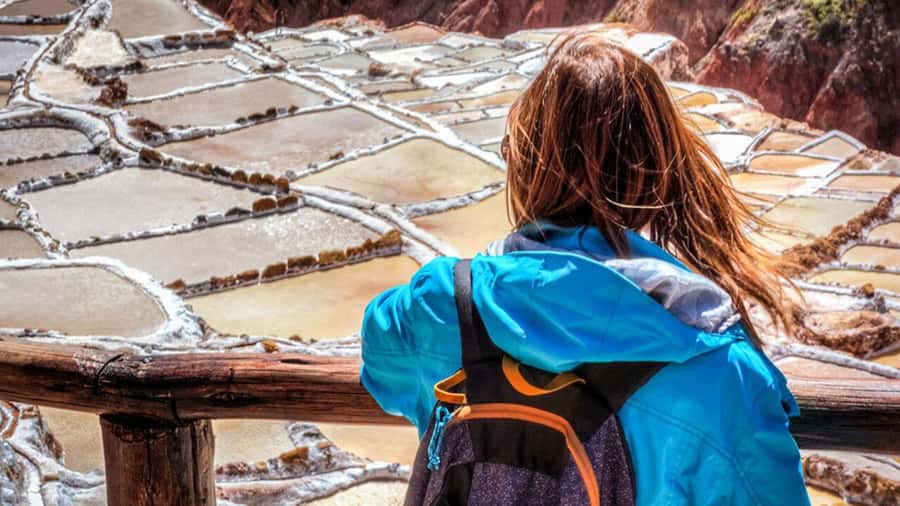
- Maras has more than 3,000 salt pools: The ponds are still used today, continuing a salt-making tradition that reaches back to Inca times.
- Lunch is in Urubamba: A buffet meal is included, giving you a straightforward break before the final ride along the Urubamba River.
- Ollantaytambo is the final stop: The tour ends in the town’s main square, not back in Cusco.
- Extra fees matter: The tourist ticket costs S/70 per person, and salt mine admission is not included.
- Small group, not private tour: The group is limited to 15 people, with guiding offered in English or Spanish.
Why the route works from Cusco to Ollantaytambo
The tour follows a sensible westward route from Cusco into the Sacred Valley. Instead of returning to Cusco after sightseeing, you finish in Ollantaytambo, one of the main departure points for trains toward Machu Picchu.
That routing saves you from backtracking. If you already plan to spend the night in Ollantaytambo or catch a train from there, the transfer adds real value to the sightseeing. You get three important stops and a meal while moving toward your next base.
The early pickup is not glamorous, but it is practical. You should expect collection from your Cusco accommodation around 6:30am. Pickup can be late or confusing, so keep your phone available and confirm your hotel details when booking. Do not plan a tight connection after the 3pm finish. The stated drop-off is Ollantaytambo’s Plaza de Armas, and your train must depart after 3pm for the day to run normally.
Transport is shared, with a maximum group size of 15. That is small enough to feel more manageable than a large coach, but it does not guarantee a private or flexible pace. The guide needs to keep everyone together across several archaeological sites.
More Sacred Valley days out:
- From Cusco: Moray, Maras Salt Mines & Chinchero Weavers Tour
★ 4.8 · 1,925 reviews - 2-Day Tour: Sacred Valley and Machu Picchu by Train
★ 5.0 · 1,127 reviews - Cusco: Sacred Valley, Pisac, Ollantaytambo, Salt Mines Moray
★ 4.6 · 1,058 reviews
Moray’s circular terraces and the Inca farming puzzle
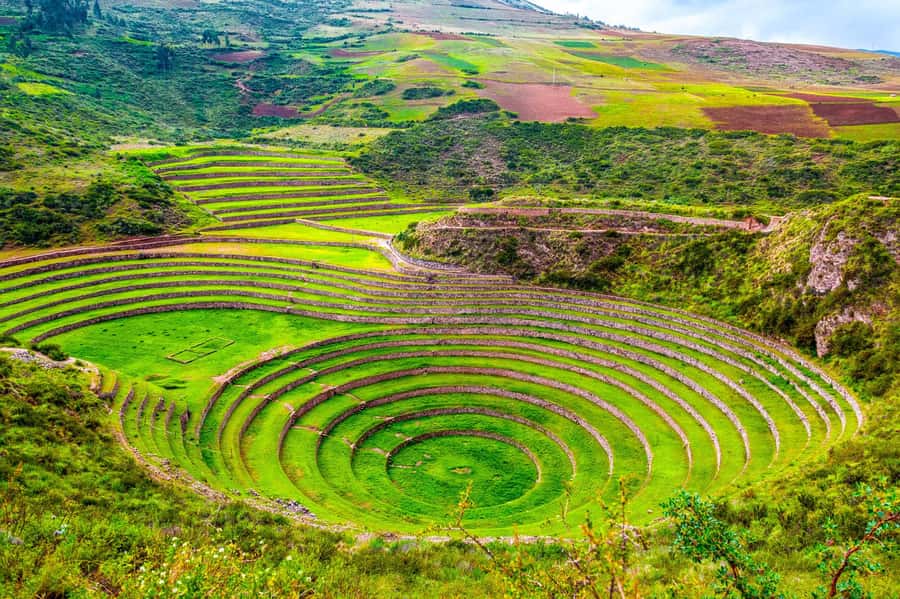
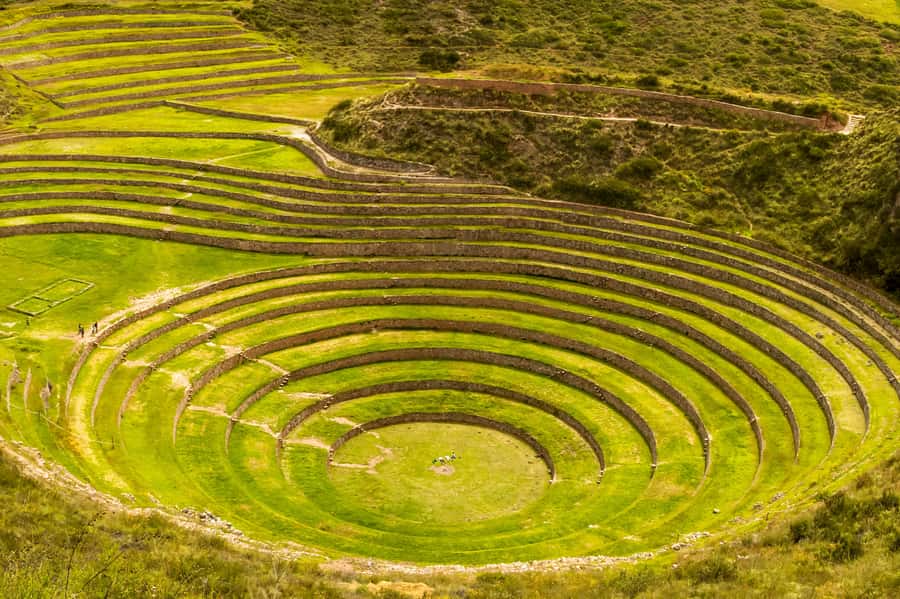
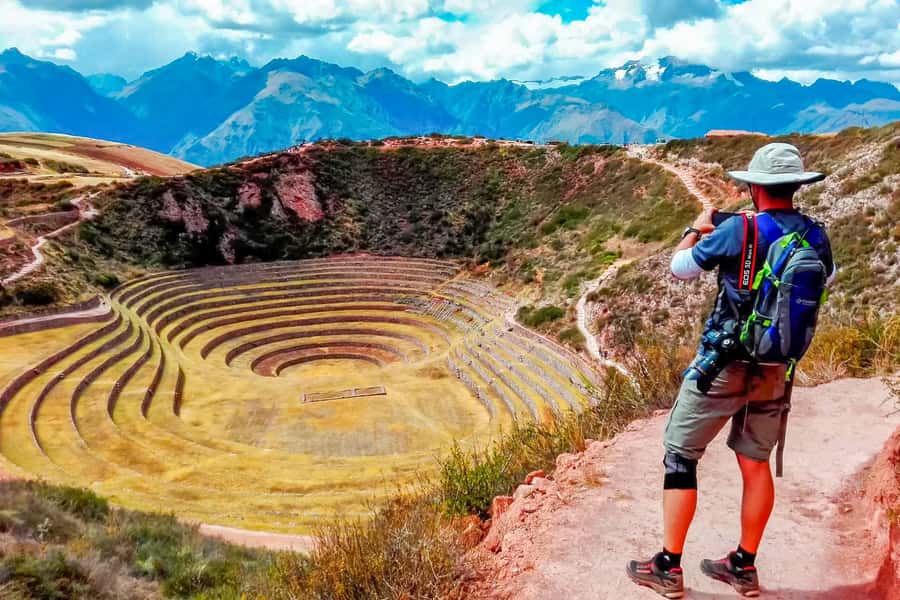
Moray is the first major stop, about 50 kilometers northwest of Cusco. The site is built into natural sinkholes on a limestone plateau overlooking the Urubamba Valley, with broad circular terraces descending toward the center.
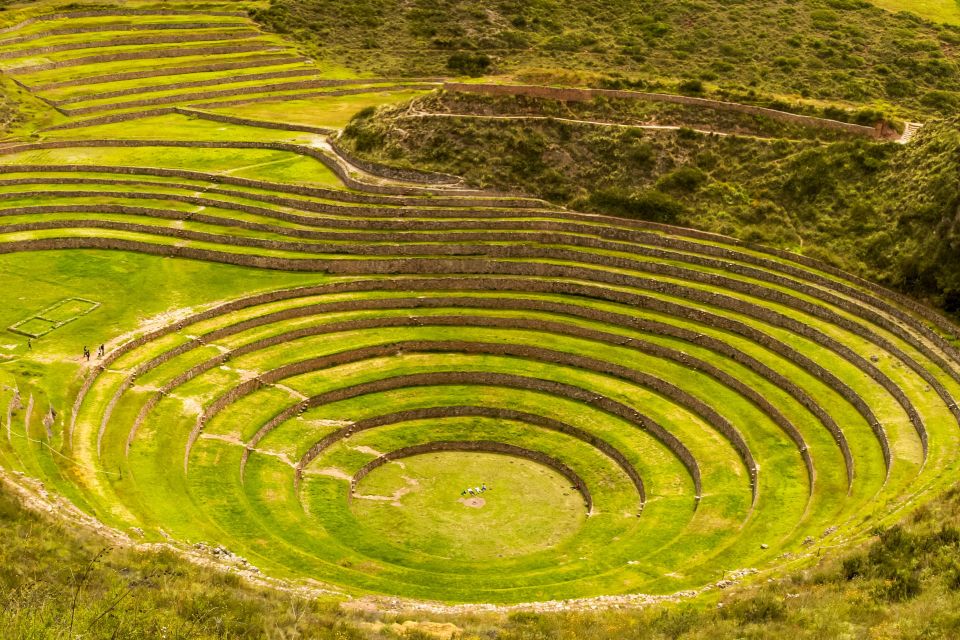
The shape is what makes Moray unforgettable. From above, the terraces resemble enormous stone bowls or amphitheaters. Each ring is cut into the earth at a different height, creating a dramatic pattern that looks carefully designed rather than simply farmed.
The terraces were used for agriculture, but their exact purpose remains unclear. The changing levels may have created different growing conditions, and the site has also been linked to Inca cosmology. You will hear interpretation from the guide, but the archaeological evidence does not provide one simple answer.
I like Moray because it makes Inca engineering feel practical and mysterious at the same time. It is not only a pretty viewpoint. The site raises a good question: how did the Incas test crops and adapt farming to difficult mountain conditions?
The downside is time. The itinerary includes several major stops, so you may not get the leisurely visit you would have on a private tour. One assessment described the day as well organized but a little too quick, while another found the guide moved ahead without giving enough direction. I suggest staying close to the guide from the start and asking when the best photo opportunities are before the group moves on.
Wear comfortable shoes. You may find the site easy to view from the main paths, but uneven ground and walking around archaeological areas make sturdy footwear useful. Sunscreen is also essential in this high-altitude region, even when the morning feels cool.
Maras salt pools, still working after centuries
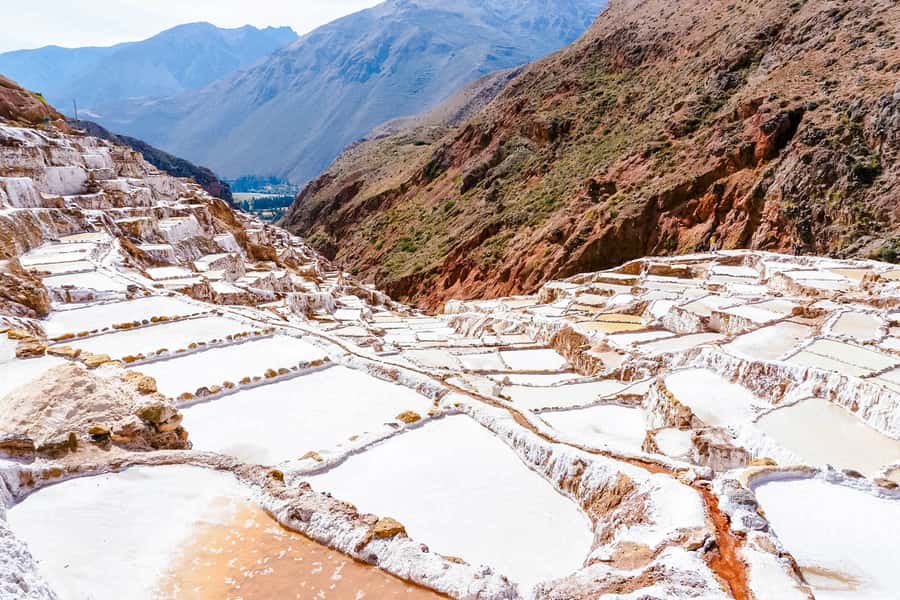
From Moray, the route continues to the colonial village of Maras and its nearby salt evaporation ponds. The pools sit less than a kilometer west of the town, on a slope above the valley.
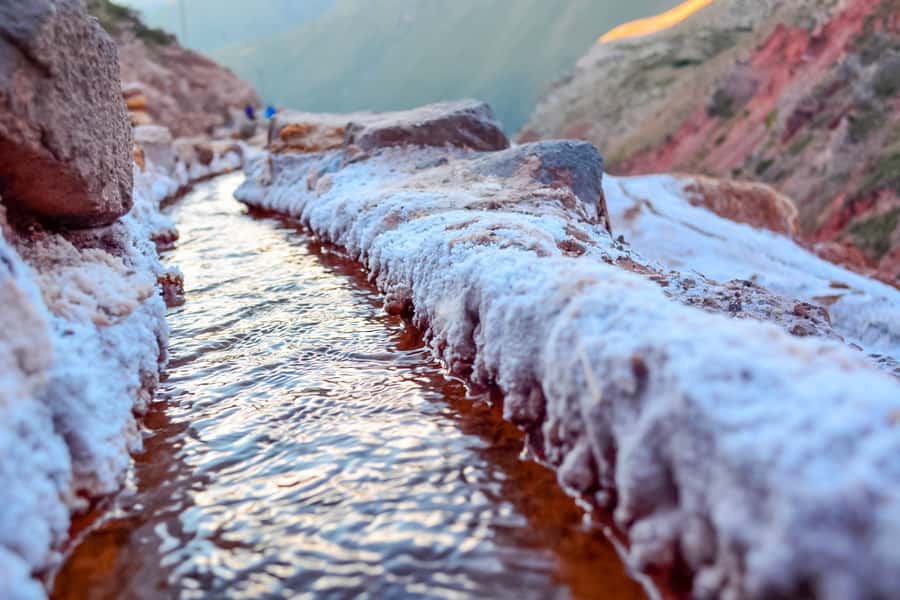
This is one of the most unusual stops in the Cusco region. Thousands of small pools spread across the hillside, each one holding salty water that gradually evaporates under the sun. The result is a patchwork of pale terraces that follows the shape of the slope.
The salt works were used during Inca times, continued during the colonial period, and remain active today. That long use gives the place a living quality that a ruined site cannot provide. You are looking at an old system that is still part of local production.
The salt pools are also a strong photo stop, but do not expect unlimited time. The group needs to remain on the permitted paths, and the guide must keep the schedule moving toward lunch and Ollantaytambo. Bring your camera, but do not count on lingering at every viewpoint.
Salt mine admission is not included in the tour price. This is an important cost to remember because the S/70 tourist ticket does not cover every entry on the day. The booking information specifically notes an additional entrance fee for the salt mine, so carry extra soles rather than arriving with only the S/70 requested for the tourist ticket.
The visit may feel more like a scenic stop than a long guided lesson if the group is moving quickly. One low assessment described the guiding as thin and the day as mostly a ride between attractions. That is the main risk here. If you want detailed information about salt production, ask direct questions instead of waiting for a long explanation.
Urubamba lunch and the river road
After Maras, you stop for lunch in Urubamba, a town along the Sacred Valley route. A buffet lunch is included, which makes the $49 price easier to justify and removes the need to search for food during a tightly timed day.
The meal is functional rather than a reason to book the tour by itself. You get a proper break before the final archaeological visit, and the buffet format is useful for a mixed group with different appetites. The supplied information also lists meals as not included, which is inconsistent with the specific inclusion of buffet lunch in Urubamba. I would treat the buffet lunch as included, but confirm the details when you book.
After lunch, the vehicle follows the Urubamba River toward Ollantaytambo. This part of the tour is less about a scheduled attraction and more about connecting the valley’s major sites. You get a change of pace after the terraces and salt pools, with a road journey toward the final ruins.
The river route also explains why this tour works well as a transfer. You are not simply being taken back to Cusco. You are moving deeper into the Sacred Valley and ending where many visitors need to be for the next leg of their trip.
A few more Cusco trips worth lining up side by side
- Classic Inca Trail Trek 4D/3N to Machu Picchu (Group Service)
★ 5.0 · 8,653 reviews - Cusco: Rainbow Mountain and Red Valley Day Trip with Meals
★ 4.9 · 4,893 reviews - Machu Picchu: 4-Day Inca Trail Trek with Panoramic Train Ride
★ 5.0 · 4,568 reviews - Salkantay Classic Trek 5 Days from Cusco
★ 5.0 · 4,062 reviews
Ollantaytambo ruins and the final 3pm drop-off
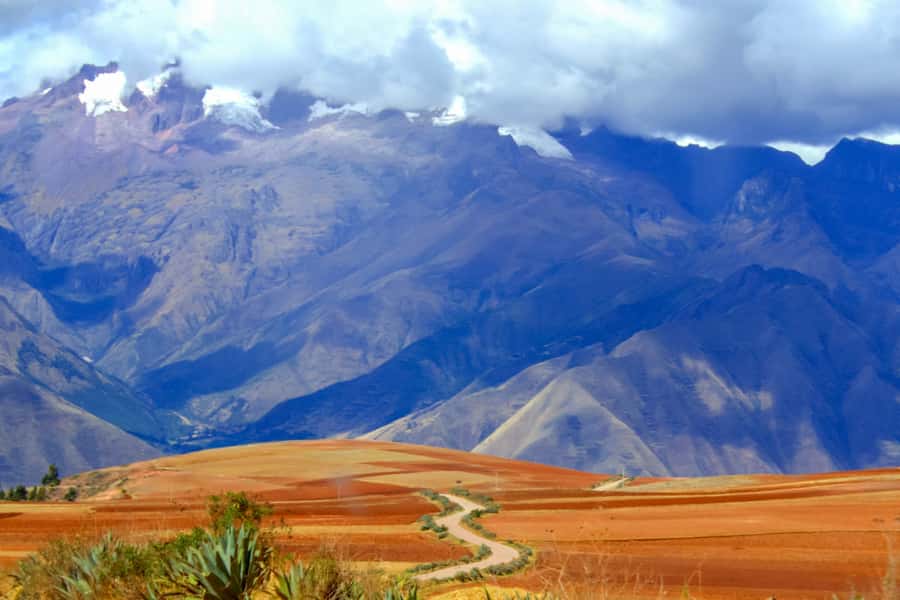
Ollantaytambo is the last stop, and it deserves more than a quick glance. The site was an important area of Inca construction during the height of the empire. Massive stonework, terraces, and steeply set ruins make it one of the most impressive archaeological areas in the Sacred Valley.
The site is also associated with rock formations representing Wiracocha, an Inca god. That gives the visit a symbolic dimension beyond walls and terraces. Your guide can help point out how the natural rock and Inca construction relate to one another.
The timing here matters most. You finish around 3pm at the Plaza de Armas, and this is a drop-off rather than a return to your Cusco hotel. If you have a train, schedule it after 3pm, with enough additional margin for a delayed departure or a slower visit.
Do not book a 3:05pm train and hope everything lines up. The tour has several moving parts: early pickup, three archaeological stops, lunch, and a shared vehicle. A later train gives you room to collect your bags, orient yourself in the square, and reach the station without panic.
The drop-off is especially useful if you have luggage, but large bags are not allowed on the tour itself. You should arrange luggage storage or confirm what you can bring before departure. A small day bag is the safer choice.
Price, entry fees, and what you really receive
At $49 per person, this is a reasonably priced day of sightseeing and transport. The value is strongest if you need to reach Ollantaytambo anyway. In that case, the tour combines a transfer with Moray, Maras, lunch, and Ollantaytambo rather than requiring separate transport arrangements.
The price includes:
- Pickup from your Cusco accommodation
- Shared transportation
- A bilingual English or Spanish guide
- Buffet lunch in Urubamba
- Drop-off at Ollantaytambo’s main square
You need to budget separately for the S/70 tourist ticket per person. Salt mine admission is also extra. The listed information says meals are not included, even though a buffet lunch is listed among the inclusions, so I would clarify that point before paying.
A small group of up to 15 people is a useful middle ground. You have a guide and organized transport without joining a huge bus group. The tradeoff is that the schedule cannot bend much for one person who wants extra time at Moray or Maras.
The tour also offers free cancellation up to 24 hours in advance and a reserve-now, pay-later option. Those terms help if your Cusco plans are still shifting, but the key practical issue remains the train timing.
How the guiding and pace affect your day
The guiding quality appears to be the most variable part of the experience. English and Spanish guiding is available, but the amount of explanation can depend on the individual guide and the pressure of the schedule.
Some people find the day organized and enjoyable, while others find the guide moves too fast, walks ahead, or gives too little direction. That difference matters because Moray, Maras, and Ollantaytambo are places where context improves the visit.
You can help the day go better by doing three things:
- Stay near the guide when leaving the vehicle.
- Ask how much time you have at each stop.
- Request explanations before the group starts moving again.
The tour is best for someone who wants an efficient introduction to several major sites. It is less suitable if you prefer quiet exploration, long photography stops, or detailed archaeological discussion at every location.
The overall rating of 3.4 from 16 ratings reflects that mixed experience. The route and organization earn praise, but the fast pace and uneven communication are fair concerns. I would not book this expecting a slow, deeply detailed private tour.
What to bring and who should skip it
Bring comfortable shoes and sunscreen. The tour includes multiple archaeological locations and outdoor walking, so practical clothing matters more than dressing up.
Keep your belongings light. Pets and large bags are not allowed, and the transfer ends in Ollantaytambo rather than returning to your Cusco hotel. A small bag with water, sun protection, and personal items is the sensible setup.
This experience is not suitable for wheelchair users. The archaeological sites and walking requirements make that restriction important to consider before booking.
I recommend this tour most strongly for:
- You are staying in Cusco and need to reach Ollantaytambo.
- You want Moray and Maras covered in one morning.
- You prefer a small shared group to a large coach.
- You are comfortable with a brisk schedule.
- You plan to take a train after 3pm.
You may prefer another option if:
- You want a private guide and flexible timing.
- You need extensive assistance at archaeological sites.
- You want to return to Cusco the same day.
- You dislike extra entry fees paid locally.
- You need to carry large luggage.
Should you book this Maras and Moray tour?
Book it if your priority is efficient sightseeing plus a useful transfer. Moray, the Maras salt pools, lunch in Urubamba, and Ollantaytambo form a strong route, and $49 is a fair price once you account for the included transport, guide, and buffet lunch.
Go in with realistic expectations. The day can feel rushed, the guiding may be brief, and the salt mine fee is extra. Confirm your pickup details, carry enough soles for both entry costs, bring only a small bag, and schedule your Ollantaytambo train after 3pm with breathing room.
For a first look at this part of the Sacred Valley, it is a practical choice. For a slower and more personal visit, pay more for a private tour or plan the sites separately.
FAQ
What time does the tour pick me up in Cusco?
Pickup is scheduled for around 6:30am from your accommodation in Cusco. You should confirm your accommodation details when booking.
Where does the tour end?
The tour ends around 3pm at the Plaza de Armas, or main square, in Ollantaytambo. It does not return you to Cusco.
Can I take a train from Ollantaytambo after the tour?
Yes, but your train must depart after 3pm so the visits can take place normally. A later train gives you more practical time after drop-off.
Is lunch included?
A buffet lunch in Urubamba is listed as included. The information also says meals are not included, so you should confirm the lunch arrangement when booking.
How much is the tourist ticket?
The tourist ticket costs S/70 per person. This fee is not included in the tour price.
Is entry to the Maras salt mines included?
No. Entrance to the salt mines is not included, so you need to pay that additional fee separately.
Is the tour available in English?
Yes. The live guide service is offered in English and Spanish.
Added recently around Cusco
- Guided tour of the mountain of colors in Cusco★ 5.0 · 11 reviews
- 2-Day Private Short Inca Trail to Machu Picchu★ 5.0 · 15 reviews
- City Tour Cusco – Group★ 5.0 · 4 reviews
- Tour Sacred Valley with Maras and Moray★ 5.0 · 15 reviews
- San Pedro Market Tour with Peruvian Cooking Class★ 5.0 · 31 reviews
- Walking Culinary Experience★ 5.0 · 41 reviews
- City Tour in Cusco★ 4.5 · 10 reviews
- One Day Tour to Humantay Lagoon★ 5.0 · 8 reviews
Sacred Valley Tours, compared.
Sacred Valley & Maras Salt Mines Tour with Lunch
Read our review →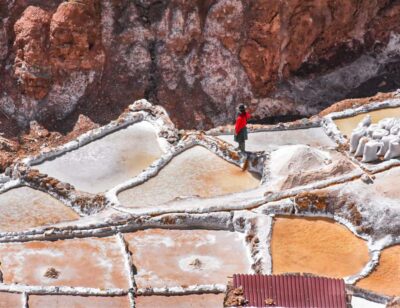
Moray, Maras Salt Mines & Chinchero Weavers Tour
Read our review →
2-Day Tour: Sacred Valley and Machu Picchu by Train
Read our review →
Sacred Valley, Pisac, Ollantaytambo, Salt Mines Moray
Read our review →
Chinchero,Moray & Salt Mines drop-off in Ollantaytambo
Read our review →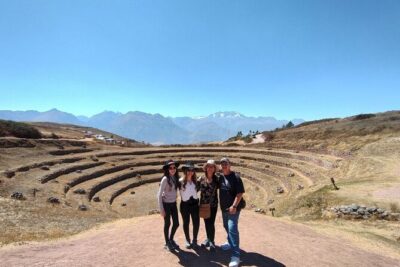
Sacred Valley and Maras Moray Tour with Full Day Buffet Lunch
Read our review →

Browse the lists this tour appears in