
Reviewed · SACRED VALLEY TOURS
Cusco: Moray, Maras Salt Mines, and Chinchero Weavers Tour
High-altitude wonders await here. This six-hour outing links three very different Andean sights: Chinchero’s weaving tradition, Moray’s great Inca terraces, and the Maras salt pools. I especially like the mix of culture and scenery, and the chance to see salt still being produced by hand. The main catch is that the attractive $14 starting price does not include site admission or hotel drop-off.
I also like the small-group format, limited to 12 people, and the included pickup from your Cusco hotel. The tour has earned a 4.4 rating, with strong praise for its organization, punctual pickup, good driving, and clear explanations. Still, the Chinchero workshop deserves careful attention: one serious complaint described a sales-focused visit with questionable claims about alpaca fiber, so you should treat shopping pressure with caution.
The route reaches high elevations, including Moray at 11,318 feet and Chinchero at 3,762 meters. Bring cash for the extra fees, wear shoes with a good grip, and keep your first day in Cusco free of strenuous plans if you are still adjusting to the altitude.
In This Review
- Key points to know before you go
- Why this half-day route works from Cusco
- Chinchero and the question of authentic shopping
- Moray at 11,318 feet, Inca farming in circular terraces
- Maras Village and the salt pools below it
- Salineras, 3,000 small pools still producing salt
- Transport, group size, and the pace of the day
- Is the $14 starting price good value?
- Who should choose this Cusco excursion?
- What to bring and how to prepare
- Should you book the Moray and Maras tour?
- FAQ
- How long is the Moray, Maras, and Chinchero tour?
- Where does the tour begin?
- Where does the tour end?
- What languages does the guide speak?
- How large is the group?
- Are entrance fees included?
- How high does the tour go?
- What should I bring?
Key points to know before you go
- Moray reaches 11,318 feet: The circular Inca terraces are the tour’s most striking sight, with a carefully planned agricultural design and irrigation system.
- The Maras salt mines contain about 3,000 pools: Mineral-rich water fills small evaporation basins, creating a remarkable patchwork on the mountainside.
- Chinchero adds living Andean craft: You can watch artisans use natural plants to make colors for textiles and other art.
- The $14 price is not the full cost: Archaeological admission is listed as $19 or 70 soles, and the salt mines cost $6 or 20 soles.
- You finish at Plaza Regocijo: Hotel pickup is included in Cusco, but the return is not to your hotel.
- The group is limited to 12: That is small enough for a more manageable outing, though the guide may still need to switch between English and Spanish.
Why this half-day route works from Cusco
This tour gives you a useful look at the Cusco region without taking up an entire day. In roughly six hours, you move from a traditional weaving workshop to an Inca agricultural site and then to a salt-producing complex with roots reaching back before the Inca period.
I like the way the stops balance one another. Moray is about engineering and farming. Maras shows how a natural spring can support a working local industry. Chinchero brings you closer to present-day Quechua craft traditions. You are not seeing three versions of the same attraction.
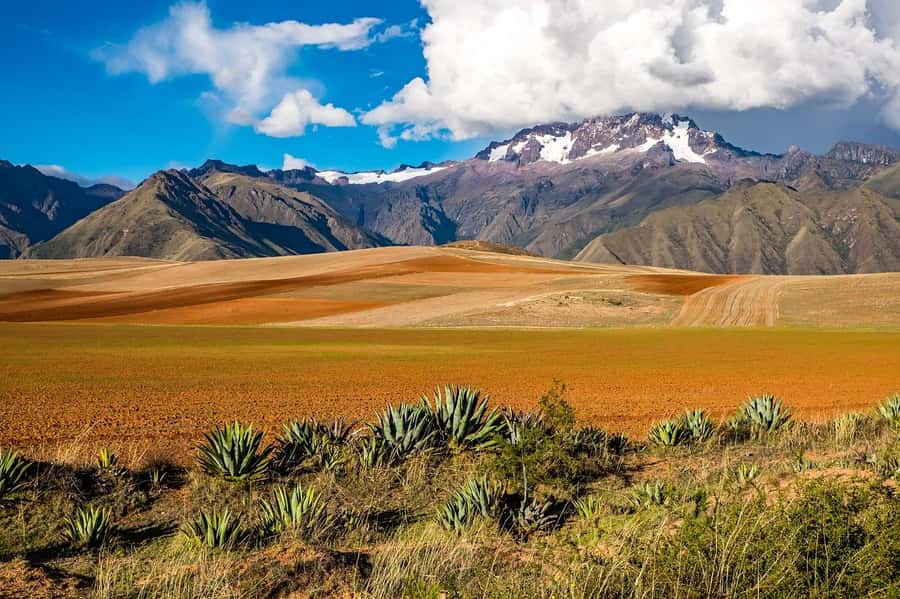
The route also gives you repeated views of farmland and surrounding mountains. These are not just filler between stops. The high valleys around Cusco help explain why agriculture, irrigation, textiles, and trade have mattered here for centuries.
The timing is brisk but sensible. The listed stop at Chinchero lasts about 30 minutes, Moray about 40 minutes, and the salt mines another 40 minutes. The rest of the time goes to driving, with listed journeys of about 50 minutes from Cusco to Chinchero, 35 minutes to Moray, 40 minutes to Maras, and 80 minutes back to Plaza Regocijo.
That final 80-minute ride matters. You get a good half-day of sightseeing, but the return takes a while. If you want a quiet afternoon in Cusco, this is still workable. If you have a fixed lunch reservation, train connection, or museum booking, leave plenty of space.
More Sacred Valley days out:
- From Cusco: Moray, Maras Salt Mines & Chinchero Weavers Tour
★ 4.8 · 1,925 reviews - 2-Day Tour: Sacred Valley and Machu Picchu by Train
★ 5.0 · 1,127 reviews - Cusco: Sacred Valley, Pisac, Ollantaytambo, Salt Mines Moray
★ 4.6 · 1,058 reviews
Chinchero and the question of authentic shopping
Chinchero is the first major stop, reached after about 50 minutes by bus or coach. It sits at 3,762 meters, so this is already a high-altitude visit before you reach Moray.
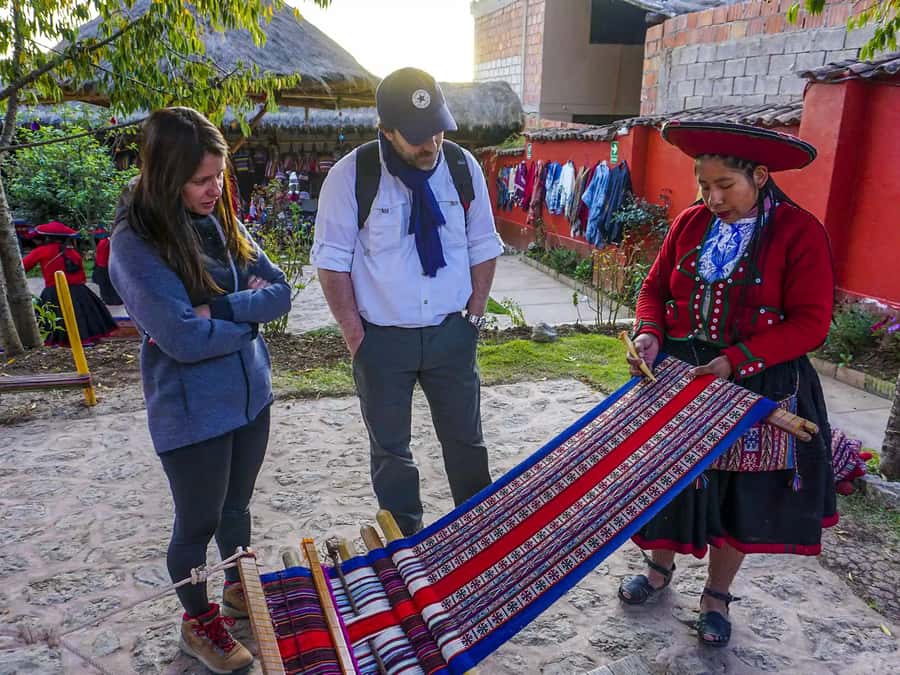
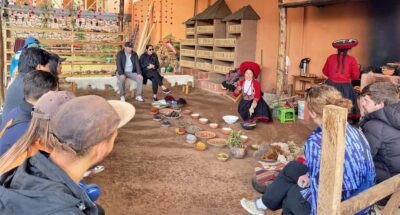
The planned visit includes a weaving workshop where local artisans demonstrate the Quechua tradition of making Andean art. The most interesting part is the use of natural plants to extract colors. This connects the finished textile to the local environment and gives you a better sense of the work behind the bright patterns and shades.
For me, this stop has real value when the demonstration is clear and the shopping remains optional. You can learn how color is produced rather than simply seeing finished goods in a market. The short 30-minute visit means you should expect a compact introduction, not a long craft course.
There is an important warning here. The workshop destination may not be the one shown in promotional photographs. One strongly negative account said the group was taken to a different place and was pressured to buy items described as alpaca despite doubts about the material. That is a serious concern, especially if the workshop is your main reason for booking.
Use practical judgment. Ask what the material is, how it was made, and whether the price reflects genuine alpaca or a synthetic blend. You do not need to buy anything to make the stop worthwhile. If the sales pitch becomes uncomfortable, remember that the cultural value of the visit does not depend on making a purchase.
The guide can make a major difference here. One guide named Victor received particularly warm praise for his explanations and considerate manner. You may not have Victor on your departure, but the feedback suggests that the quality of the guiding can shape the day.
Moray at 11,318 feet, Inca farming in circular terraces
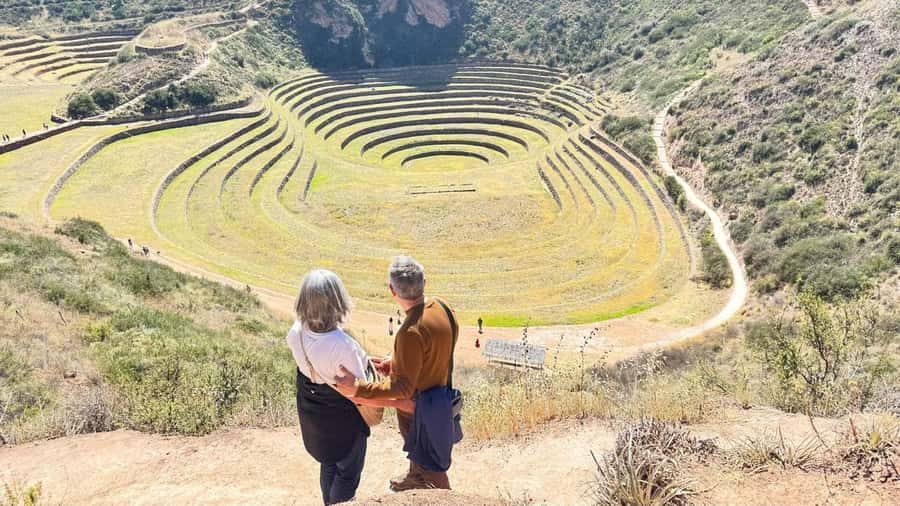
From Chinchero, the drive to Moray takes about 35 minutes. The archaeological complex sits at 3,450 meters, or 11,318 feet, making this the highest point listed on the route.
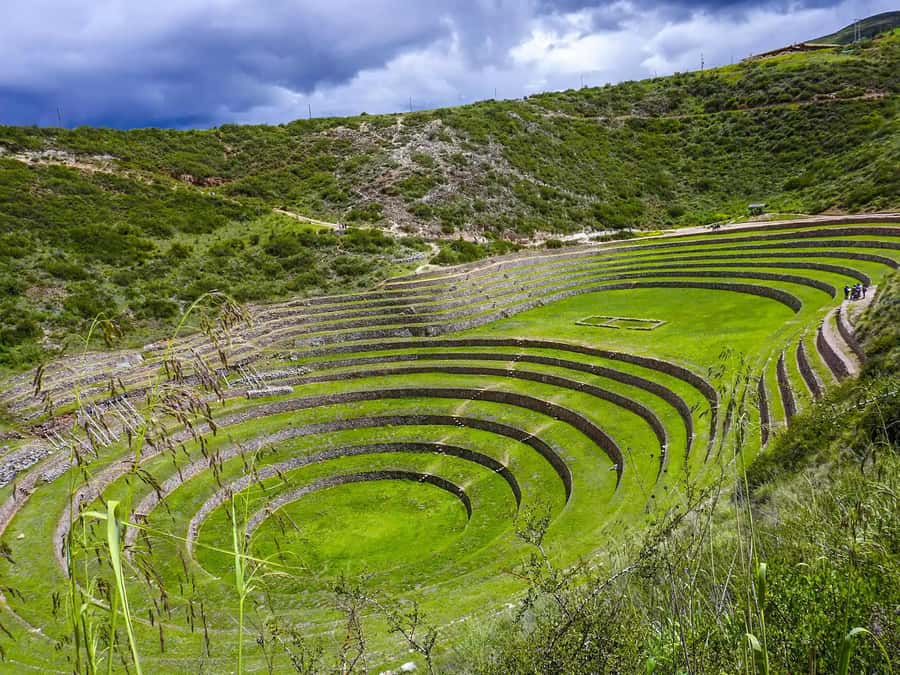
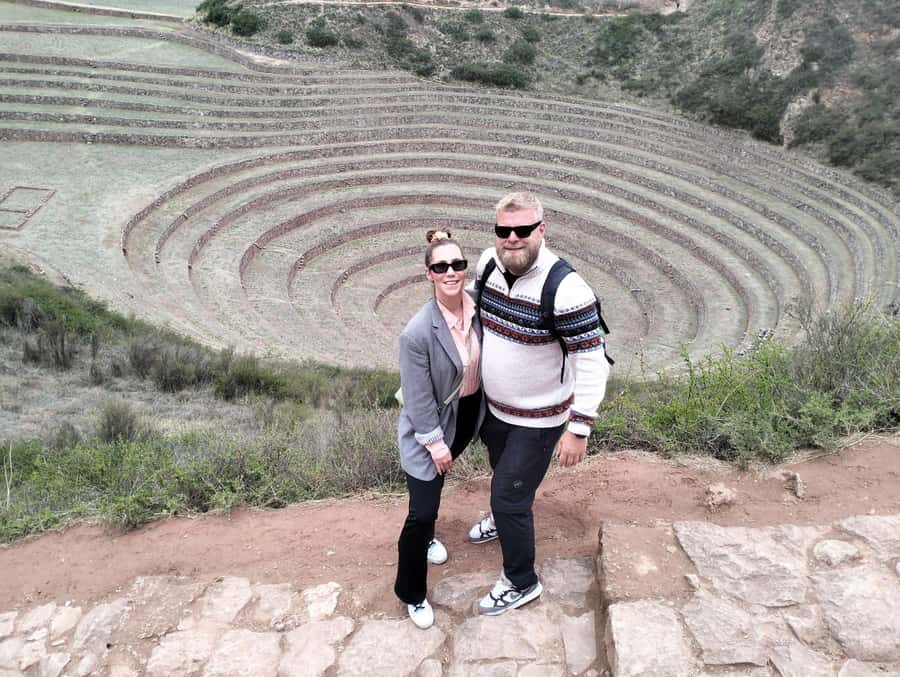
Moray is memorable because the terraces form enormous circular depressions. From the viewing area, you see rings descending into the earth, with each level connected to the larger agricultural system. The design feels almost theatrical, but its purpose was practical: the terraces and irrigation system helped the Inca manage crops in a difficult mountain setting.
The tour allows about 40 minutes for a guided visit, photographs, walking, and scenic views along the way. That is enough time to appreciate the main sight and hear the basic explanation. It is not enough for a slow, detailed archaeological study, so listen closely while the guide is speaking.
The altitude is the main issue. At 11,318 feet, even a gentle walk can feel harder than expected. Walk slowly, use the available time rather than rushing from viewpoint to viewpoint, and keep water close. Comfortable shoes are listed as essential, and that advice is worth following.
Moray is the stop where the tour’s educational side works best. You are not just looking at old stone. You are seeing how farming technology responded to steep terrain, thin air, and changing conditions. A good guide should explain the terraces and irrigation without burying the site under too many repeated facts.
One complaint described a guide who repeated the same points and gave some inaccurate information. That warning is worth keeping in mind, but it should be balanced against the much more favorable comments about clear explanations, good organization, and strong site knowledge. The experience can vary with the guide assigned to your group.
Maras Village and the salt pools below it
After Moray, the vehicle continues toward Maras, with about 40 minutes listed for the journey. The village itself is noted for preserved colonial architecture and thin-stoned buildings, giving you a quick look at how Spanish-era construction sits within an Andean setting.
This stop is shorter in character than Moray. You are not coming for a long town walk or a full architectural tour. Instead, you get a brief visit and a chance to notice the stonework before continuing to the salt mines.
The distinction between Maras and the salt mines is useful. Maras is the village, while the Salineras are the working salt pools outside it. If you expect a single attraction, the stop can feel confusing. If you see them as two related places, the route makes more sense.
The colonial buildings are a reminder that this region’s story did not end with the Inca period. The tour places them beside older agricultural and commercial practices, giving you a compact view of several eras in one morning or afternoon.
A few more Cusco trips worth lining up side by side
- Classic Inca Trail Trek 4D/3N to Machu Picchu (Group Service)
★ 5.0 · 8,653 reviews - Cusco: Rainbow Mountain and Red Valley Day Trip with Meals
★ 4.9 · 4,893 reviews - Machu Picchu: 4-Day Inca Trail Trek with Panoramic Train Ride
★ 5.0 · 4,568 reviews - Salkantay Classic Trek 5 Days from Cusco
★ 5.0 · 4,062 reviews
Salineras, 3,000 small pools still producing salt
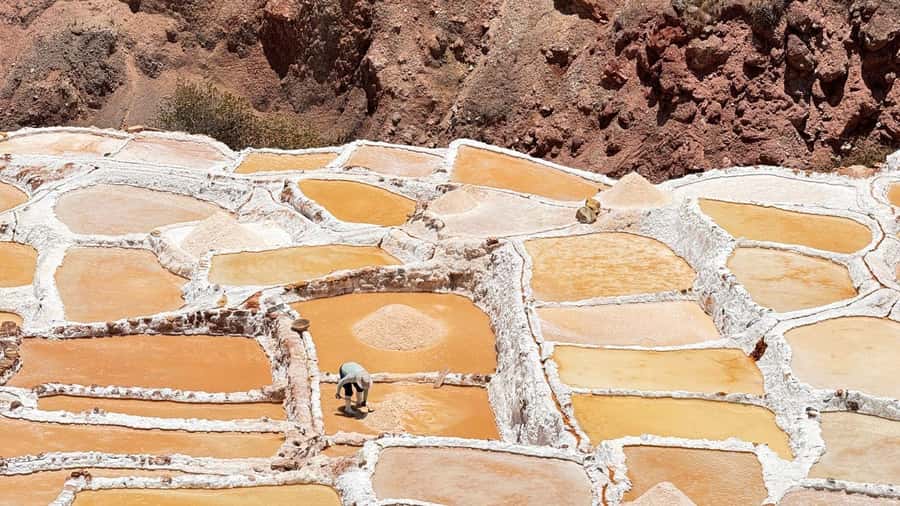
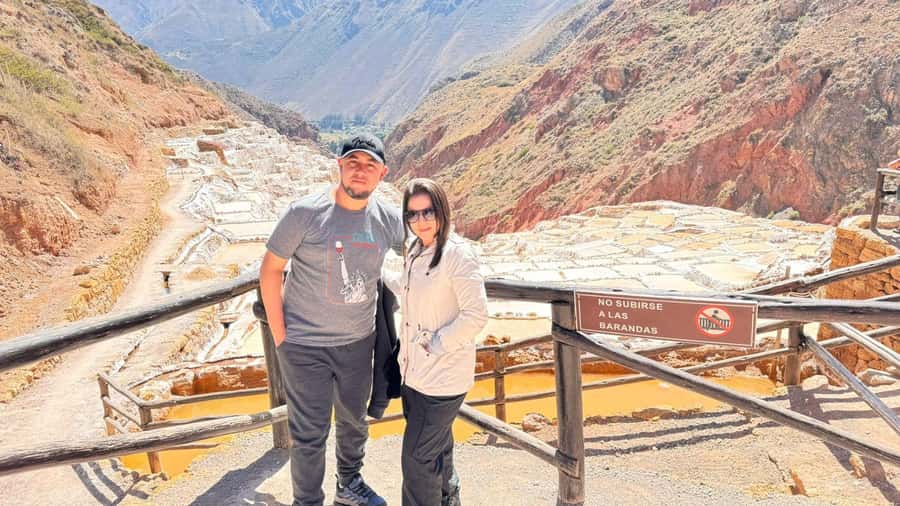
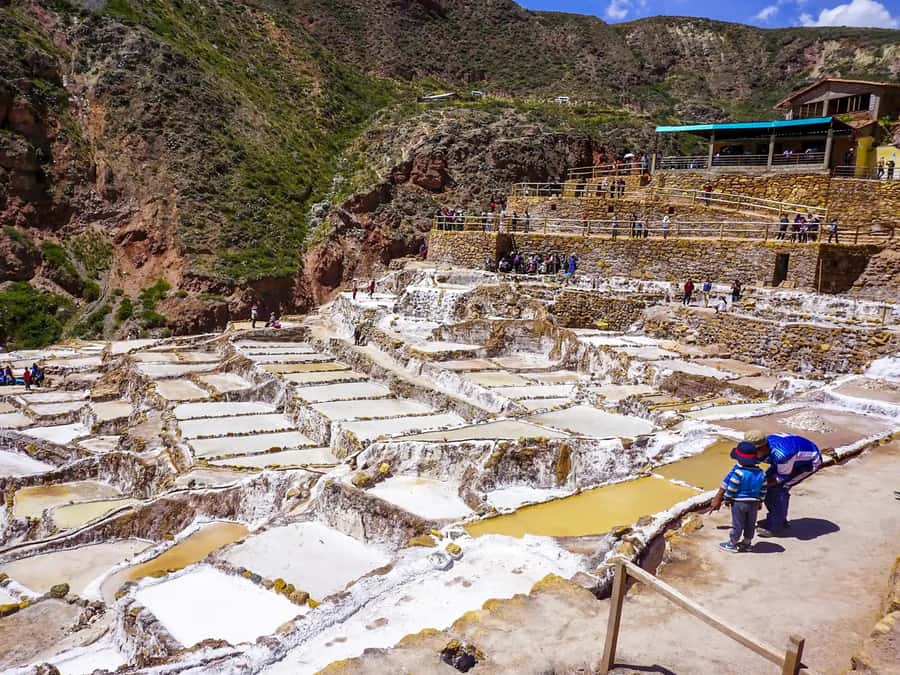
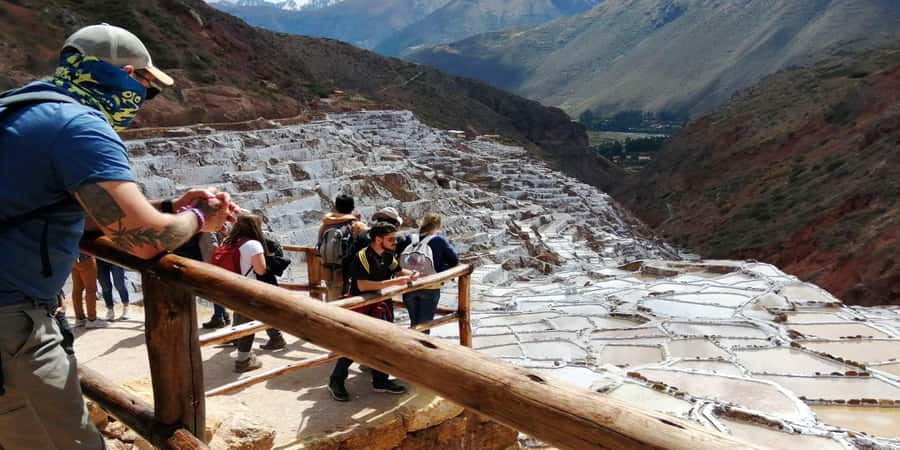
The Maras salt mines are the final major sight. About 3,000 small pools cover the slope, each one fed by mineral-rich water and used to collect salt as the water evaporates.
This is the most unusual stop on the route because it is not only an archaeological remnant. Salt continues to be processed and distributed in the region. You are looking at a working system with roots dating to pre-Inca times, not a display built solely for tourism.
The 40-minute visit includes a guided walk, sightseeing, and photographs. The view is especially striking from above, where the small pools form dense lines and pale patches across the mountainside. The exact appearance can change with water levels, weather, and production, but the basic sight is unusual enough to justify the trip.
You should bring cash because the salt mines require a separate admission fee listed as $6 or 20 soles. The archaeological sites are listed separately at $19 or 70 soles. Check the current amounts before you leave, since local fees can change.
The salt stop also gives you a chance to think about scale. Three thousand small basins sound enormous, but each one is part of a local production system. The value is not just the photograph. You are seeing a long-running method adapted to the mountain terrain and still tied to regional commerce.
Wear shoes suited to walking. The tour includes a walk at the mines, and the surfaces may not feel as easy as a paved city street. A sun hat, sunscreen, and camera are also sensible items from the suggested packing list.
Transport, group size, and the pace of the day
Transportation is included, along with hotel pickup in Cusco. That makes the tour useful if you do not want to arrange separate rides to three sites spread across the region.
The listed driving times add up to more than three hours, so you should expect a substantial portion of the day inside the vehicle. The benefit is convenience. You can watch the farmland and mountains pass by instead of managing routes and fares yourself. The tradeoff is that this is not a slow village-to-village journey.
The group is limited to 12 people. That is a useful middle ground. You avoid the scale of a large coach tour, while still sharing the cost of transport. A small group may also make it easier to hear the guide at Moray and the salt mines.
The tour is offered in English and Spanish. If your group includes both languages, the guide may switch back and forth. One visitor found this tiring and said the constant language changes made it harder to follow. If you are sensitive to that, ask before departure how the commentary will be handled.
Pickup is included, but hotel drop-off is not. The tour ends at Plaza Regocijo, a central point in Cusco. Plan your afternoon around that ending point rather than assuming you will be returned to your accommodation.
Is the $14 starting price good value?
At first glance, $14 for transport, a guide, hotel pickup, and three major stops looks very appealing. It remains a reasonable deal after you add the admission charges, but the real cost is closer to $39 if you pay the listed $19 archaeological fee and $6 salt mine fee.
That total still buys a lot for a six-hour outing. You get transport into the Sacred Valley area, a bilingual guide, a small group, and access to places that would be awkward to combine independently in one half-day.
The value is strongest if you want an efficient overview. You are paying for access and coordination more than for long visits at each location. The tour does not give you hours at Chinchero, Moray, or Salineras. It gives you a well-packed introduction.
A private option is available, according to the tour details. The private version may suit you if you want more control over the pace or more direct time with the guide, but the supplied information does not state its price. Compare that cost carefully before booking.
Free cancellation up to 24 hours before departure and a reserve-now, pay-later option make the booking less rigid. Those features are useful when altitude, weather, or changing Cusco plans are a concern.
Who should choose this Cusco excursion?
I would recommend it to you if you want to see more than Cusco’s historic center but do not have a full day for the Sacred Valley. It suits first-time visitors who want a broad introduction to Andean farming, craft, colonial buildings, and salt production.
It is also a good fit if you prefer a small group and want transport arranged from your hotel. The route covers several different types of sights, so it works well for couples, friends, and families who do not all want the same kind of attraction.
You may want another plan if the textile workshop is your top priority. The workshop is included, but the exact venue and sales approach may not match your expectations. For a serious textile buyer, a dedicated craft visit with clear material standards could be a safer choice.
You should also think twice if you are not yet comfortable at high altitude. Moray reaches 11,318 feet, and Chinchero is also above 3,700 meters. The tour is not described as strenuous, but altitude can turn an easy walk into a tiring one.
What to bring and how to prepare
Bring your passport, comfortable shoes, sun protection, a hat, a camera, and cash. The cash is especially important for the separate archaeological and salt mine fees.
Keep your schedule flexible after the tour. The return to Plaza Regocijo is listed at about 80 minutes from the salt mines, and traffic or roadside conditions could affect the final arrival time.
I would also keep your expectations clear at the weaving stop. Enjoy the demonstration, ask questions about natural dyes and materials, and do not feel obliged to purchase anything. That small bit of caution can protect the cultural part of the visit from becoming a hard-sell shopping stop.
Should you book the Moray and Maras tour?
Book it if you want a compact, good-value route through three distinct Andean sights, especially if hotel pickup and a small group matter to you. Moray and the Salineras are the strongest reasons to go, while Chinchero adds a useful connection to living Quechua craft.
Before paying, budget for the $25 in listed admission fees, confirm the workshop expectations, and remember that you finish at Plaza Regocijo rather than your hotel. I would choose this tour for its efficient route, striking scenery, and working salt pools, but I would keep the textile shopping optional and judge the final value by the guide assigned to your group.
FAQ
How long is the Moray, Maras, and Chinchero tour?
The tour lasts six hours, including transportation between Cusco and the sites.
Where does the tour begin?
Pickup is provided from your hotel in Cusco.
Where does the tour end?
The tour finishes at Plaza Regocijo. Hotel drop-off is not included.
What languages does the guide speak?
The tour is offered with a live guide in English or Spanish.
How large is the group?
The small-group option is limited to 12 participants. A private tour option is also available.
Are entrance fees included?
No. Admission to the archaeological sites is listed as $19 or 70 soles, and admission to the salt mines is listed as $6 or 20 soles.
How high does the tour go?
Moray is located at 3,450 meters, or 11,318 feet. Chinchero is at 3,762 meters.
What should I bring?
Bring your passport, comfortable shoes, a sun hat, a camera, sunscreen, and cash.
Added recently around Cusco
- 2-Day Private Short Inca Trail to Machu Picchu★ 5.0 · 15 reviews
- Guided tour of the mountain of colors in Cusco★ 5.0 · 11 reviews
- City Tour Cusco – Group★ 5.0 · 4 reviews
- Tour Sacred Valley with Maras and Moray★ 5.0 · 15 reviews
- San Pedro Market Tour with Peruvian Cooking Class★ 5.0 · 31 reviews
- Walking Culinary Experience★ 5.0 · 41 reviews
- City Tour in Cusco★ 4.5 · 10 reviews
- One Day Tour to Humantay Lagoon★ 5.0 · 8 reviews
Sacred Valley Tours, compared.
Sacred Valley & Maras Salt Mines Tour with Lunch
Read our review →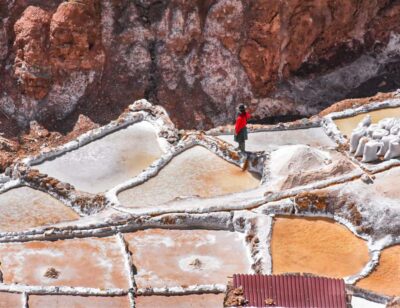
Moray, Maras Salt Mines & Chinchero Weavers Tour
Read our review →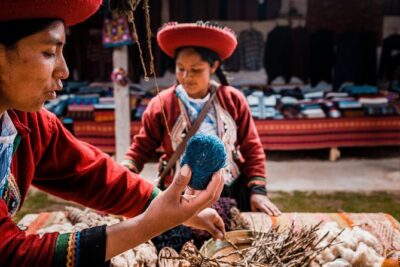
2-Day Tour: Sacred Valley and Machu Picchu by Train
Read our review →
Sacred Valley, Pisac, Ollantaytambo, Salt Mines Moray
Read our review →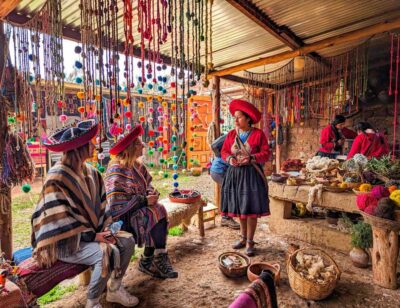
Chinchero,Moray & Salt Mines drop-off in Ollantaytambo
Read our review →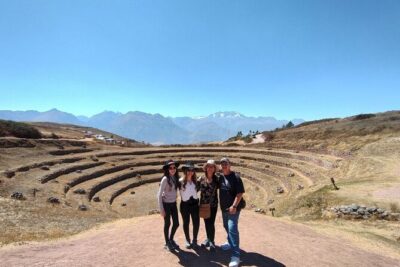
Sacred Valley and Maras Moray Tour with Full Day Buffet Lunch
Read our review →

Browse the lists this tour appears in