Reviewed · SACRED VALLEY TOURS
Cusco: The best of The Sacred Valley PRIVATE Tour
Big sights, one long day. This private Sacred Valley tour packs Chinchero, Moray, Maras, Urubamba, Ollantaytambo, and Pisac into about 12 hours. I like the private format, since you travel only with your own group, and I like the English-speaking guide who can explain the sites and answer questions as you go. The main drawback is the pace: with six major stops, you will see a lot, but you will not have unlimited time at each place.
The early 7:00 am pickup helps you make the most of the day. I also appreciate the mix of famous ruins and living Andean culture, especially the textile demonstration at Chinchero and the salt-making pools at Maras. If you prefer slow meals, long walks, or several hours at one archaeological site, this itinerary may feel rushed.
In This Review
- Key points to know before booking
- Why this Sacred Valley route works
- Chinchero: textiles, Inca remains, and mountain views
- Moray: circular terraces with a practical purpose
- Maras and its salt pans: an old working tradition
- Urubamba: a buffet break in the valley
- Ollantaytambo: fortress, temple, and Inca engineering
- Pisac: terraces, temples, and a colorful market
- The guide makes the packed schedule more useful
- Is $225 per person a fair price?
- Who should book this private Sacred Valley day?
- Should you book it?
- FAQ
- How long does the private Sacred Valley tour last?
- What time does the tour begin?
- Where does the tour take place?
- Is the tour private?
- Which sites are included?
- Is an English-speaking guide provided?
- Is hotel pickup and drop-off provided?
- Is lunch included?
- Are admission tickets included?
- What is the cancellation policy?
Key points to know before booking

- Six major stops in one day: Chinchero, Moray, Maras, Urubamba, Ollantaytambo, and Pisac give you a broad look at the Sacred Valley.
- Private sightseeing: Only your group takes part, making it easier to ask questions, adjust your attention, and avoid the fixed rhythm of a large coach.
- A 7:00 am start: The early departure is useful because the route covers a great deal of ground before returning to Cusco.
- Culture beyond ruins: Chinchero includes a step-by-step textile demonstration using natural dyes, while Maras shows how salt is produced in shallow mountain pools.
- English-speaking guidance: The guide helps connect the Inca sites, colonial buildings, farming terraces, and present-day communities.
- $225 per person: The price makes the most sense for people who value a private vehicle, private guide, included admission at several sites, and one full day of sightseeing.
Why this Sacred Valley route works
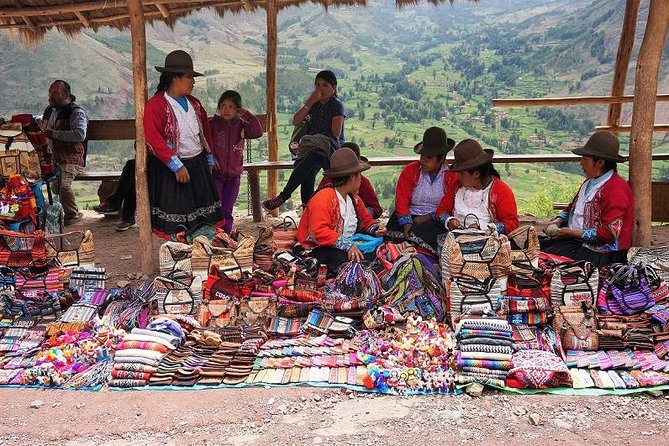
Many Cusco excursions force you to choose between ruins, villages, and scenery. This one tries to cover all three. You begin with Chinchero’s Andean village setting, move to the unusual circular terraces at Moray, see the salt pans near Maras, stop for lunch in Urubamba, and finish with the large Inca sites at Ollantaytambo and Pisac.
That range is the tour’s greatest strength. You are not simply moving from one stone site to another. The day shows how the region’s people worked with crops, salt, textiles, mountains, and water. The result is a fuller picture of the Sacred Valley.
The trade-off is time. The listed visits add up to only about five and a half hours, leaving the rest of the 12-hour day for driving, transfers, lunch, and moving between sites. That is normal for a route this ambitious. Still, you should book it for breadth, not for a slow, unhurried exploration of every ruin.
The private setup changes the feel of the day. In a large group, a guide must keep everyone moving and repeat instructions for the whole bus. Here, you can ask for more explanation at a site that catches your interest. You are also not waiting for strangers who are late returning to the vehicle.
More Sacred Valley days out:
- From Cusco: Moray, Maras Salt Mines & Chinchero Weavers Tour
★ 4.8 · 1,925 reviews - 2-Day Tour: Sacred Valley and Machu Picchu by Train
★ 5.0 · 1,127 reviews - Cusco: Sacred Valley, Pisac, Ollantaytambo, Salt Mines Moray
★ 4.6 · 1,058 reviews
Chinchero: textiles, Inca remains, and mountain views
Pickup is scheduled for around 7:00 am, with Chinchero as the first stop. This village combines Inca ruins with a colonial church, mountain views, and a colorful Sunday market. If your visit falls on Sunday, the market adds a local trading scene to the morning. On another day, the textile demonstration is still the main cultural feature.
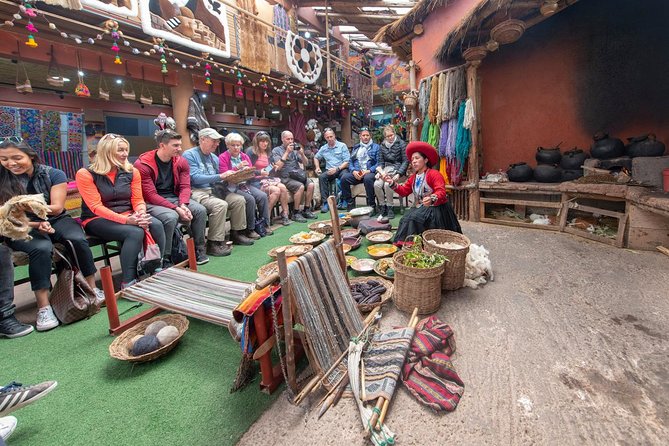
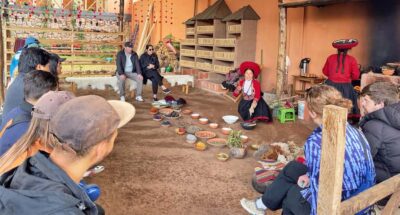
The demonstration explains how local weavers make their textiles from start to finish. You can see the gathering of raw materials, the washing process, and the coloring of threads with natural dyes. A master weaver presents the techniques step by step, which gives the visit more substance than simply walking past a table of finished products.
You also have a chance to buy textiles at the end. I would treat this as an opportunity to see the work close up, not as an obligation to purchase. The free admission listed for Chinchero is helpful, though the cost of any products you buy is separate.
The one-hour stop is enough for an introduction, a short look at the ruins and church, and the weaving presentation. It is not enough for a leisurely study of every part of the village. The private guide can help you decide where to focus.
Moray: circular terraces with a practical purpose
Moray is one of the most unusual sites on the route. Its broad circular agricultural terraces descend to a depth of up to 330 feet, creating a shape unlike the long hillside terraces seen elsewhere in the valley.
Some explanations describe Moray as an Inca agricultural laboratory, a place for testing growing conditions for different crops. That idea is widely associated with the site, but you should expect the guide to explain the theory rather than present it as a simple proven fact.
The visit is scheduled for 30 minutes, so this is a quick stop. You will have time to take in the circular form, hear the main interpretation, and photograph the view, but not to linger. The admission ticket is included.
Moray is especially valuable for visitors who want to understand Inca farming methods. It shows that Inca engineering was not limited to temples and fortresses. The terraces also reveal careful attention to agriculture and the difficult conditions of the high Andes.
Maras and its salt pans: an old working tradition
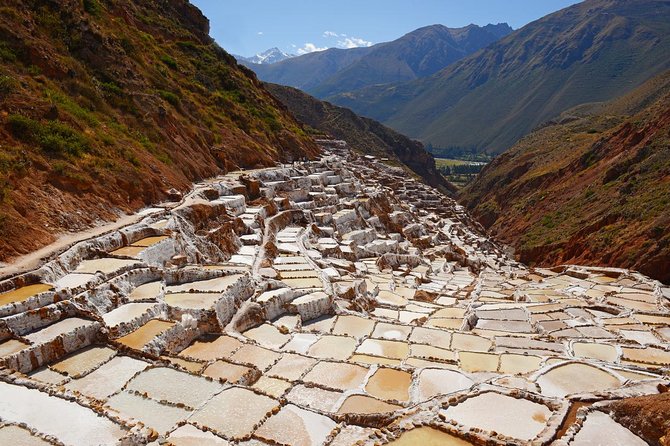
The next part of the route includes the colonial town of Maras, its church, and the salt pans cut into the mountainside. The salt pools are made up of thousands of shallow basins filled with salt water. As the water evaporates, crystallized salt remains behind.
This process has been practiced for more than 500 years. The site connects an old method of production with a striking natural setting. From a distance, the pools form a patterned patchwork on the mountainside. Up close, the point is not just the view. You are seeing a working system based on evaporation, shallow channels, and repeated harvesting.
The visit lasts about an hour, and admission is included. That gives you more time here than at Moray, which makes sense because the stop includes both the town and the salt pans.
Conditions can be bright and exposed, so bring sun protection and water. Those are general precautions for a full day at high-altitude archaeological sites, not special requirements of the tour. Since the day begins early and lasts until evening, small practical comforts matter.
The salt pans also give the tour a welcome change of pace. After Chinchero’s textiles and Moray’s terraces, Maras shows how the region’s resources support local production. It is a useful reminder that the Sacred Valley is not only an open-air museum.
A few more Cusco trips worth lining up side by side
- Classic Inca Trail Trek 4D/3N to Machu Picchu (Group Service)
★ 5.0 · 8,653 reviews - Cusco: Rainbow Mountain and Red Valley Day Trip with Meals
★ 4.9 · 4,893 reviews - Machu Picchu: 4-Day Inca Trail Trek with Panoramic Train Ride
★ 5.0 · 4,568 reviews - Salkantay Classic Trek 5 Days from Cusco
★ 5.0 · 4,062 reviews
Urubamba: a buffet break in the valley
Urubamba is the lunch stop, with a buffet meal scheduled for about one hour. This break comes at a good point in the route, after the morning visits and before the larger archaeological sites later in the day.
A buffet suits a packed schedule because you do not need to wait for each dish to be prepared. You can eat according to your own pace, then return to the route. The tour information does not specify the exact menu, so I would not book this expecting a particular regional dish or dietary arrangement.
The lunch stop is included in the schedule, but the supplied details do not state that the meal itself is included in the $225 price. Check the final booking terms if the cost of lunch matters to your budget.
One hour is enough for a practical meal, but not for a long restaurant experience. That is consistent with the tour’s purpose: cover the major Sacred Valley sights in one day.
Ollantaytambo: fortress, temple, and Inca engineering
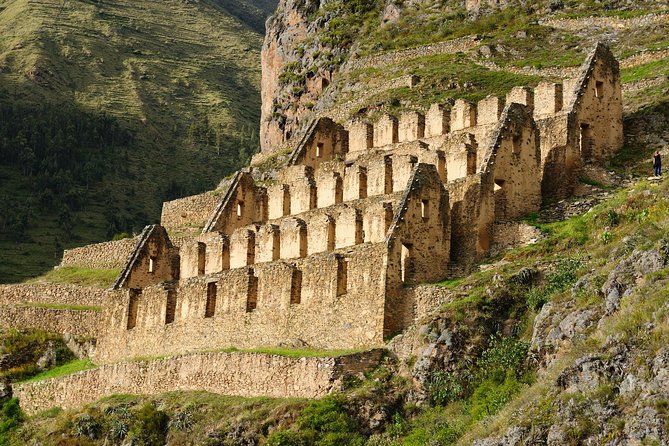
After lunch, the tour reaches Ollantaytambo, an ancient Inca temple and fortress at the northwestern end of the Sacred Valley. The archaeological park is one of the day’s major stops, with one hour set aside and admission included.
Ollantaytambo is important because it combines a defensive position with religious and ceremonial construction. Large stonework and steep terraces make the site visually powerful, but the climb and uneven archaeological ground can make the hour pass quickly.
Your guide is especially useful here. Without context, you may see terraces, walls, and stairways without understanding how the pieces fit together. With an English-speaking guide, you can ask about the site’s purpose, its construction, and the way it relates to the surrounding valley.
I would not assume that one hour allows a complete visit to every section of the park. The information for Pisac specifically recommends several hours, and Ollantaytambo also rewards extra time. On this tour, you are getting a focused introduction rather than a full archaeological day.
Pisac: terraces, temples, and a colorful market
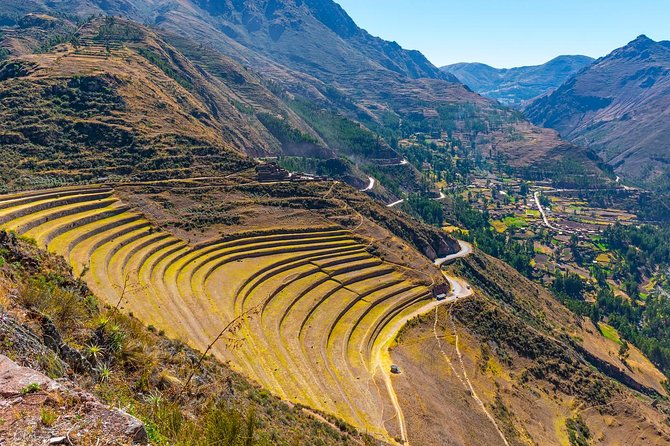
Pisac is the final major sightseeing stop. The route includes its archaeological park and colorful local market, with admission included. The site has plazas, temples, pools, and other structures built between the 10th and 11th centuries AD.
The scale of the terraces is a major part of the experience. They extend across a large mountain from south to east, at elevations of roughly 3,000 to 3,450 meters, or about 9,843 to 11,319 feet. The construction shows how the Incas adapted steep mountain ground for farming and settlement.
The ruins also include palaces and carefully placed stone blocks. I would pay close attention to the masonry, terraces, and water features rather than rushing only to the most famous viewpoint. The site has relatively few tourists each day compared with some other major attractions, according to the tour description, which may make the visit feel less pressured.
Still, one hour is short. The detailed site information recommends reserving several hours to explore Pisac. That advice is important. If Pisac is your main reason for visiting the Sacred Valley, a dedicated Pisac visit would allow more time for the ruins and market. On this full-day circuit, you get a strong sample of the site, not the whole story.
The market adds a human element after the ruins. You can look through local goods and colors, but the supplied details do not promise a specific market schedule beyond the reference to the colorful market. The private guide can help you understand what you are seeing and keep the stop within the day’s schedule.
The guide makes the packed schedule more useful
An English-speaking guide is one of the most important parts of this experience. The route includes several kinds of places: a colonial church, textile production, agricultural terraces, salt pools, temples, fortifications, and markets. A guide can tie those pieces together instead of leaving you to guess at their meaning.
Guide Jenny has been praised for answering questions and bringing the culture and history of the Sacred Valley to life. If Jenny leads your group, that style should suit you well if you like conversation rather than a silent ride between photo stops. Guide assignments can vary, so I would not assume she will lead every departure.
Because the tour is private, the quality of the guide matters even more. You are not sharing the experience with a large group, so there is more room for questions and personal attention. Ask about the textile process, the purpose of Moray, the salt pools, and the stonework at Ollantaytambo and Pisac.
Is $225 per person a fair price?
At $225 per person, this is not a budget sightseeing day. The value depends heavily on the size of your private group and how much you care about having your own guide and transport.
The price is easier to justify if you are traveling with several people, since the private format spreads the cost of the vehicle and guide across your group. It also includes admission at Moray, Maras, Ollantaytambo, and Pisac, while Chinchero is listed as free. The English-language guiding and hotel pickup and drop-off add convenience.
You are also buying time. Planning this route independently would require coordinating transport between six stops, watching the clock, and deciding how to connect Chinchero, Moray, Maras, Urubamba, Ollantaytambo, and Pisac in one day. The tour removes that work.
The value is weaker if you want to spend several hours at Pisac or Ollantaytambo, or if you are happy using shared transport and arranging your own explanations. This is a premium convenience choice, not the cheapest way to see the valley.
Who should book this private Sacred Valley day?
I would recommend it to you if you are visiting Cusco for a limited time and want a broad introduction to the region. It works particularly well for families, couples, and small groups who prefer to travel privately and ask questions without a large group listening.
It also suits you if you want more than ruins. Chinchero’s weaving demonstration and Maras’s salt production give the day a stronger connection to living traditions and local work.
I would be more cautious if your priority is a relaxed pace. The early start, long day, and six-stop schedule require energy. The short visits at Moray, Ollantaytambo, and Pisac mean you must accept an overview rather than complete exploration.
Most people can participate, and the experience is near public transportation, though the central arrangement is private pickup and drop-off. Confirmation is provided at booking. Free cancellation is available if you cancel at least 24 hours before the local start time. Changes or cancellations made later are not accepted for a refund.
Should you book it?
Book this tour if you want the widest Sacred Valley snapshot in one day, value private transport, and appreciate a guide who can explain both ancient sites and present-day traditions. The combination of Chinchero, Moray, Maras, Ollantaytambo, and Pisac is hard to beat for range.
Skip it if you want to give Pisac or Ollantaytambo several hours each. For a first look at the Sacred Valley, though, the route is well chosen. Just prepare for an early start, a full 12-hour day, and plenty of time in the vehicle between the big sights.
FAQ
How long does the private Sacred Valley tour last?
The tour lasts approximately 12 hours.
What time does the tour begin?
Pickup and the tour start are scheduled for 7:00 am.
Where does the tour take place?
The experience is based in Cusco, Peru, and visits several locations in the Sacred Valley.
Is the tour private?
Yes. Only your group participates in the private tour or activity.
Which sites are included?
The route includes Chinchero, Moray, the colonial town of Maras and its salt pans, Urubamba for lunch, Ollantaytambo, and Pisac.
Is an English-speaking guide provided?
Yes. The tour includes an English-speaking guide.
Is hotel pickup and drop-off provided?
Yes. The experience includes pickup and drop-off, with pickup scheduled for around 7:00 am.
Is lunch included?
The itinerary includes a one-hour buffet lunch stop in Urubamba. The provided information does not clearly state whether the meal cost is included in the tour price.
Are admission tickets included?
Admission is listed as included for Moray, Salinas de Maras, Ollantaytambo, and Pisac. Chinchero is listed with free admission.
What is the cancellation policy?
You can cancel at least 24 hours before the experience start time for a full refund. Cancellations or changes made less than 24 hours before the start time are not accepted for a refund.
Added recently around Cusco
- Super valley or vip valley★ 5.0 · 13 reviews
- the Incas’ Sacred Valley★ 5.0 · 27 reviews
- Sacred Valley of the Incas Day Trip from Cusco★ 5.0 · 6 reviews
- Maras + Moray & Textile Experience★ 5.0 · 14 reviews
- Small-Group Tour: Rainbow Mountains Hiking from Cusco★ 4.0 · 5 reviews
- Excursion to the Sacred Valley of the Incas from Cusco★ 5.0 · 8 reviews
- Tour EN Cuatrimoto POR la Montaña 7 Colors Hike 5 Minutes★ 4.5 · 32 reviews
- rainbow mountain★ 4.0 · 4 reviews
Sacred Valley Tours, compared.
Sacred Valley & Maras Salt Mines Tour with Lunch
Read our review →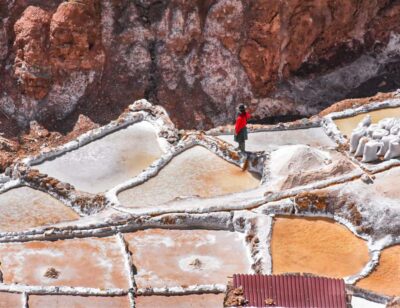
Moray, Maras Salt Mines & Chinchero Weavers Tour
Read our review →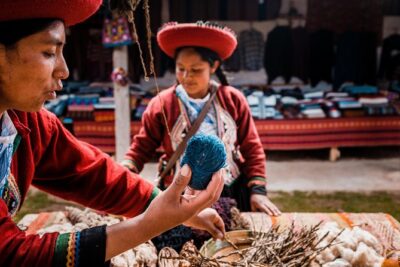
2-Day Tour: Sacred Valley and Machu Picchu by Train
Read our review →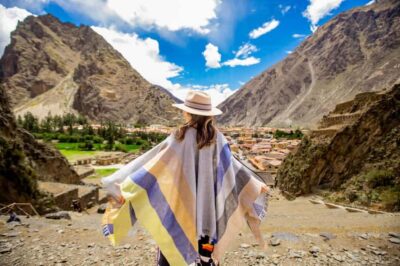
Sacred Valley, Pisac, Ollantaytambo, Salt Mines Moray
Read our review →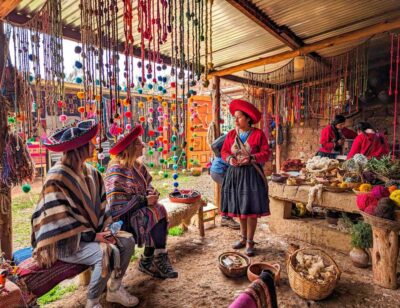
Chinchero,Moray & Salt Mines drop-off in Ollantaytambo
Read our review →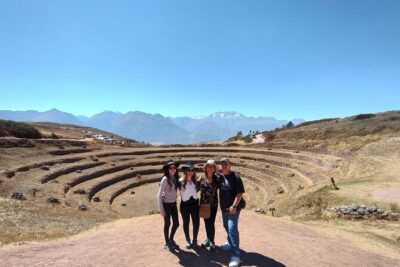
Sacred Valley and Maras Moray Tour with Full Day Buffet Lunch
Read our review →