
Reviewed · MACHU PICCHU TOURS
Excursion Sacred Valley and Machu Picchu more Huayna Picchu
Machu Picchu is only half the story. This two-day Cusco tour pairs the Sacred Valley’s best-known Inca sites with an overnight in Machu Picchu Pueblo and a demanding climb up Huayna Picchu. You move from weaving villages and salt pools to Ollantaytambo, then reach the citadel by train and bus.
I like the well-packed route and the fact that transport, admission, breakfast, a three-star hotel, and a professional guide are included. I also like the choice of Huayna Picchu, which gives you a much more active day than a standard citadel visit. At $478.67 per person, the package can be good value if you want the major arrangements handled for you.
The main caution is the return journey. One recent booking had two brothers placed in separate train carriages and separate buses back to Cusco, with little explanation after the Machu Picchu visit. Ask the operator to keep your party together, and be ready to find your way between the train, bus, and Cusco transfer.
In This Review
- Key points to know before booking
- Why this two-day Cusco tour works
- Chinchero: textiles and Andean tradition
- Moray: Inca farming in circular terraces
- Maras Salt Mines: a working Andean trade site
- Urubamba: a pause in the Sacred Valley
- Ollantaytambo: the strongest stop on day one
- Overnight in Machu Picchu Pueblo
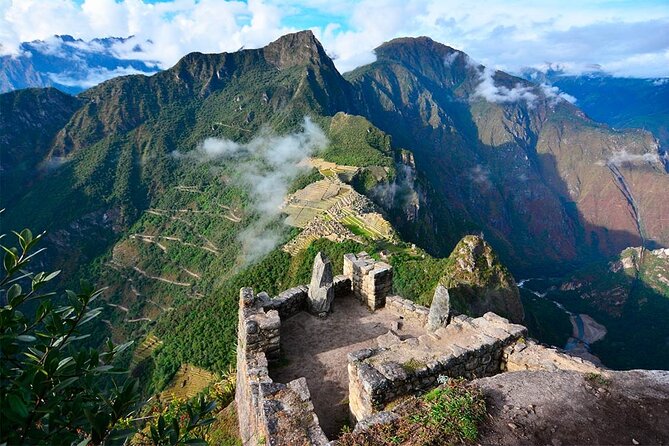
- Machu Picchu and the Huayna Picchu climb
- Transport, timing, and the return problem
- Is $478.67 good value?
- Who should choose this experience?
- Should you book this Sacred Valley and Huayna Picchu tour?
- FAQ
- Where does the tour start?
- How long does the experience last?
- Is the tour private?
- Is admission to Chinchero included?
- Is admission to Moray included?
- Is admission to the Maras salt mines included?
- Is food included?
- Is a hotel night included?
- Is the Huayna Picchu guide included?
- What level of fitness is needed?
Key points to know before booking
- The 6:00 am start makes a full Sacred Valley day possible, but you should be ready for a long day of stops, roads, and changing elevations.
- Chinchero, Moray, Maras, Urubamba, and Ollantaytambo give you a broad look at Andean life, farming, trade, food, and Inca engineering.
- Huayna Picchu is the strenuous part, with greater physical and mental demands than the regular Machu Picchu visit.
- The Huayna Picchu climb has no guide included, so you climb on your own after entering the area with the tour arrangements.
- One hotel night in Machu Picchu Pueblo saves you from trying to see the citadel and return to Cusco in one punishing day.
- The return transfer needs close attention, especially if you are sharing luggage, phones, or important documents with someone in your group.
Why this two-day Cusco tour works
This is a fast but sensible way to combine the Sacred Valley and Machu Picchu. The first day follows a natural route through the valley, ending at Ollantaytambo before you continue by train to Machu Picchu Pueblo, also called Aguas Calientes. The second day is reserved for Machu Picchu and Huayna Picchu, followed by the return to Cusco.
I like this structure because it avoids treating Machu Picchu as a rushed day trip from Cusco. You still have a busy schedule, but the overnight stay puts you near the sanctuary before your main visit. That matters when you are also taking on Huayna Picchu, a steep route that demands more energy than the citadel alone.
The tour is private, so only your own group participates. That gives you a better chance of asking questions and keeping the day focused on your interests. It does not mean every part of the trip is private, though. The train and bus are shared transport services, and the return arrangements may place members of one group in different vehicles unless this is confirmed in advance.
The package currently carries a 4.9 rating from 15 posted ratings, with 100 percent recommending it. The most praised part is guide John, who was described as friendly, informative, and so caring that the group felt guided by a family member. That personal touch can make a big difference at a site as busy and complex as Machu Picchu.
More Machu Picchu Tours in Sacred Valley
- 2-Day Tour: Sacred Valley and Machu Picchu by Train
★ 5.0 · 1,127 reviews - Sacred Valley & Machu Picchu 2D1N
★ 5.0 · 617 reviews - 6 Days Exploring Cusco, Sacred Valley & Machu Picchu
★ 5.0 · 470 reviews
Chinchero: textiles and Andean tradition
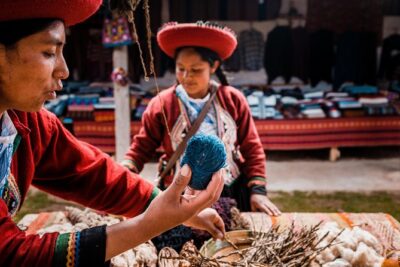
Your first stop is the archaeological complex at Chinchero, with about an hour set aside. Chinchero is known for its textile tradition, so this is more than a quick photo stop. You learn how local makers work with natural fibers and dyes made from plants and minerals.
I find this a useful opening because it connects the valley to living Andean culture. The stones and terraces are important, but the weaving shows that the area is not simply an open-air museum. People still use local knowledge and materials in practical ways.
The visit is included in the admission price, and the guide can help explain the connection between the textile work and the surrounding region. If you are interested in buying handicrafts, this is one point where you may want to take your time and check prices before committing. The supplied details do not promise a shopping stop or a specific demonstration, so treat the textile visit primarily as a cultural introduction.
The one-hour visit also gives you a gentle start before the day becomes more site-heavy. You should still wear shoes suited to uneven ground. The tour requires a moderate level of walking at Machu Picchu, and the entire day includes several archaeological areas.
Moray: Inca farming in circular terraces
The next stop is Moray, where you have about 30 minutes to see the famous circular terraces. The terraces form a series of bowl-shaped levels that created different growing conditions. They are often described as an agricultural laboratory, allowing the Incas to test crops in varied microclimates.
The value here is visual and practical. Instead of hearing only about Inca engineering in the abstract, you see how a carefully shaped site could support farming experiments. The circles are also unlike the more familiar straight terraces found elsewhere in the Sacred Valley.
Thirty minutes is enough for an overview and photographs, but not for a slow, extended visit. Keep that in mind if you prefer long periods at one archaeological site. This tour favors variety, giving you several distinct places in one day rather than a single site with lots of spare time.
Moray is also a good reminder that the Inca world depended on food production as much as temples and fortresses. The stop gives the day a useful change of pace after Chinchero’s textile focus.
Maras Salt Mines: a working Andean trade site
At the Maras salt mines, you spend about 40 minutes looking over thousands of salt pools fed by an underground spring. The salt is still produced today, and the site once served as an important trading center during the Inca Empire.
This is one of the tour’s most unusual stops. You are not just looking at old ruins. You are seeing a place where natural water, human labor, and a long-standing local economy meet. The many pools create a striking pattern across the hillside, and the site gives you a clear sense of how valuable a small natural resource could become.
The visit is included, but the exact amount of time you can spend near the pools may depend on the organized schedule and site rules. I would not count on wandering everywhere or stopping for a long meal here. Use the time to listen to the guide, understand how the salt is collected, and take in the view.
Moray and Maras work well together. One explains agricultural testing, while the other shows salt production and trade. The two stops help you see the Sacred Valley as a place of work and exchange, not only a string of impressive ruins.
Other ways to reach Machu Picchu:
- Classic Inca Trail Trek 4D/3N to Machu Picchu (Group Service)
★ 5.0 · 8,653 reviews - Machu Picchu: 4-Day Inca Trail Trek with Panoramic Train Ride
★ 5.0 · 4,568 reviews - Short Inca Trail to Machu Picchu 2D/1N
★ 5.0 · 3,007 reviews - 2-Day Inca Trail to Machu Picchu with Panoramic Train
★ 5.0 · 1,876 reviews
Urubamba: a pause in the Sacred Valley
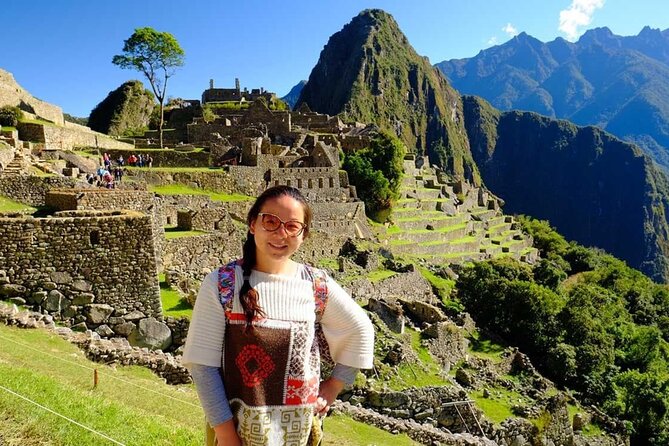
The stop in Urubamba lasts about an hour and is free of admission charges. This is your chance to take a break in a town known as the heart of the Sacred Valley, with time for food and a look at the local market.
That pause matters. The first day includes several sites, and an hour away from formal archaeological visits gives you room to eat, stretch, and see regional produce and handicrafts. Food is not included in the tour, so you should budget separately for lunch and other meals.
The details do not specify a restaurant or a fixed menu. That gives you some freedom, but it also means you should not expect the price to cover your meal. If you want a relaxed lunch, keep an eye on the meeting time. The tour has to continue to Ollantaytambo and then connect with the train to Machu Picchu Pueblo.
Urubamba is less about a major monument and more about seeing how the valley functions today. I like that balance. A good Peru tour should give you time with living communities, not only carefully preserved stonework.
Ollantaytambo: the strongest stop on day one
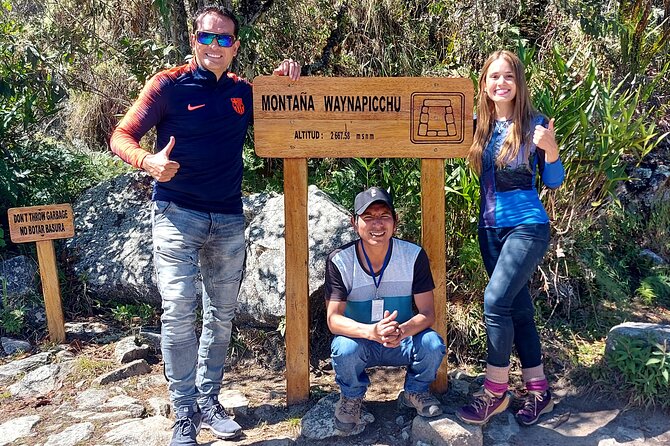
Ollantaytambo is the last major Sacred Valley stop and one of the most important. The archaeological park includes a fortress, temples, terraces, and a town that still preserves its original Inca street plan. Its cobbled lanes and stone construction make it feel different from a site that has been separated from daily life.
This is where the first day’s themes come together. You have seen weaving, farming, salt production, and local commerce. At Ollantaytambo, you see the scale and planning of an Inca center, along with a living settlement built around much of the old structure.
The schedule gives the site only a minute in the supplied timing, which is clearly not enough to describe a full visit. In practical terms, Ollantaytambo is the point where the Sacred Valley portion ends and the journey to Machu Picchu Pueblo begins. Do not read the listed one-minute duration as the actual time available for exploring the fortress. The important point is that this is your transition station and final major valley stop.
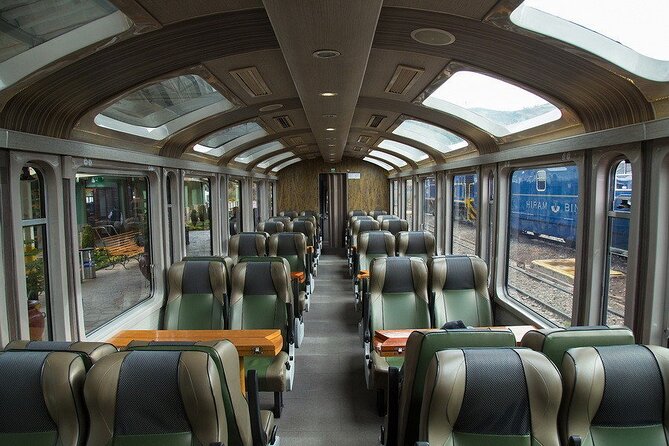
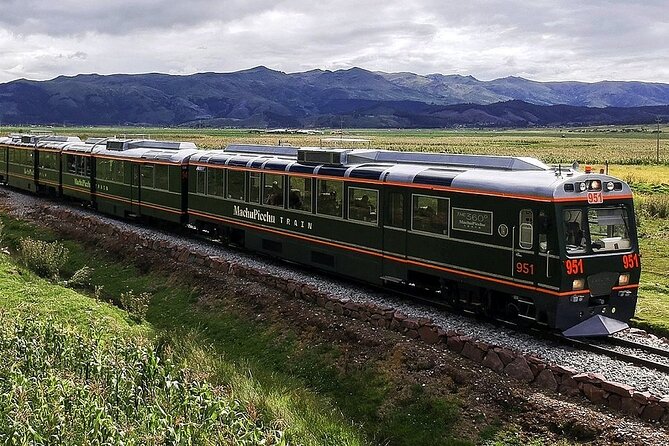
From here, the tour continues by tourist train to Aguas Calientes. The package includes the train from Ollantaytambo to Machu Picchu Pueblo and back. It also includes one hotel night and breakfast at a three-star property, giving you a place to sleep before the early visit to the sanctuary.
Overnight in Machu Picchu Pueblo
The overnight stay is one of the package’s practical strengths. You do not have to finish the Sacred Valley, rush to Machu Picchu, visit the citadel, and then attempt the full return to Cusco in the same day.
The hotel is listed as three-star, with breakfast included. The exact hotel name is not provided, so you should not choose this tour based on a particular property or special hotel facilities. Think of the room as a useful base for the night rather than the centerpiece of the experience.
Food beyond breakfast is not included. You will need to pay for lunch, dinner, snacks, and drinks yourself. That is easy to overlook when the package includes so many transport and entry details, so build those costs into your budget.
The town is also your connection point for the sanctuary. Keep your personal items organized, especially if someone in your group is carrying shared luggage, phones, or documents. A smooth next morning depends on knowing what you have with you.
Machu Picchu and the Huayna Picchu climb
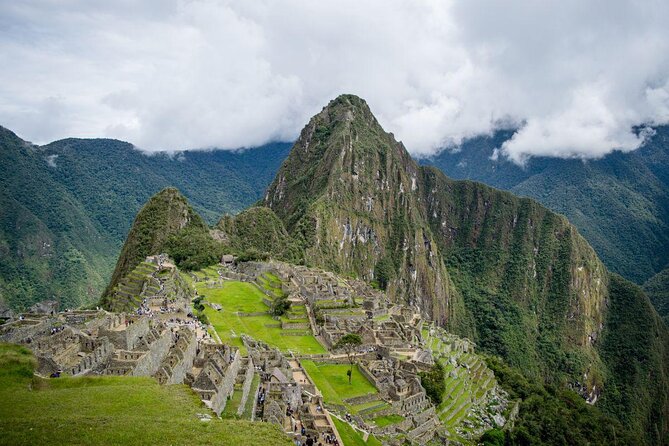
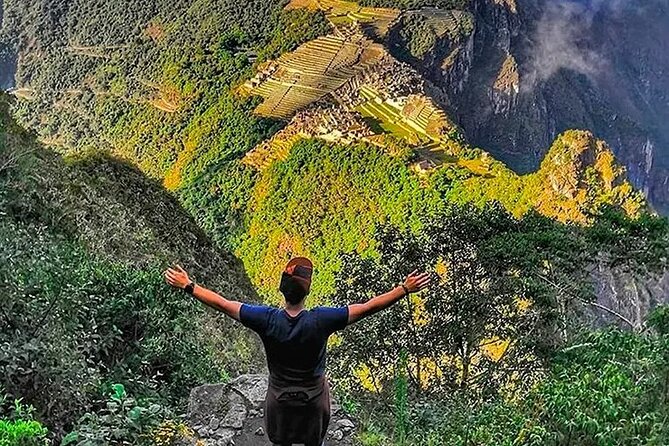
The second day centers on the Historic Sanctuary of Machu Picchu, with about four hours allocated for the visit. The package includes Route 3-A, the Waynapicchu Mountain Route, along with admission and a professional guide for the main arrangements.
Machu Picchu itself gives you the famous stone citadel, terraces, and carefully planned structures set high above the surrounding area. Your guide can provide the context that turns a remarkable view into a meaningful visit. John received especially strong praise for being both informative and warm, so if he is assigned to your group, his approach may be a real strength.
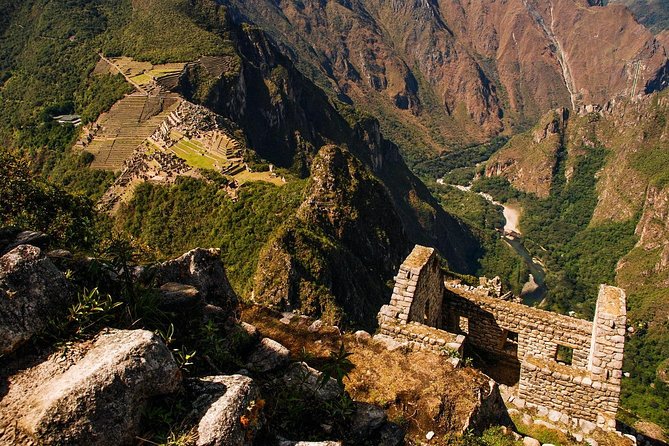
Huayna Picchu is the more demanding part. The route is steep and adventurous, and the information for this tour specifically warns that it requires greater physical and mental effort. You climb without a Huayna Picchu guide. In other words, the guide covers the main tour, but you should expect to handle the mountain route on your own.
That detail is important. You need to be comfortable following the designated route and managing the climb without a guide beside you. The supplied information does not give a precise distance, elevation gain, or time for the mountain section, so I would not assume it is a casual add-on. A moderate level of fitness is required for the sanctuary, while Huayna Picchu calls for more.
You may see references to Machu Picchu Mountain as another option. This package specifically includes Huayna Picchu, Route 3-A. Machu Picchu Mountain is described as wider and more panoramic from a distance, while Huayna Picchu is steeper and more adventurous, with close views over the citadel. Do not assume you can switch mountains without confirming it before booking.
Four hours can sound generous, but it must cover the sanctuary visit and the mountain route within the permitted schedule. Follow your guide’s instructions and keep track of the meeting time. The mountain is not the place to linger without a plan, particularly when you still need to return to town and begin the journey to Cusco.
Transport, timing, and the return problem
Transport is a major part of the $478.67 price. The package includes a tourist bus from Cusco to Ollantaytambo Station, the tourist train between Ollantaytambo and Machu Picchu Pueblo, and the return train and bus connections to Cusco. Admission, one hotel night, breakfast, and a professional guide are also covered.
If you arranged these pieces separately, you would need to coordinate tickets, station transfers, the hotel, and the site entry on your own. The package is therefore most valuable for someone who wants one company to handle the main framework of a complicated two-day trip.
The 6:00 am start is an important tradeoff. It lets you cover the Sacred Valley in one day, but you should expect a full schedule. You will be moving between towns and sites, with limited time at some stops. This suits you if you prefer seeing several major places in one trip. It may frustrate you if you want slow meals, long market visits, or extended time at every ruin.
The return deserves special attention. One booking ended with two people from the same party separated on both the train and bus to Cusco. Because they shared luggage and devices, the separation caused real problems when they were dropped off in town. The company’s response expressed thanks and appreciation but did not change the practical lesson: confirm that your entire party is assigned together before boarding.
Ask clearly about the return train carriages, bus seats, luggage, and the place where you will reconnect in Cusco. If only one person in your group speaks Spanish, keeping together becomes even more important. Carry essential documents, phones, and any medicine with you rather than placing everything in shared luggage.
Is $478.67 good value?
The price is not cheap, but it covers the expensive and time-sensitive parts of the trip. You receive entry to the archaeological sites, the Huayna Picchu route, train tickets, bus connections, a hotel night, breakfast, and a professional guide.
The value is strongest for you if you are visiting Peru for a limited time and do not want to build the Sacred Valley and Machu Picchu plan yourself. The route handles the broad logistics while still giving you a private group experience.
The value is weaker if you already know how to arrange trains, hotels, and admissions, or if you want complete control over meal times and site duration. Food is not included, and the schedule is tight. You are paying for convenience and access, not a leisurely custom trip.
The advance booking pattern also matters. This experience is booked on average 81 days ahead, which fits the limited availability of major Machu Picchu and Huayna Picchu entries. If Huayna Picchu is the reason you are interested, do not wait until the last minute and assume space will remain.
Who should choose this experience?
I would recommend it most to an active first-time visitor who wants the Sacred Valley and Machu Picchu in a short package. You should be comfortable with early starts, moderate walking, a busy day, and a steep mountain route without a Huayna Picchu guide.
It also suits couples, families with physically capable older children, and small private groups that value having a guide for the main cultural visits. John’s warm style, if available, would be especially welcome for people who want more than basic directions and photographs.
I would be cautious about recommending it to anyone with limited mobility or a strong fear of heights. The standard Machu Picchu visit already requires moderate walking, and Huayna Picchu requires more physical and mental effort. The provided details do not describe accessibility services or an easier mountain alternative within this booking.
I would also hesitate if you dislike fixed schedules or need everyone in your party to move together without repeated checks. The return transfer problem is not a reason to reject the whole tour, but it is a reason to communicate clearly before the trip and again at the station.
Should you book this Sacred Valley and Huayna Picchu tour?
Book it if you want a two-day, private-group package that covers the Sacred Valley, an overnight in Machu Picchu Pueblo, the citadel, and Huayna Picchu without arranging each piece yourself. The route offers a strong mix of living culture, Inca agriculture, salt production, fortress architecture, and one of Peru’s great mountain views.
Before paying, confirm that Huayna Picchu is included under Route 3-A, ask who will guide the main Machu Picchu visit, and request that your group remain together on every return train and bus. If you accept the early start, limited meal flexibility, and strenuous climb, the package offers a practical way to fit a lot of Peru into two days.
FAQ
Where does the tour start?
The tour starts in Cusco at 6:00 am.
How long does the experience last?
The experience lasts approximately two days.
Is the tour private?
Yes. Only your own group participates in this private tour or activity.
Is admission to Chinchero included?
Yes. Admission to the Chinchero archaeological complex is included.
Is admission to Moray included?
Yes. Admission to Moray is included.
Is admission to the Maras salt mines included?
Yes. Admission to Salinas de Maras is included.
Is food included?
No. Food is not included. Breakfast at the hotel is included, but you pay separately for other meals and food.
Is a hotel night included?
Yes. The package includes one night in Machu Picchu Pueblo at a three-star hotel, with breakfast.
Is the Huayna Picchu guide included?
No. The guide does not accompany you on Huayna Picchu. You climb the mountain on your own.
What level of fitness is needed?
The Machu Picchu visit requires moderate walking. Huayna Picchu requires greater physical and mental effort, so you should have a moderate level of fitness and be prepared for a strenuous climb.
More Sacred Valley Days Out
- From Cusco: Moray, Maras Salt Mines & Chinchero Weavers Tour
★ 4.8 · 1,925 reviews - Cusco: Sacred Valley, Pisac, Ollantaytambo, Salt Mines Moray
★ 4.6 · 1,058 reviews - Cusco:Chinchero,Moray & Salt Mines drop-off in Ollantaytambo
★ 4.8 · 793 reviews - Sacred Valley and Maras Moray Tour with Full Day Buffet Lunch
★ 5.0 · 670 reviews
Added recently around Cusco
- Super valley or vip valley★ 5.0 · 13 reviews
- the Incas’ Sacred Valley★ 5.0 · 27 reviews
- Sacred Valley of the Incas Day Trip from Cusco★ 5.0 · 6 reviews
- Small-Group Tour: Rainbow Mountains Hiking from Cusco★ 4.0 · 5 reviews
- Excursion to the Sacred Valley of the Incas from Cusco★ 5.0 · 8 reviews
- Maras + Moray & Textile Experience★ 5.0 · 14 reviews
- Tour EN Cuatrimoto POR la Montaña 7 Colors Hike 5 Minutes★ 4.5 · 32 reviews
- rainbow mountain★ 4.0 · 4 reviews
Machu Picchu Tours, compared.
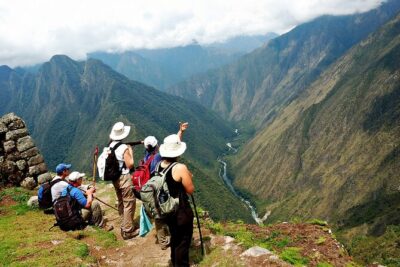
Classic Inca Trail Trek 4D/3N to Machu Picchu (Group Service)
Read our review →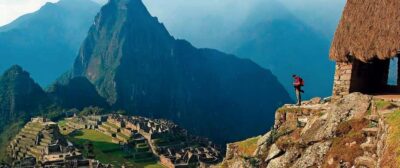
Machu Picchu: 4-Day Inca Trail Trek with Panoramic Train Ride
Read our review →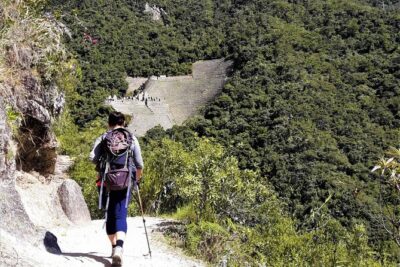
2-Day Inca Trail to Machu Picchu with Panoramic Train
Read our review →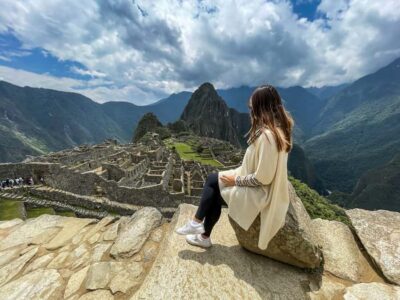
2-Day Tour: Sacred Valley and Machu Picchu by Train
Read our review →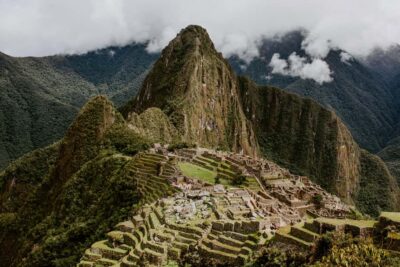
Machu Picchu: Full-Day Tour from Cusco with Optional Lunch
Read our review →Browse the lists this tour appears in