
Reviewed · PISCO TOURS & TASTINGS
Experience and Tasting of Pisco and Peruvian wine
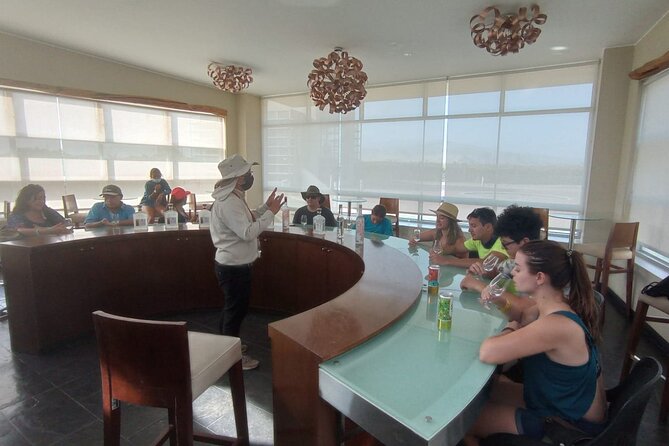
Pisco tells Ica’s story in a glass. This private half-day outing links three very different estates, from America’s oldest distillery to Peru’s first vineyard, giving you history, production, and several tastings for $26 per person. I like the private transportation, which keeps the day simple, and I like the contrast between polished modern production and old-fashioned grape pressing. The main caution is that entrance fees are extra, and the guide service may feel more like coordinated transportation than a long, interpretive tour at every stop.
You spend about three to four hours moving between Bodega La Caravedo, Tacama, and Taqara 1856. Each visit is planned for roughly an hour, so you get a brisk look at three producers rather than a slow afternoon at one estate. The route suits you best if you want a clear introduction to Ica’s pisco and wine culture without arranging taxis, reservations, and transfers yourself.
The operator says your driver also serves as an official, government-accredited tourism guide and has English training. That matters because one dissatisfied guest felt the service was closer to a taxi with a fixed route than a fully guided experience. I would book this for its access and convenience, while keeping your expectations measured: the estates themselves provide much of the specialist information.
In This Review
- Five things to know before you go
- Why Ica is the right place for pisco
- La Caravedo: pisco from 1684 to the present
- Tacama: Peru’s first vineyard and an old hacienda
- Taqara 1856: a more handmade finish
- What the $26 price really covers
- The guide question: what service should you expect?
- Timing, alcohol, and practical planning
- Who should book this Ica tasting?
- Should you book the La Caravedo, Tacama, and Taqara route?
- FAQ
- How long does the pisco and wine experience last?
- Where does the tour begin?
- Where does the tour end?
- Is private transportation included?
- Which estates are visited?
- Is Tacama open every day?
- What is the Tacama entrance fee?
- What is the Hacienda Caravedo entrance fee?
- Is lunch included?
- Can you see grape treading?
Five things to know before you go
- Three estates, three styles: You visit a modern pisco distillery, Peru’s first vineyard, and an artisanal producer in one outing.
- La Caravedo dates to 1684: Its old presses and falcas give the tour a strong historical opening.
- Tacama is Peru’s first vineyard: The estate traces its origins to 1540 and includes one of South America’s oldest haciendas.
- Taqara changes with the season: In February and March, you may see traditional grape treading.
- The advertised price is not the full cost: Tacama and La Caravedo entrance charges are listed separately, so budget for them before booking.
Why Ica is the right place for pisco

Ica is the heart of Peru’s pisco country, and this outing makes good use of that setting. Instead of treating pisco as just a souvenir bottle, the route connects the drink with vineyards, old estates, distillation equipment, and local production methods.
The experience also helps you compare different approaches. La Caravedo presents a large, modern operation with deep roots. Tacama connects wine and pisco to Peru’s earliest vineyards. Taqara 1856 offers a smaller-scale, more artisanal view. That mix is useful because it shows you that Peruvian spirits are not made in only one way.
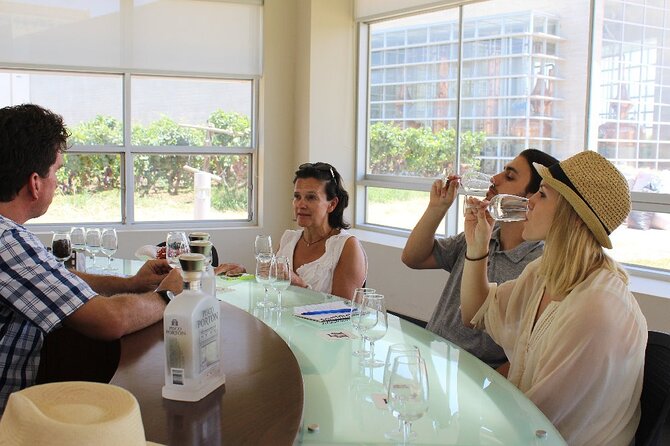
You will taste both pisco and wine, though the exact pours are not specified. Alcoholic tastings are for adults only. If you do not drink, the value of the visit will rest mainly on the estates, history, and production demonstrations rather than the tasting portion.
The tour begins at La Libertad 179 in Ica and returns to that same meeting point. Private transport is included, which is a real advantage in a region where three separate estate visits could otherwise require careful timing and several rides.
More Pisco Tastings in Ica
- Wine, Pisco and Dune Buggy Experience
★ 5.0 · 166 reviews - Winery and Pisco Distillery tour
★ 5.0 · 82 reviews - ICA: Pisco and Wine Route with tasting in 03 Wineries
★ 4.3 · 80 reviews
La Caravedo: pisco from 1684 to the present
The first stop, Bodega La Caravedo, gives you the strongest historical setting of the day. The visit begins along a boulevard featuring the eight pisco grape varieties. That introduction helps you understand that pisco is not a single-flavor spirit. The grape type shapes what eventually reaches your glass.
From there, you visit the original facilities dating from 1684. The estate is described as the largest winery in Ica, and its old presses and falcas provide a look at earlier production. A falca is a traditional still used to distill pisco, so this section connects the machinery with the finished drink you taste later.
The old buildings are likely to be the most atmospheric part of this stop. You can see how production once depended on sturdy presses, copper equipment, and hands-on labor. The age of the facilities also gives the visit a sense of continuity, even though the current operation uses far newer technology.
The tour then moves to the present-day distillery. It is described as one of the most modern in Peru, with high production standards for Peruvian pisco. That change from historic equipment to current distilling technology is one of the visit’s best features. You are not simply looking at an old hacienda and hearing dates. You are seeing two stages of the same industry.
The tasting ends with La Caravedo’s famous green must pisco from the Portón brand. Green must pisco is made from partially fermented grape juice, giving the tasting a distinctive point of focus. Because this is a special product rather than a generic pour, pay attention to how it differs from the wines and other piscos later in the day.
You have about one hour here. That is enough for a guided walk and tasting, but not enough for a leisurely study of every building. If you enjoy old industrial sites and production details, you may wish the schedule allowed more time.
Tacama: Peru’s first vineyard and an old hacienda
Tacama brings the story back to the vineyard. It is described as Peru’s first vineyard, with an estate history reaching to 1540. Francisco de Carabantes, a Spanish pioneer, planted the first vines in Ica’s hot valley. That date gives the stop unusual weight. You are not just visiting a winery with an attractive old property. You are visiting a place tied to the beginning of viticulture in Peru.
The visit covers the vineyards, the winery’s past, and its production. You will also see the old hacienda, described as the oldest in South America. The combination of vines and historic buildings gives Tacama a different feel from La Caravedo’s emphasis on distilling.
You taste both wines and piscos made by the estate. This is a useful point for comparison. At La Caravedo, the green must pisco provides a memorable specialty. At Tacama, the tasting broadens the picture by putting wine and pisco side by side.
Tacama is open for this visit Tuesday through Sunday. On Mondays, the route changes because Tacama is closed, and Hacienda Vista Alegre is visited instead. That is an important scheduling detail. If Tacama’s early vineyard history is the main reason you want this tour, avoid Monday and confirm the day’s route before you pay.
The listed information includes a tourist ticket for Hacienda Tacama at S/25, or about $6.80 per person. It also lists a Tacama admission fee of PEN25 per person, which appears to describe the same charge. I would ask the operator to confirm the exact amount and whether it is paid directly at the estate, since the details present the fee more than once.
Tacama is another one-hour visit. You will get the main story, production information, and tastings, but this is not a full-day winery stay. The short schedule works well if you want variety. It is less suitable if you prefer to sit among the vines, order a long lunch, or spend hours comparing bottles.
Taqara 1856: a more handmade finish
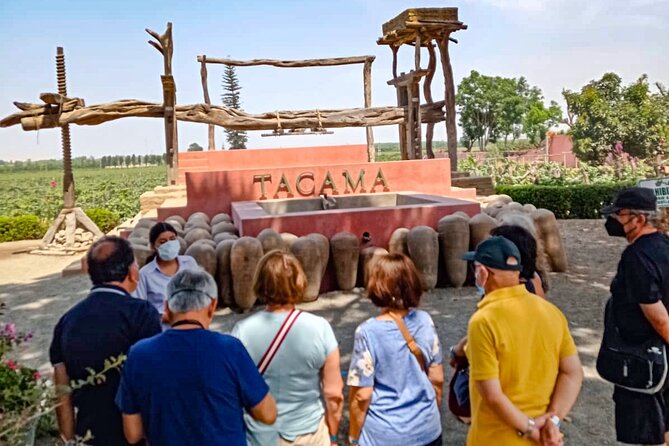
Taqara 1856 changes the rhythm of the outing. Here, the focus is on artisanal production and methods preserved over many years. After the large-scale operation at La Caravedo and the historic estate setting at Tacama, this stop gives you a smaller and more hands-on point of comparison.
You learn how the pisco and wine are made in an artisanal form, then taste the products offered at the estate. The description emphasizes that the same flavor has been retained for many years. That makes the stop less about modern equipment and more about continuity in local methods.
The best seasonal detail comes in February and March. During those months, you may see traditional grape treading at the facilities. This is an old method in which grapes are crushed underfoot. It is a simple process, but it makes the connection between vineyard and bottle easy to understand.
Do not treat the grape treading as guaranteed. It is tied to the harvest season, and the information says you will appreciate it if visiting in February or March. Outside those months, the stop still includes a production explanation and tasting, but the live seasonal activity may not be taking place.
The one-hour limit is sensible here. You get a clear look at the artisanal method without turning the visit into a technical class. If you want detailed answers about fermentation, grape varieties, or aging, use your time well and ask questions early.
More pisco tasting in Ica:
- Pisco and wine route, Huacachina, Buggies, Sandboard and sunset
★ 5.0 · 26 reviews - From Ica or Huacachina: Sunset pisco and buggy experience
★ 5.0 · 14 reviews - Pisco Tasting and Buggies with Sandboarding
★ 5.0 · 9 reviews - Tacama Wine Experience and Pisco Museum and Pisco Sour Class
★ 5.0 · 7 reviews
What the $26 price really covers
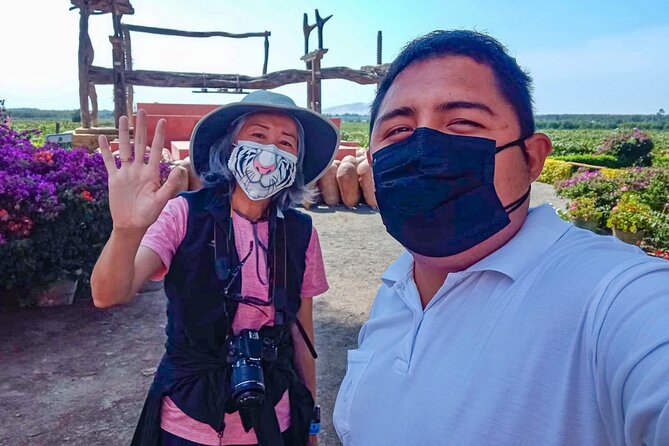
At $26 per person, the tour offers strong basic value. Private transportation, an official tourism guide, three estate visits, and tastings are built into a three to four-hour outing. Organizing the same route independently would mean finding transport, keeping appointments, and making sure you arrive at each property in the right order.
Still, $26 is not the complete out-of-pocket cost. The published details exclude the tourist tickets for Tacama and Hacienda Caravedo. The Caravedo charge is listed as S/49, or about $13.20 per person. Tacama is listed at S/25, or about $6.80 per person. Lunch and tips are also extra.
That adds roughly $20 per person in estate charges if both listed fees apply. Since the admission information is repeated in slightly different wording, confirm the final amount before departure. You should think of the advertised price as the transport and tour price, not a fully inclusive day rate.
Even with the extra tickets, the outing can make financial sense for a small group. It is private, so only your party participates. That gives you more control over questions and timing than a large shared coach, although the fixed one-hour visits limit how much you can linger.
The guide question: what service should you expect?
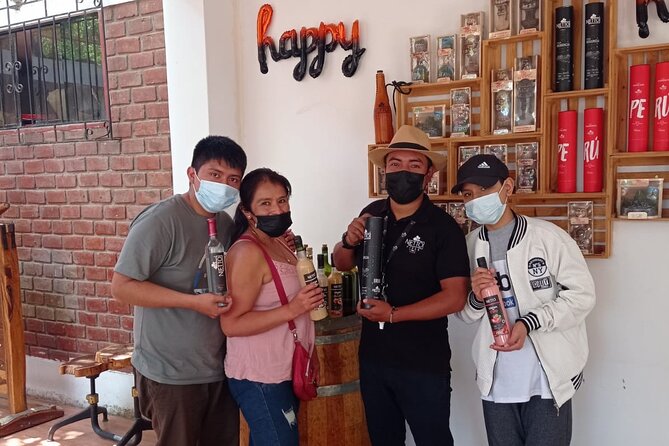
The operator presents the driver as both driver and guide, with government accreditation and English training. The company also says the guide remains with you, helps manage reservations, and coordinates the estate visits. Those are useful duties, especially when the day includes several stops.
You should not assume that the driver will provide a long lecture at every winery. One low rating described the service as feeling like a taxi with a set route, even though the estates themselves were enjoyable. That criticism is worth taking seriously because this tour depends on the quality of the explanations as much as the driving.
My practical advice is simple: if the historic and production details matter to you, ask at the start how much guiding will happen inside each estate. The staff at La Caravedo, Tacama, and Taqara may provide much of the site-specific information, while your private guide handles transport, timing, and coordination.
The private format is still a strength. You are not sharing the vehicle with a large group, and the schedule can be easier to manage. The operator is Visitemos Perú, and confirmation is normally sent when you book unless you reserve within three hours of departure. Last-minute bookings are confirmed as soon as possible, subject to availability.
Timing, alcohol, and practical planning
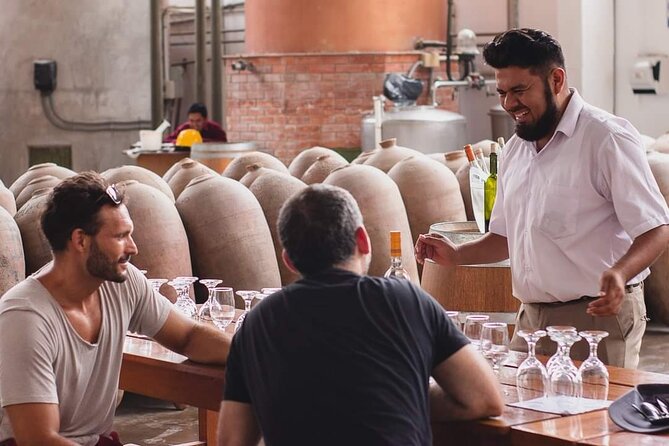
Plan on three to four hours from the meeting point and back. Each estate receives about one hour, with the remaining time used for transfers and coordination. Since lunch is not included, you should plan to eat before or after the outing rather than expecting a meal during the visits.
The route begins and ends at La Libertad 179, Ica 11001. Because transportation is private, this is easier than trying to meet a group at several different locations. Be ready at the stated meeting point and allow enough time for the vehicle to depart on schedule.
The tastings are for adults only. If you are traveling with children, the estate visits may still have visual and historical interest, but the alcohol tasting itself is restricted. The experience is open to most people, according to the supplied participation information.
Good weather is required. If poor weather cancels the outing, you are offered another date or a full refund. For the best seasonal feature, choose February or March, when grape treading may be visible at Taqara 1856. For Tacama, choose Tuesday through Sunday rather than Monday.
Cancellation is free up to 24 hours before the start time. Cancellations or changes made less than 24 hours before departure are not refunded or accepted. That rule matters if your Ica schedule is still shifting.
Who should book this Ica tasting?
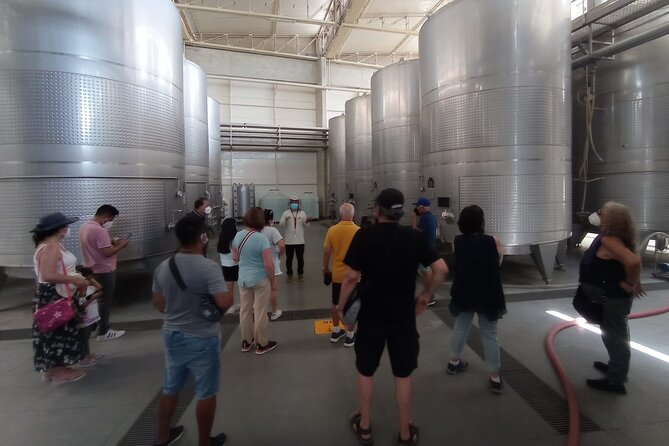
I recommend this experience if you want a compact introduction to pisco and wine, prefer private transport, and like comparing old and new production methods. It is especially useful for a first visit to Ica because the three stops cover a broad range of local traditions.
It also suits couples, families with adults, and small private groups who would rather not arrange several separate transfers. The modest base price helps, though you should include the extra entrance charges in your calculation.
I would hesitate if you want a slow food-and-wine day, a substantial lunch, or a deeply technical guide at every estate. The schedule is brisk, and the guide may focus more on driving and coordination than on extended commentary.
Should you book the La Caravedo, Tacama, and Taqara route?
Book it if your priority is variety. In one half-day, you get a 1684 distillery, Peru’s first vineyard, a historic hacienda, modern pisco production, artisan methods, and several tastings. That is a lot of context for a short outing.
Before paying, confirm three details: the total entrance fees, the exact Monday replacement route, and how much in-estate guiding your driver will provide. If those points match your expectations, this is a practical way to meet Ica’s wine and pisco traditions without wrestling with transport. If you want depth over range, choose a longer visit at one estate instead.
FAQ
How long does the pisco and wine experience last?
The experience lasts approximately three to four hours, including the visits and private transportation between stops.
Where does the tour begin?
It begins at La Libertad 179, Ica 11001, Peru.
Where does the tour end?
The experience ends back at the meeting point on La Libertad in Ica.
Is private transportation included?
Yes. Private transportation is included, and only your group participates in the activity.
Which estates are visited?
The route includes Bodega La Caravedo, Tacama, and Taqara 1856. On Mondays, Hacienda Vista Alegre is visited because Tacama is closed.
Is Tacama open every day?
Tacama is visited Tuesday through Sunday. It is closed on Mondays.
What is the Tacama entrance fee?
The supplied details list a Tacama tourist ticket of S/25, or about $6.80 per person. This charge is not included in the tour price.
What is the Hacienda Caravedo entrance fee?
The supplied details list a Hacienda Caravedo tourist ticket of S/49, or about $13.20 per person. This charge is not included in the tour price.
Is lunch included?
No. Lunch is not included in the experience.
Can you see grape treading?
You may see traditional grape treading at Taqara 1856 during February and March. The activity is seasonal and is not stated as available at other times of year.
More Wine Tours in Ica
- Ica: Pisco and Peruvian Wine Route
★ 5.0 · 4 reviews - From Ica or Huacachina: Tour to Tacama Vineyard and Artisanal Winery.
★ 4.0 · 4 reviews - Lima: Paracas & Huacachina Oasis Day Trip with Wine & Dunes
★ 4.7 · 266 reviews - Lima: Huacachina, Winery, & Nazca Lines from Pisco Airport
★ 4.7 · 31 reviews
More Eating Your Way around Ica
- Lima Ultimate Peruvian Food Tour
★ 5.0 · 1,845 reviews - Peruvian Cooking Class, Local Market Tour & Exotic Fruit Tasting
★ 5.0 · 744 reviews - Lima: Ultimate Peruvian Food Tour
★ 4.9 · 700 reviews - Street Food, Market & Old Eateries Tour in Lima’s Historic Center
★ 5.0 · 656 reviews
Added recently around Ica
- Tacama Wine Experience and Pisco Museum and Pisco Sour Class★ 5.0 · 7 reviews
- Ballestas Islands and Paracas Reserve Expedition from Ica group★ 5.0 · 12 reviews
- Huacachina SandSki★ 4.5 · 15 reviews
- Huacachina Sandboard★ 5.0 · 29 reviews
- Private Transportation between Ica Bus Terminal and Huacachina Hotels★ 5.0 · 7 reviews
- Canyon of the Lost Day Trip from Ica★ 5.0 · 4 reviews
- From Ica or Huacachina: Sunset pisco and buggy experience★ 5.0 · 14 reviews
- Professional Sandboarding and Sandskiing Tour, Ica, Peru★ 5.0 · 42 reviews
Pisco Tours & Tastings, compared.

3 Day Tour From Lima: Paracas, Huacachina Oasis & Pisco Vineyard
Read our review →
2 Day Tour from Lima: Paracas, Huacachina, and Pisco Vineyard
Read our review →
Local Market and Peruvian Cooking Class with Pisco Sour in Cusco
Read our review →
Group Cooking Class in Cusco with Pisco Tasting
Read our review →
Historic Walking Tour with Pisco Sour and Local Music
Read our review →
Authentic 4-dish Peruvian Food Cooking Class in Lima + Pisco Sour
Read our review →
Cook an Authentic Ceviche And Peruvian Pisco Sour!
Read our review →Browse the lists this tour appears in