
Reviewed · SACRED VALLEY TOURS
From Cusco: Moray, Maras Salt Mines & Chinchero Weavers Half-Day
Ancient terraces, living crafts, and salt pools await. I like this tour because it packs three very different Andean experiences into one outing, and I especially enjoy the clear explanations from guides such as Felipe, Julio, Manuel, and Eddie. The $15.20 price is also hard to beat, though you should expect a long ride, extra entrance fees, and no meal break.
This is a strong first excursion from Cusco. You see how the Incas worked with mountain farming, how salt is still collected by hand, and how Quechua textile makers use plants for color. The main drawback is comfort: a full minibus can feel cramped, and the schedule may stretch to seven hours without a proper stop for lunch.
In This Review
- Key points before you book
- Why this half-day route works so well
- Chinchero: Quechua weaving and a very tourist-facing visit
- Moray: Inca farming shaped into giant bowls
- Maras Salt Mines: Peru’s most unusual working site
- The road between stops is part of the experience
- Food, timing, and the real cost of the day
- Who should book this Cusco excursion?
- Should you book it?
- FAQ
- How long does the tour last?
- What places does the tour visit?
- Is hotel pickup included?
- Are entrance fees included?
- Is food included?
- What happens at Chinchero?
- How many people can join the tour?
- Is the tour offered in English?
- Can I cancel the booking?
Key points before you book
- Three contrasting stops in one morning: Chinchero textiles, Moray’s circular terraces, and the Maras salt pools each show a different side of the Cusco region.
- Excellent guide commentary: Guides including Felipe and Julio are praised for explaining both Inca history and present-day life in clear English and Spanish.
- Very low starting price: The $15.20 tour fee covers hotel pickup, transport, and a bilingual guide, but entrance charges add about $25 more.
- Chinchero includes a sales stop: You see natural dye demonstrations and local weaving, but much of the visit takes place at a textile center designed to sell goods.
- No lunch is included: Bring water and snacks, since the return to Cusco is around 3:15 pm.
- Small-group format: The advertised maximum is 16 people, although group size and vehicle comfort can vary.
Why this half-day route works so well
Cusco sits high in the Andes, and the nearby Sacred Valley is best understood through its working traditions. This outing gives you three useful pieces of that picture.
At Chinchero, you see Quechua weaving and natural dyes. At Moray, you see an ingenious attempt to manage growing conditions at high altitude. At Maras, you see an ancient salt operation that still supports local families. The sites are not just scenic stops. Together, they show how people have made a living from difficult mountain terrain for centuries.
The pace is brisk but sensible. Pickup takes place between 8:20 and 8:40 am, and the return to Cusco is planned for about 3:15 pm, near the Plaza de Armas. That timing makes the tour useful on a day when you have an evening flight or want to keep the afternoon free.
You should allow six to seven hours, not a tight half-day. Road conditions, loading passengers, and the timing of the group can change the finish. One practical point matters here: you return to Cusco, but hotel drop-off is not included.
More Sacred Valley days out:
- From Cusco: Moray, Maras Salt Mines & Chinchero Weavers Tour
★ 4.8 · 1,925 reviews - 2-Day Tour: Sacred Valley and Machu Picchu by Train
★ 5.0 · 1,127 reviews - Cusco: Sacred Valley, Pisac, Ollantaytambo, Salt Mines Moray
★ 4.6 · 1,058 reviews
Chinchero: Quechua weaving and a very tourist-facing visit
The first major stop is Chinchero, at about 3,762 meters above sea level. The town has a traditional market where bartering has been practiced, but this excursion only visits part of Chinchero. The main stop is an Andean textile center.
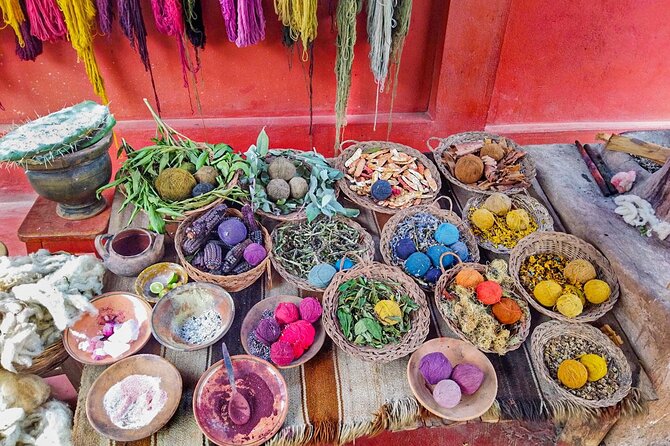
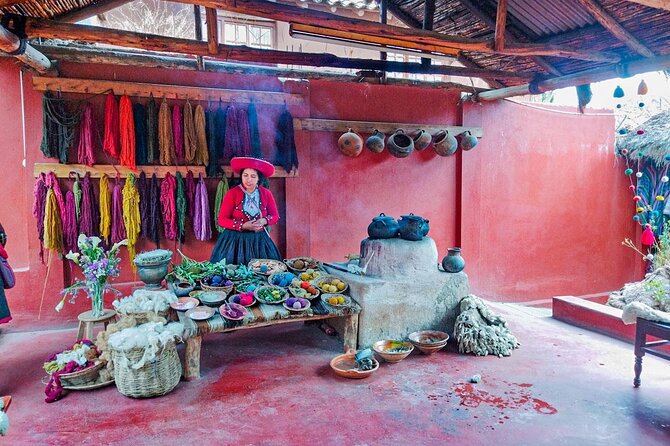
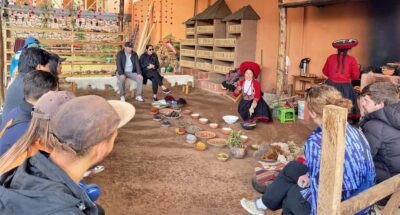
Here, local makers explain how wool is prepared and how colors come from natural plants. The demonstration is one of the most worthwhile parts of the morning because it turns a colorful souvenir into something you can understand. You may see the process of creating yarn, learn about plant-based dyes, and watch local people explain techniques tied to Quechua tradition.
There are also chances to take photographs in Andean clothing and see llamas or alpacas. Several guides make this stop more engaging by explaining the customs rather than simply pointing at merchandise. Felipe, in particular, is praised for connecting the textile work to everyday life in the region, and one guide even shared coca leaves with the group to try.
Still, you should know what kind of stop this is. The demonstration can be brief, followed by time to shop. The goods are not all pure alpaca, so ask what a garment contains before buying. Some items may combine alpaca with acrylic. That is not necessarily a problem, but you should know what you are paying for.
I like the chance to support local textile makers, but I would not book this tour mainly for a long market visit. If you want an extended look at Chinchero town or its archaeological church, this route may feel limited. The value is in the short, practical explanation of dyeing and weaving, not a full cultural tour of the town.
Moray: Inca farming shaped into giant bowls
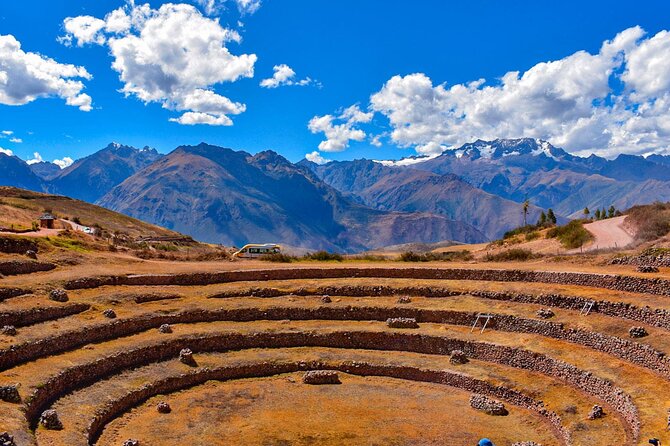
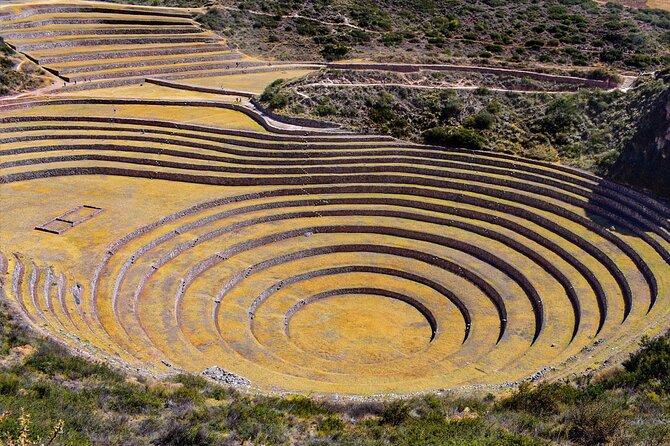
From Chinchero, the minibus continues to Moray, at about 3,450 meters, or 11,318 feet. The site is famous for its huge circular terraces, cut into broad natural depressions in the ground.
From above, the terraces look almost like giant bowls. Each level sits lower than the one above it, creating a series of changing conditions for crops. The site includes irrigation and carefully built terraces, and part of the area was excavated and shaped by the Incas.
A common explanation is that Moray helped the Incas test which crops grew best in different conditions. The lower terraces were warmer than the upper ones, making the site a natural growing laboratory. The exact purpose of Moray is still discussed, but the basic point is clear: Inca engineers understood that altitude, sunlight, water, and temperature could be managed.
This is where a good guide adds real value. Instead of treating Moray as a photo stop, guides such as Felipe and Manuel explain the connection between farming and the wider Inca economy. You begin to see the terraces as a practical response to mountain life, not just as an attractive archaeological shape.
The site also brings dramatic views toward the surrounding Andes, including glacier-covered peaks on clear days. That visual setting helps you understand the scale of the region. The terraces are impressive on their own, but the broad mountain backdrop gives them a stronger sense of place.
The entrance fee is separate. The supplied cost is $19, or 70 soles, for Moray. Bring the correct money if possible, since the tour fee does not cover it. You should also remember that altitude can make even an easy sightseeing stop tiring, especially early in a Cusco visit.
Maras Salt Mines: Peru’s most unusual working site
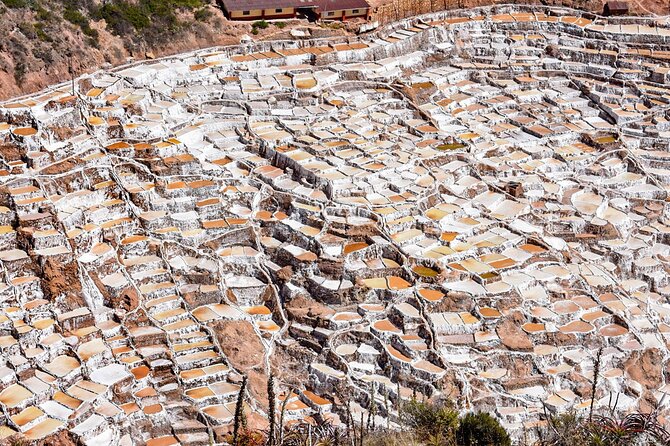
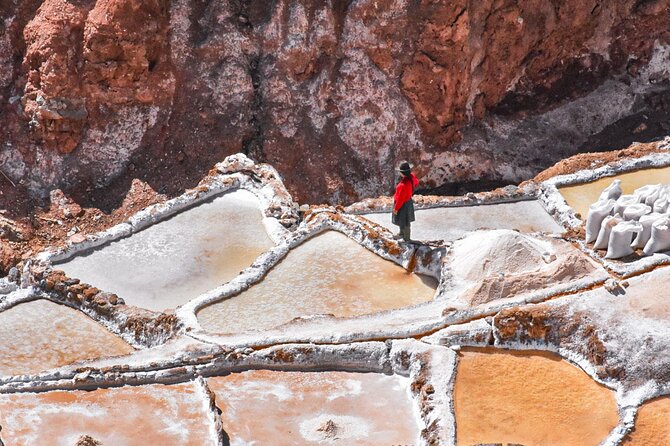
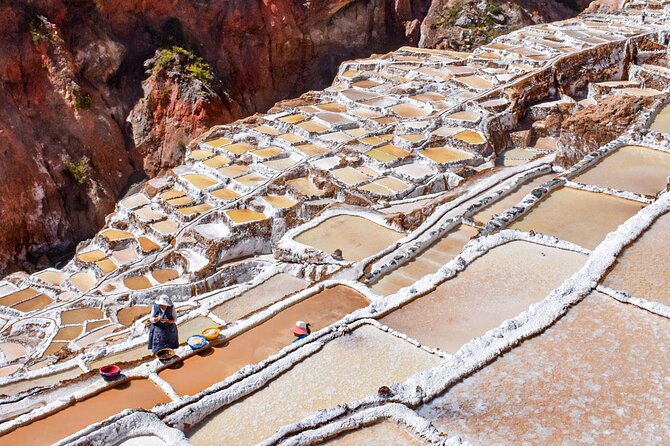
The salt mines at Maras are the visual highlight for many people. Thousands of small pools spread across a steep mountainside, each one coated in pale salt. The site has about 3,000 pools, and salt production here dates from before the Inca period.
The process is simple but clever. Salt water comes from a natural hot spring and is directed into the pools. During the dry season, workers fill them about every three days. As the water evaporates, salt forms in layers. The salt is then collected, ground, treated with iodine, packaged, and sold in regional markets.
You can see why this stop feels different from Moray. Moray is an archaeological site where the original activity has ended. Maras remains a working operation, tied to local families and communities. You are looking at an old method that still has a practical purpose.
The pools create strong patterns of white, beige, and brown against the mountains. The view is especially striking from above, where the small rectangles seem to run down the slope. The scale can surprise you. This is not a single salt pan but a whole hillside of individually managed pools.
Admission is not included and is listed at $6, or 20 soles. The additional fee is modest, but it changes the real price of the day. With both Moray and Maras added, your basic cost becomes roughly $40.20 per person before tips, food, or any shopping.
The salt mines can be slippery or uneven, so you should take care with your footing. The provided information does not promise a particular walking distance or accessibility level, so anyone with mobility concerns should confirm details before booking. The tour is suitable for most people, but the altitude and uneven ground are worth keeping in mind.
A few more Cusco trips worth lining up side by side
- Classic Inca Trail Trek 4D/3N to Machu Picchu (Group Service)
★ 5.0 · 8,653 reviews - Cusco: Rainbow Mountain and Red Valley Day Trip with Meals
★ 4.9 · 4,893 reviews - Machu Picchu: 4-Day Inca Trail Trek with Panoramic Train Ride
★ 5.0 · 4,568 reviews - Salkantay Classic Trek 5 Days from Cusco
★ 5.0 · 4,062 reviews
The road between stops is part of the experience
This is not a tour where every minute takes place at a monument. A fair amount of the day is spent on the road, but the views from the vehicle are part of the appeal.
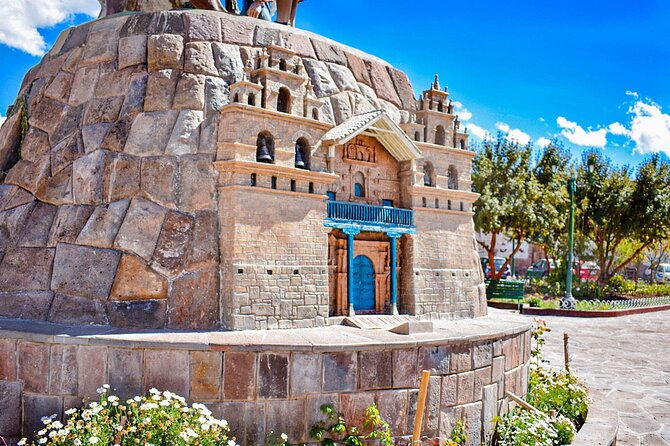
You pass through high Andean country and the Maras area, where colonial buildings are made from thin stone. The drive gives you a look at the changing countryside around Cusco, even when no formal stop is scheduled. Several people especially value the scenery seen from the minibus.
Transportation is included, along with hotel pickup and a bilingual guide. The group maximum is 16, which should be easier to manage than a large coach. Still, vehicle comfort depends on the day. One recent account describes an uncomfortable minibus when it was full, while another found the bus comfortable.
That difference is useful to understand. Do not assume a luxury vehicle. You are paying a low rate for a shared outing, and the road time is significant. If you are tall, prone to motion sickness, or particular about personal space, a private tour may suit you better.
Guides are a major strength. Felipe receives repeated praise for his explanations and personal pride in sharing local culture. Julio is described as attentive in both English and Spanish, while Manuel is praised for switching between the two languages so everyone could follow. Eddie, or possibly a similarly named guide, is also described as friendly and well informed.
The exact guide will depend on the date, but the pattern is clear: commentary is not treated as an afterthought. The guide explains sites on the bus and at each stop, helps with photographs, and sometimes adjusts plans when practical problems arise.
Food, timing, and the real cost of the day
There is no breakfast or lunch included. The tour returns near Cusco’s Plaza de Armas at around 3:15 pm, so you may not eat until late unless you carry something.
Bring water and snacks. This is especially important because the day can run seven hours and there is no guaranteed meal stop. A small packed lunch may be sensible if you do not want to wait until the return.
The $15.20 advertised price covers three useful basics:
- Hotel pickup
- Shared transportation
- A bilingual guide
You must pay separately for Moray and the salt mines. Tips are also excluded, as are food and purchases at Chinchero. Once the entrance fees are added, the tour is no longer a $15 outing, but it remains very good value for a full day of transport and guided sightseeing.
The tour is booked, on average, 26 days ahead, which suggests that planning early is wise during busy periods. Confirmation is provided at booking, and free cancellation is available up to 24 hours before the start time. If poor weather forces cancellation, you are offered another date or a full refund.
Who should book this Cusco excursion?
I would recommend it to anyone who wants a broad introduction to the Sacred Valley area without giving up a full day. It works particularly well early in a Cusco stay because the guide gives you context for farming, textiles, salt production, and Quechua culture.
It is also useful for solo visitors. The shared format gives you company, and the guide-led structure removes the need to arrange several separate taxis or tickets. Couples and friends who want strong photographs will find plenty of them at Moray and Maras.
This is less suitable if you want a slow, independent visit. Chinchero is limited to part of the town and a textile center, and the group must keep moving. The schedule can feel stressful if people are late at each stop.
I would also think twice if you need a substantial meal during the day, dislike minibus travel, or want a private guide. The low price comes with shared transport and a fixed route.
Should you book it?
Book this tour if you want three distinct sights, clear cultural explanation, and a low-cost way to reach places that are awkward to visit independently. Maras is the visual star, while Moray offers the strongest Inca engineering story and Chinchero gives the day a living cultural element.
Skip it if you prefer to linger, shop without pressure, or stop for a relaxed lunch. For most people with limited time in Cusco, though, the combination is unusually good value. Carry water, snacks, entrance money, and patience for the road, and this half-day plan becomes one of the most useful introductions to the high Andes.
FAQ
How long does the tour last?
The experience takes approximately six to seven hours. Pickup from your hotel is between 8:20 and 8:40 am, with return to Cusco planned for around 3:15 pm.
What places does the tour visit?
The route includes Chinchero, Moray, the Maras salt mines, and the Maras village area. It begins and ends in Cusco.
Is hotel pickup included?
Yes. Pickup from your hotel is included. Hotel drop-off is not included.
Are entrance fees included?
No. Moray costs $19, or 70 soles, and the Maras salt mines cost $6, or 20 soles. These fees are paid separately.
Is food included?
No. Breakfast and lunch are not included. You should bring water and snacks because the day may last up to seven hours without a proper meal stop.
What happens at Chinchero?
You visit part of Chinchero and an Andean textile center. The local people demonstrate weaving and explain how natural plants create different dye colors. You may also take photographs in Andean clothing and see llamas or alpacas.
How many people can join the tour?
The maximum group size is listed as 16 people. Vehicle comfort may vary depending on the group and minibus used.
Is the tour offered in English?
Yes. A bilingual tour guide is included. Guides may explain the experience in English and Spanish.
Can I cancel the booking?
You can cancel up to 24 hours before the experience start time for a full refund. Cancellations or changes made less than 24 hours in advance are not accepted for a refund. If poor weather cancels the tour, you are offered another date or a full refund.
Added recently around Cusco
- Guided tour of the mountain of colors in Cusco★ 5.0 · 11 reviews
- 2-Day Private Short Inca Trail to Machu Picchu★ 5.0 · 15 reviews
- City Tour Cusco – Group★ 5.0 · 4 reviews
- Tour Sacred Valley with Maras and Moray★ 5.0 · 15 reviews
- San Pedro Market Tour with Peruvian Cooking Class★ 5.0 · 31 reviews
- Walking Culinary Experience★ 5.0 · 41 reviews
- City Tour in Cusco★ 4.5 · 10 reviews
- One Day Tour to Humantay Lagoon★ 5.0 · 8 reviews
Sacred Valley Tours, compared.
Sacred Valley & Maras Salt Mines Tour with Lunch
Read our review →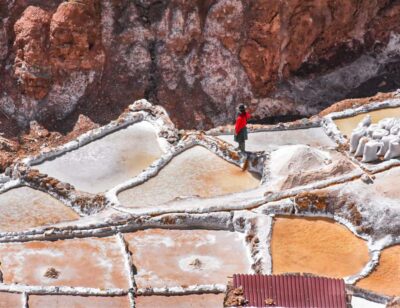
Moray, Maras Salt Mines & Chinchero Weavers Tour
Read our review →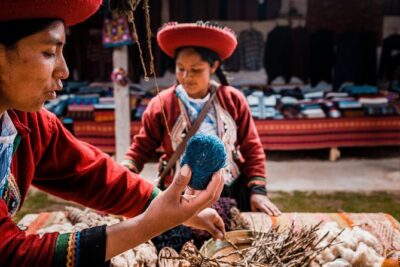
2-Day Tour: Sacred Valley and Machu Picchu by Train
Read our review →
Sacred Valley, Pisac, Ollantaytambo, Salt Mines Moray
Read our review →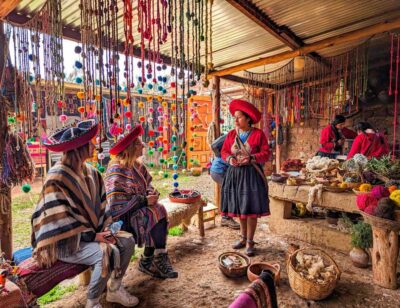
Chinchero,Moray & Salt Mines drop-off in Ollantaytambo
Read our review →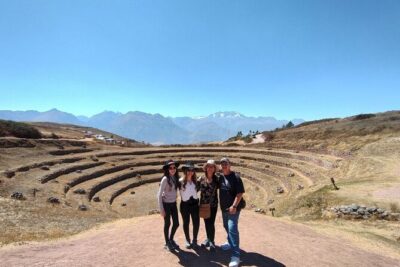
Sacred Valley and Maras Moray Tour with Full Day Buffet Lunch
Read our review →

Browse the lists this tour appears in