
Reviewed · SACRED VALLEY TOURS
From Cusco: Sacred Valley and Salt Mines of Maras with Lunch
One long day covers the Sacred Valley. This $40 group tour links Chinchero, Moray, the Maras salt ponds, Ollantaytambo, and Pisac, with hotel pickup, an English or Spanish guide, and a buffet lunch. I especially like the range of stops and the chance to see both major Inca sites and living craft traditions. The main drawback is the pace: six stops in about 12 hours means plenty of walking and little time to linger.
The guide can make or break a full day like this. Rudy took extra time to explain the sites in English for the only English-speaking passenger in his group, while Jose was praised for being informative and fun. Adolfo also handled pre-tour WhatsApp messages with patience. The extra tickets cost $26, so the real price is closer to $66 per person before any other expenses.
In This Review
- Key points to know before booking
- Why this Sacred Valley route works
- Chinchero begins with textiles and Inca foundations
- Moray’s circular terraces raise bigger questions
- Maras turns saltwater into a working tradition
- Urubamba provides the needed lunch break
- Ollantaytambo brings the biggest stonework
- Pisac closes the day with ruins and a market
- What the $40 price really covers
- Who will enjoy this day most
- Booking advice and cancellation
- Should you book this Sacred Valley tour?
- FAQ
- How long does the Sacred Valley and Maras tour last?
- How much does the tour cost?
- Are entrance tickets included?
- Is lunch included?
- Is hotel pickup included?
- Is the tour private or shared?
- Which languages are offered?
- What places does the tour visit?
- How physically demanding is the tour?
- Can I cancel for a full refund?
Key points to know before booking
- Six major stops in one day: Chinchero, Moray, Maras, Urubamba, Ollantaytambo, and Pisac create a broad introduction to the Sacred Valley.
- A strong mix of culture and ruins: You see textile work, colonial and Inca buildings, agricultural terraces, salt production, and famous archaeological sites.
- Lunch is included: The Urubamba buffet breaks up the sightseeing and is part of the advertised price.
- The day is physically active: A moderate fitness level is recommended, with repeated walking around ruins and terraces.
- Budget for $26 in extra admission fees: The Sacred Valley Tourist Ticket costs $20, and the Maras Salt Mines ticket costs $6.
- Pisac may provide the day’s best finish: The route can end there around sunset, with one especially memorable account also noting moonrise.
Why this Sacred Valley route works
Many Cusco day tours force you to choose between ruins, markets, and scenery. This one tries to give you all three. You begin with Chinchero’s textiles, move through Moray’s circular terraces and Maras’s salt ponds, stop for lunch in Urubamba, then continue to Ollantaytambo and Pisac.
That range is the tour’s greatest strength. You are not seeing six versions of the same ruin. Instead, you get a quick lesson in how the region worked: farming, trade, religious ideas, stone construction, food production, and modern craft sales all appear in one day.
The tradeoff is easy to understand. A 12-hour schedule leaves room for many sights, but not for a slow, thoughtful visit at each one. If you want detailed archaeology at every site, a private tour or a longer Sacred Valley stay will suit you better. If you have limited time in Cusco, this route gives you a lot for the money.
The group format also affects the experience. The guide speaks in English and Spanish, and the tour runs as a shared service. A good guide matters here because the day crosses several towns and archaeological areas. Rudy’s extra effort with English shows how useful it is to tell the guide your language needs early.
More Sacred Valley days out:
- From Cusco: Moray, Maras Salt Mines & Chinchero Weavers Tour
★ 4.8 · 1,925 reviews - 2-Day Tour: Sacred Valley and Machu Picchu by Train
★ 5.0 · 1,127 reviews - Cusco: Sacred Valley, Pisac, Ollantaytambo, Salt Mines Moray
★ 4.6 · 1,058 reviews
Chinchero begins with textiles and Inca foundations
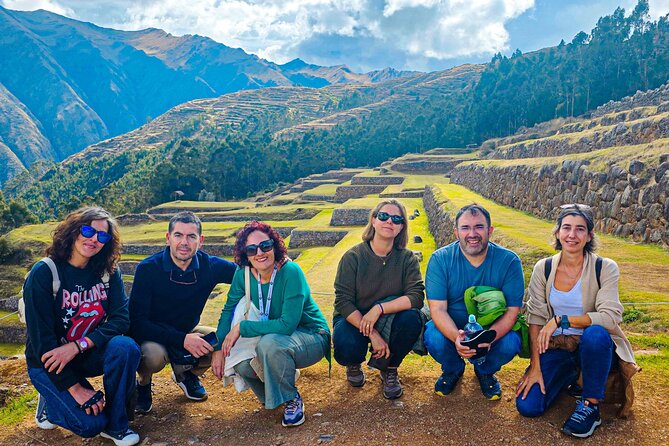
Chinchero is about 28 kilometers from Cusco on the paved road toward Urubamba. The town’s colonial church was built on Inca foundations, giving you an immediate visual reminder that Spanish and Inca structures often occupy the same ground in Peru.
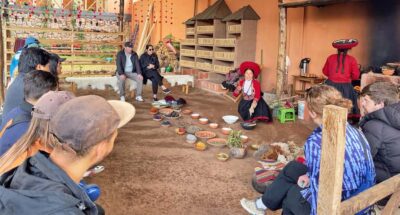
The main stop here is the artisan market. It began as a place where people from the valley and the mountain areas exchanged agricultural goods through barter. Today, it focuses on crafts and textile garments made in pre-Columbian styles.
I like this opening because it puts living culture before the larger ruins. You can see the colors, patterns, and handmade work that give context to the region’s traditions. It is also a practical place to browse for textiles and souvenirs, though a market visit can feel more commercial than the archaeological stops later in the day.
Expect the first stop to set the rhythm for the tour. You will have time to look, listen, and perhaps shop, but this is not designed as a long market morning. If textiles interest you, stay alert during the demonstration and ask the guide questions. The tour’s textile presentation is one of the details that helps the day feel less like a parade of stone walls.
Moray’s circular terraces raise bigger questions
Moray is about 7 kilometers from Maras and roughly an hour from Cusco by the Chinchero route. Its circular terraces are among the most unusual sights in the Sacred Valley. They drop into the earth in broad rings, creating a shape that is easy to recognize even in photographs.
The site is described as a set of agricultural experimentation terraces. It is also linked in local interpretation with female energy and Pachamama, or Mother Earth. That combination gives you two ways to consider Moray: as an ingenious agricultural setting and as a place carrying spiritual meaning.
I find Moray valuable because it invites questions rather than offering one simple explanation. The terraces show careful planning and farming skill, while the spiritual interpretation connects the site to Andean beliefs that remain important today.
You should also know that Moray is a walking stop, and the day has only just begun. Take in the full shape from the viewing areas rather than trying to rush down every possible path. With six stops ahead, sensible pacing will help you enjoy the later ruins instead of arriving there tired.
Maras turns saltwater into a working tradition
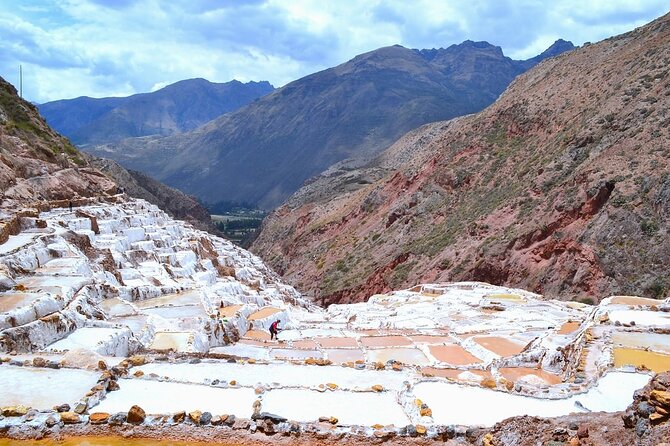
The Maras salt ponds sit northwest of the town of Maras. Around 3,000 small pools are arranged across the slope, each one collecting saltwater from an underground stream. Sunlight evaporates the water, leaving salt ready for sale.
This is one of the tour’s most distinctive stops. The site is not simply an abandoned relic. Salt has been produced here since pre-Hispanic times, and the drying process still gives the visit a practical, working character.
The ponds also offer a sharp contrast with Moray. At Moray, you are looking at large, carefully planned terraces tied to farming. At Maras, the same basic forces of water, slope, and sun support a smaller-scale production system. The two stops make sense together, even though they look very different.
The salt mine requires a separate $6 ticket. That fee is easy to overlook when comparing tour prices, so add it to your budget before booking. The surface around archaeological and industrial sites can also require walking, and the tour specifically recommends a moderate level of physical fitness.
A few more Cusco trips worth lining up side by side
- Classic Inca Trail Trek 4D/3N to Machu Picchu (Group Service)
★ 5.0 · 8,653 reviews - Cusco: Rainbow Mountain and Red Valley Day Trip with Meals
★ 4.9 · 4,893 reviews - Machu Picchu: 4-Day Inca Trail Trek with Panoramic Train Ride
★ 5.0 · 4,568 reviews - Salkantay Classic Trek 5 Days from Cusco
★ 5.0 · 4,062 reviews
Urubamba provides the needed lunch break
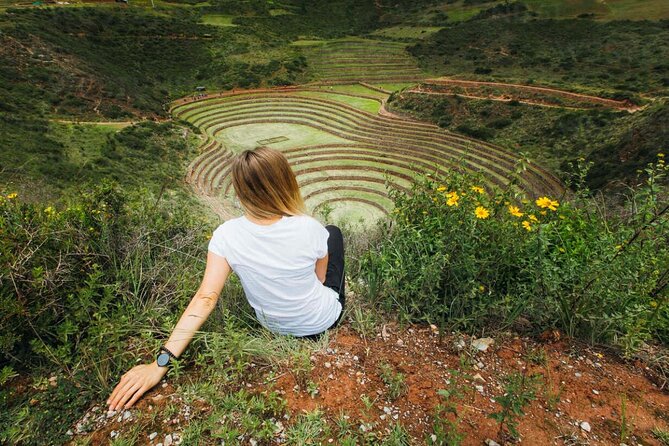
Urubamba lies in the Sacred Valley and is known for maize production, fruit trees, and open countryside. It is the meal stop on this route, with a local buffet lunch included.
After Chinchero, Moray, and Maras, a seated meal is more than a pleasant extra. It gives you a real pause before the afternoon’s larger archaeological sites. The buffet format also works well for a group because you can choose what appeals to you rather than waiting for a single fixed dish.
The tour description presents the meal as a chance to enjoy typical local food. Keep your expectations practical: this is a scheduled group lunch, not a long restaurant experience built around slow service and conversation. Its value is convenience, variety, and a chance to refuel without arranging another meal in the middle of the valley.
Urubamba also helps you understand why the Sacred Valley mattered. Maize and fruit production are not background details. They explain the valley’s importance as a productive agricultural zone and give the ruins a stronger setting.
Ollantaytambo brings the biggest stonework
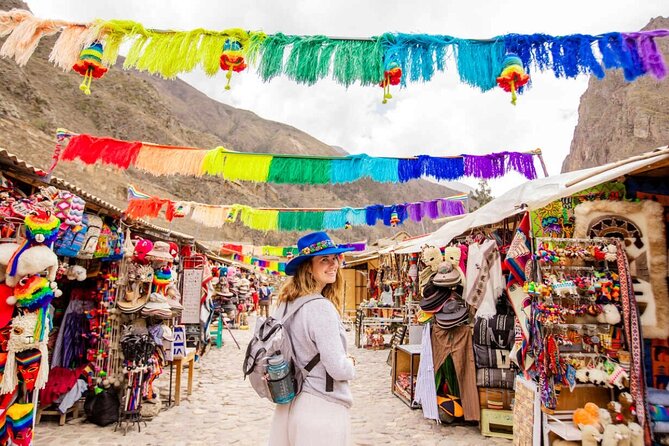
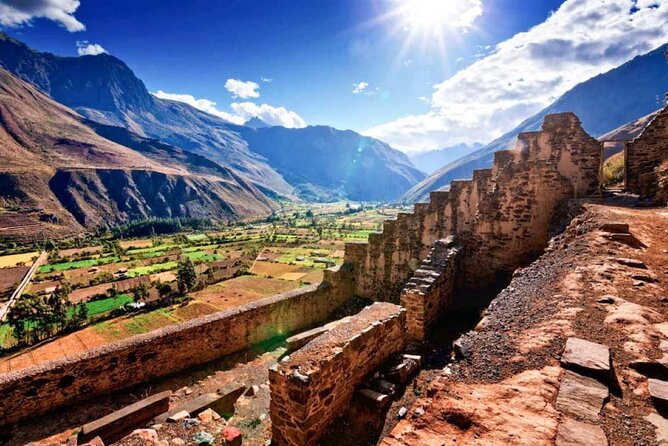
Ollantaytambo is an Inca village about 21 kilometers from Urubamba, at an elevation of approximately 2,800 meters. The town takes its name from the chieftain Ollanta, who is associated with a famous love story involving an Inca princess, the daughter of Pachacutec.
The archaeological area includes the Temple of the Sun, the Intihuatana, and the Baths of the Princess. North of Hanan Huacaypata Square, you can also see 15 blocks of houses built with carefully worked stone. The combination of a living town and a large archaeological site makes Ollantaytambo especially rewarding.
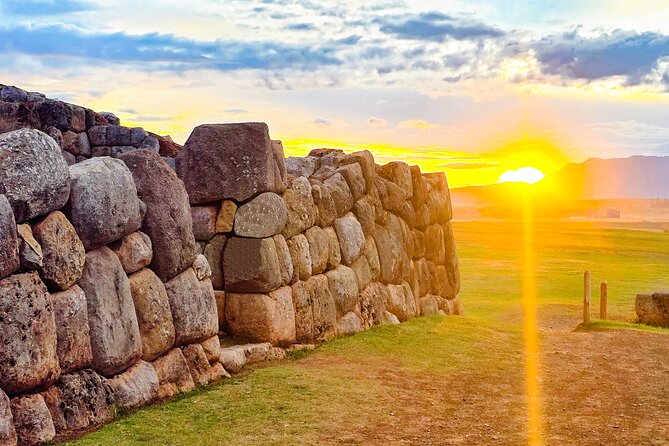
This is the stop where the scale of Inca construction becomes most apparent. Massive stonework, terraces, ceremonial structures, and homes are all part of the visit. You get more than a single viewpoint or isolated ruin. You see how a settlement and its surrounding ceremonial area fit together.
The price of that scale is walking. The site can feel demanding late in the day, particularly after Moray and Maras. Wear practical shoes and save some energy for the final stop. The tour is a poor match for anyone seeking a gentle sightseeing day with minimal movement.
Pisac closes the day with ruins and a market
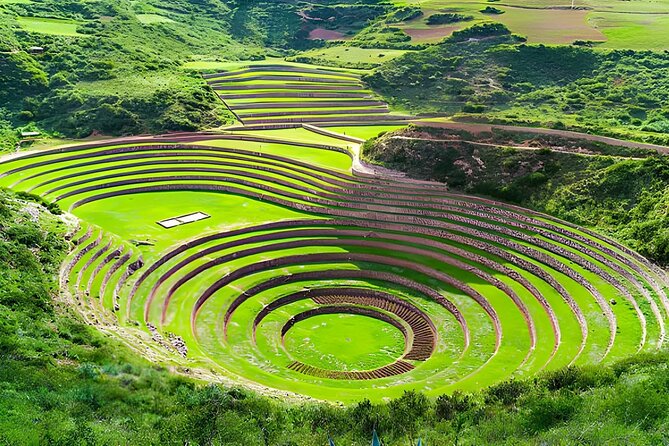
Pisac is 33 kilometers from Cusco by paved road and includes three connected experiences: an ancient town, a major archaeological site, and a modern colonial town. It is also known for its artisan market.
That mix makes Pisac a fitting final stop. Chinchero introduces craft traditions in the morning, while Pisac gives you another chance to see the region’s market culture after visiting several major sites. The archaeological area adds another layer, with the old settlement and Inca remains set above the modern town.
The timing can be a real advantage. One account described reaching Pisac at sunset, with the moon rising afterward. You cannot assume the same exact light on your departure date, but the late position in the route can create a memorable finish if the schedule and conditions line up.
You may also feel the day’s fatigue here. If Pisac comes near sunset, you will have spent hours on the road and on foot. That is part of the appeal for a first-time visitor who wants one big overview, but it is a reason to choose a slower itinerary if you prefer quiet photography or extended exploration.
What the $40 price really covers
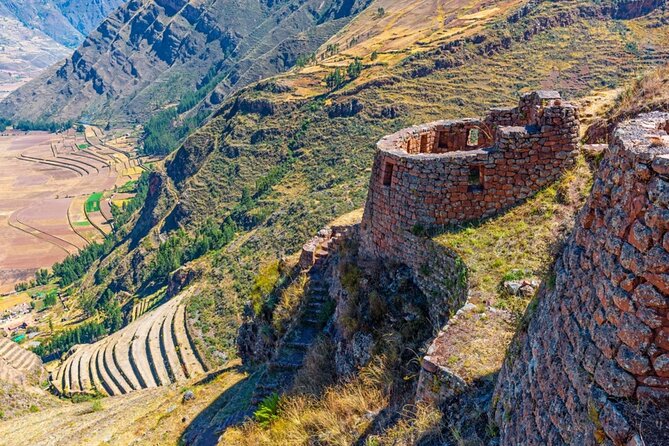
At $40 per person, the tour is priced as an economical way to cover a large part of the Sacred Valley. The fee includes tourist transport, hotel pickup, a professional English or Spanish guide in a group, and buffet lunch.
You should calculate the required admissions separately:
- Sacred Valley Tourist Ticket: $20 per person
- Maras Salt Mines ticket: $6 per person
- Tour price: $40 per person
- Known total: $66 per person
That is still a strong value for a 12-hour day with transport, guiding, and lunch. The value is highest if you want a broad introduction and do not want to arrange separate taxis, site visits, and meals.
The shared format keeps the cost down, but it also means you have less control over timing. A private guide would likely be better for someone with a special archaeological interest, limited mobility, or a firm wish to spend extra time at one place. For most first visits, the group price makes sense if you accept a full schedule.
The tour is offered daily from Monday through Sunday, with listed hours from 6:00 AM to 6:00 PM. Confirmation is received when you book, and pickup from your hotel is included. It is also near public transportation, though the tour itself supplies the tourist vehicle.
Who will enjoy this day most
I would choose this tour if you have one free day in Cusco and want to see the Sacred Valley’s main highlights without planning every transfer yourself. It suits active sightseers who enjoy switching between markets, ruins, working sites, and a buffet meal.
It is also a good match if you want an English-speaking guide but are comfortable sharing the vehicle. Rudy’s handling of a mostly non-English-speaking group shows that the guide may make an effort to explain things clearly, though you should state your language preference at the start.
I would hesitate if you dislike early starts, group schedules, or long days with repeated walking. The moderate fitness requirement is worth taking seriously. You will move through several archaeological areas, and the tour does not leave much spare time for a slow pace.
The route may also feel too packed if your main goal is photography. You can get striking views at Moray, Maras, Ollantaytambo, and Pisac, but the schedule may not allow you to wait for ideal light at each one.
Booking advice and cancellation
The experience has a 4.8 rating from 21 reviews, with 95 percent recommending it. The most praised elements are the guides, the number of sites covered, the buffet lunch, and the way the day can finish at Pisac around sunset.
You can cancel for a full refund if you do so at least 24 hours before the start time. Cancellations or changes made less than 24 hours before departure are not accepted for a refund, and cut-off times use local time.
Because the tour is booked an average of 75 days in advance, planning ahead is sensible, especially if your Cusco dates are fixed. The provider is World Explorer Peru.
Should you book this Sacred Valley tour?
Book it if you want maximum coverage for a modest price and can handle a long, active day. You will see the region’s most recognizable sites, learn about salt and textiles, eat lunch in Urubamba, and finish with the possibility of sunset in Pisac.
Skip it in favor of a private or slower plan if you want deep time at each ruin, dislike group transport, or need a gentle schedule. For a first look at the Sacred Valley from Cusco, though, the combination of variety, capable guides such as Rudy and Jose, and included lunch makes this a sensible choice.
FAQ
How long does the Sacred Valley and Maras tour last?
The tour lasts approximately 12 hours.
How much does the tour cost?
The listed price is $40 per person.
Are entrance tickets included?
No. The Sacred Valley Tourist Ticket costs $20 per person, and the Maras Salt Mines ticket costs $6 per person.
Is lunch included?
Yes. A buffet lunch in Urubamba is included.
Is hotel pickup included?
Yes. Tourist transport and pickup from the hotel are included.
Is the tour private or shared?
It is a group service with a professional guide.
Which languages are offered?
The guide service is offered in English and Spanish.
What places does the tour visit?
The route visits Chinchero, Moray, the Maras Salt Mines, Urubamba, Ollantaytambo, and Pisac.
How physically demanding is the tour?
A moderate level of physical fitness is recommended. The schedule includes walking at markets, terraces, salt ponds, and archaeological sites.
Can I cancel for a full refund?
Yes, if you cancel at least 24 hours before the experience start time. Cancellations or changes made less than 24 hours before the start time are not refunded or accepted.
Added recently around Cusco
- Super valley or vip valley★ 5.0 · 13 reviews
- the Incas’ Sacred Valley★ 5.0 · 27 reviews
- Sacred Valley of the Incas Day Trip from Cusco★ 5.0 · 6 reviews
- Small-Group Tour: Rainbow Mountains Hiking from Cusco★ 4.0 · 5 reviews
- Excursion to the Sacred Valley of the Incas from Cusco★ 5.0 · 8 reviews
- Maras + Moray & Textile Experience★ 5.0 · 14 reviews
- Tour EN Cuatrimoto POR la Montaña 7 Colors Hike 5 Minutes★ 4.5 · 32 reviews
- rainbow mountain★ 4.0 · 4 reviews
Sacred Valley Tours, compared.
Sacred Valley & Maras Salt Mines Tour with Lunch
Read our review →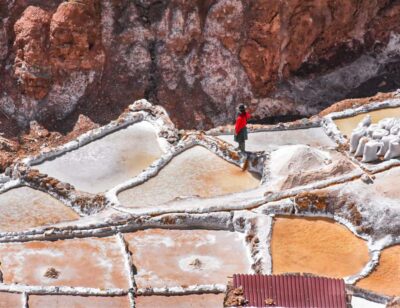
Moray, Maras Salt Mines & Chinchero Weavers Tour
Read our review →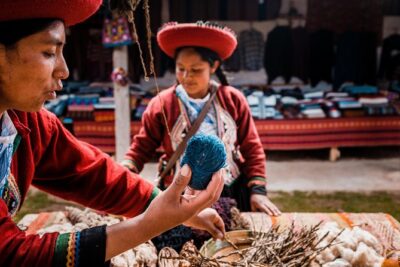
2-Day Tour: Sacred Valley and Machu Picchu by Train
Read our review →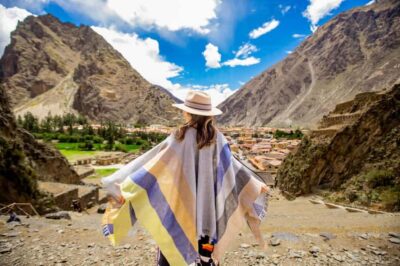
Sacred Valley, Pisac, Ollantaytambo, Salt Mines Moray
Read our review →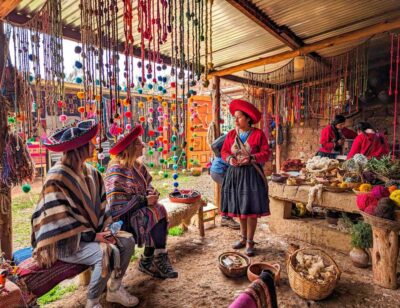
Chinchero,Moray & Salt Mines drop-off in Ollantaytambo
Read our review →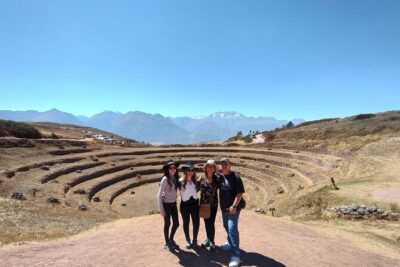
Sacred Valley and Maras Moray Tour with Full Day Buffet Lunch
Read our review →

Browse the lists this tour appears in