
Reviewed · SACRED VALLEY TOURS
FULL DAY SACRED VALLEY TOUR (Just for your family)
The Sacred Valley packs a lot into one day. This private tour links Chinchero, Moray, Maras, Urubamba, Ollantaytambo, and Pisac in a long but rewarding circuit from Cusco. I like the private format, which gives your family one vehicle and guide, and I like the range of places included, from Inca terraces and salt pools to a living market town.
The strongest parts are the route and the flexibility. The tour company has arranged pickup from an Urubamba hotel when needed, and one group was returned to Cusco around 4:30 p.m. rather than the listed 7 p.m. estimate. The main consideration is the pace: six stops over 10 to 12 hours leaves limited time at each site, and entrance fees plus lunch cost extra.
In This Review
- Key Points Before You Book
- Why a Private Sacred Valley Day Makes Sense
- Chinchero: Inca Foundations and Living Weaving
- Moray: Inca Terraces in Giant Natural Hollows
- Maras Salt Mines: A Working Andean Tradition
- Urubamba Lunch: A Needed Pause in the Middle
- Ollantaytambo: A Fortress Above a Living Inca Town
- Pisac Market and Terraces: A Strong Finish
- Guide, Vehicle, and Group Comfort
- The Long Day and Its Real Costs
- Who Should Book This Cusco Day Tour?
- Should You Book the Full Day Sacred Valley Tour?
- FAQ
- Where does the Sacred Valley tour start?
- What time does the tour begin?
- What time will I return to Cusco?
- How long is the tour?
- Is this a private tour?
- Is transportation included?
- Is the tour offered in English?
- Are entrance fees included?
- Is lunch included?
- Can I cancel for a full refund?
Key Points Before You Book
- A private vehicle for up to 10 people keeps the day focused on your family rather than a large mixed group.
- Chinchero includes an Andean textile demonstration, with alpaca wool and local materials still used in traditional weaving.
- Moray and Maras offer two very different sights, one an Inca agricultural site and the other a working salt operation.
- Ollantaytambo is both an archaeological site and a living town, a rare chance to see Inca urban planning still in daily use.
- The full route takes about 10 to 12 hours, with a return to Cusco planned for approximately 7 p.m.
- The listed price is $370.52 per group, but you should add the partial tourist ticket, the Salineras fee, and lunch.
Why a Private Sacred Valley Day Makes Sense
The Sacred Valley is not one single attraction. It is a string of sites spread across the valley and surrounding hills, and getting between them takes time. A private tour makes this arrangement easier because your group is not waiting for strangers at every hotel or forcing a fixed pace on a large bus.
The price is $370.52 for up to 10 people. For a full vehicle, that can be good value, especially for a family or group of friends. At the maximum group size, the base cost works out to about $37 per person before admissions and food. For two people, it is a much more expensive day per person, so the private format pays off most when you can fill several seats.
The tour includes a professional guide and tourist transportation. It does not include the partial tourist ticket, which covers Pisac, Ollantaytambo, Chinchero, and Moray at $23 per person. The Salt Mine of Maras charges another $3 per person, and lunch in Urubamba is listed at $12 per person. Plan on these costs from the start instead of treating the advertised price as the complete bill.
Pickup is available from hotels in Cusco city. You need to give the company your hotel name and address. The published start time is 7 a.m., which is early, but that early departure is useful. You have a long route ahead, and an earlier start gives you a better chance of reaching Cusco near the expected return time.
More Sacred Valley days out:
- From Cusco: Moray, Maras Salt Mines & Chinchero Weavers Tour
★ 4.8 · 1,925 reviews - 2-Day Tour: Sacred Valley and Machu Picchu by Train
★ 5.0 · 1,127 reviews - Cusco: Sacred Valley, Pisac, Ollantaytambo, Salt Mines Moray
★ 4.6 · 1,058 reviews
Chinchero: Inca Foundations and Living Weaving
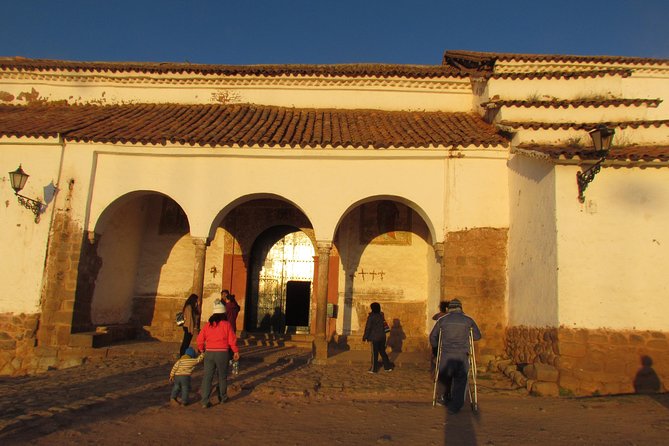
The morning begins at Iglesia Colonial de Chinchero and the nearby archaeological site. The unusual feature here is the layering: an Inca temple site was later used as the foundation for a Catholic church. You are not seeing two unrelated monuments. You are seeing how colonial construction was placed over an earlier Andean sacred and political space.
The stop lasts about an hour, not counting the ride from Cusco. That is enough for an introduction and a guided look, but not a leisurely visit. Admission is not included, and Chinchero is part of the $23 partial tourist ticket.
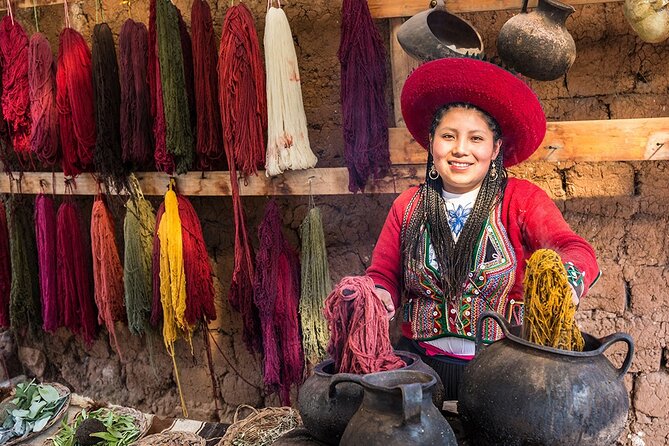
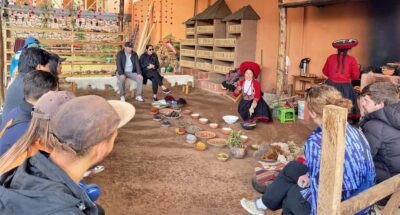
The visit also includes the local town and a demonstration of Andean textiles. This may be the most personal part of the morning. Local people continue to make textiles with Andean materials and alpaca wool, so you get a look at a skill that is still part of community life rather than only a museum display.
I would pay close attention during the demonstration and ask questions through your guide. The experience is not simply a shopping stop on the way to the ruins. It gives useful context for the patterns, fibers, and techniques you will see in markets around the Sacred Valley. Still, if your main goal is archaeological sightseeing, remember that part of the hour is devoted to textiles.
Moray: Inca Terraces in Giant Natural Hollows
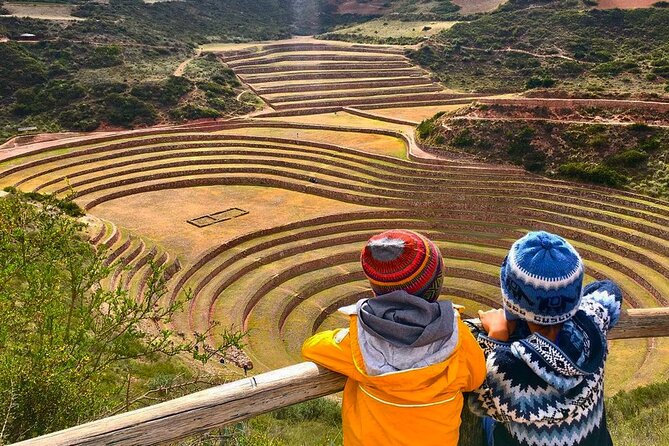
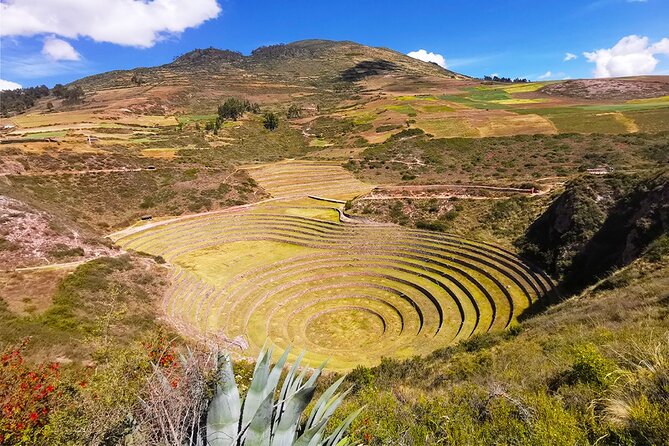
The route continues through typical settlements and open mountain scenery toward Maras and Moray. Moray is one of the most visually unusual places on the itinerary. Its terraces descend into huge natural hollows, creating a series of curved agricultural platforms that look almost theatrical from above.
The largest hollow is described as about 150 meters deep, with platforms averaging 1.80 meters in height between levels. The terraces also had irrigation canals. Your guide can help turn those striking shapes into a clearer story about Inca farming and experimentation.
Moray receives about an hour. That gives you time to view the terraces and hear an explanation, but the site is not a place where you should expect an unhurried exploration of every path. Admission is not included and is covered by the partial tourist ticket.
I like the contrast with Chinchero. Chinchero connects Inca and colonial use, while Moray focuses on engineering and agriculture. The stop also works well for photos, but the view is the main reward. If you have limited mobility, ask the tour company for current details before booking, since the supplied information only says that most people can participate and does not describe the paths.
Maras Salt Mines: A Working Andean Tradition
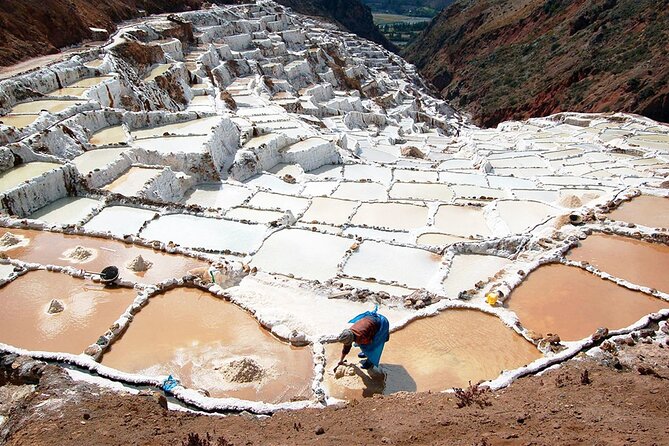
The Salineras of Maras are made up of about 2,000 small salt wells. Salt water is directed into the shallow pools, where evaporation leaves salt behind. The operation has roots in Inca times and was used as a form of economic exchange.
This is a short stop, about 40 minutes. That timing is sensible because the salt pools are a focused sight rather than a large complex with many separate buildings. You will see the tightly packed wells spread across the hillside and learn how the site functions.
The Salineras admission is separate from the main tourist ticket and costs $3 per person. The tour price does not cover it. Since the fee is small, the real question is time, not cost. Maras adds a working tradition to a day otherwise centered on ruins and markets, so I consider it one of the more worthwhile short stops.
The tour description groups this area with the picturesque village of Maras, which has pre-Hispanic, colonial, and republican features. The exact time spent in the village is not specified, so you should not assume a long walking visit there. The salt pools are the clear focus.
A few more Cusco trips worth lining up side by side
- Classic Inca Trail Trek 4D/3N to Machu Picchu (Group Service)
★ 5.0 · 8,653 reviews - Cusco: Rainbow Mountain and Red Valley Day Trip with Meals
★ 4.9 · 4,893 reviews - Machu Picchu: 4-Day Inca Trail Trek with Panoramic Train Ride
★ 5.0 · 4,568 reviews - Salkantay Classic Trek 5 Days from Cusco
★ 5.0 · 4,062 reviews
Urubamba Lunch: A Needed Pause in the Middle
After Moray and Maras, the route heads to Urubamba for a buffet lunch. Lunch is listed at $12 per person and is not included in the tour price. The scheduled stop is about 40 minutes.
That is a fairly brisk meal break after a busy morning. You will want to keep an eye on the clock, especially if your group is large. The buffet format can save time compared with ordering individual dishes, but the supplied information does not specify the restaurant, menu, or drinks.
I see this stop mainly as a practical reset. The route covers several sites before reaching Urubamba, and you still have Ollantaytambo and Pisac ahead. Snacks and drinks are also excluded, so bring extra money for them. The day is long enough that a small snack can be useful if your group does not want to rely only on the scheduled meal.
Ollantaytambo: A Fortress Above a Living Inca Town
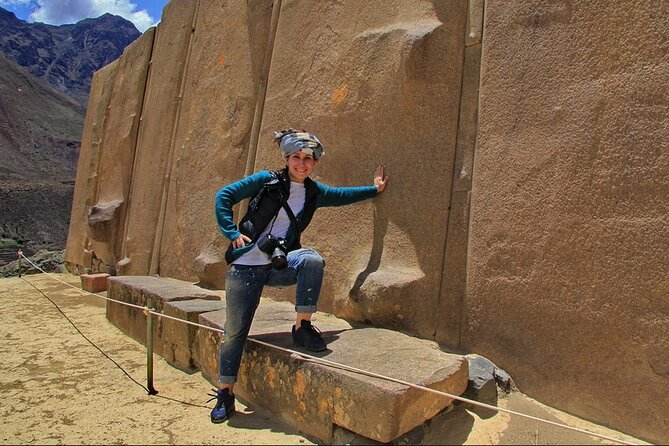
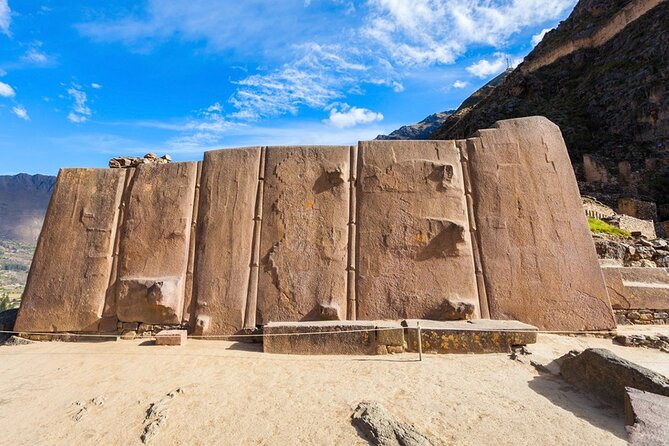
Ollantaytambo is the most substantial archaeological stop on the afternoon route. The site served as a tambo, or accommodation and administrative center, during Inca times. It is also linked to the figure of Ollanta, who was famous for his relationship with an Inca princess, the daughter of Pachacutec Inca.
The site has another distinction that gives it extra value: Ollantaytambo is described as the only Inca city in Peru that is still inhabited. That changes the way you look at it. You are not walking through ruins that were separated from modern life. The old city layout remains part of a living town.
The visit lasts about an hour, and admission is part of the $23 partial tourist ticket. The time should let you see the key areas with a guide, but Ollantaytambo rewards a slow pace. If this is the stop you care about most, tell your guide. On a private tour, your group may have more room to adjust the emphasis than it would on a large scheduled bus.
The fortress and town also help explain why the Sacred Valley is more than a collection of photo stops. Architecture, agriculture, transportation, religion, and political power all meet here. The hour will go quickly, so listen closely to the guide rather than trying to rush through every corner.
Pisac Market and Terraces: A Strong Finish
The final major stop is Pisac. The plan includes the famous craft market and the archaeological site, with terraces reaching along the mountain slopes. This pairing gives you two different experiences in one place.
The market is the more social part of the day. It is a chance to look at handmade goods and local crafts after seeing textile production in Chinchero. You may find the two stops feel connected, though the tour description does not specify the exact products or amount of shopping time.
The Pisac archaeological site adds another set of terraces and mountain views. Admission is included in the $23 partial tourist ticket, not in the tour price itself. The visit is scheduled for about an hour, which means you will need to divide your attention between the market and the ruins.
I would decide before the day begins which matters more to your group. If you want the archaeological site, do not let shopping use the entire stop. If you are buying crafts, set a budget and remember that the tour still has a long drive back to Cusco. The guide can help you understand the site, but the private format does not automatically create extra time.
Guide, Vehicle, and Group Comfort
The tour is offered in English and includes a guide and driver. One especially positive account names Juan Carlos as the guide and describes his English as very strong. He accompanied a group of eight with the driver for the full day, which is the kind of arrangement you want on a route with several archaeological sites.
The same group used a comfortable van that held eight people and their luggage. That detail matters if you are traveling with a larger family or carrying bags between hotels. The tour is designed for up to 10 people, but the exact vehicle for your booking is not specified, so confirm the seating and luggage arrangements if you will use the maximum capacity.
The company has also shown flexibility with pickup and drop-off. A group staying in Urubamba was collected at 7 a.m. and returned to a Cusco hotel after the tour, with drop-off around 4:30 p.m. The standard plan says you return to Cusco at approximately 7 p.m., so timing can vary with the starting point and route.
That flexibility is a real advantage, but it is worth confirming your plan before departure. Give the company your hotel name and address, especially if you are not staying in central Cusco.
The Long Day and Its Real Costs
A 10 to 12 hour outing is a serious commitment. You will leave around 7 a.m., visit six planned stops, eat lunch in Urubamba, and return to Cusco at about 7 p.m. This is not the tour for a slow morning or an afternoon of rest.
The payoff is range. In one day you see colonial and Inca layers at Chinchero, agricultural terraces at Moray and Pisac, salt production at Maras, a living Inca town at Ollantaytambo, and crafts in Chinchero and Pisac. Few shorter outings provide that much variety.
The tradeoff is time at each place. The listed stops are mostly 40 minutes to one hour, and driving between them takes a significant part of the day. I would choose this route if you have limited time in Cusco and want a broad introduction. If you already know you prefer one site, a shorter or more focused private plan might suit you better, though this particular experience is built around the full circuit.
Bring money for the $23 partial tourist ticket, $3 Salineras entrance, $12 lunch, snacks, and drinks. Those charges are modest compared with the group price, but they add up. The private rate makes the most financial sense for several people sharing the vehicle.
Who Should Book This Cusco Day Tour?
This tour suits families, friends, and small groups who want a private English-speaking guide and do not want to organize several Sacred Valley transfers themselves. It is also a good fit if you want both famous archaeological sites and everyday cultural stops such as the textile demonstration and Pisac market.
I would be more cautious if you dislike early starts, long vehicle days, or short visits. The route is ambitious, and the advertised return time can reach 7 p.m. Most people can participate, but specific accessibility information is not provided, so ask the operator about the paths and walking conditions before booking.
Free cancellation is available if you cancel at least 24 hours before the start time. Cancellations or changes made less than 24 hours in advance are not accepted for a refund.
Should You Book the Full Day Sacred Valley Tour?
Book it if you want breadth, privacy, and a guide-led introduction to the Sacred Valley. The strongest reasons are the private vehicle, the flexible handling of pickup and drop-off, the comfortable van reported for a group of eight, and the guide Juan Carlos, whose English and explanations received particular praise.
The route is ambitious but well chosen. You get the practical insight of weaving and salt production alongside major Inca sites. Just budget for the extra admissions and lunch, and accept that each stop will be a brisk introduction rather than a long, quiet visit. For a family or group of six to 10 people, the $370.52 group price can be a sensible way to cover a lot of ground in one day.
FAQ
Where does the Sacred Valley tour start?
Pickup is offered from hotels in Cusco city. You need to provide the hotel name and address when booking.
What time does the tour begin?
The tour starts at approximately 7 a.m.
What time will I return to Cusco?
The expected return is around 7 p.m., though the timing can vary. One group was dropped at a Cusco hotel around 4:30 p.m.
How long is the tour?
The tour lasts approximately 10 to 12 hours.
Is this a private tour?
Yes. Only your group participates, and the booking covers up to 10 people.
Is transportation included?
Yes. Tourist transportation and a professional tour guide are included.
Is the tour offered in English?
Yes. The tour is offered in English.
Are entrance fees included?
No. The partial tourist ticket for Pisac, Ollantaytambo, Chinchero, and Moray costs $23 per person. Entrance to the Salineras costs $3 per person.
Is lunch included?
No. Lunch, snacks, and drinks are not included. Lunch in Urubamba is listed at $12 per person.
Can I cancel for a full refund?
Yes, if you cancel at least 24 hours before the experience start time. Cancellations made less than 24 hours before the start time are not refunded.
Added recently around Cusco
- Guided tour of the mountain of colors in Cusco★ 5.0 · 11 reviews
- 2-Day Private Short Inca Trail to Machu Picchu★ 5.0 · 15 reviews
- City Tour Cusco – Group★ 5.0 · 4 reviews
- Tour Sacred Valley with Maras and Moray★ 5.0 · 15 reviews
- San Pedro Market Tour with Peruvian Cooking Class★ 5.0 · 31 reviews
- Walking Culinary Experience★ 5.0 · 41 reviews
- City Tour in Cusco★ 4.5 · 10 reviews
- Rainbow Mountain Small-Group Full-Day Hike from Cusco with Meals★ 4.5 · 15 reviews
Sacred Valley Tours, compared.
Sacred Valley & Maras Salt Mines Tour with Lunch
Read our review →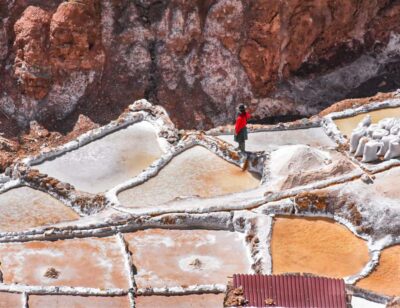
Moray, Maras Salt Mines & Chinchero Weavers Tour
Read our review →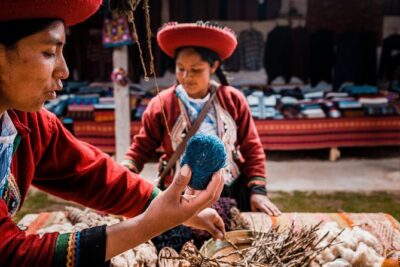
2-Day Tour: Sacred Valley and Machu Picchu by Train
Read our review →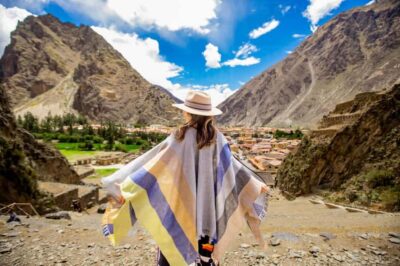
Sacred Valley, Pisac, Ollantaytambo, Salt Mines Moray
Read our review →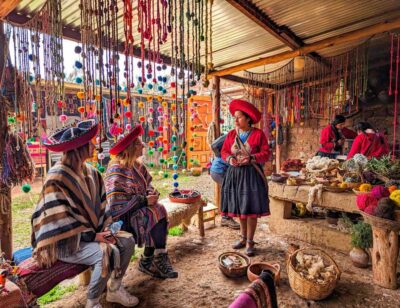
Chinchero,Moray & Salt Mines drop-off in Ollantaytambo
Read our review →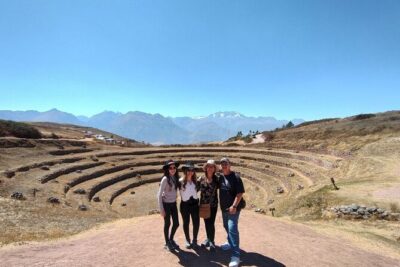
Sacred Valley and Maras Moray Tour with Full Day Buffet Lunch
Read our review →

Browse the lists this tour appears in