
Reviewed · SACRED VALLEY TOURS
Full-Day Tour of Moray Salinas de Maras and The Sacred Valley from Cusco
One long day can cover a lot. This private Cusco tour links Chinchero, Moray, the Maras salt terraces, Ollantaytambo, Urubamba, and Pisac without making you manage several separate transfers. I especially like the private vehicle, which gives your group more control than a large bus, and the mix of famous ruins with living Andean traditions, including wool work and the working salt pans. The main drawback is simple: twelve hours is a full day at high altitude, and lunch and entrance fees cost extra.
The route is also unusually useful if your time in Peru is short. Guides such as Jorge, Carlos, Alfredo, Elizabeth, Noemi, and Jesus have been praised for clear explanations, good local context, and a willingness to add small stops or adjust the day. Still, this is a fast sampler, not a slow visit to the Sacred Valley. You will see many places, but each scheduled stop is roughly 40 minutes.
In This Review
- Key points to know before booking
- Why this private Cusco day works
- 7:00 am pickup and the road to Chinchero
- Moray and the Incas’ agricultural experiments
- Salinas de Maras, where salt still follows water
- Ollantaytambo, stone streets and water channels
- Urubamba lunch stop and the cost question
- Pisac market and the final ruins
- What the $180 price really buys you
- Comfort, pace, and practical preparation
- Who should choose this Sacred Valley tour
- Should you book the Moray and Maras day?
- FAQ
- What time does the tour start?
- When does the tour finish?
- Is this a private tour?
- How many people are required to book?
- What attractions are included in the route?
- Is lunch included?
- How much are the entrance fees?
- Can I use the full Cusco Tourist Ticket instead?
- What should I wear?
Key points to know before booking
- Private transport saves time: Your own vehicle avoids waiting for a full coach and makes it easier to adjust the order or timing.
- Six Sacred Valley sights fit into one day: The route includes Chinchero, Moray, Salinas de Maras, Ollantaytambo, Urubamba, and Pisac.
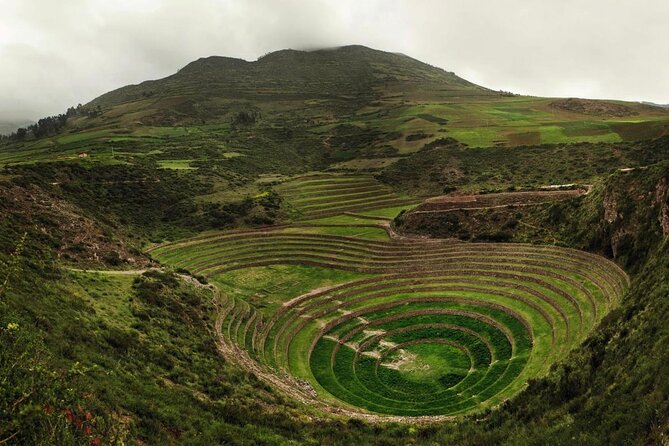
- Moray is more than a photo stop: Your guide explains the terraces, agricultural testing, and drainage system built to handle rainy-season water.
- Maras remains a working site: Saline spring water flows through channels into hundreds of pans, where evaporation leaves salt behind.
- Budget for added costs: The partial Cusco Tourist Ticket is 70 soles, Maras costs 20 soles, and lunch and drinks are separate.
- This suits a busy itinerary: You get a broad introduction to Inca engineering, Andean craft, village life, and Sacred Valley ruins in about twelve hours.
Why this private Cusco day works
The strongest feature is the route itself. Many day trips focus only on the Sacred Valley’s major ruins, while this one adds Moray and Salinas de Maras, two places with a very different feel. You move from a village craft tradition to an Inca agricultural site, then to salt terraces, a stone-built town, and a market and ruin complex.
That range gives you a better sense of the region than a day spent looking only at monumental walls. You see how people worked with water, soil, stone, wool, and salt. The tour also uses a private van and driver, so you are not tied to the pace of a large group.
Past participants have singled out guides by name. Jorge was praised for taking a family to extra places, while Carlos was valued for explaining the purpose of the ruins and the Andean civilization behind them. Alfredo was described as especially helpful and passionate about Peruvian culture. Noemi also received strong praise for clear explanations and warm company.
Those individual guide reports matter because the sites themselves are not always self-explanatory. Moray’s circular terraces can look like an odd natural hollow, and the Maras pans can seem like a bright hillside pattern until someone explains the water system. A good guide turns each stop from a quick photograph into a place with a purpose.
More Sacred Valley days out:
- From Cusco: Moray, Maras Salt Mines & Chinchero Weavers Tour
★ 4.8 · 1,925 reviews - 2-Day Tour: Sacred Valley and Machu Picchu by Train
★ 5.0 · 1,127 reviews - Cusco: Sacred Valley, Pisac, Ollantaytambo, Salt Mines Moray
★ 4.6 · 1,058 reviews
7:00 am pickup and the road to Chinchero
Pickup begins at about 7:00 am from your Cusco accommodation. The drive to Chinchero takes roughly one hour by private van, and the early start is necessary if you want to fit the full circuit into one day.
Chinchero gives the tour a human beginning. Instead of starting with a large ruin, you enter a small village with adobe homes, narrow cobbled streets, and views toward the Sacred Valley. People may be wearing traditional Peruvian clothing, and local craft traditions remain part of village life.
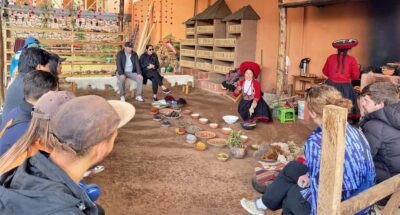
If you choose to watch the textile demonstration, you can see how wool is washed and dyed with native plants and minerals. This is one of the more distinctive parts of the day because it shows a skill still practiced by local people rather than only preserved in stone.
You should not expect a long village walk. The planned visit is about 40 minutes, so use the time well. Look closely at the streets, listen to the explanation of local customs, and ask about the dyeing process before the vehicle moves on.
Moray and the Incas’ agricultural experiments
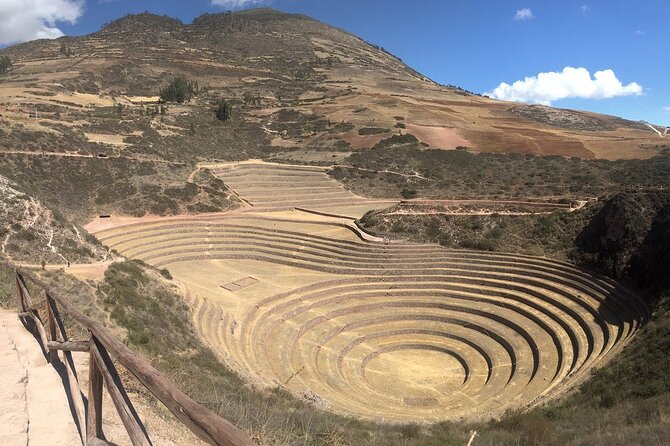
Moray is one of the most curious stops on the route. Its broad, circular terraces descend into the earth in a series of rings. The Incas used the site for agricultural experiments and for cultivating seeds, making it an important example of practical engineering rather than a ceremonial ruin alone.
Your guide will explain how the terraces were designed and how drainage at the bottom helped prevent flooding during the rainy season. That detail is easy to miss, yet it is the key to understanding why the site was built this way. The terraces were not simply decorative circles. They formed a controlled setting for working with crops and water.
The visit lasts about 40 minutes, with additional time for your own look around. That is enough for an explanation and photographs, but not enough for a long, unhurried walk. If Moray is high on your list, stay focused during the guide’s talk, then use your free minutes for the views.
Admission to Moray is not included in the tour price. You will need the partial Cusco Tourist Ticket, officially called the Boleto Turistico del Cusco. The partial ticket costs 70 soles and lasts two days. It covers the sites on this route, making it useful if you plan to visit another included attraction soon.
Salinas de Maras, where salt still follows water
After Moray, the tour continues toward Maras. The published schedule allows about 20 minutes by bus to reach the salt mines, followed by roughly 40 minutes at the site.
The salt terraces stretch along one side of a narrow valley. Saline spring water enters a network of channels and flows into shallow pans. As the water evaporates, salt remains behind. The terraces have been used since pre-Incan times, and a collective of salt miners has maintained the channels and pans for hundreds of years.
This is one of my favorite stops because it combines striking patterns with a working tradition. You may see people tending the pans, which makes the place feel less like an abandoned archaeological site and more like a living system of local work.
Maras also provides a useful contrast with Moray. At Moray, water was managed for crops and experiments. At Maras, water is directed to produce salt. In both places, the clever part is not just the structure you see, but the quiet movement of water through it.
The separate Maras entrance fee is 20 soles per person. It is not covered by the partial tourist ticket, so keep this extra cost in your day budget. Wear walking shoes, since the visit involves moving around an uneven terraced area.
A few more Cusco trips worth lining up side by side
- Classic Inca Trail Trek 4D/3N to Machu Picchu (Group Service)
★ 5.0 · 8,653 reviews - Cusco: Rainbow Mountain and Red Valley Day Trip with Meals
★ 4.9 · 4,893 reviews - Machu Picchu: 4-Day Inca Trail Trek with Panoramic Train Ride
★ 5.0 · 4,568 reviews - Salkantay Classic Trek 5 Days from Cusco
★ 5.0 · 4,062 reviews
Ollantaytambo, stone streets and water channels
The road then leads to Ollantaytambo, one of the most rewarding stops on the tour. The town preserves a traditional Inca urban plan, with narrow stone streets beside flowing streams. The water is not an incidental detail. It helps you picture how the settlement functioned when Inca planning shaped daily life.
The upper part of town contains an impressive ceremonial center associated with water worship, along with a powerful fortress guarding access to the lower valley. From here, the scale of the construction becomes clear. Large stonework, steep slopes, and the town’s carefully aligned streets all point to a place built for both ceremony and defense.
The scheduled visit is about 40 minutes, so you will receive an overview rather than an exhaustive exploration. If you want to spend much longer at the fortress, this one-day route may feel too compressed. If you want an introduction before continuing through the Sacred Valley, the timing is reasonable.
Ollantaytambo is also a useful place to pay attention to the difference between an archaeological site and a living town. You are not viewing ruins in isolation. You are walking through streets where the old layout remains part of the present town.
Urubamba lunch stop and the cost question
After Ollantaytambo, the route follows the scenic road to Urubamba, described as the heart of the Sacred Valley. This is where the group stops for a buffet lunch.
Lunch is not included, so you will pay separately for the meal and drinks. That lowers the advertised tour cost, but it means the final price is higher than the $180 per-person booking amount. Add 70 soles for the partial tourist ticket and 20 soles for Maras, then allow extra money for food.
I see the lunch arrangement as both a strength and a weakness. You are not forced to pay for a meal you may not want, and a buffet makes it easier to eat quickly during a packed day. On the other hand, anyone looking for a fully packaged experience needs to plan for these additional charges.
The stop is practical rather than leisurely. You are midway through a long circuit and still have Pisac ahead. Eat enough to stay comfortable, refill your water, and be ready for more walking.
Pisac market and the final ruins
The last major area is Pisac, where you first have free time in the small village and artisan market. This gives you a change of pace after several guided archaeological stops. You can browse handcrafts and souvenirs, meet local townspeople, and decide if you want to buy something to take home.
The market is useful for shopping, but keep your expectations sensible. You will not have unlimited time, and the tour still needs to reach the Pisac ruins before returning to Cusco. If you find a textile or small craft you like, make your choice without spending the entire free period comparing every stall.
The Pisac ruins provide the closing historical stop. Your guide will lead you through the site after the market, giving the day a final look at Inca construction and settlement planning. As with the other stops, the stated visit is about 40 minutes, plus around ten minutes for personal exploration.
The return to Cusco is scheduled for about 6:30 to 7:00 pm, although another timing note gives 6:00 pm and says the schedule can be flexible. In practice, you should treat this as an evening return. The route covers a lot of ground, and traffic, road conditions, and the length of each stop can affect the arrival time.
What the $180 price really buys you
At $180 per person, this is not the cheapest way to see the Sacred Valley. Its value comes from what is bundled into the day: hotel pickup and drop-off, a private vehicle, a professional guide, and round-trip transportation from Cusco.
A private setup can save meaningful time. You do not need to wait for a large coach group at every stop, and the driver can keep your small party moving. Several past participants specifically praised punctual pickup, clean vehicles, courteous drivers, and the ability to request small changes.
The value is strongest for a couple, family, or small group with only one open day. The minimum booking is two people, and only your group participates. For a solo visitor, the minimum requirement makes the price less convenient.
The price is less attractive if you have several days in Cusco and can spread these sights across separate outings. A slower plan would give you more time at Ollantaytambo, Pisac, or Chinchero. This tour is built for coverage and convenience, not for lingering.
Comfort, pace, and practical preparation
Wear comfortable clothing and walking shoes. The day includes cobbled streets, archaeological sites, stone paths, and the salt terraces at Maras. You will be getting in and out of the vehicle repeatedly, so light layers and shoes with good footing make sense.
The experience lasts about 12 hours. That is manageable for most people, but it is not a gentle half-day outing. You should be comfortable with a full schedule and repeated short walks.
Children under five can join at no charge. Most people can participate, according to the tour information, but you should still consider the length of the day when deciding if it suits a very young child.
The guide may be multilingual. If you have a strong language preference, confirm it when booking rather than assuming the guide will speak your first language.
You can buy the tourist tickets along the way. The partial ticket lasts two days and costs 70 soles. The full ticket costs 130 soles, lasts ten days, and covers 16 places. The full option makes sense only if you plan to visit other included attractions in and around Cusco during the rest of your stay.
Who should choose this Sacred Valley tour
I would choose this tour if you want the widest possible introduction to the Sacred Valley in one day. It is especially good for you if Maras is a priority, since many standard routes do not combine the salt terraces with this many major valley sights.
It also suits families and small groups that value a private vehicle. The driver and guide can keep the day moving, and the route can reportedly be adjusted to suit your preferences. The chance to request extra places, as Jorge did for one family, is a useful bonus, though you should not assume every day will include additional stops.
You may want another plan if you dislike early starts, long drives, or short visits. The schedule is full, and each place receives an overview rather than a slow examination. It is also not the best fit if you want a food-focused day, since lunch is simply a separate stop in Urubamba.
Free cancellation is available if you cancel at least 24 hours before the start time. Changes or cancellations made later are not accepted for a refund.
Should you book the Moray and Maras day?
Book it if you have limited time and want one private circuit covering the Sacred Valley’s major highlights plus the unusual salt terraces and Moray. The combination of local craft, Inca farming, salt production, stone towns, ruins, and a market gives you real variety.
I would be comfortable choosing it for a first Cusco visit, particularly with a guide such as Carlos, Jorge, Alfredo, Elizabeth, or Noemi. Just budget for the 70 soles tourist ticket, 20 soles Maras admission, lunch, and drinks, and accept that a twelve-hour day will feel busy.
Skip it if your priority is a slow archaeological visit or a relaxed valley stay. For everyone else, the private transport and broad route make the $180 cost defensible, provided you treat the tour as an efficient first look rather than the final word on the Sacred Valley.
FAQ
What time does the tour start?
Pickup starts at approximately 7:00 am from your accommodation in Cusco.
When does the tour finish?
The stated return time is about 6:30 to 7:00 pm. Another schedule note gives 6:00 pm and says the timing can be flexible, so expect an evening return.
Is this a private tour?
Yes. Only your group participates, and transport is provided by private vehicle.
How many people are required to book?
A minimum of two people per booking is required.
What attractions are included in the route?
The route includes Chinchero, Moray, Salinas de Maras, Ollantaytambo, Urubamba for lunch, and Pisac.
Is lunch included?
No. The tour stops for buffet lunch in Urubamba, but lunch and drinks are paid separately.
How much are the entrance fees?
The partial Cusco Tourist Ticket costs 70 soles per person. Entrance to Salinas de Maras costs an additional 20 soles per person.
Can I use the full Cusco Tourist Ticket instead?
Yes. The full ticket costs 130 soles, covers 16 places, and lasts 10 days. It is useful if you plan to visit other included attractions in and around Cusco.
What should I wear?
Wear comfortable clothing and walking shoes. The tour includes village streets, ruins, terraces, and repeated walking at several stops.
Added recently around Cusco
- Guided tour of the mountain of colors in Cusco★ 5.0 · 11 reviews
- 2-Day Private Short Inca Trail to Machu Picchu★ 5.0 · 15 reviews
- City Tour Cusco – Group★ 5.0 · 4 reviews
- Tour Sacred Valley with Maras and Moray★ 5.0 · 15 reviews
- San Pedro Market Tour with Peruvian Cooking Class★ 5.0 · 31 reviews
- City Tour in Cusco★ 4.5 · 10 reviews
- Walking Culinary Experience★ 5.0 · 41 reviews
- One Day Tour to Humantay Lagoon★ 5.0 · 8 reviews
Sacred Valley Tours, compared.
Sacred Valley & Maras Salt Mines Tour with Lunch
Read our review →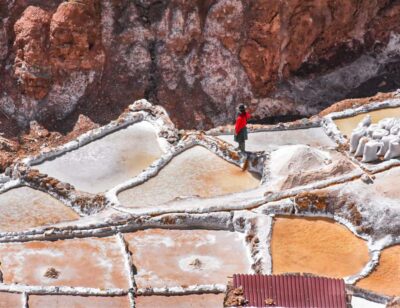
Moray, Maras Salt Mines & Chinchero Weavers Tour
Read our review →
2-Day Tour: Sacred Valley and Machu Picchu by Train
Read our review →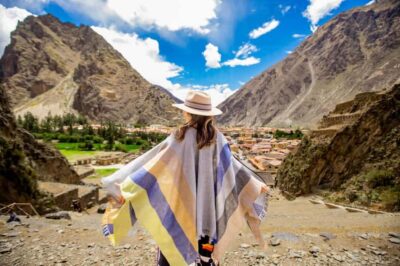
Sacred Valley, Pisac, Ollantaytambo, Salt Mines Moray
Read our review →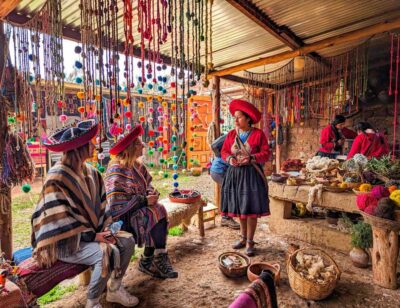
Chinchero,Moray & Salt Mines drop-off in Ollantaytambo
Read our review →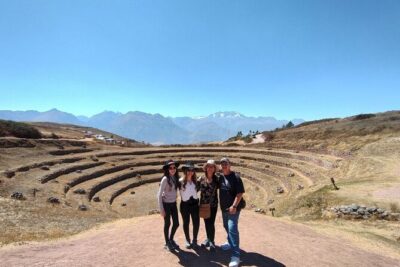
Sacred Valley and Maras Moray Tour with Full Day Buffet Lunch
Read our review →

Browse the lists this tour appears in